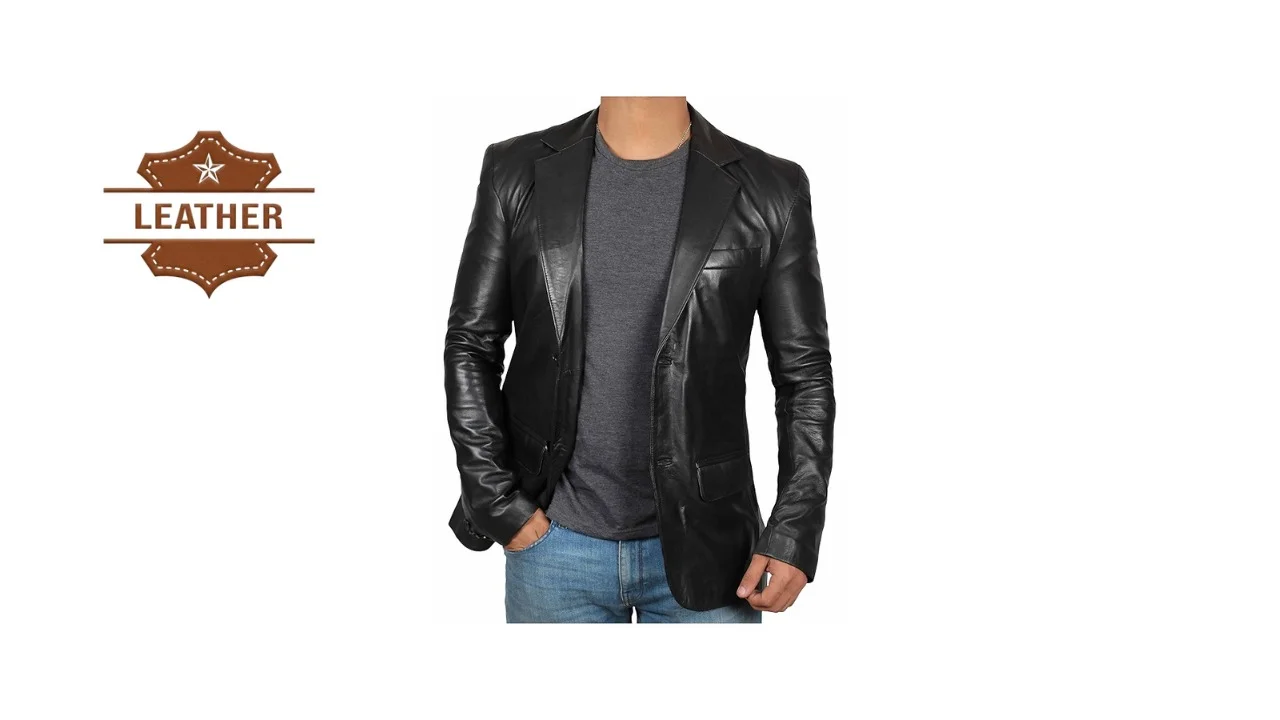
Black Men’s Leather Blazer
Leather fashion is timeless, but some pieces go beyond trends and become wardrobe staples. The Black Men’s Leather Blazer sits at a stylish intersection: classic tailoring meets the tactile depth of leather. That combination makes it versatile, characterful, and enduring.
By the end, you will know:
➡ What makes a black man’s leather blazer great? ➡ How to choose the right one (fit, leather, construction) ➡ How to style it for every occasion ➡ How to care for it so it lasts decades ➡ What brands and leather types are best ➡ And how to buy with confidence
What Is a Black Man’s Leather Blazer?
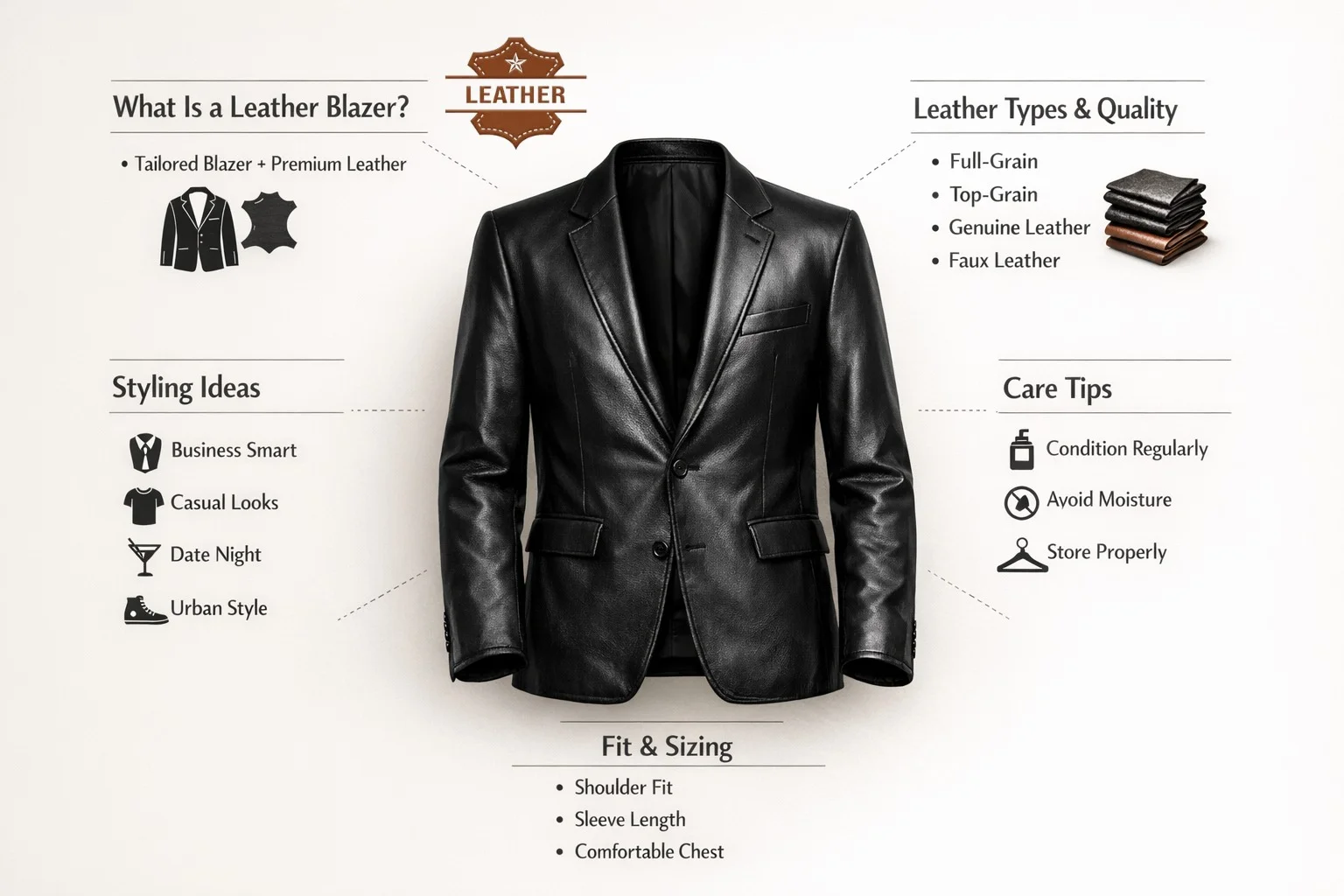
A black man’s leather blazer is a jacket that marries the silhouette of a tailored blazer with a leather exterior. It keeps the defining elements of a blazer — lapels, a structured shoulder, buttoned front, and a lined interior — but substitutes the cloth fabric for leather. The result is a piece that reads smarter than a casual leather jacket but more adventurous than a traditional wool blazer.
Key features to expect:
- Tailored silhouette that avoids the bulk of motorcycle jackets
- Leather exterior (from lambskin for softness to cowhide for durability)
- Classic blazer lapels (not always peaked; sometimes notch lapels)
- Buttons (single or double-breasted styles exist)
- Lined interior for comfort and structure
This hybrid fits into wardrobes where you want the polish of tailoring combined with the texture and attitude that leather provides.
Why a Black Leather Blazer Is a Must-Have
A black leather blazer functions as both an anchor and an accent in a contemporary closet. It transcends mere garment status by merging sartorial finesse with rugged materiality, producing a piece that can ground an ensemble or elevate it depending on the context. The aesthetic longevity of a black leather blazer is partly due to its neutral color and partly due to leather’s ability to develop personality over time; a well-crafted leather blazer acquires a patina and subtle surface history that cloth alternatives cannot replicate.
Utility and adaptability are central reasons this blazer is indispensable. It works with structured tailoring, bringing an edge to business casual looks, yet it also pairs naturally with casual clothing — jeans, tees, and sneakers — providing effortless cohesion. The color black further amplifies versatility: black minimizes visual friction across palettes, allowing the blazer to function as a unifying garment regardless of the rest of the outfit’s hues.
From a fabric and function standpoint, leather offers wind resistance and a tactile warmth that fabric blazers typically lack. Leather’s tactile weight and drape create a silhouette that reads intentional yet relaxed; it carries structure without appearing stiff. For men who aim to project confidence with subtlety — that is, confidence that doesn’t shout but holds its ground — the black leather blazer is uniquely positioned.
Economically and temporally, the blazer is a durable investment. High-grade leather paired with careful construction results in a garment that can last for many years if properly maintained. Rather than seasonal spending, purchasing a quality leather blazer is an investment in a durable, aging piece that rewards wear with character.
Finally, its cross-demographic appeal makes the leather blazer relevant to a wide spectrum of wearers: creatives, professionals with relaxed dress codes, performers, and anyone who appreciates the combination of refinement and rebellion. This is why, whether you are curating a capsule wardrobe or selecting a statement piece, the black leather blazer remains an essential option.
The History of the Leather Blazer
Leather has ancient roots as a clothing material — used for protection, warmth, and durability long before modern tailoring existed. The blazer, meanwhile, originated in the 19th century as a uniform jacket for sports clubs (notably British rowing clubs). The combination of leather and tailoring evolved gradually: early leather outerwear emphasized utility (think cavalry, aviator, and motorcycle jackets). Over time, designers began experimenting with more refined, tailored leather pieces that borrowed the lines and structure of Traditional Blazers.
Key historical moments:
- Ancient to pre-modern times: leather was used for shelter and protection.
- Early 20th century: leather jackets adopted for military and aviation use; leather symbolizes purpose, not fashion.
- Mid-20th century: motorcycle culture and rock’n’roll associated leather with rebellion.
- 1980s–1990s: luxury fashion houses begin presenting leather blazers as elevated ready-to-wear items.
- 2000s–present: the leather blazer becomes a mainstream, versatile piece worn by professionals and creatives alike.
This evolution explains why the leather blazer feels both classic and contemporary: it carries functional textile history while integrating today’s tailoring sensibility.
Leather Types Used & Why They Matter
The type of leather determines look, durability, texture, and price. When choosing a leather blazer, know the leather categories and what they mean for long-term wear.
Common leather types:
Full-Grain Leather
- Highest quality, preserves the hide’s natural grain.
- Ages beautifully and develops a desirable patina.
- Durable, breathable, and costly.
Top-Grain Leather
- Slightly sanded or corrected for uniformity.
- Softer and smoother than full-grain, still high quality.
- Good balance of price and finish.
Genuine Leather
- A lower tier that’s processed from the lower layers of hide.
- Suitable for budget options; less longevity and patina.
Split Leather & Corrected Grain
- Split layers of hide with an artificial grain applied.
- Can be affordable but less durable.
PU / Faux Leather
- Synthetic leather made from polyurethane or PVC.
- Affordable, consistent appearance, but lacks patina and breathability.
How leather type affects wear:
- Durability: Full-grain > Top-grain > Genuine > PU.
- Feel & Drape: Lambskin (soft) vs cowhide (sturdier).
- Aging: Only real leathers (especially full-grain) develop natural patina.
- Care Needs: Real leather needs conditioning; faux leather needs surface cleaning.
Selecting the right leather depends on priorities: if longevity and natural aging matter, opt for full-grain or high-quality top-grain. For lower budgets or vegan preferences, choose premium PU alternatives but manage expectations on lifespan.
Full-Grain vs Top-Grain vs Genuine vs PU Leather
A compact comparison to help with buying decisions:
- Strength: Full-grain (best) → Top-grain → Genuine → PU (least)
- Patina & Aging: Full-grain (excellent) → Top-grain (good) → Genuine (limited) → PU (none)
- Price: Full-grain (highest) → Top-grain → Genuine → PU (lowest)
- Grain Texture: Natural → Slightly corrected → Processed → Artificial
- Breathability: Real Leathers breathe; PU does not.
If budgeting allows, full-grain is the gold standard. For a balance of cost and finish, top-grain is an excellent middle ground.
How a Leather Blazer Is Made
Understanding construction helps you evaluate quality beyond label claims.
- Hide Selection: Choose hides with minimal scars and uniform thickness. Lambskin yields soft, luxurious hand; cowhide yields robust structure.
- Tanning: Vegetable or chrome tanning stabilizes the hide. Tanning method affects suppleness, color uptake, and environmental profile.
- Cutting: Panels are cut according to pattern pieces; efficient cutting reduces waste and cost.
- Skiving & Thinning: Edges are thinned to prevent bulk in seams.
- Stitching & Reinforcement: High-stress points use reinforced stitching and sometimes hidden bar tacks.
- Lining & Interfacing: Linings (silk, satin, viscose) add comfort and structure; interfacing manages lapel shape and collar form.
- Finishing: Dyeing, edge-finishing, pressing, and final quality control.
- Hardware: Buttons, zippers, and trims must be durable and aligned with the blazer’s aesthetic.
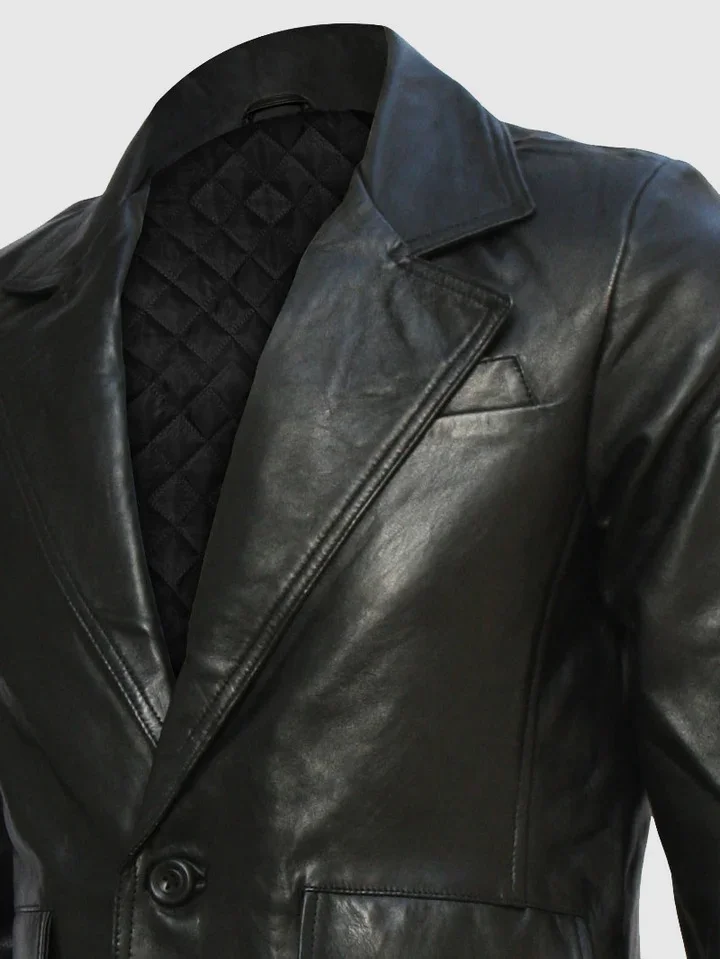
Well-made leather blazers will show even stitching, clean edges, and precise pattern matching across panels.
How to Spot Real Leather
Simple tests to avoid disappointment:
- Surface & Grain: Real leather carries irregularities and varying pores; perfect uniformity often signals faux.
- Smell Test: Genuine leather has a warm, organic scent. Faux smells of plastic or chemicals.
- Bend & Wrinkle: Real leather wrinkles and creases naturally; faux softens uniformly and springs back.
- Edges: Real leather edges show fibrous layers; faux has smooth, plastic-like edges.
- Price & Seller: If the price is suspiciously low for what is claimed to be full-grain leather, double-check seller’s credibility and return policy.
- Labeling Clues: Look for terms like “full-grain,” “top-grain,” or tannery details. Beware marketing terms (e.g., “genuine leather” is a legal label but often low grade).
When buying online, insist on detailed photos of grain, stitching, and edgework. Good retailers will provide close-ups and material disclosures.
Essential Buying Checklist
Before you click “buy” or step into a store, check these essentials:
Fit & Silhouette
- Shoulders align; sleeve length ends at the wrist bone.
- Enough room for the shirts/sweaters you plan to layer.
- Not too tight in the chest or across the back.
Leather Quality
- Natural grain for full- or top-grain.
- Consistent thickness and no chemical shine.
Lining & Comfort
- Breathable lining (viscose, rayon, or silk blends preferred).
- Non-itchy and avoids static cling.
Construction & Stitching
- Even tight stitches and reinforced stress points.
- Clean buttonholes and sealed seams.
Hardware
- Quality buttons, zippers, and lining attachment.
- Avoid cheap snaps or fragile hardware.
Brand & Reputation
- Research the brand’s leather sourcing, tanning process, and customer reviews.
- Check return and repair policies.
Price & Value
- Compare similar pieces; extremely low prices often indicate lower materials or construction shortcuts.
Try It On
- If in doubt, try on the outfits you’ll wear most often and evaluate mobility and comfort.
Best Occasions to Wear a Black Leather Blazer
The leather blazer’s tonal neutrality and design flexibility make it suitable for many scenarios:
- Business Casual Meetings: Pair with tailored trousers and a crisp shirt for a modern professional look.
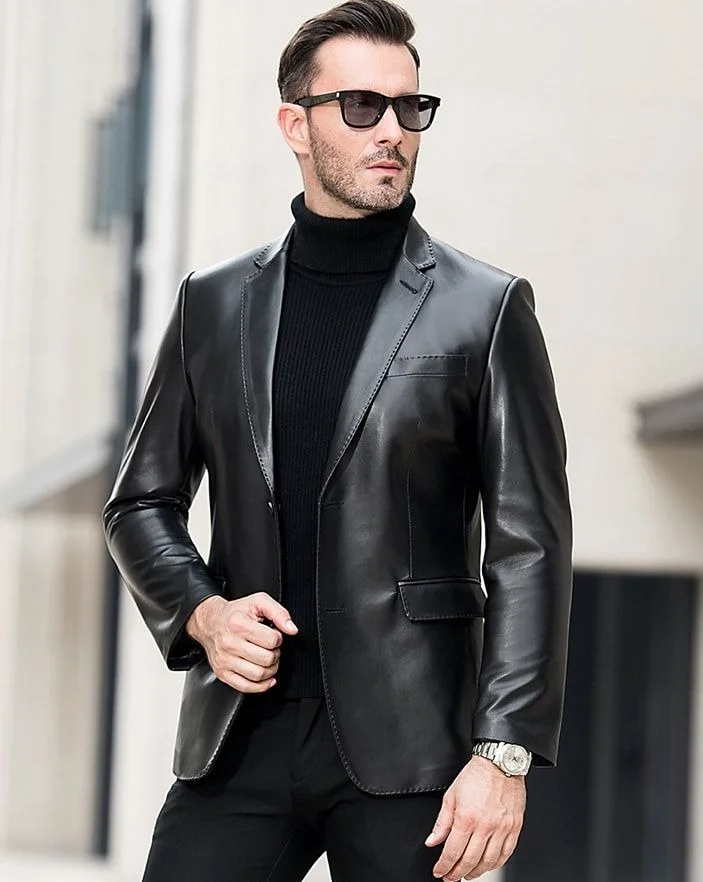
- Dinner Dates: Turtleneck or button-up, paired with Chelsea boots for a refined evening vibe.
- Weekend Outings: T-shirt, slim denim, sneakers — a relaxed but intentional outfit.
- Concerts & Events: Leather’s edge works perfectly in cultural settings.
- Gallery Nights & Creative Work: Blends sophistication with Artistic Personality.
Because leather reads slightly dressier than denim jackets but less formal than wool blazers, it bridges many dress codes effectively.
How to Style a Black Leather Blazer
Here are concrete outfits to illustrate versatility.
Business Smart
- White dress shirt, navy or charcoal tailored trousers, black derby or oxford shoes.
- Tip: Use a slim silk tie or no tie for modern smart-casual offices.
Weekend Casual
- Clean white or grey tee, slim dark jeans, white leather sneakers.
- Tip: Keep the tee fitted to balance the blazer’s structure.
Date Night
- Black turtleneck, slim black trousers, Chelsea boots.
- Tip: Use matte black hardware for a minimalist, cohesive look.
Urban Street Style
- Graphic tee, black ripped jeans, and combat or chunky boots.
- Tip: Add a beanie or leather belt to accentuate the aesthetic.
Layered Fall Look
- Lightweight sweater, shirt underneath, blazer on top, wool scarf for texture.
- Tip: Avoid bulky sweaters unless you size up.
Business Casual with a Twist
- Dress shirt, no tie, chinos, blazer — swap the blazer for leather to modernize the look.
- Tip: Keep colors muted (navy, camel, charcoal) to let the leather be the focal point.
Fit & Sizing — How to Get It Right
Leather doesn’t stretch much, so getting fit right at purchase is crucial.
Shoulders: Should be the most reliable measurement. The junction point of the arm to the torso should align with your bone. If the shoulders pull, the fit is wrong.
Sleeve Length: Aim for sleeves that hit the wrist bone with a slight shirt cuff visible if wearing shirts. Avoid sleeves that are too long or bunch at the wrist.
Torso & Chest: The blazer should close comfortably without pulling. You should be able to button it and move freely. If tight across the back or chest, size up.
Length: A blazer should end near the mid to lower seat line for balanced proportions (varies by style and personal preference). Leather blazers sometimes sit slightly shorter than traditional blazers for a modern look.
Layering: Try your blazer with the shirts and light sweaters you intend to wear most often. If you plan heavy layering (thick knitwear), you may need a size up.
Tailoring: Good tailors can adjust sleeves and taper waste slightly, but leather alterations are more complex and expensive than cloth. Buy for shoulders and chest — these are the hardest to alter.
Leather Care & Maintenance
Leather rewards good care. Follow these practical steps to keep your blazer in excellent condition.
Daily & After-Wear
- Wipe down with a soft, dry cloth to remove surface dust.
- Hang on a wide, padded hanger to preserve shoulder shape.
- Avoid plastic covers; leather needs to breathe.
Regular Care
- Apply a leather conditioner appropriate for the leather type (test spot first).
- Use conditioners recommended for full-grain/top-grain leathers, avoiding silicone sprays that can clog pores.
Cleaning Spills & Stains
- Blot (don’t rub) liquids with a clean cloth.
- For grease or oil, consult a professional leather cleaner.
- Avoid household detergents; they can strip oils.
Storage
- Keep in cool, dry, dark conditions — avoid direct sunlight that causes fading.
- If stored long-term, use a breathable garment bag and periodically air the blazer while conditioning as needed.
Professional Care
- For deep cleaning or significant damage, take the blazer to a leather specialist. This may be a yearly ritual for high-use pieces.
Water Exposure
- Light rain is OK for most leathers; pat dry and condition.
- Avoid soaking or machine washing (never machine wash real leather).
Price Range Worldwide
Price varies by leather type, brand, country of manufacture, and construction quality.
Typical Price brackets you’ll encounter:
- Budget / Faux Leather: $50 — $250
- Entry Real Leather (genuine leather, mass produced): $200 — $600
- Mid-Range (top-grain, reputable brands): $600 — $1,200
- Premium / Luxury (full-grain, designer houses, artisan tanneries): $1,200 — $4,000+
Regional examples (approximate):
- USA: $300 – $2,000+
- UK: £250 – £1,800+
- EU: €280 – €1,900+
- Australia: AUD 400 – AUD 2,400+
- Middle East: $350 – $2,200+
Remember: material and construction quality often justify higher prices if you plan to keep the blazer for years. Factor in local taxes and import duties when buying across borders.
Top Brands & Countries Known for Leather Blazers
Certain regions and houses are consistently associated with high standards in leatherwork.
- Italy is renowned for luxury leather craftsmanship and designer houses with meticulous finishing.
- United States — home to heritage brands and a history of durable, tailored leather pieces.
- Japan — celebrated for precision, unique dyeing techniques, and minimalist aesthetics.
- Turkey — known for strong quality-to-price ratios and established leather manufacturing.
When considering brands, research tanneries, stitch counts, and repair policies. Artisan makers may offer bespoke fits and tannage transparency; luxury houses offer curated styling and finishing.
Pros & Cons
Pros
- Timeless, hard-wearing style that becomes more distinctive with age.
- Versatile across smart and casual wardrobes.
- Provides structure and polish while retaining attitude.
- Full-grain options can last decades.
Cons
- Higher upfront cost for Premium Leathers.
- Requires ongoing care (conditioning, proper storage).
- Less breathable than fabric blazers — consider the climate.
- Tailoring adjustments are more complicated and costly.
FAQs
A: Yes — in business-casual or creative professional settings. Pair with tailored trousers and polished shoes for a formal lean.
A: With proper care, real leather blazers (especially full-grain) can last 10–30 years or more.
A: Best in cooler months. Lighter spring or early autumn days work if you avoid heavy lining and thick layers.
A: For mild marks, a damp cloth is fine. For oily or set stains, consult a leather cleaning specialist.
A: Leather will relax slightly and conform to the body, but it won’t stretch dramatically. Buy for a fit in the shoulders and chest.
Conclusion
The black men’s leather blazer is more than a trend — it’s an investment in adaptable style. Whether you’re aiming for refined modernity or cultivated edge, a well-selected leather blazer enhances many outfits while rewarding good care with character and longevity.
To buy well: prioritize Hide Quality, construction, and proper fit. To wear well: balance the blazer’s weight with fitted garments and intentional footwear. Care well: follow a consistent conditioning and storage routine, and consult professionals for serious cleaning.