Introduction
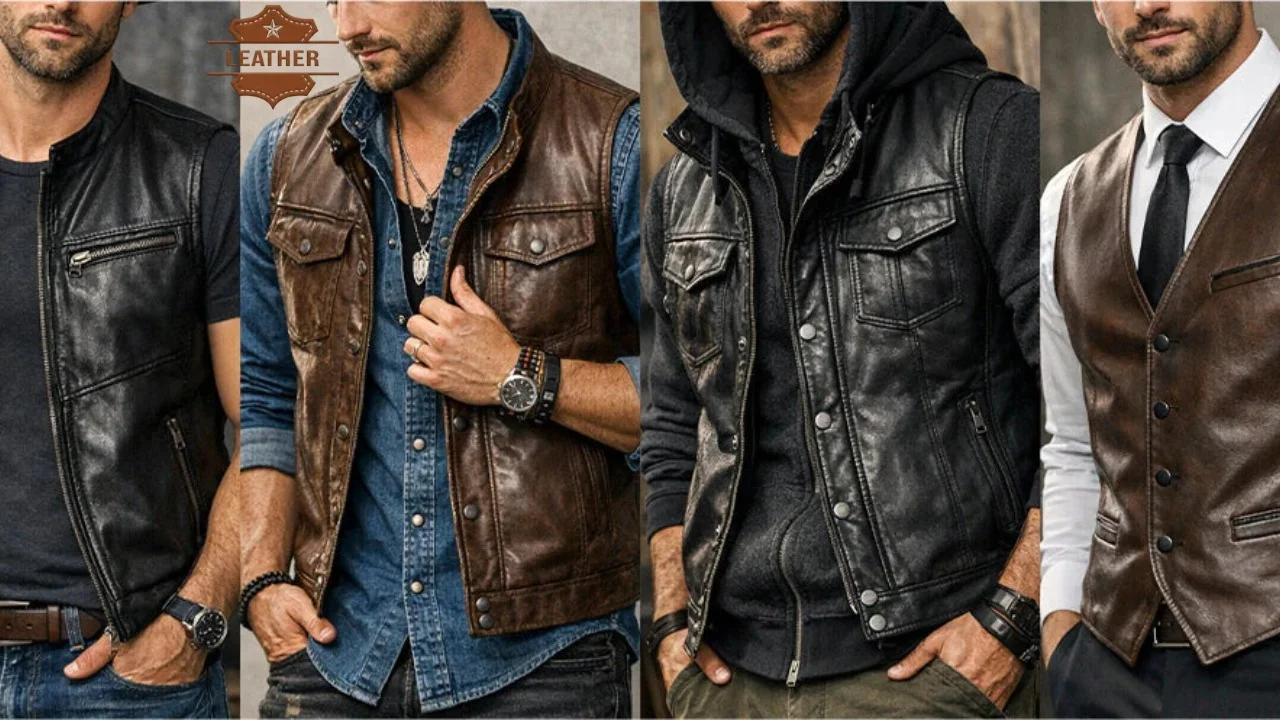
A Leather Vest for Men has moved far beyond its original identity as a rugged biker layer. In 2026, it stands as a versatile menswear statement that bridges heritage, utility, and contemporary fashion. It is no longer confined to motorcycle culture or vintage Americana. Instead, it is appearing across streetwear looks, smart-casual wardrobes, festival outfits, and even premium runway styling.
What makes the leather vest so relevant right now is its rare combination of visual impact and practical wearability. Men want clothing that looks intentional without feeling overbuilt. They want layers that add character without restricting movement. They want garments that work across seasons, occasions, and personal style identities. A leather vest checks all of those boxes with ease.
It offers a strong silhouette, a masculine edge, and a tactile richness that fabric vests often cannot match. Unlike full jackets, it leaves the arms free, which means better mobility and more comfort when layered over shirts, tees, hoodies, or knits. It is substantial enough to feel stylish and durable, yet light enough to adapt to changing temperatures.
In 2026, fashion is increasingly shaped by three key ideas: functionality, individuality, and longevity. The leather vest aligns perfectly with all three. It is functional because it layers well. Individual because it can look biker-inspired, Western, minimal, or refined depending on the design. It is long-lasting because quality leather can age beautifully and remain wearable for years.
What is a Leather Vest for Men?
A leather vest for men is a sleeveless outerwear piece made from leather or leather-like material, designed to provide style, structure, and a refined layered look without covering the arms. It is typically worn over shirts, T-shirts, sweaters, or hoodies and may be used for fashion, function, or both.
Most men’s leather vests are made from one of the following materials:
- Cowhide
- Lambskin
- Goat leather
- Suede
- PU or vegan leather
Each material brings a different balance of softness, durability, texture, and price. Cowhide is usually more rugged and long-lasting. Lambskin is softer and more luxurious. Goat leather offers a balance of toughness and flexibility. Suede delivers a velvety, casual character. PU and vegan alternatives are more budget-friendly, though they usually do not match the aging quality of real leather.
A leather vest is often distinguished by these traits:
- Sleeveless construction
- Structured fit
- Durable exterior
- Functional details such as zippers, buttons, belts, pockets, or snap closures
- Style versatility across casual, biker, Western, and formal-inspired looks
Leather vests are used in many style categories:
- Fashion-forward layering
- Motorcycle wear
- Streetwear styling
- Western and vintage outfits
- Performance and stage looks
- Smart-casual and heritage-inspired ensembles
Because of its clean shape and strong visual presence, a leather vest can instantly elevate a basic outfit. Even a plain white T-shirt and jeans can look more deliberate when paired with the right vest.
History of Leather Vests: From Utility to Fashion
The history of the leather vest is rooted in utility, then shaped by subculture, and finally refined by fashion. Its evolution mirrors the broader journey of menswear itself: practical at the beginning, expressive in the middle, and highly adaptable in the present.
1920s–1940s: Workwear Roots
In the early decades of the 20th century, sleeveless leather garments were worn for practical reasons. Laborers, ranch workers, riders, and outdoor workers favored leather because it was durable, protective, and dependable. The sleeveless form allowed better movement and reduced the bulk associated with full jackets.
1950s–1970s: Biker Culture and Rebellion
The leather vest became strongly associated with motorcycle culture during the mid-20th century. It signaled toughness, rebellion, and brotherhood. Riders used leather vests to display club patches, personal identity, and allegiance. This era gave the garment its bold masculine image, which still influences its aesthetic today.
1980s–1990s: Rock, Punk, and Counterculture
By the 1980s and 1990s, the leather vest had moved beyond motorcycling and into music-driven style culture. Rock bands, punk artists, and edgy fashion communities embraced it as a symbol of nonconformity. Studs, patches, distressed finishes, and bold tailoring became more common.
2000s–Present: Mainstream Menswear
In the modern era, the leather vest has entered mainstream fashion. Designers now reinterpret it through luxury cuts, minimal silhouettes, seasonal layering, and streetwear influence. The result is a garment that can be rugged or polished, loud or understated, vintage or modern.
Today, the leather vest represents a fusion of craftsmanship and style identity. It carries historical weight, but it also fits seamlessly into the contemporary wardrobe.
Types of Leather Vests for Men
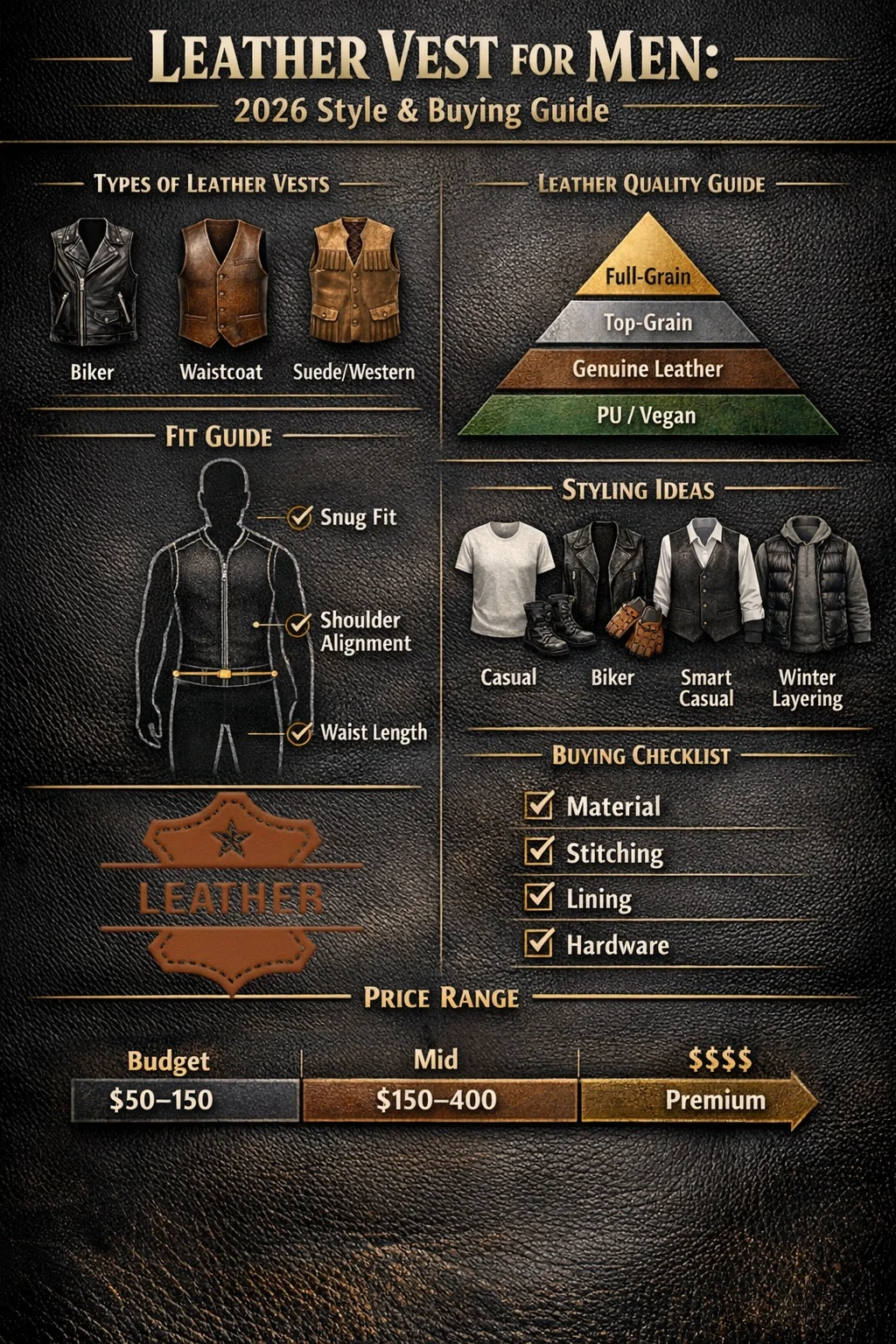
Selecting the right style is essential because every vest communicates a different message. The shape, finish, and details determine whether the vest feels biker-driven, formal, casual, Western, or winter-ready.
Biker Leather Vest
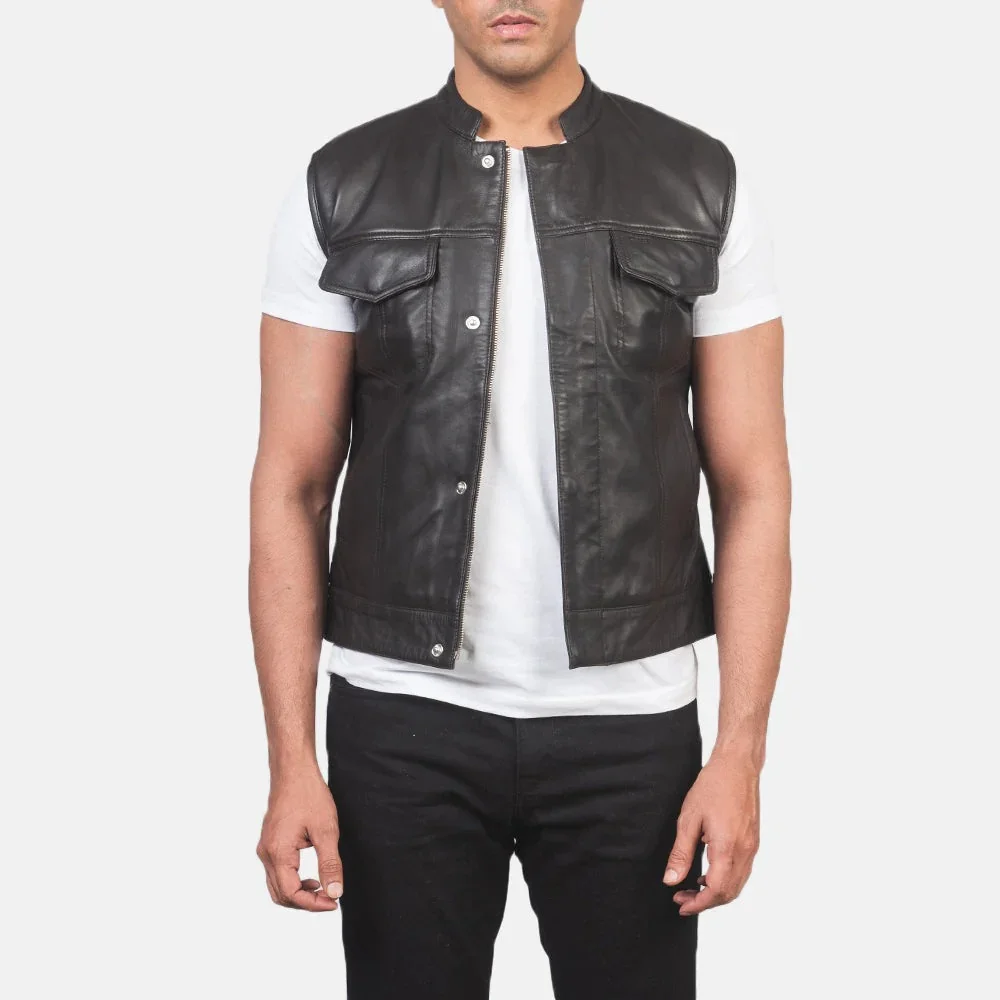
The biker leather vest is the most iconic and recognizable form. It usually features a rugged build, thick leather, strong stitching, and functional hardware such as zippers, snaps, patches, or reinforced seams. This design is meant to feel durable, bold, and unmistakably masculine.
It often pairs well with:
- Jeans
- Boots
- T-shirts
- Riding gear
- Sunglasses
- Gloves
This style is ideal for motorcycle riders and men who want a tough, street-ready aesthetic.
Best for: biker style, road wear, edgy casual outfits, and statement dressing.
Classic Waistcoat Vest
The classic waistcoat-style leather vest has a cleaner and more tailored appearance. It is less aggressive than the biker version and more refined in shape. It may resemble a formal vest but is crafted in leather for extra texture and presence.
This vest works well with:
- Button-down shirts
- Chinos
- Tailored trousers
- Loafers or polished boots
It is suitable for smart-casual dressing, contemporary layering, and understated elegance.
Best for: office-adjacent style, elevated casual wear, and refined outfits.
Western / Suede Vest
The Western leather vest often carries a vintage, frontier-inspired appeal. Suede versions are especially popular because they look softer and more textured than smooth leather. Fringe, stitching accents, and earth-toned hues are common.
This style works beautifully with:
- Denim
- Boots
- Western shirts
- Neutral tees
- Layered country-inspired looks
It feels artistic, relaxed, and fashion-conscious without being overly formal.
Best for: Casual Style, country-inspired looks, heritage fashion, and festival wear.
Puffer Leather Vest
The puffer leather vest is more contemporary and designed for colder climates. It combines leather with insulated padding or quilted construction, making it both stylish and practical. This is a good choice for winter layering when you need warmth but do not want to wear a heavy coat.
It pairs well with:
- Hoodies
- Sweaters
- Thermal tops
- Winter boots
- Cargo pants
- Denim
Best for: winter layering, urban fashion, and functional streetwear.
Minimal Leather Vest
Minimal leather vests are sleek, clean, and stripped of unnecessary embellishment. They often use smooth panels, hidden fasteners, and slim silhouettes. This style suits men who prefer modern wardrobe essentials over decorative fashion.
It is best worn with:
- Monochrome outfits
- Slim-fit shirts
- Simple jeans
- Clean sneakers
- Minimalist boots
Best for: modern men’s fashion, capsule wardrobes, and clean styling.
Distressed or Vintage Leather Vest
This type focuses on aged texture, weathered tones, and a lived-in appearance. It is popular among men who appreciate old-school character. The distressed look adds personality and often makes the vest appear more authentic and grounded.
Best for: retro outfits, rock-inspired looks, and vintage styling.
Leather Types Used in Vests
The leather you choose is one of the most important determinants of the vest’s durability, comfort, feel, and price. In many cases, the difference between an average vest and an exceptional one comes down to the hide selection and tanning quality.
Full-Grain Leather
Full-grain leather is generally considered the highest-quality option. It uses the outermost layer of the hide and retains the natural grain pattern. This means the surface is strong, breathable, and capable of developing a rich patina over time.
Advantages:
- Exceptional durability
- Natural aging character
- Premium appearance
- Long lifespan
- Excellent structure
Best for: investment pieces and premium wardrobes.
Top-Grain Leather
Top-grain leather is also a high-quality material, but it is slightly more processed than full-grain leather. The surface is refined to improve smoothness and consistency.
Advantages:
- Softer feel
- More uniform finish
- Good durability
- Easier to maintain than full-grain in some cases
Best for: men who want a balance of premium look and ease of wear.
Genuine Leather
The term “genuine leather” can be misleading. It sounds premium, but in many markets it refers to a lower tier of real leather that has been heavily processed. It is still leather, but not the top-grade category many buyers assume.
Advantages:
- More affordable
- Real leather composition
- Acceptable for casual use
Limitations:
- Less durable than premium grades
- Often less breathable
- May not age as beautifully
Suede
Suede is made from the underside of animal hide, giving it a soft, velvety finish. It looks luxurious and stylish, though it typically requires more delicate care.
Advantages:
- Soft texture
- Distinctive appearance
- Stylish and versatile
Limitations:
- More sensitive to water and stains
- Needs careful maintenance
PU / Vegan Leather
PU leather and vegan leather are synthetic alternatives that mimic the appearance of real leather. These materials are useful for budget shoppers or those who prefer non-animal products.
Advantages:
- Lower cost
- Easy availability
- Animal-free alternative
- Often lightweight
Limitations:
- Lower durability
- Less breathable
- Does not develop natural patina
- Can crack or peel over time
Leather Quality Comparison Table
| Leather Type | Quality Level | Durability | Feel | Price Range |
| Full-Grain Leather | Premium | Very High | Natural, rugged | $$$$ |
| Top-Grain Leather | High | High | Smooth | $$$ |
| Genuine Leather | Medium | Moderate | Processed | $$ |
| PU / Vegan Leather | Low | Low | مصنوعی | $ |
Expert Insight
If you are buying a vest for long-term wear, full-grain leather is usually the best investment. It is more expensive upfront, but the aging process is part of its charm. Over time, the material becomes more personal, more expressive, and often more attractive. That is why premium leather is often seen not just as clothing, but as a wearable asset.
How Leather Vests Are Made
Understanding how a leather vest is manufactured gives you a clearer sense of quality. A well-made vest is not defined only by the type of leather. It also depends on how carefully the hide was selected, cut, stitched, and finished.
Raw Hide Selection
Everything starts with sourcing the hide. High-grade leather vests typically use hides from cows, goats, or sheep. Better sourcing means fewer flaws, better grain structure, and more reliable longevity.
Tanning Process
The tanning stage stabilizes the hide so it can be turned into durable leather. Two major methods are common:
- Chrome tanning: faster, more modern, widely used, and often produces a softer finish
- Vegetable tanning: more traditional, eco-conscious, and often associated with premium craftsmanship
Each tanning method affects color, texture, Flexibility, and aging behavior.
Cutting and Pattern Making
After tanning, the hide is cut into vest patterns. This stage is critical because precision determines fit, symmetry, and waste reduction. Skilled cutting ensures the vest maintains structural balance and sits properly on the body.
Stitching and Assembly
Once the pieces are cut, they are stitched together. Quality vests usually feature:
- Even seams
- Reinforced stress points
- Durable thread
- Clean interior finishing
- Strong edging
Double stitching is a good sign because it improves durability and helps the vest hold its shape over time.
Finishing
This is where the vest gets its final personality. The finishing stage may include:
- Dyeing
- Polishing
- Waxing
- Softening
- Adding zippers, buttons, snaps, or lining
- Branding details
- Pocket installation
A strong finish improves appearance and extends wearability. Poor finishing, on the other hand, can make even good leather look cheap.
How to Identify Original vs Fake Leather
Being able to tell real leather from imitation material is essential, especially if you are shopping online or purchasing from unfamiliar sellers. Many products are marketed in ways that sound premium but are not always transparent.
Signs of Real Leather
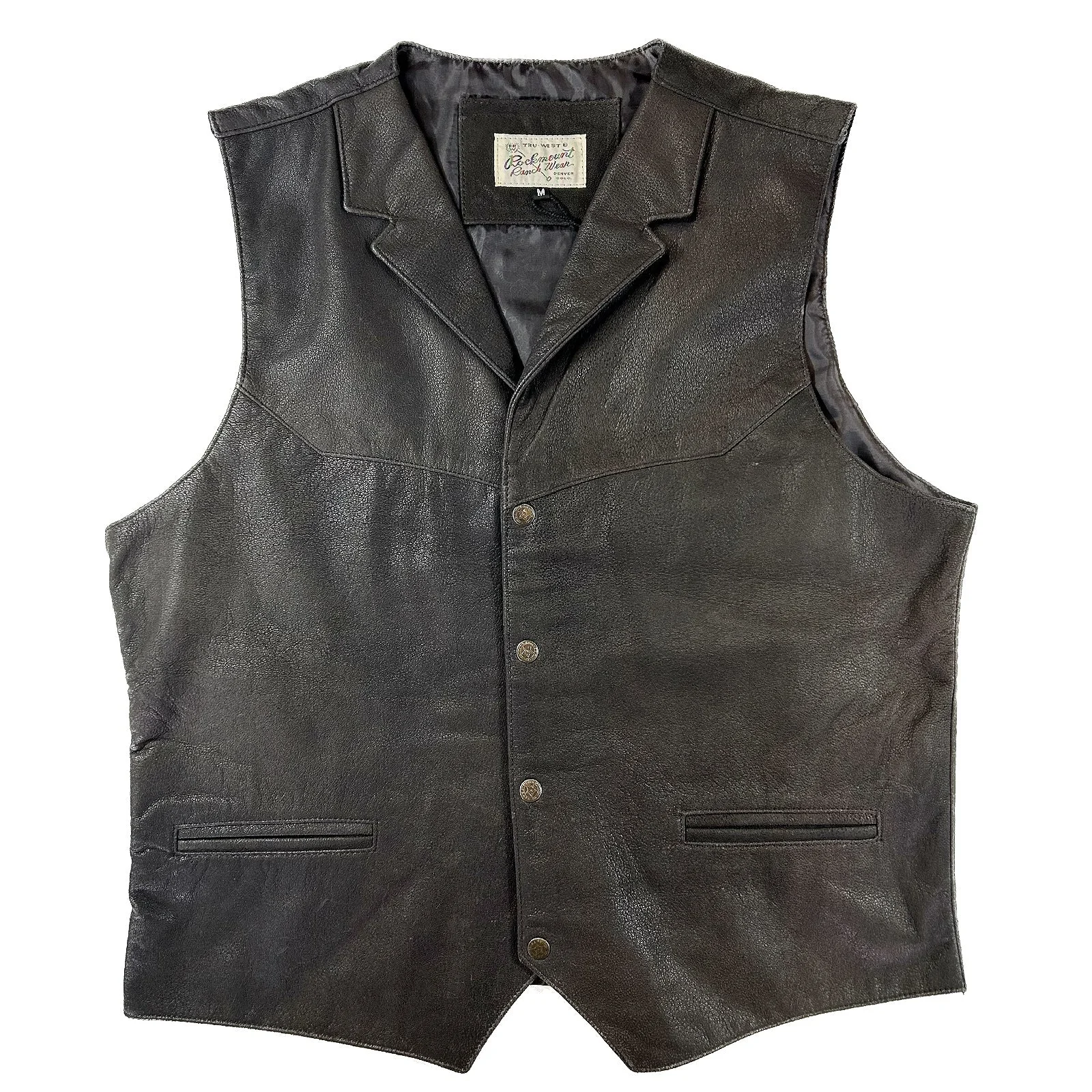
Real leather usually shows some variation in grain. It is not perfectly uniform because it comes from natural hide. You may notice small imperfections, subtle tonal differences, and a richer, more organic smell.
Other indicators include:
- Natural grain texture
- Slight irregularities
- Warm, rich aroma
- Soft but firm feel
- Gradual aging and patina development
- Slight moisture absorption
Signs of Fake Leather
Synthetic leather often looks too perfect. The pattern may repeat evenly across the surface, which is a clue that it was machine-made rather than naturally produced. It may also smell plasticky and feel less breathable.
Common signs of imitation material include:
- Uniform surface pattern
- Plastic-like smell
- No natural aging
- Surface peeling over time
- Lack of depth in texture
- Unnaturally glossy finish
Practical Buying Tip
The label alone is not enough. Terms such as “genuine leather” and “premium leather” can be used loosely in marketing. Always inspect the texture, construction, stitching, and product description carefully. If possible, ask for close-up photos or verify the material breakdown before buying.
Leather Vest Buying Guide
This is the most critical part of the process because fit, leather quality, and construction determine whether your vest becomes a favorite wardrobe staple or an unused purchase.
Fit Guide
Fit is the foundation of a good leather vest. A vest should feel close to the body without becoming restrictive. It should contour the torso without pulling awkwardly across the chest or back.
A good fit usually means:
- Snug but not tight
- Shoulder seams aligned properly
- Armholes that allow movement without gaping
- Length that sits around the waist or slightly below
- Room for a light layer underneath
If the vest is too loose, it loses structure and can look sloppy. If it is too tight, it becomes uncomfortable and limits layering. The goal is controlled ease.
Material Selection
The material should match your intended use.
- Cowhide: best for rugged durability and biker styling
- Lambskin: best for softness, luxury, and smooth drape
- Suede: best for casual, vintage, and textured outfits
- PU / vegan leather: best for budget-friendly, lower-maintenance purchases
Think about where and how often you will wear the vest. Daily wear demands a tougher material. Occasional fashion wear may allow more flexibility in material choice.
Stitching Quality
Stitching tells you a lot about craftsmanship. High-quality vests show even, consistent stitching with no visible gaps or loose threads. Reinforced areas around the shoulders, sides, and closures are especially important because these zones take more strain.
What to look for:
- Straight seam lines
- Tight stitching
- Secure thread ends
- No puckering
- No unraveling edges
Inner Lining
The lining affects comfort, breathability, and seasonal performance.
- Cotton lining: breathable and comfortable for regular wear
- Satin lining: smooth, refined, and often used in dressier vests
- Thermal lining: warmer and suitable for winter
- Mesh or blended lining: useful for lightweight comfort
A good lining helps the vest slide on easily and prevents irritation against shirts or bare skin.
Hardware Quality
Zippers, snaps, buttons, buckles, and rivets matter more than many buyers realize. Weak hardware can ruin an otherwise well-made vest. Rust-resistant, sturdy, and smoothly functioning hardware is a sign of a higher-quality product.
Check for:
- Smooth zipper movement
- Strong snap closure
- Secure button attachment
- Consistent finishing on metal parts
- No sharp edges or poor alignment
Purpose and Lifestyle Match
Before buying, ask yourself how you plan to wear the vest.
- For riding: choose durability and protection
- For fashion: focus on cut and silhouette
- For layering: prioritize fit and comfort
- For winter wear, choose lining and insulation
- For minimal outfits: select a clean, understated design
A great vest should fit both your body and your routine.
How to Style a Leather Vest for Men
Styling is where a leather vest becomes truly useful. Because it is versatile, it can shift from rugged to refined depending on what you pair it with. In 2026, the strongest styling trend is intentional layering with clean proportions.
Casual Look
A leather vest with a T-shirt and jeans is a classic combination that never loses appeal. It is simple, direct, and easy to wear. You can use white, black, grey, or muted earth tones for the base layer.
Example combination:
- Leather vest
- Plain T-shirt
- Slim or straight jeans
- Sneakers or boots
This look works because it is balanced. The vest adds structure while the tee keeps it relaxed.
Biker Style
For a stronger biker identity, pair the vest with boots, gloves, darker denim, and perhaps a graphic tee or rugged shirt. The goal is to create a bold and purposeful silhouette.
Example combination:
- Black leather vest
- Black or dark T-shirt
- Dark jeans
- Leather boots
- Sunglasses
This outfit projects confidence and edge without needing excessive accessories.
Smart Casual Look
Leather vests can also work in polished settings when styled correctly. A tailored leather vest over a button-down shirt and chinos creates a sharp, Contemporary Profile.
Example combination:
- Smooth leather vest
- White or light blue shirt
- Chinos or tailored trousers
- Chelsea boots or loafers
This approach is especially good for dinners, social events, and style-forward gatherings.
Winter Layering
A leather vest can be layered over sweaters, knitwear, or hoodies during cooler seasons. This makes it practical while still visually compelling.
Example combination:
- Leather vest
- Hoodie or knit sweater
- Denim or cargo pants
- Boots or winter sneakers
The key is proportion. The inner layer should fit well so the overall outfit remains clean.
Streetwear Direction
Modern streetwear styling often favors contrast. A leather vest over a hoodie, paired with wide-leg jeans or cargo pants, can create a very current look.
Style cues:
- Oversized base layer
- Structured vest
- Balanced bottoms
- Minimal accessories
- Strong footwear
Minimalist Direction
For a cleaner, modern aesthetic, choose a vest with fewer details and pair it with monochrome basics. This makes the vest look more architectural and less costume-like.
Best approach:
- Black, brown, or charcoal vest
- Solid-color tee or shirt
- Neutral trousers
- Clean sneakers or boots
Top Uses of Leather Vests
The leather vest is not just a style piece. It also serves multiple lifestyle and wardrobe purposes.
- Motorcycle riding
- Casual everyday wear
- Concerts and festivals
- Streetwear outfits
- Winter layering
- Retro and vintage looks
- Smart-casual occasions
- Fashion photography and content creation
Its flexibility is one of the main reasons it remains relevant. A single vest can adapt to different personalities and settings.
Care & Maintenance Tips
A leather vest is an investment, and like any quality item, it performs best when cared for properly. The better you maintain it, the longer it retains its shape, finish, and visual appeal.
Essential Care Tips
- Apply leather conditioner every 3–6 months
- Store the vest in a cool, dry space
- Avoid prolonged exposure to water
- Wipe it with a soft cloth after use
- Use padded hangers to protect the shoulders
- Keep it away from direct sunlight for long periods
- Let it breathe instead of sealing it in plastic for months
Extra Maintenance Advice
If your vest gets wet, allow it to air dry naturally. Do not use harsh heat sources such as direct hair dryers or radiators, because rapid drying can damage the material. For suede vests, use a suede brush and specialized cleaner rather than general-purpose leather products.
With proper care, a quality leather vest can remain wearable for many years and may even look better with age.
Leather Vest Price Range Worldwide
Pricing varies based on leather quality, construction, brand positioning, and country of manufacture. While the market is broad, there are some general price tiers you can use to guide expectations.
| Category | Price (USD) | Quality |
| Budget | $50–$150 | Low |
| Mid-Range | $150–$400 | Good |
| Premium | $400+ | High-end |
What Drives the Price?
Several factors influence how much you pay:
- Leather type
- Stitching quality
- Lining material
- Brand reputation
- Country of manufacture
- Hardware quality
- Level of craftsmanship
- Customization or detailing
A premium vest is not just expensive because of the material. It is also expensive because of the care, labor, and precision involved in making it.
Top Countries & Brands for Leather Vests
Where a vest is made can influence everything from leather quality to design language. Some regions are especially well known for leather craftsmanship.
Top Countries
Italy
Known for luxury craftsmanship, premium finishing, and refined tailoring. Italian leather products often emphasize elegance and tactile quality.
USA
Strongly associated with biker culture, heritage brands, and rugged outerwear. American-made pieces often lean into durability and masculine styling.
Pakistan
Recognized for affordable quality, skilled leather production, and strong export capacity. It is a major sourcing hub for leather goods.
UK
Associated with heritage brands, mod-inspired styling, and classic menswear silhouettes.
Popular Brands
- The Jacket Maker
- Schott NYC
- AllSaints
- Wilsons Leather
These brands are often mentioned because they represent different ends of the style spectrum, from biker ruggedness to modern minimalism.
Common Mistakes to Avoid
Even a strong buyer can make avoidable errors when shopping for a leather vest. Knowing the mistakes ahead of time can save money and frustration.
Avoid These Errors
- Buying based only on the phrase “genuine leather.”
- Ignoring fit and body proportions
- Choosing a trendy design that does not match your wardrobe
- Overlooking stitching quality
- Forgetting to inspect the lining
- Prioritizing price over construction
- Selecting a style that does not match your lifestyle
A leather vest should be both wearable and sustainable in your wardrobe. The best purchase is not the flashiest one, but the one you will actually use again and again.
Pros & Cons
No garment is perfect for every situation. A balanced view helps you make a smarter decision.
Pros
- Durable and long-lasting
- Timeless in appearance
- Versatile across many outfits
- Lighter than a full leather jacket
- Easy to layer in multiple seasons
- Strong visual impact
Cons
- Can be expensive
- Requires maintenance
- Not ideal for extreme cold by itself
- Low-grade versions can wear out quickly
The positives are compelling, especially if you want a piece that can serve as both a style signature and a practical layering option.
Are Leather Vests Still in Style in 2026?
Yes, absolutely. Leather vests are not only still in style in 2026, but they are also benefiting from several major fashion movements that favor them.
Why They Remain Relevant
- Minimalist dressing is rising
- Vintage aesthetics are back in demand
- Men want layered looks without heavy bulk
- Sustainable buying encourages long-lasting garments
- Rugged textures are popular in modern streetwear
- Personal styling is becoming more expressive
A leather vest fits these trends naturally. It is one of those rare garments that feels classic and current at the same time.
FAQs
A: It should fit snugly without restricting movement, allowing light layering underneath.
A: Yes, it is durable, stylish, and versatile—making it a long-term investment.
A: Yes, lightweight leather vests are great for mild weather and layering.
A: Full-grain leather is the best for durability and premium quality.
A: With proper care, a high-quality vest can last 10–20 years or more.
Conclusion
A leather vest for men remains one of the most practical and stylish wardrobe investments you can make in 2026. It is strong enough to feel masculine, refined enough to feel modern, and flexible enough to work across Multiple Style Identities.
Whether your taste leans toward biker fashion, minimal layering, Western character, or smart-casual sophistication, there is a leather vest style that can support your wardrobe goals. The key is to focus on quality, fit, and longevity rather than chasing the cheapest option.
The best leather vest is the one that feels natural on your body, complements your lifestyle, and improves with age. When selected wisely, it becomes more than a clothing item. It becomes a signature piece.