Introduction
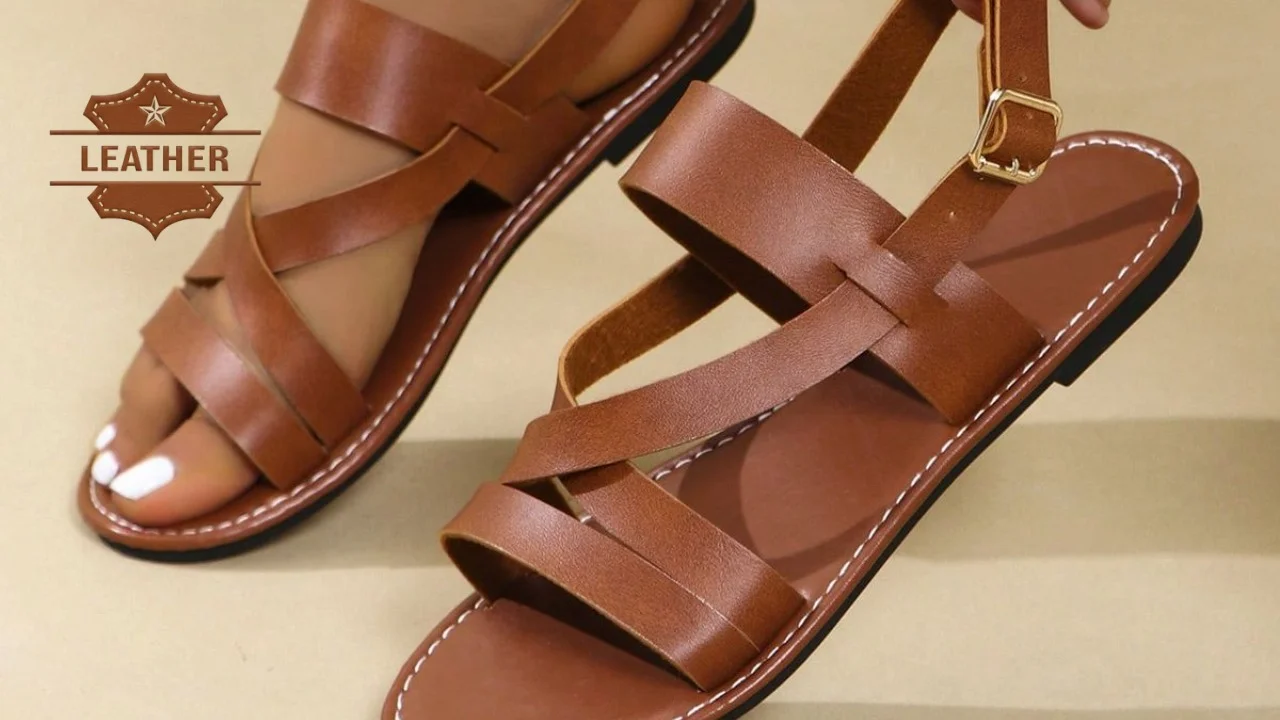
Leather Sandals For Women are not just a warm-weather style choice. They are one of the few footwear categories where fashion, comfort, and durability can genuinely meet in one pair. The right pair can take you from daily errands to travel days, office dressing, dinner plans, and even long walks without looking out of place. The wrong pair, however, can leave you with sore feet, sweaty straps, unstable soles, and a purchase you regret after a few wears.
That is why buying sandals based solely on appearance is a mistake.
In 2026, shoppers care more than ever about comfort features, arch support, wide-fit options, leather quality, and long-term value. Current sandal coverage keeps returning to the same core themes: cushioned footbeds, secure straps, breathable materials, and designs that work for real life, not just product photos. Premium brands are also leaning into handcrafted leather, while comfort-led brands are highlighting orthopedic-style support and all-day wearability.
This guide is built to solve the full buying journey. You will learn what leather sandals are, which leather types matter, how they are made, how to spot fake material, what to check before buying, how prices vary worldwide, and which styles are rising in 2026. By the end, you will know exactly how to choose a pair that looks beautiful and feels even better.
What Are Leather Sandals for Women?
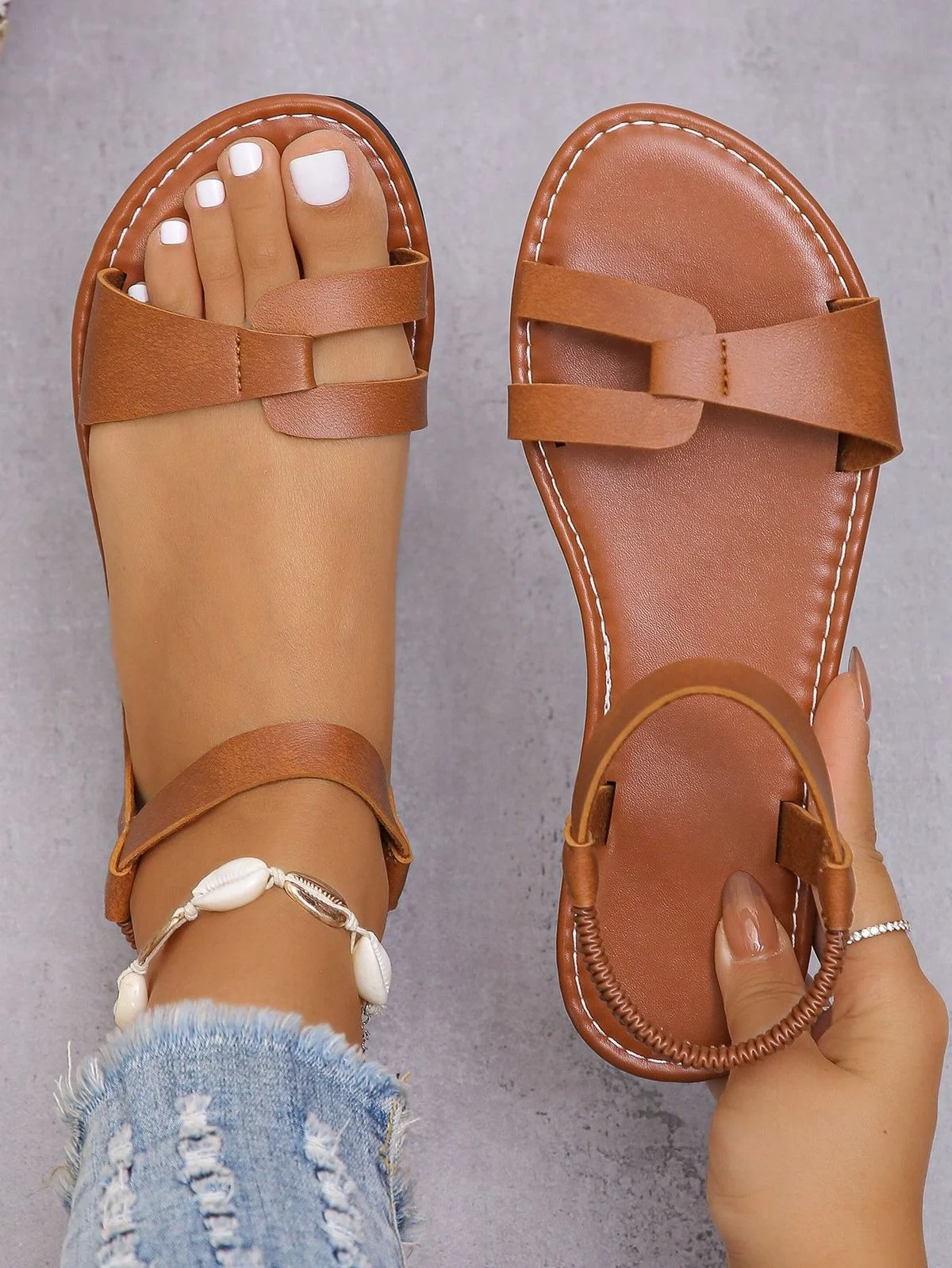
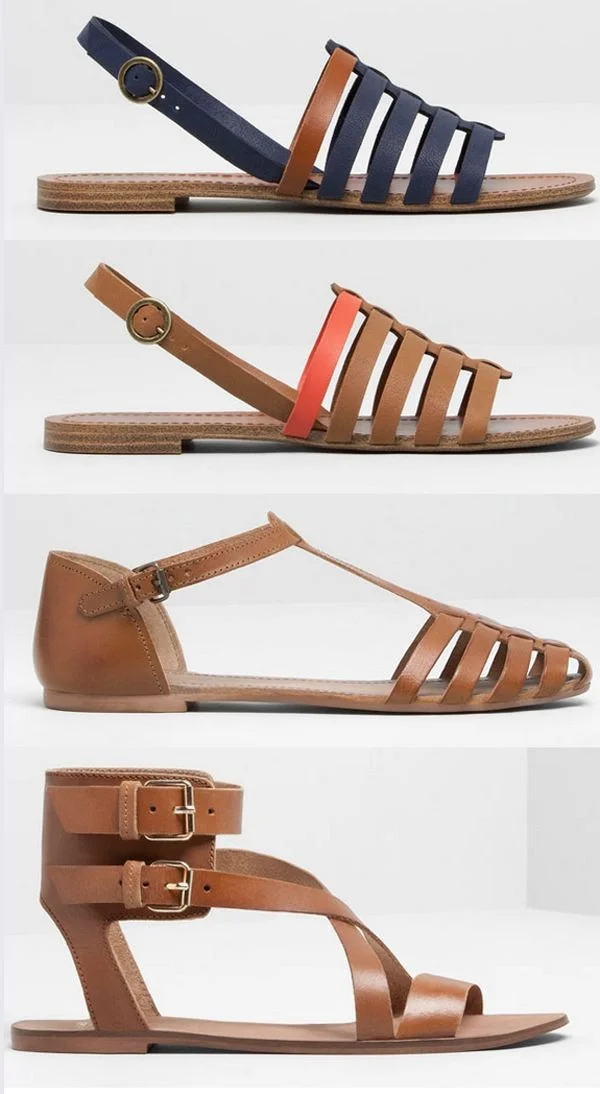
Leather sandals for women are open-toed footwear styles made with leather in the upper, lining, straps, or footbed. Depending on the design, they may be flat, heeled, strappy, slide-style, wedge-style, fisherman-style, or minimalist. In premium models, the leather is often combined with supportive midsoles, rubber outsoles, or comfort footbeds to improve wearability.
At the material level, leather is made through tanning, a process that stabilizes hide so it becomes durable and usable in products. Britannica describes tanning as part of the commercial leather-making process, and the Leather Working Group notes that modern leather supply chains increasingly focus on standards, certification, and traceability.
Why this matters
If you understand the construction, you stop treating sandals as “just sandals” and start evaluating them like a real footwear investment.
History of Leather Sandals
Leather sandals are one of the oldest shoe forms in human history. Their roots go back to early civilizations that used available hides and tanning methods to create protective footwear suited to warm climates. Britannica notes that tanning practices developed early and that vegetable tanning has ancient origins, with leather-making becoming a long-established industry across regions.
What changed over time was not the basic idea, but the design language. Today’s leather sandals blend heritage craftsmanship with modern comfort engineering. That is why you now see everything from elegant Italian-crafted pairs to supportive walkable designs with arch support and cushioned soles.
Why Leather Sandals Matter in 2026
In 2026, the sandal market is being shaped by two big consumer demands: style and comfort. Fashion coverage shows strong interest in designer thong sandals, fisherman sandals, crossover straps, and elevated minimalist styles. At the same time, comfort editors keep recommending sandals with supportive footbeds, roomy fits, and walking-friendly construction.
That makes leather sandals especially relevant because leather can deliver both a polished look and a premium feel. A good leather sandal can age well, soften with wear, and stay useful longer than many synthetic options when properly cared for. Horween’s care guidance also reflects a wider leather truth: quality leather often improves with thoughtful wear and maintenance.
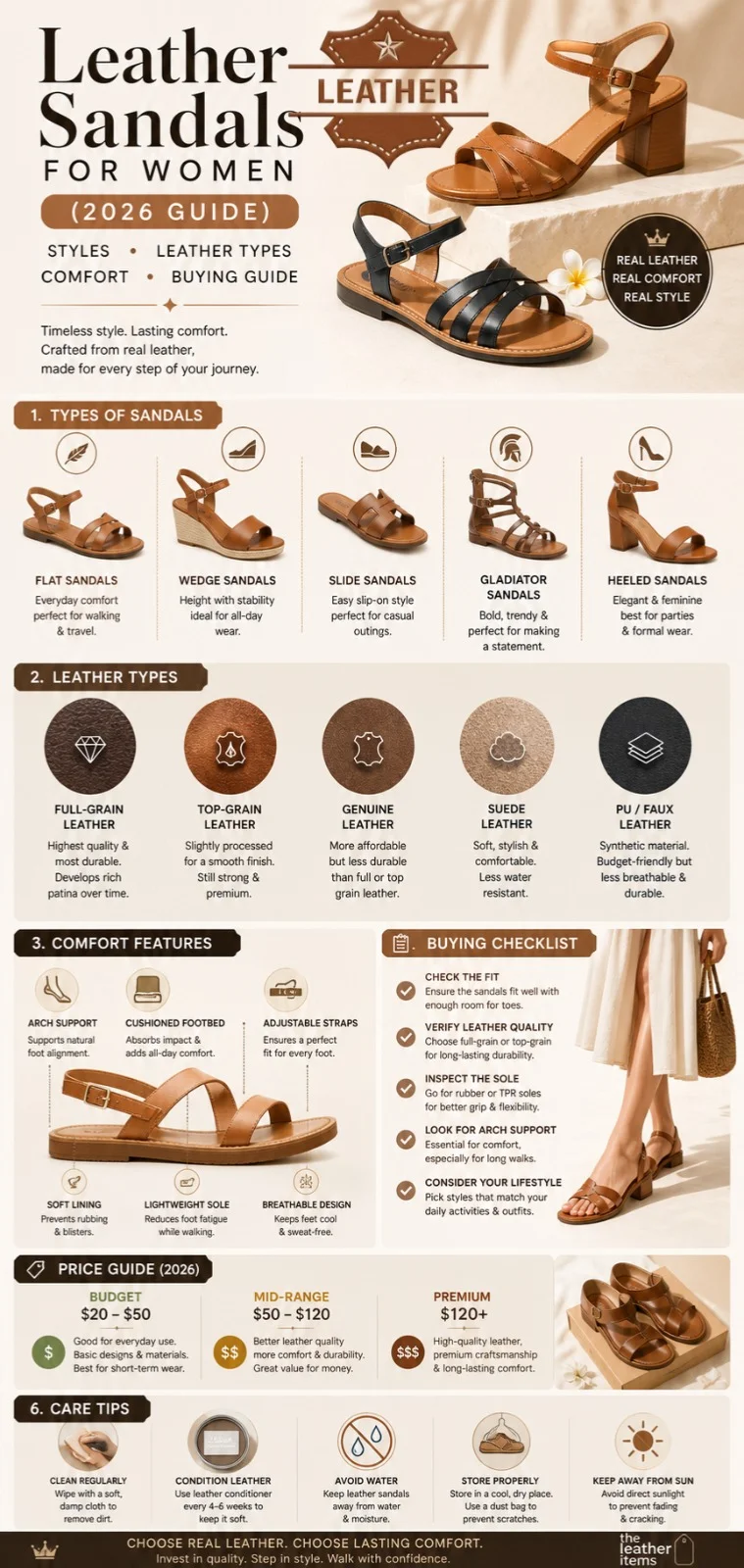
Types of Leather Sandals for Women
| Style | Best For | Main Benefit | Watch Out For |
| Flat leather sandals | Daily wear, travel, casual outfits | Easy comfort and versatility | Thin soles with no support |
| Heeled leather sandals | Office, events, dinners | More polished and dressy | High instability, narrow straps |
| Slide leather sandals | Quick wear, relaxed styling | Easy on/off convenience | Loose fit if straps are too wide |
| Fisherman sandals | Trend-led everyday outfits | Secure coverage and style | Can feel heavy if poorly made |
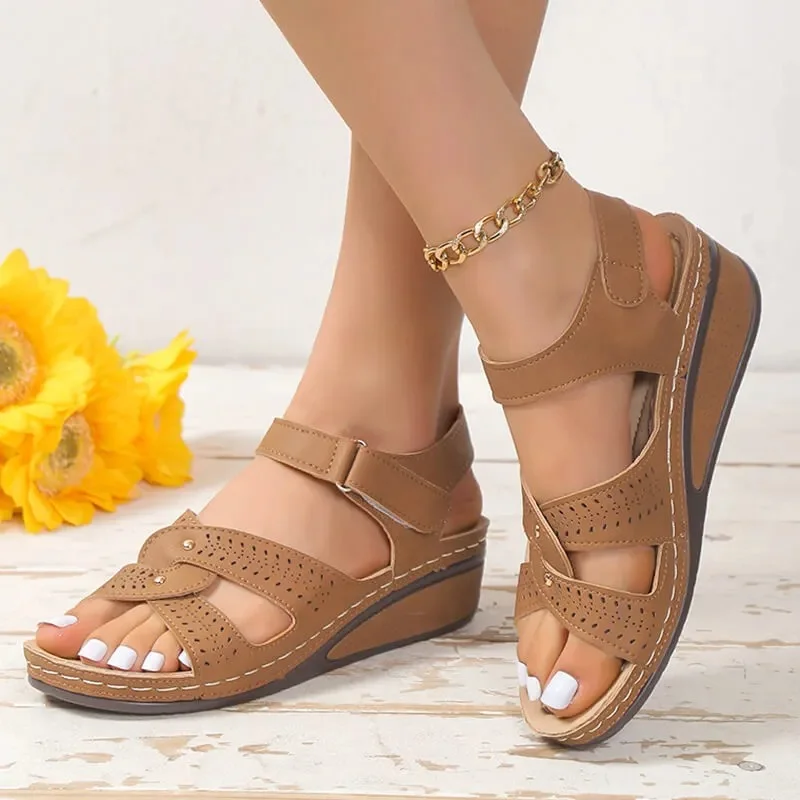
| Wedge leather sandals | Long wear with height | Better balance than stilettos | Bulky look if oversized |
| Gladiator sandals | Fashion-forward looks | Statement styling | Can feel restrictive |
| Orthopedic-style sandals | Foot pain, flat feet, long walks | Support and stability | Less fashion flexibility |
Current retail and editorial coverage reflects this mix of styles, with flat sandals, wedges, block heels, fisherman styles, and slide silhouettes appearing across fashion and comfort-led collections.
Mini summary
Choose the style based on your real life, not your wish list. The most beautiful pair is useless if you cannot wear it comfortably for more than an hour.
Leather Types Used in Women’s Sandals
Understanding leather quality is one of the fastest ways to avoid bad buys.
| Leather Type | What It Means | Strengths | Best Use |
| Full-grain leather | Keeps the full grain surface | Most durable, develops rich patina | Premium sandals, long-term wear |
| Top-grain leather | Slightly corrected surface | Smooth finish, still premium | Dress sandals, polished styles |
| Genuine Leather | Broad market term for real leather | Often more affordable | Budget-friendly footwear |
| Suede | Soft, napped leather surface | Luxurious feel, stylish texture | Fashion sandals |
| Nubuck | Buffed leather with velvety finish | Refined look, softer touch | Premium casual sandals |
| PU / faux leather | Synthetic leather alternative | Lower cost, easier to mass-produce | Temporary or budget fashion |
The Leather Working Group defines full grain as leather that keeps its entire grain surface, while nubuck is buffed for a velvety effect with the original grain pattern still visible, and suede is leather finished to create a velvet-like nap.
Buying takeaway
For long-term value, full-grain and top-grain usually make the strongest cases. Suede and nubuck are attractive but need more care. PU can work for budget fashion, but it is usually not the best choice if durability is your priority. That last point is practical buying advice rather than a fixed rule, because the final result depends on construction quality and use patterns.
Manufacturing Process: How Leather Sandals Are Made
Leather sandal production usually moves through a few core stages. Britannica describes leather making as involving preparation for tanning, tanning itself, and then processing the tanned leather into usable material.
Step-by-step process
- Hide selection
Better hides produce better leather. Grain quality matters. - Preservation and preparation
Hides are cleaned and prepared before tanning. - Tanning
This is the key transformation stage that stabilizes the material. Chrome tanning and vegetable tanning are both widely used in leather production. - Splitting and finishing
The leather may be buffed, dyed, softened, or coated, depending on the style. - Cutting
Upper parts, straps, linings, and trim are cut from selected leather sections. - Stitching and assembly
The upper is attached to the sole, often with glue, stitching, or both. - Insole and outsole fitting
Comfort features such as foam, cork, rubber, or molded footbeds are added. - Final inspection
Stitch quality, glue lines, symmetry, and strap tension should be checked before packing.
Mini summary
Good leather sandals are not just about leather. The construction, footbed, and outsole often matter just as much as the upper material.
How to Identify Original vs Fake Leather
Here is the simple truth: most buyers look at the surface and guess. That is risky.
Practical checklist
- Check the grain pattern
Real leather usually has natural variation. Artificial surfaces often look too perfect. - Read the product description carefully
Look for specific leather naming such as full-grain, top-grain, nubuck, or suede. LWG’s definitions are useful because they separate these categories clearly. - Examine the edge finishing
Cheap synthetic edges can look layered or plastic-like. - Feel the flexibility
Real leather tends to soften and move more naturally. - Look at the price
Extremely low pricing for “premium leather” is a warning sign, especially when the item also promises multiple luxury features. - Ask about the lining and sole
A sandal can have a real leather upper but a weak synthetic build underneath.
Important note
The word “genuine” simply means authentic in standard English usage, but in shopping language, it does not automatically mean top-grade leather. That is why smart buyers ask for the exact leather type instead of stopping at the label.
What to Check Before You Buy
This is the section most competitor pages skip.
Fit and toe room
Your toes should not spill over the edge. If the sandal is open-toe, your foot still needs a stable base.
Arch support
Health and comfort coverage repeatedly shows that sandals with contoured footbeds, stable midsoles, and support features are better for flat feet, plantar fasciitis, and long walking days.
Strap adjustability
Adjustable straps matter because feet swell during the day. Supportive brands and podiatrist-led footwear collections consistently highlight this feature.
Sole quality
A rubber or well-engineered outsole usually gives better grip than a hard, slippery base. Current comfort-focused collections often highlight flexible soles and shock absorption.
Breathability
Leather helps, but the sandal still needs a design that lets air move around the foot. This is one reason sandal shopping often overlaps with warm-weather comfort searches.
Intended use
A pair of travel shoes should not be judged by the same standard as a dress sandal. Match the shoe to the job.
Best Uses of Leather Sandals
Leather sandals are versatile enough to serve many wardrobes.
- Daily casual wear
- Travel and sightseeing
- Office-smart outfits
- Vacation looks
- Weekend errands
- Dinner and evening dressing
- Warm-weather capsule wardrobes
Retail pages and fashion guides show that consumers use leather sandals for both comfort and style, from beach Walks to Evening Wear.
Price Range Worldwide
| Tier | Typical Price Band | What You Usually Get |
| Budget | Under $50 / low-cost local pricing | Basic leather-look or entry leather designs |
| Mid-range | About $50–$150 | Better comfort, real leather, more balanced construction |
| Premium | $150+ | Higher craftsmanship, better finishing, fashion branding |
Current market examples show this spread clearly: Oceedee lists sandals around ₹1,699 to ₹9,999, Quince has restocked leather sandals at $72, Frankie4 positions comfort-led sandals around $134, and Scarosso sits in the premium handcrafted segment.
Snippet-ready answer
Leather sandal prices vary widely by leather grade, brand, craftsmanship, and comfort engineering. In 2026, a realistic market range is budget, mid-range, and premium, with comfort and designer pairs reaching well above basic retail levels.
Best Brands and Market Leaders to Know
Rather than pretending one brand owns the category, it is smarter to group the market by strength.
Comfort-first brands
Vionic and Frankie4 are strong references when support matters most. Their current product pages emphasize arch support, supportive sandals for wide feet, and podiatrist-designed footbeds.
Fashion-led brands
Scarosso represents the handcrafted Italian luxury side of the category, while current fashion trend coverage also spotlights elevated leather sandals and designer-style silhouettes.
Value and marketplace retail
Daraz, Amazon, and other marketplace pages show how broad the search demand is, especially in budget and mass-market tiers.
Budget-Friendly Options vs Premium Options
Budget-friendly
Budget sandals are best when you need short-term wear, a trend piece, or a backup pair. Be extra careful about stitching, sole grip, and strap quality.
Premium
Premium pairs make more sense when you want:
- better leather,
- better fit,
- longer life,
- and better comfort over time.
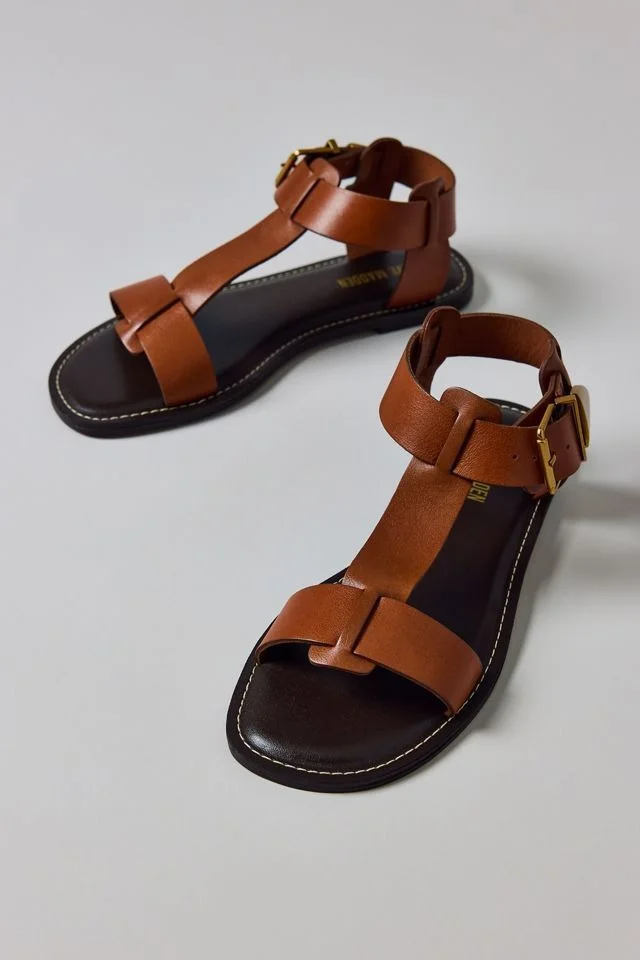
Scarosso and similar premium labels show that high-end leather sandals are sold as both fashion and craftsmanship products, not just summer basics.
Pros and Cons
Pros
- Better look and feel
- Can soften with wear
- Often more durable than cheap synthetics
- Usually more breathable than plastic-feel materials
Cons
- Can cost more
- Needs care
- Some leather types mark easily
- Poor construction still causes pain even when the leather is good
Common Mistakes to Avoid
- Buying only by photos
Beautiful styling can hide weak soles or a poor fit. - Ignoring foot shape
Wide feet, bunions, flat feet, and high arches need different support profiles. - Choosing fashion over stability
Very thin heels or unsupportive soles can turn a pretty sandal into a painful one. - Not checking return policies
Fit issues are common with sandals, especially online. - Assuming all leather is the same
Full-grain, top-grain, suede, and nubuck behave differently.
Care, Cleaning, and Maintenance Tips
Proper leather care is not complicated, but it must be consistent.
Basic care routine
- wipe with a soft, slightly damp cloth,
- let the sandals dry away from direct heat,
- Brush or Clean Gently after dusty wear,
- condition the leather occasionally,
- store in a dry place,
- Keep them out of prolonged water exposure.
Horween’s care guidance reinforces the value of simple maintenance: clean gently, allow the leather to dry naturally, brush, and avoid harsh heat.
Care by leather type
- Full-grain: easiest to age beautifully with proper care
- Suede/nubuck: more delicate, needs extra caution
- Finished or coated leather: often easier to wipe clean
- PU/faux: easier to maintain, but less likely to age like real leather
Mini summary
A well-made leather sandal can last much longer than a cheap pair, but only if you treat it like a real material and not disposable fashion.
Expert Tips Most Buyers Ignore
The footbed matters more than the upper
Many people focus on the visible leather and ignore the part under the foot. That is a mistake.
A slightly roomier fit is often better for daily wear
Feet swell during the day, especially in warm weather.
Wide feet need structure, not just width
A wide sandal with no support can still feel unstable. Supportive brands repeatedly emphasize arch support and secure straps for wide-foot comfort.
Trend styles can still be practical
The rise of fisherman sandals, thong sandals, and minimalist leather slides shows that fashionable styles can also be wearable when built properly.
Traceability is becoming more important
Leather Working Group now places strong emphasis on standards, certification, and supply-chain transparency, which is increasingly relevant to shoppers who care about responsible sourcing.
Future Trends in the Leather Sandal Industry
The leather sandal market in 2026 is moving toward a few clear directions.
Comfort-led design
More brands are making sandals with better arch support, cushioned insoles, shock absorption, and stability features.
Fisherman, thong, and minimalist silhouettes
Current fashion coverage shows strong momentum behind fisherman sandals, elevated thong sandals, and sleek leather slip-ons.
Handcrafted premium positioning
Premium labels are increasingly selling leather sandals as long-term wardrobe investments, not seasonal throwaways. Scarosso is a good example of this editorial-luxury positioning.
Sustainability and traceability
Traceable supply chains and certification are becoming more visible. LWG’s current public materials show the industry’s push toward audits, certified suppliers, and continuous improvement.
FAQs
A: Yes, if they have a stable sole, cushioned footbed, secure straps, and enough arch support. Comfort-focused reviews repeatedly show those features matter most for long wear.
A: Real leather can soften and mold to the foot over time, which is one reason many buyers prefer it.
A: Full-grain leather is usually the strongest premium option because it keeps the full-grain surface and tends to age well. Top-grain is also a strong choice for smoother finishes.
A: For durability, breathability, and long-term feel, leather often has an advantage. Synthetic can be cheaper, but it usually does not age the same way. This is a general buying judgment based on material behavior and care expectations.
A: Look for adjustable straps, roomy toe shape, and supportive footbeds. Current comfort-focused brands specifically call out support for wide feet.
Conclusion
Leather sandals for women remain one of the smartest footwear investments in 2026 because they sit at the intersection of style, comfort, and Durability. The best pairs do more than look elegant. They support the foot, fit properly, use the right leather, and last long enough to justify the purchase. Current market and editorial coverage make the same point again and again: the winners are the sandals that combine good materials, comfortable construction, and practical wearability.
For theleatheritems.com, this topic is a strong pillar opportunity because the current search results are still dominated by product pages and thin category pages. A deeper guide like this can win on intent, trust, and topical coverage.
Related Leather Products:
Leather Wallet Guide · Leather Jackets Buying Guide · How to Clean Leather Bags · Best Leather Belts for Men · Full Grain vs Genuine Leather
Trusted external sources to cite on the page:
Leather Working Group, Britannica, Horween Leather, Health, Clarks, Vionic, Frankie4, Scarosso, ELLE, Who What Wear.
Add this article to the site, link it from related leather guides, and keep the internal links tight. That is how the page builds topical authority instead of standing alone.
You do not have enough Humanizer words left. Upgrade your Surfer plan.