Introduction
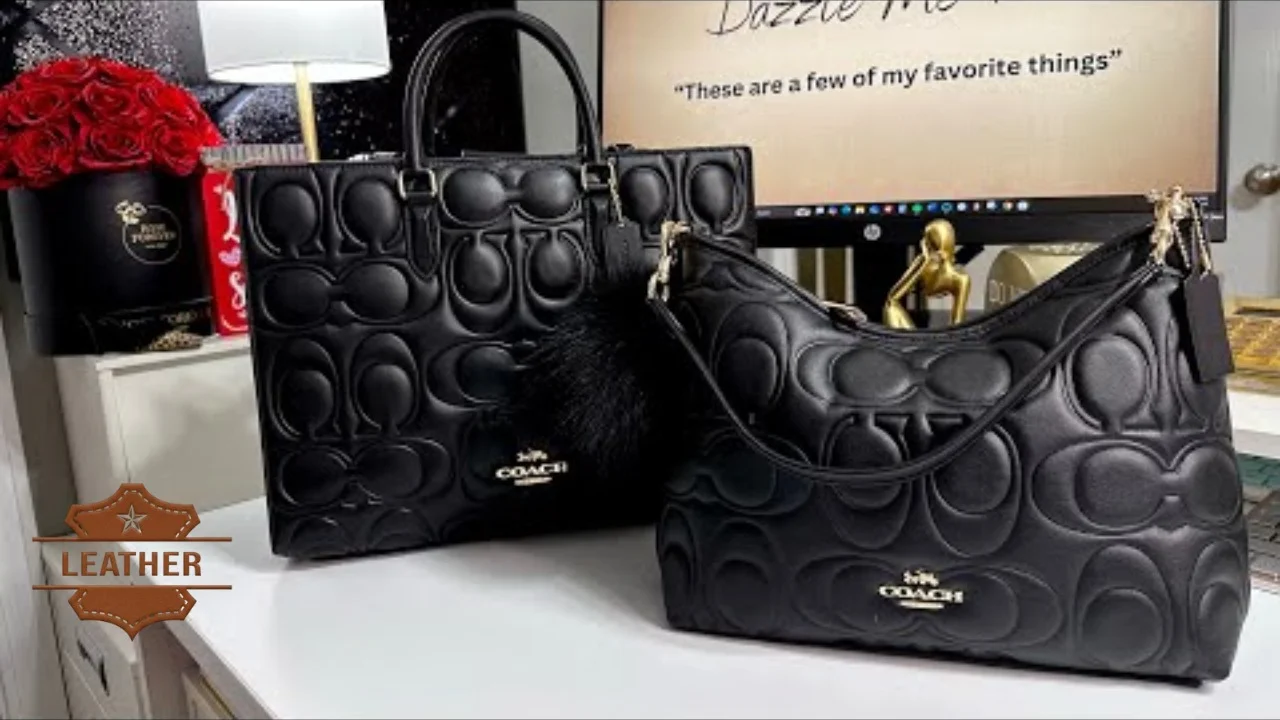
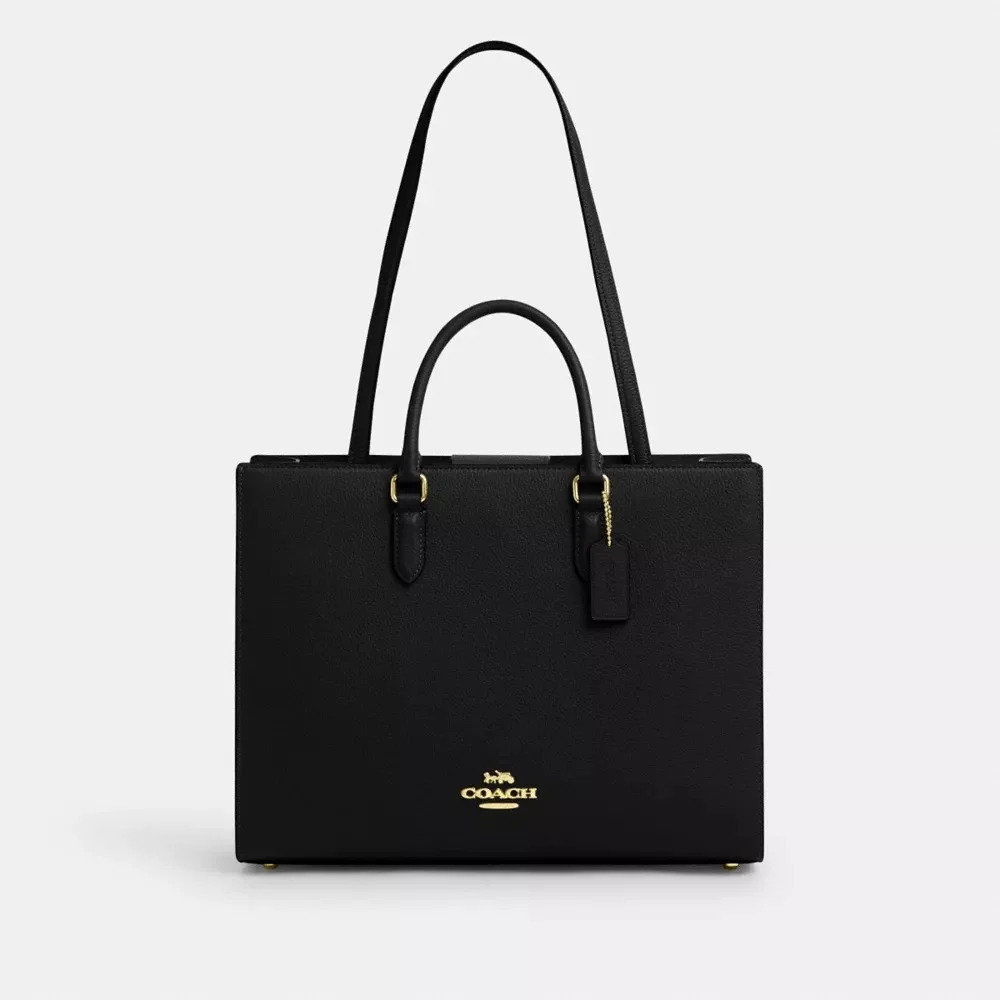
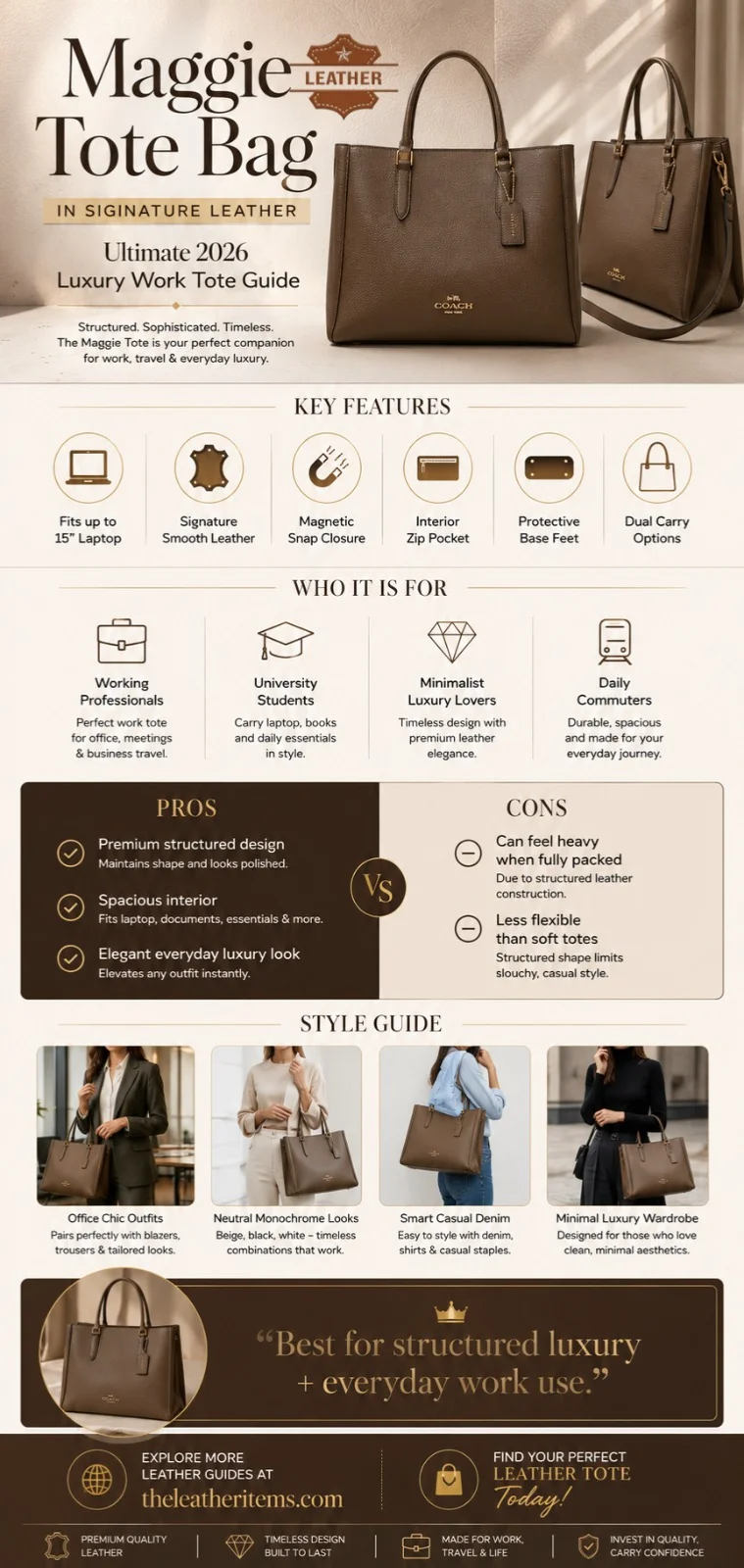
The Maggie Tote Bag in Signature Leather is built for shoppers who want one bag that feels polished, practical, and easy to live with every day. It is not just about the logo or the look. It is about whether the bag can handle a real workday, a commute, a laptop, a few essentials, and still look refined at the end of the day. Coach’s current listing shows that the bag is a structured tote with signature smooth leather, an inside zip pocket, a magnetic snap closure, four protective feet, and space for a laptop up to 15 inches. At the time of writing, Coach lists it at $279 from a comparable value of $425.
This guide is designed to answer the questions shoppers actually ask before buying: Is it worth it? Is it too structured? Does it work for office life? How does signature leather compare with full-grain, top-grain, genuine leather, suede, nubuck, and faux options? And how does the Maggie tote compare with other structured work totes from brands like Coach, Dagne Dover, Michael Kors, and Fossil?
What is the Maggie Tote Bag in Signature Leather?
The Maggie tote bag is a structured designer tote built for everyday carry. Coach describes it as a “take-anywhere essential” with a spacious interior that can hold a large wallet, an iPhone up to 16 Pro Max, an iPad or Kindle, and a laptop up to 15 inches. It also uses a magnetic snap closure, an internal zip pocket, and protective feet at the base, which makes it more practical than a fashion-only tote.
History of this leather product
Coach’s tote category has a history. On its official tote page, the brand says its tote bags were introduced more than fifty years ago by its first lead designer, Bonnie Cashin. That matters because it shows the Maggie tote is part of a long Coach tote tradition rather than a one-season trend. Coach also positions its tote collection as a mix of work, travel, and everyday luxury, which helps explain why the Maggie style fits the modern office-first buyer so well.
From an industry perspective, this is exactly how tote design evolved: from carry-all utility to a polished daily handbag that can still hold a laptop, wallet, water bottle, and personal items without losing its shape. That balance of function and refinement is what makes structured leather totes relevant in 2026.
Mini summary
The Maggie tote works because it sits inside a proven tote category: practical, structured, and appropriate for work or travel. That heritage is part of the product’s appeal.
Why it matters in 2026
In 2026, buyers are looking for bags that do three things at once: look elevated, work for daily use, and stay organized. Coach’s own tote category language emphasizes room for laptops, workwear compatibility, and everyday luxury, while Dagne Dover and Fossil position their totes around organization, versatility, and classic style. That tells you the market is still rewarding bags that solve daily problems instead of just looking pretty.
The Maggie tote matters because it sits in the middle of that demand curve. It is more polished than a casual shopper, more practical than a tiny fashion tote, and more premium than a basic work bag. For buyers who want one bag to move from office to dinner to weekend errands, that is a very strong position.
Types, styles, and variations
The Maggie family is best understood as a structured tote line with different sizes and finish options. Coach’s product pages show both a full-size Maggie Tote Bag and a Maggie Small Tote Bag, and the broader tote category includes leather, canvas, and suede designs across mini, small, and large formats. That means shoppers are not just buying a single bag; they are choosing a size and carry style that fits their routine.
Buying logic for shoppers
- Large tote: best for office, laptop, and travel days.
- Small tote: best for lighter daily carry.
- Structured leather tote: best for polished outfits and shape retention.
- Soft tote: best for relaxed styling and less formal looks.
Mini summary
When people search for the Maggie tote, they are often really choosing between size, structure, and use case. That is where your article should guide them clearly.
Leather types used in tote bags
| Leather type | What it usually means | Best use | Buying note |
| Full-grain | The outermost layer of the hide with the grain intact; highly durable and often develops patina over time. | Premium bags meant to age beautifully | Usually, the strongest long-term option. |
| Top-grain | High-quality leather that is corrected or sanded for a smoother, more uniform surface. | Work bags, luxury totes, cleaner finish | Great balance of durability and polish. |
| Genuine leather | Real leather, but typically lower in the quality hierarchy than full-grain and top-grain. | Budget-friendly real leather goods | The label alone does not mean premium. |
| Suede | Real leather with a soft, napped surface; attractive but more delicate. | Fashion pieces, softer looks | Needs more care and stain protection. |
| Nubuck | Top-grain leather sanded on the grain side for a velvety feel; tougher than suede. | Luxury lifestyle products | Beautiful but maintenance-heavy. |
| PU / faux leather | Synthetic leather alternative | Budget or vegan alternatives | Easier to price-access, usually less durable. |
What this means for the Maggie tote
Coach lists the Maggie tote in signature smooth leather, which gives it a cleaner, more structured look than slouchy suede or soft casual leather. That is ideal if the goal is a polished work tote rather than a relaxed weekend bag.
Manufacturing process: how a quality leather tote is made
A good leather tote is not just cut and stitched. It goes through selection, tanning, splitting, finishing, cutting, assembling, lining, edge work, hardware attachment, and final inspection. The Leather Working Group describes responsible leather as a standards-based process focused on recognized best practice and positive impact, which is useful when you talk about sourcing and quality.
Step-by-step process
- Hide selection: choose hides with consistent texture and fewer defects.
- Tanning: stabilizes the hide so it becomes leather.
- Surface finishing: create the final look, such as smooth, pebbled, suede, or nubuck.
- Pattern cutting: cut body panels, straps, pockets, and base pieces.
- Stitching and reinforcement: build seams that can hold weight over time.
- Hardware installation: add closures, feet, buckles, and strap connectors.
- Lining and inspection: check the bag for symmetry, alignment, and finish.
Snippet-ready answer
A quality leather tote is made by selecting the hide, tanning it, finishing the surface, cutting the pattern, stitching the panels, adding hardware, lining the interior, and inspecting the final bag for structure and durability.
How to identify original vs fake leather
This is one of the most searched buyer-intent sections, and it is missing from many competitor pages. Use it.
Quick checks
- Look at the grain: real leather usually shows natural variation.
- Check the edges: premium bags usually have cleaner edge finishing.
- Smell test: real leather has a richer, less plastic smell.
- Touch test: real leather feels warmer and More Organic Than PU.
- Weight and structure: structured leather bags often feel denser, not hollow.
- Hardware and stitching: uneven stitching and cheap hardware are red flags.
Common mistake
Do not assume “genuine leather” means top-tier leather. It is real leather, but it is not automatically the best grade.
Buying guide: what to check before purchase
This is where your article becomes more useful than a normal product page.
| What to check | Why it matters | Best practice |
| Size | A tote that is too small becomes frustrating | Match the bag size to your laptop and daily carry. |
| Closure | Security and convenience | Magnetic snap is easy; zip-top is more secure. |
| Interior pockets | Organization | At least one zip pocket helps protect valuables. |
| Base feet | Helps the bag stay cleaner and sit upright | Very useful for the office and travel. |
| Strap drop | Comfort on the shoulder | Choose a drop that works with coats and workwear. |
| Leather finish | Changes the whole personality of the bag | Smooth leather = polished; pebbled = more forgiving. |
Expert buying tip
If you want a tote for work, choose structure first, then size, then interior organization. If you want a casual lifestyle bag, reverse that order. This is why a tote can feel perfect for one buyer and wrong for another.
Top uses of the Maggie tote
Coach positions the Maggie tote as an everyday bag for class, office, and “everything in between,” and that matches how structured totes are used across the market. Dagne Dover also promotes its totes for work, travel, and play, while Fossil emphasizes everyday versatility.
Best use cases
- Office commute
- Laptop carry
- College or university
- Business casual travel
- Everyday luxury errands
- Minimalist capsule wardrobes
Not ideal for
- Very light handbag users
- People who prefer slouchy bags
- Buyers who want ultra-soft leather
- Shoppers who dislike structured silhouettes
Price range worldwide
Because prices vary by region, tax, retailer, and season, the best way to discuss price is as a market band rather than a fixed number. Coach currently lists the Maggie Tote Bag in Signature Leather at $279 in the US market, while Coach’s own tote category also includes higher-end carryalls such as the Empire Carryall priced at $880 and $1,395 in one visible regional listing. Michael Kors, Dagne Dover, and Fossil also position their tote ranges across mid-range to premium levels, which shows how broad this category is.
Practical pricing takeaway
For a shopper, the important point is this: the Maggie tote sits in the affordable luxury/premium everyday tote zone, not the ultra-luxury zone. That makes it attractive to buyers who want a designer feel without stepping into the highest price tier.
Top brands and countries famous for structured leather totes
The strongest names in this category include Coach, Michael Kors, Dagne Dover, and Fossil. Coach highlights its New York luxury identity and tote heritage, Michael Kors focuses on polished, structured totes, Dagne Dover leans into organization and tech-friendly design, and Fossil emphasizes classic leather style and craftsmanship.
Countries often associated with premium leather goods
- United States: strong in accessible designer totes and everyday luxury.
- Italy: widely associated with artisanal leather fashion.
- Spain: known for leather craftsmanship and fashion production.
- Pakistan, India, Turkey, and Bangladesh: important manufacturing and sourcing hubs in the global leather supply chain. Leather Working Group’s global footprint shows how international the leather manufacturing ecosystem is.
Budget-friendly options
If someone wants the look of a structured tote without paying Coach pricing, the smartest budget route is to look for:
- pebbled or saffiano-style alternatives,
- sale events,
- outlet collections,
- and structured faux-leather or vegan options.
Dagne Dover’s vegan tote and Fossil’s sale pages show how brands use alternative materials and promotions to make tote styling more reachable. Michael Kors outlet pages also show how structured work totes are often discounted in seasonal sales.
Premium and luxury options
If the buyer wants a more premium lane, the strongest upgrades are:
- full-grain leather,
- better edge finishing,
- better hardware,
- stronger lining,
- and a more intentional internal organization layout.
Coach’s own higher-tier carryalls, plus structured totes from Michael Kors and Fossil, show that the market for polished leather work bags is wide. The difference is usually in leather grade, hardware feel, and how the bag balances structure with comfort.
Common mistakes to avoid
Buying only for the logo
A tote is a daily tool. If it does not fit your routine, it will not feel worth it.
Ignoring strap comfort
A beautiful bag that hurts your shoulder will stay in the closet.
Choosing the wrong leather finish
Smooth leather looks refined, but pebbled or textured leather can be more forgiving for everyday wear.
Underestimating weight
Structured leather can feel heavier when fully packed. That is the trade-off for shape and polish.
Skipping comparison shopping
Many competitors fail here. You should compare Coach with brands that solve the same problem in different ways, especially if you care about organization or travel.
Care, cleaning, and maintenance tips
For smooth leather bags, the safest rule is simple: keep them away from harsh chemicals, excessive moisture, and direct heat. Leather care guides from established brands commonly recommend gentle wiping, mild soap only when needed, and storing the bag in a dry place away from sunlight.
Care routine
- Wipe the bag with a soft dry cloth after use.
- Spot-clean gently when needed.
- Avoid Soaking The Leather.
- Store it upright in a dust bag.
- Keep it away from direct sun and heat.
- Do not overfill it, because that stretches the shape over time.
Mini summary
The best care is simple care. Leather bags last longer when they are cleaned gently, stored properly, and not overloaded every day.
Expert tips most buyers ignore
Tip 1: Check the base feet
Base feet matter more than people think. They help the bag sit better on desks, floors, and café tables, and they reduce wear on the bottom. Coach includes four protective feet on the Maggie tote.
Tip 2: Buy for your smallest real use case
If the bag can handle a normal weekday, it will feel versatile. If it only works on “perfect” days, it will disappoint you. That is why tote capacity matters.
Tip 3: Prioritize interior organization
A zip pocket is not a luxury extra. It is a daily convenience feature.
Tip 4: Understand the finish
Smooth leather reads more formal and structured; pebbled leather reads softer and more forgiving. That style difference shapes the whole purchase decision.
Tip 5: Think in outfits, not just products
Coach’s tote category and Michael Kors’ tote pages both show that structured bags are easy to style with workwear, denim, and elevated everyday outfits. That is why these bags stay relevant.
Future trends in the leather industry
The biggest trend is not just “more leather.” It is more responsibly sourced, more functional, and more versatile leather. The Leather Working Group frames responsible leather around standards, certification, and improved impact, which reflects where the industry is heading. Google’s current guidance also shows that useful, trustworthy, and well-structured content wins across both classic search and AI-driven discovery, which is a useful reminder for content creators in any niche.
What buyers will keep asking for
- lighter structured totes,
- better organization,
- more durable finishes,
- cleaner silhouettes,
- and better sustainability messaging.
Pros and cons
Pros
- Polished structured silhouette.
- Fits a laptop up to 15 inches.
- Inside zip pocket and magnetic closure.
- Protective base feet for better everyday use.
- Versatile for office, class, and casual wear.
Cons
- Can feel heavier when packed. This is a common trade-off with structured leather totes.
- Less relaxed than slouchy or soft bags.
- Premium price may be too high for casual-only buyers.
Is the Maggie tote bag in signature leather worth it?
Yes, for the right buyer. The bag earns its place when structure, work utility, and everyday polish matter more than trend chasing. Coach’s own description shows a bag made for real life: laptop-friendly, secure, structured, and easy to carry from office to class to errands. If that is the shopper’s lifestyle, the value is strong. If the shopper wants a softer, lighter, more relaxed tote, a different design may be better.
FAQs
Yes. Coach describes it as an everyday tote that can fit a laptop up to 15 inches, which makes it a strong work bag choice.
Yes. Coach says it fits a laptop up to 15 inches.
Coach lists signature smooth leather with a recycled polyester lining.
Yes. It includes an inside zip pocket.
It uses a magnetic snap closure, which is fast and practical for daily use.
Conclusion
The Maggie tote bag in signature leather is strongest when the reader wants a structured, polished, laptop-friendly tote that can work for office days, class, travel, and everyday carry. It is not the softest bag in the market, but that is not the point. Its value comes from shape, practicality, and a clean luxury look that feels Easy to Style. Coach’s current product details, tote heritage, and tote category positioning all support that conclusion.
For theleatheritems.com, this article should rank better because it answers the real search journey: what it is, who it is for, what leather it uses, how it compares, how to care for it, and whether it is worth buying. That is the kind of people-first structure Google’s current guidance continues to reward.
If you publish more articles in this same format, your site can build topical authority around leather quality, tote bags, work bags, and buying guides very quickly.
You do not have enough Humanizer words left. Upgrade your Surfer plan.