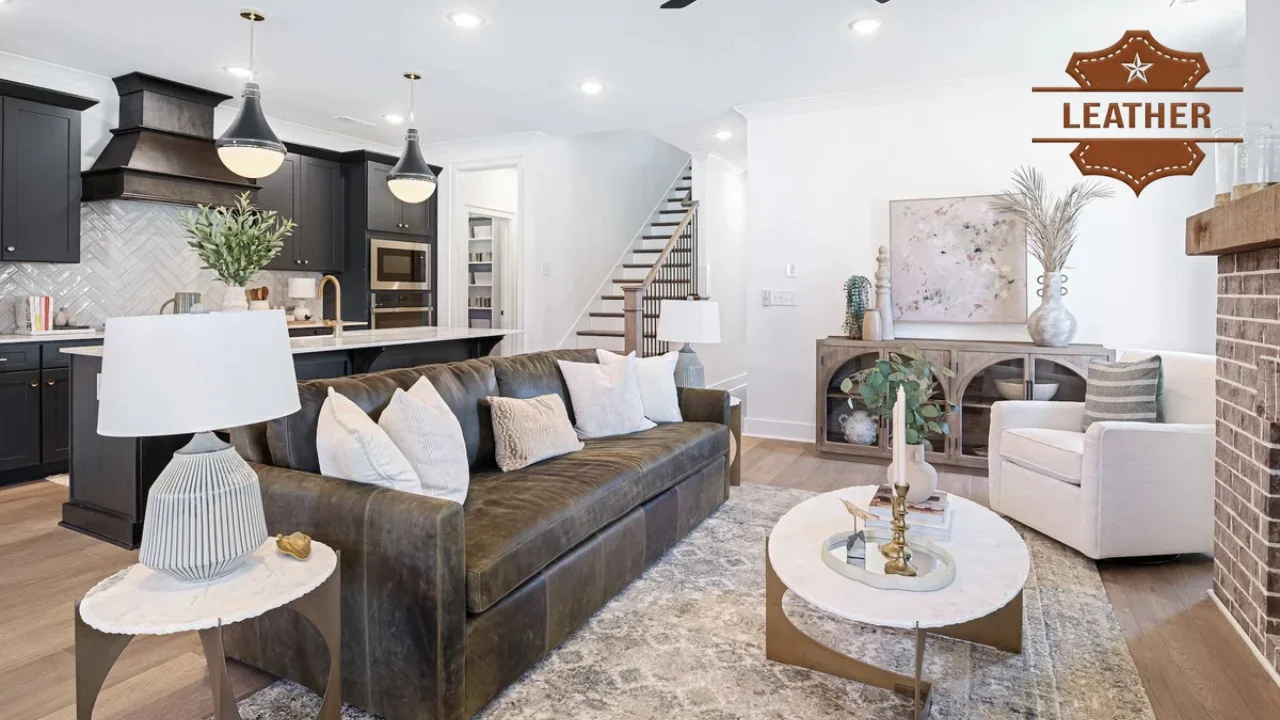
Full Grain Leather Sofa
A Full-Grain Leather Sofa is one of the rare furniture purchases that can become more attractive with age instead of wearing out in silence. When the hide is genuine, the construction is sound, and the finish is chosen for the right lifestyle, the sofa does more than fill a room. It becomes a long-term design object, a comfort investment, and, in the best cases, a piece of heirloom furniture. Full-grain leather is defined by the Leather Research Laboratory as leather that retains the original grain surface with nothing removed except hair and associated epidermis, which is why it keeps the hide’s natural character and long-wear potential.
That said, not every “leather” sofa deserves the premium price tag. Buyers are often asked to compare full grain, top grain, corrected grain, and vague “genuine leather” labels without being shown what those terms mean in practice. A smart purchase depends on more than leather grade alone. The frame, springs, cushion fill, stitching, tanning, finish, and maintenance plan all shape how the sofa will look and feel after year three, year seven, and year fifteen.
This guide gives you the exact buying framework a serious shopper needs in 2026: what full-grain leather really is, how it compares to other grades, how to spot quality, what construction details matter most, how to avoid common traps, and when a full-grain sofa is truly worth the money.
What Is a Full Grain Leather Sofa?
A full-grain leather sofa uses leather taken from the strongest outer layer of the hide, with the natural grain left intact. That untouched surface is what gives the sofa its character, breathability, and ability to develop patina over time. In leather terminology, that natural grain is the part buyers are really paying for.
In practical sofa terms, full-grain leather often feels more organic and less “plastic-coated” than heavily finished leather. It may show scars, pores, wrinkles, and subtle shade variation. Those features are not defects; they are evidence that the hide was not over-processed. That is exactly why luxury buyers and leather enthusiasts often prefer it.
Why it matters
Full-grain leather is usually chosen by shoppers who value longevity, a richer aging story, and natural aesthetics over perfect uniformity. Current editorial and industry-style guides repeatedly associate it with high-end furniture and long-term use.
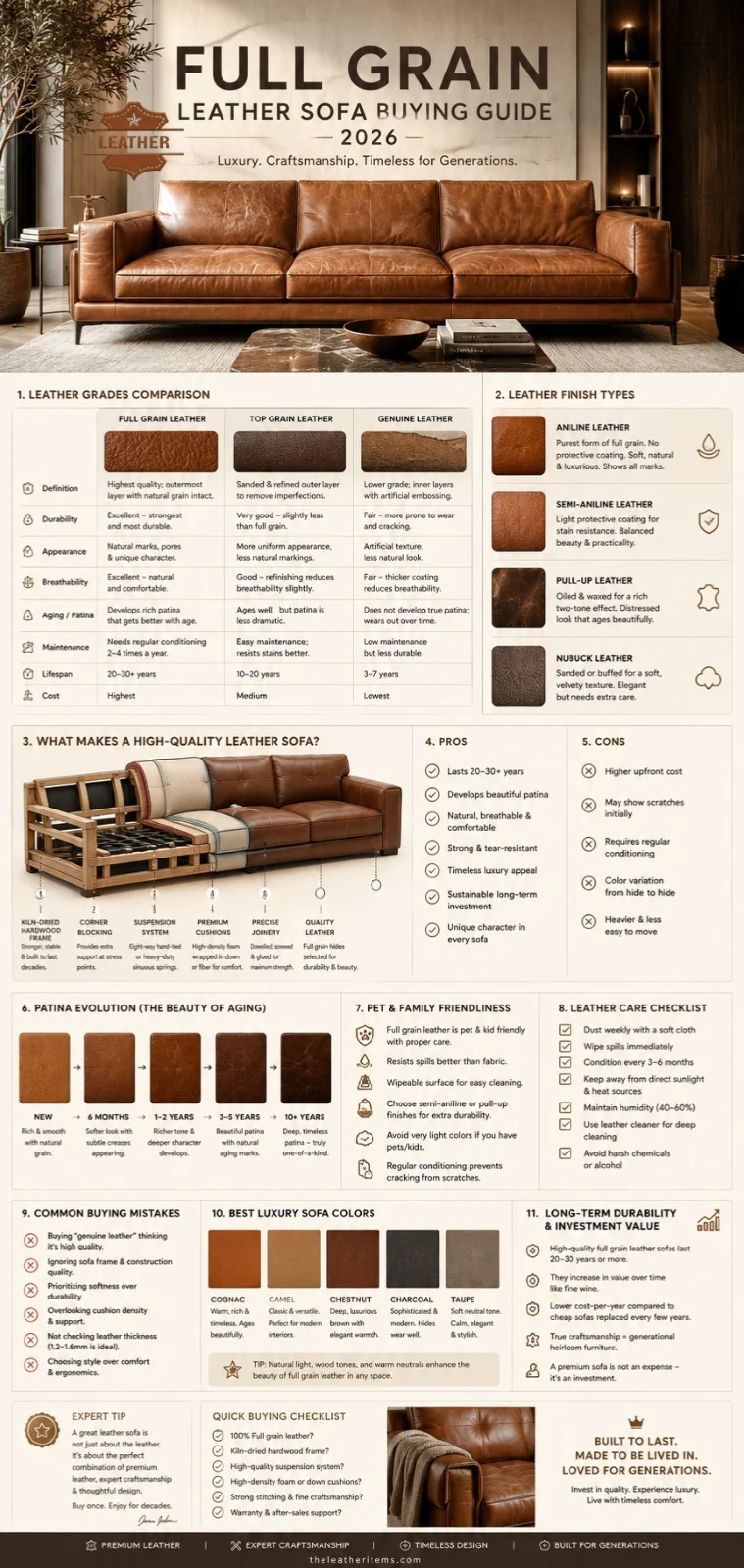
Full Grain vs Top Grain vs Genuine Leather Sofa
Leather terminology is messy, and that is part of the problem. Official trade definitions can differ from consumer-market usage, so shoppers should always ask sellers for the exact leather specification rather than relying on a label alone. Leather Research Laboratory cites full grain as the original grain surface with no surface removed by buffing, snuffing, or splitting, while some consumer guides use “top grain” to describe leather that has been sanded or corrected for a more uniform finish. Corrected grain, meanwhile, is leather whose grain layer has been partially removed and rebuilt with finishes.
| Leather Type | Look and Feel | Durability Potential | Maintenance | Best For |
| Full grain | Natural, rich, characterful | Very high | Moderate | Luxury buyers, long-term owners |
| Top grain | Smoother, more uniform | High | Easier than full grain | Families, modern interiors |
| Corrected grain | More even, more processed | Good to high | Easier to maintain | Busy homes, stain resistance |
| Genuine leather | Vague marketing term; quality varies | Variable | Variable | Only when the spec sheet is clear |
Full grain is the most character-rich option because it preserves the original grain surface. Top grain is usually a step toward a cleaner, more consistent look, while corrected grain sacrifices some naturalness for a more uniform finish and often more practical everyday care. “Genuine leather,” however, is too vague to trust without details.
Why Full Grain Leather Sofas Are Considered Luxury Furniture
Luxury in furniture is not just about appearance. It is about material honesty, craftsmanship, and longevity. Full-grain leather signals quality because it keeps the hide’s natural structure intact, and high-end buyers often value the way it develops patina rather than wearing out. Patina is one of the strongest selling points of premium leather because it is the visible record of use and aging.
A better leather sofa also tends to sit inside a better-built frame. Current couch-buying guidance stresses kiln-dried hardwood frames, reinforced joinery, strong spring systems, and supportive cushion fill as core markers of quality. That is why a true luxury leather sofa is a systems purchase, not just a leather purchase.
Pros and Cons
Pros
- Develops a beautiful patina over time.
- Has strong long-term durability potential when paired with a quality frame and fill.
- Feels more natural and breathable than heavily finished leather.
- Supports a premium, heirloom-style aesthetic.
Cons
- Costs more up front. Premium full-grain sofas are commonly positioned in the several-thousand-dollar range in current retailer examples.
- Shows scratches and natural marks more readily than heavily corrected leather.
- Needs smarter care and conditioning than low-end synthetic alternatives.
- May not suit buyers who want a perfectly uniform, factory-smooth look.
How Long Does a Full Grain Leather Sofa Last?
A well-built full-grain leather sofa can last for decades, but the leather alone does not guarantee that outcome. The frame, springs, cushions, and household conditions matter just as much. Current buying guides for premium sofas consistently emphasize kiln-dried hardwood frames, strong joinery, and high-density foam or mixed-fill cushions because these components determine whether a sofa keeps its shape and comfort.
A realistic lifespan expectation looks like this: if the leather is genuine full grain, the frame is strong, the cushions are well made, and the sofa is cared for properly, the piece can stay functional and attractive for a very long time. Premium leather guides and testing roundups repeatedly position top-tier leather sofas as long-term investments rather than short-cycle purchases.
How to Identify Real Full Grain Leather
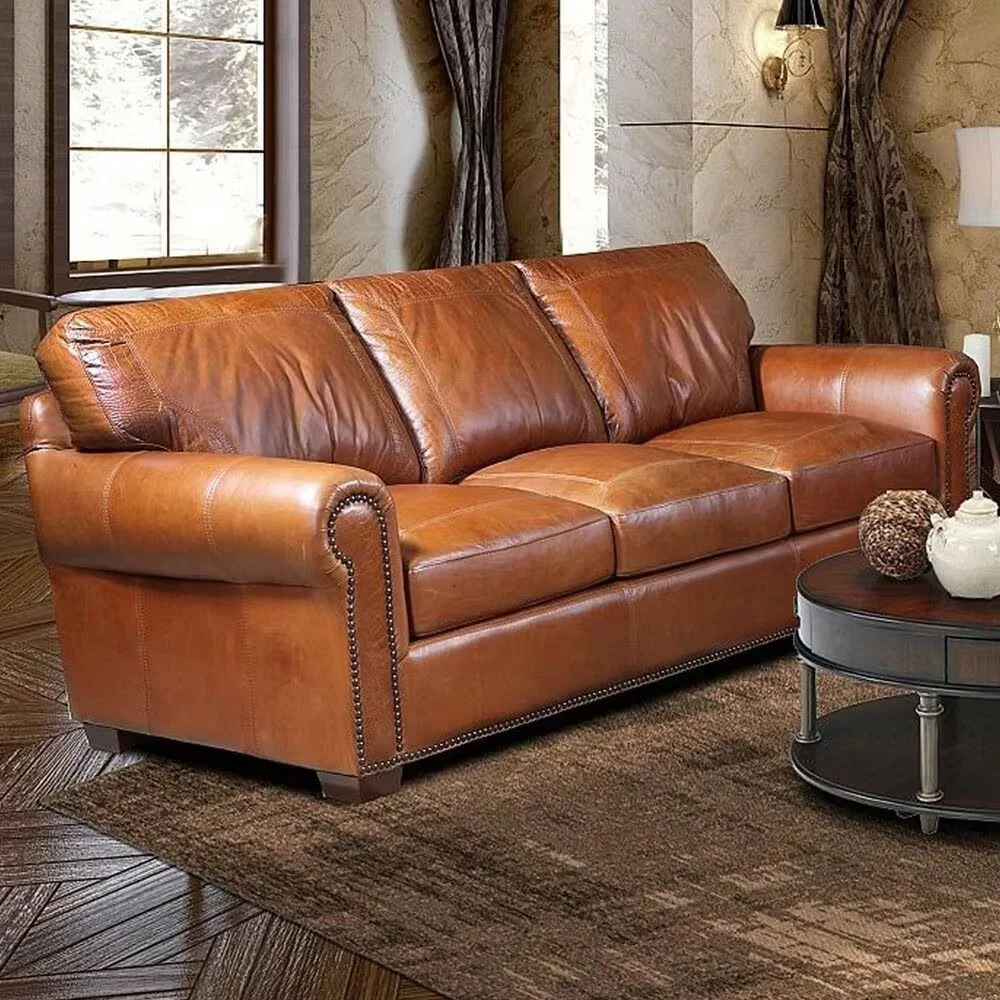
The smartest buying move is to stop asking, “Is it leather?” and start asking, “What leather, exactly?” Real full-grain leather usually keeps visible pores, natural variation, and an organic grain pattern. It is not sanded smooth into a perfectly uniform surface. Official definitions and leather guides point to preserved grain as the key marker.
Use this checklist before buying:
- Ask for the exact leather grade in writing.
- Ask whether the leather is full grain, top grain, corrected grain, or pigmented.
- Ask what finish is used: aniline, semi-aniline, or pigmented.
- Ask for the frame material and joinery details.
- Ask for cushion fill specifications and foam density.
- Ask for warranty terms on frame, cushions, and upholstery.
Red flags
If the seller uses only the phrase “genuine leather” and avoids the exact grain type, that is a warning sign. Consumer leather guides also warn that “genuine leather” can be a vague catchall and should not be treated as a quality guarantee.
Best Types of Leather Finishes for Sofas
Aniline Leather
Aniline leather is dyed with soluble dyes that let the natural grain remain visible. It is loved for softness and a very natural look, but it can be more vulnerable to marks and stains because it has less Protective Surface build-up.
Semi-Aniline Leather
Semi-aniline is the middle ground. It keeps much of the natural look of aniline but adds a light protective topcoat, which improves everyday practicality. Many leather sofa guides position it as a smart option for buyers who want a premium feel without quite as much maintenance pressure.
Pull-Up Leather
Pull-up leather develops color variation when stretched or bent, which creates a lived-in, vintage effect. It is attractive for buyers who like character and visible aging, but it is not the best choice for someone who wants a spotless, ultra-uniform sofa. This is an inference based on how the finish behaves and how aged-leather guides describe patina development.
Nubuck Leather
Nubuck has a soft, velvety surface because the grain is buffed. It can look very luxurious, but it is usually more delicate than smooth full-grain leather for high-traffic family use. That makes it beautiful, but not always the most forgiving choice.
Waxed Full Grain Leather
Waxed full grain keeps the natural character of the hide but adds a more tactile, rugged finish. It is a strong option for buyers who want a sofa that ages with a visible personality. Because waxed and pull-up finishes are built to show change, they reward owners who enjoy patina rather than resisting it.
What Makes a High-Quality Leather Sofa Besides Leather?
This is where most articles fail. The best leather does not rescue a weak frame.
Current furniture-buying guidance repeatedly says to prioritize a kiln-dried hardwood frame, solid joinery, strong corner reinforcement, and durable suspension before you obsess over color or “luxury” branding. For cushioning, high-density polyurethane foam is common, natural latex is durable, and down-plus-spring combinations can feel more luxurious.
What to look for
- Kiln-dried hardwood frame
- Mortise-and-tenon or similarly strong joinery
- Reinforced corners
- Eight-way hand-tied or sinuous springs
- High-density foam or a quality mixed-fill cushion
- Neat double stitching and clean seam alignment
What to avoid
- Particleboard in load-bearing areas
- Thin, overly soft cushions that collapse fast
- Vague product pages that hide the frame and suspension details
- “Genuine leather” with no material breakdown
Best Full Grain Leather Sofa Styles
Full-grain leather works best in styles that let the material speak. Clean-lined modern sofas, sculptural sectionals, compact apartment sofas, and classic Chesterfield silhouettes all benefit from the depth and texture of real grain. Contemporary editor-tested sofa roundups show that buyers are spread across styles, from low-profile sectionals to more tailored classic frames, so the “best” style depends on the room and use case.
Strong style matches
- Modern minimalist
- Mid-century modern
- Scandinavian
- Chesterfield
- Sectional/modular
- Reclining leather sofa for comfort-first buyers
Best Full Grain Leather Sofa Colors
The safest long-term colors are the ones that age well and work across changing interiors. Cognac, camel, chestnut, deep brown, taupe, and charcoal usually give the best balance of warmth and versatility. Those tones also tend to make patina look intentional rather than messy. This is an informed design recommendation based on how patina and natural color variation develop in full-grain leather.
Best color picks by mood
- Cognac/camel: warm, timeless, high character
- Chestnut/tobacco brown: classic and rich
- Charcoal / black: modern and architectural
- Taupe/olive-brown: softer, contemporary, versatile
Are Full Grain Leather Sofas Good for Pets & Kids?
They can be, but the honest answer is “it depends on the finish and your tolerance for wear.” Sofology notes that leather types with protective layers are better suited to busy homes with kids and pets, and Better Homes & Gardens found some leather sofas easier to clean than others, while still showing wear in high-use zones over time.
For families, semi-aniline or lightly protected finishes are often the safer choice than fully naked aniline. Darker colors also hide daily life better. Full grain can absolutely work in family homes, but it is best for owners who accept scratches, marks, and character as part of the story.
Full Grain Leather Sofa Maintenance Guide
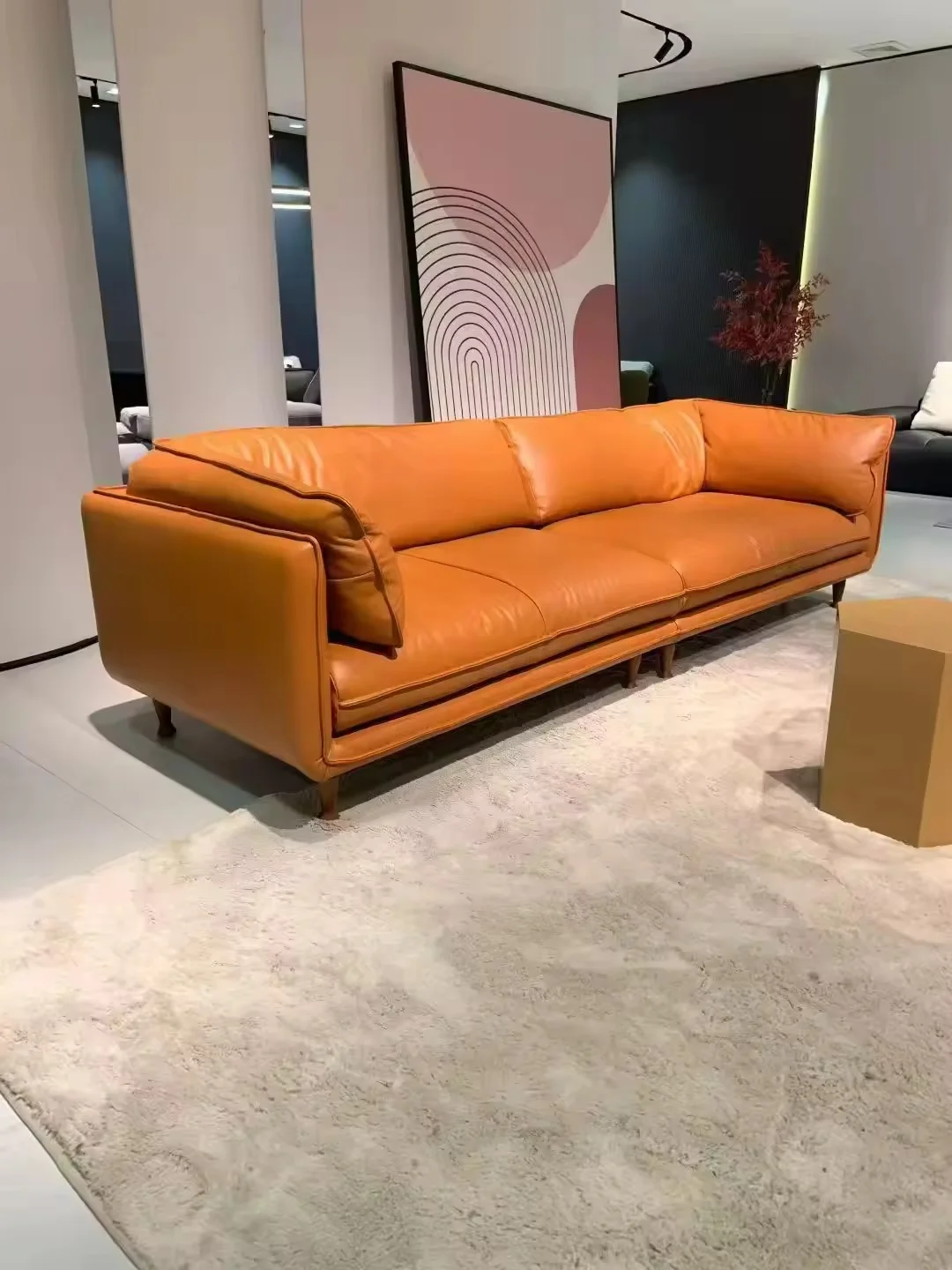
Leather care should be simple, not harsh. Current care guides consistently recommend regular dusting with a soft dry cloth, avoiding abrasive cleaning tools, keeping leather away from excessive sun and heat, and using a suitable conditioner on a measured schedule.
Basic care routine
- Dust weekly with a soft, dry cloth.
- Vacuum gently around seams and crevices.
- Blot spills immediately; do not rub aggressively.
- Condition only with a product meant for your leather type.
- Keep the sofa out of harsh direct sunlight when possible.
- Avoid paper towels and abrasive cleaners.
Smart care schedule
- Weekly: dust and inspect
- Monthly: deeper wipe-down and seam check
- Every 3–6 months: conditioning or leather-specific treatment, depending on finish and climate
- Immediately: treat spills and stains quickly
Common Mistakes to Avoid When Buying a Leather Sofa
The most expensive mistake is buying leather grade before buying the structure. Current couch-buying advice makes it clear that frame, springs, and cushion quality shape comfort and lifespan as much as the upholstery does.
Avoid these traps
- Buying bonded or vague “Genuine Leather” without a spec sheet.
- Choosing softness only, without checking support.
- Ignoring cushion density and sag resistance.
- Skipping frame and joinery questions.
- Expecting full grain to look perfect and uniform from day one.
Best Luxury Full Grain Leather Sofa Brands to Shortlist
Rather than claiming a single universal “best,” it is smarter to shortlist brands that appear in current editor-tested roundups and premium buying guides. Recent coverage repeatedly surfaces Pottery Barn, Crate & Barrel, Burrow, Room & Board, and Ashley in different categories and price tiers, with reviewer notes emphasizing frame quality, comfort, style range, and family suitability.
How to evaluate any brand
- Does it disclose the leather grade clearly?
- Does it specify frame wood and joinery?
- Does it list cushion fill?
- Does it explain the finish?
- Does it offer real warranty support?
Is a Full Grain Leather Sofa Worth It?
For the right buyer, yes. A full-grain leather sofa is worth it when you want longevity, character, and a premium feel that improves rather than deteriorates with age. The strongest cases are made when the sofa also has a kiln-dried hardwood frame, quality suspension, and proper cushion support. That combination turns the purchase from “expensive furniture” into “long-term value.”
For buyers who want a softer initial feel, easier stain management, or a more uniform surface, semi-aniline or top-grain may be the smarter choice. That is not a downgrade; it is a lifestyle match. Smart shopping means choosing the leather that matches the home, not just the leather that sounds most premium.
People Also Ask
A: It is usually the premium choice because it keeps the natural grain intact and can age beautifully. The “best” choice still depends on your lifestyle, budget, and how much maintenance you want to do.
A: Any leather can crack if it is neglected, dried out, or exposed to too much heat and sun. Regular dusting, gentle care, and the right conditioner help reduce that risk.
A: A well-made leather sofa can last for many years, and premium pieces are often treated as long-term investments. Lifespan depends heavily on the frame, springs, cushions, and maintenance.
A: Full grain is usually the most character-rich and highest-end option. Top grain is often smoother and easier to live with, so it can be a better practical choice for some homes.
A: Yes, if you value durability, timeless style, and easier spill cleanup than many fabrics. Recent editor-tested guides repeatedly place leather sofas among the strongest long-term furniture buys.
Final Verdict
A full-grain leather sofa is the best choice for buyers who value authenticity, long service life, natural character, and a richer aging story. It is not the best choice for people who want the lowest price, the most uniform finish, or zero maintenance. The ideal full-grain sofa is built on a strong frame, paired with good springs and supportive cushions, and maintained with a simple care routine.
If the goal is a sofa that can look better year after year, full-grain leather is hard to beat. If the goal is Maximum Practicality for a busy family, semi-aniline or protected top-grain may be the smarter compromise. Either way, the real win comes from knowing exactly what you are buying.
Legal Disclaimer
Leather quality, pricing, manufacturing standards, and product availability may vary by country, brand, and supplier. Always verify authenticity, material details, and care instructions before purchase.