Introduction
Leather sofas look luxurious, feel comfortable, and can last for years, but only when they are cleaned the right way. If you use too much water, the wrong cleaner, or harsh scrubbing, you can damage the finish, strip moisture, or create permanent marks. Google’s own guidance rewards content that is genuinely useful and written for people first, which is exactly why this guide goes beyond the usual “wipe it with soap and water” advice.
In this complete 2026 Leather Sofa cleaning Guide, you will learn how to clean different leather types safely, how to remove common stains, what products to avoid, how often to clean, and when conditioning or professional help makes sense. The goal is simple: help your leather sofa stay soft, clean, and beautiful without guesswork. Current leather-care guidance from furniture brands and leather-care organizations consistently emphasizes gentle cleaning, patch testing, limited moisture, and protection from heat and sunlight.
What Is Leather Sofa Cleaning?
Leather sofa cleaning is the process of removing dust, body oils, food residue, stains, and built-up grime without damaging the leather’s finish. Leather is a natural material used in furniture, clothing, footwear, and many other products, and it needs care that matches the finish on the hide.
A leather sofa does not behave like fabric. It is more sensitive to soaking, strong detergents, abrasive scrubbing, and heat. That is why the safest cleaning method depends on the finish, not just on the stain.
Why Proper Leather Sofa Cleaning Matters
Regular cleaning helps prevent dirt from grinding into the surface, oils from discoloring the leather, and dryness from turning into cracks. Leather-care guidance repeatedly stresses that routine dusting, careful wiping, and periodic conditioning help extend the life of the furniture and preserve its look over time.
Leather can also fade in sunlight and dry out near heat sources, so cleaning and placement go together. If the sofa lives in a bright room, near a radiator, or in a dry climate, maintenance matters even more.
Leather Types You Should Know Before Cleaning
Understanding the leather type is one of the biggest differences between average advice and expert advice. Aniline leather is very natural and absorbs liquids more readily than pigmented leather; pigmented leather has a protective finish and is easier to care for; nubuck and suede are absorbent and more delicate.
| Leather Type | What It Means | Cleaning Level |
| Aniline | Natural look, no pigment finish, absorbs liquid quickly, and develops patina. | Very gentle care only. |
| Semi-aniline | More protected than aniline, still softer than fully coated leather. | Gentle but slightly more forgiving. |
| Pigmented / Protected | Finished the surface with a protective coating and added color. | Easiest for routine care. |
| Full-grain | Top hide surface kept intact; develops patina over time. | Usually durable, but still needs gentle care. |
| Top-grain | The outer layer is sanded or buffed for a more uniform finish. | Durable and easier to maintain than many delicate finishes. |
| Genuine leather | Real leather, but the label alone does not guarantee a premium grade. | Check the exact finish and construction. |
| Suede / Nubuck | Soft, napped, absorbent, and more delicate than smooth leather. | Specialty-only care. |
| PU / Faux leather | Synthetic material with different care needs. | Mild soapy water. Avoid Harsh Chemicals. |
Mini takeaway: If you do not know the finish, treat the sofa as delicate first. Start dry, test carefully, and use the least aggressive method that works.
Supplies You Need
Keep the cleaning kit simple:
- Microfiber cloths
- Soft brush attachment vacuum
- Distilled water
- Mild, unscented soap
- Leather-safe cleaner
- Leather conditioner
- Cotton swabs for small stains
- Soft brush or sponge for deeper cleaning when appropriate
What You Should Never Use on Leather
Avoid soaking the sofa, bleach, ammonia, harsh solvents, abrasive scrubbers, and aggressive household degreasers. Expert guidance also warns against routine oil-heavy treatments and random cleaners that are not made for the leather finish.
Do not default to steam cleaning leather. Leather-furniture advice consistently favors low moisture and careful drying instead of heat-heavy methods, and leather-care sources warn against drying with a hairdryer or placing leather near direct heat.
How Can I Clean a Leather Sofa? Step-by-Step
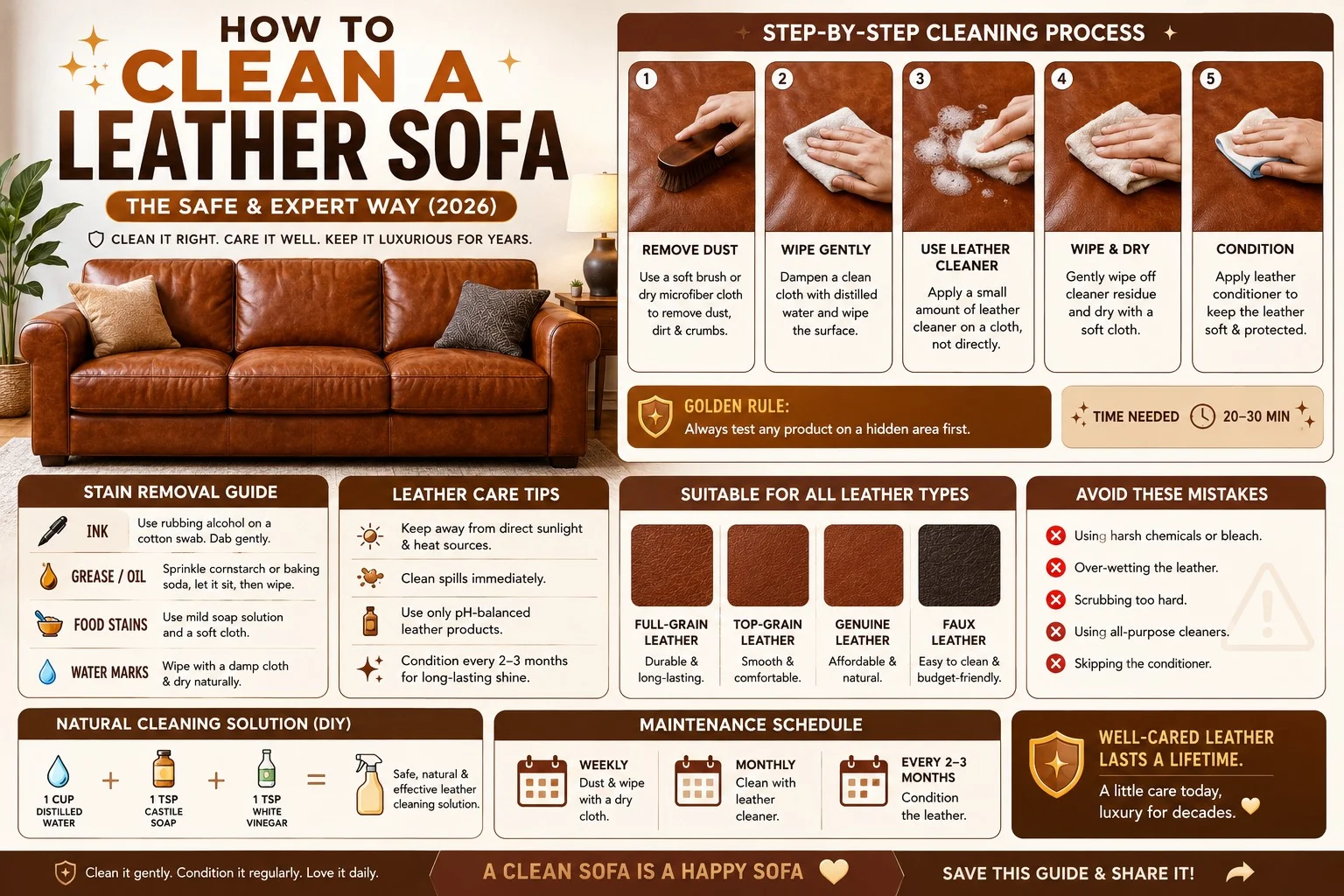
Vacuum or dust first
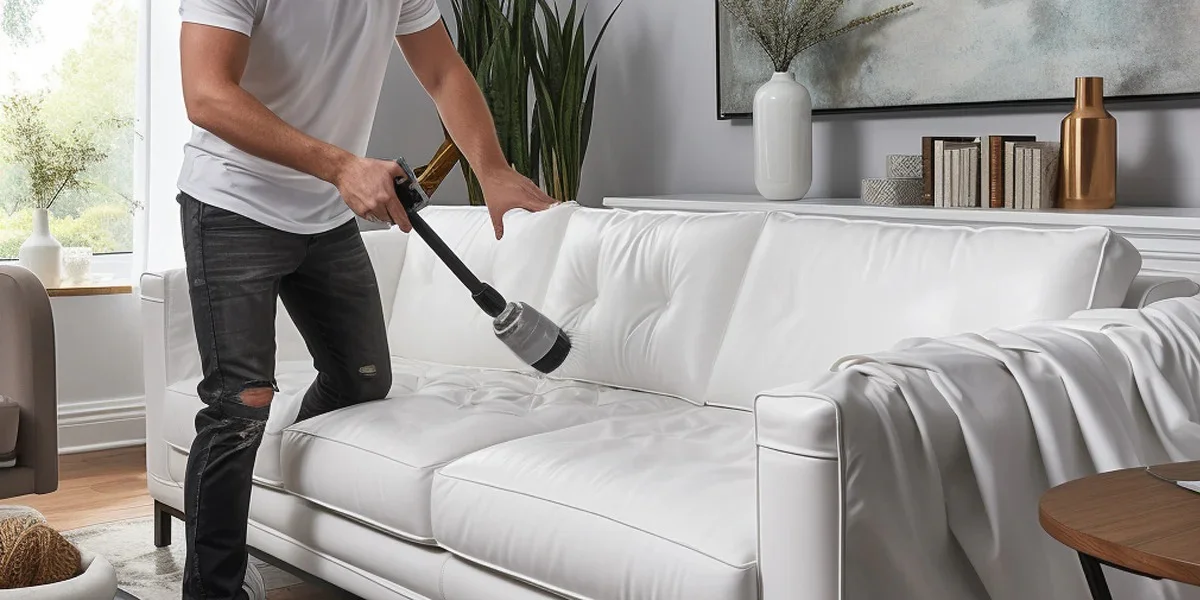
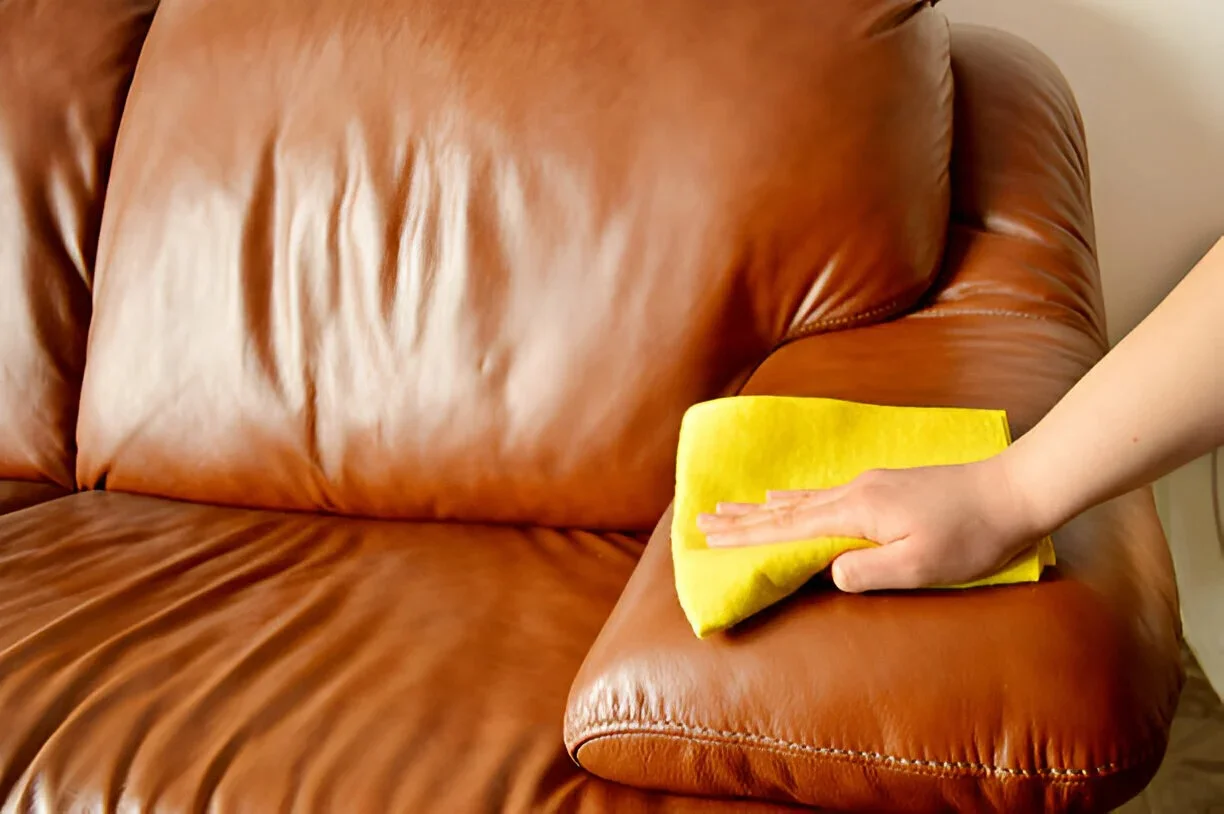
Remove loose dust, crumbs, lint, and pet hair before adding any moisture. This prevents grit from being rubbed into the finish and reduces scratch risk. Use a soft brush attachment or a dry microfiber cloth, especially around seams and cushions.
Patch-test the cleaner
Always test any cleaner on an inconspicuous spot first. Leather finishes can react differently, and patch testing is one of the most repeated recommendations across current care guidance.
Prepare a gentle cleaning solution
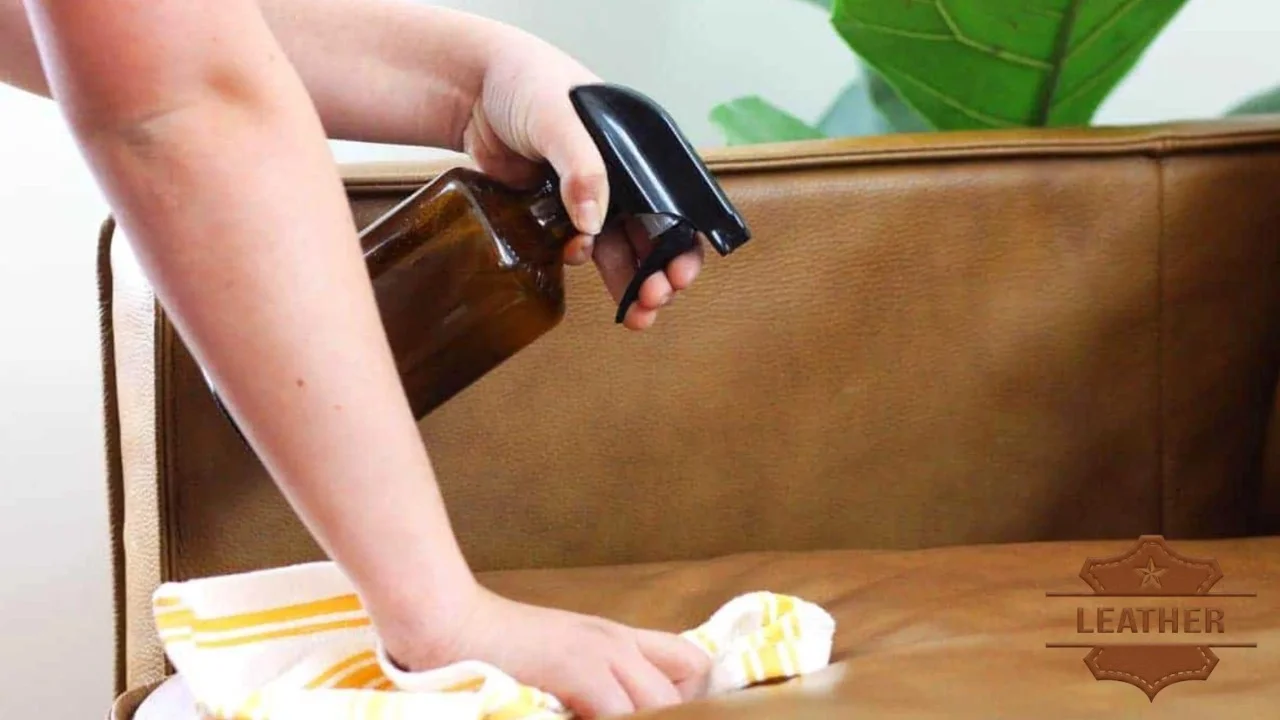
For many treated leathers, a lightly damp microfiber cloth with lukewarm water and a small amount of mild soap is the safest baseline. Some guides also allow a diluted vinegar solution for limited spot cleaning, but it should not be the default for every sofa or every finish.
Clean in small sections
Wipe one section at a time with light pressure. Do not rub hard. Blotting and gentle wiping are preferred because scrubbing can spread the stain or wear the finish.
Remove residue with a clean, damp cloth
After cleaning, go over the area with a second cloth dampened only with clean water if needed. That helps remove soap residue without over-wetting the leather.
Dry the sofa immediately
Use a dry microfiber cloth and allow the sofa to air dry naturally. Never use a hairdryer, never place the sofa near a heater, and never let it sit wet for long. Leather-care sources repeatedly warn that heat and fast drying can cause fading, cracking, and color change.
Condition when needed
Conditioning helps keep leather supple and reduces dryness and cracking. Many current care guides recommend conditioning every 6–12 months for regular-use leather, with more frequent care in harsh or dry environments and more careful product matching for sensitive finishes.
Best Cleaning Method by Stain Type
| Stain Type | Safer First Step | What to Avoid |
| Dust/surface grime | Dry microfiber cloth or vacuum with a soft brush. | Hard brushes and rough cloths. |
| Food/drink spills | Blot immediately with a dry cloth, then use a mild soap solution if needed. | Rubbing and Soaking. |
| Oil/grease | Baking soda or cornstarch to absorb the oil, then brush away gently. | Scrubbing with water or oily cleaners. |
| Ink | Cotton swab with a small amount of rubbing alcohol on the spot only. | Spreading the stain with broad wiping. |
| Water marks/tide marks | Wipe the whole affected panel evenly and dry carefully. | Spot-soaking one tiny area only. |
| Odor / stale smell | Gentle ventilation and light cleaning; baking soda can help in some cases. | Heavy fragrance sprays and wet deodorizing. |
How to Clean Different Leather Types
Aniline leather
Aniline leather is beautiful, but it absorbs liquid quickly and needs a very light touch. Use a dry brush or slightly damp cloth, patch-test every product, and keep it away from harsh chemicals and direct heat.
Semi-aniline leather
Semi-aniline is more forgiving than aniline because it has more protection, but it still deserves gentle cleaning. Use mild soap and lukewarm water on a cloth, then dry well.
Pigmented/protected leather
Protected leather is usually the easiest to live with. Dust weekly, wipe spills immediately, and use a leather-safe cleaner every few months. This is the best match for busy homes with kids or pets.
Suede and nubuck
Suede and nubuck are absorbent and require specialty care. Use a brush made for nap leather, avoid soaking them, and avoid treating them like smooth leather.
Faux leather
Faux leather should be wiped with mild soapy water and a soft cloth, then dried with a microfiber. Avoid harsh chemicals and direct sunlight where possible.
The Best Way to Clean a Leather Couch Naturally
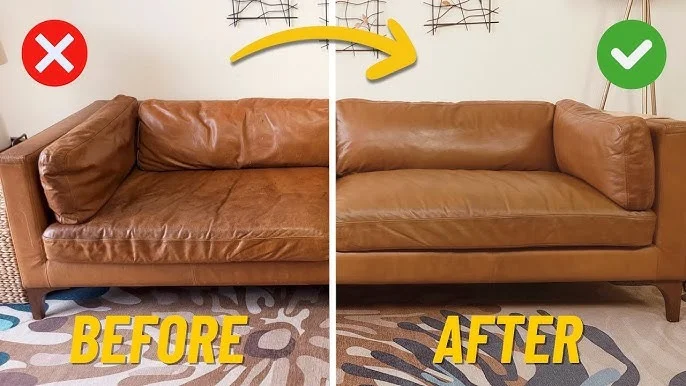
A natural approach works best when it stays gentle. The safest “natural” method is usually a soft cloth, lukewarm water, and a tiny amount of mild soap. For some stains, a diluted vinegar solution can be used carefully, but it is not the best default for every finish.
For oil stains, baking soda or cornstarch is a useful natural absorber. As odor control, light ventilation and dry cleaning are better than aggressive spray-and-soak methods.
Cleaning Schedule for Leather Sofas
| Task | Frequency |
| Dusting | Weekly |
| Vacuuming seams and crevices | Weekly to monthly |
| Spot cleaning | Immediately |
| Deep cleaning | Every 3–6 months |
| Conditioning | Every 6–12 months |
| Professional service | As needed for heavy stains or delicate finishes |
This cadence matches current brand care guidance and expert advice that recommends routine dry care, periodic deep cleaning, and conditioning to keep leather looking healthy.
Common Mistakes That Ruin Leather
- Using too much water
Leather should never be soaked. Too much moisture can leave marks, weaken the finish, and create Drying Issues later. - Scrubbing too hard
Hard rubbing can wear the finish, spread the stain, or leave a dull patch. - Skipping the patch test
Different leather finishes react differently, so test first. - Using the wrong chemicals
Household degreasers, bleach, and strong solvents can damage leather. - Ignoring sunlight and heat
Heat and sunlight can fade, dry, and crack leather over time.
How to Condition Leather Furniture the Right Way
Conditioning is not about making leather oily. It is about restoring balance so the material stays soft and resilient. Most current care sources recommend applying conditioner only after the sofa is clean and dry, then using it sparingly according to the leather type and manufacturer guidance.
Apply a small amount with a clean cloth, work gently, and buff off any excess. If the leather is aniline or very delicate, use the product only if the manufacturer specifically recommends it.
Product-Safe Recommendations Buyers Actually Need
If you are choosing products for a leather sofa, look for these traits:
- pH-balanced or leather-specific cleaner
- Mild, unscented formula
- Microfiber cloth compatibility
- Conditioner matched to the finish
- Clear manufacturer instructions
- Patch-test guidance
- No heavy oil residue
For high-traffic homes, pigmented or protected leather is usually easier to maintain than delicate finishes. For a more natural look, aniline gives beauty and patina, but it requires more care and more caution.
Expert Tips Most Buyers Ignore
- Clean seams and crevices first, because grit hides there.
- Rotate cushions so wear stays even.
- Keep the sofa out of direct sunlight and away from radiators.
- Wipe spills immediately instead of waiting for a “better time.”
- Use the mildest effective cleaner, not the strongest one.
Professional Cleaning vs DIY
DIY cleaning is best for dust, light grime, and fresh spills. Professional help makes more sense for deep ink marks, fragile aniline leather, mold, cracks, peeling, or expensive upholstery that needs restoration rather than simple cleaning. Several expert pages also advise calling a pro instead of risking damage when the stain is serious or the leather finish is sensitive.
Who Should Buy This Guide’s Recommended Leather Type
- Families with kids or pets: pigmented/protected leather.
- Luxury buyers who want patina: full-grain or aniline leather.
- Style-first shoppers who still want practicality: semi-aniline.
- Budget-conscious shoppers: genuine leather only if the exact finish and coverage are disclosed. The label alone is not enough.
- Buyers who want easy care: pigmented or protected leather.
Who Should Avoid Delicate Leather Finishes
If your sofa will live in a very sunny room, near heat, or in a high-traffic home with pets and children, delicate aniline or suede-like finishes may be frustrating unless you are committed to careful maintenance. Those finishes can be stunning, but they ask for discipline.
Future Trends in Leather Care for 2026
The big trend is not a new miracle cleaner. It is smarter care: clearer product labeling, more finish-specific instructions, more buyer education, and more emphasis on responsible sourcing and maintenance. The Leather Working Group continues to position itself around audit standards and responsible production, with more than a third of global finished leather production assessed under its audit standard. That makes sourcing and transparency more important than ever for brands that want trust.
Google’s own docs also make it clear that content should be helpful, accurate, and visibly representative of the page. For leather content, that means the article should answer real cleaning problems, not just repeat Generic Tips.
People Also Ask
Can I use vinegar on a leather sofa?
Sometimes, but not as the default for every sofa. A few current guides allow diluted vinegar for spot cleaning, but finish type matters, and some experts prefer a milder soap-and-water baseline unless the manufacturer recommends vinegar.
What should you not use on leather furniture?
Avoid bleach, harsh solvents, abrasive scrubbers, soaking wet cloths, and random household degreasers. Leather can dry out, discolor, or crack when treated like fabric.
How often should I clean a leather sofa?
Dust or wipe it weekly, vacuum seams regularly, spot clean immediately, deep clean every 3–6 months, and condition about every 6–12 months, depending on use and climate.
How do I clean white leather safely?
Use the same gentle method, but be even more careful with patch testing and residue removal because light-colored leather shows dirt and marks more easily. Some current guides specifically note that white leather is the toughest color to clean because dirt shows the most.
Can water damage leather furniture?
Yes, especially if the leather is soaked or left wet too long. Leather-care sources repeatedly warn against excess moisture and advise drying naturally, away from heat.
Conclusion
The best way to clean a leather sofa is not to treat it like fabric. Start dry, use the gentlest cleaner that fits the finish, blot instead of scrubbing, and dry the sofa properly every time. Then protect it with regular dusting, sensible conditioning, and smart placement away from heat and harsh sun. That is the difference between a sofa that just looks cleaned and a sofa that actually stays healthy.
For TheLeatherItems.com, this topic can become a strong pillar page because it naturally connects cleaning advice to Buying Guidance, leather types, product safety, and maintenance. That combination matches current people-first SEO guidance and gives readers a reason to stay, trust the site, and explore more leather content.
Legal Disclaimer
Leather quality, pricing, manufacturing standards, and product availability may vary by country, brand, and supplier. Always verify authenticity, material details, and care instructions before purchase.