Introduction
The Leather Moto Jacket functions like a highly optimized language model for wardrobes: compact, expressive, and instantly meaningful. It signals identity rebellion, craft, and endurance with high semantic weight. Whether your use-case is pragmatic (motorcycle protection) or stylistic (a fashion token), selecting the optimal jacket requires parsing features (leather type, construction, fit) and ranking them according to intent and constraints. In this pillar guide, reframed through an NLP lens, you’ll receive clear taxonomy, decision heuristics, structured checklists, and actionable maintenance protocols so your jacket performs reliably and gracefully for years.
What is a Leather Moto Jacket?
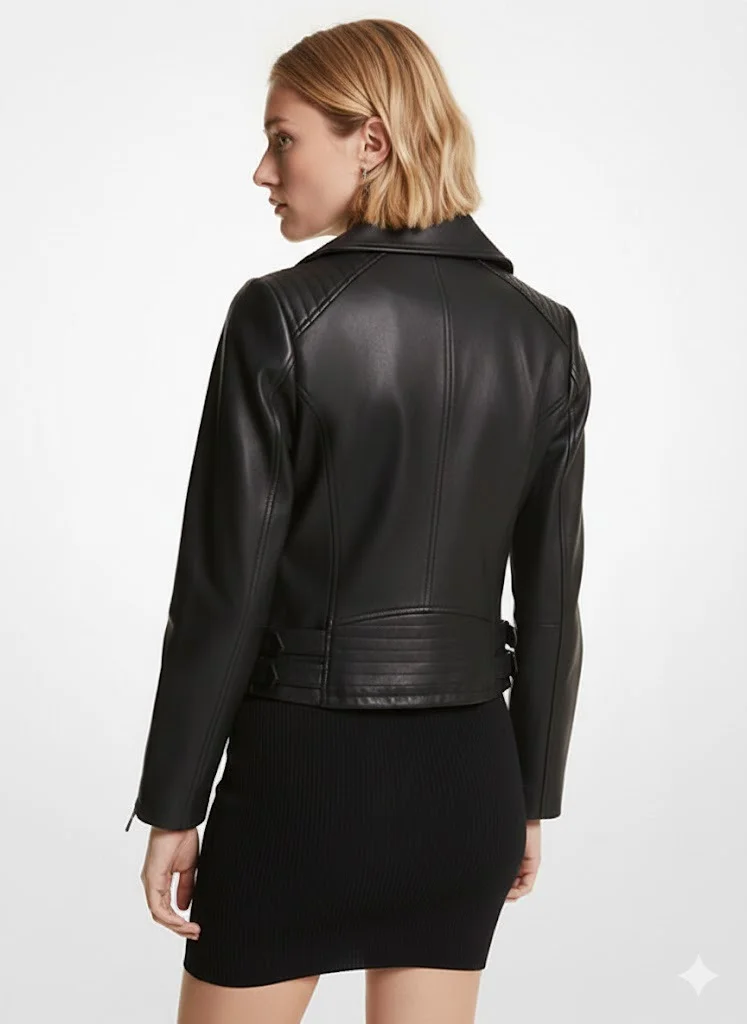
A leather moto jacket (often called a biker jacket) is a close-fitting leather outer layer originally designed to protect motorcyclists and to manage airflow, abrasion, and mobility. In an NLP metaphor, the moto jacket is the embedding vector for a style: compact, highly discriminative, and rich in cultural embeddings. Key surface features to detect when tagging or describing a jacket are:
- Asymmetrical front zipper: Diagonal closure that improves wind sealing and creates the iconic silhouette.
- Snap or notch collar and wide lapels: Afford both function (windbreak) and identity (visual signature).
- Zip cuffs and zip pockets: Practical affordances for fit and storage.
- Heavy-duty hardware: Metal zippers, snaps, buckles signal durability and higher token weight.
- Reinforced stitching and layered panels: Structural features that confer abrasion resistance and longevity.
Fashion variants replicate these surface cues while simplifying internal architecture (lighter
A short history of the moto jacket
The modern motorcycle jacket’s canonical prototype is Schott NYC’s “Perfecto” (1928), designed with heavy leather, diagonally offset zippers, and a belted waist to prevent flapping while riding. This archetype propagated through cinema, rock music, and countercultural movements, accumulating semiotic value beyond utility. Today, that lineage informs both utility-first and couture-first variants: the same structural grammar, repurposed for new stylistic dialects.
Common styles & variations
Below is a concise taxonomy (style label → defining features → common uses):
- Classic Biker / Asymmetrical Moto: Large lapels, offset zip, belted waist. Use: dual-purpose (riding + fashion), high visual impact.
- Café Racer: Minimalist collar, straight-zip, slim silhouette. Use: clean style, everyday urban riding.
- Cropped Moto: Shortened them, often lambskin. Use: high-fashion, pairs with high-waist garments.
- Oversized / Relaxed Moto: Increased boniness for layering. Use: contemporary streetwear.
- Distressed / Vintage Finish: Pre-worn textures. Use: retro aesthetic.
- Armored / Riding-Specific Jackets: CE-rated pockets, triple-stitched seams. Use: commuting and sport riding.
Leather types quick guide + table
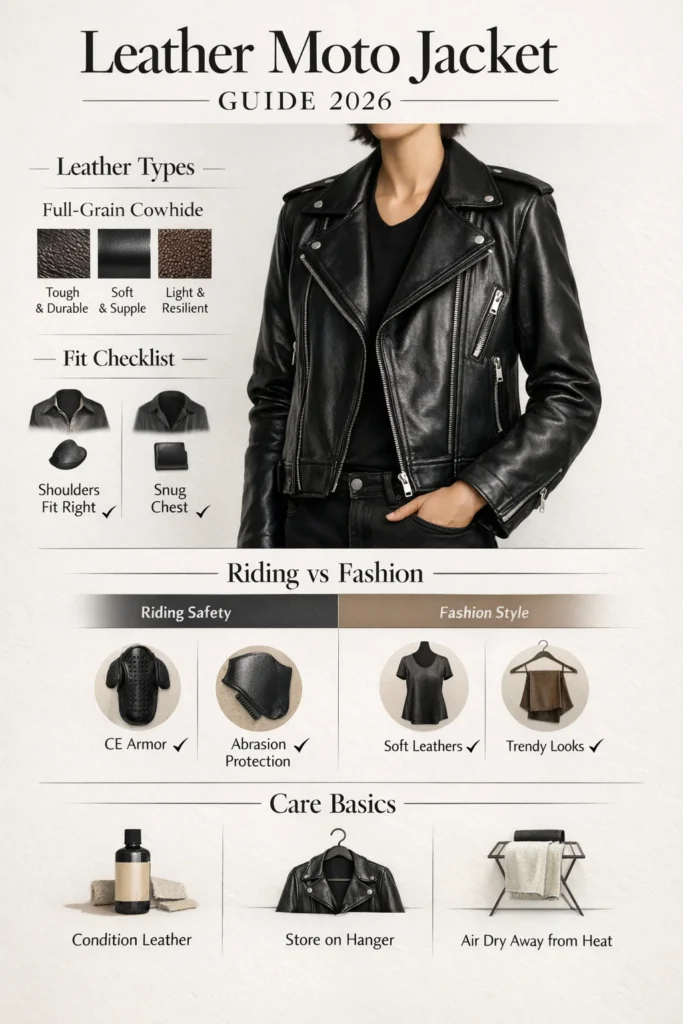
Understanding hide selection is a primary signal for both performance (abrasion resistance, tensile strength) and surface characteristics (hand-feel, drape). Below is a compact feature matrix suitable for content blocks or data tables.
| Leather Type | Feel & Look | Durability | Best For |
| Full-Grain Cowhide | Stiff initially; develops rich patina | Very high (best abrasion resistance) | Riders, heirloom pieces |
| Top-Grain / Corrected Grain | Smooth, even surface | High | Fashion-forward jackets |
| Lambskin / Sheepskin | Extremely soft, buttery | Moderate (more delicate) | High-end fashion, cropped styles |
| Goatskin | Distinct grain; flexible | High, lighter than cowhide | Lightweight durable jackets |
| “Genuine Leather” (label) | Varies; often split leather | Lower | Budget real-leather pieces |
| PU / Vegan Leather | Imitates look; synthetic hand | Low may crack | Vegan/budget fashion buyers |
When labeling products for SEO or catalog metadata, use the leather type as a primary attribute tag to help both users and search agents filter effectively.
Why leather type matters simple science
Three performance axes matter when selecting hide: abrasion resistance, tear strength, and flexural fatigue. Full-grain cowhide ranks highest on abrasion resistance and tear strength because it retains the hide’s outermost fibrous bundles. Lambskin scores high for immediate tactile comfort and drape but offers lower abrasion resistance; it’s suited to fashion, not crash energy absorption.
Other factors include moisture behavior (hydrophobicity vs hygroscopicity), thermal properties (insulative value per unit thickness), and the quality of tanning and finishing (which alters surface friction and longevity). For riders, these metrics translate into real-world outcomes: greater slide-resistance and less material failure on impact correlate with full-grain hides and reinforced construction.
How a moto jacket should fit easy checklist
Leather’s limited alterability (vs woven jackets) makes fit decisions high-stakes. Use this fit-validation checklist when trying on a jacket:
- Shoulders: Shoulder seam should align with the natural shoulder edge.
- Chest: Zippable comfortably while wearing a light-to-medium sweater; not ballooning when closed.
- Sleeve length: Sleeves should fall at the base of the thumb when arms hang.
- Torso length: Hem typically sits at or slightly above the waist; balance with intended layering.
- Mobility: Raise arms and rotate shoulders no worrying seam pull or restricted reach.
- Collar behavior: When zipped, the collar should allow comfortable breathing; when open, lapels should lie flat.
Buying checklist what to check before you buy
This operational checklist is formatted to be printable or to drop into a product page as a downloadable checklist.
Pre-purchase decisions
- Intended use: Riding or fashion? Decide first.
- Leather grade: Prefer full-grain or high-quality top-grain for durability.
Construction checks
- Seams: Double/triple-stitched in high-wear zones.
- Panels: Layered panels instead of glued overlays.
- Hardware: YKK or branded zippers, solid metal snaps.
- Lining: Breathable; removable liners are a bonus.
- Armor compatibility: Pockets for CE-rated protectors (if riding).
Policy & provenance
- Return policy: At least 14–30 days to check fit.
- Repair service: Brand repairs prolong product life.
- Tanner info: LWG-certified tanneries are preferable for sustainability-conscious buyers.
Head-to-head: Full-Grain Cowhide vs Lambskin vs Goatskin
| Feature | Full-Grain Cowhide | Lambskin / Sheepskin | Goatskin |
| Abrasion Resistance | Highest | Moderate | High |
| Break-in Time | Long | Immediate | Short |
| Weight | Heavy | Light | Light–Medium |
| Comfort out-of-box | Stiff → softens | Very soft | Flexible |
| Patina & Aging | Excellent | Mild | Good |
| Price | High | High | Mid–High |
| Best Use | Riding / durable wear | Fashion / luxury | Lightweight durable |
This table can be used as a modular content block for landing pages or comparison widgets.
Safety motorcycle use vs fashion what to pick
If you ride, treat safety as a hard constraint, not a soft preference. Follow this decision logic:
- High-risk riding (street/racing/commuting): Choose full-grain cowhide or certified riding textiles, CE-labeled garments with A/AA/AAA ratings per EN 17092, and Level 2 armor for shoulders, elbows, and back.
- Low-speed or occasional riding: High-quality top-grain with armor pockets may suffice, but check ratings.
- Fashion-only: Lambskin or corrected-grain leathers are fine but treat them as non-protective absent clear certifications.
Fit for riding must be snug so armor remains aligned with joints on impact. Oversized fashion cuts should not be used as substitutes for certified riding gear.
Styling ideas real, simple looks
These outfit prompts are short, shareable, and optimized for social captions or product cross-sells.
For Men
- Classic: Black cowhide moto + slim dark jeans + leather boots + white tee.
- Layered: Moto jacket over a slim hoodie + tapered chinos + high-top sneakers.
- Smart-casual: Slim moto + merino knit + tailored trousers + derby shoes.
For Women
- Edgy-feminine: Cropped lambskin moto + silk slip dress + ankle boots.
- Street: Oversized moto + high-waisted jeans + chunky sneakers.
- Evening: Slim lambskin moto + silk top + heels.
Care & maintenance easy routine
A lightweight maintenance rhythm preserves value and maximizes the jacket’s useful life.
Routine
- Wipe leather with a soft, dry cloth after each wear to remove dust and surface grit.
- Condition 1–3 times a year depending on climate (dry climates require more conditioning; humid climates less). Use a conditioner recommended for the hide type.
- Store on a wide, padded hanger, in a breathable garment bag or open closet; never long-term in plastic.
- Dry naturally if wet; avoid heat sources which strip oils.
- Apply waterproofing sprays or creams recommended for your leather type if you frequently encounter rain.
Avoid
- Machine wash or solvent-based cleaners.
- Folding leather for extended periods (causes creases and cracking).
- Over-conditioning (can overly soften stitches or change drape).
For large stains or structural damage, engage a leather repair specialist or the brand’s repair service.
Troubleshooting & repairs
- Small scuffs: Use a soft cloth and leather conditioner to buff lightly.
- Deep scratches: Seek a specialist for color-matched repair or use professional color restoration balms.
- Broken zippers: Replaceable by tailors or authorized service centers.
- Ripped seams: Re-stitching by a leather repair professional is recommended; domestic sewing machines often cannot handle leather thickness.
Price ranges and what to expect
Price bands are influenced by hide quality, construction detail, brand heritage, and origin of tanning:
- PU / Faux leather: $50–$200 lower longevity.
- Entry real leather (top-grain / small brands): $200–$500 credible mid-range options.
- Premium lambskin & full-grain: $500–$1,500 high-quality hides and fit.
- Luxury / bespoke: $1,500–$5,000+ handmade, premium hides, custom fit.
Top brands & where good jackets come from
- USA: Heritage and robust riding jackets Schott NYC, Vanson.
- Italy: Fashion-forward, premium lambskin, and couture ateliers.
- UK & Japan: Niche brands with quality control and unique cuts.
- Global mid-range: Brands and direct-to-consumer labels that emphasize honest materials and LWG-sourced hides.
When recommending products, surface tannery provenance and LWG certification if available this adds trust signals for eco-conscious audiences.
FAQs
A: Yes. Leather moto jackets remain a wardrobe staple visible on runways and street style. Both classic tailored fits and relaxed oversized silhouettes continued to register in fashion coverage through 2024–2026.
A: Choose lambskin for immediate softness, luxury drape, and fashion use. Choose full-grain cowhide for durability and protection if you ride. Goatskin offers an in-between: lighter weight with good abrasion resistance.
A: Yes, with the right leather weight and lining. Perforated or thin hides and lightweight liners suit summer; quilted or insulated liners are appropriate for winter.
A: Look for EN 17092 labeling (A / AA / AAA) and CE-labeled armor pockets that accept EN 1621-standard protectors. If these certifications are absent, treat the jacket as a fashion piece, not protective gear.
A: With proper care, a full-grain leather jacket can last decades. Lower-quality leather or PU typically lasts only a few seasons before visible failure.
Conclusion
Treat a leather moto jacket as a Long-Term asset: determine your primary intent (riding vs fashion), choose the hide and construction that match that intent, verify fit meticulously, and commit to a modest maintenance routine.