Introduction
A Moto Leather Jacket perfectly blends practicality and fashion. It started as protective gear for motorcyclists and has become an essential item in wardrobes worldwide. Whether you’re looking for something to keep you safe while riding or a stylish piece for everyday wear, this guide covers everything from its origins to purchasing choices, leather details, and upkeep. The explanations are straightforward—like chatting with a teenager—but packed with accurate, up-to-date info for 2026.
What is a Moto Leather Jacket?
A moto leather jacket, short for motorcycle jacket, is an outerwear piece inspired by riding gear. It features a slim, aerodynamic shape, practical elements like zippers and snaps, and sometimes reinforced sections for protection on the bike. Some versions focus purely on fashion, while others include armor pockets and tougher materials for real riding.
Quick one-line definition: A moto leather jacket is a motorcycle-inspired leather jacket designed for both performance and style.
History of the Moto Leather Jacket
The classic moto silhouette emerged from early motorcyclists’ needs for protection. Schott NYC’s “Perfecto,” launched in the late 1920s, became a defining design and gained fame through films and music as a rebel symbol. Through the years, it shifted from pure riding equipment to a cultural staple—seen on tracks, screens, and streets alike.
Moto Jacket vs Biker Jacket: What’s the Difference?
These terms often overlap, but subtle distinctions exist:
- Moto jacket: Cleaner, sleeker lines; café racer roots; less hardware; ideal for daily fashion and moderate riding.
- Biker jacket: Bulkier build, extras like belts, wide lapels, asymmetrical zips—the rugged “Perfecto” feel is tied to serious riding.
Anatomy of a Moto Jacket Key Features
Knowing the elements helps spot quality.
Core Components
- Leather panels & grain: Full-grain, top-grain, corrected-grain, lambskin—each ages uniquely.
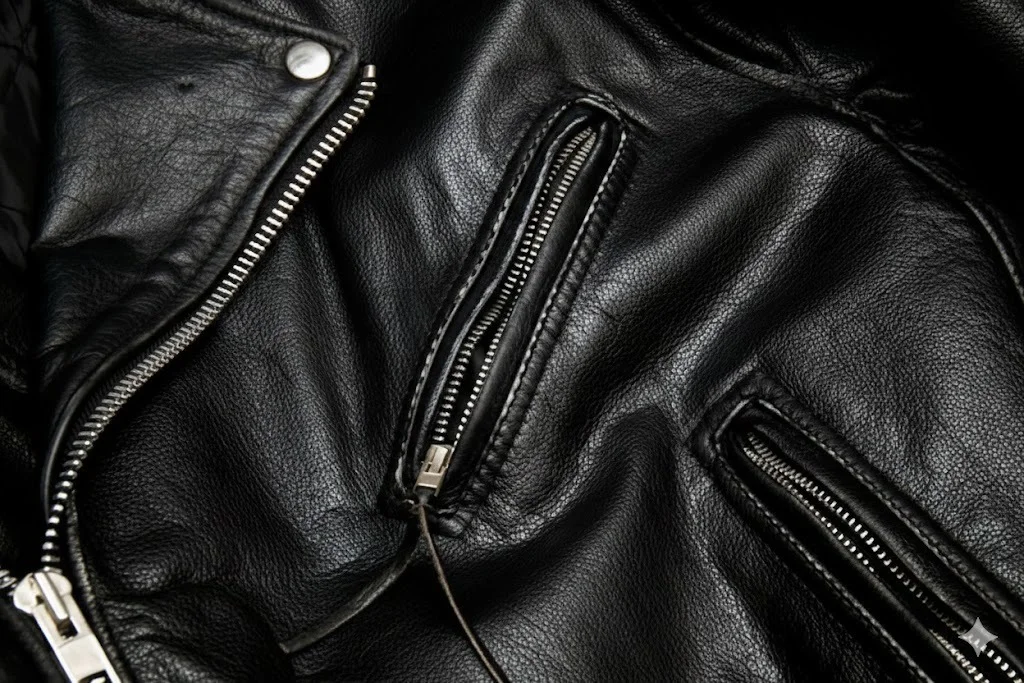
- Zippers & hardware: High-grade metal (like YKK), firm snaps, durable pulls outlast cheap ones.
- Lining: Quilted, mesh, or removable thermal for warmth and ease.
- Seams & reinforcements: Double stitching and bar-tacks at stress areas boost strength.
- Armor pockets: Rider-focused jackets have slots for CE-rated protectors at shoulders, elbows, and back.
Signature Aesthetic Features
Cropped hems, band collars, lapels, and pocket layouts shift the look from timeless to modern.
Types & Styles of Moto Leather Jackets
Key styles include:
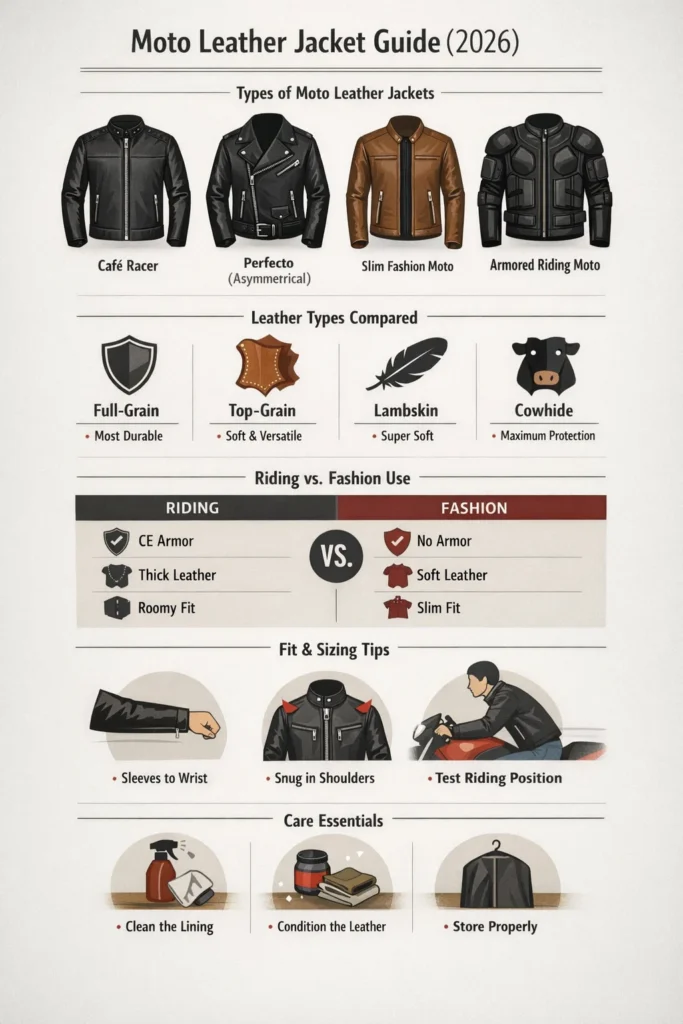
- Classic Asymmetrical Offset zip, broad lapels, cinched waist; bold and iconic.
- Café Racer — Clean straight zip, band collar, slim profile; minimal extras and highly versatile.
- Slim / Fashion Moto — Softer lambskin or top-grain, cropped for contemporary appeal.
- Armored Riding Moto — Thick cowhide/steerhide, CE pockets, sometimes reflective bits for safety.
- Cropped & Longline Variants — Short for trendiness, longer for layering and cold weather.
Leather Types Used in Moto Jackets
The material choice often outweighs the brand.
Full-grain Leather
- Pros: Toughest, develops beautiful patina.
- Cons: Pricier.
Top-grain Leather
- Pros: Smooth, consistent look; breaks in easier.
- Cons: Slightly less tough than full-grain.
Lambskin
- Pros: Super soft; perfect for slim fashion pieces.
- Cons: Lower abrasion resistance—not great for intense riding.
Cowhide / Steerhide
- Pros: Excellent abrasion protection; top for safety.
- Cons: Heavier, needs time to soften.
PU / Vegan Leather
- Pros: Affordable, animal-free.
- Cons: Less breathable, wears out faster.
Tip: Choose cowhide/steerhide with armor compatibility for real riding; lambskin or top-grain for street comfort and drape.
How to Identify Original vs Fake Leather
Simple checks in-store or at home:
- Smell: Genuine has a natural, Organic Aroma; fake smells chemical/plastic.
- Grain & pattern: Real shows irregular texture; fakes often repeat uniformly.
- Edge inspection: Leather edges appear fibrous; faux looks smooth or plastic-like.
- Flex & warmth: Real warms up and softens when held; fake stays cool.
- Price & label: Suspiciously cheap “full-grain” claims are red flags.
- Small water test: A drop on a hidden area absorbs slightly into real leather (avoid visible spots).
Manufacturing Process From Hide to Jacket
Simplified steps:
- Sourcing & grading hides — Selected by size and imperfections.
- Tanning — Chrome (quick, uniform) or vegetable (slower, richer character).
- Dyeing & finishing — Aniline highlights natural traits; pigmentation adds stain resistance.
- Pattern cutting — Panels aligned to the grain for efficiency.
- Hardware & lining installation — Zips, snaps, and liners added.
- Assembly & stitching — Reinforced at key points.
- Quality control — Final inspections.
How to Choose the Best Moto Leather Jacket: Buying Guide
Quick checklist:
- Fashion/everyday → Lambskin/top-grain → Slim fit → Soft lining.
- Rider/protection → Cowhide/steerhide → Room for armor → CE pockets.
- Year-round → Top-grain + removable liner → True size → Vents/liner.
- Budget → PU or entry-level genuine → Size up if needed → Strong stitching/hardware.
Decision tips: Prioritize protection (CE pockets, tough leather, reinforcements) if riding; focus on fit and feel for looks alone.
Fit & Sizing: What to Know
Rider Fit vs Fashion Fit
- Rider: Space for base layer/armor; full movement.
- Fashion: Snug through shoulders/chest; minimal layering room.
Length & Movement
Waist-length classic; cropped trendy but less versatile; longline for extra coverage/warmth.
How to Check Fit in the Shop
Raise arms, mimic riding posture—if seams strain, it’s too tight. Sleeves hit the thumb base when arms out; zip comfortably.
Safety & Rider Protection
Essential for riders.
Armor & CE Standards
Seek CE-rated pockets for shoulders, elbows, and back. Standards: EN 1621-1 (limbs), EN 1621-2 (back). Level 2 provides better impact absorption than Level 1. Brands like D3O detail these and offer compatible inserts.
Leather Thickness & Abrasion
Thicker cowhide/steerhide excels in slide resistance; riding jackets often specify hide weight (oz/mm).
Construction
Stitched (not glued) seams, bar-tacks, and double stitching for crash durability.
Price vs Value: What to Expect
- Under $200: Often faux or low-grade; fine for style, short life.
- $200–$700: Reliable top-grain/lambskin; great everyday value.
- $700+: Premium full-grain, heritage brands, heavy-duty rider gear; lasts decades.
Higher cost typically means superior materials, hardware, and build.
Top Moto Leather Jackets Worth Considering
This is a curated overview based on recent reviews and expert tests (not live inventory). For latest lab results, check specialist sites and roundups.
Popular recommendations:
- Schott NYC — Timeless Perfecto heritage.
- Alpinestars (e.g., Faster V2) — High-performance rider options with great airflow and durability.
- Dainese — Technical riding gear with solid protection and documentation.
- Other strong contenders — RST, Richa, Spidi Roar, or mid-range like Quince for affordable genuine leather.
Trends lean toward versatile café racers, ventilated leather for warmer rides, and premium full-grain with modern fits.
Comparison Table Fashion Moto vs Armored Riding Moto
- Main purpose: Fashion → style; Riding → protection.
- Leather type: Fashion → lambskin/top-grain; Riding → thick cowhide.
- Weight: Fashion → light-medium; Riding → heavy.
- Armor pockets: Fashion → uncommon; Riding → included/standard.
- Breathability: Varies (higher in ventilated models).
- Price range: Fashion → $150–$800; Riding → $300–$1,500+.
- Longevity: Fashion → moderate; Riding → high.
Styling Your Moto Leather Jacket
Everyday Casual
Black café racer + dark slim jeans + white tee + Chelsea boots.
Smart Casual
Tailored moto over button-down + chinos + brogues.
Streetwear
Oversized moto + hoodie + cargos + chunky sneakers.
Rider Outfits
Over armored base + riding jeans/textile pants + ankle-protected boots.
Tip: Layer textures—knits, denim, cotton—to balance leather’s edge.
Care & Maintenance: Keep Your Jacket Alive
Proper care means decades of wear.
Daily Care
Brush dust, spot-wipe with a soft cloth, hang on a wide hanger.
Monthly / Seasonal Care
Mild soap for lining; damp cloth for leather spots; condition 1–3 times yearly (more in dry areas).
For Water Exposure
Air-dry at room temp (no heat sources); condition after to replenish oils.
Deep Cleaning & Repairs
Professional leather specialist for heavy stains or fixes.
Storage
Cool, airy spot on a wide hanger; breathable bag, no plastic.
Common Care Mistakes
- Harsh cleaners/solvents on leather.
- Direct heat drying (sun/radiator).
- Long-term folding—causes cracks.
Small Repairs You Can Do at Home
- Swap the zipper pull with a keyring/slider.
- Condition or use a dye pen for minor scratches.
- Gently tighten loose snaps; pros for big issues.
Pros & Cons of Owning a Moto Leather Jacket
Pros
- Timeless appeal.
- Real protection when riding-focused.
- Develops attractive patina.
Cons
- Quality costs more.
- Cheap versions wear out fast.
- Heavy rider styles bulky for casual use.
FAQs
A1: Cowhide or steerhide — best for abrasion resistance and durability. Also, look for jackets that accept CE-rated armor.
A2: Yes — pick a jacket with a removable liner or vents for summer; layer in winter.
A3: For durability and long life, good full-grain or top-grain leather is worth the investment. Beware of marketing terms like “genuine leather,” which can mean low-grade.
A4: For fashion: snug but breathable in the shoulders and chest. For riding: allow room for a thin base layer and armor — you must be able to move freely.
A5: Usually 1–3 times a year, depending on climate and use; more often in very dry climates.
Conclusion
A moto leather jacket goes beyond clothing—it’s heritage, real-world protection, and a lasting piece when selected and maintained right. Go cowhide for riding, lambskin/top-grain for fashion. Emphasize CE armor pockets, quality hardware, and a strong build if on a bike. Stick to gentle cleaning, regular conditioning, and smart storage, and it’ll deliver style and Reliability for years.