Introduction
A Vintage Leather Bomber Jacket serves beyond mere clothing; it functions like a precious asset within the shared heritage of men’s and women’s fashion. Originally designed for pilots in exposed cockpits, then embraced by everyday styles, the flight jacket sits inside a rich meaning network covering practicality, prestige, retro appeal, and skilled construction.
Her,e this detailed overview reworks standard collector advice through a language-model style: view each jacket like a data sample, its traits like key features or tokens, origin history like attached metadata, and genuineness tests like rule sets or attribute detectors. You acquire background details, classification system, precise verification steps for genuine pieces against copies, purchasing plus repair tips, expected state levels, and value ranges in the current 2026 markets, reliable makers, plus one ready-to-use buying summary list.
What is a Vintage Leather Bomber Jacket?
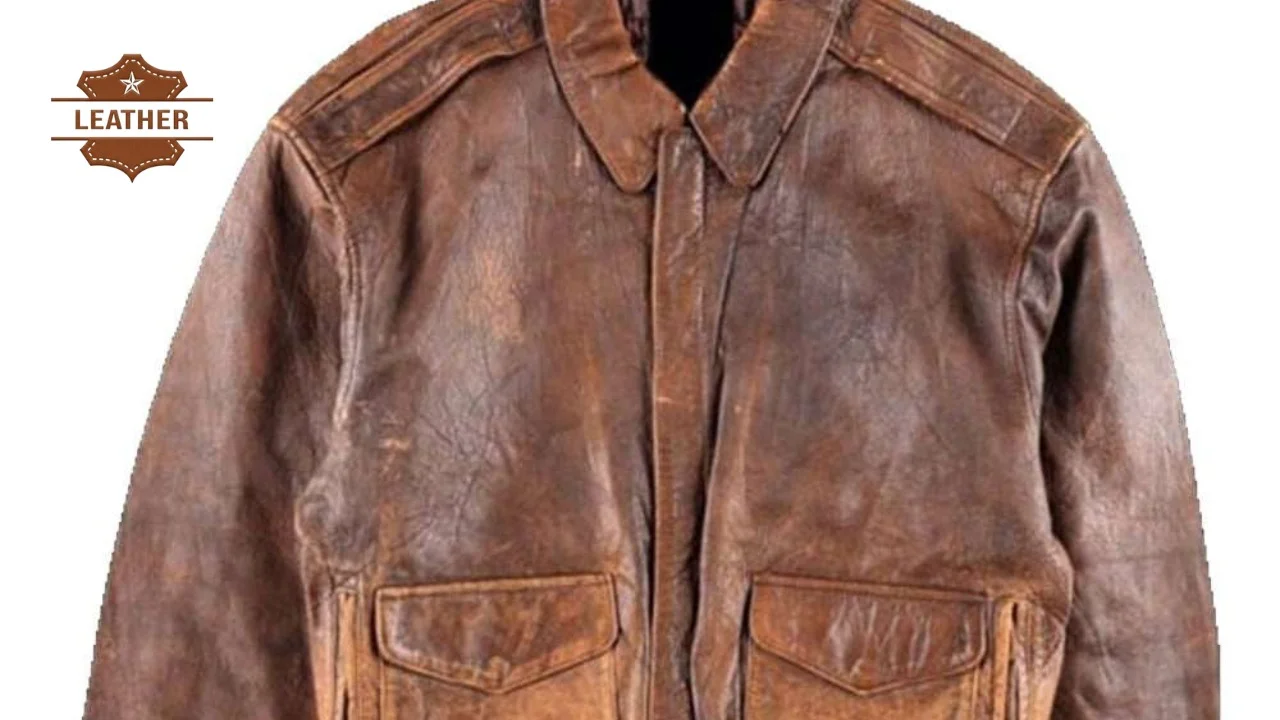
In NLP terms, a vintage leather bomber jacket is a labeled instance from the “historical outerwear” dataset: the label “vintage” usually implies a time-based cutoff (commonly ≥20 years old) and construction features matching period manufacturing practices. Key tokens/features include:
- Material token(s): Full-grain or horsehide leather, sheepskin, or high-quality cowhide (high-weight features for authenticity score).
- Construction tokens: Ribbed cuffs and waistband, period-correct topstitching, panel layout, original hardware (Talon, Conmar, Crown zippers).
- Wear and patina tokens: Natural creasing, worn highpoints, small nicks (explainable signals of age vs. artificial distressing).
- Provenance metadata: Manufacturer contract numbers, service tags, veteran provenance, or paperwork (high-precision evidence).
Replicas or modern “retro” versions often mimic superficial tokens but lack deeper signals like original hardware stamps, period linings, consistent stitch types, and natural hide aging.
Quick Taxonomy — Key Vintage Bomber Styles as Labeled Classes
Treat each style as a class in a taxonomy:
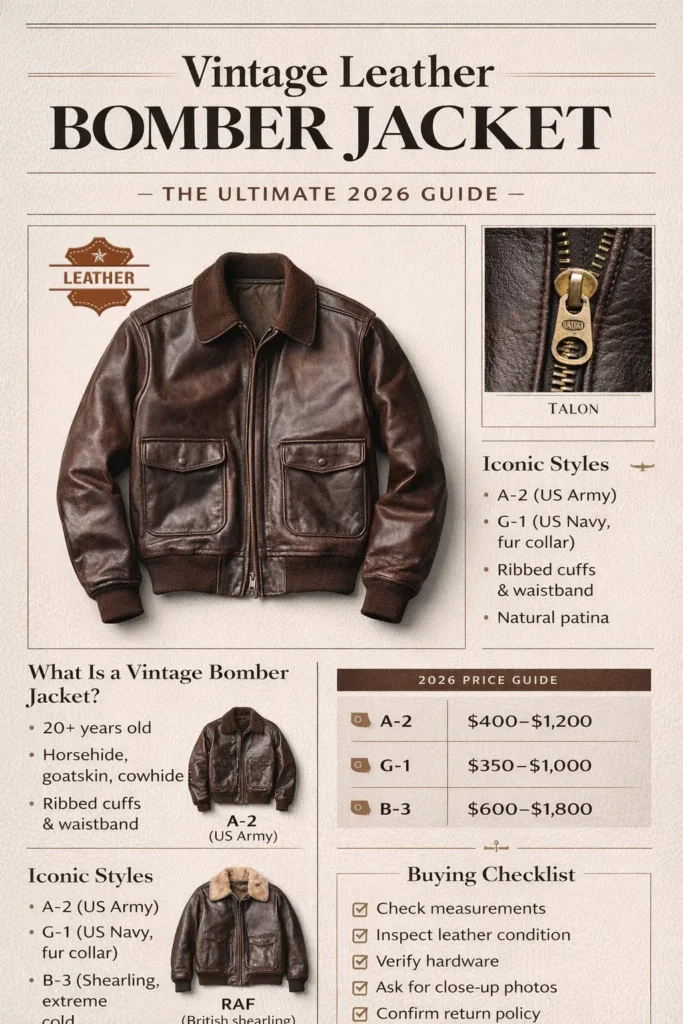
- A-2 — US Army Air Corps classic. Slim silhouette, horsehide or heavy cowhide, simple patch pockets. High collector value. Discriminative features: contract number labels, heavy stitching.
- G-1 — US Navy style. Shearling or fur collar, structured cut. Distinguishing tokens: fur collar attachment, naval inventory tags.
- B-3 — Full shearling bomber. Very warm, heavy. Primary tokens: full shearling interior/exterior (often fragile due to fiber degradation).
- RAF — British shearling bomber. High collar, buckle, and different pattern shapes.
- Leather MA-1 — Later leather adaptations. Relaxed fit, fewer period tokens.
History of the Vintage Leather Bomber Jacket — Chronology as Sequential Token Generation
The bomber evolves from functional aviation gear to a cultural meme across film, music, and wardrobes.
Early Military Origins (WWI – WWII)
Open-cockpit pilots needed windproof leather. The A-2 was standardized in the 1930s with durable hides and reinforced stitches. WWII production runs created contract numbers and tags—now high-value metadata.
A-2: The Classic (1931)
Emphasized durability and clean silhouette. Horsehide develops distinctive patina—a key authenticity feature.
G-1: Naval Adaptation (1940s)
Refined for naval aviators with shearling collars and ergonomic shapes. Pop culture (movies, figures) pushed it civilian.
B-3: Shearling for Extreme Conditions
Full shearling for high-altitude crews. Organic fibers make originals fragile (brittleness, delamination common).
Types & Variations — Feature Comparison Matrix
- A-2: US Army, medium warmth, slim fit, very high collector value, everyday/collector use.
- G-1: US Navy, medium–high warmth, structured fit, high value, smart casual.
- B-3: US Army Air Corps, very high warmth, bulky fit, high value (fragile), cold climates/statement.
- RAF: UK Air Force, very high warmth, heavy fit, medium–High Value, winter/reenactment.
- Leather MA-1: Civilian adaptations, medium warmth, relaxed fit, moderate value, streetwear/casual.
Leather Types Used in Vintage Bombers — Feature Value Hierarchy
Weighting for scoring
- Full-grain leather — Top for durability and patina.
- Horsehide — Very high (dense, period A-2 favorite).
- Top-grain — Moderate to high.
- Shearling/sheepskin — Key for B-3/RAF, high warmth but preservation needed.
- Lower-grade “genuine” leather — Low score (common in fashion remakes).
How Vintage Bomber Jackets Were Made — Production Pipeline
- Hide selection (defect-free thick hides).
- Tanning (vegetable/chrome affects aging).
- Panel cutting.
- Stitching (heavy thread, reinforcements).
- Hardware installation (stamped zippers/snaps).
- Lining & finish (wool/cotton, inspections).
Identification: Original vs Fake — Building an Authentication Classifier
Rule-based classifier: prioritize high-signal features.
High-signal
- Labels/contract numbers (era fonts).
- Hardware marks (Talon, Crown, Conmar).
- Natural patina/grain.
- Provenance (paperwork, records).
Medium-signal
- Stitch patterns (hand-guided vs. modern).
- Lining type/wear.
- Organic smell/feel.
Low-signal
- Superficial distressing.
- Vintage-style tags.
Red flags: Too-perfect leather, synthetic linings, “WWII original” with modern tags/hardware, Chinese-made wartime claims.
Detailed Authentication Walkthrough — Inspection Pipeline
- Measurements/fit (vintage runs small).
- Seam/stitch inspection (loupe for type/thickness).
- Hardware (stamps, patina).
- Leather surface/edges (natural creasing).
- Lining/tags (stamps, contracts).
- Smell/touch (organic vs. chemical).
- Paper trail/provenance.
- Request close-ups, returns policy.
Consult experts or reputable dealers if unsure.
Buying Guide: What to Check Before Purchase
- Fit/sizing vs. reference.
- Leather condition (no severe cracks/dry rot).
- Lining/labels (original preferred).
- Repairs/restorations (minor ok, major reduces value).
- Seller reputation/reviews/authentication.
- Price vs. 2026 market.
Price Ranges Worldwide
Influenced by condition, rarity, and provenance. Broad ranges for originals in typical resale:
- A-2 Vintage: USA $400–$1,500+ | UK £350–£1,200 | Europe €450–€1,300 | Middle East $600–$1,800 (museum/provenance pieces higher).
- G-1 Vintage: USA $350–$1,200 | UK £300–£1,000 | Europe €400–€1,100 | Middle East $550–$1,500.
- B-3 Shearling: USA $600–$2,000+ | UK £500–£1,600 | Europe €650–€1,800 | Middle East $900–$2,500.
Rare/provenance examples exceed these at auctions.
Top Brands & Countries — Trusted Makers
Original/heritage
- Schott NYC.
- Cockpit USA.
High-quality repros
- Aero Leather (UK).
- Eastman Leather (UK).
- The Real McCoy’s / Buzz Rickson (Japan) — obsessive Authenticity.
Pros & Cons
Pros
- Unique patina.
- Value retention/appreciation (rare pieces).
- Durable with care.
Cons
- High cost/repairs.
- Sizing limitations.
- Fragility (shearling/hides).
- Over-restoration risks value.
How to Style a Vintage Bomber Jacket — Simple Ensembles
- Casual: White T-shirt, slim jeans, boots/sneakers.
- Smart casual: Oxford shirt, trousers/chinos, Chelsea boots.
- Women’s: Oversized A-2, high-waisted jeans, ankle boots.
- Winter: B-3, knit scarf, heavy boots.
Keep supporting pieces simple—the jacket is focal.
Care & Maintenance — Operations Manual
- Cleaning: Damp cloth for dirt; specialist for stains.
- Conditioning: Every 6–12 months (test first).
- Storage: Wide wooden hanger, no sunlight/humidity/plastic.
- Repairs: Vintage-experienced leather shops.
- Preservation vs. Restoration: Preserve for collectors; restore for wear (disclose major work).
Red Flags When Buying Online — Automatic Heuristics
- Insufficient close-ups.
- No/inconsistent measurements.
- Too-low price for rarity.
- Modern signs on “vintage” claims.
- No returns/authentication answers.
Request collar/zipper/label close-ups.
FAQs
A: Usually 20+ years old, made with real leather and period construction methods.
A: Check labels, zipper brand, leather patina, stitching, and any contract numbers or maker tags.
A: Minor adjustments possible (sleeve shortening, small tailoring). Major resizing can ruin structure and value.
A: Yes—rare, well-preserved pieces often keep or increase value, but condition and provenance matter most.
Conclusion
A classic leather flight jacket goes beyond simple clothing — it stands as an eternal symbol of legacy, skilled making, and lasting appeal. Originating in the armed forces past and polished across many years of style changes, legendary types such as A-2, G-1, plus B-3 still shape Strong Grace and tough refinement.
What sets an authentic old bomber apart remains its realness — top-grade hides like horse leather or goat skin, solid metal parts, careful seam work, and organic aging glow that grows better with time. Different from quick-made items, a true vintage flight jacket carries narrative and gains unique character as years pass.
Whether seeking it for look, background, or future worth, picking the proper size, confirming legitimacy, and applying good upkeep guarantees your piece endures many seasons ahead. During 2026, the vintage leather flight jacket stays a core closet item — flexible for relaxed daily outfits and polished for clever combined layers.