Introduction of Western leather belts for men
Western Leather Belts are more than just accessories—they serve as functional hardware, cultural symbols, and aesthetic statements. Rich in history and craftsmanship, they blend practicality with storytelling through tooling, buckles, and materials. This comprehensive 2026 guide structures everything in a clear, actionable way: from heritage and materials to buying decisions, care, and top recommendations.
Heritage & Cultural Background
Western belts trace their roots to functional straps used by riders, ranch hands, and cowboys for securing gear. Over time, they evolved into symbolic pieces: trophy buckles for rodeo champions, intricate tooling narrating personal or regional stories, and influences from Native American and Spanish metalwork traditions (like conchos and silver accents).
Today, these belts carry deep cultural meaning. A well-made example encodes heritage through its leather, patterns, and hardware—making provenance a key factor in value, authenticity, and appeal.
Leather Types: Key Materials and Characteristics
Leather type is one of the most important factors in durability, appearance, and aging.
- Full-Grain Leather — The highest quality, using the outermost hide layer with natural grain intact. It offers superior strength, develops a rich patina over time, and excels in longevity. Ideal for heirlooms and heavy use.
- Top-Grain Leather — The top layer, lightly sanded or corrected for smoothness. Durable and uniform in look, with good strength but less pronounced patina. Great for everyday polished wear.
- Genuine / Corrected Grain — Lower layers or heavily processed surfaces, often embossed to mimic grain. Affordable but less durable and poor aging. Suited for budget or fashion pieces.
- Exotic Leathers — Alligator, ostrich, stingray, snake, etc. Unique textures and high value, but may require CITES documentation for legal trade.
Tanning Processes
- Vegetable-tanned: Plant-based, ideal for tooling and patina development.
- Chrome-tanned: Faster process, softer and more water-resistant.
Quick Comparison Table
- Full-grain: Very high durability, excellent patina, high price, best for heirlooms/heavy use.
- Top-grain: High durability, moderate patina, mid price, everyday/dress.
- Genuine/Corrected: Low–moderate durability, poor patina, low price, fashion/budget.
- Exotic: High durability, unique patina, very high Price, luxury statements.
Western Belt Styles and Variations
Common categories include:
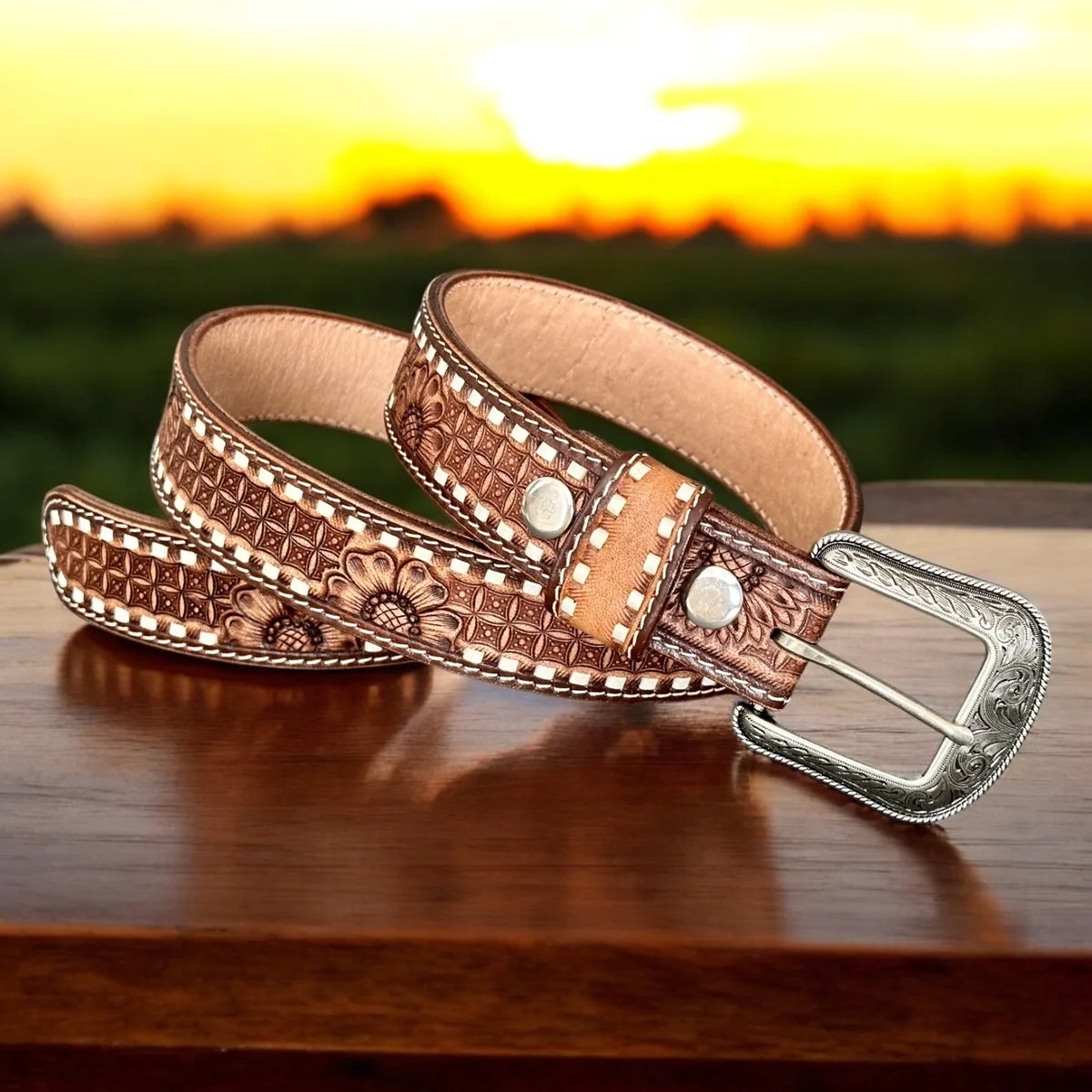
- Classic Tooled Leather: Hand-carved motifs on vegetable-tanned full-grain.
- Concho & Trophy Belts: Metal conchos, large decorative buckles—statement pieces.
- Minimal Western: Slimmer widths, subtle details for modern/urban looks.
- Dress Western: Polished, narrower, smaller buckles for smart-casual.
- Work-Grade Ranch: Thick (8–12 oz), reinforced for heavy-duty use.
Anatomy of a Western Belt: What to Inspect
Key features to evaluate:
- Strap thickness/weight (oz): 8–12 oz for durability.
- Edge finishing: Burnished for water resistance.
- Stitching: Saddle-stitched or reinforced.
- Buckle attachment: Snap/removable vs fixed.
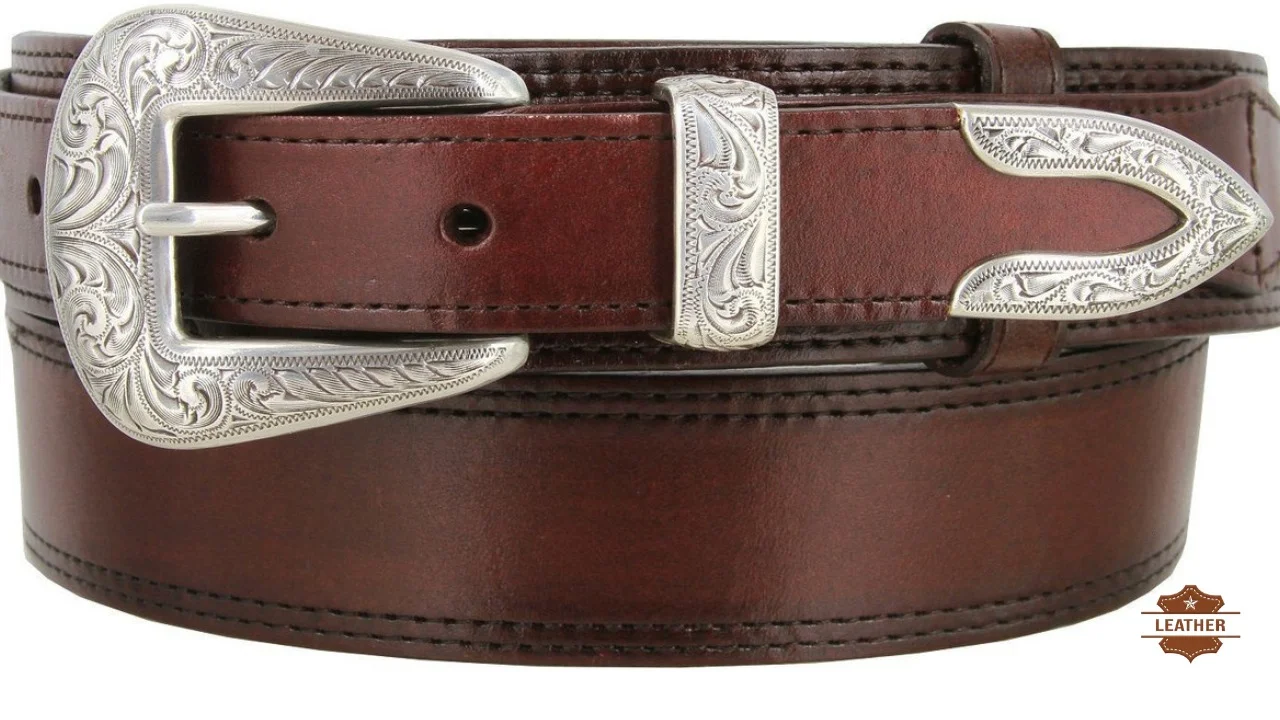
- Hardware: Solid brass, sterling silver, or nickel.
- Lining: Suede backing for stability.
How to Choose: Step-by-Step Buying Guide
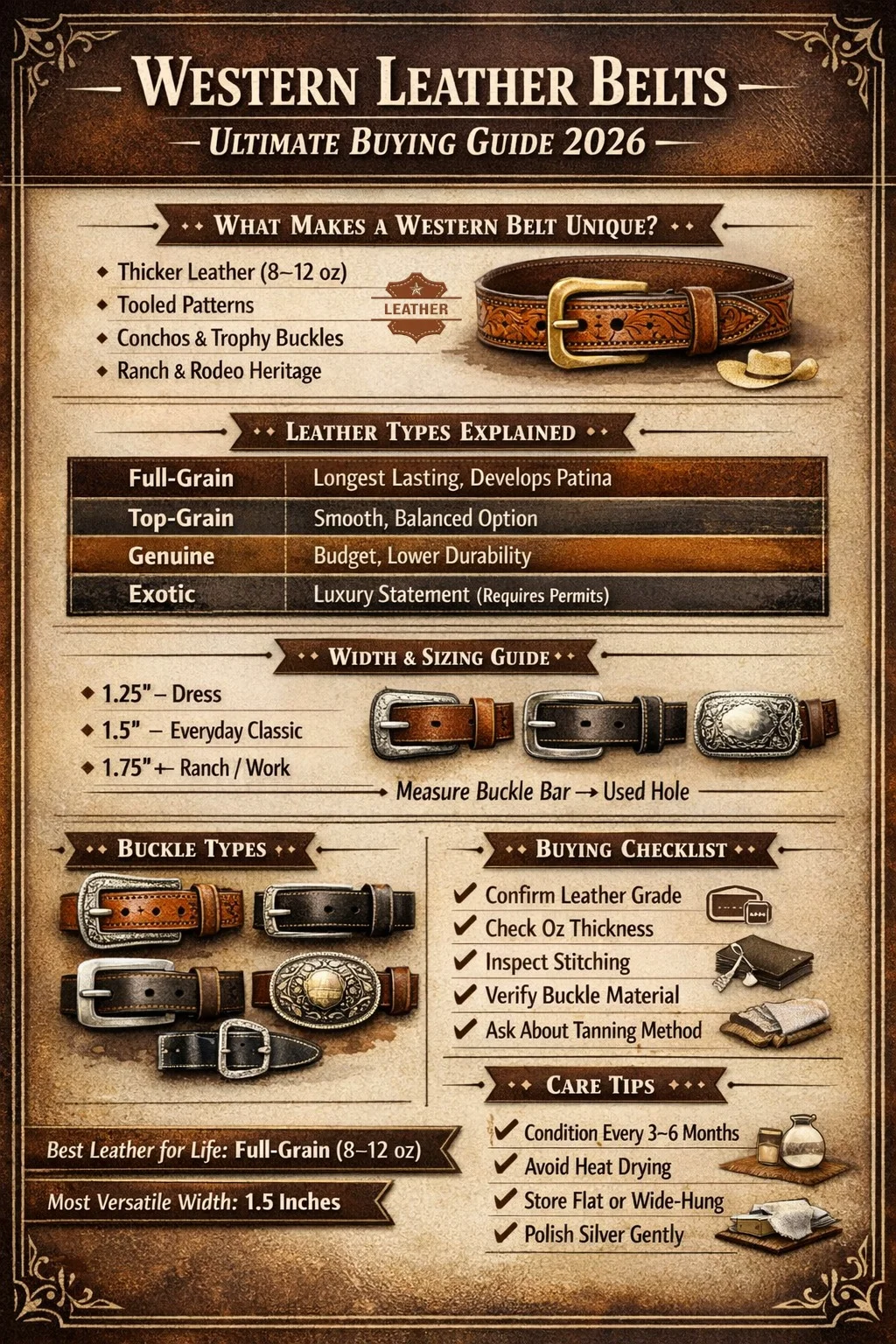
- Define Use & Style — Daily jeans (1.5″), formal mix (1.25–1.5″), ranch/work (1.75″+).
- Select Leather — Full-grain for longevity; top-grain for polish/budget.
- Choose Width & Thickness — 1.25″ dress, 1.5″ versatile, 1.75″+ heavy.
- Pick Buckle — Solid materials, removable if desired.
- Size Correctly — Measure existing belt (buckle bar to most-used hole) or waist + 1–2 inches.
- Inspect Quality — Even tooling, stitching, edges, and dye.
Buckles & Hardware
- Types: Plate (decorative/engraved), frame (functional), concho/snap-on, championship/trophy (oversized/collectable).
- Materials: Prioritise solid brass, sterling silver, or nickel over plated alloys for longevity.
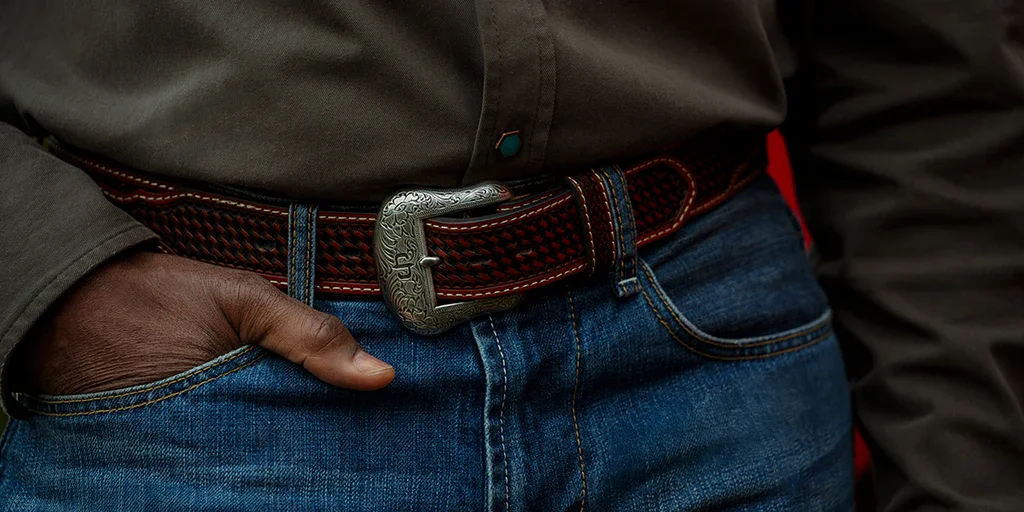
Detecting Real vs. Fake Leather
- Natural variations/marks vs uniform perfection.
- Earthy smell vs chemical.
- Fibrous cross-section vs fabric/foam.
- Suspiciously low prices for “full-grain.”
- Reputable sellers provide tannery/Origin details.
Materials Comparison: Use Cases & Lifespan
- Full-grain cowhide: Heirloom/heavy wear, 8–12 oz, 10–40+ years.
- Top-grain: Everyday, 6–8 oz, 5–15 years.
- Corrected/Genuine: Budget, 3–5 oz, 1–5 years.
- Exotic: Luxury, varies, 10–30 years.
How to Style Western Belts
- Denim/Jeans: 1.5–1.75″, medium patina, sturdy buckle + boots.
- Smart-Casual/Blazer: 1.25–1.5″, polished, smaller buckle.
- Festival/Statement: Concho or trophy with bold outfits.
Care & Maintenance
- Wipe after wear with a soft cloth.
- Condition every 3–6 months (test first).
- Air-dry flat if wet; no heat.
- Store flat or on wide hangers.
- For scuffs: Condition + buff; professional repairs for edges/stitching.
Price Ranges & Sourcing
- Budget: $20–$80 (mass-produced).
- Mid-range: $80–$250 (better materials).
- Premium: $250–$800+ (full-grain, hand-tooled).
- Collector: $800+ (custom/vintage trophy).
Exotics may need CITES paperwork.
Top Brands & Makers (2026 Highlights)
Classic and reliable names include:
- Tony Lama (historic, tooled classics).
- Ariat (modern performance-Western).
- Justin Boots (rugged ranch styles).
- Lucchese (high-end artisan).
- Stetson (lifestyle accessories).
- Tecovas (handmade calfskin/exotics).
- Others to watch: Vogt Silversmiths (sterling), Clint Orms (heirloom engraving), Hanks Belts (heavy-duty), and custom makers like Gavere Leather (personalised/engraved trends).
Minimal and modern Western styles remain popular, with fringed or subtle embellishments gaining traction.
Who Should Choose Which Type
- Fashion/Cowboycore: Minimal/slim tooled.
- Collectors/Traditional: Full-grain, hand-tooled, sterling.
- Heavy Users/Ranch: Thick full-grain, reinforced.
- Sellers: Offer tiered options with clear specs.
Pros & Cons
Pros
- Exceptional durability (especially full-grain).
- Rich heritage for storytelling/resale.
- Versatile styling.
- Collectable potential.
Cons
- Premium pieces cost more.
- Exotics/silver may need permits.
- Cheap hardware or poor sizing disappoints.
- Oversized buckles can be divisive.
Full-Grain vs Top-Grain Head-to-Head
- Durability: Full-grain excellent; top-grain good.
- Patina: Full-grain rich; top-grain limited.
- Cost: Full-grain higher; top-grain moderate.
- Best for: Full-grain heirloom/heavy; top-grain everyday stylish.
Full-grain wins for character and lifespan.
FAQs
A: Measure a belt that fits you: from the buckle bar to the hole you use most — that measurement is your belt size. If you don’t have a belt, measure your waist where you’d wear the belt and add 1–2 inches. Many brands measure to the middle hole.
A: If you value longevity, patina, and heirloom quality, yes. Full-grain outlasts other leathers and improves with age. For purely trend-driven or budget items, top-grain may be a better fit.
A: Many Western belts use snap systems that allow quick buckle swaps. Fixed-bar systems require a leatherworker to remove and reattach the buckle. Check the belt’s attachment type.
A: Store flat or on a wide hanger in a cool, dry place away from direct sun. Avoid tight rolls that crease the leather.
A: They can be collectable and hold value if linked to notable events, artisans, or histories. But only speculate on appreciation after verifying provenance.
10-Point Pre-Purchase Buying Checklist
- Confirm leather grade (full-grain vs top-grain vs corrected).
- Check leather weight (oz) for durability.
- Inspect stitching quality and edge finish.
- Verify buckle material (solid brass/sterling> plated alloy).
- Confirm buckle attachment/removability.
- Measure sizing method and hole placement.
- Ask about tanning (vegetable vs chrome) and dye type.
- Consider lining/backing (suede or reinforcement).
- Review the return policy and warranty.
- If exotic leather — request CITES/export documentation.
Final Recommendations
For lasting character and heirloom potential, prioritise full-grain leather (8–12 oz), solid hardware (brass/sterling), burnished edges, and quality stitching. For everyday polished Western style on a budget, go with top-grain at 1.5″ width and a Clean Buckle.