Introduction
Hide jackets serve as enduring purchases that endure many years through correct maintenance. This detailed walkthrough employs Clear Wording and draws from proven expert approaches in preservation techniques, plus trade guidelines. Always favor mild methods to prevent harm. Leather absorbs easily and reacts poorly to too much moisture, high temperatures, and strong cleaners.
Quick Summary
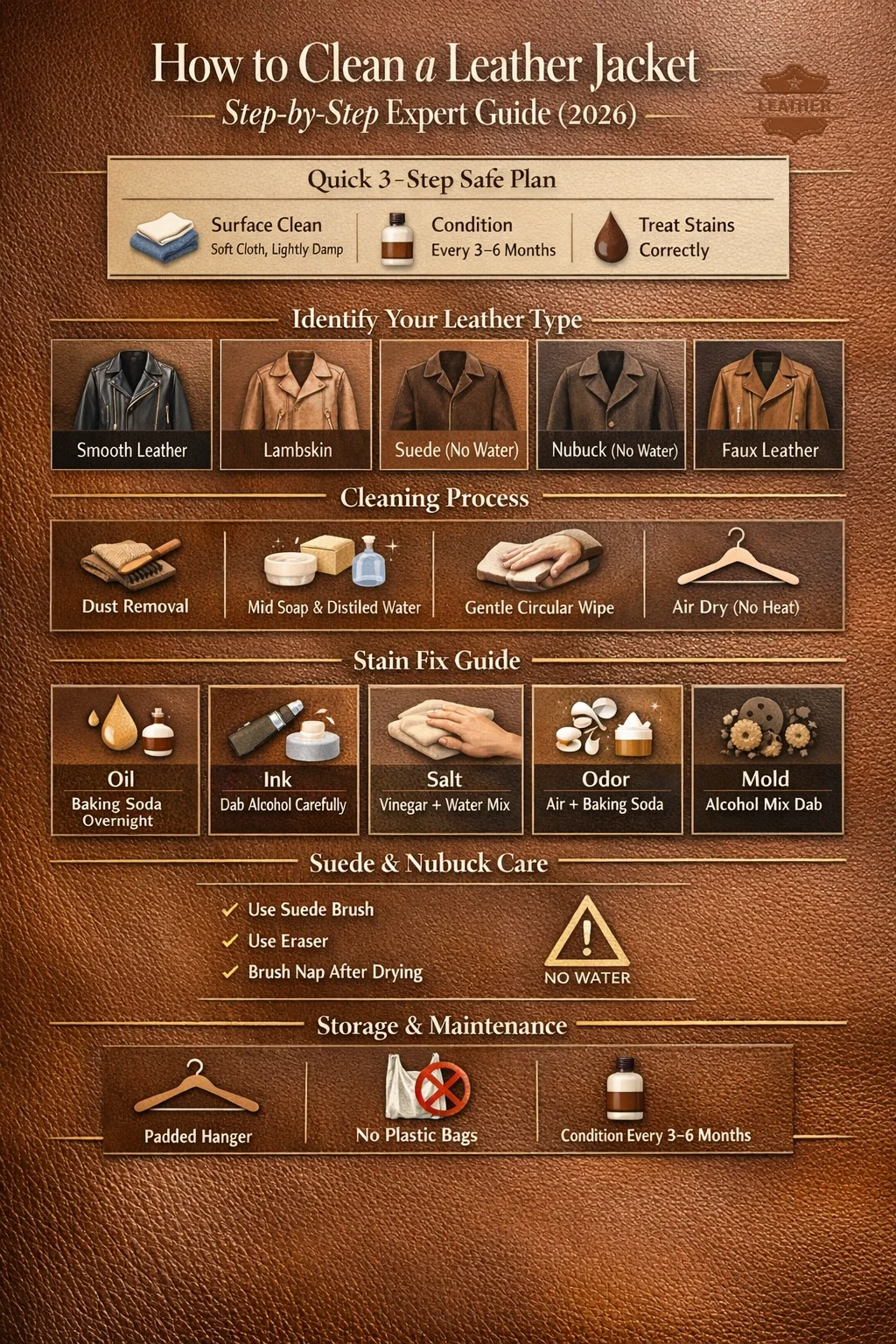
- Outer dusting — Remove dust and minor soil monthly using a gentle, slightly moist cloth.
- Nourish periodically — Spread leather balm every 3–6 months to replenish moisture and stop splitting.
- Handle marks quickly — Apply targeted techniques for grease, pen, road salt, and similar, plus recognize when expert help is needed.
Never tumble clean, immerse fully, or expose to straight warmth on hide.
Step 1: Identify Your Leather Type
The cleaning method depends on the leather. Test in a hidden area first.
| Leather Type | Feel / Look | Cleaning Approach | Water Safe? |
| Full-Grain | Thick, natural grain | Mild cleaner + conditioner | Lightly damp only |
| Top-Grain | Smooth, uniform | Gentle cleaner + conditioner | Lightly damp |
| Genuine Leather | Processed, even | Mild soap or pH-balanced cleaner | Lightly damp |
| Lambskin | Very soft, thin | Gentlest methods; often pro | Lightly damp |
| Suede | Fuzzy nap | Suede brush & eraser — no water | No |
| Nubuck | Velvet-like | Nubuck cleaner — no water | No |
| Faux (PU) | Slightly plastic | Mild soap + water | Yes (more tolerant) |
Quick check: Put one water droplet on an inside seam.
Quick soaking shows genuine hide; rolling off points to synthetic.
Step 2: Outer Cleaning
Do this routine monthly or straight after any spills to lift dust, skin oils, and tiny debris.
Tools Needed
- Soft microfiber cloth
- Distilled water (stops mineral marks)
- Mild soap (baby shampoo or leather-friendly Cleaner)
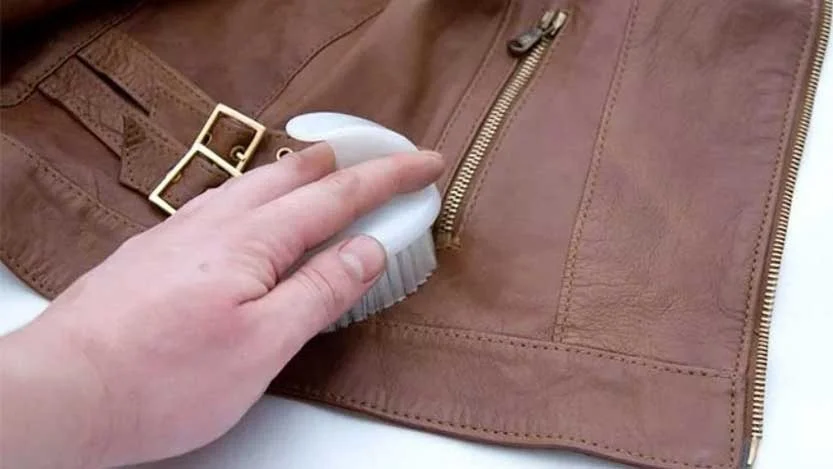
- Gentle brush for seams and closures
Steps
- Empty pockets fully, fasten zippers, hang on a wide padded hanger.
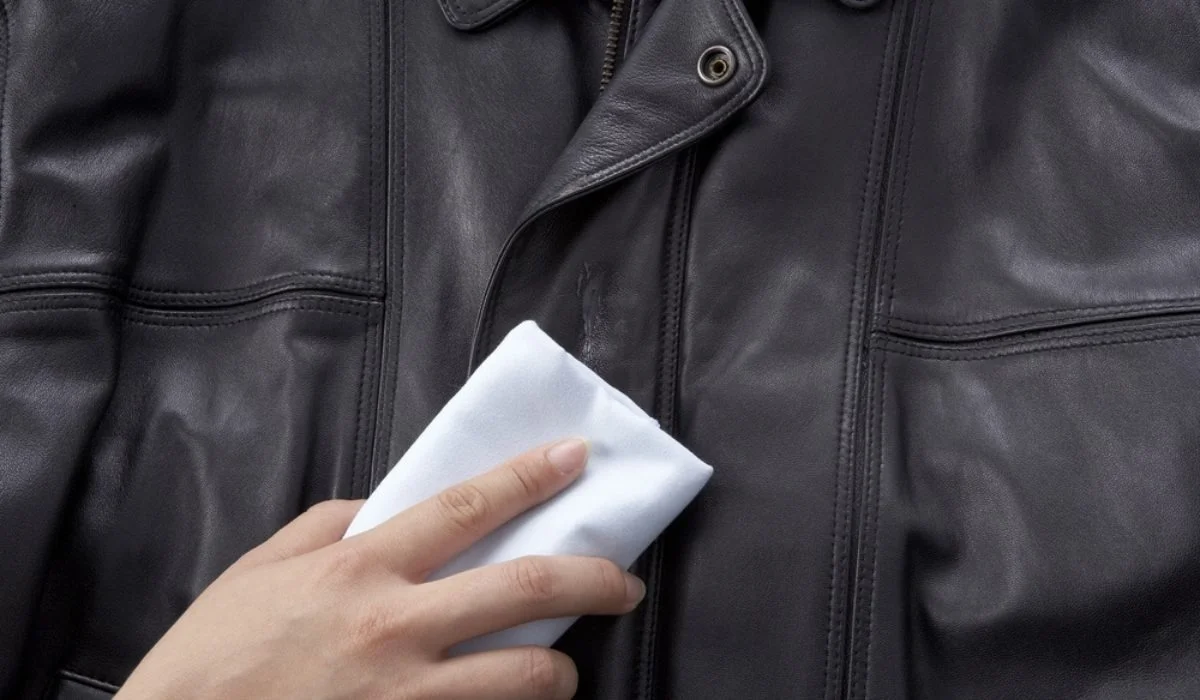
- Wipe the entire jacket with a dry microfiber cloth.
- Blend lukewarm distilled water plus 2–3 drops of gentle soap.
- Wring cloth nearly dry; wipe using small circles, area by area.
- Clean the cloth well, then wipe away the remaining soap traces.
- Allow natural air drying at room temperature on a hanger — steer clear of heaters or sunlight.
Never Do
- Soak the jacket
- Use machine washing/tumble drying
- Apply abrasive cleaners, bleach, or wipes
Step 3: Conditioning
Cleaning strips natural oils—conditioning replenishes them to keep leather supple.
Frequency: Every 3–6 months (more often in dry climates or heavy use).
Product: pH-balanced garment leather conditioner (spot-test first).
How to Apply
- Clean and fully dry the jacket.
- Apply a small amount to a soft cloth.
- Rub in circles on a test area; wait 5–10 minutes.
- If no issues, apply sparingly across the jacket.
- Buff with a clean cloth.
Avoid over-application to prevent stickiness.
Stain-Specific Treatments
Proceed promptly yet gently — always trial any method on an inconspicuous area first.
- Grease or oil — Carefully blot excess, apply cornstarch or baking soda, leave overnight, then brush away. Repeat if required; consult a professional for persistent traces.
- Ink or pen stains — Lightly dab (never rub) with rubbing alcohol on a cotton swab, starting from the edges toward the middle. Cease instantly if dye begins lifting.
- Winter salt marks — Gently dab an equal mix of white vinegar and distilled water, wipe softly, allow full drying, then condition.
- Unwanted smells — Hang in a shaded open space; position sealed baking soda nearby (never in contact with hide) for 24–48 hours.
- Mold patches — Brush off outdoors; lightly wipe using 70% isopropyl alcohol solution, then dry completely.
How to Clean Suede and Nubuck
- Softly brush with a suede brush to raise the nap and clear dust.
- Remove marks using a suede eraser.
- For tough areas: Lightly dab with a cloth barely dampened in white vinegar, let dry naturally, then brush again.
- If fully saturated: Allow complete natural drying, then brush firmly to Restore texture.
Cleaning the Interior Lining
- Turn the garment inside out or reach through the openings.
- Gently blot using a cloth lightly moistened with mild detergent (avoid soaking).
- For persistent odors: Dust baking soda inside, leave overnight, then vacuum thoroughly.
- Confirm full air drying before putting away.
Storage, Drying, and Common Mistakes
Drying: Suspend on a padded hanger in a ventilated area; keep away from heat sources and direct sunlight.
Storage
- Use only wide padded hangers.
- Breathable cotton storage bag (never plastic — holds moisture).
- Cool, dry spot far from sunlight and humidity.
- Fill with acid-free tissue to hold shape; check occasionally.
Common Mistakes
- Machine washing or aggressive dry cleaning
- Applying bleach, wipes, or regular household soaps
- Excessive conditioner use
- Keeping in plastic bags or warm/humid spots
When to Seek Professional Cleaning
GoPro for
- Vintage/valuable pieces
- Heavy ink/oil/mold/structural issues
- Unknown leather type
- Persistent odors
Professionals use safe, controlled methods.
Maintenance Schedule Quick Reference
| Task | Frequency | Purpose |
| Dust wipe | Monthly | Prevents abrasion |
| Conditioning | Every 3–6 months | Restores oils, prevents cracks |
| Stain treatment | As needed | Quick fixes |
| Professional clean | Every 1–2 years (heavy use) | Deep Care |
| Storage check | Every 6–12 months | Avoid mildew/creasing |
FAQs
A: No. Washers apply water, tumbling motion, and soaps that remove natural oils, distort form, and cause cracking in the hide. Machine cleaning often destroys a leather piece entirely. Synthetic hide (PU) might handle stronger methods better, but always follow the garment tag; when doubtful, clean by hand or seek expert advice.
A: Select a neutral pH leather cleaner designed for clothing (avoid strong saddle soaps meant for horse gear). Product names evolve — choose one marked for finished apparel hide, test on a hidden spot first, and stick to directions. For a homemade option, a gentle soap mixed with distilled water applied lightly suits many treated leathers.
A: Hang to air dry on a broad padded hanger in a well-aired space at normal room temperature. Avoid heat sources like blow dryers or heaters, plus extended sun exposure — warmth draws out oils and makes the hide brittle or split.
A: Yes — washing lifts dirt along with some natural oils. Conditioning afterward rebuilds suppleness and guards against brittleness. Conditioning schedule varies by environment and wear: frequently used jackets usually require it every 3 months; seldom-worn ones might need it every 6 months.
A: No. Suede demands a suede brush and eraser only; it cannot get wet. Moisture flattens the fuzzy surface and leads to lasting harm. For stubborn suede marks, visit a specialist cleaner experienced with suede and nubuck materials.
Conclusion
With mild outer wiping, Correct Nourishment, and fast mark treatment, your hide jacket remains smooth, flexible, and sharp-looking across many seasons. Regular attention stops nearly all problems — spend several minutes each month to enjoy decades of reliable use.