Introduction
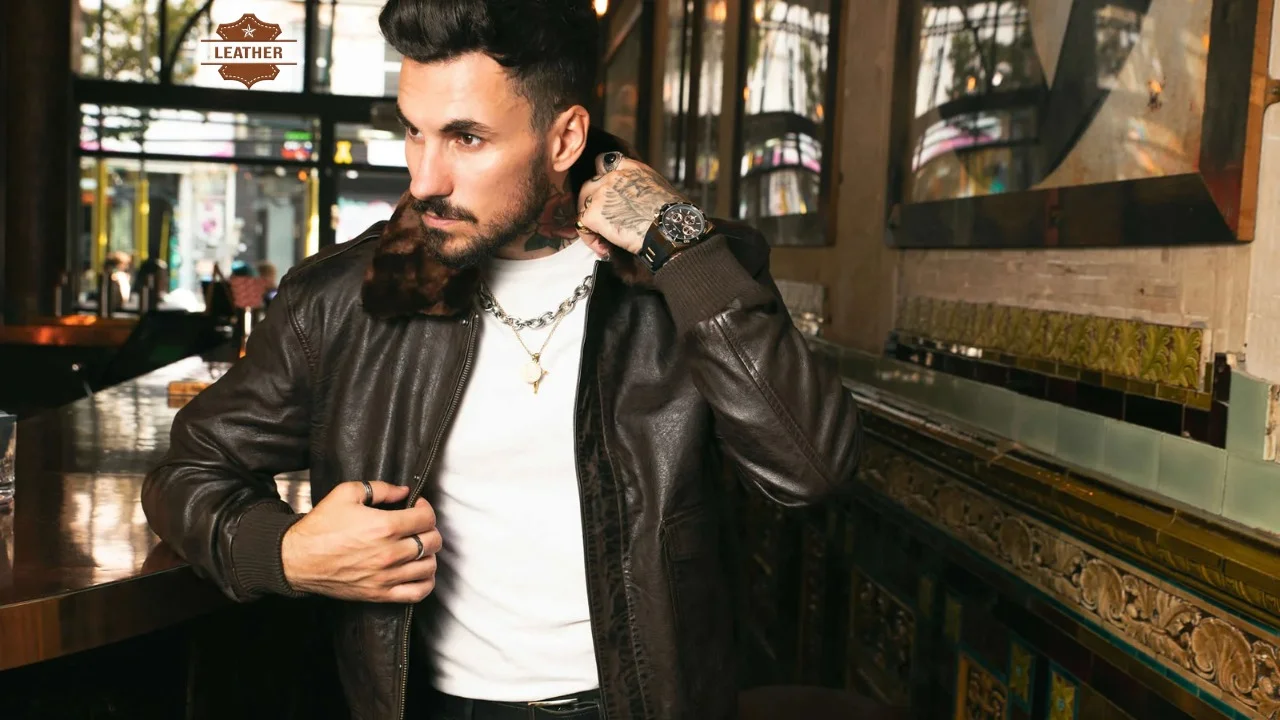
The Leather Bomber Jacket For Men remains one of fashion’s most enduring successes. Originating from early aviator needs over a century ago, this piece has moved beyond pure function into closets everywhere — loved by students, smart-casual workers, riders, stars, and anyone after a sharp, masculine vibe. Its strength comes from contrast: tough yet clean, traditional yet flexible. Pair it with jeans and boots for rugged daily wear, chinos and Chelsea boots for polished casual, or over sweaters in cooler weather. Finding the right one takes thought: hide type, build, shape, interior, and details all count — with costs ranging from under $50 to above $2,000.
What Is a Leather Bomber Jacket?
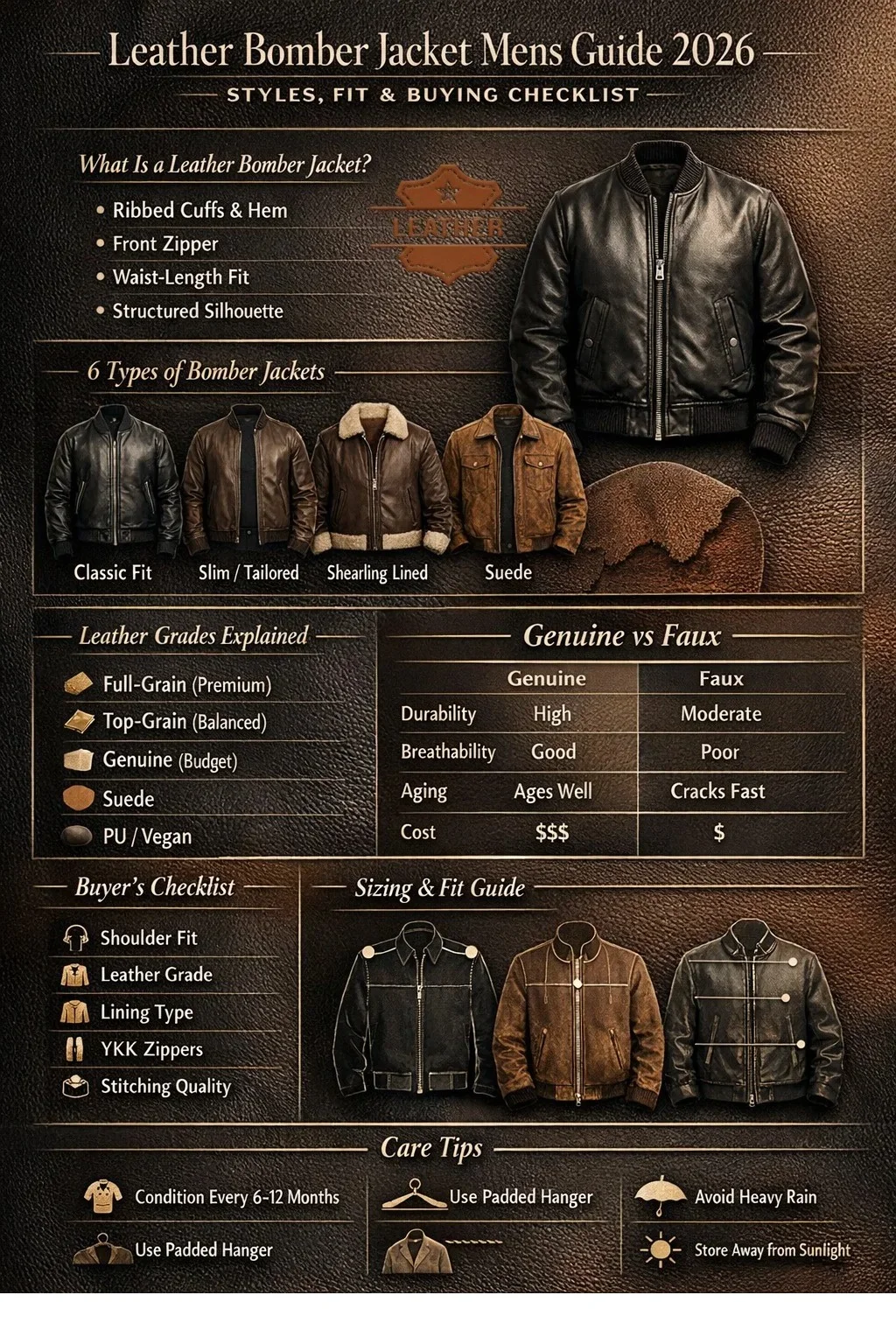
A leather bomber jacket is a short-waist coat marked by key traits:
- Ribbed hem band
- Ribbed wrist bands
- Front zipper fastening
- Basic neckline (knit, shirt-type, or sheepskin)
- Easy yet shaped outline
First made to warm pilots in open cockpits during World Wars I and II, the bomber shifted from flight gear to an everyday essential. Its short length, snug bottom, and cuffed arms shield the body while permitting motion — explaining its jump from planes to screens and streets.
The History of the Leather Bomber Jacket
Early Military Roots
The bomber started as equipment for flyers facing wind, chill, and height. Initial versions used thick horse or goat hides, often sheepskin-lined for warmth. Big collars and strong fittings served real needs.
Notable early types include the B-3 sheepskin coat, B-10 fabric-lined style, and later MA-1 nylon version — each marking steps from basic military wear to a style item.
Civilian Rise
Post-WWII, veterans carried jackets home. Bikers embraced the sturdy style; musicians and film stars boosted its appeal; U.S. makers turned it into city fashion. By the late 1900s, it went from fringe to common; designers updated it while keeping core lines.
Knowing this past lets you spot real tradition versus novelty when buying.
Types & Styles of Leather Bomber Jackets for Men
Bombers vary widely. Select the group suiting your weather, build, and clothes.
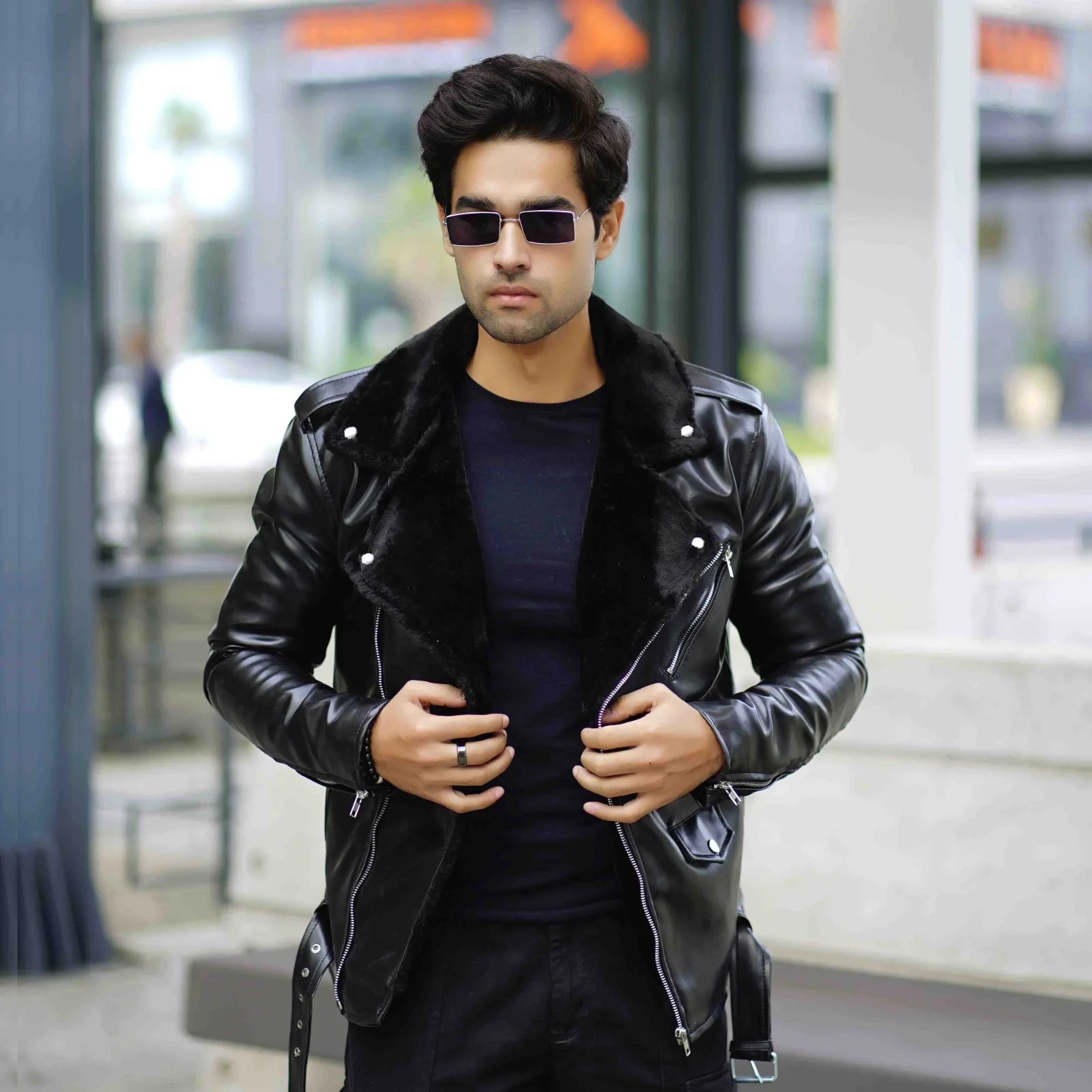
- Classic Fit Leather Bomber Jacket: The standard. Standard cut, ribbed edges, simple design, smooth hide surface. Highly adaptable — daily outerwear for most closets.
- Slim / Tailored Leather Bomber Updated shape with tighter body and sleeker arms. Suits slim figures wanting a sharper, dressier feel.
- Shearling-Lined / Insulated Bomber Cold-weather ready: thick hides, true or fake sheepskin inside, heavier make. Draws from WWII B-3; great winter staple.
- Suede Bomber Jacket Soft fuzzy finish adds a refined touch. Less rain-proof but ideal for polished casual or nights out.
- Vintage & Distressed Leather Bomber Pre-worn looks, and natural marks add character. Pick wisely — real aging feels Organic; forced wear can look phony.
- Technical / Treated Leather Bomber Modern coatings like wax, water-repellent, or advanced linings mix hide appeal with weather resistance.
Leather Types Explained (Full-Grain to PU)
Hide quality varies greatly. Your pick affects lifespan, appearance, and upkeep.
Full-Grain Leather — Top Tier
- Keeps the outer hide layer
- Displays natural marks and texture
- Ages with rich patina
- Very tough. Best for: long-term keepers lasting a decade plus.
Top-Grain Leather
- Lightly smoothed for evenness
- Keeps strength with a uniform look. Best for: premium feel at moderate cost.
Corrected Grain / “Genuine” Leather
- Lower level; stamped to copy grain
- Cheaper but less unique aging. Best for: cost-conscious real hide fans.
Suede
- From the inner hide side with a velvety finish
- Elegant but water-sensitive. Best for: smarter outfits.
PU / Vegan Leather
- Man-made, animal-free, low price
- Consistent but less breathable, shorter life. Best for: trend followers or non-animal choices.
Genuine Leather vs Faux Leather — Complete Breakdown
| Feature | Genuine Leather | Faux Leather (PU) |
| Look | Natural & varied | Even & consistent |
| Durability | High | Moderate |
| Breathability | Good | Poor |
| Aging | Builds patina | May crack over time |
| Maintenance | Needs conditioning | Simple wipe clean |
| Cost | Higher | Lower |
Expert note: For a jacket lasting over ten years, choose real hide. For quick trends or tight budgets, quality PU works well.
How to Choose the Perfect Leather Bomber Jacket — Buyer’s Checklist
Run through these points like an expert.
Fit Comes First
- Shoulder seams match your shoulder edge.
- Sleeves hit the wrist bone.
- Space for 1–2 under layers.
Leather Grade
- Full-grain for Longevity; top-grain for balance; PU for savings.
Lining
- Satin/nylon for mild days; quilted for warmth; sheepskin for cold.
Hardware Quality
- Favor YKK or trusted zippers; firm brass buttons; smooth pull.
Stitching
- Double seams at key spots; neat inside edges.
Brand Reputation
- Read feedback, check returns, review maker history.
Return Policy and Warranty
- Vital for online buys where fit feels uncertain.
Sizing & Fit Guide
How a Bomber Should Fit
- Shoulders: Seams align with the shoulder bone.
- Chest: Close but movable — lift arms easily.
- Sleeves: Reach wrist bone.
- Length: Hem sits at the natural waist.
Quick Measuring Table
| Measurement | How to Measure | Fit Tip |
| Chest | Around the fullest part of the chest | Add 2–4 cm for ease |
| Shoulder | Seam to seam | Matches the shoulder edge |
| Sleeve | Center back, neck to wrist | Compare to product specs |
| Length | Collar base to hem | Hits at the waist |
Comparison Table: Bomber Types
| Type | Warmth | Dressiness | Price Range (2026) |
| Classic | Medium | Casual–Smart | $150–$800 |
| Shearling | High | Casual | $400–$1,800 |
| Suede | Low–Medium | Smart Casual | $200–$900 |
| Distressed | Medium | Casual | $150–$1,200 |
| PU | Low–Medium | Casual | $30–$200 |
Best Leather Bomber Jackets to Buy in 2026 — A Framework
Instead of specific models (which change), use this decision guide:
- Everyday Classic: Black full-grain, knit edges, Reliable Zipper — timeless and adaptable.
- Winter Workhorse: Brown sheepskin-lined, thick hide, strong fittings.
- Smart Suede Option: Dark brown suede, clean details — great for evenings and polished casual.
- Vintage Distressed Pick: Naturally aged hide with good lining — seek honest wear or trusted distressing.
- Budget Vegan Choice: Solid PU bomber with careful fit and details for the best value feel.
Manufacturing Process — How a Leather Bomber Is Made
Understanding steps helps judge quality claims.
- Raw hide selection — Pick for thickness and grade.
- Tanning — Chrome or veg methods set texture and toughness.
- Dyeing — Add color evenly.
- Splitting & finishing — Prep surface; apply treatments.
- Pattern cutting — Cut panels accurately.
- Sewing & assembly — Attach lining, zippers, trims.
- Quality check — Inspect seams and fittings.
Focus on join points and lining attachment — frequent weak spots.
How to Identify Original vs Fake Leather
Quick tests distinguish real from copies.
- Visual: Natural grain shows tiny variations.
- Smell: Real hide smells organic; fakes smell synthetic.
- Edge: Real edges look fibrous, not plastic-like.
- Water drop: Real absorbs slowly; synthetics bead up.
High-end fakes challenge these, so combine with seller trust.
Maintenance — How to Care for Your Leather Bomber Jacket
Daily Care
- Dust off with a soft cloth.
- Avoid cramming or folding tightly.
Cleaning
- Light dirt: Damp cloth, mild soap sparingly.
- Deep clean: Use a pro leather cleaner or specialist.
Conditioning
- Apply every 6–12 months based on wear and weather. Match product to hide type.
Storage
- Wide padded hanger for shape.
- Breathable bags, no plastic.
- Away from the sun.
Rain & Water
- Blot light rain; air dry naturally.
- Heavy wet: Seek pro help; opt for treated hide in damp areas.
Price Range Worldwide
| Region | Budget | Mid-Range | Premium |
| USA | $50–$200 | $200–$600 | $600–$2,000+ |
| UK | £30–£150 | £150–£500 | £500–£1,500+ |
| Canada | CAD 60–250 | CAD 250–700 | CAD 700–2,000+ |
| Australia | AUD 80–300 | AUD 300–900 | AUD 900–2,200+ |
Costs reflect hide level, make, origin, and brand.
Pros & Cons
Pros
- Classic outline
- Tough and fixable
- Gains character with age
Cons
- Higher upfront cost for Quality
- Needs regular care
- Not best for heavy rain, untreated
Top Brands & Countries Known for Leather Bombers
- Schott NYC (classic U.S. outerwear; durable heritage pieces)
- Italian tanneries (luxury hides and expert finishing)
- UK makers (tailored traditions)
- Japanese labels (precise modern takes)
How to Break In a Leather Bomber
- Wear shorts regularly to soften naturally.
- Move freely; no forced pulls.
- Light condition if stiff.
- Skip heat sources like dryers.
Leather molds to you over time.
Styling Ideas for Men’s Leather Bomber Jackets
Casual Everyday
T-shirt, jeans, sneakers, black bomber — simple and current.
Smart Casual
Button shirt, chinos, brown bomber, Chelsea boots — refined yet easy.
Winter Layered
Sweater, shearling bomber, sturdy boots — cozy and sharp.
Streetwear
Hoodie, cargo pants, loose bomber — urban edge.
FAQs
A: Yes. Fresh colors, textures, and fits keep it relevant as a core piece.
A: Every 6–12 months, depending on climate, use, and hide.
A: Light rain ok. Avoid heavy downpours; treated hides suit wetter spots.
A: Measure chest, shoulders, sleeves; match brand chart. Size up for layers if between.
Closing
In summary: Fit over trend first. Value, hide, and build quality. Check fittings and seams, confirm returns, and view care as an investment. Skip the cheapest for longevity; go full-grain or top-grain. The right bomber becomes a piece that ages alongside you.