Introduction
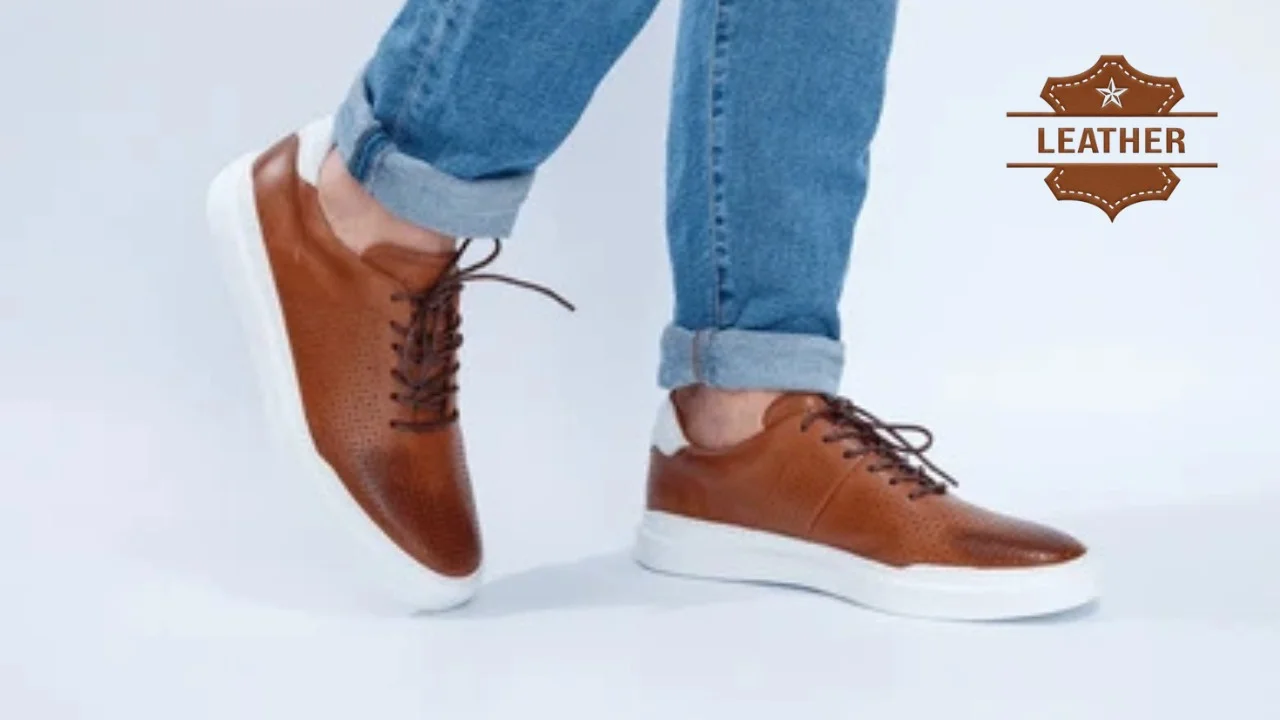
Imagine your wardrobe as a large text corpus and each shoe as a token: some tokens are high-frequency (everyday trainers), some are rare but informative (luxury loafers), and some are domain-specific (boat shoes for coastal contexts). In this guide, I’ll treat Casual Leather Shoes For Men as if they were an NLP pipeline — with tokenization (styles), embeddings (leather types and qualities), architectures (construction methods), training data (history & cultural signals), evaluation metrics (fit, comfort, durability), and maintenance as continual model fine-tuning.
This guide reframes practical shoe advice into computational metaphors to make decision-making systematic, repeatable, and measurable. You’ll learn how to represent shoes as feature vectors, score options with an evaluation function that balances style and utility, and adopt a maintenance schedule equivalent to periodic model retraining so your footwear performs well over the years.
Why use leather? In vector-space terms, leather has strong, high-dimensional features: durability, breathability, capacity to develop patina, and the ability to be conditioned — attributes that improve over time rather than degrade. That’s why leather remains the dominant substrate for long-term footwear embeddings.
Problem statement: What are casual leather shoes for men?
Task goal: select footwear tokens that maximize comfort ∧ , durability ∧ , and aesthetic utility for everyday contexts.
Definition (formal): Casual leather shoes for men are footwear items where the dominant upper material is leather and the intended use-case distribution centers on informal-to-smart-casual events rather than strictly formal or strictly athletic domains.
Typical constraints
- softer leather upper (flexible embeddings)
- flexible rubber or EVA outsoles (shock-absorbing activation functions)
- simplified design or relaxed closures (low-complexity models)
- compatibility across multiple outfit domains (high generalization score)
Use-cases (target distributions): commuting, weekend social outings, travel, smart-casual workdays, and multi-season wear where the input distribution of events varies from relaxed (jeans + sneakers) to smart-casual (chinos + loafers).
Historical corpus: How casual leather footwear evolved
Treat this as the model’s pretraining dataset — successive eras changed the priors, and priors drive modern style.
- Ancient tokenization (primitive epochs): leather sandals and early moccasins in many ancient cultures act as initial tokens in the footwear corpus.
- 20th-century fine-tuning: the 1920s–1960s saw specific tokens (loafers, moccasins, boat shoes, chukkas) emerge as high-frequency items in particular subcorpora (collegiate, maritime, leisure).
- Late-20th / early-21st century transfer learning: luxury brands and sportswear collaborations introduced premium leather sneakers, creating hybrid tokens blending casual and dress attributes.
- 2010–2026 (modern distribution): the dominant tokens are minimalist leather sneakers and utility-driven hybrid casual shoes that allow broad generalization across outfit types.
Interpretation: the modern consumer’s preference distribution favors leather constructions with sneaker-like comfort — i.e., high similarity in embedding space between sneakers and leather dress shoes.
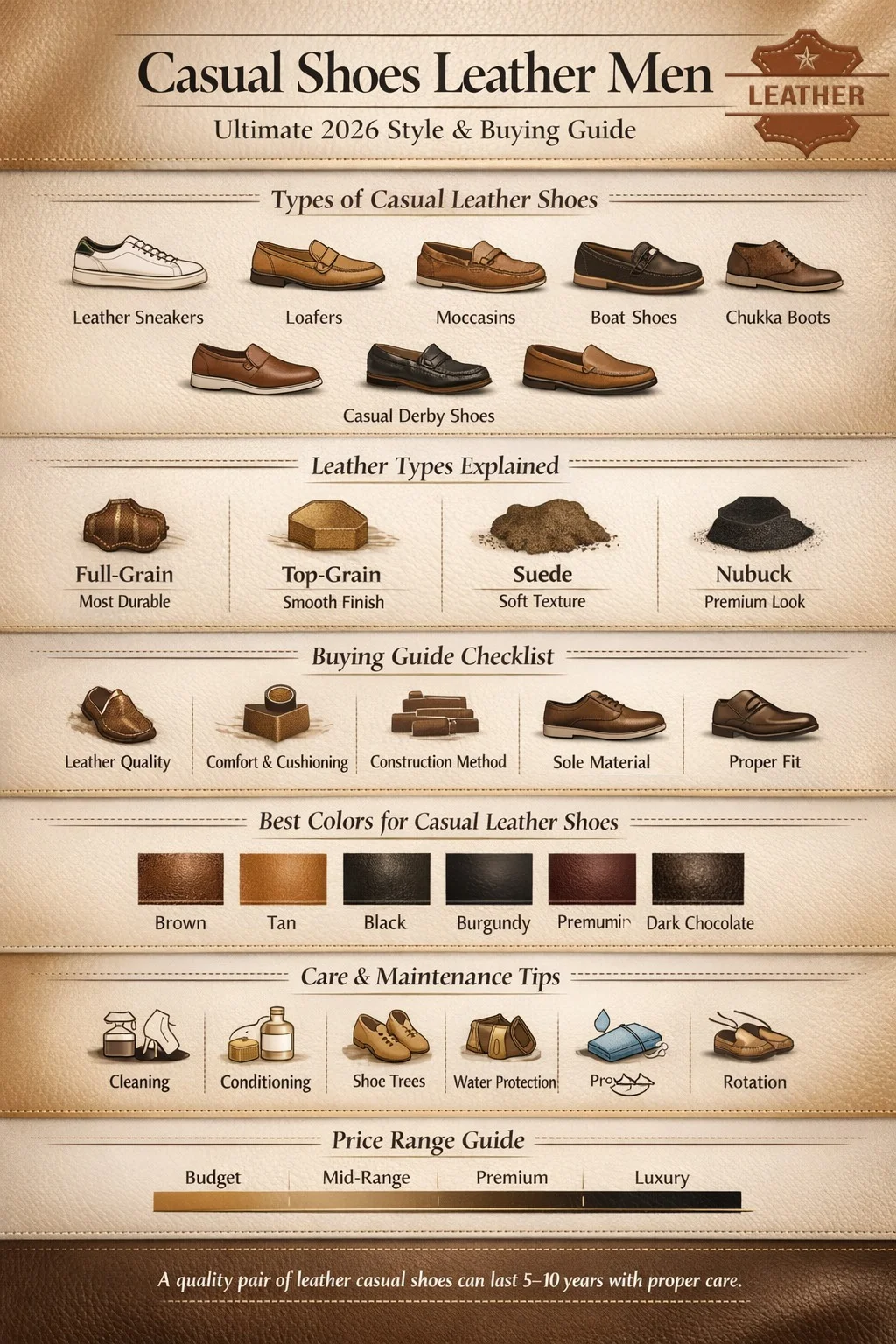
Token taxonomy — Types of casual leather shoes
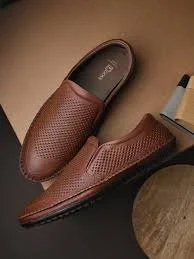
In NLP, we define a taxonomy to label tokens. Below is a taxonomy of casual leather shoe tokens with their characteristic features, canonical examples, and recommended outfit pairings.
Leather Sneakers
Vector features: minimalist silhouette, rubber/EVA outsole, low profile
Use-cases: daily commute, travel, casual offices
Styling: jeans, joggers, chinos, casual suits
Why popular: they have a high recall across outfit domains; low variance in perceived formality.
Loafers
Vector features: slip-on, moc-toe variance, dressy-casual boundary
Subtypes: penny, tassel, horsebit
Use-cases: smart-casual, summer, travel
Why used: reduced friction (easy wear) and high aesthetic precision for smart-casual contexts.
Moccasins
Vector features: single-piece upper morphology, pliability, low structural bias
Use-cases: driving, casual locales, indoor comfort
Why used: optimize subjective comfort score; often used where mobility and flexibility are High-Priority.
Boat Shoes
Vector features: siped rubber sole (non-slip), lace-around topology, casual-exposed stitching
Use-cases: beach, summer, nautical-inspired ensembles
Why used: domain-specific utility (non-slip on wet decks) that transfers into vacation fashion.
Chukka Boots
Vector features: 2–3 eyelets, ankle coverage, suede or leather options
Use-cases: multi-season casual wear, pairing with jeans or chinos
Why used: robust generalizer across mild climates and various outfit classes.
Derby Casual Shoes
Vector features: open lacing, rounded toe, typically more robust last
Use-cases: business-casual, semi-formal gatherings
Why used: boundary token bridging casual and formal datasets.
Slip-On Leather Shoes
Vector features: no laces, quick on/off, lightweight
Use-cases: travel, errands, casual daily wear
Why used: minimal friction in deployment (wearing) and real-world practicality.
Leather quality as feature engineering — leather types explained
In ML, better features lead to stronger model performance. Leather type acts as a major feature set influencing lifespan and appearance.
Full-Grain Leather
Signal strength: extremely high — minimal preprocessing, retains natural grain
Benefits: durability, patina over time, strong aesthetic features
Recommendation: preferred for premium shoes and pieces intended for long-term use.
Top-Grain Leather
Signal strength: strong with some smoothing
Benefits: refined appearance, strong durability, slightly more affordable
Recommendation: offers a good precision/price tradeoff.
Suede
Signal strength: stylistically strong but environmentally sensitive
Benefits: soft texture and casual aesthetic
Drawbacks: water sensitivity and higher maintenance costs
Recommendation: use for chukkas, loafers, and seasonally restricted wear.
Nubuck
Signal strength: high aesthetic value and good durability
Benefits: plush mouthfeel, premium look
Recommendation: suits higher-end casual footwear; apply protective treatments.
Manufacturing as model architecture & pipeline
Think of manufacturing as an architectural pipeline with repeatable stages:
- Leather selection (data curation): pick hides with minimal defects.
- Cutting (feature extraction): pattern-matching and CNC or manual cutting.
- Stitching (assembly layer): robust seam topology affects structural integrity.
- Lasting (shape fitting / inference step): the upper is pulled over the last to set the silhouette.
- Sole attachment (linking layers): glue or stitch bond; cemented = fast, welted = repairable.
- Finishing (post-processing & QA): polishing, inspection, and packaging.
Architectural choices impact repairability and lifecycle: e.g., Goodyear welt (modular, repairable) vs. cemented construction (lighter, cheaper) — analogous to modular vs. monolithic model design.
Signal validation — distinguishing original leather vs. synthetic
This is an evaluation/validation step to ensure data Authenticity.
Key validation heuristics
- Smell test: natural leather ≈ has a characteristic organic scent; synthetics ≈ have a chemical/plastic odor.
- Texture test: genuine leather shows non-uniform natural grain; faux materials may be uniformly patterned.
- Aging test (temporal robustness): genuine leather develops patina, faux peels or flakes.
- Durability test: genuine tends to persist; synthetic materials can crack under similar stress.
These heuristics form a classifier you can run in-store or during inspection.
Buying as model selection — an evaluation framework
When choosing a shoe, imagine you have a loss function L = w1*(comfort_loss) + w2*(durability_loss) + w3*(style_mismatch) + w4*(maintenance_cost). Your aim is to minimize L according to your personal weights.
Key features to inspect (feature vector components):
- Leather quality — full-grain > top-grain > corrected grain.
- Comfort features — insole cushioning, arch support, lining breathability.
- Construction method — Goodyear welt (repairable) vs. Blake stitch vs. cemented.
- Sole material — rubber (flexibility, traction), leather (sleek), EVA (cushioning).
- Proper fit — toe room, heel lock, arch alignment.
- Aesthetic match — color and silhouette relative to your wardrobe embeddings.
Practical tests in-store
- Walk at least 10–20 paces on various surfaces.
- Try in the evening to account for slight foot swelling.
- Wear socks types you expect (no-show vs. thicker socks).
Sole materials & optimization
Sole material selection affects shock absorption, weight, and traction — similar to choosing activation functions that shape model behavior.
- Rubber: flexible, high traction, robust across conditions (general-purpose activation).
- Leather soles: elegant, slimmer profile, better for dry conditions, but less traction.
- EVA: lightweight, superb cushioning, but can compress over time (like functions with vanishing gradients).
For everyday casual use, rubber or rubber-composite soles are often the optimal choice.
Color as style embedding
Color choice affects matchability and frequency of wear (how often a shoe token is selected).
- Brown: high-match score across casual outfits — top choice for versatility.
- Tan: seasonal (spring/summer) match boost.
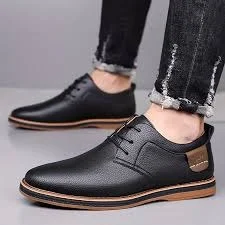
- Black: high smart-casual utility; slightly reduced casual warmth.
- Burgundy / Dark chocolate: signal distinctiveness (lower frequency but high style value).
Optimize color selection to maximize wardrobe coverage while minimizing cognitive friction.
Use-cases and contextual inference
Map shoe tokens to context distributions:
- Everyday wear: leather sneakers or durable casual loafers for high comfort and generalization.
- Smart-Casual Office: loafers or Derby casuals for better formality calibration.
- Travel: moccasins or leather sneakers that balance comfort with lightweight packing.
- Social Events: loafers or sleek leather sneakers, depending on dress code.
- Weekend Outings: chukkas or boat shoes for relaxed but presentable appearances.
Pros and cons
Advantages
- Durable: high signal-to-noise ratio over time.
- Timeless: low risk of sudden obsolescence.
- Comfort improves: weights adapt through usage.
- Versatility: broad transfer learning across outfits.
Limitations
- Higher upfront cost (resource investment).
- Requires maintenance (conditioning, weather protection).
- Some styles are not fully Waterproof (limited domain robustness).
Care & maintenance — scheduled fine-tuning to maximize lifespan
Think of maintenance as periodic fine-tuning that prevents concept drift.
Cleaning
- Wipe with a soft cloth to remove dust.
- For suede/nubuck, use a dedicated suede brush.
Conditioning
- Apply leather conditioner every few months to soften and to preserve oils.
- Avoid over-conditioning, which can oversaturate leather.
Shoe trees
- Cedar or wooden shoe trees absorb moisture and keep their shape; use after wear.
Water protection
- Apply spray protectors suitable for leather and suede; reapply regularly.
Rotation
- Rotate between 2–3 pairs to allow drying time and reduce total wear per pair.
Minor repairs
- Resole or repair stitching when needed — especially for welted shoes, which are designed for repair.
Price tiers as a budget-aware model selection
Interpret price ranges as cost budgets for optimization:
- Budget ($40–$80): entry-level models with cemented construction; decent for short-term optimization.
- Mid-range ($80–$200): better leather, improved construction; optimal for many buyers balancing cost and value.
- Premium ($200–$500): high-quality leather and construction (often welted); long-term value maximizers.
- Luxury ($500+): designer labels and artisanal builds; prestige tokens with lasting value.
Note: These price bands are heuristics; brand, country of manufacture, and craft techniques affect the expected performance of each band.
Countries famous for casual leather shoes
Below are country priors that historically supply high-quality footwear and craft traditions. Each country is listed once as an entity for clarity.
- Italy is renowned for luxury leatherwork, artisanal ateliers, and fashion-forward designs.
- United Kingdom — famous for traditional handmade constructions and welted techniques.
- Spain — recognized for stylish casual silhouettes and suede mastery.
- Portugal — a hub for high-quality leather sneakers and mid-tier manufacturing.
- Pakistan — notable for affordable, well-crafted leather goods and growing export quality.
FAQs
A: Yes. Many styles, such as leather sneakers, loafers, and chukka boots, are specifically designed for casual wear and everyday comfort. Framed as an inference task: leather shoes consistently score high on combined comfort and style metrics for casual domains.
A: High-quality leather shoes can last 5–10 years if properly maintained. With welted constructions and occasional resoling, lifespans may extend significantly beyond a decade — analogous to a well-maintained, regularly fine-tuned model lasting far beyond initial expectations.
A: Yes. Leather sneakers provide durability, breathability, and better support compared to many synthetic shoes. Their comfort profile typically improves over a break-in period as leather conforms to foot anatomy (akin to model adaptation to training data).
A: Brown leather shoes are considered the most versatile and match a wide variety of outfits. Brown tokens map to the largest region of wardrobe embedding coverage.
A: Yes, but it is recommended to rotate between two or three pairs to extend their lifespan. Daily wear without rotation increases wear variance and shortens expected life.
Building a capsule shoe wardrobe
If you aim to build a compact, high-utility shoe set, consider the following 3–5 pair capsule optimized for coverage:
- Minimal leather sneaker (white or brown): High-frequency token; for everyday wear.
- Brown loafers (penny or tassel): Smart-casual staple for meetings and dinners.
- Suede chukka: Seasonal, stylish, pairs well with jeans and chinos.
- Durable rubber-soled Derby or casual boot: For variable-weather days and robust use.
- (Optional) Boat shoes or moccasins: For vacation and relaxed weekends.
This capsule covers an extensive portion of an average man’s outfit distribution while minimizing redundancy.
Final thoughts
Choosing casual leather shoes is an optimization exercise. Define your personal loss function (comfort weighting, maintenance tolerance, budget limits, and aesthetic priorities) and score candidate shoes accordingly. View shoes as Long-Term investments: properly chosen leather footwear provides positive returns through years of wear, improved appearance (patina), and reparability.