Introduction
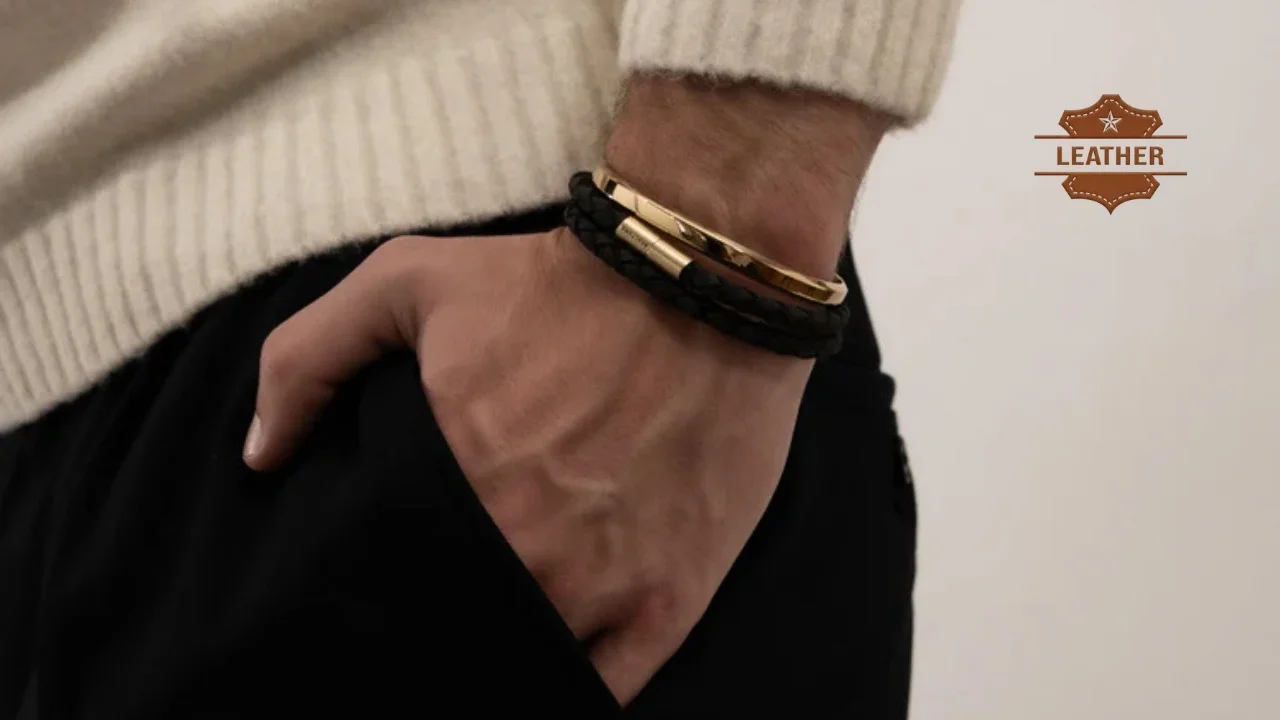
A Man’s Leather Bracelet is more than just an accessory — it’s a statement of style, personality, and craftsmanship. Made primarily from leather, these bracelets can range from simple single bands to braided wraps, wide cuffs, or designs that combine leather with metal accents. The beauty of a leather bracelet lies in its versatility: it complements casual outfits like jeans and tees, pairs seamlessly with smart-casual blazers, and can even make a bold statement when worn as a cuff.
Leather bracelets are also appreciated for their durability and character. Over time, quality leather develops a unique patina, giving each bracelet a one-of-a-kind look that reflects the wearer’s lifestyle. Whether you’re looking for a subtle, everyday piece or a stylish accessory to enhance your outfit, a men’s leather bracelet is a timeless addition to any wardrobe.
What is a Mens Leather Bracelet?
A men’s leather bracelet is a wrist accessory made primarily from leather (animal hide or high-quality leather substitutes). It can be:
- A thin single band (minimal)
- A braided or woven style (textured)
- A wide cuff (statement)
- A wrap bracelet (multiple loops)
- A hybrid of leather + metal details (refined)
Leather bracelets are popular because leather ages gracefully and develops a unique look (called a patina). They can be casual, smart-casual, or rugged depending on design and finish, and they often pair well with watches and other accessories.
Short History — Where did leather bracelets come from?
Leather has been used for protection, fastening, and ornamentation for thousands of years. In early human history, leather straps served practical roles (straps, ties, and simple bands). In the 20th century, leather bracelets became cultural and fashion signifiers — from rock and punk subcultures to boho and surf scenes. Today, the men’s leather bracelet bridges heritage craft and modern design: artisan-made cuffs sit beside mass-market braided bands.
Why choose a Men’s Leather Bracelet?
- Timeless style — leather rarely looks out of place.
- Versatile — works with jeans or a blazer.
- Durable — well-made leather lasts many years.
- Comfortable — leather softens and molds to your wrist.
- Aging — develops a personal patina with wear.
Types of Men’s Leather Bracelets
| Style | Look | Best for |
| Braided Leather Bracelet | Interwoven strands | Casual, boho |
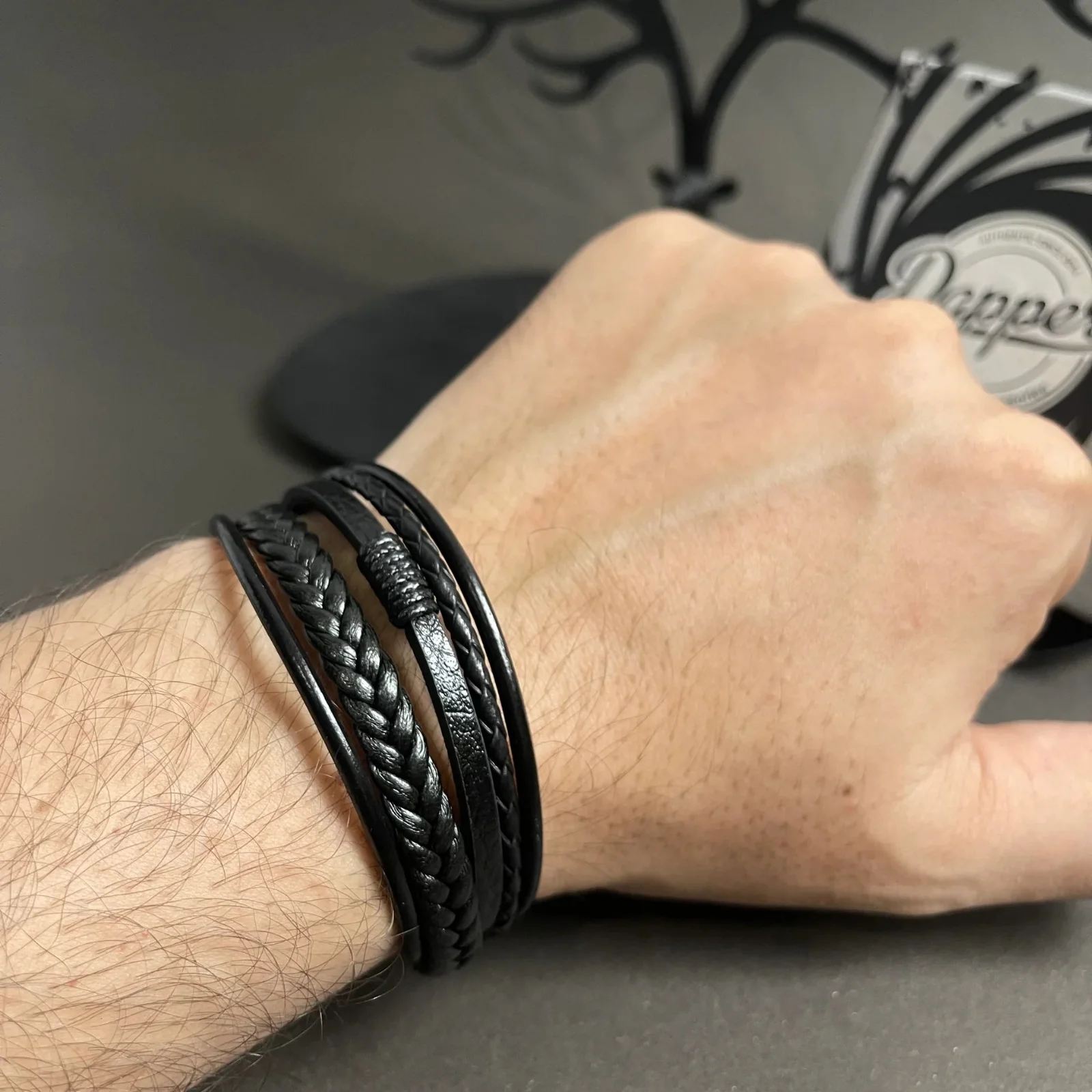
| Black Leather Bracelet | Clean, minimalist | Everyday, smart-casual |
| Leather Cuff Bracelet | Wide band, bold | Statement looks |
| Wrap Leather Bracelet | Multiple wraps around the wrist | Trendy, layered |
| Leather + Metal | Leather with a clasp or plate | Refined, industrial |
Main Leather Types
Understanding leather type is the single most important factor when buying a bracelet.
Short list
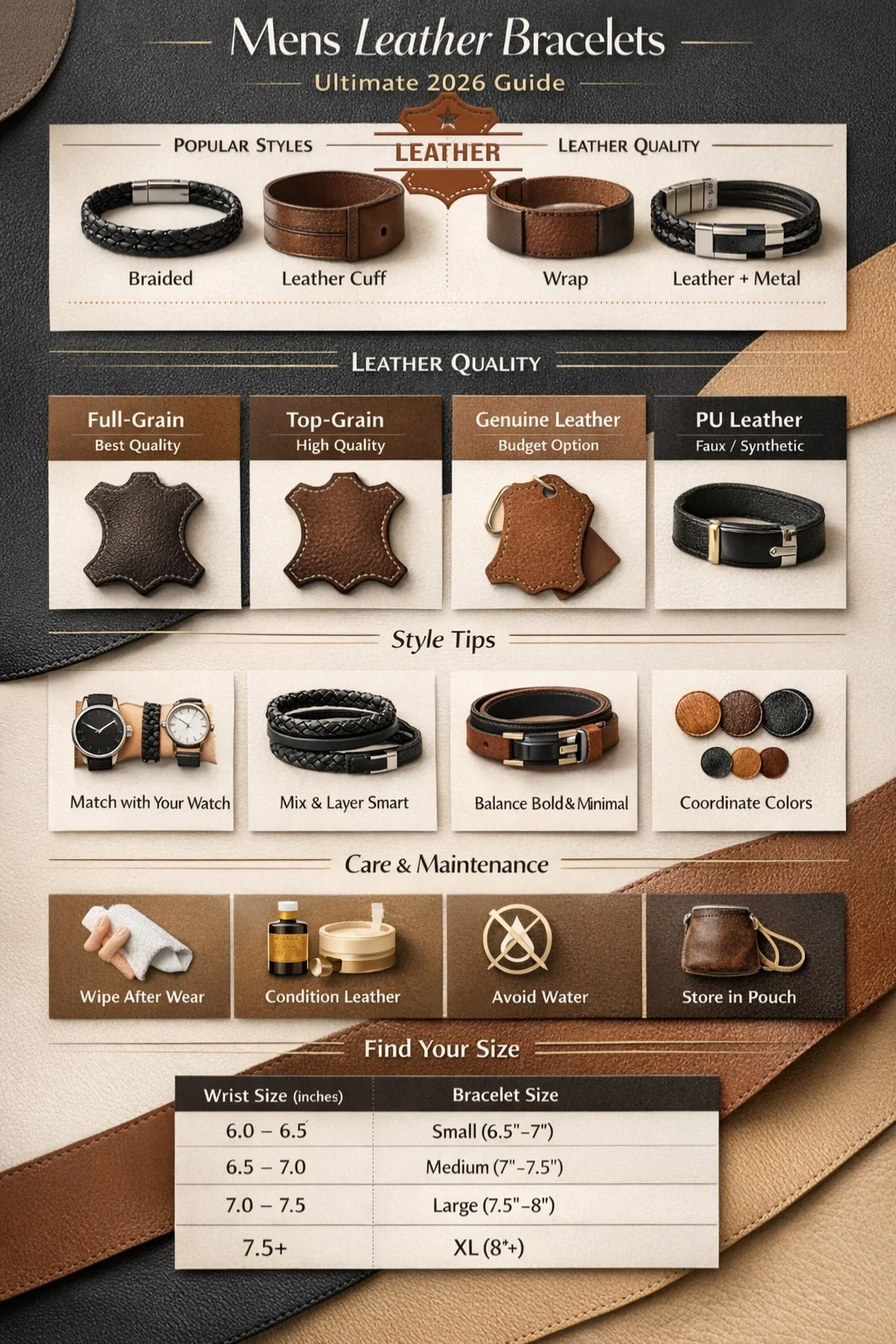
- Full-Grain Leather — best. Very durable. Develops the best patina. Top pick for heirloom pieces.
- Top-Grain Leather — high quality, slightly more processed than full-grain. Still very good.
- Genuine Leather — real leather, but cut from lower layers. Budget-friendly.
- Bonded Leather — made from leftover fibers glued together. Shorter lifespan.
- PU Leather (Faux) — synthetic; cheap, uniform, won’t age like real leather.
Why full-grain > top-grain? Full-grain keeps the natural surface and the full thickness of the hide; it’s stronger and shows character. Top-grain is sanded and finished for a uniform look — still solid, just less “natural.”
How bracelets are made
- Leather selection — decide on full-grain, top-grain, or another grade.
- Cutting & shaping — strips, bands, and cords are cut to size.
- Braiding/assembly — braiding or layering by hand or machine.
- Edge finishing — sanding and burnishing edges for comfort.
- Adding hardware — clasps, buckles, and plates attached.
- Dyeing & conditioning — color and protective finishes applied.
- Quality check — strength, Stitching, and finish inspected.
How to Spot Real vs Fake Leather
- Smell test — real leather has a natural, earthy aroma; faux smells plastic/chemical.
- Texture — real leather feels warm and slightly uneven; faux is unnaturally smooth.
- Edge cut — real leather edges look fibrous; faux edges are uniform.
- Water drop test — real leather absorbs a tiny drop; faux beads up. (Use this carefully.)
- Price & label — very cheap items labeled only “genuine leather” merit caution.
If you’re uncertain, ask the seller for leather type, close-up photos, and return policy.
How to Choose the Best Men’s Leather Bracelet — Step-by-Step
Decide style
- Casual: braided, wrap.
- Smart-casual: thin black bands, leather + metal.
- Statement: wide cuff.
Choose leather quality
- For longevity: full-grain or top-grain.
Pick closure/hardware
- Magnetic clasps look clean — verify strength.
- Buckles and snaps are durable.
- Avoid weak or glued hardware.
Size & fit
- Measure your wrist (see measuring section). Add 0.5–1 inch for comfort.
Maintenance & climate
- If you live in humid climates or sweat heavily, choose well-finished leather and avoid suede.
Budget & brand
- There are excellent real-leather bracelets from $25–$120; handcrafted or designer pieces cost more.
How to Measure Your Wrist
Tape measure
- Wrap a soft tape measure around the wrist bone (where bracelets sit).
- Note the number in inches or cm.
- Add 0.5–1 inch for comfort — that’s your bracelet length.
Paper or string
- Wrap paper or string around wrist.
- Mark where it overlaps.
- Measure the strip with a ruler.
Quick size chart
| Wrist (inches) | Suggested Bracelet Size |
| 6.0 – 6.5 | Small (6.5–7 in) |
| 6.5 – 7.0 | Medium (7–7.5 in) |
| 7.0 – 7.5 | Large (7.5–8 in) |
| 7.5+ | XL (8+ in) |
How to Style a Men’s Leather Bracelet
- Keep balance. If the bracelet is bold, keep other jewelry minimal.
- Match metal tones. Silver watch → silver clasp or plate. Gold/brass watch → warm metal on bracelet.
- Mix textures. Pair a braided piece with smooth leather for depth.
- Layer smart. 2–3 bracelets create a layered look — keep one piece dominant.
- Match the color to the outfit. Black = modern; brown/tan = Casual And Earthy.
Examples
- Jeans + tee: wrap bracelet + leather-strap watch = relaxed, cool.
- Blazer + shirt: thin black leather = smart-casual.
- Leather jacket: wide cuff + worn leather = rugged vibe.
Price Guide & What to Expect
Prices vary by materials, craft, and brand. Rough guide (USD):
| Material / Level | Price Range (USD) |
| PU / Faux Leather | $10 – $25 |
| Genuine Leather (basic) | $25 – $60 |
| Top-Grain Leather | $60 – $120 |
| Full-Grain / Designer | $120 – $300+ |
Designer labels and artisan handcrafted pieces can exceed these ranges. Use price as a clue, but check materials, hardware, and return policy.
Top Brands & Countries Famous for Leather Bracelets
Trusted names and places to show authority (recommended brands or “see also” on your page):
- Miansai
- Fossil
- Montblanc
- Tod’s
- Hugo Boss
Countries known for leather craftsmanship: Italy, the USA, and the United Kingdom.
Note: When adding brand links, use official product pages in your “where to buy” or “recommended” sections.
Best Men’s Leather Bracelets as Gift Ideas
Top gift picks
- Personalized engraved leather band — initials or date.
- Classic black single band — safe and versatile.
- Wrap set (2–3 pieces) — trendy, good for younger recipients.
- Premium full-grain cuff — for an anniversary or milestone.
Gift tips
- Include sizing guidance (measure wrist).
- Offer gift wrap and a clear return policy.
- Suggest pairing with a watch for a full set.
Care & Maintenance — Keep Leather Looking Great
Caring for leather is straightforward if you follow a few simple steps.
Daily care
- Wipe with a soft dry cloth after wearing.
- Remove before swimming or showering. Avoid prolonged water.
Deep care
- Clean light dirt with a damp (not wet) cloth; air dry naturally.
- Condition lightly with a small amount of leather conditioner or mild natural oil. Rub in and buff. Do this every 3–6 months, depending on wear and climate.
- Avoid harsh soaps and chemical cleaners.
Storage tips
- Keep in a cool, dry place away from direct sunlight.
- Don’t seal in plastic — allow the leather to breathe.
- Store flat or in a soft pouch to avoid bending.
Quick fixes
- Light scratch: rub gently with your finger — natural oils can reduce minor marks.
- Oil stain: dust with talc or cornstarch to absorb oil, then brush off.
- Bad odor from sweat: wipe, air out, and condition if the leather remains good. For persistent smells, consider a professional cleaner.
Why conditioning matters: Leather dries out and cracks without oils. Conditioning keeps fibers flexible and prevents splits.
Common Problems & How to Solve Them
- Problem: Leather stiffens or cracks.
Fix: Clean and condition thoroughly; avoid water and store properly. - Problem: Metal hardware darkens.
Fix: Clean metal with a soft cloth and a mild metal cleaner — avoid touching leather with strong metal polish. - Problem: Color fades.
Fix: Moderate fading is Natural. For heavy fade, use a leather dye or consult a leather repair shop. - Problem: Loose stitching or hardware failure.
Fix: Check the warranty. Small repairs can be done by cobblers or leather repair services.
Buyer’s Checklist
Before buying a men’s leather bracelet, check:
- Does the listing specify full-grain or top-grain?
- Is the hardware robust (magnetic clasp, buckle)?
- Is there a clear size chart? (Measure wrist)
- Is there a warranty/return policy?
- Are care & cleaning instructions included?
Product Comparison Table
| Product | Leather Type | Width | Clasp | Price (USD) | Best for |
| Classic Black Band | Full-Grain | 6mm | Magnetic | $85 | Everyday & Work |
| Braided Wrap | Top-Grain | 4mm | Toggle | $45 | Casual Layering |
| Wide Cuff | Full-Grain | 25mm | Snap | $150 | Statement |
| Leather + Steel Plate | Top-Grain | 10mm | Foldover | $120 | Smart-Casual |
FAQs
A: No. Leather is not fully waterproof. Small splashes are okay, but long exposure to water can dry and crack leather over time. Always remove leather bracelets before swimming or showering.
A: Wrap a flexible tape measure around the wrist bone where you wear bracelets. If you don’t have a tape measure, use a strip of paper or string, mark it, then measure it with a ruler. Add 0.5–1 inch for comfort.
A: Black is most versatile and modern. Brown is casual and rugged. Tan is earthy and works with neutral outfits. Pick a color that fits your usual clothes and shoe tones.
A: Generally every 3–6 months, depending on wear and climate. If you live in a dry place or wear the bracelet daily, condition it more often. Use a small amount of leather conditioner and buff with a soft cloth.
A: Yes. Pair neutral leather tones with your watch strap or metal watch. Keep sizes balanced — don’t pair a very thick cuff with a thin dress watch.
Quick Troubleshooting Flow
- Is your bracelet dirty? → Wipe with a soft cloth → Dry.
- Is it dry/stiff? → Clean gently → Condition lightly → Buff.
- Is the hardware loose? → See warranty or a leather repair shop.
- Bad smell after sweat? → Wipe, air out, and condition if the leather is still good.
Closing Thoughts
A man’s leather bracelet is a small accessory with a big character boost. With the right leather grade, mindful sizing, and basic care, a bracelet becomes a Dependable Piece — one that ages with you rather than just wearing out. Whether you want a subtle black band for everyday life or a bold cuff for special looks, use the steps above to choose, buy, and maintain a piece that lasts.