Introduction
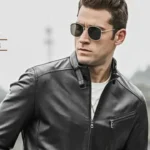
A Bomber Leather Jacket is an archetypal outerwear piece that fuses functional design, historical provenance, and perennial style. Originating from necessity on military flight decks and evolving through cultural adoption by veterans, rebels, and designers, the bomber’s compact silhouette, ribbed trims, and practical hardware make it both a functional tool and a fashion statement.
What is a Bomber Leather Jacket?
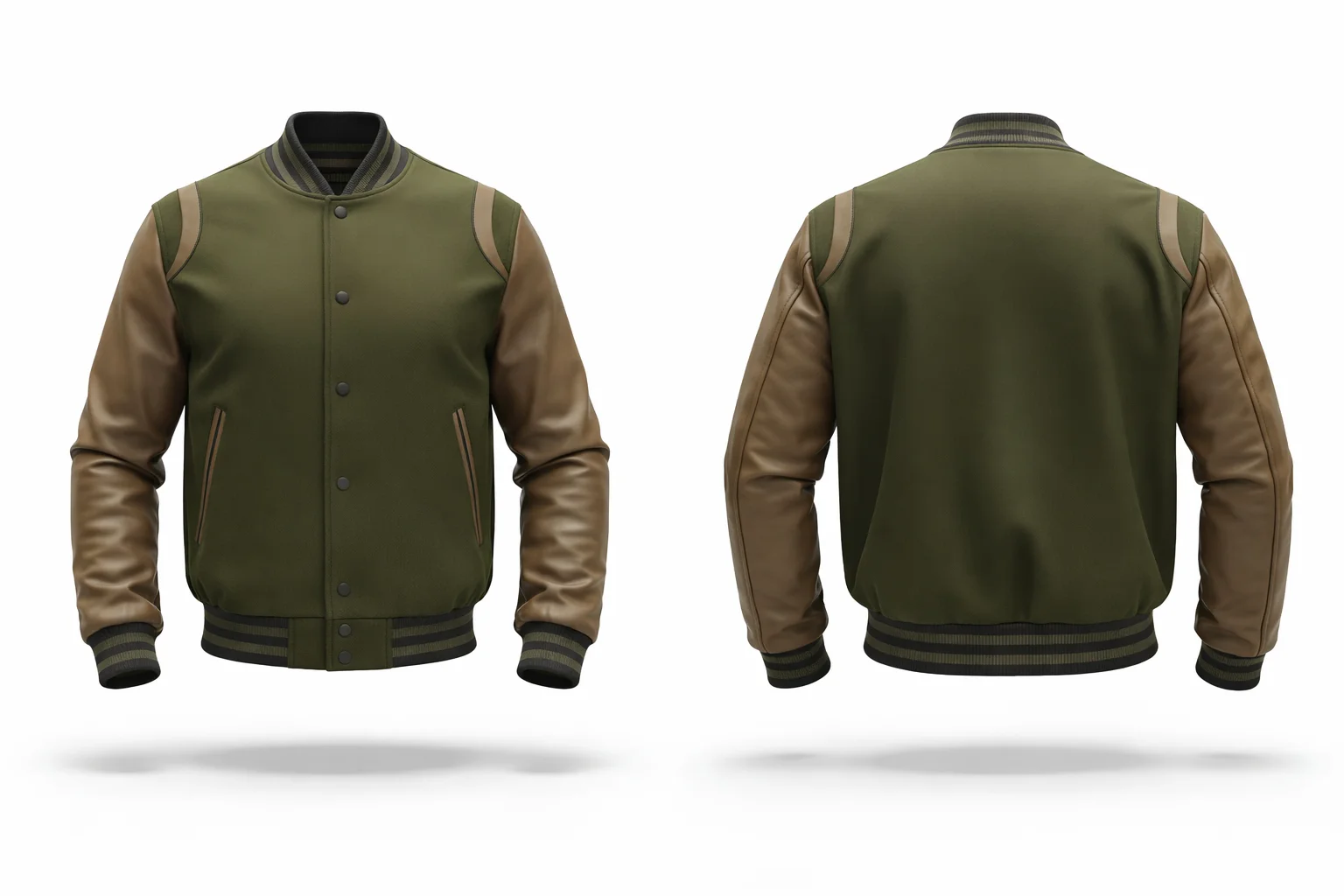
A bomber leather jacket (aka flight jacket) is a short outer garment originally designed for aviators. Typical features: ribbed waistband and cuffs, practical front closure (zipper or snaps), multiple external pockets, and a cut that allows arm movement in tight cockpits. Historically, leather (A-2, B-3), later iterations introduced textiles (MA-1 nylon), shearling collars, and modern hybrid constructions. In NLP terms: treat this as the canonical definition (entity = bomber leather jacket) and index semantically related entities (A-2, MA-1, shearling, full-grain leather) whenever creating content or metadata.
History of the Bomber Jacket short, authoritative narrative
The bomber jacket evolved from necessity. Pilots needed compact, warm outerwear that allowed freedom of motion and fit into cramped cockpits. Over time, these jackets moved from military kit to civilian wardrobes, carried home by servicemen and amplified by film, music, and subcultures.
Early evolution
- WWI / Interwar: Experimental flight coats; designers worked to combine insulation and maneuverability.
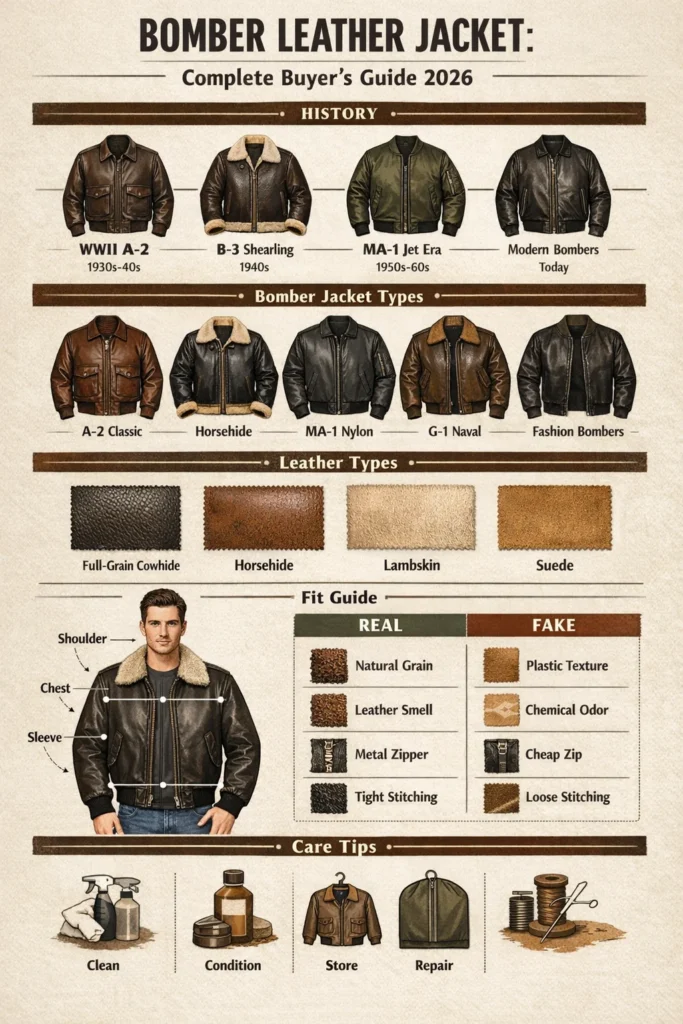
- A-2 (1930s–1940s): Became the archetype for leather flight jackets; features include a simple shirt collar or snap, ribbed hem and cuffs, and robust leather construction (horsehide or cowhide).
- B-3 (WWII): Heavy shearling-lined jackets worn by bomber crews at high altitudes; iconic large shearling collars and corkscrew construction for warmth.
- MA-1 (1950s): Jet-age need for lighter gear produced the nylon MA-1 with knitted cuffs and an often-orange rescue lining; this model migrated into civilian streetwear and spawned leather-hybrid variants.
Post-war civilian life
Veterans brought flight jackets home. Films and subcultures (motorcycles, rock & roll, punk) normalized the bomber outside aviation. Designers later recontextualized bombers for runway collections — changing fit, length, and materials while retaining the silhouette’s core identity.
Today
Modern iterations pair leather with textiles, experiment with proportions (cropped or oversized), and add design details. Despite evolution, the fundamental design principles—mobility, warmth, and durability—remain, which is also why vintage authentic pieces hold resale and collector value.
Types & Variations
Below is a typology of bomber-style jackets — useful for mapping product categories in a store or for guiding buyers.
A-2 (classic leather flight jacket)
- Collar: Shirt or snap collar
- Material: Traditionally, horsehide or cowhide
- Use: Rugged daily wear, collectible vintage models
- Search intents: “A-2 bomber jacket history,” “buy vintage A-2”
B-3 (shearling bomber)
- Lining: Full shearling (sheepskin fleece)
- Use: Extreme cold, heritage collectors
- Search intents: “B-3 shearling jacket repair,” “original B-3 value”
MA-1 (jet-age jacket)
- Origin: Nylon flight jacket adapted for jet cockpits
- Feature: Knit cuffs & waist, rescue orange lining; leather hybrids exist
- Use: Modern streetwear and utility
- Search intents: “MA-1 vs A-2 differences”
G-1 (naval cousin)
- Collar: Mouton (sheepskin) fur collar
- Notes: Naval specification, slightly different pocket layout
Modern / Fashion variants
- Cropped silhouettes, oversized shapes, quilted panels, leather+fabric mixes, lambskin fashion bombers.
Quick comparison A-2 vs MA-1 vs B-3
Feature / A-2 / MA-1 / B-3
- Material: Horsehide/cowhide / Nylon (or hybrid) / Sheepskin with fleece
- Warmth: Medium / Light (unless insulated) / Very high
- Collar: Shirt or snap / Knit / Large shearling collar
- Style: Heritage / Modern streetwear / Heavy vintage
- Best for: Everyday collectible / Casual & modern / Cold climates
- Collectability: High / Moderate / High
- Price range: Mid→Premium / Budget→Mid / Mid→Premium
Leather Types & Construction: technical yet plain-language
Choosing leather and inspecting construction determine longevity, look, and aging behavior.
Leather types explained
- Full-grain (cowhide/horsehide): Top quality; retains natural grain and patinas with wear; heavy and durable. Best for heritage, long-lasting jackets.
- Top-grain: Slightly sanded and finished for uniform appearance; softer; still Durable.
- Lambskin/kid leather: Exceptionally soft and smooth; excellent drape for fashion pieces; less abrasion-resistant than cowhide.
- Suede/nubuck: Sanded surface giving velvety touch; delicate and requires careful maintenance.
- Corrected grain / coated leather: Hides buffed to remove defects and coated for a uniform look; resists stains but doesn’t form a natural patina.
- Faux leather (PU): Synthetic, consistent, and inexpensive; more prone to cracking and won’t develop authentic patina.
Construction & hardware checklist
- Stitching: Even, tight, reinforced at stress points.
- Zippers: Heavy metal (Talon, YKK) or premium branded zips signal quality.
- Lining: Shearling, quilted polyester or cotton; removable liners add versatility.
- Seam finishing: Bound or taped inner seams last longer.
- Interfacing: Reinforced shoulders/pockets indicate durability.
Manufacturing Process
An overview that’s useful for product descriptions or buyer transparency.
- Design & patterning: Technical drawings and graded sizing patterns.
- Leather selection: Hides are inspected for marks, thickness, and color; matching hides for consistency.
- Cutting: By hand or CNC; layout optimized to reduce waste.
- Skiving & edge finishing: Thinning edges where panels meet for neat seams.
- Stitching & assembly: Industrial machines sew panels and pockets.
- Hardware installation: Zips, snaps, and rivets added with reinforcement.
- Lining insertion & insulation: Linings sewn in, removable liners fitted if applicable.
- Finishing: Edges polished, leather oiled or waxed where necessary; suede brushed.
- Quality control: Inspection of zippers, seams, and measurements.
- Packing & dispatch: Hung on wide padded hangers and bagged in breathable covers.
Handmade or small-batch jackets receive extra attention on fit and finishing and often command higher prices.
Authentication: How to identify original vs fake leather
Whether buying vintage or new, verifying authenticity prevents buyer’s remorse.
Quick physical checks
- Smell: Genuine leather has a warm, organic scent; PU smells chemical/plastic.
- Touch: Real leather is warm, supple, and irregular; PU feels cold and uniform.
- Grain & pores: Natural hides have irregular pores; perfect repeating grain often indicates synthetic or corrected grain.
- Back of material: Leather underside is fibrous; synthetics may show fabric backing.
- Edge test: Leather edges show fibers; plastic edges are uniform.
Construction & labelling clues
- Hardware quality: Heavy metal zips (YKK, Talon) and sturdy snaps.
- Stitching & interior: Bound seams, branded linings, and quality tapes.
- Labels & stamps: Vintage military pieces often have contract stamps, maker tags, and NSNs (national stock numbers). Ask for clear photos under the lining.
For vintage sellers, what to request
- High-res photos: Interior tags, zipper close-ups, stamps, and seams.
- Seller provenance: Past restoration, purchase receipts, and proof of age.
- Beware “pre-distressed” new jackets sold as vintage — ask for proof (old photos or paperwork).
When to get a pro
For rare or high-value pieces, consult a vintage textile specialist, auction house, or authenticated vintage dealer.
Buying Guide: Practical Checklist
Use this buyer checklist when evaluating jackets.
Pre-purchase checklist
- Material check: Full-grain, top-grain, lambskin, suede, or PU?
- Measurements: Chest (flat ×2), shoulder width, sleeve length, back length. Get flat measurements for vintage pieces.
- Hardware inspection: Are the zips branded? Are the teeth metal?
- Lining: Original shearling, quilted polyester, or replaced?
- Return policy & warranty: Is there a return window and warranty?
- Authenticity proof: Photos of stamps/tags, seller history, original receipts.
- Price vs quality: Does construction justify the price?
- Repairability: Can a local cobbler replace zippers or reline?
Buying scenarios
- Gift/fashion: Lambskin or top-grain for softness and look.
- Workwear/motorcycle use: Full-grain cowhide/horsehide with reinforced seams.
- Cold climate: B-3 shearling or lined cowhide.
- Vintage collectors: Confirm provenance and original hardware.
Price Range: concise global guide
Tier / Price / Expectation
- Budget / Faux: $30–$150 — PU or thin leather; trend pieces.
- Mid-range genuine: $200–$700 — top-grain or lambskin, decent hardware.
- Premium/heritage: $700–$2,500+ — full-grain cowhide/horsehide, heavy hardware.
- Luxury/designer: $2,500+ — couture materials and brand premium.
How Should a Bomber Jacket Fit?
A well-fitted bomber is comfortable and flattering.
Fit rules
- Waistband: Should sit at/just above the hips and hug lightly.
- Shoulders: Seams align with your shoulder or slightly drop for a relaxed fit.
- Sleeves: End at or just past the wrist bone; allow space for a shirt or thin sweater.
- Torso: Allows one thin layer comfortably; size up for thicker layers.
- Movement: Lift arms forward — jacket shouldn’t pull or restrict.
How to measure
- Lay the jacket flat.
- Chest: Measure across the widest point (underarms) and multiply by 2.
- Sleeve length: From the shoulder seam to the cuff.
- Back length: Base of collar to hem.
When buying online, compare these flat measurements to a jacket that already fits.
Care & Maintenance keep your bomber looking great
Leather lasts when looked after. Here’s a clear regimen.
Daily & routine care
- Wipe dust/dirt with a soft dry cloth.
- Spot-clean stains quickly with a damp cloth; for grease, consult a professional.
- Avoid prolonged sun and direct heat (drying out leather).
- Hang on a wide padded hanger to preserve shoulder shape.
Deep cleaning & conditioning
- Use pH-balanced leather cleaner; test in an inconspicuous area first.
- Condition 1–3 times a year, depending on climate and wear. Over-conditioning can soften leather excessively.
- For lambskin, use a lighter conditioner; use minimal amounts.
- For suede/nubuck,k use a suede brush and avoid liquid cleaners.
Storage
- Store in a breathable cloth bag — never plastic.
- Keep in a cool, dry, dark place.
- For long storage, stuff the shoulders with acid-free tissue.
Minor repairs, what you can DIY vs pro
| Problem | DIY fix | When to see a pro |
| Surface scuff (smooth leather) | Apply a small amount of conditioner, buff | Deep scratch or color loss |
| Suede stain | Suede eraser/brush | Oil stains or severe discoloration |
| Loose snap | Re-attach with the kit | Structural seam failure |
| Broken zipper teeth | Try slider realignment | Replace zipper (pro) |
| Detached lining | Re-stitch with a needle | Replace lining (pro) |
For major restoration (large tears or significant dye loss), seek a reputable leather restorer.
Styling 12 outfit ideas + color tips
Bomber jackets are styling engines that are Adaptable to various looks.
Men
- Classic: Black bomber + white tee + slim dark denim + Chelsea boots.
- Heritage: Brown A-2 + olive chinos + suede boots.
- Winter layering: Shearling bomber + roll-neck + wool trousers.
- Streetwear: Bomber + hoodie + joggers + high-top sneakers.
- Smart casual: Quilted bomber + button-down oxford + dark jeans.
- Moto edge: Reinforced cowhide bomber + black denim + biker boots.
Women
- Modern casual: Cropped lambskin bomber + high-waist jeans + ankle boots.
- Feminine contrast: Oversized bomber + midi skirt + chunky boots.
- Winter chic: Shearling bomber + knit dress + tights.
- Evening edge: Fitted bomber over slip dress + heels.
- Work-friendly: Bomber + tailored trousers + loafers.
- Athleisure: Bomber + leggings + oversized sweater + sneakers.
Where to Buy & Price Guide
By intent
- Heritage & investment: Small ateliers, heritage makers (Aero, Schott).
- Designer & premium: Official showrooms, high-end department stores.
- Vintage & collectible: Established vintage dealers, auction houses, vetted eBay sellers.
- Budget/trend: High-street retailers (Zara, Mango) — typically lower-grade leather or PU.
Regional pricing pointers
- North America: mid-range $250–$800; premium $800–$2,500.
- Europe: Similar; VAT can increase upfront cost.
- Australia: Often +10–20% on imports.
- Middle East: Designer prices may match/ exceed European retail.
Pros & Cons
Pros
- Timeless and versatile.
- Durable when made from full-grain leather.
- Patina improves over time on good leathers.
- Flexible across casual and smart-casual contexts.
Cons
- High-quality leather is costly.
- Improper care causes cracking and irreversible damage.
- Sizing varies by brand — returns can be difficult.
- Vintage pieces may need restoration.
Top Brands & Countries Famous for Bomber Jackets
- United States: Schott NYC (heritage).
- United Kingdom: Bespoke and premium outerwear houses.
- Italy: Craftsmanship, luxury lambskin makers.
- Japan: Small-batch producers focused on vintage accuracy (The Real McCoy’s).
- Australia: Rugged workwear-oriented producers.
FAQs
A: Waistband should sit at the hips and hug lightly; sleeves end at the wrist bone; shoulder seams align with or slightly drop from your natural shoulder. Size up for thicker layering.
A: A-2 is a classic leather flight jacket with a shirt or snap collar and ribbed hem; MA-1 began as a nylon flight jacket with a knit waist and often a reversible orange lining.
A: Check for natural grain and irregular pores, the leather smell versus plastic, heavy metal zips, proper stitching, and (for vintage) contract stamps or maker tags. Ask for close-up photos.
A: Remove dirt with a soft cloth; use a pH-balanced leather cleaner for deep cleaning; condition periodically. For suede, use a special brush and avoid water.
A: Yes — a high-quality full-grain or well-made lambskin jacket can last decades and often improves with age. Proper care makes the cost-per-wear very favorable.
Conclusion
A bomber leather jacket blends history, function, and style. From heavy shearling B-3s to heritage A-2s and modern MA-1 hybrids, there is a bomber for nearly every use case. Prioritize leather type (full-grain for durability, lambskin for softness), inspect construction (zippers, stitching, linings), measure carefully for fit, and maintain the jacket with routine cleaning and occasional conditioning. For vintage purchases, insist on provenance and clear photography of stamps/hardware. Consult a professional for High-Value items.