Introduction
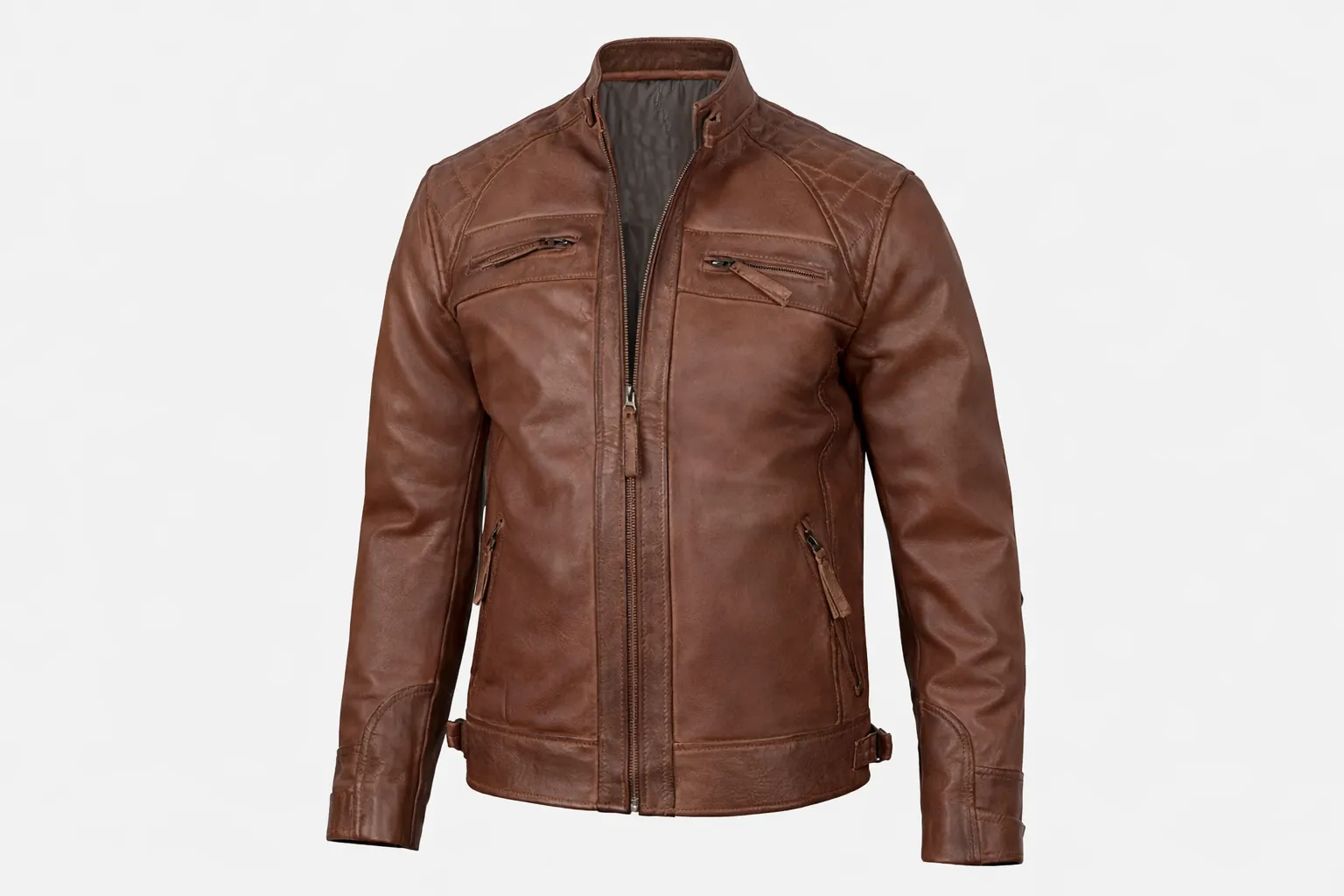
A Brown Leather Jacket remains one of the most versatile and timeless pieces in a man’s wardrobe. It offers warmth, character, and a rugged elegance that black leather often can’t match. Brown tones bring an earthy, approachable vibe that improves with age through a natural patina—developing unique sheen, subtle color shifts, and personal marks over time.
This expert-level guide covers everything from leather types and production to spotting real vs. fake, key styles for 2026, buying tips, care routines, styling ideas aligned with current trends, price expectations, top brands, and more. Written in clear, simple English with step-by-step advice and checklists, it’s designed to help you invest in a jacket that lasts decades.
For personalized recommendations, share your budget, height/size, preferred silhouettes, and style vibe—I’ll suggest current models and retailers.
What Is a Brown Leather Jacket?
A brown leather jacket features leather as the primary outer material in visible brown shades. It spans silhouettes like biker, bomber, café racer, blazer, field, shearling-lined, and suede variations.
Common brown tones include:
- Cognac — Warm, orange-brown (bright and standout).
- Chestnut/Medium brown — Balanced and versatile.
- Tan — Light and casual.
- Chocolate — Deep and sophisticated.
Lighter tones add vibrancy and pair well with neutrals; darker ones feel more formal and blend seamlessly. Brown leather excels at developing patina, making each jacket uniquely yours.
Short History of Brown Leather Jackets
Leather jackets originated as functional gear in the early 1900s for pilots, soldiers, and workers needing durable protection. Post-World War II, they transitioned into mainstream fashion—bombers for aviators, field styles for military surplus, and motorcycle jackets for riders.
In the 1950s–1960s, they symbolized rebellion. Natural tanning processes often yielded brown hues, making it a staple early on.
From 2024–2026, trends emphasize aged/vintage finishes, soft hand-feel, and warm browns like cognac and chocolate. Distressed and shearling details remain strong, with eco-conscious and refined vintage looks gaining traction.
Types / Variations
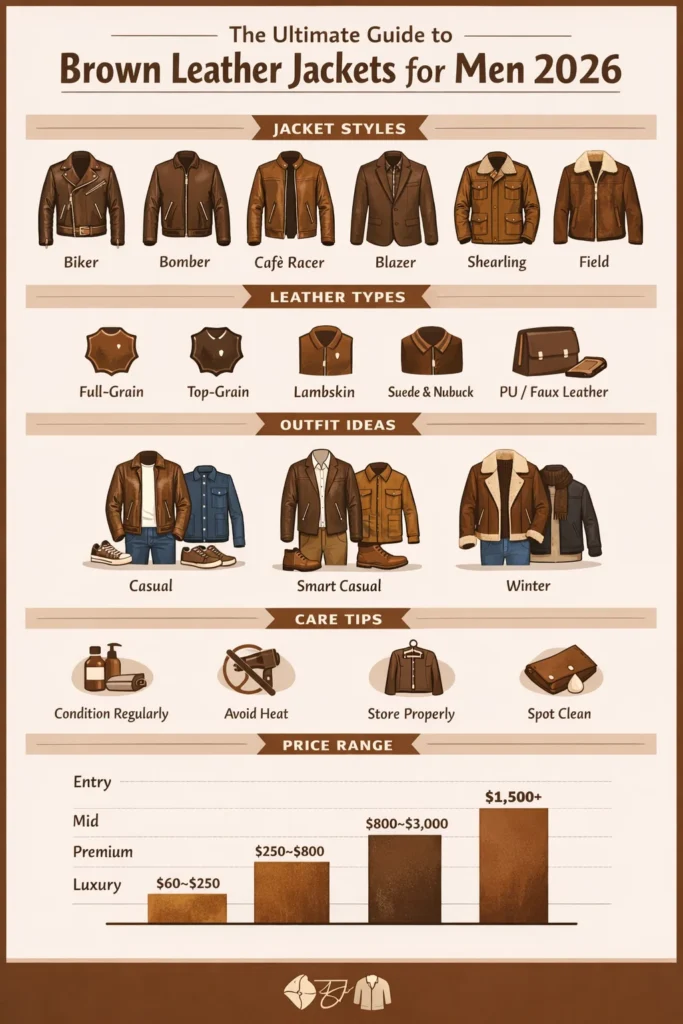
Here are the main brown leather jacket styles, with ideal scenarios:
- Biker (Motorcycle) Jacket: Asymmetric zip, heavy hardware, belted waist, reinforced panels. Best for: Edgy casual, riding (add armor for protection).
- Bomber Jacket: Ribbed hems/cuffs, straight zip, knit/elastic collar. Best for: Everyday casual, easy layering.
- Café Racer / Racer Jacket: Center zip, minimal snap collar, clean lines. Best for: Smart-casual, modern minimalism.
- Leather Blazer / Shirt Jacket (Shacket): Lapels or shirt-style cut, longer length. Best for: Dressier/business-casual outfits.
- Field / Utility Jacket: Multiple pockets, longer body, rugged finish. Best for: Travel, outdoors, cold layering.
- Shearling-Lined Jacket (Aviator): Warm shearling interior/collar, pilot shape. Best for: Winter, vintage-inspired warmth.
- Suede & Nubuck: Soft nap surface, delicate. Best for: Refined casual in dry conditions.
In 2026, cropped bombers, distressed finishes, and oversized/relaxed fits (especially in chocolate brown) are trending strongly.
Leather Types Used
Leather grade impacts durability, feel, price, and aging:
- Full-Grain Leather — Top layer with natural grain/marks. Traits: Most durable, best patina. Ideal for: Long-term investment.
- Top-Grain Leather — Lightly sanded for uniformity. Traits: Smooth, still high-quality, and tough. Ideal for: Balanced look and practicality.
- Corrected-Grain / “Genuine” Leather — Lower hide, buffed/embossed. Traits: Cheaper, uniform, limited patina. Ideal for: Budget options.
- Lambskin — Soft, thin lamb hide. Traits: Luxurious drape, less abrasion-resistant. Ideal for: City/dressier wear.
- Suede & Nubuck — Sanded nap surface. Traits: Rich texture, stain/water-sensitive. Ideal for: Dry-weather refinement.
- PU / Faux Leather — Synthetic. Traits: Affordable, low-maintenance, no patina. Ideal for: Vegan/low-cost.
Tip: Prioritize full-grain or quality top-grain for character-building longevity.
How a Leather Jacket Is Made
- Sourcing — Hides from cows/sheep/goats; species affects grain/thickness.
- Tanning — Chrome (soft/fast) or vegetable (firm/natural).
- Dyeing & Finishing — Aniline (natural look) vs. pigmented (protective).
- Cutting — Pattern pieces aligned to the grain.
- Skiving & Stitching — Edges thinned, seams reinforced.
- Hardware — Zips/snaps added (YKK common for quality).
- Quality Control — Inspected for evenness, then conditioned/packed.
Understanding this helps evaluate craftsmanship when shopping.
How to Identify Real vs Fake Leather
- Smell — Real: earthy/warm; fake: plastic/chemical.
- Texture — Real: irregular natural grain; fake: repeating pattern.
- Pores — Random in real; uniform in fake.
- Edge — Shows layered fibers; fake often sealed/plastic.
- Water Drop — Absorbs/darkens real (test discreetly).
- Price/Label — “Genuine” often means lower quality.
- Hardware/Stitching — Sturdy, even in real.
- Flex — Natural wrinkles; poor fake cracks.
Buying Guide — What to Check Before Purchase
Fit Checklist
- Shoulders: Seam at bone edge.
- Sleeves: To the wrist bone (relaxed arms).
- Chest: Zip comfortably, no pulling.
- Length: Shorter for biker/bomber; longer for blazer.
- Mobility: Arms up/bend without restriction.
Construction & Details
- Lining: Full for warmth; partial for lightness.
- Stitching: Tight, reinforced at stress points.
- Hardware: Smooth zips, sturdy snaps.
- Pockets: Practical placement/size.
Leather & Finish
- Confirm full-grain/top-grain.
- Aniline: Shows character; pigmented: More resistant.
Questions for Seller
- Tannery/country of origin?
- Leather grade?
- Warranty/repairs?
- Recommended care products?
- Future services (zipper/seam)?
Price Range — What to Expect (2026)
- Entry (PU/corrected-grain): $60–$250
- Mid (top-grain/lambskin): $250–$800
- Premium (full-grain/handcrafted): $800–$3,000+
- Heritage/Luxury: $1,500–$10,000+
Under $200 “real leather” often means corrected-grain or thin splits—inspect closely.
How to Style a Brown Leather Jacket
Brown leather pairs easily with neutrals/earth tones. 2026 favors aged/distressed finishes, chocolate/cognac tones, cropped bombers, and layered looks.
Casual Everyday
White tee + indigo jeans + brown bomber + sneakers/boots. Add a plaid overshirt for ruggedness.
Smart Casual
Café racer + button-down + chinos + derby/Chelsea boots. Layer a cashmere sweater underneath.
Office / Business Casual
Leather blazer + wool trousers + collared shirt. Opt for deep chocolate, minimal distressing.
Date Night / Evening
Slim dark brown café racer + black jeans + turtleneck + Chelsea boots. Matte finish for refinement.
Cold Weather Layering
Shearling-lined + heavy knits, or a field jacket under a wool coat.
Color Pairing Tips
- Cognac/light: Mid-blues, creams, olive.
- Chocolate/dark: Greys, black, navy. Keep palettes earthy for cohesion.
Head-to-Head Comparison Table
| Feature | Biker | Bomber | Café Racer | Blazer | Shearling |
| Casual friendly | ★★★★☆ | ★★★★★ | ★★★★☆ | ★★☆☆☆ | ★★★☆☆ |
| Formal potential | ★☆☆☆☆ | ★★☆☆☆ | ★★★☆☆ | ★★★★★ | ★★☆☆☆ |
| Warmth | ★★☆☆☆ | ★★☆☆☆ | ★★☆☆☆ | ★☆☆☆☆ | ★★★★★ |
| Ease of layering | ★★☆☆☆ | ★★★☆☆ | ★★☆☆☆ | ★★☆☆☆ | ★★★☆☆ |
| Patina potential | ★★★★★ | ★★★★☆ | ★★★★☆ | ★★☆☆☆ | ★★☆☆☆ |
| Riding suitability | ★★★★★ | ★☆☆☆☆ | ★★☆☆☆ | ★★☆☆☆ | ★★★☆☆ |
Pros & Cons
Pros
- Timeless versatility.
- Develops warm patina.
- Bridges casual to smart-casual.
Cons
- Some shades are less evening/formal than black.
- Suede requires extra care.
- Quality pieces are pricey.
How to Care for a Brown Leather Jacket
Routine Maintenance
- Wipe dust with a soft, damp cloth.
- Brush suede gently.
- Condition full-grain/top-grain every 6–12 months (pH-balanced; test first).
- Hang on a padded/wooden hanger.
If Wet
- Air dry at room temp (no heat).
- Apply protector spray (if finish-compatible).
Storage
- Breathable garment bag.
- Away from sunlight.
- Condition before long storage.
Professional Care
- Stains/repairs: Leather specialist.
- Re-dye/fix edges as needed.
Repair Tips
- Fix zippers/snaps early.
- Patch seams promptly.
- Regular fixes preserve value.
Top Brands & Where to Buy (2026 Picks)
Heritage/Classic
- Schott NYC — Iconic motorcycle styles.
- Belstaff — Rugged premium builds.
Contemporary/DTC
- The Jacket Maker — Custom/accessible quality.
- Todd Snyder — Elevated fits.
Fashion/Luxury
- AllSaints, Reiss, Saint Laurent — Designer finishes.
- Banana Republic — Solid value options.
Retailers
- Nordstrom, Mr Porter, MatchesFashion — Wide selection/returns.
Local artisans offer bespoke fits and repairs.
Price & Value: What to Expect
High-quality means better leather, hardware, and construction—an investment lasting decades. Avoid suspiciously cheap “real leather.”
FAQs
A: Yes—warm aged leathers, cognac/chocolate tones dominate, favored for patina and seasonal palettes.
A: Cognac and medium chocolate—pair easily with denim, chinos, neutrals.
A: Yes—leather blazer or clean café racer in dark brown, minimal distressing.
A: Specialty protector spray; avoid heavy rain. Air dry, brush nap if wet.
A: Yes—every 6–12 months keeps it supple, prevents cracking (more in dry climates).
Buying Checklist
- Leather type: Full-grain/top-grain/lambskin confirmed.
- Shoulders/sleeves/chest/length fit properly.
- Mobility test: Full arm movement.
- Hardware/stitching robust.
- Lining/pockets/length suit needs.
- Return/repair policy is clear.
- Price aligns with grade.
Conclusion
A brown leather jacket is more than clothing—it’s an investment that gets better with time. Choose a silhouette matching your lifestyle, prioritize quality leather and fit, then care for it properly. With the right piece, it becomes a signature item that evolves personally and Stylistically for years.