Introduction
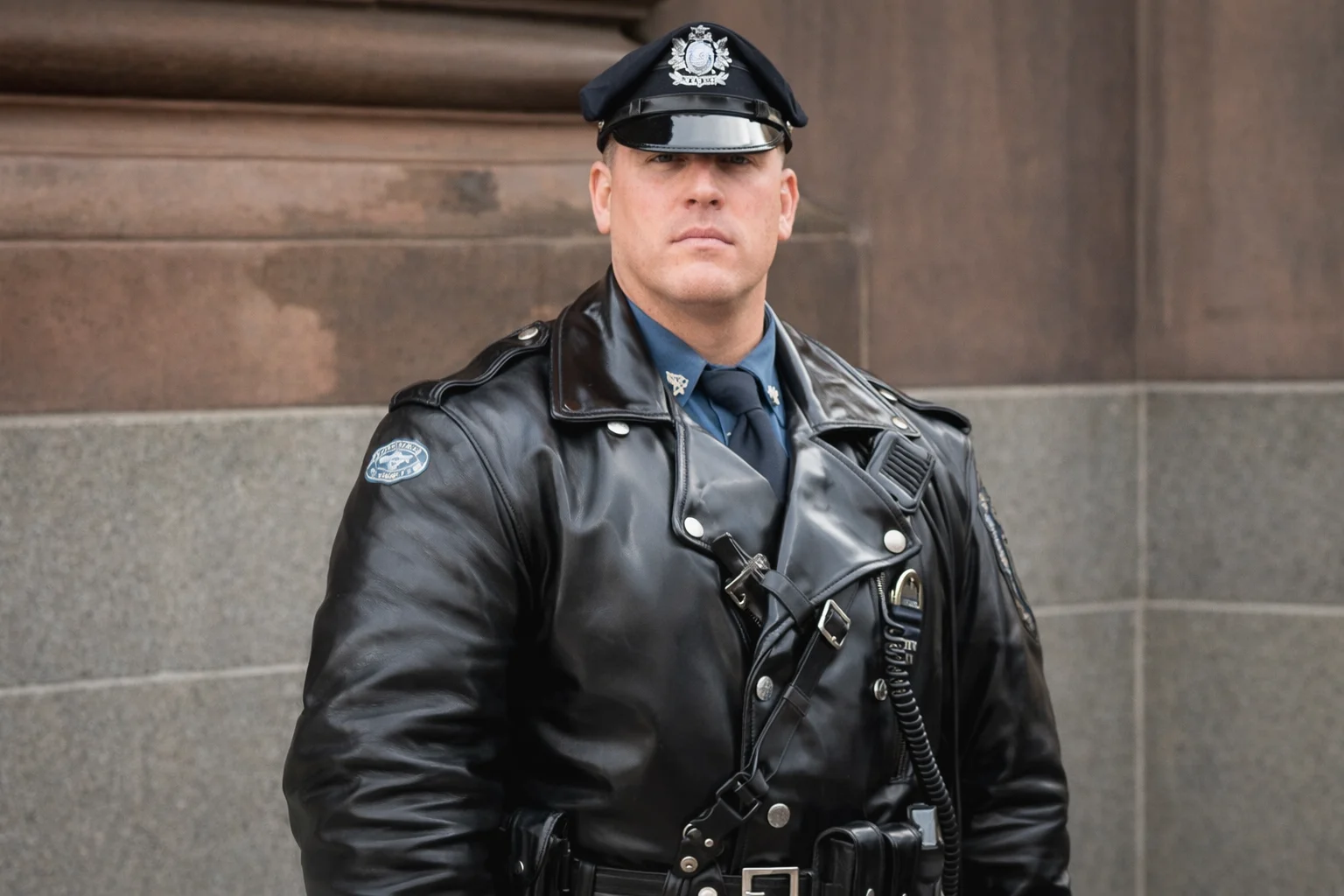
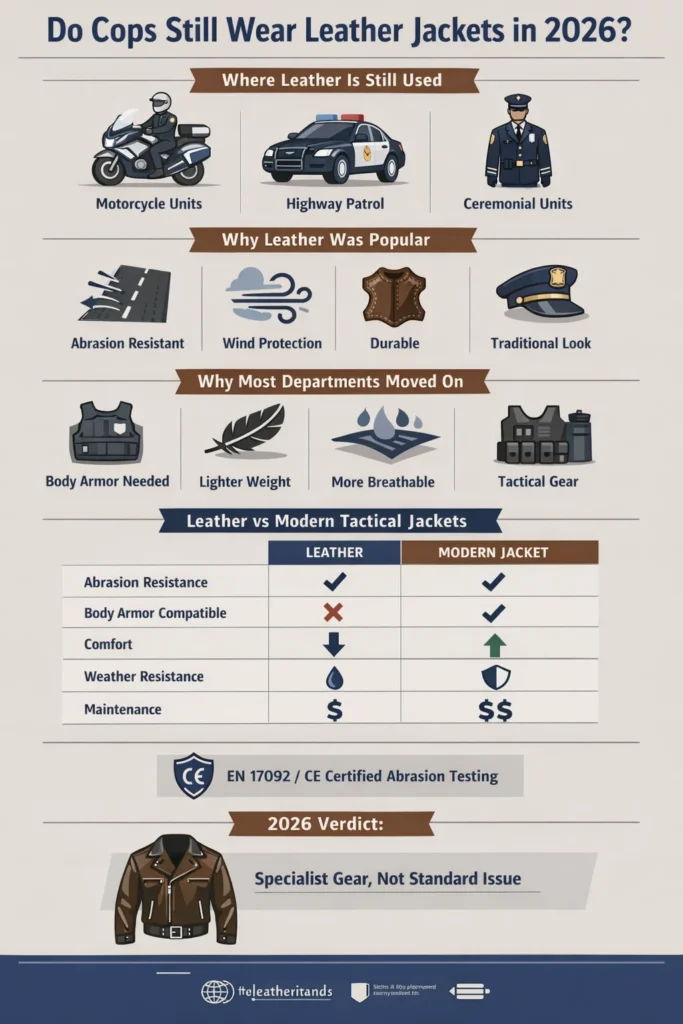
Very few police departments issue leather jackets as standard duty outerwear anymore. Leather remains alive in policing — chiefly in motorcycle units, some highway/motor patrols, and as optional cold-weather or ceremonial pieces — because of its abrasion resistance, durability, and traditional look. But most day-to-day uniform jackets today are soft-shells, fleeces, or technical parkas that integrate better with body armour and modern equipment.
Why This Article Matters
People searching “Do Cops Still Wear Leather Jackets” want a clear, evidence-based answer — not nostalgia. This long-form guide explains the lifecycle of police leather: why it rose, why it faded in many places, where it still appears in 2026, how it stacks up against modern tactical textiles, procurement and policy signals to watch, and practical buying and care guidance for departments, riders, collectors, and journalists.
What is a Police Leather Jacket?
A police leather jacket is a purpose-designed outer garment tailored for law enforcement duties. Key attributes include abrasion resistance, reinforcement, badge/insignia accommodation, a cut optimized for seated motorcycle posture, and exceptional durability. Typical features:
- Thick full- or top-grain hides (cowhide, horsehide historically) for abrasion resistance.
- Badge tabs, departmental patches, and reinforced ID panels.
- Pockets sized for gloves, notepads, and often accessible while seated on a motorcycle.
- Motorcycle-specific cuts: longer back, tapered waist, higher collar, and reinforced seams.
- Lined variants for cold weather and optional aramid (Kevlar) reinforcement at seams/impact zones.
In short: built to be functional and protective rather than merely fashionable.
Short History: Leather’s Rise and Gradual Decline
Origins and Early Use
Leather became a uniform staple because it met basic operational needs: windproofing, durability, and a professional look. For riders, it provided critical slide-resistance; for urban patrol, it signalled authority and weather protection.
Why Leather Began to Fade (1980s–2000s)
From the 1980s onward, several converging trends shifted procurement away from leather for routine patrol:
- Ballistic protection: The requirement to wear body armour made tight leather cuts impractical.
- Textile advances: Soft shells, breathable membranes, and laminated parkas offered integration and lighter weight.
- Cost & maintenance: Leather costs more up front and requires conditioning and repair.
- Climate variability: Leather is uncomfortable for warm climates and heavy for long shifts.
Result: Leather moved from general-issue to a specialist role — mostly motorcycle/highway, ceremonial, and optional cold-weather wear.
Which Police Units Still Wear Leather in 2026?
Leather hasn’t vanished; it’s a specialist kit. In 2026, you most commonly see leather in:
- Motorcycle police units: The largest and most consistent user. Leather’s abrasion resistance and wind blocking remain crucial for riders.
- Highway/motor patrol: Some state/provincial agencies keep leather blousons or offer leather as an option for high-speed duties.
- Ceremonial & heritage units: Parades, mounted police displays, and historical reenactment teams.
- Optional cold-weather items: A minority of departments permit leather coats as optional warm layers.
- Collectors & vintage outfits: Leather jackets remain desirable as memorabilia.
Units where leather has mostly disappeared: frontline foot patrol, community policing teams, and rapid-response units where modularity and armour integration are essential.
Why Leather Was Used: Protection & Practical Benefits
Leather was chosen for operational reasons, not just aesthetics:
- Abrasion resistance: Full-grain leather resists sliding abrasion on asphalt — critical during road slides.
- Wind protection: Lined leather cuts wind well and retains warmth.
- Durability: A well-made leather jacket can outlast many textile garments.
- Professional image: The classic look works well for court appearances, parades, and public ceremonies.
These explain its persistence in motor units and in contexts where durability and slide protection are priorities.
Why Many Departments Phased Out Leather
Despite those strengths, practical realities led many agencies to shift:
- Body armour compatibility: Modern policing requires flexible integration with ballistic and stab vests, which soft-shells and layered parkas support better.
- Weight and breathability: Leather is heavier and less ventilated — a performance cost on long shifts.
- Maintenance overhead: Leather requires conditioning and careful repair; textiles are lower-maintenance and cheaper to replace in bulk.
- Cost & procurement economics: Contracts favor multi-role textile garments that satisfy many units at a lower unit cost.
- Climate & role diversity: Variable climates and mixed duties favor modular textile layers.
In the procurement taxonomy, leather became a High-Specialty class rather than a default label.
Leather vs Modern Tactical Textiles — Head-to-Head
| Feature | Leather Jacket | Modern Soft-Shell / Textile |
| Abrasion resistance (slide protection) | High — full-grain excels | Variable — high-end textile + aramid can match |
| Body armour compatibility | Poor–moderate | Excellent — designed for integration |
| Breathability/comfort | Lower; heavier | Higher, ventilated, and lighter |
| Rain performance | Wind-blocking; can absorb water | Better if waterproof membranesare present |
| Maintenance & lifecycle cost | Higher | Lower |
| Visibility/modularity | Less modular; traditional look | Highly modular (pockets, loops, panels) |
Bottom line: Leather often wins for pure abrasion properties and longevity; modern textiles win for modularity, armour compatibility, and overall operational comfort.
Safety Evidence: Standards and Research
Standards That Matter
For motorcycle protective clothing, standards (e.g., EN 17092 / EN 13595) evaluate abrasion, tear, and seam strength. Leather typically performs well in abrasion tests used by these standards.
Research Highlights
- Abrasion resistance reduces road-slide injury severity — leather historically performs strongly here.
- But abrasion is only one component: seam strength, impact armor, and fit matter. A well-fitted textile jacket with armor can equal or surpass leather in total crash protection.
- For high-speed motorcycle duty, abrasion resistance remains a dominant variable — this explains leather’s persistence in motor units.
(When drafting procurement specifiers, treat abrasion class and presence of impact armor as separate, testable features.)
Types of Leather & Police Jacket Construction
- Full-grain cowhide: Heavy, highly abrasion-resistant; common in motorcycle jackets.
- Top-grain leather: Thinner, more flexible; used in blousons or dress variants.
- Horsehide (historic): Extremely tough; used in vintage pieces, now rare.
- Lining & reinforcement: Modern police motorcycle jackets often add aramid/Kevlar panels, quilted linings, and removable insulation.
- Construction details to watch: Reinforced seams, heavy-duty zippers, shoulder/elbow reinforcements, and badge pocket design.
Practical Comparison: Motorcycle Leather vs Departmental Soft-Shell
| Use Case | Motorcycle Leather Jacket | Department Soft-Shell |
| High-speed motor patrol | Excellent — abrasion & wind protection | Acceptable if the textile meets the high abrasion class |
| Urban foot patrol | Overkill; heavy | Preferred — lighter, flexible, integrates with armour |
| Cold weather | Good when properly lined | Good (insulated parkas, lighter) |
| Ceremonial / parade | Iconic, traditional | Often used for uniformity and ease |
How Uniform Policy Shapes the Choice
Uniform decisions are made through directives, procurement specs, and local constraints. Patterns include:
- Unit-specific allowances: Documents often list leather for motor units, soft shells for patrol.
- Explicit optional items: Some policies explicitly name “leather coat” as permitted optional wear.
- Procurement focus: Large contracts favor versatile textiles to economize on inventory and maintenance.
- Compliance checks: Ensure patches, reflective panels, and ID meet local safety and visibility standards.
If you’re drafting a directive, treat garment selection as a role-based decision: each role (motor, foot, detective) receives a limited set of allowed outerwear options to maintain interoperability with armour and identification systems.
Pros & Cons
Pros
- Excellent abrasion resistance for motorcycle crashes.
- Windproof and warm when lined.
- Durable; long service life with care.
- Iconic look for ceremonial units.
Cons
- Heavy, less breathable.
- Often incompatible with ballistic vests.
- Higher purchase & maintenance cost.
- Not ideal in hot climates or for long foot patrols.
Buying Guide — for Departments & Collectors
For Departments
- Define role(s): Reserve leather for motorcycle/highway use; choose soft shells for general patrol.
- Safety specs: Require abrasion testing or aramid reinforcement for motorcycle jackets.
- Armour compatibility: Confirm jacket fits over or integrates with issued body armour.
- Visibility: Ensure reflective insignia meet standards.
- Vendor support: Prefer suppliers offering warranties and repair services.
- Total lifecycle costing: Compare purchase + maintenance + replacement timelines.
For Collectors / Enthusiasts
- Construction: Look for full-grain hide, reinforced seams, and maker tags.
- Provenance: Department patches and maker’s label increase value.
- Condition: Intact lining, solid zips, minimal dry-rot.
- Care expectations: Regular conditioning and proper storage.
Care & Maintenance
- Quick clean: Wipe dirt with a damp cloth.
- Deep clean: Manufacturer’s leather cleaner solution.
- Conditioning: Apply Quality conditioner every 6–12 months.
- Drying: Avoid heat; dry at room temperature after wetting.
- Winter: Remove salt/grime promptly to avoid hardening.
- Repairs: Fix seams/zips quickly—damaged seams reduce slide protection.
Price Ranges and Top Brands
- Department contract grade leather motorcycle jacket: USD $350–$900 (hide quality, reinforcements, customization).
- High-end bespoke leather uniforms/replicas: USD $700–$1,500+.
- Vintage police jackets (collectible): widely variable; provenance can push prices several hundred dollars or higher.
FAQs
A: No. In most departments, leather is not standard issue for day-to-day patrol in 2026. It is generally unit-specific or optional.
A: Yes. Motorcycle units are the single largest group that still issues or routinely wear leather jackets due to abrasion protection.
A: Leather generally offers superior abrasion resistance, but high-quality certified textiles with proper armour can provide comparable overall protection. Look for EN/CE ratings and reinforced panels.
A: Sometimes. It depends on the jacket’s cut and design. Many leather jackets aren’t designed to accommodate body armour, which is why soft-shell jackets are often preferred for patrol officers.
A: Match the garment to the role. Use leather where slide protection and wind resistance are essential (motorcycle/highway); use soft-shells where armour compatibility and comfort matter most (patrol/foot work).
Final Verdict
Leather police jackets have not disappeared — they have specialized. In 2026, the frontline patrol officer is more likely to wear a soft-shell, fleece, or technical parka selected for armour Compatibility, modularity, and comfort. Leather’s specific advantages — abrasion resistance and wind blocking — make it the logical choice for motorcycle and some highway units, and it retains a ceremonial and collectible role. Departments choosing leather should do so deliberately: specify abrasion testing, confirm armour fit, and plan for lifecycle maintenance.