Introduction
Green Leather Coats provide an ideal mix of adaptability and bold attitude. In 2025, green shifted from a rare pick to a key trend in style, showing up on catwalks (Prada’s Kelly plus pistachio hides, Gucci, along with Saint Laurent vibes) and everyday street looks. Olive stays a solid everyday neutral, whereas vivid emerald, deep forest, and gentler mint or pistachio tones bring strong impact or timely vibrancy.
This handbook explains it all: color variations, shapes, fabric types, genuine hide tests, outfit suggestions, maintenance steps, plus purchase guidance to assist you in choosing (or reselling) the perfect green leather jacket.
What Is a Green Leather Jacket?
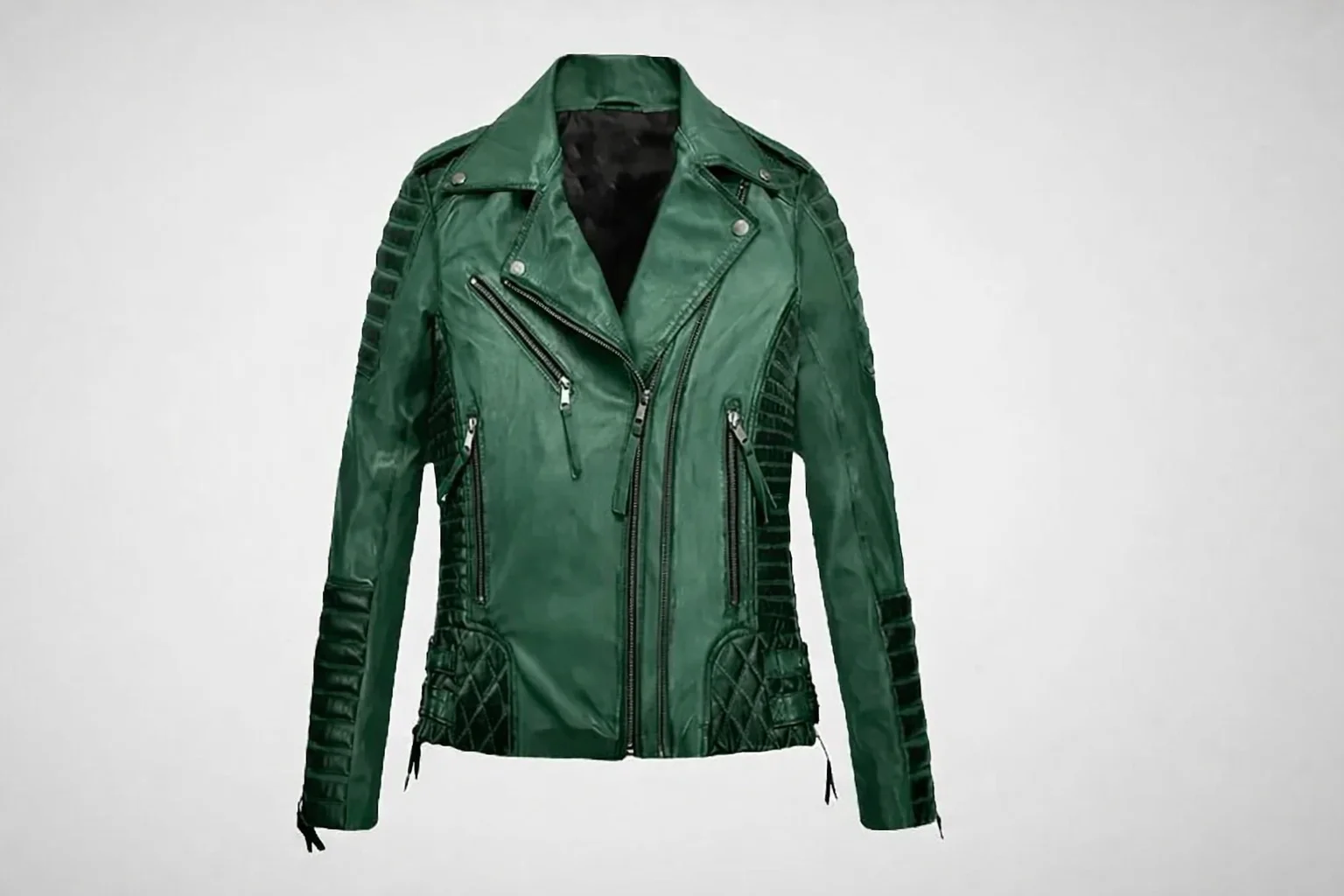
A green leather coat displays a primary green hue across its exterior layer, crafted from real hide or premium man-made substitutes. Main characteristics include:
- Fabric — Full-grain, top-grain, suede, PU, microfiber, and similar options.
- Surface — Matte/aniline, shiny/patent, worn-in, textured patterns.
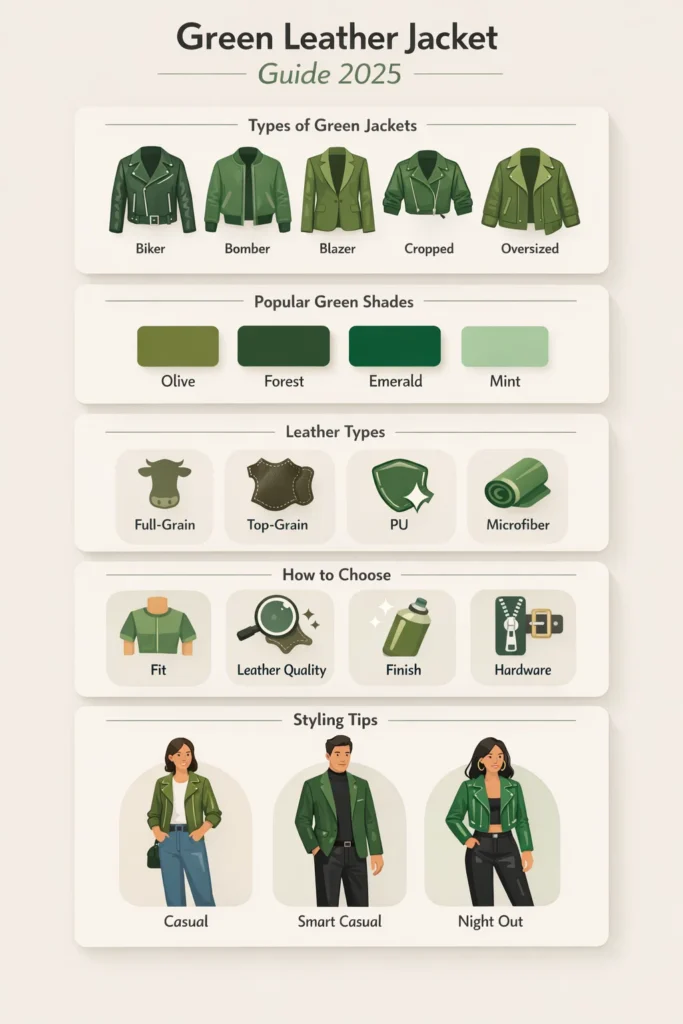
- Tone — Olive, forest, emerald, mint (along with hex codes for exact shade matching in shopping listings).
Such specifics support sharper searches, tailored suggestions, and precise item listings.
Why Green in 2026? Color Context
Green coats rose sharply in 2026, expanding past standard olive toward lively and surprising hues. Style enthusiasts welcomed bolder greens (Kelly, pistachio, emerald) on catwalks by Prada, Gucci, Hermès, among others, whereas urban outfits leaned toward adaptable olive plus deep forest tones. Olive works as an easy neutral for daily outfits, forest lends refined depth, emerald delivers upscale appeal, and mint or softer pastels fit spring plus summer collections.
Label items using both “green” and exact shade names to reach wide plus niche search traffic.
Types & Variations of Green Leather Jackets
By Shape
- Traditional Moto / Biker — Off-center zipper, cinched waist, firm padded shoulders.
- Bomber / Aviator Coat — Elastic ribbed wrists and bottom, squared, relaxed cut.
- Tailored / Blazer Style — Extended length, sharp lines for polished casual outfits.
- Short Cropped Jacket — Ends high at the waist, perfect with tall-waisted clothing.
- Extra-Large / Shacket — Baggy fit, built for easy layering.
- Hooded Hide Jacket — Relaxed mixed style, frequently seen in plant-based versions.
By Surface
- Matte / Aniline — Visible natural pores, true leather touch.
- Shiny / Patent — Reflective gleam, bold, striking look.
- Worn / Vintage Distressed — Rough aged appearance.
- Patterned / Croc-Embossed — Raised luxury texture.
Beside Shade
| Shade | Vibe / Use | Best For | Quick Styling Note |
| Olive / Army Green | Neutral, utilitarian | Everyday wear | Pairs with denim, beige, brown |
| Forest / Bottle Green | Sophisticated, moody | Smart casual, evening | Works with charcoal and navy |
| Emerald / Jewel Green | Luxurious, bold | Statement pieces | Keep the outfit minimal |
| Mint / Pastel Green | Fresh, seasonal | Spring/summer | Pairs with white/pale denim |
| Distressed Green | Rugged, vintage | Casual layering | Streetwear, worn-in vibe |
Include color_hex and precise names in product data for accuracy.
Leather Types Used
Genuine Leather
- Full-Grain — Top Quality, natural grain, patina over time, high durability.
- Top-Grain — Smooth, uniform, still durable.
- Corrected-Grain / “Genuine” — Coated for consistency, medium durability.
- Suede / Nubuck — Soft nap, higher care needs.
Synthetic Leathers
- PU (Polyurethane) — Affordable vegan, variable quality.
- PVC — Budget, less breathable.
- Microfiber Leather — Premium synthetic, closer to the real leather feel.
Choose full-grain or top-grain for investment; high-quality PU/microfiber for seasonal or budget pieces.
How Genuine & Faux Leather Differ
| Feature | Genuine Leather | High-Quality PU / Microfiber |
| Look & Feel | Natural grain, warm | Uniform, consistent |
| Breathability | High | Lower (varies) |
| Durability | Decades with care | Good short–medium term |
| Care | Conditioning needed | Wipe clean |
| Cost | Higher upfront | Lower upfront |
Use comparison tables on product pages to set expectations.
How to Identify Real vs. Fake Leather
- Labels — Look for specific terms (full-grain, top-grain); avoid vague “leatherette.”
- Touch & Flex — Really warms up and stretches slightly.
- Edge Inspection — Real shows fibrous edges; faux looks plastic.
- Smell — Real has an earthy scent; synthetics smell chemical.
- Water Drop — Real absorbs slowly; faux beads (test hidden area).
Avoid destructive tests on display items.
Buying Guide: What to Check Before Buying
- Material & Specs — Exact type, tanning, stitch density (8–10/inch ideal), hardware (YKK zips preferred).
- Color Consistency — Request swatches or daylight photos.
- Construction — Reinforced seams, quality zippers.
- Fit — Leather has little stretch; check measurements.
- Care & Warranty — Clear instructions and policies.
- Sustainability — Tannery info for genuine, recycled/PVC-free for vegan.
Price Range Benchmarks
- Budget Faux / Low-Tier PU: $40–$150
- Mid-Range Genuine: $200–$600
- Premium Full-Grain: $700–$2,500+
- Luxury / Bespoke: $2,500–$6,000+
Factor in sourcing costs for retail pricing.
Manufacturing Hubs
- Italy — Premium tanning/finishing.
- Turkey — Mid-to-premium volume.
- India & Pakistan — Cost-effective, scalable (request certifications).
Styling Your Green Leather Jacket — Outfit Ideas
Street Style — Casual Cool
- Olive biker + straight jeans + white tee + chunky sneakers.
- Forest bomber + slim black jeans + neutral knit + Chelsea boots.
Smart Casual — Elevated Everyday
- Emerald blazer + tailored trousers + silk blouse + loafers.
- Dark green + turtleneck + wool trousers + derby shoes.
Night Out — Edgy & Refined
- Dark green cropped moto + black jeans + heeled boots.
- Olive + black tee + leather boots.
Seasonal Layering
- Spring: Mint/light olive + linen + lightweight denim.
- Autumn/Winter: Deeper greens layered under wool coats.
Color Pairing Rules
Neutrals (black, white, beige), earth tones (brown), navy/charcoal. Avoid clashing brights unless intentional.
Care & Maintenance
- Daily — Wipe with a damp cloth, use a padded hanger.
- Conditioning — Full-grain/top-grain: 1–2×/year.
- Storage — Breathable garment bag, away from sun/heat.
- Repairs — Balm for scratches; Professional for tears/hardware.
Pros & Cons
Pros
- Versatile statement (olive, especially wearable).
- Refreshes neutrals.
- Jewel greens shine in photos.
Cons
- Dye-lot variation possible.
- Bright shades may feel seasonal.
- Poor coatings can peel.
FAQs
A: Yes. Emerald plus richer greens appeared strongly in 2026 style reports, holding firm in urban outfits and designer lines.
A: Definitely. Olive functions as a versatile neutral and matches easily with jeans, tan tones, plus dark shades.
A: Yes — premium PU or microfiber versions deliver the style at a lower cost. Examine images carefully and confirm return policies.
A: For often-used full-grain or top-grain, apply every 6–12 months. Synthetic kinds: simply wipe down.
A: Deeper shades, such as forest or bottle, keep their value longer compared to vivid or light pastels.
Closing
Green leather coats show Great Flexibility: olive serves as an everyday neutral, emerald conveys upscale luxury, and deeper greens hold stronger resale value. For lasting investment items, opt for full-grain or top-grain hide; for trend-driven shades, premium PU or microfiber makes a wise, cruelty-free pick. Always ask for a fabric sample to verify color match uniformity and provide straightforward upkeep guidelines to increase purchaser confidence.