Introduction
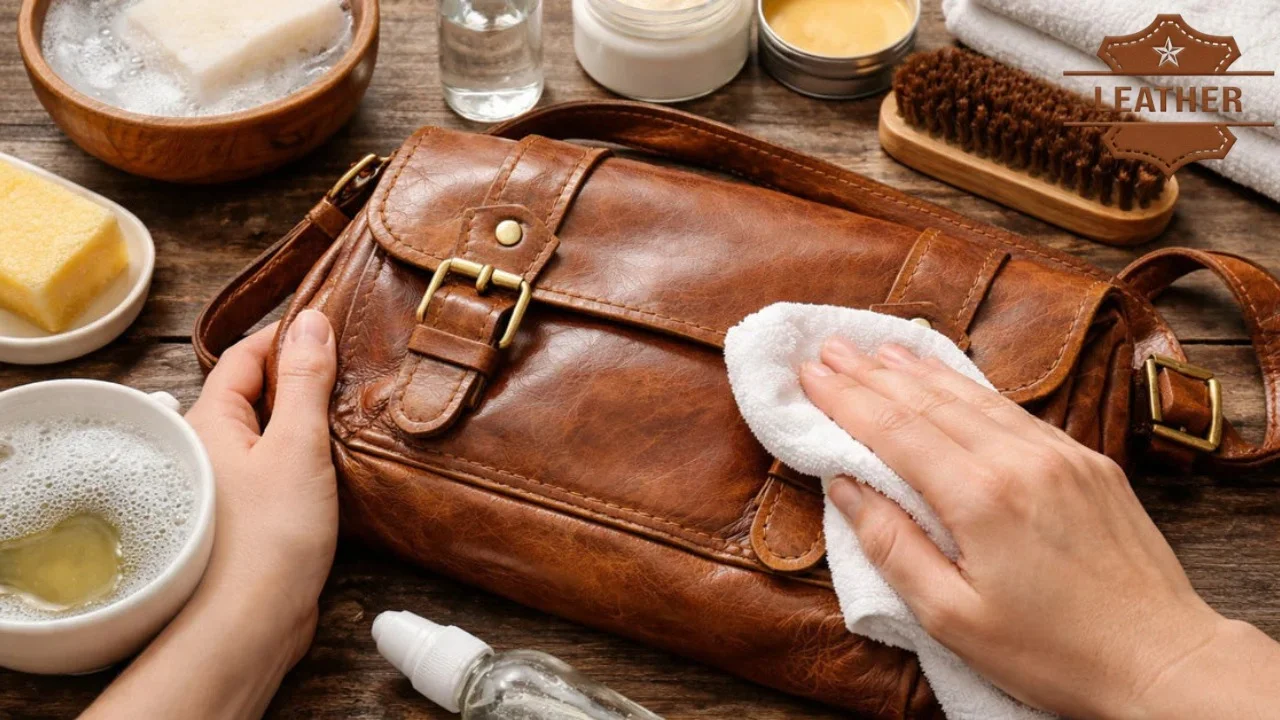
Leather bags are far more than simple fashion items—they are long-term investments in elegance, durability, and refined style. Whether you own a premium handbag, a professional briefcase, or a casual tote, proper cleaning and upkeep are essential if you want it to remain in excellent condition for years—or even decades.
However, here’s the challenge:
Cleaning Leather is not as straightforward as washing fabric or wiping synthetic materials.
Leather is a natural, porous, and reactive material. It responds to:
- Moisture and humidity
- Heat exposure
- Harsh chemicals
- Environmental conditions
If cleaned incorrectly, leather can suffer serious damage, such as:
- Surface cracking
- Color fading
- Loss of flexibility
- Permanent structural deterioration
👉 That’s exactly why this comprehensive guide exists.
In this advanced 2026 guide, you will discover:
- The safest way to clean a leather bag without damage
- How different leather categories impact cleaning techniques
- Step-by-step cleaning procedures
- Proven stain removal strategies
- Long-term care and preservation methods
This is not generic advice—it’s expert-level, practical knowledge simplified for real-world use.
What is a Leather Bag?
A leather bag is crafted from animal hide that has undergone tanning and finishing processes, transforming raw material into a durable, flexible, and visually appealing product.
Core Characteristics of Leather
Leather is valued because it is:
- Strong and resilient
- Flexible and adaptable
- Long-lasting
- Aesthetically refined
Why Leather is Unique
Unlike synthetic alternatives, leather:
- Develops a natural patina over time
- Allows airflow (breathable structure)
- Improves in appearance with age
- Can last for decades when maintained properly
👉 However, this uniqueness also means it requires specialized cleaning and care routines.
History of Leather Bags
Leather bags have a rich history that spans thousands of years, evolving alongside human civilization.
Historical Timeline
Ancient Civilizations (Egypt & Rome)
Leather pouches were used for carrying tools, coins, and essentials.
Middle Ages
Artisans, traders, and soldiers relied heavily on leather satchels.
Industrial Revolution
Mass production techniques improved consistency and accessibility.
Modern Era
Leather bags became symbols of luxury, craftsmanship, and status.
👉 Today, leather bags represent a blend of heritage, artistry, and functionality.
Types / Variations of Leather Bags
Understanding the type of bag you own helps determine how it should be cleaned and maintained.
Common Leather Bag Styles
- Tote bags
- Handbags
- Backpacks
- Briefcases
- Messenger bags
- Crossbody bags
Each style encounters different levels of exposure to dirt, friction, and wear, which affects cleaning frequency and method.
Leather Types Used
Before cleaning, identifying your leather type is essential. Using the wrong method can permanently alter texture and structure.
| Leather Type | Features | Cleaning Approach |
| Full-Grain Leather | Most durable, natural surface | Requires conditioning |
| Top-Grain Leather | Smooth, processed | Easier to clean |
| Genuine Leather | Lower grade | Gentle care needed |
| Suede | Soft, fibrous | Dry cleaning only |
| Nubuck | Velvet-like | Brush-based cleaning |
| Patent Leather | Glossy finish | Wipe-only |
👉 Key Insight: Incorrect cleaning methods can destroy the natural fiber structure of leather.
Manufacturing Process
Leather undergoes several stages before becoming a finished bag.
Production Steps
- Raw hide selection
- Tanning (vegetable or chrome)
- Dyeing and finishing
- Drying and Conditioning
- Cutting and stitching
Even after processing, leather retains natural oils and microscopic fibers.
👉 Harsh cleaning removes these oils, leading to:
- Dryness
- Brittleness
- Surface cracking
For deeper insights, refer to industry authorities like:
- Leather Working Group
- American Leather Chemists Association
- British Leather Confederation
How to Identify Original vs Fake Leather
Before cleaning, confirm whether your bag is genuine leather or synthetic.
Real Leather Indicators
- Uneven, natural grain patterns
- Distinct earthy smell
- Gradual moisture absorption
- Develops patina over time
Fake Leather Indicators
- Plastic-like odor
- Perfect, uniform texture
- Water remains on the surface
- Cracks instead of aging
👉 Synthetic leather generally requires surface wiping only, not conditioning.
Step-by-Step: How to Clean a Leather Bag at Home
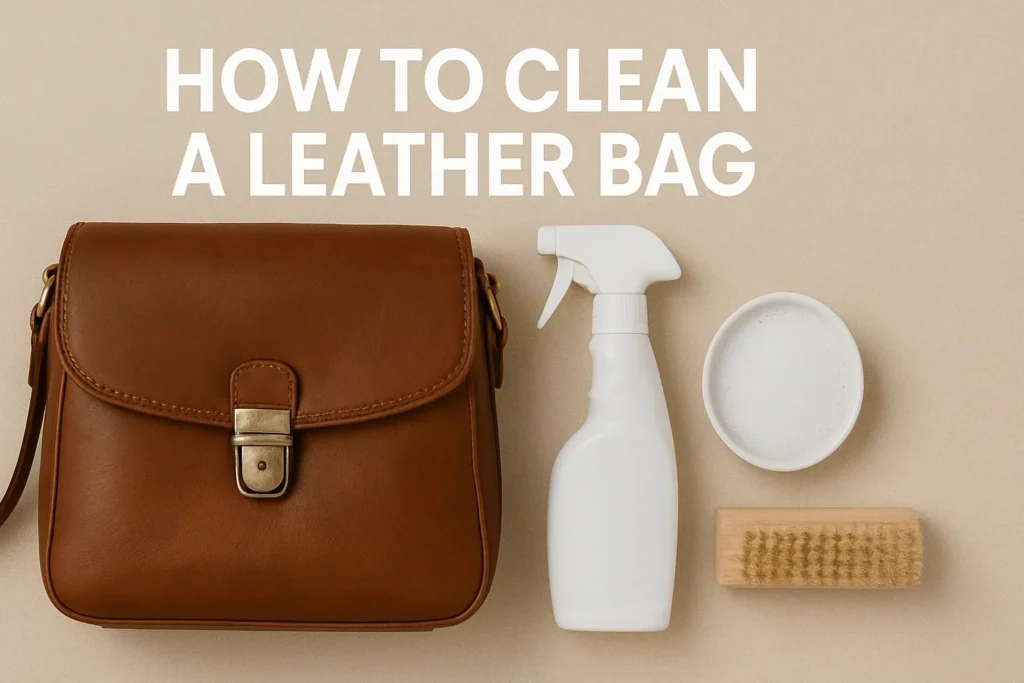
This is the most important section of the guide.
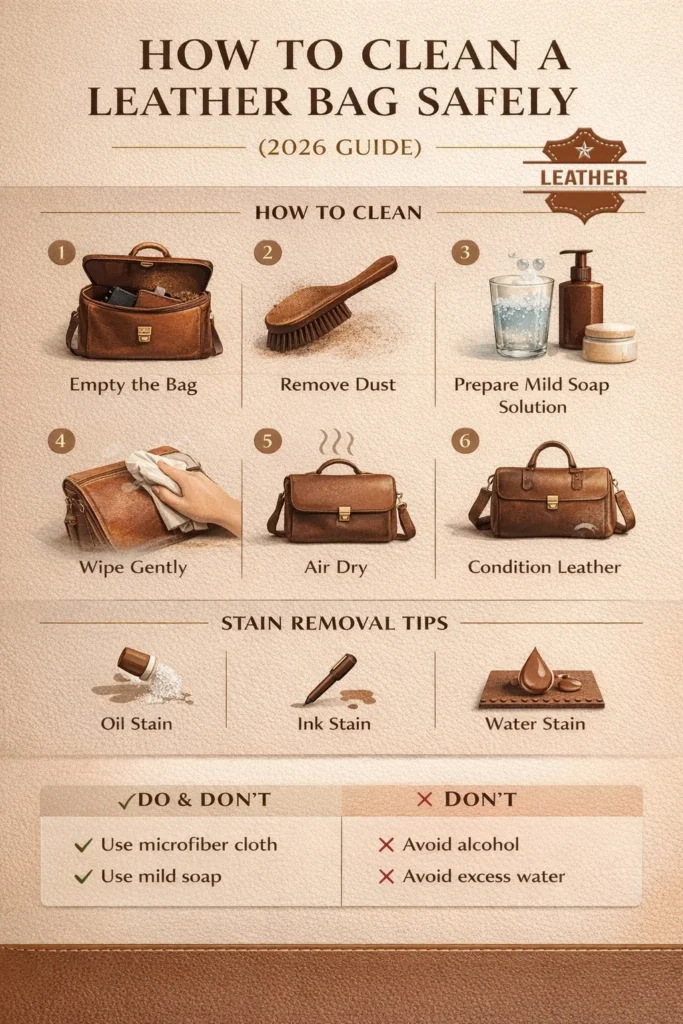
Cleaning Workflow Overview
| Step | Action | Purpose |
| 1 | Empty bag | Prevent contamination |
| 2 | Remove dust | Avoid scratches |
| 3 | Prepare solution | Safe cleaning |
| 4 | Clean gently | Lift dirt |
| 5 | Dry properly | Prevent damage |
| 6 | Condition | Restore oils |
Empty & Prepare
- Remove all contents
- Shake out debris
- Inspect compartments
👉 This prevents redistributing dirt during cleaning.
Remove Surface Dust
- Use a microfiber cloth or soft brush
- Focus on seams, edges, and corners
👉 Dust particles can act like abrasives and scratch leather.
Prepare Cleaning Solution
Create a gentle mixture:
- Lukewarm water
- A few drops of mild soap
Avoid Completely
- Alcohol-based cleaners
- Vinegar solutions
- Bleach or harsh detergents
👉 These substances strip essential oils and degrade leather fibers.
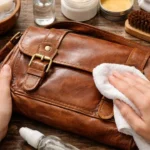
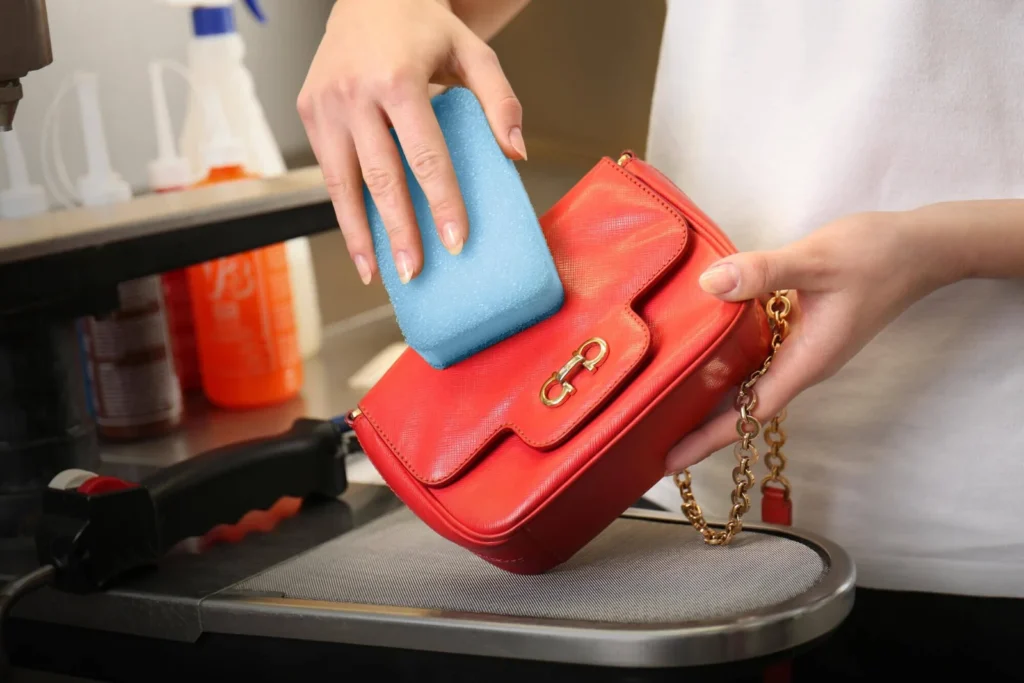
Clean Without Damage
- Lightly dampen a cloth (never soak)
- Wipe in circular motions
- Work in small sections
👉 Excess moisture is the most common cause of leather damage.
Dry Correctly
- Use a dry, clean cloth
- Let it air dry naturally
Never
- Use direct sunlight
- Apply heat (hair dryer, heater)
👉 Heat accelerates drying, causing cracks and deformation.
Condition the Leather
- Apply a small amount of conditioner
- Use a soft cloth
- Buff gently
👉 Conditioning replenishes lost Oils and Maintains flexibility.
How to Clean the Inside of a Leather Bag
Interior cleaning is often overlooked, but equally important.
Fabric Lining
- Use a lint roller or vacuum
- Spot clean with a mild soap solution
Leather Interior
- Clean using the same method as the exterior
- Use minimal moisture
👉 Clean interiors prevent odor buildup and bacterial growth.
How to Remove Stains from Leather Bags
This section provides expert-level stain removal strategies.
Oil Stains
- Apply baking soda or cornstarch
- Leave overnight
- Wipe gently
👉 Absorbs oil naturally without damaging leather.
Ink Stains
- Use a professional leather cleaner
- Dab lightly (do not rub)
👉 Rubbing spreads ink deeper into fibers.
Water Stains
- Wipe the entire panel evenly
- Allow to dry naturally
👉 Prevents uneven discoloration.
Mold & Mildew
- Use a damp cloth
- Apply a mild antifungal solution
- Dry in a ventilated area
👉 Common in humid climates like South Asia.
Mistakes to Avoid
Most leather damage occurs due to improper cleaning habits.
Common Mistakes
❌ Using baby wipes
❌ Applying vinegar or alcohol
❌ Over-wetting leather
❌ Skipping conditioning
❌ Using heat for drying
👉 Avoiding these mistakes can extend your bag’s lifespan by years.
How Often Should You Clean a Leather Bag?
Recommended Schedule
| Frequency | Action |
| Daily | Light dust wipe |
| Monthly | Gentle cleaning |
| Every 3–6 months | Deep clean + conditioning |
👉 Consistency is key to maintaining leather quality.
Buying Guide
Choosing the right bag reduces future maintenance challenges.
What to Evaluate
- Leather type (full-grain preferred)
- Stitching quality
- Hardware durability
- Interior lining
- Brand reliability
👉 Higher-quality leather requires less frequent but more precise care.
Top Uses of Leather Bags
- Professional office use
- Travel and commuting
- Fashion and styling
- Everyday carry
👉 Leather seamlessly fits both formal and casual lifestyles.
Care & Maintenance Tips
Professional-Level Advice
- Store in breathable dust bags
- Avoid excessive humidity
- Keep away from direct sunlight
- Handle with clean hands
- Condition periodically
👉 Over-conditioning can clog pores and reduce breathability.
Price Range Worldwide
| Region | Price Range |
| USA | $50 – $1000+ |
| UK | £40 – £800 |
| Europe | €50 – €900 |
| Middle East | $70 – $1200 |
| Australia | AUD 80 – AUD 1500 |
👉 Pricing depends on craftsmanship, material quality, and brand reputation.
Top Countries & Brands
Leading Countries
- Italy
- USA
- UK
- Turkey
- Pakistan
Popular Brands
- Luxury: Gucci, Prada, Louis Vuitton
- Mid-range: Fossil, Coach
- Budget: Local artisans
Pros & Cons
Advantages
✅ Highly durable
✅ Timeless appearance
✅ Develops character over time
✅ Eco-friendly (natural material)
Disadvantages
❌ Requires maintenance
❌ Sensitive to moisture
❌ Higher cost
❌ Prone to scratches
FAQs
A: No. Vinegar strips natural oils and damages leather.
A: Never. It will permanently ruin it.
A: A mild soap solution or pH-balanced leather cleaner.
A: Clean regularly, condition occasionally, and store properly.
A: Yes, especially for luxury bags.
Conclusion
Cleaning a leather bag is not just about maintaining appearance—it’s about preserving the integrity of the material.
Golden Rules to Remember
- Clean gently
- Avoid Excessive Moisture
- Dry naturally
- Condition regularly
👉 Follow these principles, and your leather bag can last for decades while maintaining its beauty and durability.