Introduction
A leather bomber jacket is not merely an item of outerwear; it is a cultural artifact, a functional tool, and a long-lasting zooty backing. Rooted in military basics and refined through the decade of civilian change, the bomber jacket’s design codes an efficient set of features: warmth, mobility, safety, and comfort. We intentionally avoid celebrity-focused fluff and instead prioritize practical clarity, purchase signals, and clear guidance.
What Is a Leather Bomber Jacket?
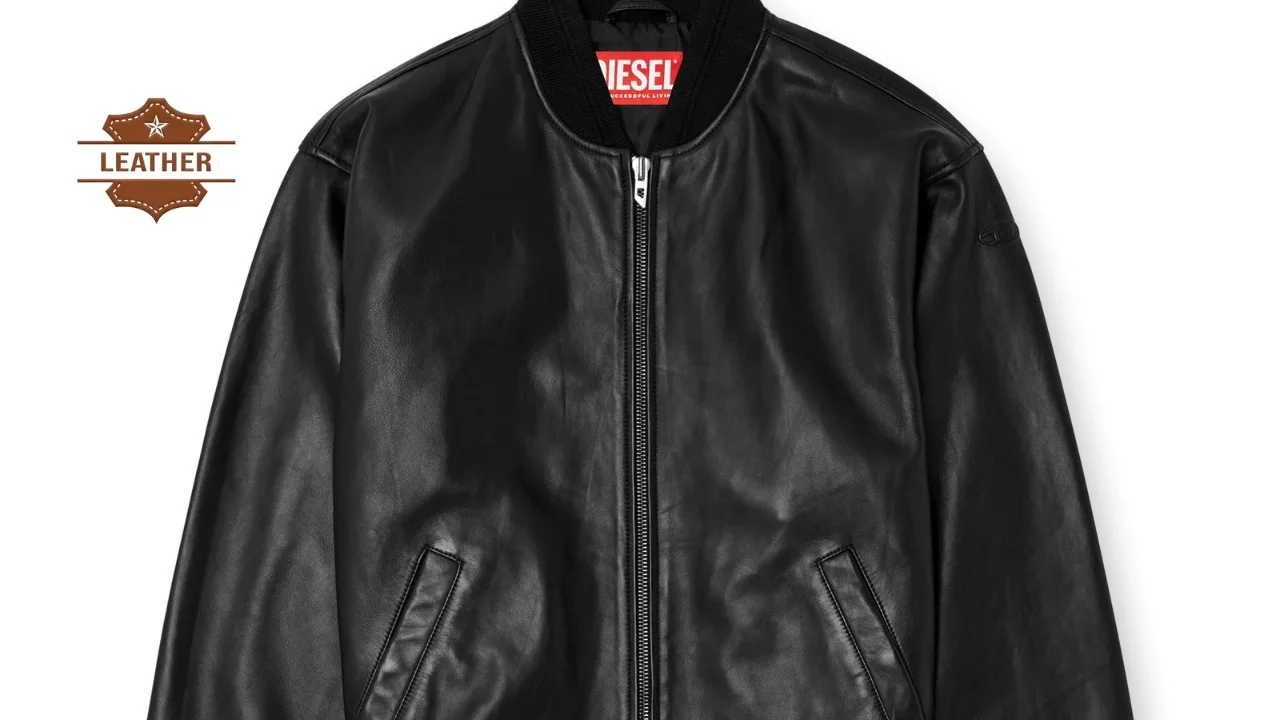
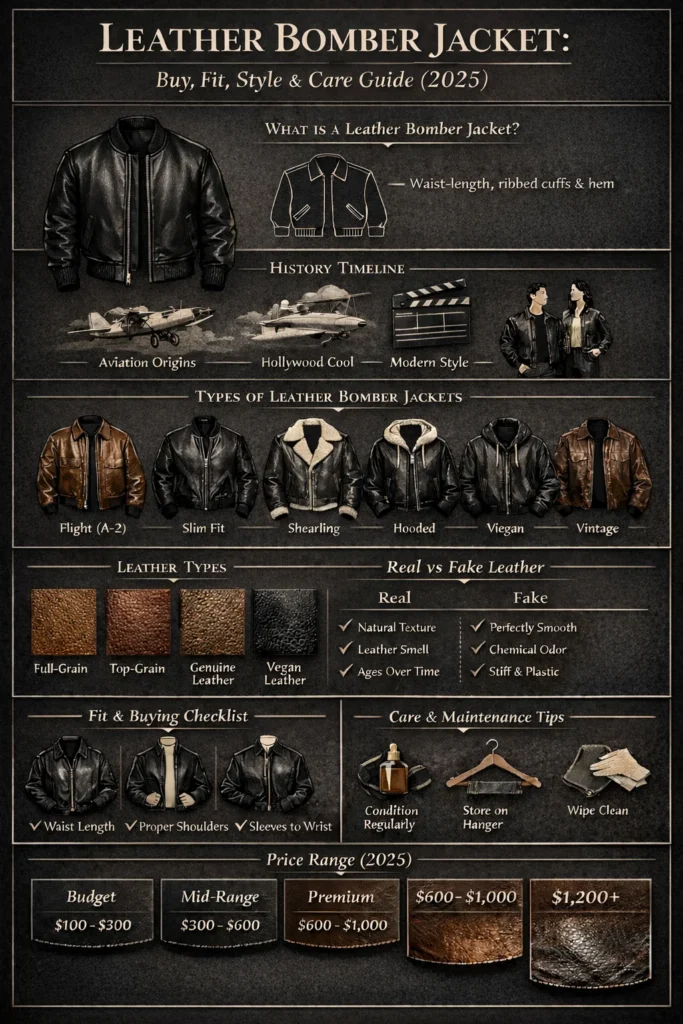
A leather bomber jacket is a waist-length jacket defined by a compact, boxy outline optimized for movement and insulation. Core systemic elements include:
- Ribbed cuffs and hem (to trap heat and reduce wind ingress)
- Front zip closure (durable, often metal hardware)
- Relaxed shoulders with structured chest and torso (mobility for arms)
- Durable outer shell constructed from animal-derived hide (or synthetic leather alternatives)
- Short length ending at or just above the waist, enabling layering and movement
Historical Context: From Cockpits to Catwalks
Aviation Origins (1900s–1940s)
The leather bomber jacket appeared from operational necessity. Early aviators flew in non-tight, open, or semi-open cockpits where temperatures dropped at altitude. Jackets like the A-1 and A-2 were engineered to deliver insulation, abrasion resistance, and easy mobility. Materials included heavier hides such as horsehide and goatskin for longevity.
Design goals during this era: warmth, windproofing, and longevity. These jackets used functional features: snug ribbing, simple collars, strong YKK-style zippers, and brace seams that established the bomber’s signature silhouette.
Post-War Popularity (1950s–1980s)
After WWII, military surplus and the visible presence of pilots in civilian life allowed bomber jackets to migrate from utility clothing to cultural metaphor. Hollywood films, early rock ’n’ roll, and motorcycles cast the bomber as a visual shorthand for vigour, rebellion, and freedom.
Modern Fashion Evolution (1990s–2025)
Creators and manufacturers have iteratively refined the bomber. Where once makers prioritized rugged utility, modern makers balance heritage cues with tailored silhouettes, premium leathers like lambskin and calfskin, and modest finishes suited to urban wardrobes.
Types & Variations of Leather Bomber Jackets
Understanding style variants helps you match jacket form with function.
- Classic Flight Bomber
- Features: Shirt-style collar, ribbed cuffs and waistband, military pocket sorting.
- Use-case: Heritage styling, vintage outfits, motorcycle-inspired looks.
- Modern Slim-Fit Bomber
- Features: narrow torso, cleaner lines, simple pockets.
- Use-case: Smart-casual, citywear, office-appropriate casual.
- Shearling Leather Bomber
- Features: Sheepskin or faux shearling lining; higher warmth rating.
- Use-case: Cold-climate outerwear, winter travel, and installment layering.
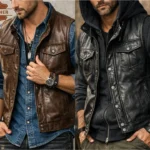
- Hooded Leather Bomber
- Features: Integrated or removable hood, hybrid textiles.
- Use-case: Young, streetwear-driven, lovely, functional day-to-day pieces.
- Vintage / Distressed Bomber
- Features: Pre-aged finish, wearing marks, softer hand-feel.
- Use-case: Rugged styling, statement pieces, stage or article looks.
- Performance / Technical Bomber
- Features: Breathable membranes, water-resistant finishes, bonded seams.
- Use-case: cut, travel, variable weather.
Leather Types Used in Bomber Jackets Deep Dive
Selecting leather is the single most exciting decision for long-term performance. The following taxonomy aligns with leather industry standards and buyer signals.
Full-Grain Leather
- Definition: The topmost layer of the hide is untouched and intact.
- Properties: High strength, natural grain variation, develops useful patina.
- Best for: Investment pieces designed to age well.
Top-Grain Leather
- Definition: The grain layer is sanded or slightly corrected to remove surface imperfections.
- Properties: Softer and lighter, still premium; more uniform mein.
- Best for: Balance between suppleness and strength.
Genuine Leather
- Definition: Layered leather made from split hide; often corrected and finished.
- Properties: More affordable; shorter lifespan than top- or full-grain.
- Best for: Cost-conscious shoppers.
Nubuck & Suede
- Definition: Annelled or buffed surfaces creating velvety textures.
- Properties: Luxurious feel, but more vulnerable to staining and rubbing.
- Best for: Dressier or fashion-forward pieces, not heavy-duty wear.
PU / Vegan Leather
- Definition: Synthetic leather alternatives.
- Properties: Animal-free, low-cost, limited durability, and patina.
- Best for: Ethical/vegan consumers or trend pieces.
Special Finishes & Treatments
- Aniline: Transparent dyes preserving natural grain soft hand and variable color.
- Semi-aniline: Light safety finishes balance between appearance and protection.
- Pigmented/Coated: Highly uniform, durable surface film resists fading but lacks natural patina.
- Pull-up/Oiled: Enriched oils that create color shifts when flexed are desirable for rugged aesthetics.
Manufacturing Process: From Hide to Jacket
A high-quality leather bomber proceeds through controlled stages. Below is a technical series with practical notes.
- Raw hide selection: Choose butt/shoulder sections for their tensile strength; avoid belly sections for structural panels.
- Vegetable tanning (plant tannins) yields flexible, processable leather; chrome tanning is faster and produces softer, more uniform leather.
- Dyeing & finishing: Aniline vs. pigmented systems determine final look and performance.
- Cutting Pattern nesting optimizes yield; grain direction matters for stretch and drape.
- Stitching & assembly Use lock and bar-tacking at stress points; maintain 8–12 stitches-per-inch in high-stress seams.
- Lining attachment: Quilted thermal linings or microfibre shells, depending on thermal rating.
- Hardware installation: YKK zippers, reinforced snaps, and rivets; test for torque and salt-spray resistance.
- Final quality inspection: Visual inspection, seam pull tests, and fitting on a block to ensure silhouette fidelity.
Quality control markers to watch: consistent stitch density, matched grain at pattern joins, secure zipper stops, even edge finishing, and absence of latent defects such as thin spots or holes.
How to Identify Original vs Fake Leather
Spotting authentic leather reduces buyer’s remorse. Use this multi-sensor approach:
- Visual cues: Natural grain variation, healed scars, and irregularities suggest genuine hide. Perfect uniformity often signals synthetic.
- Touch: Real leather is supple and warms to body temperature; synthetics feel colder and plasticky.
- Smell: Genuine leather has a complex, earthy smell; fake leather often carries strong chemical/solvent notes.
- Water test: A tiny drop of water should be absorbed slowly by real leather; synthetics bead and repel.
- Edge inspection: Real leather edges show fibrous, layered structure; PU edges appear smooth and plasticky.
- Fire test (not recommended on purchased goods): Genuine leather chars and smells like burnt hair; synthetics melt and produce plastic smoke only a forensic technique and not advised on retail items.
- Labeling and provenance: Look for tanner accreditation (e.g., Leather Working Group), country of tanning, and tested certifications.
When in doubt, ask the retailer for hide origin, tanning method, and care recommendations. Trusted brands will provide traceability details and sometimes unique serial numbers or authentication tags.
Buyer’s Checklist: Fit, Materials & Construction
Fit & Sizing
- Length: Hem should end at the waist or slightly above; not mid-hip unless intentionally oversized.
- Shoulder: Seam should align with your shoulder bone; raglan or set-in shoulders will have different fit cues.
- Sleeve length: Should reach the wrist bone with a slight bend when the arm is relaxed.
- Torso fit: Allow 1–2 fingers of ease across the chest when zipped to permit layering.
- Break-in expectation: Real leather will relax and conform up to 1–2 cm after initial wear.
Leather Quality Checklist
- Uniform thickness across panels
- No excessive cracks or finish peeling
- Even dye penetration (avoid patchy color)
- Visible grain consistent across matched panels
Hardware & Stitching
- Metal zips (prefer YKK or reputable brands)
- Reinforced bar-tacks at pocket corners
- 8–12 stitches per inch in stress seams
- Waxed or nylon thread for longevity
Lining & Insulation
- Quilted or foam-backed linings for structured warmth
- Microfibre or satin linings for comfort and moisture management
Pros & Cons
Pros
- Timeless design language that endures fashion cycles
- Long lifespan when properly crafted and maintained
- Versatile from casual to elevated casual contexts
- Gains character (patina) with age
Cons
- High upfront cost for premium hides
- Requires intentional care and periodic conditioning
- Can be heavy and hot in warm climates
- Ethical concerns for some buyers regarding animal-derived materials
Top Uses & Styling Tips
Everyday casual: Pair a mid-weight leather bomber with slim selvedge jeans and boots. Keep the silhouette balanced if the jacket is boxy; choose tapered trousers.
Smart-casual: Choose a slim-fit bomber in top-grain lambskin, pair with chinos and a merino roll-neck for elevated refinement.
Layering: Use a thin insulating layer (thermal tee or thin knit) under lightweight bombers; reserve shearling-lined variants for outermost layers in winter.
Office-appropriate: Minimal hardware and matte finishes help a bomber read less rugged and more tailored, paired with tailored trousers and loafers.
Streetwear: Oversized bombers, hooded hybrids, and contrast panels work with joggers, sneakers, and caps.
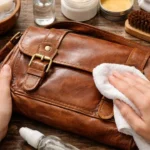
Care & Maintenance Protocol
Immediate care
- Unpack and air for 24 hours to dissipate packing odors
- Store on a wide wooden or padded hanger
Regular cleaning
- Wipe with a slightly damp cloth to remove surface dust
- Spot clean with a mild soap solution for small stains; never saturate leather
Conditioning schedule
- Condition every 3–6 months with a pH-appropriate leather conditioner
- Use a small test patch before full application to confirm finish compatibility
Storage
- Keep out of direct sunlight and humid rooms
- Use breathable garment bags avoid plastic
Repairs & Restoration
- Small scuffs can be buffed with leather balm
- For tears or seam failures, seek a specialist leather Repair Service
Professional cleaning
- For heavy soiling, oil staining, or lining issues, consult a leather-care specialist who offers wet-cleaning and re-lining services
Price Range Global Benchmarks
| Category | Typical Price Range (USD) |
| PU / Vegan | $80 – $150 |
| Genuine Leather | $150 – $300 |
| Top-Grain Leather | $300 – $600 |
| Full-Grain / Luxury | $600 – $1,200+ |
Prices depend on leather type, provenance, manufacturing scale, and brand positioning. Custom or bespoke jackets may exceed these ranges depending on personalization and hide grade.
Top Countries & Notable Brands
Famous manufacturing countries
- Italy: Renowned for premium tanning and artisanal finishing
- USA: Heritage brands and flight-jacket history
- Turkey: Competitive mid-range manufacturing with strong leather clusters
- Pakistan: Large tanning capacity and export-oriented manufacturing
Renowned brands & labels to reference
- Schott NYC (heritage A-2 and flight jackets)
- Belstaff (luxury outerwear)
- AllSaints (fashion-forward leather silhouettes)
- Selected private-label manufacturers specializing in small-batch or bespoke offerings
FAQs
A: Yes. A quality leather bomber jacket, particularly one made from top-grain or full-grain leather with solid construction, can last 10–20 years or longer with proper care. Consider the jacket’s intended use, climate, and whether you value patina. Investment-grade hides and artisanal creation deliver the best long-term value.
A: Light, unlined, or thinly-lined bombers can function in spring and autumn; shearling-lined and heavily insulated variants are winter-specific. In warm climates, choose breathable leathers, perforated linings, or hybrid textile constructions for better heat regulation.
A: Yes. Real leather will stretch and conform to your body with use. Expect roughly 1–2 cm of expansion in panel dimensions after break-in. However, overdressing can distort the silhouette; pick a fit with modest allowance rather than starting too small.
A: Leather bombers are inherently casual to smart-casual. While they can be dressed up with clean lines and subdued finishes, true formal wear typically requires structured blazers or overcoats rather than leather bombers.
Closing
Use this document as a decision-support blueprint. Start by classifying the leather type and fit that matches your climate and wardrobe needs. Next, inspect building details and roots when shopping. Finally, commit to a care routine and an eventual repair plan; these will multiply the jacket’s lifespan and Value.