Introduction
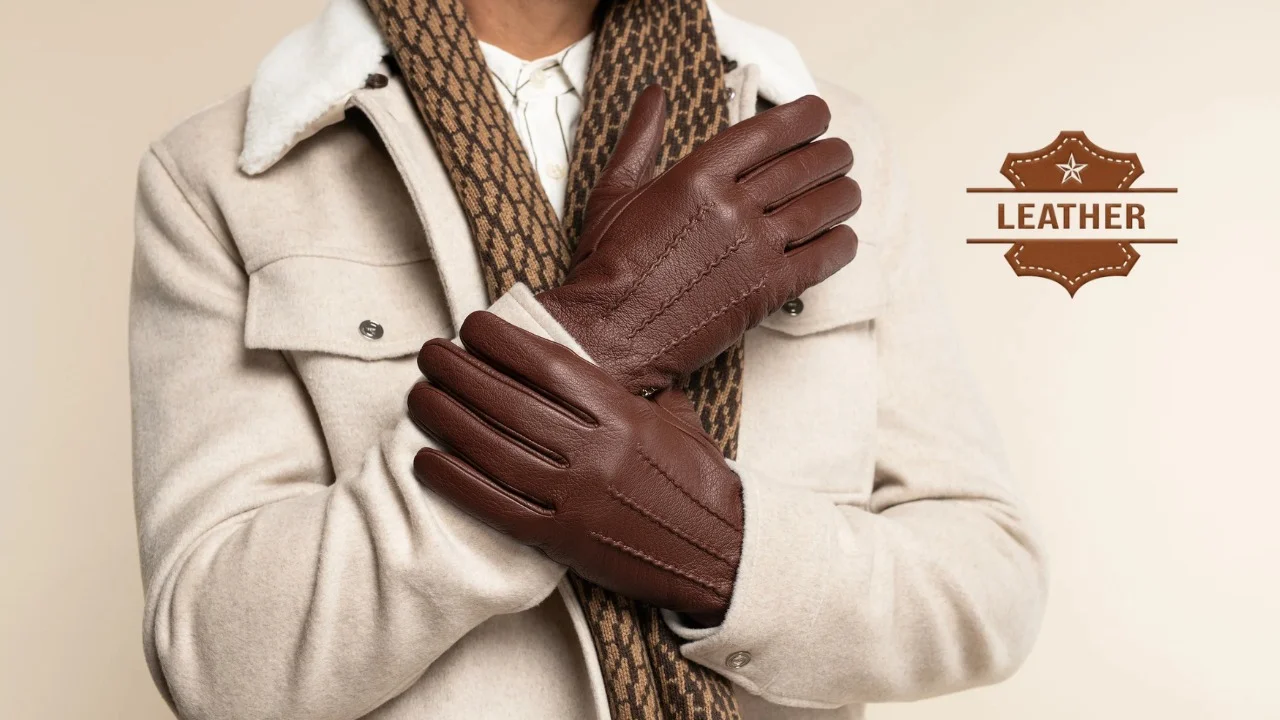
Leather Gloves are more than just a seasonal accessory — they’re practical tools that protect your hands, elevate your outfit, and, when chosen well, become timeless pieces in your wardrobe. The best ones strike a balance between warmth, dexterity, and durability: thin enough for grip on a steering wheel or phone use, yet tough enough to shield against wind, cold, and abrasion.
This guide provides clear, practical advice: signals of quality to look for, simple measuring steps for the perfect fit, maintenance tips to help them age gracefully, and recommendations tailored to common uses like driving, winter weather, work, formal occasions, and touchscreen compatibility.
What Are Leather Gloves?
Leather gloves are hand coverings crafted from tanned animal hides, cut and sewn to shape. Unlike textiles or synthetics, leather offers unique benefits:
- Retains warmth while staying relatively thin
- Develops a rich patina over time (it looks better with wear)
- Provides superior durability when properly maintained
Most include a lining — silk or cashmere for dressy feel, wool or fleece for warmth, or modern insulators like Thinsulate™ for lightweight performance. The lining greatly affects insulation, smoothness, and overall style.
Short History
Hand coverings made from animal hides date back to ancient times for basic protection. Over the centuries, leather gloves evolved from functional items (like armor or riding gear) to essential accessories for drivers and pilots, and eventually symbols of elegance and status in formal wear.
Main Types & Variations
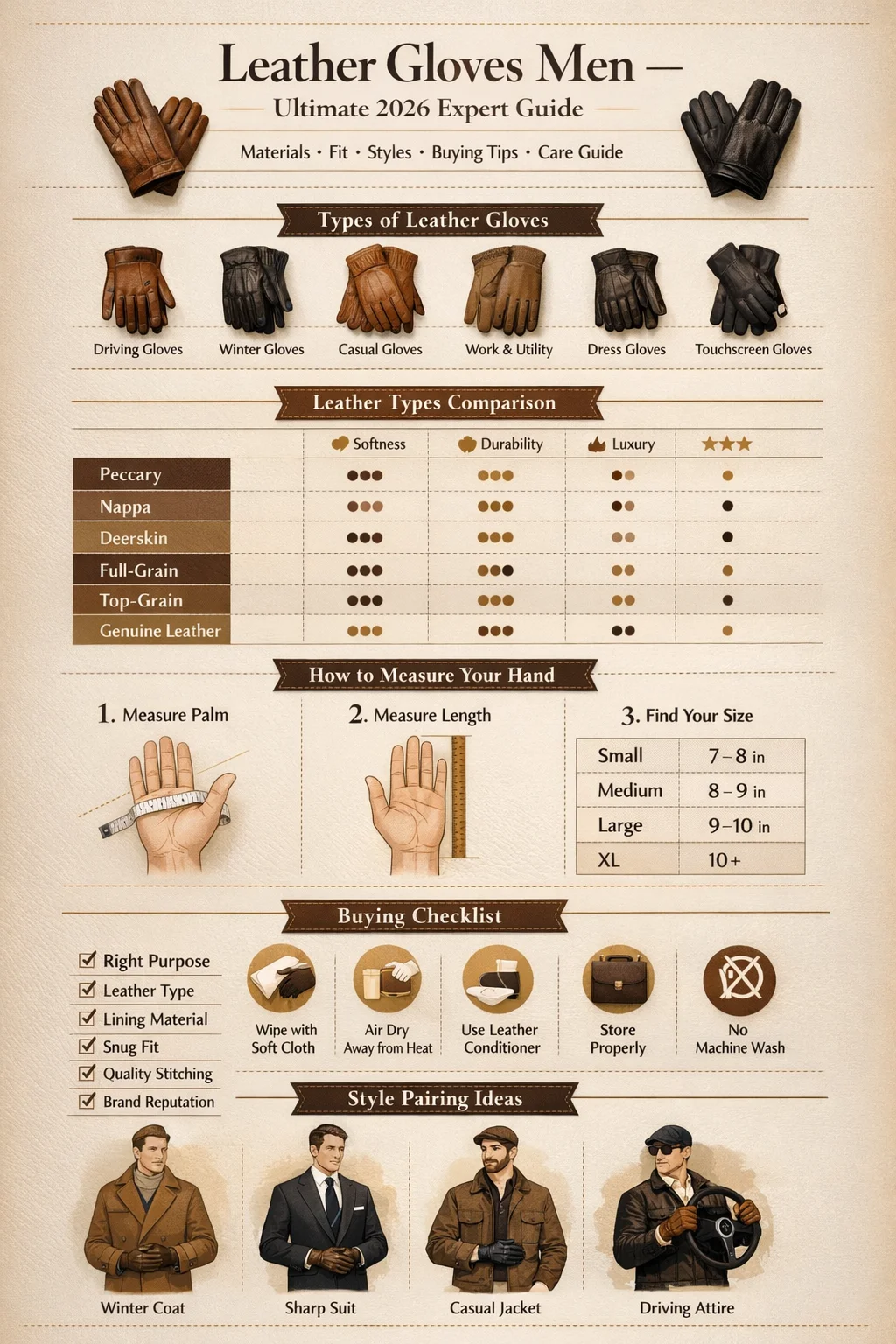
Select gloves based on your primary use. Here are the key categories:
- Driving gloves — Thin, unlined or lightly lined, often perforated for breathability; prioritize grip, tactile feedback, and snug fit.
- Winter gloves — Thicker hides with insulating linings (wool, fleece, or Thinsulate™) for serious cold protection without excessive bulk.
- Casual/everyday gloves — Lightly lined or unlined; rugged yet comfortable for daily wear.
- Work & utility gloves — Reinforced palms, thicker leather for abrasion resistance and manual tasks.
- Dress/formal gloves — Ultra-soft leathers (like nappa or peccary) with elegant linings for suits or overcoats.
- Touchscreen gloves — Feature conductive materials or treated fingertips for phone and device use.
Leather Types Explained — Quick Comparison Table
| Leather Type | Feel | Durability | Best For |
| Peccary | Ultra-soft, luxe | Very high | Dress gloves, luxury |
| Nappa | Smooth, supple | High | Everyday & dress |
| Deerskin | Flexible, textured | Great | Casual/outdoor |
| Full-grain | Natural, rugged | Top-tier | Long-life, all-purpose |
| Top-grain | Refined surface | High | Premium gloves |
| Genuine leather (processed) | Uniform, cheaper | Moderate | Budget gloves |
Quick tip: Choose peccary or nappa for soft luxury; full-grain or deerskin for rugged, long-lasting durability.
How Leather Gloves Are Made
Quality gloves follow a careful process:
- Hide selection — Choosing premium hides with few flaws.
- Tanning — Stabilizing the skin (vegetable or chrome methods).
- Dyeing & finishing — Adding color and Protective Layers.
- Cutting — Precise patterns for left/right hands and sizes.
- Stitching — Hand- or machine-sewn; premium pairs often include hand-finishing.
- Lining insertion — Adding silk, wool, or technical materials.
- Quality control — Checking seams, symmetry, and consistency.
Look for even stitching, consistent grain, and smooth lining as signs of quality craftsmanship.
How to Tell Real Leather vs. Fake — Easy Tests
Use these non-destructive checks when shopping:
- Look — Real leather shows natural irregularities; fakes often appear overly uniform.
- Smell — Genuine leather has a warm, organic scent; synthetics smell plasticky.
- Touch — Real leather warms quickly to your skin; synthetics stay cool.
- Edge — Cut edges on real leather look fibrous; faux leather has a sealed, plastic-like edge.
- Water test — A small drop on a hidden spot absorbs slightly into real leather but beads on synthetic (test carefully).
Combine multiple tests for the most reliable result.
Buying Checklist — What to Check Before You Buy
Run through these essentials:
- Purpose — Matches your needs (driving, winter, work, formal)?
- Leather type — Balances softness and durability?
- Lining — Appropriate for warmth or dressiness?
- Fit — Snug at first (leather stretches with wear)?
- Stitching & seams — Clean, even, no loose threads?
- Brand & warranty — Good Reputation, returns, or repair options?
- Care instructions — Easy to follow for long-term maintenance?
Fit & Sizing Guide — Step-by-Step
Proper fit ensures comfort and function. Measure like this:
- Palm circumference — Wrap a tape measure around the widest part of your palm (exclude thumb).
- Hand length — From base of palm to tip of middle finger (use if length differs significantly).
- Choose size — Primarily by palm measurement; consult brand-specific charts.
Basic size chart
- Small: 7 – 8
- Medium: 8 – 9
- Large: 9 – 10
- XL: 10+
Pro tip: Brand sizing varies — always check the specific brand’s guide and consider trying on if possible.
Top Picks by Category (What to Buy in 2026)
Based on current reviews and trends, here are strong category recommendations (search for these styles/brands in 2026):
- Best overall/all-rounder — Nappa leather with medium lining and precise stitching; versatile for daily use (e.g., Hestra John or similar soft leather models).
- Best winter — Full-grain or deerskin with Thinsulate™/wool lining for warmth (e.g., Hestra Utsjö, Filson goat skin, or Shinola lined options).
- Best driving — Unlined or silk-lined, perforated, snug-fit with grippy leather (e.g., Dents or classic deerskin ropers).
- Best work/utility — Reinforced, thick leather for Durability (e.g., Wells Lamont HydraHyde or Kinco lined models).
- Best budget — Top-grain or treated leather with solid construction.
- Best premium/luxury — Peccary or high-grade nappa, often handmade with cashmere/silk lining (e.g., Dents Cambridge or heritage makers).
Care & Maintenance — Keep Them Looking Great
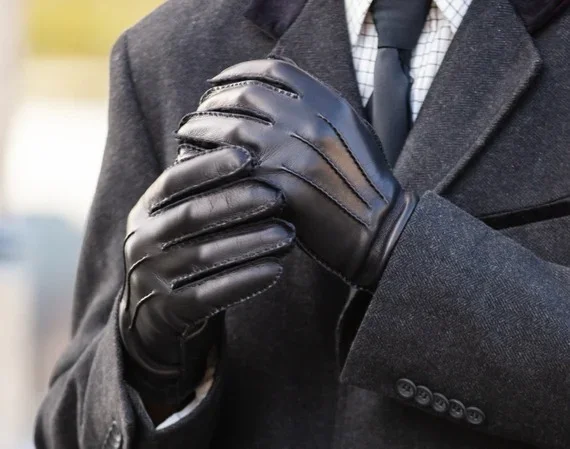
Well-maintained gloves can last decades. Follow this routine:
Daily/quick care
- Wipe off dirt with a soft cloth.
- If wet, air-dry at room temperature (no heaters or direct sun); stuff with paper to hold shape.
Monthly/occasional care
- Clean with a damp cloth and mild leather soap (spot-test first).
- Condition every 2–3 months with a suitable leather conditioner (sparingly on soft gloves).
- For suede/nubuck: Use a dedicated brush and cleaner.
What to avoid
- No machine washing.
- Avoid prolonged heat/sun exposure.
- Skip heavy waxes on dress gloves.
Style & Outfit Pairing — Simple Ideas
- Winter outfits — Pair full-grain or wool-lined gloves with wool overcoats and leather boots.
- Formal wear — Nappa or peccary in matching tones with suits, trench coats, or tailoring.
- Casual looks — Deerskin or textured leathers with denim jackets, sweaters, and boots.
- Driving — Thin, perforated styles with smart-casual jackets.
Price Ranges — What to Expect
- Budget: $30–$80
- Mid-range: $80–$200
- Premium: $200–$500
- Luxury: $500–$1,200+
Higher prices often reflect superior materials, craftsmanship, and longevity.
Top Brands & Countries Known for Gloves
Strong traditions exist in Italy, the United Kingdom (e.g., Dents), France, Sweden (e.g., Hestra), Japan, and the United States (e.g., Shinola, Filson). Heritage brands emphasize consistent Quality, premium leathers, and clear care guidance.
FAQs
A: Most aren’t fully waterproof, but some feature treated leather or membranes. Look for those if wet conditions are common.
A: Full-grain with Thinsulate™ or wool lining offers excellent warmth and durability.
A: Snug initially — they stretch slightly with wear. If they stay too tight, size up.
A: No, it damages the leather and finish. Hand-clean only.
A: Gently clean, condition, shape while drying, and repeat conditioning. For heavy wear, seek professional restoration.
Conclusion
Leather gloves are functional timepieces of style — choose the right leather, measure carefully, and commit to a simple care routine. If you want, I can help create product descriptions, Affiliate-Ready comparison tables, or SEO-friendly headings and meta content for your shop. Tell me which section you want expanded into product pages or comparison matrices, and I’ll build them.