Introduction
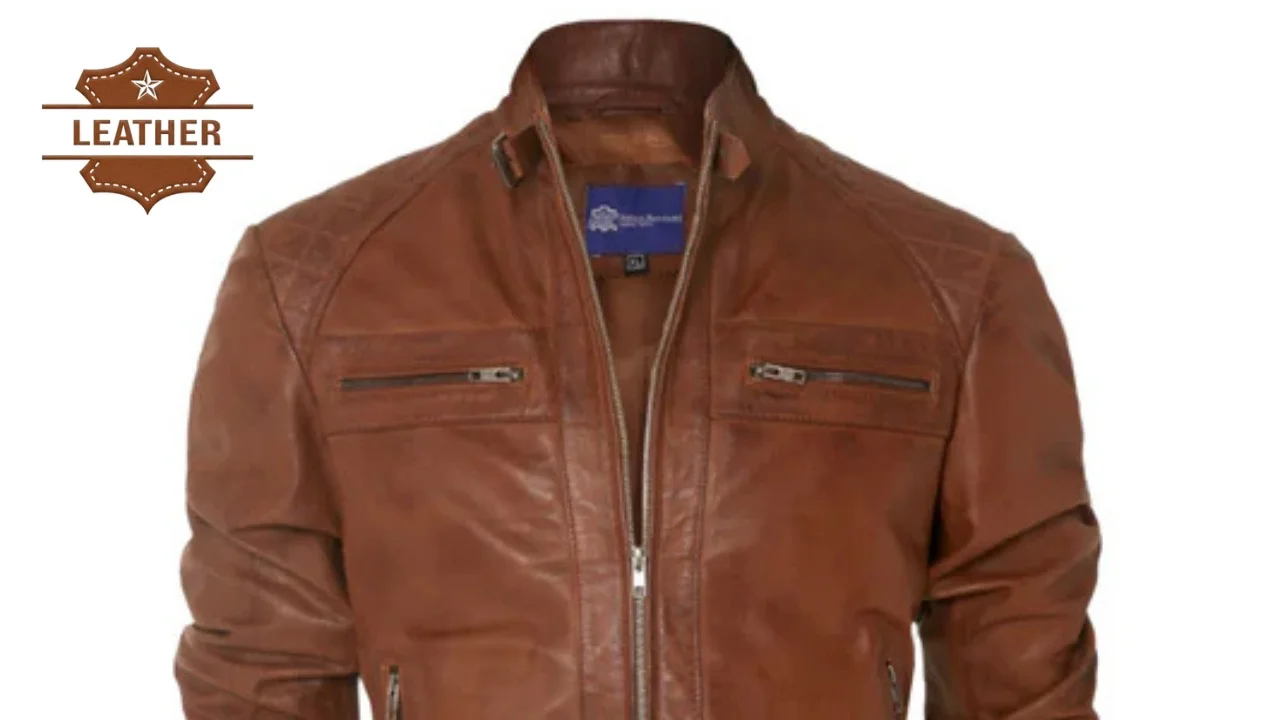
A great Leather Jacket remains one of the smartest wardrobe investments a man can make. It delivers protection, instant style credibility, and—with the right hide and careful construction—actually improves with age and wear. This 2026 guide helps you select the perfect silhouette, understand leather types and tanning methods, evaluate construction and hardware, spot fakes, maintain your jacket for longevity, and build outfits that make it a versatile cornerstone. Whether you’re buying your first or upgrading your collection, you’ll find practical checklists, repair advice, and buying recommendations across budgets.
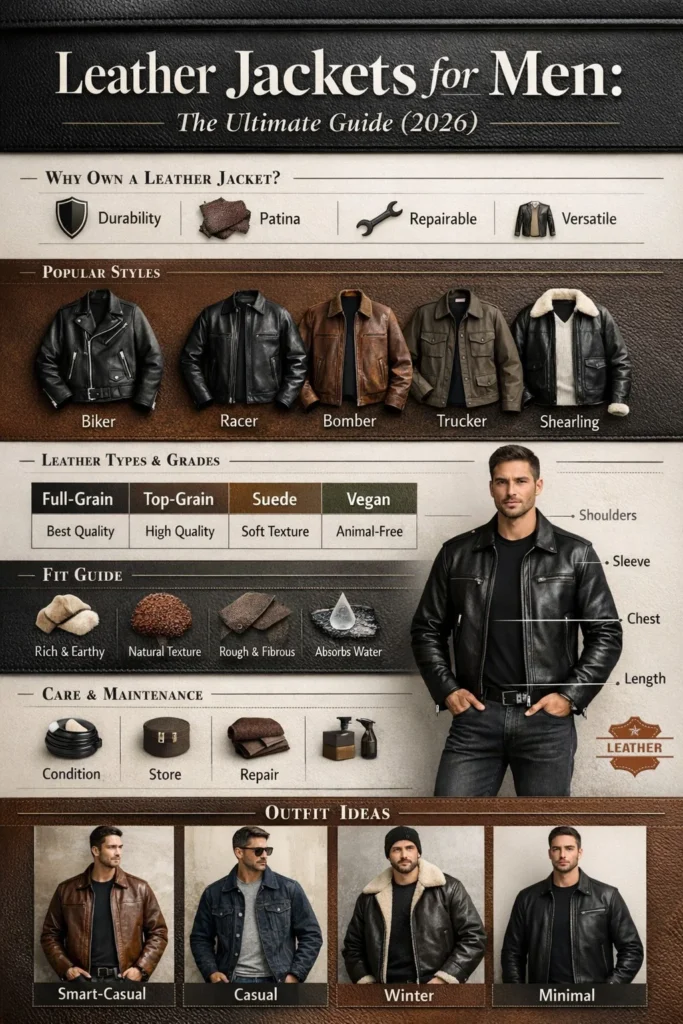
Why a Leather Jacket Is Worth Owning
A leather jacket transcends seasonal trends, proving its value in multiple ways:
- Durability — A quality piece outlasts most fabric outerwear in everyday use, thanks to strong hides and reinforced stitching that can last decades.
- Patina — Full-grain and vegetable-tanned leathers develop a unique character—scuffs, softening, and subtle sheen—that tells your personal story over time.
- Repairability — Zippers, seams, linings, and panels are often fixable by cobblers at a fraction of replacement cost.
- Versatility — From casual jeans to smart trousers or layered knits for travel, the right cut bridges countless wardrobes.
If you’re seeking one outerwear piece that gets better with age, leather stands out as a top choice.
How to Choose the Right Style
Start with your body type, lifestyle, and preferences. Here are the classic silhouettes and their vibes:
- Biker / Moto (Perfecto) Features: Asymmetric zip, belted hem, heavy hardware, angled pockets. Suits: Broad shoulders or those wanting an edgy statement. Pair with: Slim black jeans, white tee, Chelsea or engineer boots. Notes: Iconic and high-contrast; often heavier and structured.
- Racer / Café Features: Symmetrical zip, minimal collar (band or snap), slim fit. Suits: Minimalists seeking a streamlined look. Pair with: Oxford shirts, dark trousers, low-profile sneakers, or loafers. Notes: The most versatile “one-jacket” option for smart-casual.
- Trucker / Denim-Style Features: Button/zip front, boxier cut, chest pockets. Suits: Casual wardrobes and frequent layerers. Pair with: Plaid shirts, jeans, rugged boots. Notes: Forgiving fit, less tailored.
- Bomber / Flight Jacket Features: Ribbed cuffs and hem, fuller body, military roots. Suits: Relaxed builds and sporty styles. Pair with: Chinos, knitwear, sneakers. Notes: Shorter length; ideal for transitional weather. (Bomber styles continue strong in 2026 with sleek premium textures.)
- Field / Military-Inspired Features: Longer hem, utility pockets, practical details. Suits: Travelers and outdoor-focused wardrobes. Pair with: Layered shirts, cargo trousers, hiking boots.
- Shearling-Lined / Winter Jacket Features: Thick body with wool or sheepskin lining. Suits: Cold climates need insulation. Pair with: Wool sweaters, heavy boots, winter accessories.
Leather Types & Grades Explained
Understanding leather terms sets realistic expectations for performance, price, and aging.
- Full-grain — Top surface intact; best durability and patina; shows natural marks and breathes well.
- Top-grain — Lightly sanded for uniformity; high quality with good balance.
- Corrected-grain / Coated — Embossed and coated to mask flaws; cheaper, easier care, but less breathable and patina.
- Bonded — Reconstituted scraps; low durability—avoid for longevity.
- Suede / Nubuck — Buffed nap; soft but stain-prone.
- Vegan — PU, PVC, or plant-based (cactus, Piñatex, mycelium); convincing look but different aging and repair.
Tanning Methods
- Vegetable-tanned (veg-tan) — Plant-based; firmer start, deep patina over time; favored for premium craft.
- Chrome-tanned — Faster, softer, water-resistant; common in ready-to-wear.
| Leather Type | Typical Price | Durability | Patina Potential | Care Difficulty |
| Full-grain | High | Excellent | Very high | Medium |
| Top-grain | Mid–High | Very good | High | Medium |
| Corrected-grain | Low–Mid | Moderate | Low | Low |
| Bonded | Very low | Poor | None | Low |
| Suede / Nubuck | Mid | Moderate | Medium (delicate) | High |
| Vegan | Low–Mid | Varies | None | Low–Medium |
Construction & Hardware — What to Inspect
Details reveal long-term quality:
- Stitching — Even, tight; Double-Stitched at stress points (shoulders, underarms).
- Panels — Fewer, larger panels suggest better hide use.
- Lining — Cotton twill or quilted beats thin polyester; removable adds versatility.
- Zippers & Hardware — Branded (YKK, RiRi) and solid metal last longer.
- Edges — Fibrous/raw for real leather; plastic-like, often faux.
- Feel & Weight — Substantial yet supple; thin leather rarely ages well.
Fit & Measurement Guide
Fit turns a jacket into a staple:
- Shoulders — Seams align with the shoulder bone.
- Sleeves — Hit wrist bone with arms relaxed.
- Chest/Torso — Zip-over medium sweater with 1–2 fingers’ room.
- Length — Moto/racer at waist/upper hip; bombers shorter; field longer.
- Movement — Raise arms—no pulling.
Tailoring Tip: Shoulders are the toughest to alter—prioritize them.
Real vs. Fake Leather — At-Home Tests
- Smell — Real: earthy; fake: chemical/plastic.
- Edges — Real: fibrous; fake: smooth/plastic.
- Water Drop — Real absorbs slightly; fake beads.
- Grain — Natural, uneven pores; uniform, often embossed.
- Flex — Real creases naturally; fake may crack.
Care, Repair & Aging
Daily/Storage
- Hang on wide hangers; air after damp wear; breathable covers; cool/dry spot.
Cleaning
- Spot clean with a damp cloth/mild soap; professional for deep cleans.
Conditioning & Waterproofing
- Condition finished leathers 1–2× yearly; veg-tan more often. Use tested products. Wax for unfinished; breathable sprays for finished.
Repairs
- Scuffs: creams/polishes. Zippers/seams: cobbler early.
Buying Strategy by Budget
- Under $200 — Often corrected/PU; short-term style.
- $200–$600 — Top-grain/entry full-grain; best value.
- $600+ — True full-grain, premium hardware; investment.
Scorecard
Under $200: Low durability / No patina / Poor repair / Trendy
$200–$600: Good / Moderate / Good / Classic
$600+: Excellent / High / Excellent / Timeless
Quick Buying Checklist
In-store (60 sec): Shoulder fit, zip brand, durable lining, real smell, no plastic edges.
Online (5 min): Leather type, care info, reviews, Sustainability (LWG).
12 Outfit Ideas
- Black moto + white tee + slim black jeans + Chelsea boots
- Brown bomber + olive chinos + white sneakers
- Trucker + plaid shirt + blue jeans + work boots
- Shearling + wool sweater + cords + leather boots
- Racer + Oxford shirt + dark trousers + derby shoes
- Black moto + black turtleneck + grey trousers + loafers
- Brown leather + denim shirt + khaki chinos + desert boots
- Suede bomber + white tee + tapered trousers + sneakers
- Field + henley + cargo trousers + hiking boots
- Minimal zip + polo + chinos + loafers
- Leather blazer + shirt + suit trousers + monk straps
- Overshirt leather + hoodie + joggers + sneakers
Best Places to Buy & Brand Shortlist
Value / Mid-Tier
- AllSaints — Contemporary cuts.
- Banana Republic, Buck Mason, and Todd Snyder — Accessible with sales; Banana Republic racing jackets are praised.
Investment / Heritage
- Schott NYC — Perfecto originator; waxed café racers top-rated.
- Belstaff — British utility and racers.
- Aero Leather, Vanson — Heavy-duty specialists.
- Others rising: Velasca (Italian flair), Private White V.C.
Bespoke — Italian/UK/US ateliers for custom fit.
Vegan — High-quality plant-based options; check aging differences.
Pros & Cons
Pros: Ages well, timeless, repairable.
Cons: Upfront cost, maintenance, ethical/tannery concerns (seek LWG-audited).
Top-Grain vs Full-Grain
Full-grain: Highest natural look/patina/breathability; higher price.
Top-grain: More uniform; excellent balance.
FAQs
A: Shoulder seams on bone, sleeves to wrist bone, chest room for a thin/medium sweater without pulling.
A: Finished: 1–2× yearly; veg-tan/unfinished: more often per climate/use.
A: Smell (earthy vs chemical), edges (fibrous vs plastic), grain (uneven vs uniform), water drop (absorbs vs beads).
Conclusion
A quality leather jacket is an investment in durability, personality, and Adaptable Style. Focus on fit (especially shoulders), leather grade/tanning, construction/hardware, and simple care: proper hanging, smart cleaning, and conditioning. With attention and timely repairs, it becomes a lifelong wardrobe ally.