Introduction
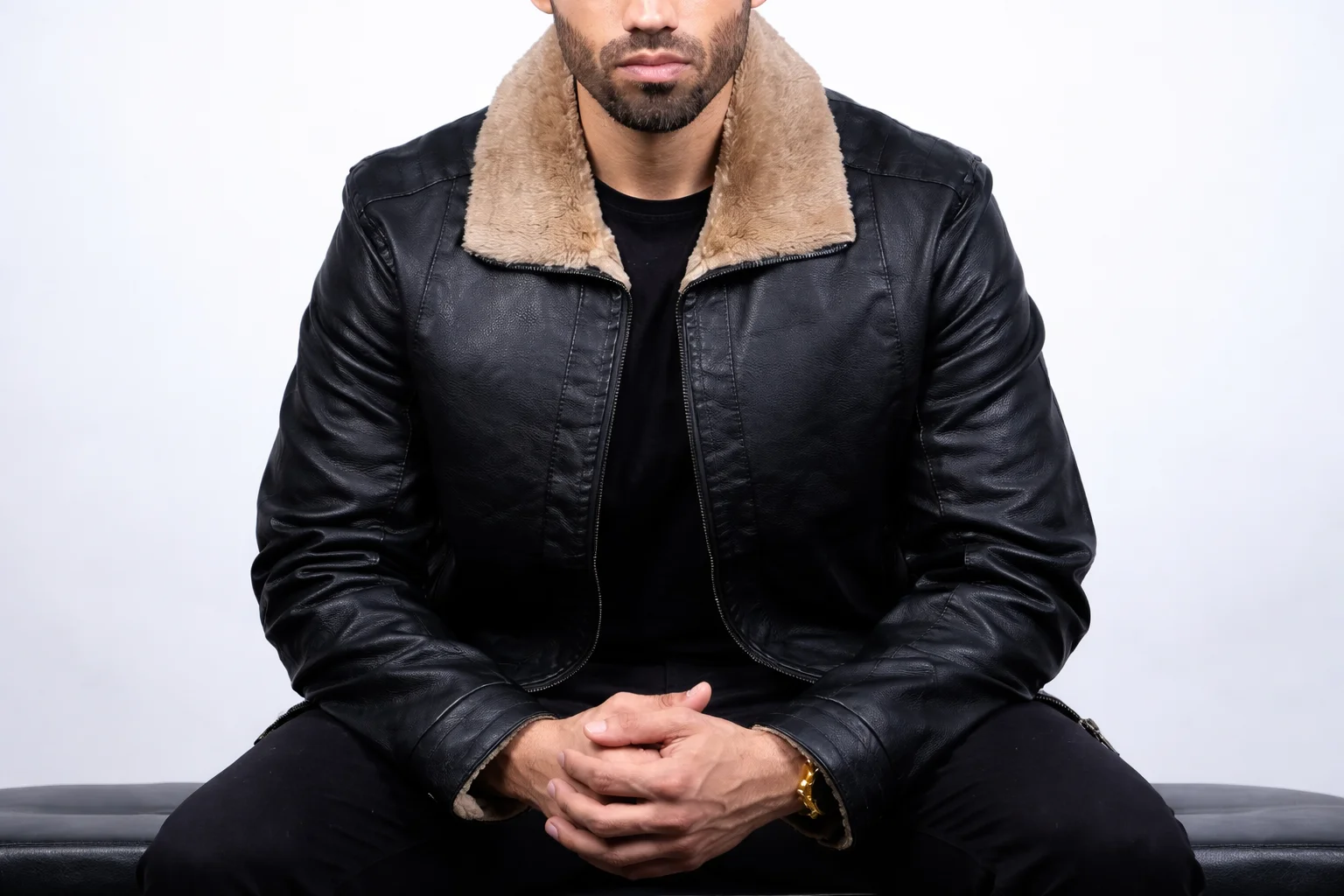
A Leather Jacket With Fur is a timeless outerwear essential that blends rugged durability with luxurious warmth. Crafted from genuine or premium faux leather and enhanced with fur or shearling linings, collars, or trims, these jackets are designed to provide superior insulation while making a bold style statement. Originally developed for pilots and explorers facing extreme cold, leather jackets with fur have evolved into versatile fashion icons worn across seasons and settings.
In 2026, their popularity continues to rise as modern designs balance comfort, aesthetics, and sustainability. From classic aviator and biker styles to tailored feminine silhouettes, fur-lined leather jackets offer options for every taste and climate. Advances in material technology now allow buyers to choose between authentic shearling for natural warmth or high-quality faux fur for ethical and eco-conscious appeal. Whether worn for protection against harsh winters or as a statement piece for everyday fashion, a leather jacket with fur remains a symbol of enduring style, functionality, and craftsmanship.
What is a Leather Jacket with Fur?
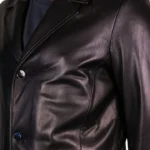
A leather jacket with fur combines a durable outer leather shell with insulating fur elements, creating superior warmth, tactile contrast, and a signature look. The exterior uses tanned animal hide (or synthetic leather), while fur appears as full linings, partial torso liners, or trims on collars, cuffs, or hems.
Fur types include natural shearling (lambskin with attached wool), short-pile furs like rabbit or fox (in select markets), and high-quality synthetic faux fur. In 2026, buyers often weigh ethical and eco-friendly factors, favoring “shearling” for natural and “faux shearling” for synthetic alternatives.
Key benefits include excellent thermal insulation, enhanced perceived luxury, and versatile styling—though they require specialized care.
History of Leather Jackets with Fur
Leather jackets with fur trace back to indigenous cold-climate communities using hide exteriors and fleece interiors for warmth.
During World War I, aviators adopted shearling-lined coats like the B-3 for open-cockpit protection, establishing the archetype of heavy leather + full shearling for extreme conditions.
Post-war, these utility pieces entered civilian fashion via motorcycle culture and Hollywood icons, symbolizing rebellion and rugged style.
The 1970s–1980s brought luxury versions with dramatic fur collars, alongside the rise of faux fur for ethical, affordable options.
From the 2000s onward, sustainability shaped the category: improved tanning, recycled materials, and traceable supply chains. By 2026, trends revive retro silhouettes (oversized, ’70s-inspired) while prioritizing eco-credentials, often with QR-coded provenance.
The evolution shifted from pure function to cultural icon, luxury status, and now ethical hybrid.
Types / Variations
Leather jackets with fur fall into distinct style clusters, each with unique features, warmth levels, and price ranges.
- Aviator Coat (Shearling Bomber): Full shearling lining, elasticized cuffs/hem, heritage look. Best for: cold daily wear, travel. Warmth: high. Price: mid to premium ($200–800).
- Pilot Coat: Reinforced shoulders, fur edging, durable seams. Best for: outdoor activities. Warmth: moderate-high. Price: mid–high ($300–1000).
- Motorcycle / Racer Coat: Streamlined fit, partial fur trims or collar-only. Best for: urban evenings, transitional weather. Warmth: moderate. Price: mid-range ($250–700).
- Hauler / Workwear Coat: Rugged nubuck finishes, functional snaps. Best for: casual or occupational use. Warmth: moderate. Price: budget-to-mid ($150–600).
- Feminine / Tailored Coat: Waist shaping, refined fur placements. Best for: professional or dressed-up occasions. Warmth: moderate-high. Price: mid–luxury ($400–1200).
- Hybrid & Modular Variants: Zip-off linings, detachable collars, mixed materials for breathability and seasonality. Eco-options use plant-based or lab-grown elements.
Pros & Cons
Pros
- Exceptional warmth and insulation
- Timeless, luxurious appearance
- Long-lasting with proper care
- Versatile styling options
- Faux alternatives for ethical choices
Cons
- Heavier and bulkier than standard jackets
- Higher cost for genuine materials
- Requires professional cleaning
- Ethical debates around animal products
- Susceptible to moisture without treatment
Leather Types Used
- Full-Grain Leather — Top layer with natural imperfections; develops patina; most durable for premium pieces.
- Top-Grain Leather — Lightly sanded for uniformity; soft and consistent; common in fashion items.
- Genuine Leather — Lower splits; budget-friendly but less durable.
- PU / Faux Leather — Synthetic; vegan, water-resistant, less breathable.
- Nubuck & Suede — Velvety nap; Stylish but stain-prone.
Fur options: natural shearling (warm, dense wool), short-pile trims, or advanced faux fur.
Manufacturing Process
- Procurement — Source hides and pelts.
- Tanning & Processing — Chrome/vegetable tanning, dyeing.
- Design & Patterning — Digital CAD for waste reduction.
- Cutting — Precise sectioning of materials.
- Assembly — Stitching the shell and lining, adding closures.
- Finishing — Treatments, conditioning, provenance tags.
- Quality Control — Testing seams, insulation, aesthetics.
- Packaging — Climate-controlled for protection.
Modern practices emphasize sustainability, recycling, and traceability.
How to Identify Original vs Fake Leather
Check:
- Natural organic smell (vs. chemical for synthetics)
- Irregular grain patterns
- Fibrous edges
- Water absorption test
- Natural creasing on flex
For fur: varied pile length and underfur in natural vs. uniform synthetic. Look for quality stitching, provenance tags, and certifications.
Avoid destructive tests like burning.
Buying Guide: What to Check Before Purchase
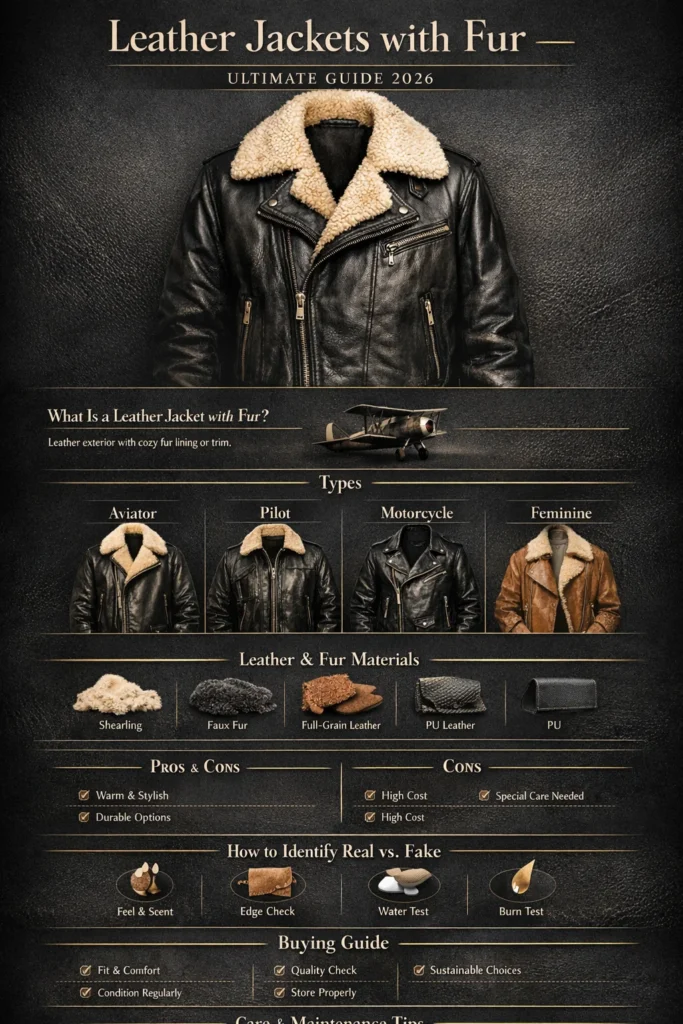
- Fit — Align shoulders, allow layering room.
- Materials — Verify leather/fur type and authenticity.
- Construction — Inspect seams, zippers, and reinforcements.
- Comfort — Test weight for your climate.
- Care — Review cleaning needs.
- Sustainability — Seek certifications and transparency.
- Policy — Confirm returns and warranty.
- Budget — $100–300 entry-level; $300–800 mid; $800+ luxury.
- Versatility — Prefer modular features.
- Ethics — Choose faux or certified options if needed.
Top Uses
- Cold-weather protection
- Statement layering
- Travel and variable climates
- Workwear in cooler settings
- Heirloom/collectible pieces
Care & Maintenance Tips
- Cleaning — Spot-treat; professional for natural fur/shearling.
- Storage — Wide hangers, breathable bags, pest repellents.
- Conditioning — Regular leather conditioner; brush fur gently.
- Protection — Apply hydrophobic sprays.
- Repairs — Use specialists for seams/zippers.
Proper care extends life 10–20+ years.
Price Range Worldwide
- Entry-level (faux/bonded): $100–300
- Mid-tier (genuine/partial shearling): $300–800
- Luxury/artisan (full-grain/full shearling): $800–$2,000+
Prices vary by region, with competitive options from production hubs.
Top Brands / Countries Famous for This Product
- Italy — Luxury tailoring, vegetable-tanned excellence.
- United States — Heritage shearling specialists.
- Turkey — Quality lambskin at accessible prices.
- Spain/Portugal — Skilled mid-to-premium craft.
2026 highlights emerging sustainable brands with upcycled and traceable materials.
What’s Trending in 2026?
Slim/boxy silhouettes, earth tones (chocolate browns), textured/oversized fur accents, reversible faux-leather-fur hybrids, and strong sustainability claims (traceable, low-impact, or faux alternatives). Shearling remains classic, with modular designs gaining popularity for year-round wear.
FAQs
A: Shearling is natural sheepskin with wool attached for superior warmth. Faux fur is synthetic, easier to care for, and animal-free.
A: Not inherently; treatments add resistance, but they’re better for dry cold than heavy rain.
A: $200–500 for solid mid-range; $800+ for premium. Consider long-term value.
A: Modular versions with removable linings increase versatility.
Conclusion
Interpreting leather jackets with fur through the lens of NLP provides a structured, feature-driven framework for understanding product attributes, user decision-making, manufacturing processes, and lifecycle care. Treat garments as composed tokens; extract and weigh features; build classifiers to detect Authenticity; and construct recommendation vectors that match customer intent to product SKU embeddings. In 2026, the market balances heritage aesthetics with sustainability demands—buyers increasingly evaluate provenance metadata as a core attribute.