Introduction
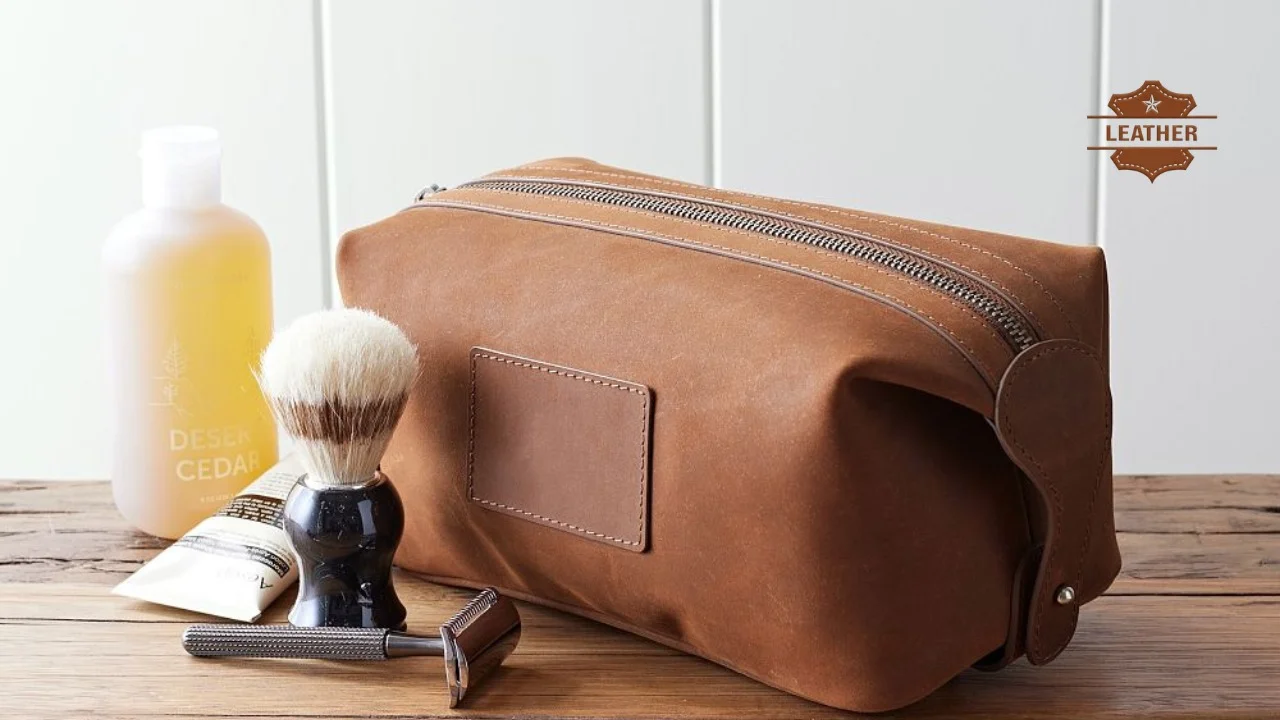
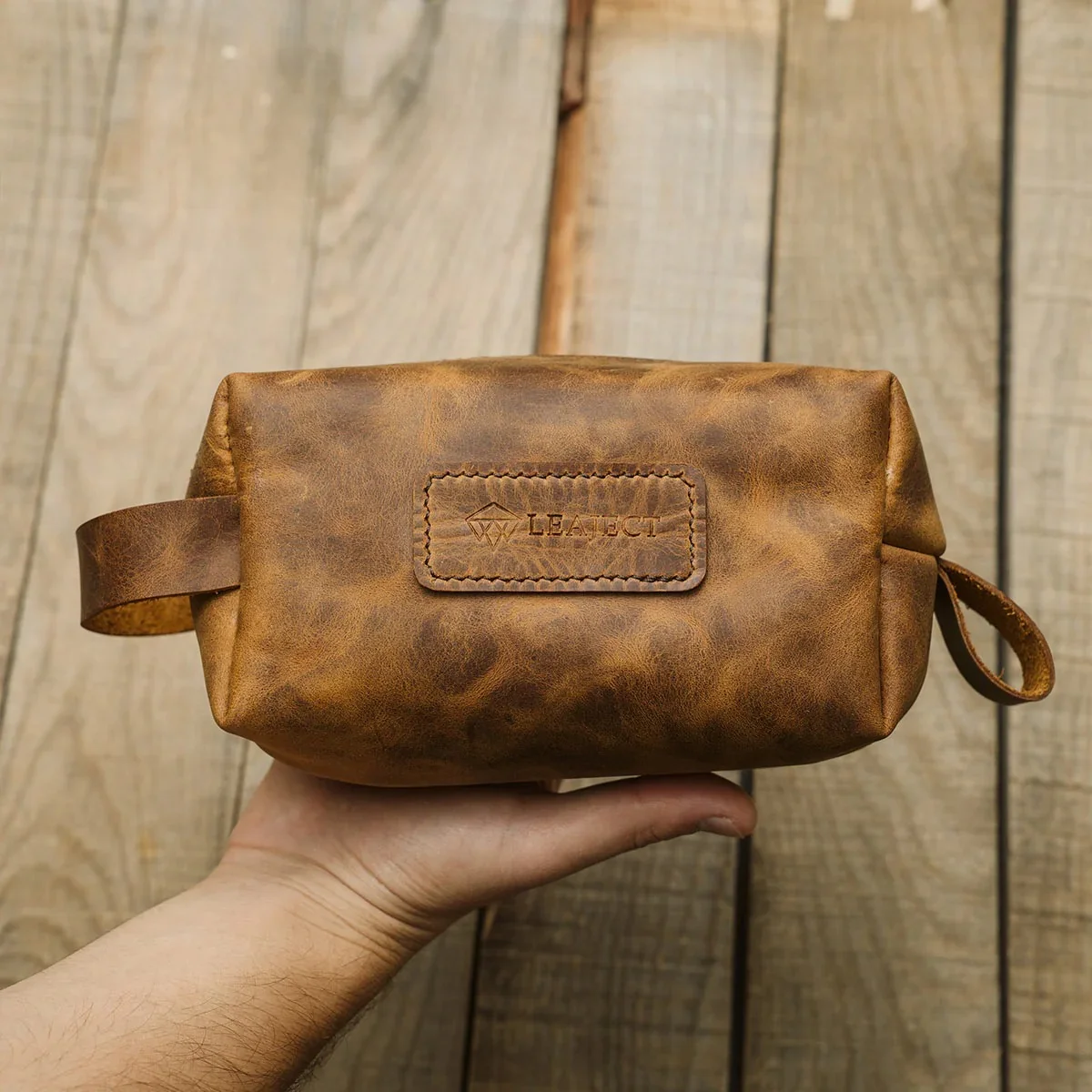
A Leather Toiletry Bag—often known as a dopp kit, wash bag, shaving kit, grooming pouch, or travel toiletry case—is a compact, durable container made primarily from leather. It is specifically designed to store and organize personal care essentials during travel or daily use. Common items packed inside include toothbrushes, toothpaste, razors, shaving cream, skincare products, deodorant, cologne, combs, brushes, and small cosmetics.
What sets a leather version apart is its premium material, which offers natural strength, a sophisticated appearance, and the potential to develop a unique patina over time. These bags typically feature organized interiors with compartments, elastic loops, zippered pockets, or mesh dividers to separate liquids from tools and prevent mess. Sizes range from slim minimalist pouches to larger structured or hanging designs, making them versatile for different travel needs.
History and Origins of the Dopp Kit
The modern leather toiletry bag evolved from early 20th-century military grooming kits. Soldiers needed portable, rugged carriers for personal hygiene items during deployments. The term “dopp kit” became popular thanks to Charles Doppelt, whose company produced leather grooming cases widely issued to U.S. troops in World War II. These early designs emphasized durability, compact shape, secure closures, and weather resistance—qualities that carried over into civilian versions.
Post-war, the item transitioned into everyday travel gear and later a stylish accessory symbolizing refinement and preparedness. Today, it remains a staple for business travelers, frequent flyers, and anyone seeking an elevated alternative to basic nylon pouches.
Types of Leather Toiletry Bags and Best Use Cases
Leather dopp kits come in several styles, each suited to specific lifestyles and packing preferences.
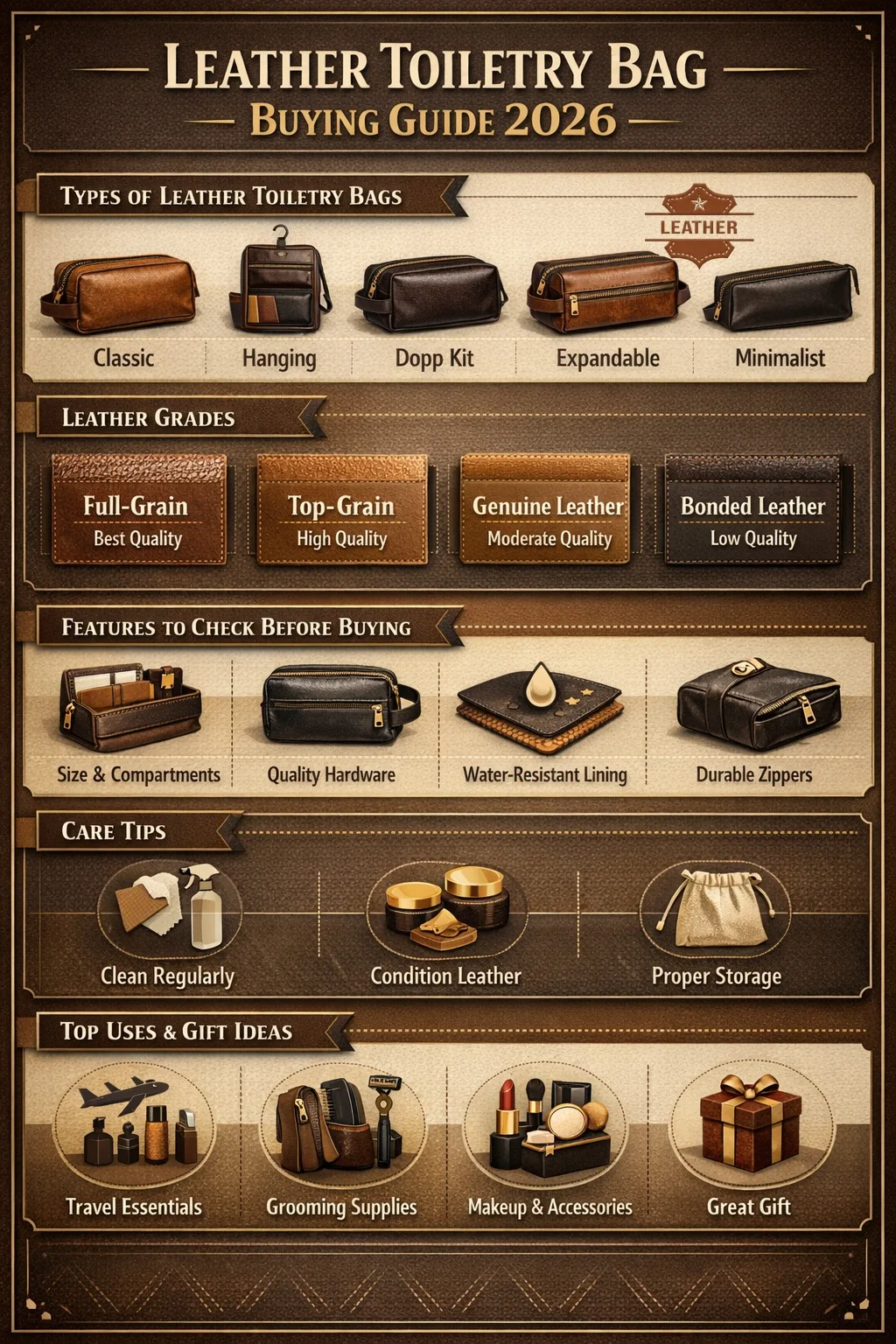
- Classic horizontal dopp kit — A low-profile rectangular shape with a top zipper. Perfect for short trips or carry-on luggage, offering balanced storage without taking up much space.
- Hanging toiletry bag — Features a built-in hook and vertical layout with stacked compartments. Ideal for hotel bathrooms or shared spaces, as it keeps items off wet surfaces and allows quick access.
- Structured dopp kit — Semi-rigid construction with defined pockets, dividers, and elastic holders. Great for organized travelers who want bottles to stay upright and tools to be secure.
- Expandable travel models — Include gussets or extension zippers for added capacity. Suited to longer vacations or users with extensive grooming routines.
- Minimalist pouch — Slim, single-compartment design. Best for light packers, day trips, or gym use where simplicity and low weight matter most.
Choosing the right type aligns features with your routine—whether you prioritize compactness, accessibility, or organization.
Leather Types and Quality Guide
The leather grade directly impacts durability, texture, Price, and longevity. Here’s a breakdown:
| Leather Type | Quality Level | Durability | Typical Price Range (USD, 2026) | Best Suited For |
| Full-Grain | Highest | Excellent | Premium (often $150–500+) | Long-term investment, patina lovers |
| Top-Grain | High | Very Good | Mid-range ($80–250) | Everyday use, smooth feel |
| Genuine Leather | Moderate | Fair | Affordable ($40–120) | Budget-conscious buyers |
| Bonded Leather | Low | Limited | Low ($20–60) | Temporary or very low-cost needs |
Full-grain leather keeps the natural surface intact for superior strength and character development. Top-grain is lightly sanded for uniformity while retaining most durability. Genuine leather is real, but lower-grade hide, while bonded uses scraps and binders—offering affordability but a shorter lifespan.
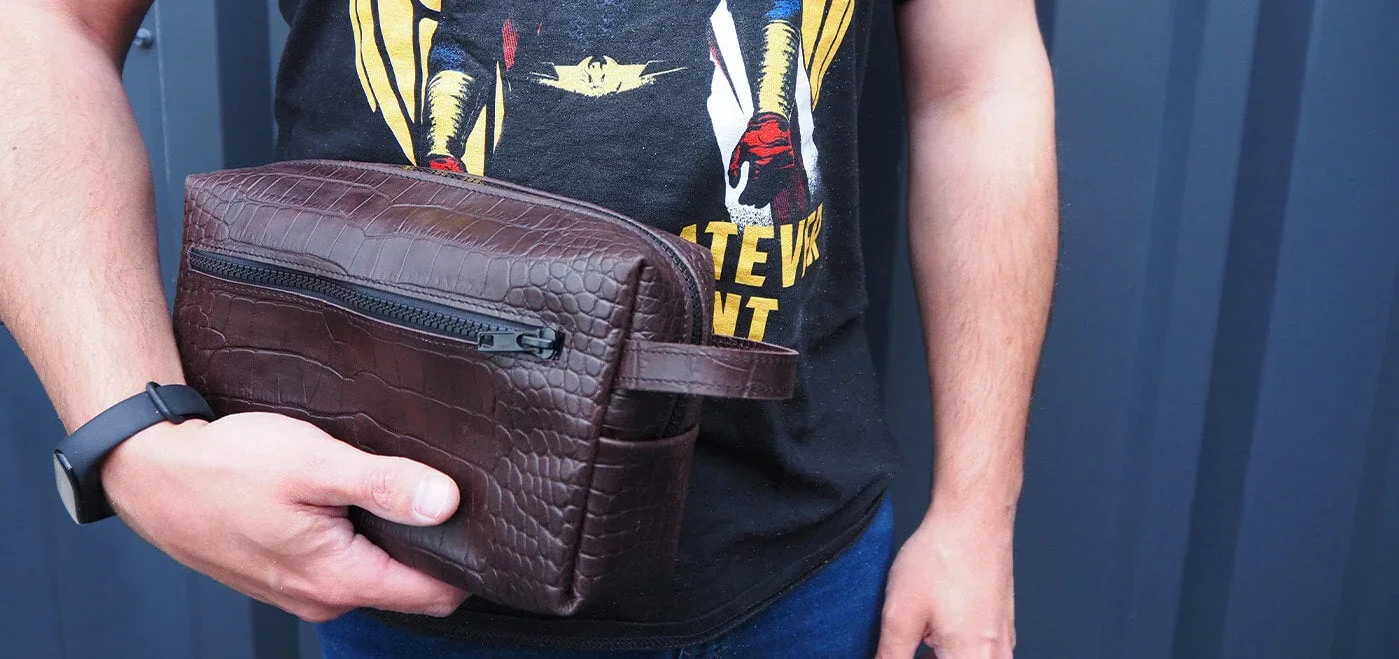
Manufacturing Process: What Makes a Quality Bag
High-end leather toiletry bags follow a careful production sequence:
- Tanning — Vegetable tanning (plant-based, firmer, ages beautifully) vs. chrome tanning (faster, softer, more consistent).
- Cutting — Precise patterns minimize waste; premium makers use full hides efficiently.
- Edge finishing — Burnished, painted, or folded edges for clean, durable results.
- Stitching — Tight, even stitches (often saddle-stitched) with reinforced stress points.
- Hardware — Quality metal zippers (e.g., YKK), sturdy pulls, and solid sliders resist failure.
- Lining & protection — Water-resistant interior (often nylon or coated fabric) with sealed seams to contain spills.
- Inspection — Final checks for functionality, stitching, and finish.
Spotting these details helps distinguish well-crafted pieces from mass-produced ones.
How to Identify Genuine Leather
Quick checks to avoid fakes or low-grade materials:
- Genuine signs — Natural variations, small scars, pores, warm organic smell, subtle color differences, yields to pressure, then recovers.
- Fake/low-quality signs — Uniform plastic-like texture, chemical odor, peeling/flaking surface, hollow tap sound.
A simple fingernail press test works: real leather indents softly and bounces back; synthetics may crack.
Buyer’s Checklist for Smart Purchasing
Score options on these factors (0–2 each) to find the best match:
- Travel frequency and style (e.g., frequent flyers need compact/hanging).
- Size and interior organization (pockets, loops, mesh for separation).
- Leather grade (prioritize full- or top-grain for longevity).
- Hardware Quality (smooth zippers, branded if possible).
- Water-resistant lining and spill protection.
- Warranty or repair options.
- Value (craftsmanship over hype; a solid mid-range bag often outperforms flashy premium ones).
Beyond Travel: Everyday and Gift Uses
Leather toiletry bags excel in multiple scenarios:
- Home grooming station organizer.
- Professional makeup or skincare kit.
- Tech pouch for cables, chargers, and small gadgets.
- Thoughtful gift for groomsmen, weddings, graduations, or executives (especially with personalization like monogramming).
This versatility broadens appeal for queries like “leather dopp kit gift” or “men’s leather grooming pouch.”
Care and Maintenance Tips
Proper upkeep extends life significantly:
- Daily — Empty, air out, wipe with a soft cloth, remove debris.
- Periodic cleaning (every 3–6 months) — Use pH-neutral cleaner sparingly; dry naturally.
- Conditioning — Apply leather conditioner every 2–3 months to prevent drying (especially vegetable-tanned).
- Spill handling — Blot immediately; avoid rubbing.
- Storage — Cool, dry spot; use a dust bag and stuff with tissue to hold shape.
Consistent care keeps the leather supple and Attractive for years.
2026 Price Ranges by Region
Prices vary with currency, duties, and local makers (estimates in USD equivalents):
| Region | Entry-Level | Mid-Range | Premium |
| USA/North America | $50–100 | $120–250 | $300–600+ |
| UK/Europe | $45–90 | $110–230 | $280–550+ |
| Australia/Oceania | $60–110 | $130–260 | $320–650+ |
| Middle East | $55–105 | $120–240 | $290–580+ |
| South Asia | $40–90 | $100–200 | $250–500+ |
Premium tiers often reflect full-grain leather, hand-finishing, and superior hardware. Local artisans in regions like South Asia can deliver strong value.
Key Manufacturing Regions and Brand Traits
Major hubs influence style and quality:
- Italy — Elegant, refined full-grain work with artisanal details.
- United States — Rugged, durable designs with workwear vibes.
- United Kingdom — Understated, sophisticated minimalism.
- Germany — Precise, functional engineering focused on longevity.
- India/Pakistan — Affordable artisanal craftsmanship with competitive pricing.
Popular brands in recent reviews include Leatherology (soft full-grain at Accessible prices), Kodiak (tough buffalo leather), Away (modern structured options), and Royce New York (buttery leather with organization).
FAQs
A: No. Leather itself is not fully waterproof. High-quality leather bags commonly include a water-resistant or waterproof lining to contain spills and protect the hide. That lining, combined with sealed seams and robust interior finishes, provides practical spill protection. For full external water resistance, you’d want a coated or waxed leather designed for wet conditions, but even then, prolonged exposure to water is not recommended.
A: With correct care, a full-grain leather bag will often last 10+ years and can outlive multiple travel cycles. The actual lifespan depends on frequency of use, exposure to moisture or harsh environments, and how well the bag is maintained (cleaning, conditioning, storage).
A: For extended travel (one week or longer), choose medium to large bags with internal dividers and upright pockets. These designs keep bottles vertical and distribute items so the bag remains easy to pack inside a suitcase. Expandable models are also useful since they offer extra capacity when needed.
A: Yes — they’re an enduring, practical, and stylish gift choice for weddings, executive gifts, groomsmen, or graduation gifts. Consider engraving options, monogramming, or selecting a model with a warranty to increase perceived value.
Closing
A leather toiletry bag is a functional object with durable materials and clear design signals. By prioritizing leather grade, internal organization, hardware quality, and care practices, shoppers can pick the right model for their needs and ensure it lasts. From a content strategy perspective, this guide is structured to provide High Semantic coverage across user intents—information, comparison, and purchase—and to support conversion through clear microcopy and schema-ready FAQ answers.