Introduction
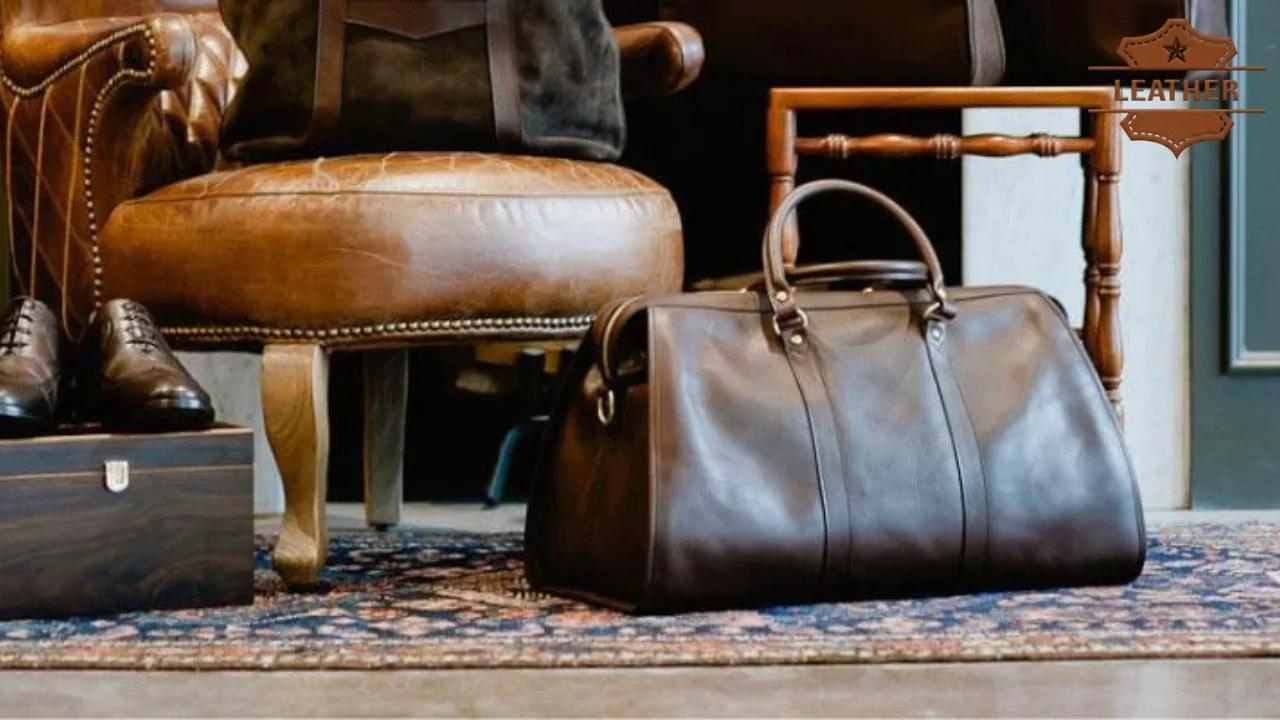
A Leather Weekender Bag is more than just temporary luggage; it’s a thoughtfully engineered blend of style, durability, and practical utility. Ideal for short urban escapes or multi-city business trips, a quality leather weekender acts as both a functional carry solution and a personal statement piece. Over time, high-quality full-grain leather develops a rich patina that adds character and credibility, unlike synthetic options that wear out quickly.
Not all leather weekenders are equal. Key differences in hide quality, tanning methods (vegetable vs. chrome), construction techniques (such as edge finishing and stitch density), and hardware (brass vs. plated) significantly impact long-term performance and value.
This guide draws from extensive leather industry knowledge to offer a clear, actionable resource updated for 2026. It includes structured sections, practical checklists, and decision-making tools for shopping online or in-store.
Weekender vs Duffel vs Travel Bag
To choose the right travel carrier, compare key features:
| Feature | Leather Weekender | Standard Duffel | Rolling Carry-On |
| Material | Premium leather | Canvas/nylon | Hard shell (polycarbonate) |
| Style | Elegant, classic | Sporty, casual | Practical, airport-optimized |
| Wheels | No | No | Yes |
| Lifespan (typical) | 10–30 years | 3–7 years | 5–10 years |
| Best For | Business + short travel | Gym & casual | Airport travel & long routes |
The leather weekender excels in longevity and refined appearance for short trips. Opt for rolling luggage if frequent long airport walks are a priority.
History of the Leather Weekender Bag
The leather weekender emerged in the early 20th century alongside increased train and steamship travel in Europe and North America. Travelers needed compact bags for 2–4 days of essentials, drawing from cavalry kits and saddle-making traditions.
Luxury houses like Louis Vuitton and Gucci elevated these practical designs into status symbols. Mid-20th-century jet-set and business travel further popularized the weekender as an icon of sophistication and utility.
Today, variations include rugged pull-up leather styles for outdoor use, structured professional designs, and modern hybrids with laptop compartments.
Types / Variations of Leather Weekender Bags
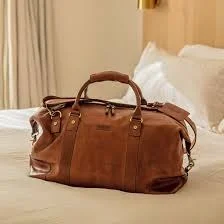
Match the style to your needs and aesthetic:
Classic Cylindrical Weekender
- Shape: Traditional duffel silhouette with one large main compartment.
- Best for: Simple, High-Capacity packing.
Structured Travel Weekender
- Shape: Reinforced frame for upright posture.
- Best for: Business travelers needing a polished look.
Weekender Bag With Compartments
- Features: Shoe compartment, laptop sleeve, internal pockets.
- Best for: Organized travel with electronics and clothing.
Vintage Distressed Leather Bag
- Finish: Pull-up, waxed, or oiled for quick patina.
- Best for: Casual users who love a rugged, lived-in vibe.
Hybrid Business Travel Bag
- Design: Slimmer profile, often cabin-compliant with laptop space.
- Best for: Commuters blending office and travel use.
Leather Types Used in Weekender Bag
Prioritize based on durability, patina, and value:
- Full-Grain Leather (Top Recommendation) Outermost hide layer; strongest, best patina potential; 20+ years lifespan. Ideal for premium, aging-beautiful bags.
- Top-Grain Leather Slightly sanded for uniformity; durable but less character; 10–15 years.
- Genuine Leather Lower hide layers, often coated; lower durability; 3–7 years. Budget option.
- PU / Faux Leather Synthetic; lightweight but short-lived (1–3 years). For low-budget or vegan needs.
Full-grain offers the best long-term value despite a higher upfront cost.
Leather Comparison Table
| Leather Type | Durability | Patina | Price Level | Typical Lifespan |
| Full-Grain | ★★★★★ | Yes | High | 20+ years |
| Top-Grain | ★★★★ | Light | Mid-High | 10–15 years |
| Genuine | ★★★ | No | Budget | 3–7 years |
| PU / Faux | ★★ | No | Low | 1–3 years |
How Leather Weekender Bags Are Made — Production Pipeline
- Hide Selection — High-quality, low-defect cowhides with good provenance.
- Tanning — Vegetable (slower, richer, eco-friendly) or chrome (faster, softer).
- Pattern Cutting — Grain-aligned for efficiency and strength.
- Skiving & Edge Finishing — Thinning and burnishing edges to prevent wear.
- Stitching — Dense, reinforced seams with Durable Thread.
- Hardware Installation — Brass, YKK zippers, solid rivets.
- Final Inspection — Checks for uniformity and quality.
Strong hardware and stitching predict longevity.
How to Spot Real vs Fake Leather — Detection Heuristics
Real leather indicators
- Natural grain variation and pores/scars.
- Distinct, organic aroma (not chemical).
- Texture changes with touch; scratches darken on pull-up leathers.
- Fibrous, uneven cut edges.
Fake signs
- Uniform, repeating patterns.
- Strong plastic smell.
- Perfectly smooth, consistent surface.
- Peeling layers or fabric backing.
Combine multiple tests for reliability.
Buying Guide — Expert Selection Criteria
- Size & Capacity — 30–45 liters for 2–4 days.
- Carry-On Compatibility — Check ~22 × 14 × 9 inches; verify airline rules.
- Compartments & Organization — Prioritize laptop sleeve, shoe area, and pockets.
- Hardware Quality — Brass and YKK preferred.
- Stitching Quality — Tight, even, reinforced at stress points.
- Leather Grade Disclosure — Clear full-grain/top-grain statements.
- Construction Details — Burnished edges, quality lining, reinforced base.
- Warranty & Aftercare — Look for repair support.
- Weight Balance — Assess empty weight vs. capacity.
- Sustainability — Check ethical sourcing certifications.
Pros & Cons
Pros
- Exceptional durability (especially full-grain).
- Timeless style with patina development.
- Versatile for work and leisure.
- Potentially more Sustainable long-term.
Cons
- Higher initial cost.
- Heavier than synthetics.
- Needs regular maintenance.
- Not fully waterproof without treatment.
Top Uses of a Leather Weekender Bag
- Weekend getaways.
- Short business trips.
- Road trips.
- Photography gear transport.
- Gym-to-work transitions.
- Stylish events or client meetings.
Leather Weekender Bag Care & Maintenance — Lifecycle Management
Weekly: Dust with a soft cloth.
Every 3–6 months: Condition with an appropriate leather product (test first).
Water exposure: Blot dry, air dry naturally, then condition.
Storage: Use a breathable dust bag; stuff to maintain shape; avoid sun/humidity.
Repairs: Seek professionals for seams/hardware; polish brass.
Consistent care maximizes a 15–30 year lifespan for full-grain bags.
Price Range Worldwide
Typical retail ranges for quality leather weekenders (designer/custom higher):
- USA: $150 – $900+ (many mid-range $300–600; premium $800+)
- UK: £130 – £750+
- Canada: CAD 200 – 1,100+
- Australia: AUD 250 – 1,200+
- Middle East: $200 – $1,000+
Premium brands often exceed $1,000–$1,500. Factor in total ownership cost.
Top Countries & Brands Known for Leather Weekender Bags
- Italy — Vegetable tanning excellence; brands like Serapian, Berluti, Métier.
- United States — Rugged heritage; e.g., Leatherology, Lotuff, Saddleback.
- United Kingdom — Structured designs; e.g., Harber London, Bennett Winch.
- France — Luxury prestige; heritage influences.
Trust signals: Leather Working Group Certification, YKK hardware, ethical sourcing.
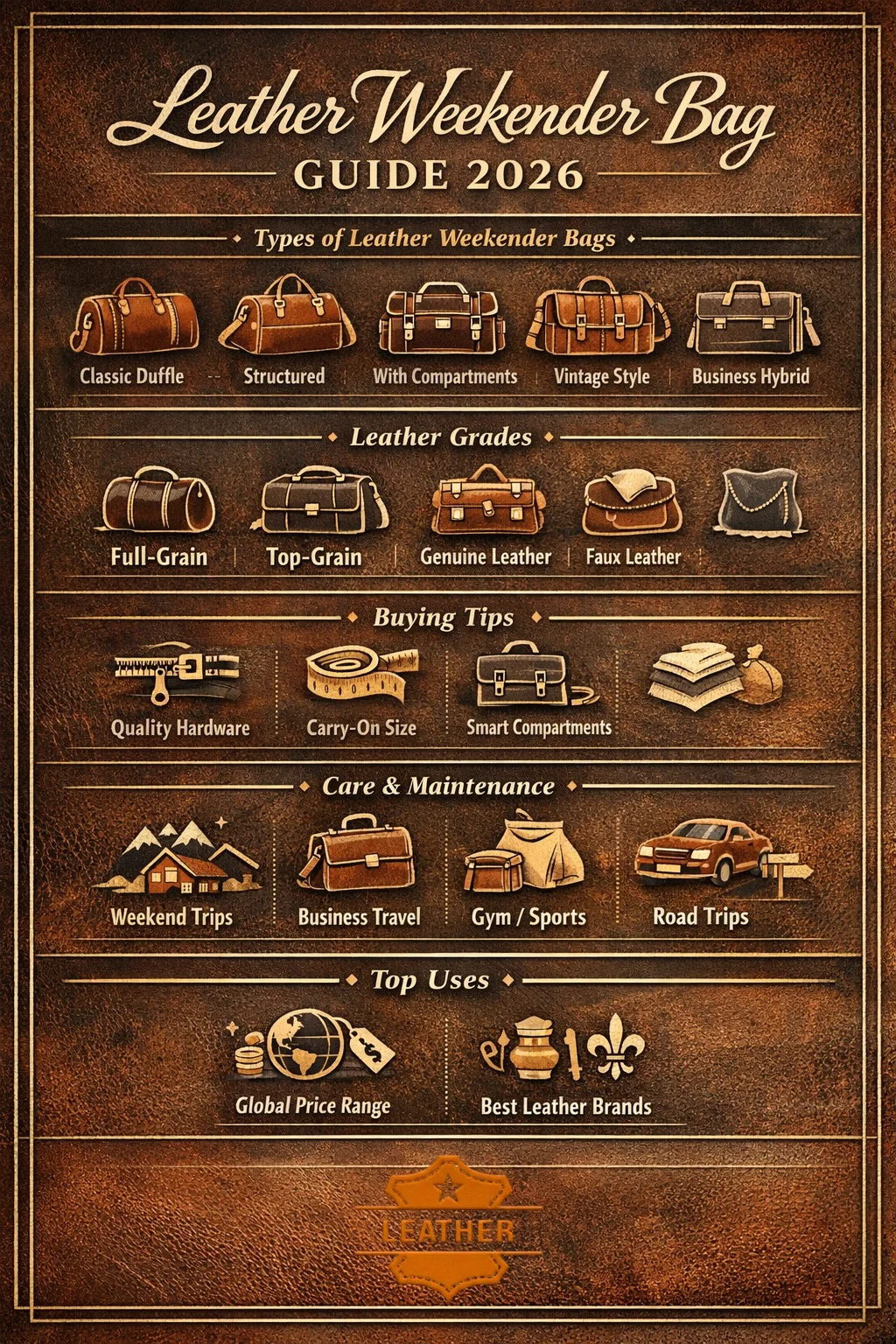
FAQs
A: With care, full-grain versions last 15–30 years, depending on quality and maintenance.
A: Yes, especially full-grain; it adds unique character and value over time.
A: Most fit standard allowances (~22 × 14 × 9 inches), but confirm with your airline.
A: Water-resistant but not waterproof; use treatments for better protection, though they may alter appearance.
Conclusion
A leather weekender is a smart, enduring investment in style and function. Prioritize full-grain leather, Quality hardware (YKK, brass), transparent details, and a maintenance commitment for decades of reliable use.