Introduction
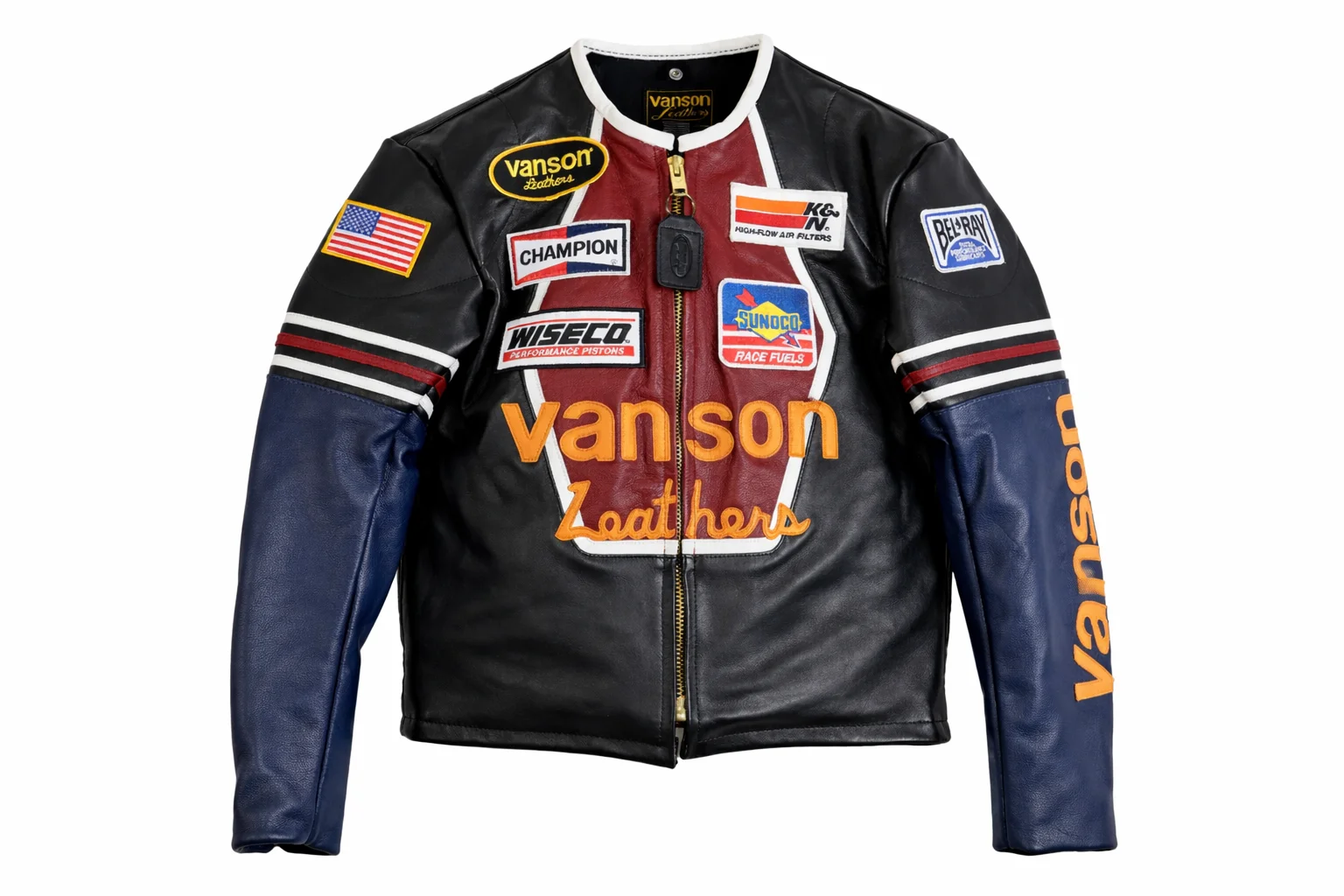
Vanson Leather Jackets are widely regarded as some of the most durable, protective, and thoughtfully engineered motorcycle jackets available. Built with race-grade patterns, heavy full-grain hides, and small-batch American craftsmanship, a Vanson jacket is as much a tool for protection as it is an heirloom garment. This guide reframes that story in clear, natural-language technical terms (NLP-friendly structure and phrasing), so search engines, riders, and buyers can find the exact information they need quickly.
What Is a Vanson Leather Jacket?
A Vanson Leather Jacket is a motorcycle-grade leather jacket manufactured by Vanson Leathers in the United States, optimized around three core engineering priorities:
- Protection — Thick hides, reinforced seams, armor compatibility
- Performance — Patterning designed for rider posture and movement (action backs, gussets)
- Durability — Construction choices that extend service life across years and miles
Key structural elements that define a Vanson jacket:
- Patterning: Race-derived panels and cut lines to reduce pull and increase mobility
- Leather: Typically heavy-weight full-grain cowhide for abrasion resistance
- Hardware: Heavy-duty zippers, snaps, and buckles selected for longevity
- Customization: Many models are available in small batches and can be resized or modified at the factory
Vanson jackets are not mass fashion pieces. They’re engineered garments intended to function under crash and wear conditions while remaining serviceable for decades if properly maintained.
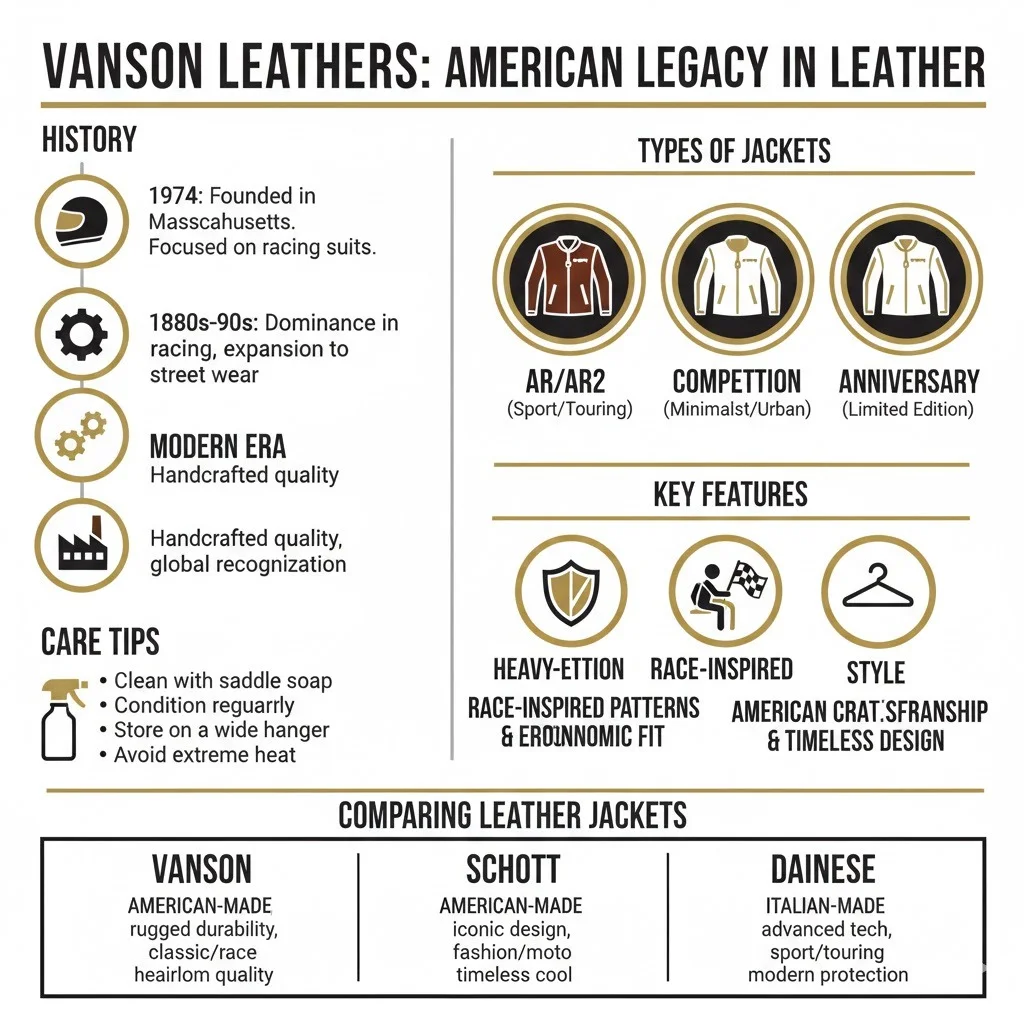
History of Vanson Leathers From Racetracks to Iconic Jackets
Founding & Early Years (1974 – 1980s)
Vanson Leathers began with a simple, engineering-first objective: produce leather apparel that performed on the racetrack. Instead of copying street fashions, Vanson developed pattern blocks that prioritized rider ergonomics and abrasion resistance. Early models such as the Model AR already showed an emphasis on mobility and durability.
Growth & Racing Heritage (1980s – 1990s)
Throughout the 1980s and 1990s, the brand built a reputation among racers and serious riders. Vanson’s suits and jackets were chosen by competitors because they combined heavy hides with reinforcement in critical areas (shoulders, elbows, seat). That heritage continues to influence modern product lines.
Modern Era & Legacy
Today Vanson still produces jackets in Massachusetts. Core continuities include:
- In-house patterning and construction
- Small-batch runs and options for custom sizing
- The continued use of heavier leathers and reinforced stitching for protection
Modern updates add CE armor pockets and refined fit options while retaining the company’s original performance focus.
Types & Variations The Vanson Taxonomy
Vanson product families are designed for distinct rider needs. Below is a practical taxonomy.
Model AR / AR2 Series
- Purpose: Daily riding, commuting, versatile use
- Characteristics: Action back or gussets for shoulder movement; roomier cut; classic styling
- Who it fits: Riders who want durable protection without a race-only posture
Competition Series
- Purpose: Track riding, racing, maximum protection
- Characteristics: Heavier, denser hides, reinforced panels, armor Compatibility, minimal fashion trims
- Who it fits: Track day riders, competitive racers, and touring riders who prioritize protection
Anniversary & Commemorative Jackets
- Purpose: Collector appeal, limited editions
- Characteristics: Unique trims, special leather grades, numbered releases
- Who it fits: Collectors and buyers who value rarity and presentation
Cafe Racer & Street Designs
- Purpose: Style-forward streetwear with authentic construction
- Characteristics: Slimmer silhouettes, minimalist elements, often uses lighter leather grades for comfort
- Who it fits: Style-conscious riders who still want a durable, rideable jacket
Leather Types & Lining Materials Glossary
Understanding leather grades and lining choices is essential when you evaluate protection and comfort.
Common Leather Types
- Competition-Weight Full-Grain Cowhide: Thickest, highest abrasion resistance. Best for track and maximum protection.
- Top-Grain / Finished Hides: Slightly lighter, easier break-in, chosen for street and cafe models.
- Drum-Dyed Hides: Color penetrates through the hide, so scuffs age with attractive pull-up.
- Aniline / Semi-Aniline: Natural appearance with variable finishing; watch for maintenance needs.
Lining Options
- Rayon / Smooth Linings: Breathable and low friction for sliding on/off.
- Quilted or Zip-in Liners: Add warmth and weather protection for colder climates.
- CE Armor Pockets: Many modern Vanson jackets include pockets designed to accept certified armor.
What Makes Vanson Leather Jackets Unique?
- Made in USA Controlled Craftsmanship: In-house production allows consistent quality control.
- Race-Origin Patterning: Patterns designed from racing ergonomics yield superior mobility for a rider in a tuck.
- Heavyweight Leathers for Protection: Thicker hides = more abrasion resistance and longevity.
- Customization & Alterations: Factory resizing and tailoring options make the fit highly personal.
- Small-Batch, Repairable Construction: Designed to be repairable and to age gracefully.
These features align to create a product whose value proposition is protection and lifetime utility rather than seasonal fashion.
How to Identify Original vs Fake Vanson Jackets Authenticity Checklist
If purchasing secondhand or from non-authorized sources, use this checklist:
- Genuine Vanson label sewn into the lining
- Consistent, high-quality stitching with reinforced seams in stress areas
- Heavy-duty zippers and hardware (not flimsy or unbranded)
- Pattern details that match known Vanson silhouettes (AR, Competition, etc.)
- Clear provenance: authorized dealer, original receipt, or factory documentation
If leather feels thin, stitching is uneven, or hardware is cheap — treat the purchase as suspicious.
How to Choose the Right Vanson Leather Jacket A Step-by-Step Workflow
This is an action plan you can follow.
Define Your Purpose
- Commuting / Daily Use: AR / AR2
- Track / Racing: Competition Series
- Style / Collector: Anniversary or Cafe Racer
Measure Precisely
- Measure chest, shoulders, arm length, torso length. Use a flexible tape and record numbers in centimeters and inches.
- Compare against Vanson’s official size chart (always use manufacturer charts, not generic ones).
Decide Layering & Armor
- If you ride with heavy layers or internal armor, size up.
- If you want a minimal city fit, choose closer tolerance but ensure mobility.
Evaluate Features & Hardware
- Armor pockets? Zip-in liner? Reinforced seat? Pick the features that match your predicted use case.
Check Return & Alteration Policy
- Vanson’s custom work and small batches often mean limited returns — confirm before purchase.
Features Breakdown Why Each Feature Matters
| Feature | Purpose | Common Vanson Lines |
| Leather weight (oz or mm) | Higher weight improves abrasion resistance | Competition |
| Action back / gussets | Increases shoulder movement | AR, AR2 |
| CE armor pockets | Accepts certified protection | AR2, Competition |
| Liner options | Comfort and weather adaptability | All lines |
| Heavy-duty hardware | Lasts through years of use | All lines |
Vanson vs Competitors Honest, Functional Comparison
When choosing between Vanson, Schott, Dainese, or Alpinestars, prioritize what you need:
- Vanson: Heavy, rugged, American, best for protection and longevity.
- Schott: Classic US silhouettes, easier break-in, good for everyday leather that skews classic/military.
- Dainese / Alpinestars: European racing brands with integrated armor and ergonomic track cuts; lighter, tech-forward.
Tradeoffs: Vanson’s heavy hides are protective but need longer break-in and can be heavier to wear. European brands offer more integrated armor but may not match Vanson for hide thickness in many models.
Pros & Cons
Pros
- Handmade in USA
- Exceptional Durability and protective philosophy
- Race-grade patterns and fit options
- Customization available
- Possible heirloom, long-term value
Cons
- Heavy and stiff at first
- Longer break-in period for comfort
- Premium price points may exceed casual needs
- Some riders prefer lighter, more ventilated jackets for hot climates
Popular Vanson Models Buyer Profiles & Reviews
Model AR / AR2
- Profile: Everyday rider who wants durability + comfort
- Summary: Robust, roomy, stiff at first; softens with mileage
Competition Series
- Profile: Track and aggressive riders
- Summary: Extremely protective and heavy; engineered for abrasion resistance
Limited & Anniversary Pieces
- Profile: Collectors, presentation pieces
- Summary: Rare, often uses special hides and trimmings; premium pricing
Price Range Realistic Expectations
| Jacket Type | Typical Price (USD) |
| Basic AR / AR2 | $700 – $1,200 |
| Competition Jacket | $1,200 – $2,500 |
| 2-Piece Racing Suit | $1,800 – $4,000+ |
| Custom / Anniversary | $1,500 – $4,000+ |
Note: Prices vary by leather grade, options, and dealer. Custom sizing and specialty leather significantly increase cost.
Manufacturing Process Stepwise Overview
- Hide Selection: Drum-dyed, full-grain hides inspected for quality.
- Patterning & Cutting: Race-tested patterns applied; panels cut with precision.
- Assembly: Panels stitched with reinforced seams and heavy thread.
- Lining & Armor Pockets: Installed per model specification.
- Quality Control: Final inspection of stitching, hardware, and finish.
Quality signals: even stitching, reinforced shoulder/elbow seams, branded hardware, clean lining.
Care & Maintenance Tactical Guide
Follow a regimented care routine to preserve protection and appearance.
Conditioning
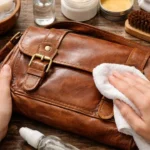
- Condition 2–3 times per year using leather conditioners that are manufacturer-recommended (avoid over-oiling).
- Test any conditioner on a hidden area first.
Cleaning
- Wipe dirt with a slightly damp cloth. Avoid soaking or machine washing.
- For stains, use leather-specific cleaners and follow label instructions.
Storage
- Use a wide-shoulder hanger to maintain structure.
- Store in a breathable garment bag away from direct sunlight and high humidity.
- Avoid plastic bags and excessive heat.
Repairs
- Use authorized repair centers for seam or patch work. Major structural repairs should be handled by experienced leatherworkers.
Break-In Tips Practical Steps
- Wear the jacket in short sessions first (20–45 minutes) and gradually increase time.
- Move through typical riding positions to encourage natural leather flex.
- Avoid heavy mechanical stress early (e.g., don’t scrub or stretch aggressively).
- Expect 2–8 weeks for notable softening depending on leather weight.
Who Should Buy a Vanson Jacket?
Ideal buyers
- Serious riders and racers seeking maximum abrasion resistance
- Collectors who want handcrafted, limited items
- Anyone looking for a lifetime garment that improves with age
Maybe skip if
- You want a lightweight, fashion-only jacket
- You dislike long break-in periods or heavy garments
- You need highly ventilated gear for extreme heat
FAQs
A: Yes. If you value high protection, durability, and craftsmanship, Vanson Leather Jackets are a long-term investment. Their hides, patterns, and construction produce a garment that can protect for years and often becomes a generational piece with proper care.
A: Many riders find them snug especially if you plan to add armor or thick layers. Use exact measurements and consult the manufacturer’s chart; when in doubt, consider sizing up for layering and comfort.
A: Most modern models include CE armor pockets. Older jackets might need aftermarket armor or tailoring. Check model specifications and consult with the seller about armor compatibility.
A: With proper care, decades. These jackets are often described as heirloom pieces that improve with age developing patina and unique wear patterns.
A: “Better” depends on needs. Vanson tends to be heavier and more race-oriented; Schott offers classic designs and often a faster, easier break-in. Choose based on protection needs and style preference.
Conclusion
Vanson Leather Jackets are engineered for riders who want protection, durability, and authenticity. They are not for everyone: if you want a light fashion piece you’ll wear casually, there are lighter, cheaper options. But if you want a functional, Protective garment built to perform in the real world and to last for decades, Vanson stands out. Use this guide as a reference while you measure, compare, and decide and keep the FAQ handy when you need quick answers.