Introduction
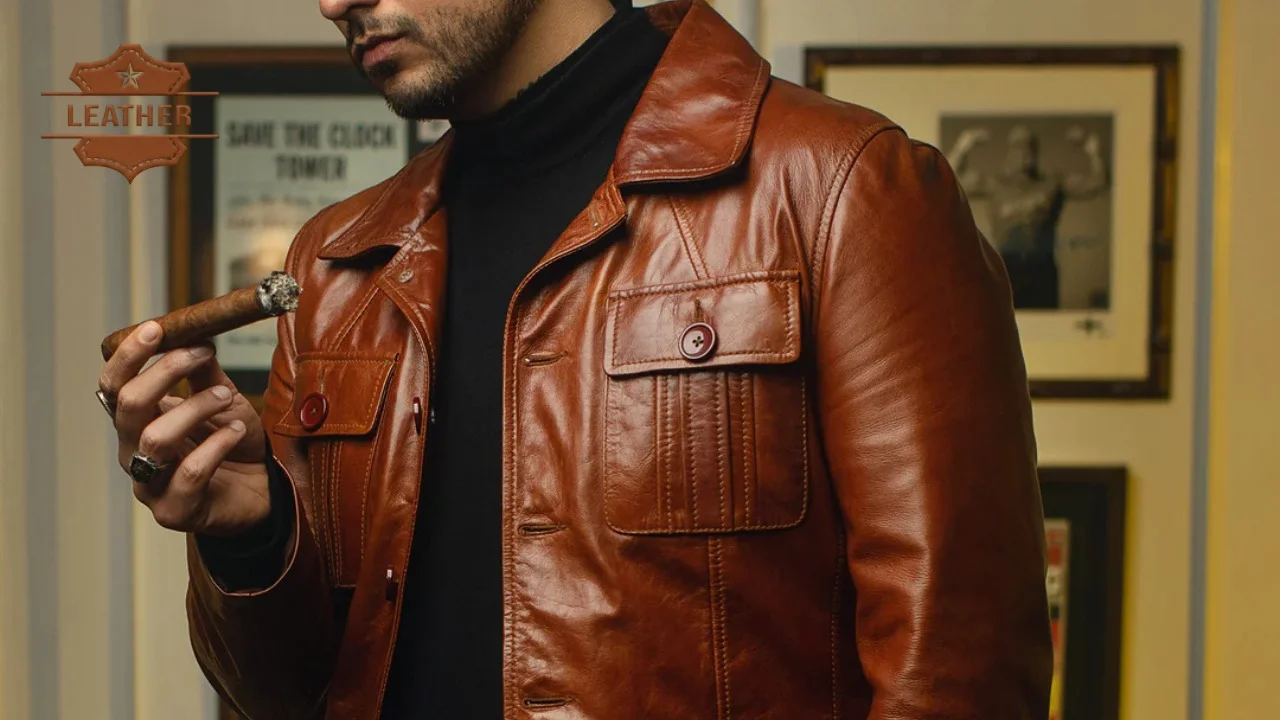
A vintage leather jacket is more than outerwear; it’s an archive of wear, a tactile narrative, and an instantly readable signal of taste. Whether rescued from a flea market, inherited from a relative, or chosen as a high-quality reissue, Vintage Leather carries textures, markings, and structural cues modern knockoffs can’t replicate. This guide is written with search intent and natural-language understanding in mind: you’ll get concise definitions, provenance and authenticity checks, a practical buying checklist for both in-person and online purchases, readable tables for price and repair expectations, museum-grade and everyday care instructions, and outfit formulas that turn vintage pieces into modern looks. Read on for hands-on steps, real-world examples, and SEO-friendly headings you can reuse or publish as-is.
What is a “Vintage” Leather Jacket?
A “vintage” leather jacket typically falls into one of two categories:
- True vintage — Produced decades ago (often 20+ years), showing genuine age with period-correct materials, hardware, maker labels, stitch patterns, and natural patina that evolved over time. Provenance (receipts, photos, previous owners) increases confidence.
- Faithful reissue — Newly made garments that strictly reproduce historic patterns, hides, hardware, and construction techniques. These are reissues, not aged-by-time originals; they’re valuable when you want authentic lines without the risks of older leather.
Key diagnostic signals of true vintage are random, layered wear (patina that concentrates at hand- and friction-points), old-school hardware, and construction that matches period techniques rather than modern mass-production shortcuts.
The Fascinating History of Leather Jackets
Leather jackets began as technical apparel: protective, insulating, and durable. Over the 20th century they transitioned into cultural shorthand.
- Early 1900s — Military & aviation: Pilots needed heavy insulating coats for open cockpits. Early flight jackets (bomber styles) matured into designs with shearling linings and reinforced seams.
- 1920s–1940s — Workwear: Leather moved into utility: work jackets, heavy-duty stitching, and functional pockets. Tannery techniques and hardware choices matured.
- 1950s — the Perfecto & cultural icon: The asymmetric motorcycle jacket gained symbolic weight after Marlon Brando’s role in The Wild One. Schott’s Perfecto helped codify the biker silhouette.
- 1970s–1990s — Music & subcultures: Punk, rock, and outlaw biker scenes adopted altered leathers as uniforms, often DIY-modified for identity.
- 2000s–present — Reissues & collector culture: Enthusiasts, bespoke ateliers, and vintage marketplaces elevated original-era pieces and high-quality reissues as collectors’ items and wearable classics.
Load-bearing fact: Schott’s Perfecto is widely recognized as a foundational motorcycle jacket; when writing historically, reference maker timelines support claims about design origins.
Why Vintage Often Outperforms New
Three practical reasons people choose vintage over new:
- Materials & construction: Vintage pieces often use thicker full-grain hides, heavier hardware, and hand-finishing unavailable at scale today.
- Patina & uniqueness: Random wear creates a unique surface — color variations, soft sheen, creases — that can’t be replicated evenly by distressing machines.
- Sustainability & story: Buying pre-owned reduces consumption and connects you to the garment’s life history.
Top Vintage Leather Jacket Styles Explained
Below are the archetypal styles collectors and buyers search for. Each entry includes hallmark features, typical hides, and styling notes.
Classic Biker / Motorcycle Jacket
- Key features: Asymmetric zipper, wide lapels, waist belt, chunky hardware, multiple external pockets.
- Typical leather: Horsehide, cowhide (thicker, breaks in with depth).
- Vibe & pairing: Edgy, rebellious. Works with slim denim, a white tee or band tee, and robust boots.
Bomber / Aviator Jacket
- Key features: Ribbed cuffs and hem, boxy torso, sometimes shearling collar & lining.
- Typical leather: Cowhide, lambskin, sheepskin.
- Vibe & pairing: Rugged casual — denim, henley, or knitwear.
Café Racer / Racer Jacket
- Key features: Center zipper, minimal collar (snap or band), streamlined silhouette.
- Typical leather: Lambskin, goatskin (softer, lighter).
- Vibe & pairing: Smart-casual — turtleneck or button-up and tailored trousers.
Flight / Shearling Jacket
- Key features: Large shearling collar and lining, heavy insulating hide.
- Typical leather: Sheepskin.
- Vibe & pairing: Efficient cold-weather option — wool trousers, chunky knits.
Distressed & Patina Jackets
- Key features: Irregular wear, creasing, color shifts.
- Typical leather: Varied hides (full-grain ages best).
- Vibe & pairing: Character pieces that pair with both rugged and refined elements.
Quick comparison table
| Style | Key Feature | Typical Leather | Best For |
| Biker | Asymmetric zip, belt | Horsehide, cowhide | Streetwear & edgy looks |
| Bomber | Ribbed cuffs/hem | Cowhide, lambskin | Casual, everyday |
| Café Racer | Slim, minimal | Lambskin, goatskin | Smart-casual |
| Shearling | Heavy shearling lining | Sheepskin | Cold climates |
| Distressed | Heavy patina | Varied | Collectors & unique looks |
Leather Types Used in Vintage Jackets
Understanding hides helps you predict durability and aging behavior.
- Full-grain leather: The top layer of hide with the grain intact. Ages beautifully with depth. Most desirable for patina seekers.
- Top-grain leather: Sanded slightly to remove imperfections. Smoother; ages differently.
- Horsehide: Dense and rigid at first, it loosens into a deep, glossy patina over the years. Classic in older biker jackets.
- Goatskin & Lambskin: Softer, lighter, and supple, favored for slim silhouettes like café racers.
- Split leather / “genuine leather”: Lower-tier layers glued or coated. Label language is important. “genuine leather” can be misleading.
How Vintage Jackets Were Manufactured: What to Look For
Detecting craftsmanship starts with process knowledge.
- Hide selection: Quality jackets start from continuous full hides, avoiding patched or glued split panels.
- Tanning method: Vegetable-tanning imparts structured, warmer tones and different aging than chrome-tanning, which preserves suppleness.
- Cutting: Pattern placement is key — good makers keep grain continuity across long seams.
- Stitching: Look for uniform stitch density and reinforced bar tacks at stress points (shoulders, pockets, armholes).
- Hardware: Brass or antique-finished zips and snaps. Older Talon zippers or marked hardware are helpful authenticity clues.
- Lining & finish: Natural linings or quilted interiors. Glue-heavy linings or poor seam finishing indicate lower quality.
How to Identify Original vs Reissue / Fake
This is a high-impact section for buyers. Use the checklist and red flags below.
Authenticity checklist
- Hardware & zippers: Look for aged brass, Talon, or era-correct zipper markings. Hardware style should match the documented period for the brand.
- Stitching & construction: Heavy-duty stitching at stress points, period-accurate seam types, and hand-finished touches indicate age.
- Labels & tags: Original maker labels are helpful, but can be forged. Cross-reference with brand archives or photos.
- Patina: Real wear is uneven and concentrated where hands and friction act — collars, cuffs, pocket edges.
- Smell & handfeel: Genuine leather has organic depth; synthetics smell chemical.
- Provenance: Receipts, photos, or owner stories increase confidence.
Tests & red flags
- Too-perfect distressing: Uniform abrasion is often machine-made.
- Cheap linings or glued seams: Signs of modern cheap repairs or fake vintage aging.
- Hardware date mismatches: Some zippers/snap makers stamped codes; compare with era references.
- Overly pristine-looking labels on an “old” jacket: Could indicate relabeling.
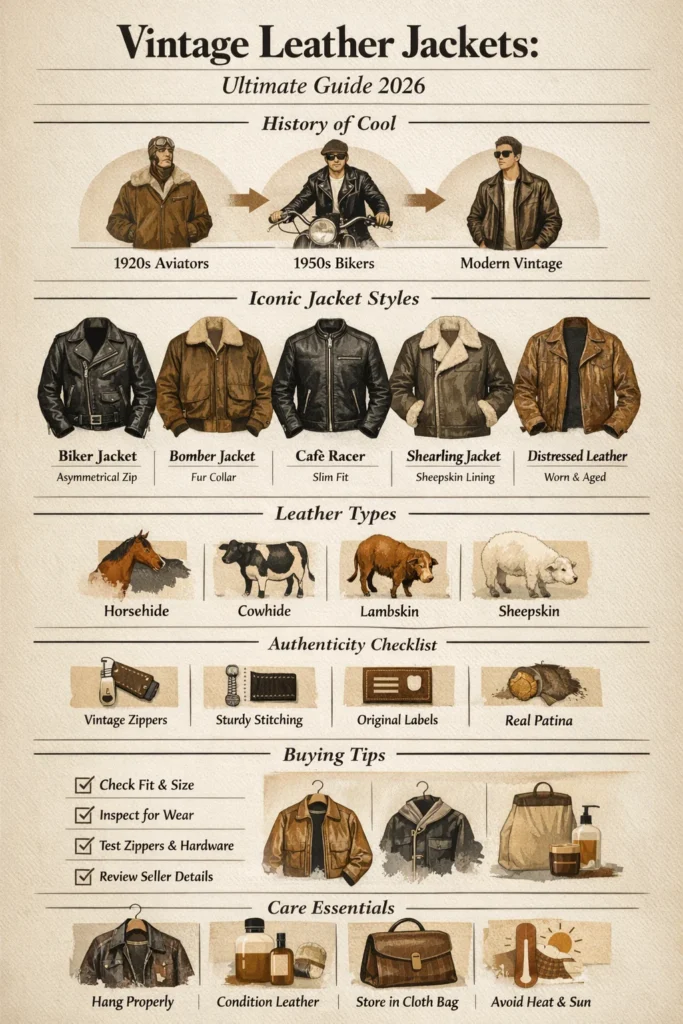
Buying Guide: What to Check Before Purchase
Below are action-oriented checklists you can use in-store or when shopping online.
In-person checklist
- Fit & balance: Move your arms; the jacket should allow a modest range of motion without pulling at the back seams.
- Shoulder fit: Should align with your natural shoulder; old jackets often have narrower cuts, except for differences.
- Sleeve length: Falls at the wrist when relaxed.
- Zippers & snaps: Operate each zipper; stuck zippers are costly to replace.
- Seam integrity: Inspect underarm, pocket, and collar seams.
- Lining & interior: Look for rot, holes, or oversized repairs.
- Smell test: Musty mold smells are expensive to remediate.
- Hardware condition: Check snaps, buckles, and pull tabs for corrosion.
Online buying checklist
- High-res photos: Request close-ups of zips, labels, seams, cuffs, collar, and lining.
- Flat measurements: Essential chest, shoulder, sleeve, and back length. Don’t rely on tagged sizes.
- Authentication & returns: Prefer platforms offering authentication and returns.
- Seller reputation: Read reviews and ask for buyer photos if possible.
- Repair history: Ask whether zips/linings were replaced and if repairs used period-correct materials.
Where to Buy
- Vintage stores & local thrift: Best for serendipity and negotiation.
- Specialist dealers & boutiques: More expensive, but often authenticated and restored.
- Online marketplaces: eBay and Etsy for variety; The Realer for Authenticated luxury consignments.
- Brand reissues & small ateliers: Aero Leather, Schott reissues, and other bespoke makers faithfully reproduce period cuts.
Range Worldwide
Price depends on maker, era, hide, rarity, and condition.
Price bands
- Budget thrift finds: $50–$250 often need basic repairs.
- Mid-range collectible: $250–$1,200, known makers, decent condition.
- High-end collectible: $1,200–$10,000+ rare military jackets, celebrity provenance, museum-quality pieces.
Repair & price & table
| Item | Typical Price (USD) | Typical Repair / Restoration Cost |
| Basic thrift find | $50–$250 | $0–$80 (minor stitching, zipper) |
| Brand-name vintage (good) | $250–$1,200 | $50–$250 (lining, hardware) |
| High-value collectible | $1,200+ | $200–$1,000+ (specialist restoration) |
Care & Maintenance Make Your Vintage Last
Vintage leather needs a conservative approach. For museum-grade textiles or historically important pieces, consult a trained conservator; for wearable vintage, the steps below work well.
Daily & short-term care
- Air it out: Hang on wide-shoulder hangers after wear to release body moisture.
- Avoid plastic: Use breathable garment bags; plastic traps humidity and encourages mold.
- Spot-clean gently: Use a damp cloth for light dirt; don’t saturate.
- Brush dust: Soft brushes remove surface grit without harming patina.
Long-term & deep care
- Condition sparingly: Use a quality leather conditioner, testing inside seams first. Over-conditioning can darken or over-soften historically valuable leather.
- Avoid heat & sunlight: Heat dries leather and causes cracking. If wet, dry at room temperature on a hanger.
- Store right: Cool, dry, and dark storage with breathable covers.
- Zipper care: Lubricate stiff zippers with graphite or zipper wax; avoid oils that stain leather.
- Professional restoration: For split seams, lining replacement, or structural issues, use a trained leather specialist.
Museum-grade note: Institutions such as conservation institutes emphasize preventive environmental control: stable humidity, minimal UV, and minimal handling. For priceless or historically significant pieces, follow conservator guidance.
Styling & Outfit Ideas
Vintage jackets are versatile. Here are actionable outfit formulas that convert archetypal jackets into modern ensembles.
Outfit formulas
- Casual cool: Biker jacket + white tee + slim jeans + leather boots.
- Smart edge: Café racer + fine-gauge turtleneck + tailored trousers + loafers.
- Feminine contrast: Oversized bomber + midi floral dress + heeled ankle boots.
- Layered winter: Shearling jacket + chunky knit + wool trousers + leather boots.
- Streetwear remix: Distressed leather + hoodie + tapered cargos + sneakers.
Pros & Cons
Pros
- Unique patina and individuality.
- Oftentimes, superior original materials and craftsmanship.
- Sustainable: Reusing reduces waste.
- Potentially collectible and value-retaining.
Cons
- Hidden damage and repair expenses.
- Irregular sizing runs differently from modern fits.
- Proving authenticity can be challenging.
- Restoration cost and expertise required for structural repairs.
FAQs
A: Yes, if you buy a well-made piece with good provenance and condition. Factor in authentication and repair costs. A rare, well-preserved jacket can be an heirloom.
A: Minor cleaning and conditioning are okay for DIY. Structural repairs and color restoration should be done by a pro to avoid reducing value.
A: Wear it gradually, use small amounts of leather conditioner sparingly, and avoid heat. For stiff hides like horsehide, time and gentle wear are best.
A: Ask for detailed measurements and high-res photos. Buy from sellers with returns and authentication.
Conclusion
Vintage leather jackets stand apart because they combine history, craftsmanship, and individuality in a way modern mass-produced pieces rarely can. Each jacket carries visible character from natural patina and worn-in texture to era-specific cuts and hardware, making no two pieces exactly alike. When chosen carefully, a vintage leather jacket isn’t just stylish outerwear; it’s a long-term wardrobe investment that can last decades.
Understanding the key styles, leather types, and authenticity markers helps you buy with confidence, whether you’re shopping in a local vintage store or online. Equally important is proper care, storing leather correctly, conditioning sparingly, and repairing damage early, which preserves both appearance and value.
Whether you prefer a rugged biker jacket, a classic bomber, or a sleek café racer, vintage leather jackets offer timeless appeal, Sustainability, and personal expression. With the right knowledge and care, one great vintage jacket can become a signature piece you wear and appreciate for a lifetime.