Introduction
A great Women’s Leather Jacket is one of the smartest wardrobe investments you can make: it endures, it improves with age, and it adapts to many outfits. This guide explains everything in straightforward language silhouettes and how to wear them, hide choices and why they matter, fit and sizing rules you can actually use in a shop or online, construction and hardware to inspect, a practical buying checklist, step-by-step care routines, simple repairs you can do at home, and shopping tips across budgets and body types. Use the checklists while you shop or when you build product pages.
What is a Women’s Leather Jacket?
A women’s leather jacket is outerwear primarily constructed from animal hide (real leather) or well-made synthetic leather and cut to follow a woman’s body shape. While the term covers everything from cropped moto jackets to tailored leather blazers and long leather trenches, three practical things decide how useful a jacket will be: hide quality, fit, and construction. Style determines the look; hide determines the lifespan and feel; construction determines whether it will stand up to daily wear. When you choose a jacket, think of these three as the foundation: pick the hide and construction appropriate to the jacket’s intended use, then dial in the fit.
Short history
Leather began as practical protective gear for riders, pilots, and laborers because it shields from wind and abrasion. The 20th century turned leather jackets into cultural icons: aviator jackets for pilots, bomber jackets for air crews, and moto jackets for bikers. That rebellion aesthetic was adapted by fashion houses and streetwear brands, and leather evolved into a garment that is simultaneously craft and fashion. Today’s jackets carry both the heritage of tough functionality and the attention to finish and silhouette demanded by contemporary style.
Common styles & variations
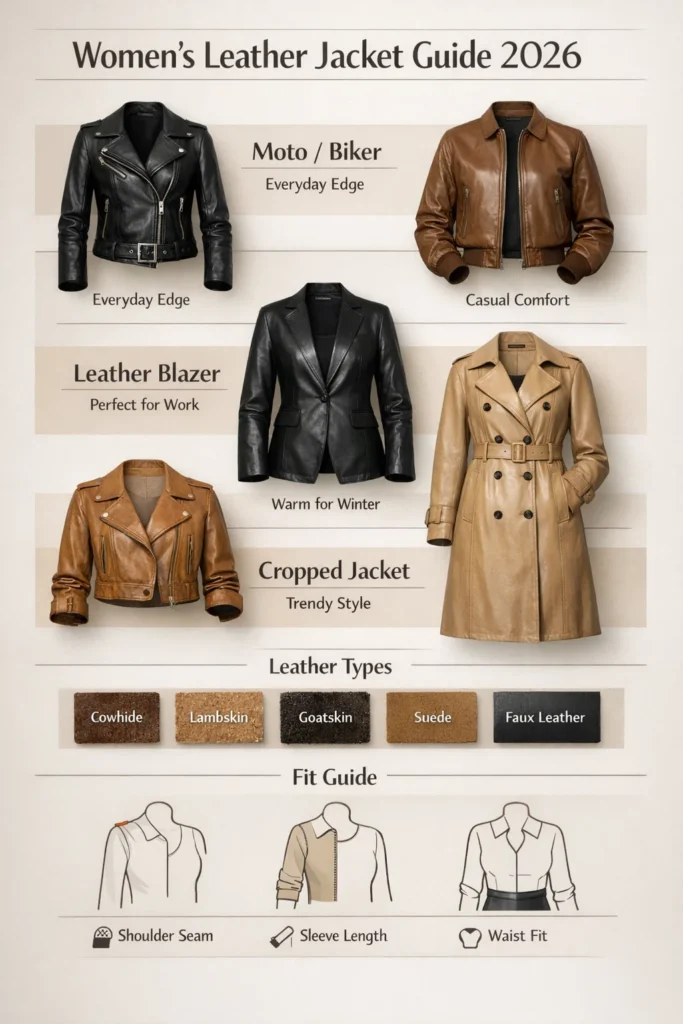
Below are the most common silhouettes and the straightforward ways to wear them.
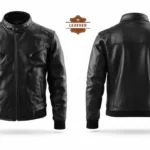
Moto
Shape: Cropped and fitted, often with an asymmetric zipper, snap lapels and a belt.
Best for: Everyday, casual and edgy looks.
Who it flatters: Most body shapes; cropped lengths help petite frames by shortening torso proportionally and creating a defined waist.
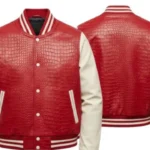
Bomber
Shape: Waist-length with a ribbed hem and cuffs, often roomy through the torso.
Best for: Sporty, relaxed outfits.
Who it flatters: Apple and rectangular shapes, or anyone who wants an easy, casual layer.
Blazer-style Leather Jacket
Shape: Longer torso, structured shoulders, button or single-button closure.
Best for: Work and smart-casual outfits.
Who it flatters: Hourglass and rectangular silhouettes when tailored.
Long Leather Coat
Shape: Knee- or calf-length, sometimes belted.
Best for: Formal looks and colder weather.
Who it flatters: Taller frames. Gives an elegant, elongated line.
Cropped Jacket
Shape: Shorter length, sometimes shirt-like, often boxy.
Best for: Layering with high-waist jeans or skirts for a modern proportion.
Suede & Nubuck Variants
Same silhouettes exist in suede and nubuck, but care differs; they need protection from moisture and special brushes.
Leather Types explained which hide for which use
The hide is the single most important technical choice you’ll make; it affects durability, breathability, weight, and how the jacket ages.
Full-Grain Leather
The top layer of the hide is left intact. Strongest, develops a patina, and lasts longest. Best for: moto and heavy outerwear intended to age beautifully.
Top-Grain Leather
Surface lightly sanded or altered to remove imperfections. Still durable but smoother. Best for: dressier blazers and polished jackets.
Corrected-Grain
Lower-cost hides embossed with a grain. Best for: budget-friendly pieces or fashion items that won’t be worn every day.
Lambskin
Very soft and supple; luxurious hand feel. Best for: fashion blazers and lightweight jackets. Not ideal for heavy abrasion or wet climates.
Goatskin
Naturally grained and lightweight with good strength. Best for: everyday uses that need both softness and toughness.
Cowhide
Thicker and very durable. Best for: motorcycle jackets and heavy outerwear that require high abrasion resistance.
Suede & Nubuck
Sanded nap finishes that look rich but are vulnerable to water and stains. Use protective sprays and avoid heavy rain.
Faux Leather
Ethical and cheaper alternatives. Quality varies; high-end microfibers can perform well, but most synthetics are less breathable and less repairable.
How a jacket is made simple steps
Understanding the production steps helps you spot quality during inspection.
- Hide selection & grading hides are examined for marks, scars, and thickness. Premium jackets start with high-grade hides with consistent thickness.
- Tanning hides are stabilized using vegetable or chrome tanning. The method affects environmental footprint, suppleness, and finish.
- Retanning & dyeing hides are retanned for specific uses and then dyed; the depth and uniformity of dyeing matter for long-term appearance.
- Shaving & splitting thickness is reduced to the target oz for that jacket type.
- Cutting & patterning panels are cut. Fewer panels often mean larger uncut areas of high-quality hide.
- Sewing & assembly seam quality, stitch density and seam allowances matter.
- Hardware attachment zips, snaps and rivets are fixed and tested. Durable jackets use metal hardware and reinforced stitching.
- Lining & finishing lining is sewn, interior pockets finished, and final treatments applied.
How to identify original vs fake leather
Quick checks you can use in-store or when evaluating photos.
- Grain & texture: Real leather has irregular grain and tiny marks; faux often appears uniformly perfect.
- Smell: Real leather has an organic, slightly oily smell; synthetic leather smells like plastic or chemicals.
- Touch & warmth: Real leather warms and flexes; faux can feel cold and plasticky.
- Cut edge: Real leather exposes fibers at the cut; faux often has a textile backing or plastic edge.
- Water test: A tiny drop in an inconspicuous spot should darken and absorb slightly into real leather; faux beads the water.
- Labeling & price: Extremely low prices and vague descriptions are red flags. Look for hide type, country of origin, and tanning notes.
Buying checklist what to check before you buy
Use this checklist in stores or when browsing product photos online.
Fit & Sizing
- Shoulder seams should rest at the edge of your shoulder bone.
- Sleeve length should reach your wrist bone.
- Armholes should allow freedom of movement without pulling.
- You should be able to zip or button while standing and wear one light layer underneath comfortably.
Construction & Hardware
- Stitching: Even, dense and clean, with no loose threads.
- Zippers: Metal zips indicate Durability; test them.
- Seams: Reinforced at stress points.
- Lining: Check for comfortable fabric and neat interior pockets.
Practical checks
- Test zippers and snaps for smoothness.
- Inspect inside seams for clean finishes (taping or overlocking).
- Ask about tanning methods if sustainability matters.
Return & Repair policies
- Check return windows (important for fit) and whether the retailer offers repair services or directs to local cobblers.
Fit & Sizing Rules Easy, practical rules
Simple, reliable rules you can use immediately.
- Shoulders: Seams should sit on the shoulder bone. If the seam is off the shoulder it will look sloppy; if it’s too tight it will restrict movement.
- Sleeves: Ideal length hits the wrist bone; too short looks awkward and too long bunches. Rolling cuffs is okay for style, but movement must be free.
- Torso & mobility: Raise your arms the jacket should not pull painfully across the chest or shoulders.
- Layering: If you plan to wear bulky sweaters, try the jacket with a typical sweater to confirm fit.
- Tailoring: Small tailoring fixes (shortening sleeves, taking in the waist) are generally cheaper than replacing a jacket; prioritize hide and construction over perfect off-the-rack fit.
Construction & Hardware What matters
Technical specifics to inspect or request in product descriptions.
- Stitch count: A good leather jacket often has ~8–12 stitches per inch; low stitch density can indicate weaker seams.
- Seam types: Double seams and reinforced bartacks at stress points are positive signs.
- Zippers: Metal teeth zippers, preferably from reputable manufacturers (YKK, Riri, Lampo), are durable. Plastic zippers are cheaper and can fail earlier.
- Lining: Natural or breathable linings (viscose, cotton blends) feel better and help with temperature regulation, while polyester is common and cheaper.
- Edge finishing: Cleanly finished edges, piped or taped seams, and strong hem finishes extend a jacket’s life.
- Hardware: Solid metal snaps, rivets and buckles withstand wear; lightweight or hollow hardware may not.
Care plan daily to seasonal
A practical routine keeps your jacket functional and beautiful.
Daily & weekly care
- Hang on a wide, shaped hanger to maintain shoulder shape.
- Air outside occasionally (avoid direct sun).
- Wipe dust off with a soft, slightly damp cloth.
- Avoid plastic garment covers and use a breathable cloth bag if needed.
Monthly / seasonal care
- Condition full-grain or top-grain leather every 6–12 months depending on climate and dryness. Use products matched to hide type.
- Re-waterproof suede/nubuck with specialist sprays for nap finishes.
- Check seams and hardware; catch minor repairs early.
Storage
- Clean and condition before long-term storage.
- Store in a cool, dry place in breathable cloth.
- Avoid damp basements and hot attics.
Deep cleaning & stain removal
Always test products in an inconspicuous spot before full application.
Light dirt
- Wipe with a damp cloth and a mild leather soap or saddle soap.
- Buff off residue with a clean damp cloth and allow the air to dry away from heat.
Oil stains
- Sprinkle cornstarch, talc or a specialized absorbent on the spot.
- Leave overnight, brush off, then condition the area.
Scuffs
- For light scuffs, apply small amounts of leather balm or neutral shoe cream; rub gently and buff.
Water stains
- Blot excess moisture and let the jacket dry naturally at room temperature. Avoid heat.
- Once dry, condition to restore oils.
Heavy soiling or structural damage
- For deep stains, heavy soiling, large tears or structural problems, seek a professional leather cleaner.
How to repair small damages
Many common issues are fixable affordably.
- Scuffs & scratches: Leather balm or creams, applied lightly and buffed, can reduce visibility.
- Loose seam: A cobbler can resew and reinforce seams; often inexpensive.
- Small holes/tears: Professional patching is usually the right call to preserve strength.
- Zipper problems: Clean zipper teeth with a soft brush, lubricate with beeswax or a specialty zipper lubricant. Broken zippers typically need replacement by a tailor or cobbler.
Price range worldwide
Leather jackets occupy broad price bands. Here’s a practical guide:
- Budget / Fast fashion: $60–$250 mostly corrected-grain or faux leather. Short-lived but useful for trend pieces.
- Mid-market: $250–$800 better hides, stronger hardware and construction. Best value for long-term wear.
- Premium / Designer: $800–$3,500+ full-grain hides, top construction, premium hardware and often artisanal finishing.
Tip: Prioritize hide quality and fit when possible. It is usually cheaper to repair hardware or tailor a jacket than to replace a poor-quality hide.
Top countries & brands known for leather
- Italy: Longstanding tanning culture, high-quality finishes and refined styling.
- USA: Rugged cowhide jackets and strong motorcycle-jacket tradition.
- UK: Heritage tailoring combined with classic outerwear.
- Spain & Portugal: Good mid-market options and solid value.
Top uses & outfit ideas
- Everyday outerwear: Moto or bomber with jeans and ankle boots.
- Work / smart casual: Leather blazer with tailored trousers or a pencil skirt.
- Travel: A cowhide coat for variable weather and durability.
- Evening / statement: Suede or colored leather for a dressier look.
Quick Comparison Table Common Jacket Types
| Jacket Type | Typical Hide | Weight (oz) | Best for | Pros | Cons |
| Moto/Biker | Cowhide / Lambskin | 1.2–3.0 | Everyday edge | Durable, classic | Heavy; fit critical |
| Bomber | Cowhide / Goatskin | 1.0–2.0 | Casual layering | Comfortable, practical | Less formal |
| Blazer | Lambskin / Top-grain | 0.8–1.6 | Workwear | Polished, soft | Less abrasion-resistant |
| Trench/Long | Cowhide | 2.0–3.5 | Cold & wind | Warmer, elegant | Heavy |
| Suede | Suede | 0.9–1.8 | Dry climates | Lux texture | Sensitive to moisture |
Pros & Cons
Pros
- Timeless and versatile; can last many years.
- Develops character (patina) with proper care.
- Repairable hardware and seams can often be fixed.
Cons
- Higher upfront cost for quality hides.
- Requires maintenance and sometimes professional repair.
- Not ideal for very wet climates unless treated.
FAQs
A: Shoulder seams should align with your shoulder bone. Sleeves should reach the wrist bone. You should be able to move your arms freely and zip or button without strain. If you want to layer, try on with the sweater you’ll wear most.
A: For light dirt, wipe with a slightly damp cloth. Use a dedicated leather cleaner for tougher spots and conditions 1–2 times a year. Never machine wash.
A: Real leather is usually more durable and repairable. Faux leather is cheaper and animal-friendly, but quality varies and it often wears faster.
A: Yes. Use a wax-based product or spray made for leather, and test on a hidden area. Avoid soaking lambskin or suede; use products made for nap finishes.
A: Cowhide or goatskin are best for daily wear because they are durable. Lambskin is softer but less resistant to heavy wear.
Conclusion
A women’s leather jacket is a versatile investment when chosen with thought. Focus on three things: the right hide for intended use, a fit that suits your body and layering needs, and solid construction with good hardware. Spend where it matters, hide quality and fit and save on trend details. Follow the care steps to preserve appearance and function. If Sustainability concerns you, ask sellers about tanning methods and traceability.