Introduction
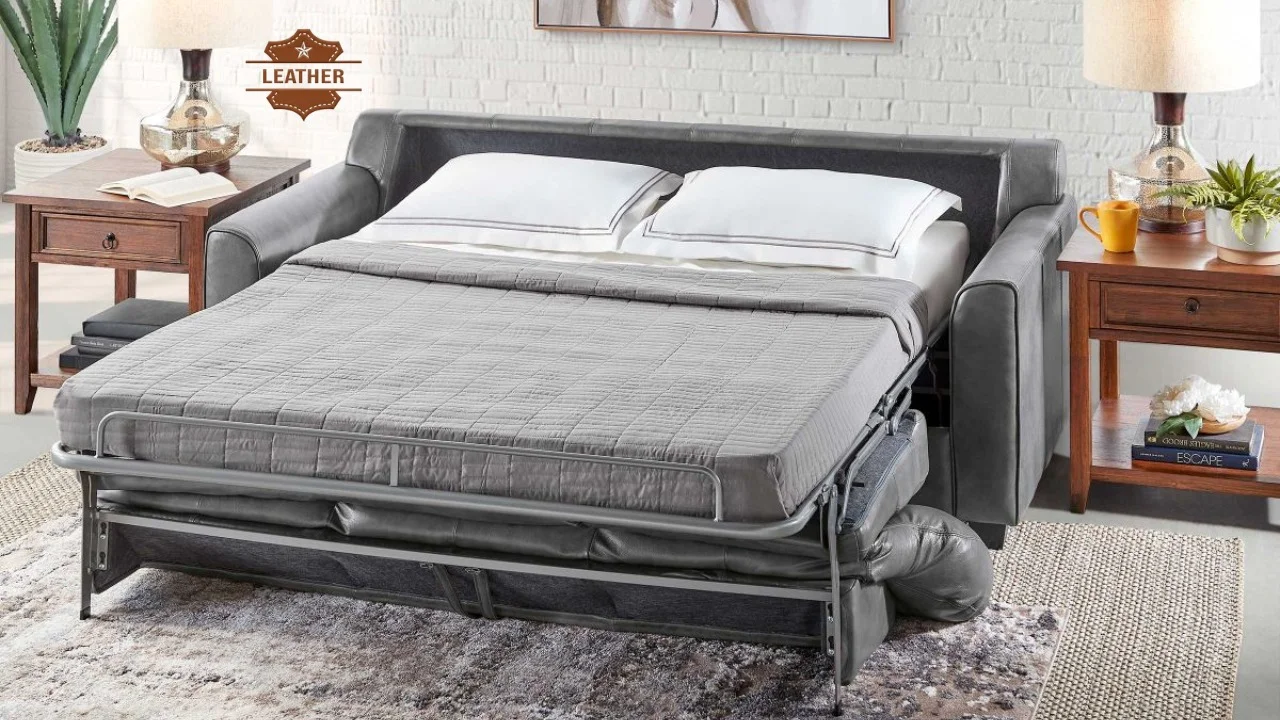
A Leather Sleeper Sofa is one of the smartest furniture investments for modern homes because it does two jobs at once: it gives you everyday seating and a real sleeping surface when guests stay over. That sounds simple, but the reality is more complicated. Some leather sleeper sofas look luxurious yet sleep poorly. Others have a comfortable mattress but take up too much space. The best ones balance leather quality, frame strength, mattress comfort, and opening mechanism so the sofa feels good in both modes.
If you are buying for an apartment, guest room, home office, or a compact living space, the right choice can save space without sacrificing style. In current retail listings, major brands now sell leather sleeper sofas in multiple sizes, with options ranging from full to queen and even larger custom systems. Premium systems can offer zero wall clearance, longer sleeping surfaces, and better mattress support than older pull-out designs.
Snippet-ready answer: A leather sleeper sofa is a convertible sofa upholstered in leather with a built-in bed mechanism, designed to work as seating by day and a guest bed by night. The best models combine durable leather, a strong frame, and a mattress that feels close to a real bed.
What Is a Leather Sleeper Sofa?
A leather sleeper sofa is a convertible couch with a hidden mattress or folding bed system inside the frame. Unlike a regular leather sofa, it is built for dual use. That means the sofa needs extra engineering support in the frame, hinges, and mattress platform.
The best versions are not just “sofas with a bed inside.” They are furniture systems designed for comfort, durability, and easy conversion. American Leather, for example, describes its Comfort Sleeper as a custom sleeper sofa system with multiple styles, mattress choices, zero wall clearance, and a true 80-inch sleeping space. Crate & Barrel and Pottery Barn also market leather sofa beds for guest rooms, offices, and other multi-use spaces, showing how mainstream this category has become.
Why Leather Sleeper Sofas Matter in 2026
Leather sleeper sofas fit the way people actually live now. Homes are doing more with less. Living rooms often double as guest rooms. Offices are sometimes used for overnight stays. Small-space living is still a major factor in furniture choices, and multifunctional pieces keep showing up in 2026 design coverage and retail promotions aimed at compact homes.
Leather also stays popular because it gives a cleaner, more elevated look than many fabric alternatives, especially in neutral, modern interiors. Several current product pages and shopping guides position leather sleeper sofas as a premium solution for guest use, with darker leathers reading as more sophisticated and lighter camel tones fitting softer contemporary rooms.
Why buyers choose them
- They save floor space
- They elevate the look of a room
- They are easier to wipe clean than many fabrics
- They can work for guests, apartments, and home offices
- They add long-term furniture value when built well
Mini summary: In 2026, leather sleeper sofas are no longer niche. They are a practical answer to small-space living, flexible guest setups, and buyers who want one piece of furniture to do more than one job.
Leather Sleeper Sofa Types and Variations
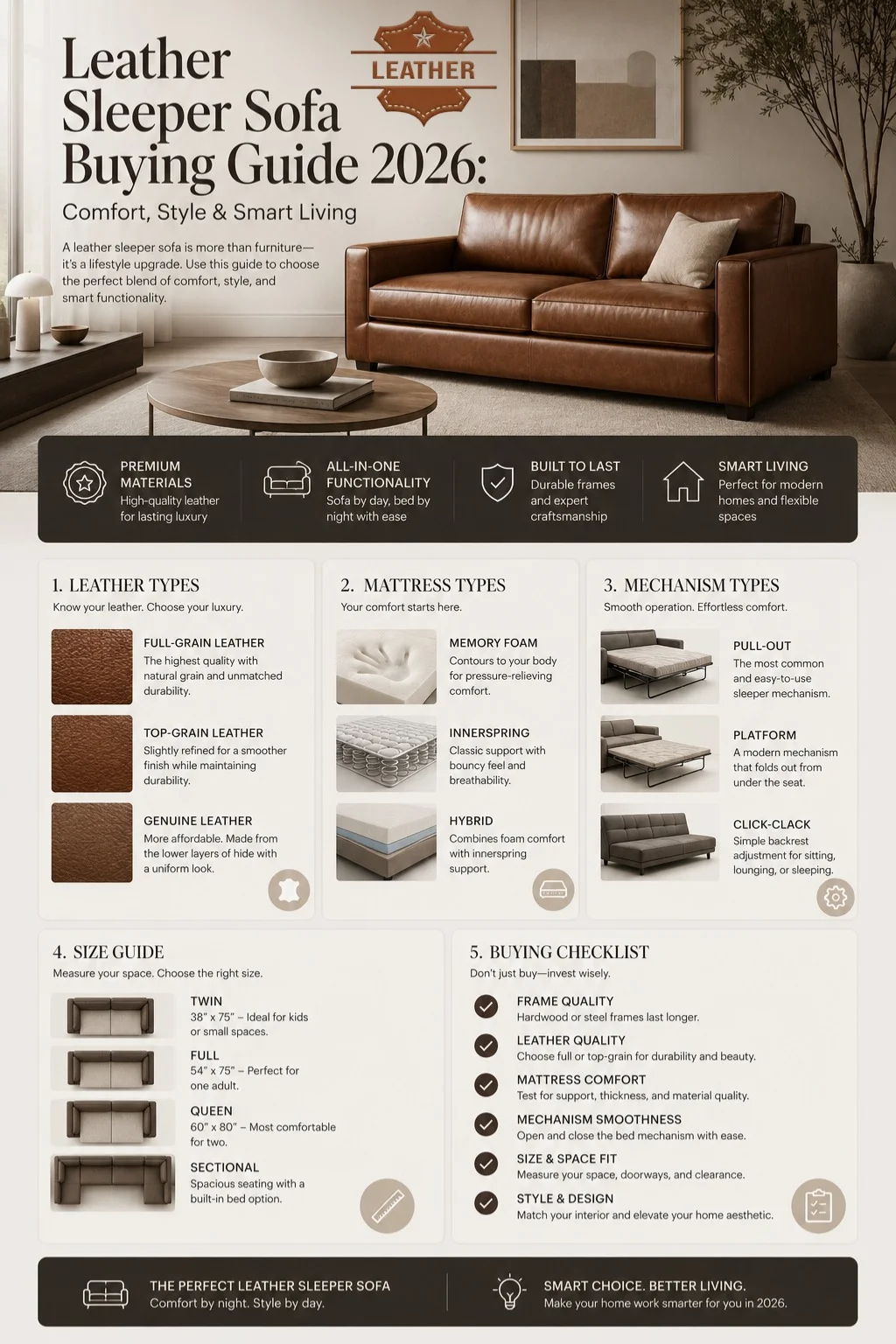
Not all leather sleeper sofas are built the same. The biggest differences come from size, opening style, and sleeping comfort.
Common size formats
- Twin/cot: best for compact offices, studios, and occasional guests
- Full: good for one adult or two smaller sleepers
- Queen: the most popular guest-friendly size
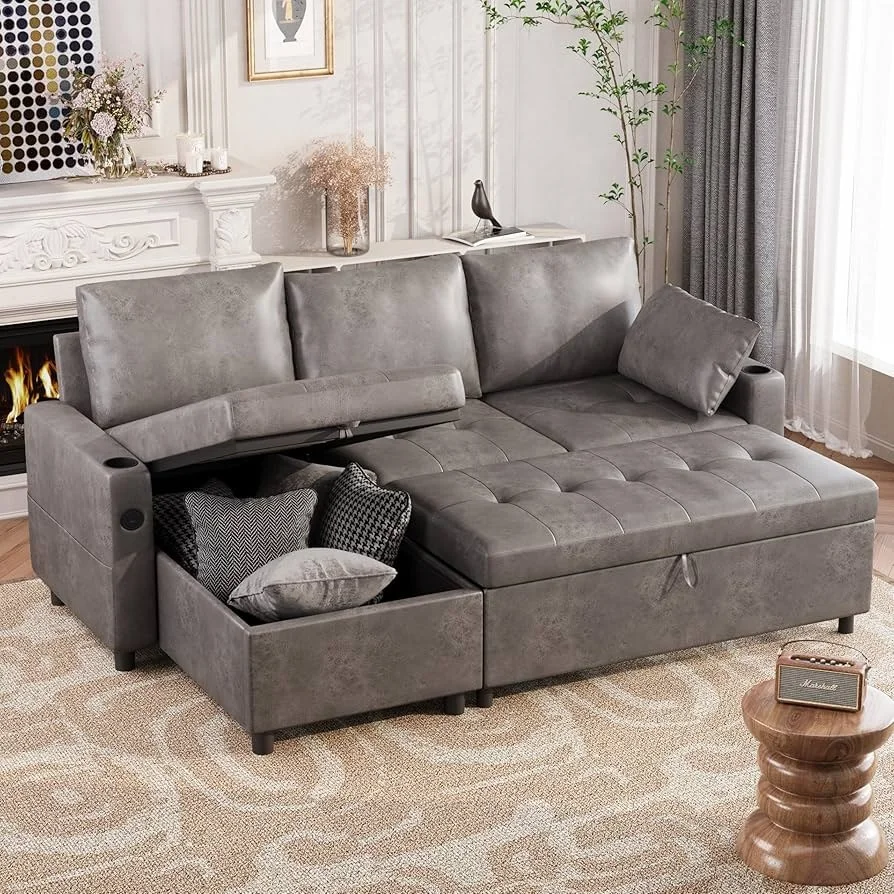
- Sectional sleeper: ideal for larger living rooms and households that often host
Common mechanism styles
- Traditional pull-out: bed folds out from inside the sofa base
- Platform or no-bar sleeper: designed to reduce the “bar-in-the-back” feeling
- Click-clack or futon-style: back folds flat into a bed, usually better for small rooms but less mattress-like for frequent sleep
- Trundle or hybrid sleeper: useful for guest versatility and compact layouts
Leather Types Used in Sleeper Sofas
| Leather Type | What It Means | Best For | Watch Out For |
| Full-grain leather | Leather with the full-grain layer kept intact | Premium buyers, long-term use, natural patina | Higher price, natural marks are normal |
| Top-grain leather | The grain surface has been lightly corrected/buffed | Balanced value and durability | Slightly less natural character than full grain |
| Corrected grain / pigmented leather | More surface correction and finishing | Families, pets, and easier cleaning | Less natural feel |
| Nubuck | Buffed to a velvety feel while grain remains visible | Luxurious, tactile interiors | Can mark more easily |
| Suede | Velvet-like nap on leather or split leather | Soft visual appeal | More delicate, harder to maintain |
| Genuine leather / split leather / bonded variants | Lower-tier categories depending on construction | Budget-focused buyers | Usually shorter lifespan and less premium feel |
Full-grain leather
LWG defines full-grain leather as leather that has kept its entire grain, with none of the surface removed by corrective mechanical treatment. That makes it the most natural-looking option and one of the strongest choices for Premium Furniture.
Top-grain leather
Top-grain leather is still high quality, but the grain has been lightly corrected to improve uniformity. It is a strong option when buyers want a smoother finish and easier styling without going all the way to full-grain pricing. LWG classifies corrected grain as leather where the grain has been partially removed by buffing or similar treatment and then finished.
Nubuck and suede
Nubuck is buffed to create a velvety effect while the grain pattern remains visible. Suede is mechanically finished to produce a velvet-like nap. Both can look beautiful, but they need more care than protected leather in a high-traffic sleeper sofa.
Genuine leather
“Genuine leather” sounds premium, but in shopping it often covers lower-grade leather constructions or heavily processed surfaces. Always ask what part of the hide was used, what finish was applied, and whether the leather is full-grain, top-grain, or split. That one detail changes the furniture’s value more than the label on the product page.
Mini summary: For a sleeper sofa, the safest long-term choices are usually full-grain or quality top-grain leather. They give a better mix of durability, comfort, and resale value than lower-tier “genuine leather” options.
Leather Type Comparison Table
| Leather Type | Durability | Feel | Appearance | Maintenance | Best Use |
| Full-grain | Very high | Rich, natural | Shows grain and patina | Moderate | Premium daily-use sleeper |
| Top-grain | High | Smooth | More uniform | Moderate | Family rooms and guest rooms |
| Corrected grain | Medium-high | Clean and even | More processed | Easier | High-traffic homes |
| Nubuck | Medium | Soft and velvety | Luxury texture | Higher care | Style-first buyers |
| Suede | Medium-low | Very soft | Matte, plush | Higher care | Low-spill areas |
| Genuine / bonded variants | Lower to medium | Variable | Less consistent | Lower price, lower lifespan | Budget or light use |
How the Manufacturing Process Affects Quality
A leather sleeper sofa is only as good as the materials and build behind it. Leather starts as a hide, then goes through tanning, finishing, and cutting. LWG’s materials guide shows that leather can be defined by grain retention, coating, and finish type, which is why two sofas that both say “leather” can feel completely different in real use.
What matters most in manufacturing
- Hide selection — better hides create better surfaces
- Tanning and finishing — affects softness, consistency, and stain resistance
- Frame construction — hardwood or engineered systems tend to perform better
- Sleeper mechanism engineering — hinges, bars, and support systems determine daily comfort
- Mattress build — thickness and foam density strongly affect sleep quality
American Leather’s Comfort Sleeper is a good example of how engineering can change the user experience. The company says the system offers zero wall clearance, a true 80-inch sleeping space, and a mechanism warranty, which shows how much the sleeper component matters beyond the upholstery alone.
How to Identify Original Leather vs Fake Leather
A smart buyer should know what to check before paying premium money.
Quick test checklist
- Look at the grain: natural leather usually has irregular patterns, not a perfect repeated print
- Check the edges: layered synthetic edges often look too uniform
- Feel the surface: real leather usually feels warmer and less plastic-like
- Smell the material: real leather has a distinct natural smell
- Ask for the leather grade: full-grain, top-grain, corrected grain, or split
- Request care instructions: reputable brands provide specific cleaning guidance
- Look for certification or sourcing details: responsible sourcing signals higher trust
What a trustworthy brand should tell you
A good listing should clearly state:
- leather type
- mechanism type
- mattress thickness
- frame construction
- size when open
- care instructions
- return or warranty terms
Complete Buying Guide: What to Look For Before You Buy
| Buying Factor | What to Look For | Why It Matters |
| Leather grade | Full-grain or top-grain preferred | Better durability and aging |
| Frame | Hardwood or reinforced construction | Longer structural life |
| Mechanism | Smooth pull-out, low resistance, reliable hardware | Easier daily use |
| Mattress | Good thickness and quality foam/spring hybrid | Better guest sleep |
| Size | Fits both the sofa footprint and open bed clearance | Prevents layout problems |
| Cushions | High-density support, not overly soft | Better seating life |
| Care | Clear cleaning instructions | Protects Finish And Color |
| Warranty | Frame and mechanism coverage | Signals confidence in build quality |
The 5 questions to ask before buying
- How often will the bed be used?
- How much floor space do I have when it is fully open?
- Do I need queen-size comfort or just occasional guest use?
- Is the leather protected enough for kids, pets, or frequent traffic?
- Is the mattress actually comfortable enough for overnight stays?
Mini summary: Never buy a leather sleeper sofa on looks alone. The mechanism and mattress decide whether it becomes a favorite piece or a regret.
Mattress Types in Leather Sleeper Sofas
| Mattress Type | Comfort Level | Best Use | Limitations |
| Innerspring | Moderate | Occasional guests | Can feel dated or firm |
| Memory foam | High | Better contouring and pressure relief | May retain heat |
| Gel memory foam | High | Comfort with a cooler feel | Usually pricier |
| High-density foam | Good | Lightweight mechanisms and compact designs | Less “bed-like” than premium hybrids |
| Hybrid/premium systems | Very high | Frequent use | Often more expensive |
Current retail examples show how much mattress quality varies. Crate & Barrel’s Lounge leather sleeper uses a bi-fold 5.5-inch innerspring mattress with a quilted top pad, while Pottery Barn’s Turner sleeper lists a 5.5-inch mattress with 3.5 inches of 1.8-pound density foam plus 2 inches of gel-infused memory foam. Those details matter because mattress construction is one of the clearest predictors of guest comfort.
Best Mechanism Choices for Different Buyers
| Mechanism | Best For | Advantages | Trade-Off |
| Traditional pull-out | Guest rooms, family rooms | Familiar, full mattress feel | Needs more space |
| Platform / no-bar system | Daily or frequent use | More comfortable, less bar pressure | Often premium-priced |
| Click-clack/futon | Small spaces | Simple, compact | Less mattress-like |
| Trundle or hybrid | Flexible guest setups | Good versatility | Not always ideal for nightly sleep |
American Leather’s system stands out because it uses a platform-style approach with no bars or springs, which directly addresses the most common sleeper-sofa complaint: the metal bar you feel through the mattress.
Size Guide: Which Size Should You Choose?
- Twin/cot: best for offices, studios, and occasional guests
- Full: good for one adult or two smaller sleepers
- Queen: the most versatile choice for guest comfort
- Sectional sleeper: best for larger homes that are often host to
American Leather says its Comfort Sleeper line is available in multiple sizes from cot to king, while Crate & Barrel and Pottery Barn both sell leather sleeper sofas in several widths and configurations, including queen-size options.
The measurement rule most buyers forget
Measure the sofa itself and the full open-bed clearance. A sleeper may fit beautifully against the wall as a sofa, but fail when converted into a bed. That is why zero wall-clearance designs are so valuable in tight rooms.
Worldwide Price Ranges
Current retail examples suggest a broad market spread. Leather sleeper sofas at major U.S. retailers can start around the lower thousands and move up quickly as size, leather grade, and mechanism quality improve. Crate & Barrel shows leather sleeper options starting around $1,000 in its category filters, Pottery Barn lists leather sleeper sofas in the roughly $2,799 to $4,949 range on some models, and Poly & Bark’s leather pull-out sleeper sofas are listed around the mid-$3,000 range.
Practical price bands
- Budget tier: generally, entry-level or simplified mechanisms are built
- Mid-range tier: strong balance of leather quality and sleep comfort
- Premium tier: better leather, stronger frames, and more advanced mattress systems
- Luxury tier: custom systems, premium upholstery, and higher comfort engineering
Brand examples seen in the current market
- United States: American Leather, Crate & Barrel, Pottery Barn, Poly & Bark
- Nordic / Finnish Design Influence: seen in product and retail descriptions
- Italy: appears in several leather sleeper product stories and craftsmanship claims
Best Uses of a Leather Sleeper Sofa
A leather sleeper sofa works best in spaces that need flexibility without looking temporary.
Best use cases
- Studio apartments
- Guest rooms
- Home offices
- Airbnb or short-stay rentals
- Media rooms
- Small modern living rooms
Crate & Barrel specifically suggests leather sofa beds for the den, office, or basement, which matches how most people actually use them: as a stylish backup bed in a room that still needs to function every day.
Pros and Cons
Pros
- Two functions in one piece
- Premium look and feel
- Easy to wipe clean
- Good for guest use
- Strong value in space-limited homes
- Can age beautifully when the leather quality is high
Cons
- Can be expensive
- Heavy to move
- Lower-quality models feel uncomfortable as beds
- Some leathers need careful maintenance
- Large open-bed clearance can limit placement options
Common Buyer Mistakes to Avoid
- Buying on looks alone
- Ignoring mattress thickness
- Choosing the wrong size for the room
- Assuming all “leather” is equal
- Forgetting to check the mechanism’s warranty
- Not measuring the open bed footprint
- Buying delicate leather for a high-traffic room
Care, Cleaning & Maintenance Tips
Current care guidance from major furniture brands is consistent on the basics: dust regularly, wipe with a soft cloth, avoid harsh cleaners, and keep leather away from direct sunlight and heat. Crate & Barrel recommends weekly dusting with a soft dry or microfiber cloth and a soft brush vacuum attachment for seams and crevices. Pottery Barn recommends using a soft, clean cloth to remove dust and gentle buffing for dull spots or light scuffs.
Simple care routine
- Dust weekly
- Clean spills quickly
- Use leather-safe cleaners only
- Avoid direct sunlight where possible
- Do not let dirt sit in seams
- Consider professional cleaning for stubborn stains
What to avoid
- Bleach
- Harsh household sprays
- Over-wetting the leather
- Heat sources near the sofa
- Scrubbing with rough cloths
Mini summary: Good leather care is simple but consistent. Small habits protect color, texture, and resale value over time.
Expert Tips Most Buyers Ignore
- Look for a Mechanism Warranty, not just a general furniture warranty
- Pay attention to the sleeping length, not only the sofa width
- Ask whether the sleeper has zero wall clearance
- Choose leather based on how the room is actually used, not just on looks
- For frequent guests, prioritize mattress comfort before decorative style
- If pets or children are involved, protected or semi-aniline leather usually makes life easier than delicate unprotected finishes
Who Should Buy a Leather Sleeper Sofa?
A leather sleeper sofa is a strong fit for:
- apartment dwellers
- homeowners without a spare guest room
- people who host occasionally
- design-focused buyers
- people who want easy cleanup and a premium look
- buyers who are willing to pay more for better comfort and longevity
Who Should Avoid It?
You may want to skip it if:
- you rarely host overnight guests
- you need the softest possible sofa feel
- your room is too small for the open bed
- your budget only allows for very low-end leather construction
- you want a piece that is lightweight and easy to move often
Future Trends in the Leather Sleeper Sofa Market
The strongest 2026 trend is function-first furniture with a refined look. Recent design coverage continues to favor adaptable spaces, compact layouts, and pieces that support more than one lifestyle use. Sleeper sofas are being marketed more like design investments than emergency guest furniture, and premium brands are emphasizing better sleep systems, cleaner silhouettes, and higher-quality leather finishes.
Three trends are especially important:
- more compact and apartment-friendly layouts
- more premium mattress systems
- more visually elevated upholstery choices, including leather in warm neutrals and rich brown tones
FAQs
A: Yes, if you need one piece of furniture to do two jobs. The value becomes strongest when the leather is good, the mechanism is smooth, and the mattress is comfortable enough for guests.
A: Full-grain is the most premium, while top-grain is often the best balance of quality and practicality. For a high-use sleeper, those two are usually the safest long-term choices.
A: For most buyers, memory foam, gel memory foam, or a strong hybrid-style mattress gives better comfort than thin old-style innerspring units. The best choice depends on how often the bed will be used.
A: Use a soft, dry, or microfiber cloth to remove dust, avoid harsh chemicals, and keep it out of strong direct sunlight when possible. For stubborn stains, professional cleaning is safer than aggressive scrubbing.
A: Queen is usually the most comfortable and versatile guest size. Full can work for occasional use, while twin or cot sizes are better for compact rooms or single guests.
Conclusion
A leather sleeper sofa is worth considering when you want one piece of furniture to handle daily seating and occasional sleeping without making your room feel crowded. The best choices are not just about appearance. They are about leather grade, frame quality, mattress comfort, and the smoothness of the opening mechanism. Premium systems can deliver more sleeping space, better support, and easier placement in smaller homes, while simpler options are better only when usage is light.
For most buyers, the Smartest Path is simple: choose top-grain or full-grain leather, verify the mattress specs, check the open-bed clearance, and buy from a brand that clearly explains its construction and care instructions. That is how you get a sofa that still feels valuable years later. If you are building a broader leather content hub, this page can sit alongside your guides on leather care, leather jackets, wallets, belts, and full-grain vs genuine leather to strengthen topical authority.
Legal disclaimer: Leather quality, pricing, manufacturing standards, and product availability may vary by country, brand, and supplier. Always verify authenticity, material details, and care instructions before purchase.