Introduction
Men’s Genuine Leather Boat Shoes are back in a big way, and not just for sailing or prep style. In 2026, they sit at the intersection of comfort, heritage, and modern smart-casual dressing. Luxury labels, classic American makers, and rugged footwear brands have all pushed the silhouette forward with better leather, stronger soles, and more wearable styling.
That is why this topic deserves more than a shallow affiliate roundup. Buyers today need to know whether they are paying for full-grain leather or a lower-grade “genuine leather” label, whether the outsole really grips wet decks, how the shoe should fit, and which brands actually justify the price. Current brand pages show that the best pairs still rely on handsewn moccasin construction, rawhide lacing, leather linings, and siped rubber outsoles, but the quality gap between entry-level and premium pairs remains wide.
This guide breaks the category down in plain English so readers can buy better, wear longer, and style smarter.
What Are Genuine Leather Boat Shoes?
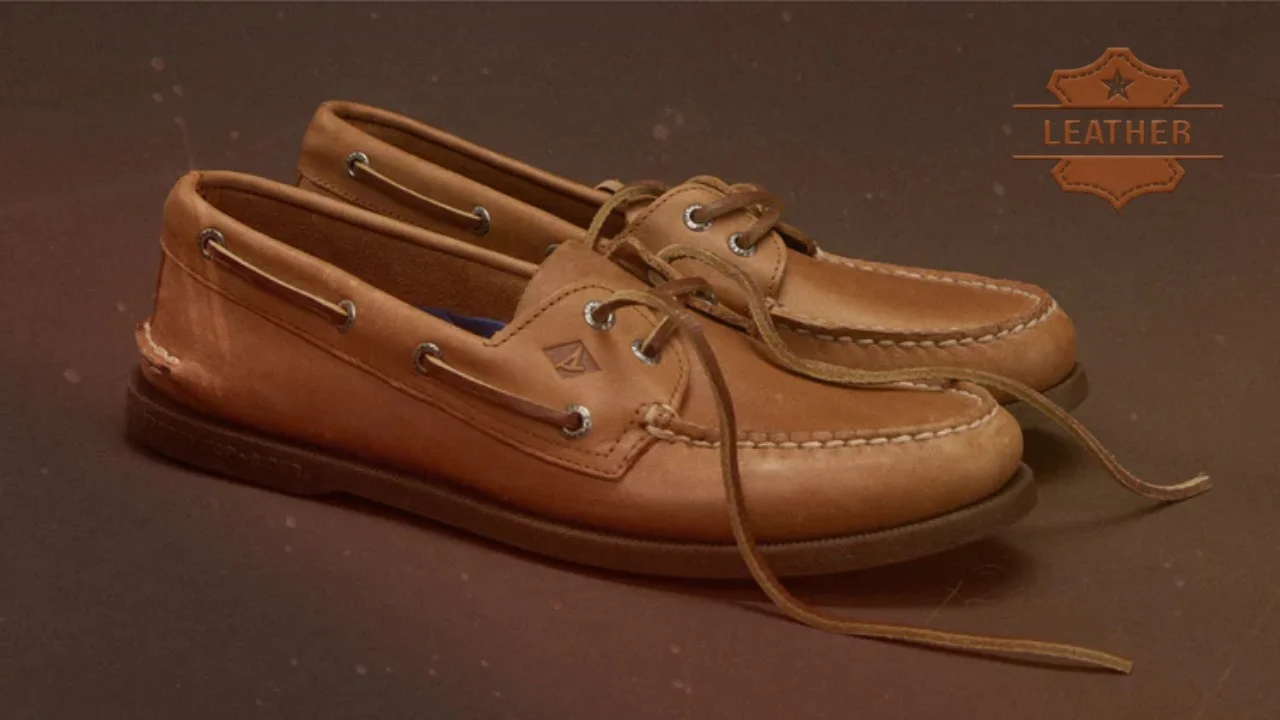
Boat shoes, also called deck shoes or topsiders, are low-profile casual shoes originally designed for traction on slippery boat decks. The classic formula includes a moc-toe front, rawhide lacing, a leather upper, and a rubber outsole with siping for grip. Sperry’s Authentic Original is widely treated as the category benchmark, and the brand says its iconic version has existed since 1937; FashionBeans notes Paul A. Sperry invented the boat shoe in 1935.
Today, men’s genuine leather boat shoes are worn far beyond the marina. They work as casual summer shoes, travel shoes, office-casual shoes in relaxed environments, and style pieces for prep, coastal, and quiet-luxury looks. The category now includes classic leather versions, lug-sole updates, and more fashion-forward shapes. Esquire’s 2026 coverage makes that shift obvious by highlighting both traditional and reimagined versions, including designs with chunkier soles and more contemporary proportions.
Mini summary:
Boat shoes started as functional deck footwear, but in 2026, they are a genuine lifestyle category with strong style and utility appeal.
Why Leather Boat Shoes Are Back in Style
The comeback is easy to explain. Modern menswear has moved back toward classics that look polished without feeling stiff. Boat shoes bridge the gap between sneakers and loafers, which is exactly why they are showing up in current style coverage again. FashionBeans says the best pair should balance timeless style, moisture resistance, and modern performance, while Esquire describes the 2026 versions as “cooler than the country club.”
Three big reasons are driving demand:
First, they are easy to style with shorts, chinos, linen trousers, denim, and resort wear. Second, the better leather versions mold to the foot over time and become more comfortable. Third, premium boat shoes now come with more advanced soles, better cushioning, and stronger upper construction than older budget models.
The broader market also shows that shoppers still want recognizable classics. Nordstrom’s current boat-shoe category features Sperry, Timberland, Sebago, Ralph Lauren, Clarks, Børn, Vionic, and others, which signals broad commercial demand across price tiers rather than a fading niche.
Types of Leather Used in Boat Shoes
Full-Grain Leather
Full-grain leather keeps the natural grain of the hide intact and is widely treated as the most durable and best-aging option. It develops patina, handles wear well, and usually feels richer over time. Galen Leather describes full-grain as the least processed top layer of the hide and notes that it develops a strong patina with use.
Top-Grain Leather
Top-grain leather is still real leather, but the surface is corrected or sanded for a cleaner look. It is usually softer and more uniform than full-grain, though it may sacrifice some long-term character.
Genuine Leather
This is the most misunderstood term in the market. Genuine leather is real leather, but it does not automatically mean premium leather. Carl Friedrik notes that there is no global standard for the term and that it is often used as a catch-all for lower-grade hides or corrected-grain material. That is why brand transparency matters so much.
Suede and Nubuck
Some modern boat shoes use suede or nubuck for a softer, more fashion-forward feel. Sebago’s current products include nubuck and waxed leathers, while Esquire highlights suede and heavier soles as a way to modernize the category. Suede looks great, but it is usually less suited to wet environments than smoother finished leather.
PU / Faux Leather
PU and faux leather can lower the price, but they typically do not age like real leather and usually offer a different feel and lifespan. For readers looking for long-term value, this category should be treated as a budget or fashion-only choice, not a heritage investment.
Leather Comparison Table
| Leather Type | Durability | Patina | Breathability | Best For |
| Full-grain | Excellent | Excellent | High | Premium buyers, long-term wear |
| Top-grain | Very good | Good | Medium-high | Clean look, balanced value |
| Genuine leather | Varies a lot | Limited to good | Medium | Entry to mid-range purchases |
| Nubuck/suede | Good, but sensitive | Good | Medium | Style-led wear |
| PU / faux | Lowest | None | Low | Low-cost fashion use |
The main lesson is simple: full-grain and high-quality top-grain leather are usually the safest long-term purchases. “Genuine leather” can still be fine, but only when the brand is transparent and the construction is strong.
Best Construction Methods
Construction decides whether a boat shoe feels cheap or premium.
Handsewn Moccasin Construction
This is the classic method used by brands like Sperry, Sebago, and Rancourt. Sperry says the Authentic Original uses hand-sewn moccasin construction and wave-siping traction. Sebago and Rancourt both emphasize hand-sewn moccasin craftsmanship.
Rawhide Lacing and 360° Lacing
The 360-degree lacing system is not just decorative. It helps secure the fit around the foot and creates the classic boat-shoe silhouette. Sebago specifically calls out a 360° rawhide lace system, while Sperry and Timberland also use rawhide laces in flagship models.
Siped Rubber Outsoles
Siping means tiny cuts in the outsole that help improve grip on wet surfaces. Sperry’s Wave Siping and Sebago’s non-marking antislip siped soles are the strongest modern examples of this feature. Timberland also emphasizes spiked rubber soles in its deck-shoe line.
Lug Sole Updates
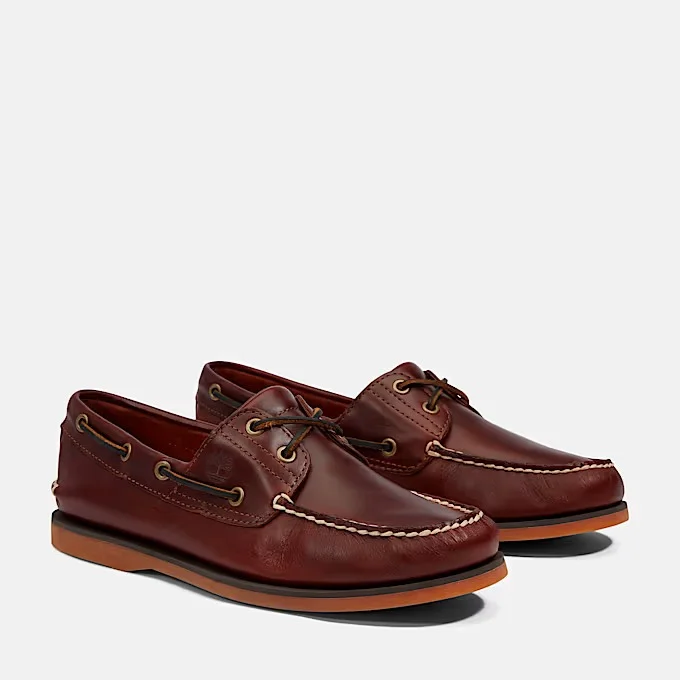
A lug sole adds grip, weight, and a more rugged look. Timberland’s current boat shoes are a clear example of this direction, and Nordstrom’s product page for the Timberland Authentic Boat Shoe specifically mentions a tough lug sole and hand-stitched details.
Construction Comparison Table
| Construction | Feel | Durability | Resole Potential | Best For |
| Handsewn moccasin | Flexible And Classic | High | Often better | Heritage buyers |
| Cemented | Lighter, cheaper | Lower | Poor | Budget buyers |
| Blake stitch | Sleek, flexible | Good | Sometimes | Dressier casual wear |
| Lug-sole handsewn | Rugged and stable | High | Good, depending on the build | Everyday wear, rougher use |
For most buyers, the best balance comes from handsewn moccasin construction + quality leather + siped rubber outsole. That is the core formula that keeps boat shoes relevant.
How Men’s Boat Shoes Should Fit
Fit matters more than many buyers expect because leather stretches with wear. Sperry’s sizing guidance says leather shoes can stretch over time and suggests some buyers may consider going a half size down. It also notes that the stretching affects width more than length.
A good fit should feel:
- snug at first, not painful,
- secure in the heel,
- roomy enough in the toe box,
- comfortable without sock pressure or hot spots,
- stable when walking on hard ground.
A common mistake is buying boat shoes too large because the buyer expects to wear them with socks. Traditional boat shoes are usually designed for sockless wear or very low-profile no-show socks. FashionBeans and several brand care pages reinforce that fit and comfort improve when the shoe is matched to the intended wear style.
Mini summary:
A boat shoe should start close-fitting, then relax slightly as the leather molds to your foot. Do not buy sloppy sizing and hope the shoe will “fix itself.”
Best Men’s Genuine Leather Boat Shoe Brands
Sperry
Sperry is the category origin story. The brand says the Authentic Original is “the world’s first leather top sider” and still positions the style as its prep icon. Its product pages emphasize full-grain leather, handsewn moccasin construction, rawhide laces, and Wave-Siping traction.
Sebago
Sebago remains one of the strongest heritage alternatives. Its Portland Docksides use waxed or nubuck leathers, leather sock lining, 360° rawhide lacing, and non-marking siped rubber soles. Esquire’s 2026 roundup treats Sebago as the best classic upgrade for men who want tradition without overspending on hype.
Timberland
Timberland has pushed the boat shoe into a more rugged lane. Its current product language highlights premium leather, handsewn construction, leather lining, and lug soles, and Nordstrom lists the Authentic Boat Shoe as a leather-upper, rubber-sole design with a true-to-size fit.
Rancourt
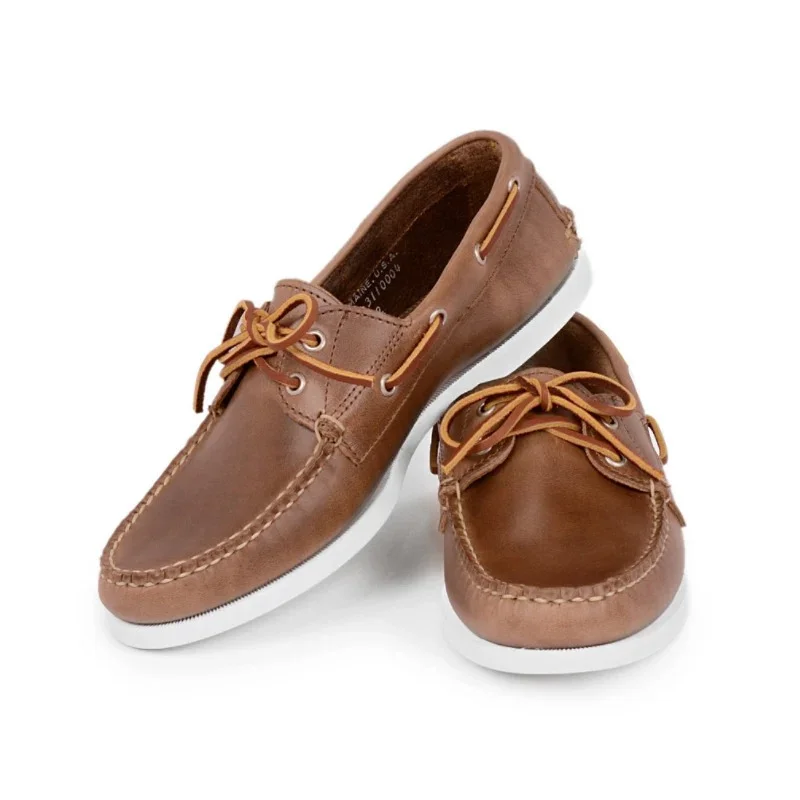
Rancourt sits firmly in the handcrafted premium tier. Its boat shoes are made in Maine, use genuine handsewn moccasin construction, and are priced well above mainstream options. That makes them attractive to buyers who care about American-made craft and long-term ownership.
Ralph Lauren, Clarks, Børn, Vionic
Nordstrom’s live assortment shows that the market is broader than the “big three.” Ralph Lauren, Clarks, Børn, and Vionic all have current boat-shoe offerings, which matters because it proves the silhouette is selling across lifestyle, comfort, and fashion-led segments.
Brand Positioning Table
| Brand | Strength | Style Lane | Value |
| Sperry | Iconic classic | Preppy, timeless | Strong |
| Sebago | Heritage craftsmanship | Classic, refined | Strong |
| Timberland | Rugged upgrade | Workwear, casual | Good |
| Rancourt | Handmade premium | Luxury heritage | High-end |
| Ralph Lauren | Fashion polish | Smart casual | Mid-to-premium |
Best Boat Shoes for Different Use Cases
| Use Case | Best Fit | Why |
| Best overall classic | Sperry Authentic Original | Heritage, traction, broad appeal |
| Best upgrade classic | Sebago Portland Docksides | Waxed leather, hand-sewn build |
| Best rugged style | Timberland Authentic / 3-Eye Lug | Lug sole and sturdier profile |
| Best luxury handmade | Rancourt Boothbay | Maine-made, premium craft |
| Best fashion-forward | Esquire-style lug or suede updates | Modern silhouette, broader styling |
| Best for value shopping | Nordstrom’s mid-range offerings | Broad market coverage and accessible pricing |
Current pricing also shows a wide market span: mainstream pairs often sit around the $100–$170 range, while premium handcrafted pairs move into the $250–$300+ zone. Nordstrom and Rancourt listings show that spread clearly.
Boat Shoes vs Loafers
Boat shoes and loafers overlap in casual wear, but they are not the same thing. Ship shoes are built around traction, marine history, rawhide lacing, and a sportier silhouette. Loafers are usually cleaner and more formal, with less emphasis on wet grip. FashionBeans says the choice depends on use: boat shoes for versatility and classic style, deck shoes if comfort, grip, and performance are the priority.
Quick Difference Table
| Feature | Boat Shoes | Loafers |
| Origin | Marine / deck use | Dress and leisure wear |
| Sole | Rubber, often siped | Leather or rubber |
| Lacing | 360° rawhide common | Usually slip-on |
| Styling | Relaxed, coastal | More refined |
| Best for | Summer, travel, casual wear | Smart casual, dressier looks |
If the outfit leans coastal, sporty, or warm-weather casual, boat shoes usually win. If the outfit leans toward tailored or office-casual, loafers often feel more appropriate.
How To Style Men’s Genuine Leather Boat Shoes
Summer Casual
Pair tan or brown leather boat shoes with chino shorts, a polo shirt, and a light overshirt. This is the easiest and most traditional look.
Smart Casual
Choose dark brown leather boat shoes with slim chinos, an Oxford shirt, and a lightweight blazer. Keep the outfit clean and fitted.
Coastal Luxury
Wear premium leather or suede boat shoes with relaxed linen trousers, a knitted polo, and soft tailoring. Esquire’s 2026 coverage shows this softer, less country-club version is part of the shoe’s current appeal.
Rugged Modern
A lug-sole boat shoe works with straight-leg denim, overshirts, chore jackets, and heavyweight knits. Timberland’s current direction makes this especially easy to pull off.
Style Rule
Keep the shoe shape aligned with the outfit’s mood. A classic boat shoe looks best when the rest of the look is relaxed but intentional. A lugged or monochrome version suits more fashion-led wardrobes.
Common Boat Shoe Buying Mistakes
The most expensive mistakes are usually simple.
- Buying on the logo alone. A famous brand name does not guarantee strong leather or construction.
- Ignoring the sole. A fashion-only sole can look good and still perform poorly on wet surfaces.
- Choosing the wrong leather. “Genuine leather” can range from excellent to mediocre, so build quality matters.
- Sizing too large. Leather stretches, so oversized shoes can end up sloppy.
- Treating suede like smooth leather. Suede and nubuck need different care and are less forgiving in wet conditions.
How To Care For Genuine Leather Boat Shoes
Good care changes the lifespan of the shoe.
Step 1: Clean after wear
Use a soft brush or cloth to remove dirt and salt. Sperry and Timberland both recommend gentle cleaning methods using cloths, brushes, and mild soap or cleaner.
Step 2: Let them dry naturally
Avoid direct heat. Air drying in a ventilated space is the safer choice for leather shoes.
Step 3: Condition the leather
Leather needs moisture maintenance. Sperry advises conditioner/lotion to help prevent drying, cracking, and scuffing.
Step 4: Protect before heavy use
A protector spray or weatherproofing routine helps, especially if the shoes will see summer travel, wet docks, or frequent outdoor wear. Timberland’s care guidance also supports cleaning first and then applying protection.
Step 5: Use shoe trees
Cedar shoe trees help maintain shape and reduce moisture buildup, which is especially useful for leather shoes worn without socks.
Mini summary:
Boat shoes last longer when they are cleaned gently, dried naturally, conditioned regularly, and stored with shape support.
Expert Tips Most Buyers Ignore
- Buy for the sole you need, not just the upper you like.
- Choose full-grain or clearly described premium leather when you want long-term value.
- Check whether the brand uses LWG-certified tanneries or similar sourcing standards. LWG says certification reflects audited and certified sourcing from manufacturers that meet its audit standard.
- Expect a short break-in period if the leather is substantial.
- For warm-weather use, prioritize breathability and lining comfort. For mixed-weather use, prioritize grip and stronger outsole geometry.
Who Should Buy This Product
Men’s genuine leather boat shoes are a smart buy for:
- men who want a summer shoe that still looks refined,
- buyers who like heritage style,
- travelers needing a versatile casual shoe,
- men who prefer leather footwear over Synthetic Materials,
- shoppers who want a classic that can be dressed up or down.
Who Should Avoid This Product
They are not ideal for:
- buyers who need heavy rain protection every day,
- people who want a fully formal shoe,
- shoppers who dislike break-in periods,
- Anyone who plans to use only low-cost synthetic fashion shoes.
Future Trends in the Leather Boat Shoe Market
The next phase is already visible. Esquire and Who What Wear show that boat shoes are being reworked with thicker soles, monochrome colorways, suede finishes, and more fashion-forward proportions. Timberland’s lug-sole versions and Paraboot-style heavier profiles show where the market is heading.
At the same time, heritage stays relevant. Sperry’s original construction, Sebago’s hand-sewn models, and Rancourt’s Maine-made approach prove that classic execution still sells when the materials are honest, and the fit is right.
Sustainability also matters more than before. LWG certification and tannery audits are becoming a meaningful trust signal for leather buyers, even though they are only one part of the bigger sourcing story.
FAQs
A: Yes, when the leather quality and construction are strong. Full-grain or well-made top-grain pairs age better, feel better over time, and usually offer better value than cheap synthetic alternatives.
A: They should feel snug at first, especially around the heel and midfoot, without crushing the toes. Leather stretches, so a little firmness at the start is normal.
A: Yes. They were built for that style of wear, and many brands still present them that way. No-show socks can help if the wearer wants extra comfort.
A: Full-grain leather is usually the best long-term choice because it is durable and develops patina. High-quality top-grain is also a solid option for buyers who want a cleaner look.
A: Yes. Current coverage from GQ, Esquire, and Who What Wear shows the category is still active and has moved into a more modern, fashion-led phase.
Final Verdict
Men’s genuine leather boat shoes are one of the most useful warm-weather shoes a man can own. The Strongest Pairs combine real leather, honest construction, and dependable traction, which is why the category still belongs to heritage names like Sperry and Sebago, with premium handmade options from Rancourt and more rugged interpretations from Timberland.
For buyers, the smartest move is to choose the best leather and construction your budget allows, then match the style to how the shoe will actually be worn. That is how boat shoes stay useful for years instead of looking good for one season. TheLeatherItems.com can win this topic by becoming the most practical and trustworthy guide on leather footwear, not just another product page.
Legal disclaimer: Leather quality, pricing, manufacturing standards, and product availability may vary by country, brand, and supplier. Always verify authenticity, material details, and care instructions before purchase.