Introduction
When riders search for Leather Racing Gloves For Men, they are usually looking for more than style. They want better grip, stronger abrasion resistance, secure wrist retention, knuckle protection, and a glove that still feels precise on the controls. That matters because motorcycle gloves are not just comfort gear; they need to fit correctly, stay on in an accident, and provide real protection on the road. EN 13594:2015 is the European motorcycle-glove standard built around that idea.
The challenge is that many pages online stop at product names and a few bullet points. Riders are left guessing about leather types, certification levels, palm sliders, gauntlet length, and whether they should prioritize airflow or protection. This guide fixes that. It gives you the buying logic behind the glove, not just the marketing language.
What Are Leather Racing Gloves?
Leather racing gloves are protective motorcycle gloves designed for sport riding, track use, aggressive street riding, and high-control throttle work. Their purpose is to protect the hands from abrasion and impact while preserving feel at the bars, levers, and throttle. The best pairs combine leather, armor, reinforcement, and a snug ergonomic fit.
A strong racing glove should do four things at once: protect the knuckles, protect the palm, keep the glove secure on the wrist, and let the rider move naturally. That balance is why fit and construction matter just as much as the hide itself.
Why Leather Still Matters in 2026
Leather remains a top choice because it delivers a proven mix of abrasion resistance, durability, and control feel. SPIDI says leather is still the best material for professional and performance riders, and notes that its racing gloves use leather to maximize abrasion resistance and reduce heat transfer. Leather Naturally also describes leather as a versatile material valued for performance and long-term use.
For racing-style gloves, the material choice affects more than comfort. It changes how the glove breaks in, how it wears under slide conditions, and how much tactile feedback you get from the controls. That is why serious riders often prefer leather over purely fashion-oriented gloves or generic winter gloves.
Leather Types Used in Racing Gloves
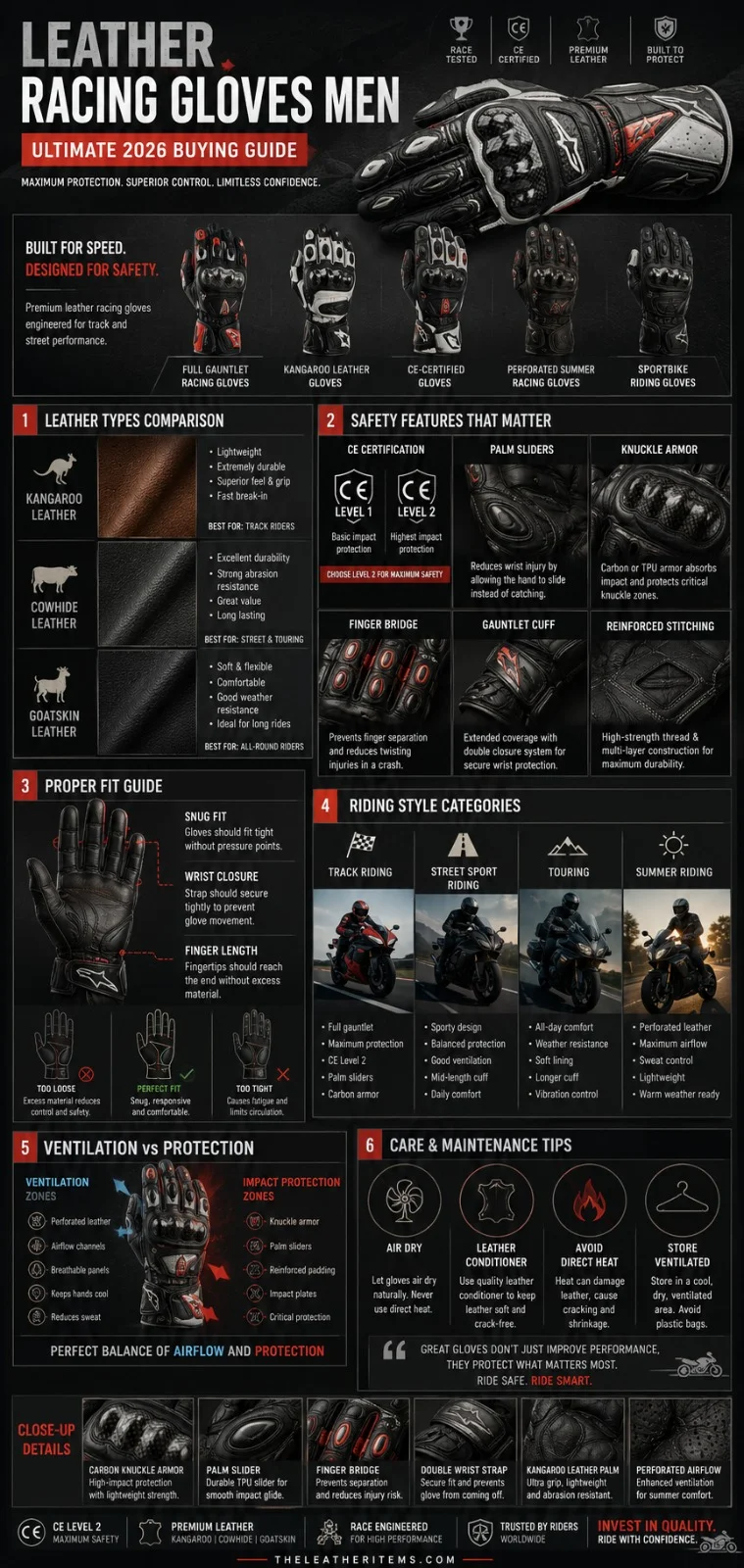
The best glove for you depends on the leather construction. The table below is a practical buying comparison based on manufacturer guidance and rider use cases.
| Leather type | Main strengths | Best for | Buying note |
| Kangaroo leather | Very light, strong, highly tactile | Track riders, sportbike riders, premium race gloves | Often used in the palm for feel and abrasion resistance. |
| Cowhide leather | Durable, widely available, good value | Street riders, daily use, budget buyers | Usually tougher and more affordable, but they can feel heavier. |
| Goatskin leather | Flexible, comfortable, good dexterity | Long rides, mixed street/sport use | A strong middle ground when you want comfort and control. |
| Hybrid leather builds | Balance of grip, flexibility, and protection | Most riders are buying premium gloves | Commonly combines goat/cowhide with kangaroo palm zones. |
Kangaroo Leather
Kangaroo leather is often treated as the premium performance option because it is light, thin, and very abrasion-resistant. SPIDI says its kangaroo version improves comfort and lightness compared with cow leather, and Argon describes kangaroo-and-goat combinations as flexible, tough, and highly abrasion-resistant. That is why kangaroo leather appears so often in track-oriented gloves.
Cowhide Leather
Cowhide is a strong choice when you want durability and better value. It is common in street and everyday riding gloves because it can take a lot of wear and usually costs less than kangaroo leather. For many riders, that trade-off makes sense.
Goatskin Leather
Goatskin is popular because it gives a soft, flexible feel without becoming flimsy. It is especially useful when the rider wants dexterity and comfort over long rides. Many premium gloves blend goatskin with stronger palm materials to improve both feel and protection.
What Safety Features Actually Matter
The most important safety features are the ones that protect the highest-risk zones: knuckles, palm, fingers, and wrist. EN 13594:2015 is the governing standard for protective motorcycle gloves in Europe, and it covers sizing, ergonomics, mechanical properties, impact protection, marking, and user information.
CE Certification
Look for CE-certified motorcycle gloves and check whether the glove is Level 1 or Level 2. Bike EXIF notes that Level 2 is the higher specification, with better abrasion resistance and impact absorption than Level 1.
Palm Sliders
Palm sliders are one of the most talked-about rider features for a reason. In rider discussions, many people argue that a palm slider matters more than a finger bridge for street use because it helps the hand slide instead of catching. Alpinestars and Argon both include palm-slider systems in their road and track glove designs.
Knuckle Armor
Knuckle armor helps absorb direct impact. Premium gloves may use carbon, TPU, or other impact-absorbing structures. Alpinestars and Argon both reference knuckle protection as part of their performance glove builds.
Finger Bridge
A finger bridge connects vulnerable fingers, especially the pinky and ring finger. REV’IT! explains that the little finger is highly vulnerable in a fall and includes a bridge for extra protection. Rider discussions also show that some street riders consider the palm slider more important, while pinky bridges are often seen as more track-oriented.
Wrist Retention
A glove that shifts or comes off during a crash is weak, no matter how nice it looks. That is why secure wrist closure matters so much. SPIDI highlights a thick gauntlet wrist closure that keeps the glove fastened without pinching or bunching.
Fit: The Part Most Buyers Get Wrong
Fit can make or break the glove. Bennett says gloves need to be Comfortable, fit properly, stay on during an accident, and provide protection. Alpinestars adds that gloves should feel snug without restricting movement or circulation, with fingers reaching the end of the glove and no bunching in the palm.
A good racing glove should feel close to the hand, but not painfully tight. If the glove has too much room, you lose control and feel, and risk movement during impact. If it is too tight, you lose circulation, comfort, and endurance. That is especially important for leather, because leather usually breaks in and molds to the hand over time.
Snippet-ready fit answer
How should racing gloves fit?
They should feel snug, with no loose fingertips, no palm bunching, and no painful pressure points. A proper fit improves control and helps the glove stay secure in a crash.
Best Styles for Riding Use
The right glove style depends on how and where you ride. Alpinestars recommends matching gloves to your discipline, climate, and ride duration. FIVE also separates glove choice by season, use case, and riding style.
| Riding style | Best glove style | What to prioritize |
| Track riding | Full race or gauntlet glove | Maximum protection, hard knuckles, palm slider, secure wrist closure, premium leather. |
| Sport street riding | Sport glove or short-gauntlet glove | Balance of feel, ventilation, and protection. |
| Aggressive daily riding | Reinforced street glove | Comfort, dexterity, palm protection, practical closure. |
| Hot-weather riding | Ventilated leather glove | Perforation, airflow, and reduced sweat buildup. |
Track Riding Gloves
Track riders should look for strong armor, palm sliders, flexible leather, and secure wrist systems. SPIDI’s kangaroo racing glove and Argon’s premium track glove both show the typical formula: kangaroo leather, reinforcements, sliders, and aggressive protection.
Street Sport Gloves
Street sport riders often want a more balanced glove: enough protection for real-world riding, but more comfort and control for traffic, braking, and frequent stops. That is where a mid-length or sport-focused glove can be better than an overbuilt race-only model.
Summer Leather Racing Gloves
FIVE explains that ventilated gloves use micro-perforated leather, honeycombed fabric, and air-moving construction to reduce heat and sweat buildup. That is valuable in summer, but more perforation can reduce how much solid leather is available in a crash zone, so airflow should never replace protection.
Ventilation vs Protection: The Real Trade-Off
A major weakness in many competitor pages is that they mention ventilation but do not explain the trade-off. The truth is simple: more airflow usually means more perforation or lighter construction, while more coverage usually means more material in the way of cooling. FIVE’s guidance makes that clear by separating standard, ventilated, waterproof, and winter glove categories.
The best answer is a glove with zoned perforation: cooling where your hand needs it, and solid reinforcement where impact and abrasion are highest. That is the practical sweet spot for many riders in warm climates.
How to Buy the Right Pair
Use this buyer sequence when comparing leather racing gloves:
- Start with your riding style: track, sport, street, or commuting.
- Check the certification: EN 13594, then the level and impact rating.
- Inspect the protection zones: knuckles, palm, fingers, and wrist.
- Choose the leather: kangaroo for premium control, cowhide for value, goatskin for flexibility.
- Decide on cuff length: short cuff for more feel, gauntlet for more coverage.
- Confirm the fit: snug, secure, and free from bunching.
What Buyers Usually Miss
Many riders focus on the brand logo and ignore the details that matter more in a crash. The most common mistakes are buying a glove that is too loose, ignoring wrist retention, choosing fashion gloves instead of motorcycle PPE, and overvaluing looks over construction. Rider discussions also show that buyers often argue about palm sliders versus finger bridges, when the real answer is to look for a glove that has both if the budget allows.
How to Care for Leather Racing Gloves
Leather gloves last longer when you dry them naturally, keep them away from direct heat, and avoid harsh cleaning. SPIDI’s care notes for its racing gloves say not to wash, bleach, tumble dry, or dry clean the glove, and instead line dry it in the shade. That is good practical guidance for premium leather gloves in general.
A simple routine works best: air them out after every ride, wipe off sweat or road grime, and store them in a cool, ventilated place. If the glove is premium leather, use care products only when the manufacturer allows it.
Pros and Cons
Pros
- Excellent abrasion resistance and road feel.
- Strong fit potential when properly sized.
- Premium Safety builds often include knuckle armor, sliders, and wrist retention.
Cons
- Premium models can be expensive. FIVE notes its range spans from about 30 euros to nearly 450 euros, which shows how much build quality can change the price.
- Some high-airflow gloves trade away material coverage for cooling.
- Leather needs care to avoid stiffness and cracking.
FAQs
A: Yes. For motorcycle use, leather is still one of the strongest choices for abrasion resistance, control feel, and durability. The best gloves combine leather with certification and impact features rather than relying on leather alone.
A: Kangaroo leather is often the premium choice because it is light, tactile, and highly abrasion-resistant, while cowhide is better for value, and goatskin is a strong flexibility choice.
A: They should be snug, not loose, and not painfully tight. Fingers should reach the end without excess material, and the palm should not bunch.
A: They usually provide more wrist and lower-forearm coverage, which is why they are a strong choice for track-style use and aggressive riding. The right glove still depends on your riding position and discipline.
A: In the materials reviewed here, CE Level 2 is the higher glove rating, and EN 13594 is the key certification standard for motorcycle gloves.
Final Recommendation
The best leather racing gloves men can buy in 2026 are not just “leather” and not just “race-styled.” They are gloves built around fit, secure retention, certification, and Real Crash Protection. If you want maximum performance, look at kangaroo-leather track gloves with CE-rated protection, palm sliders, knuckle armor, and a secure gauntlet closure. If you want everyday sport riding, choose a glove that balances airflow, dexterity, and safety.
For TheLeatherItems.com, the winning angle is education first and product second. Teach the rider how to judge leather quality, protection zones, fit, and maintenance, then connect that knowledge to the right glove type. That is how a pillar page earns trust and stays useful over time.
Disclaimer: Leather quality, certification details, pricing, and availability vary by brand, country, and production run. Always verify the exact material, CE label, and care instructions before purchase.