Introduction
A Chesterfield Sofa’s Leather is one of those purchases that looks simple until you start comparing materials, comfort levels, and build quality. One seller says “real leather,” another says “top grain,” and a third says “full leather,” but the differences can be huge in how the sofa feels, how it ages, and how long it lasts. The Chesterfield itself is more than a style label: it is a long-established furniture silhouette characterized by deep-button tufting, rolled arms, and a firm, upright seat.
That is exactly why this guide exists. If you are comparing a leather Chesterfield sofa for your living room, office, lounge, or boutique space, the real decision is not just “Does it look good?” It is “Will I still love it in five years, ten years, and beyond?” The answer depends on the leather type, frame quality, seat depth, finish, and how honestly the sofa fits your lifestyle.
What Is a Chesterfield Sofa Leather?
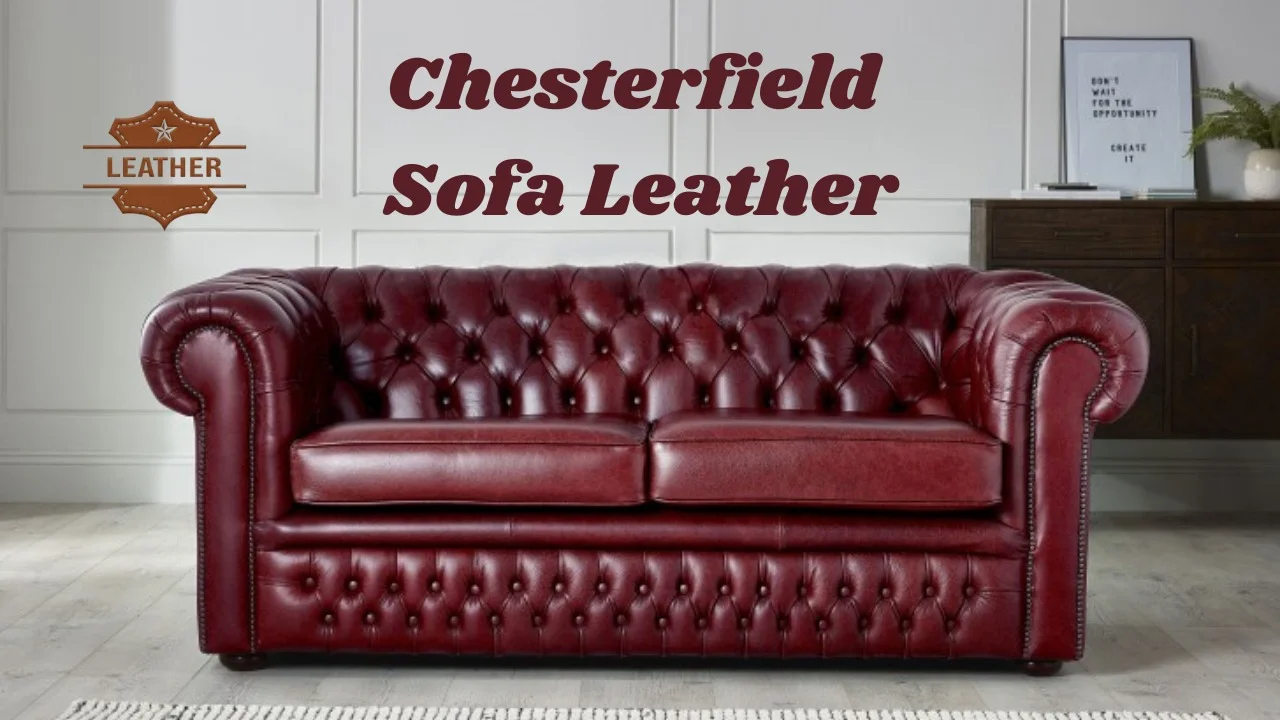
A Chesterfield is a classic sofa style defined by deep button tufting, rolled arms that sit at roughly the same height as the back, and a structured silhouette. The style is widely associated with leather upholstery, although modern versions may also use fabric, velvet, or mixed materials.
In practical terms, a Chesterfield sofa’s leather is usually chosen when someone wants a piece that feels formal, timeless, and visually strong. It is often used as a centerpiece rather than background furniture. That is why the leather finish matters so much: the material has to support the design instead of fighting against it.
Snippet-ready answer:
A Chesterfield sofa is a tufted, rolled-arm sofa upholstered in leather, usually with a firm, upright seat and a timeless British-inspired silhouette.
A Short History of the Chesterfield
The exact origin story is debated, but the most common account links the Chesterfield to Philip Stanhope, the 4th Earl of Chesterfield, in 18th-century England. The design is often described as a sofa meant to let guests sit upright without ruining their clothes. That story is repeated across heritage furniture references, though historians still debate the precise provenance.
What matters for today’s buyer is this: the Chesterfield survived because it solved a real problem. It looked refined, felt supportive, and was durable enough to last. That combination is still the reason it works so well in formal homes, libraries, offices, hotel lounges, and premium interiors today.
Why It Still Matters in 2026
The Chesterfield is not a relic. Current trend coverage still places it in the conversation for 2026 because designers keep returning to pieces that feel timeless, structured, and built to last. Leather Chesterfields continue to be framed as a strong choice for classic, rich interiors, while modern interpretations use lighter colors, cleaner proportions, and more tailored seating.
The 2026 angle is important because buyers no longer want a sofa that only looks good in a magazine. They want a piece that fits how they live: entertaining, working from home, family lounging, and long-term ownership. That is why the best Chesterfield content in 2026 has to cover both style and utility.
The Leather Types Used in Chesterfield Sofas
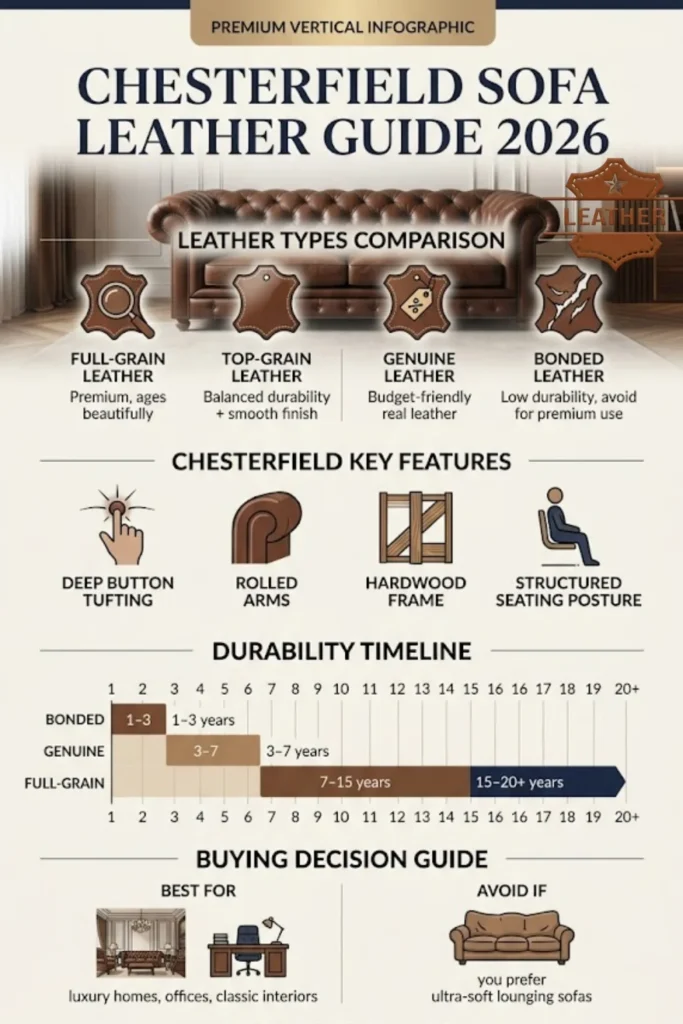
This is where most articles stop too early. They say “real leather” and move on. That is not enough. The leather type affects texture, patina, durability, and maintenance. Industry definitions also vary, so buyers should look at the actual material spec rather than relying on a single marketing label. The Leather Working Group glossary distinguishes terms such as full grain, nubuck, suede, split leather, and bonded fibre board, and it notes that reformed leather fibers are not the same thing as intact leather.
Leather Type Comparison Table
| Leather Type | What It Means | Strengths | Trade-Offs | Best For |
| Full-grain leather | Original grain surface remains intact | Strong, natural look, develops patina | Usually costs more, shows natural marks | Luxury buyers, long-term ownership |
| Top-grain leather | Upper grain leather with a more finished surface in common retail usage | Cleaner look, easier to match visually | Less natural character than full-grain | Modern homes, families, and versatile interiors |
| Genuine leather | Retail term often used for real leather, but quality can vary widely | Lower price point | Quality is inconsistent; check the construction carefully | Budget-conscious buyers |
| Suede | Leather with a soft, brushed surface | Rich texture, premium feel | More delicate, stains more easily | Low-traffic rooms |
| Nubuck | Buffed leather with velvety effect, grain still visible | Soft touch, elegant look | Needs more care than finished leather | Design-led interiors |
| Bonded leather / fibre-board type materials | Reformed leather fibers with binders | Lower cost | Shorter lifespan, weaker surface performance | Only for temporary or light-use settings |
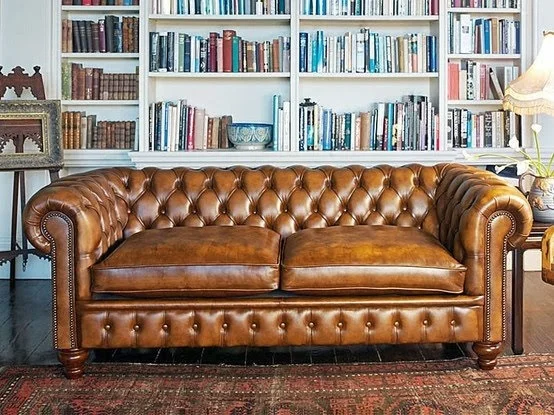
Full-Grain Leather
Full-grain leather keeps the original grain surface. An industry reference from Leather Research Laboratory states that full grain retains the original grain surface without buffing or splitting. That is why it often ages well and can develop a rich patina over time.
For Chesterfields, full-grain leather is a premium option when the goal is character and longevity. It is ideal if you want the sofa to look better as it ages, not just remain “new-looking.”
Top-Grain Leather
Top-grain leather is typically chosen when the buyer wants a smoother, more uniform finish. In the furniture market, it is often positioned as the practical premium middle ground: still high-end, but easier to live with than very natural, highly marked leather.
For a Chesterfield, this is often the safest “buy with confidence” choice for modern homes because it balances elegance and everyday use. It works particularly well if you want the Chesterfield look without too much rustic grain variation.
Genuine Leather
“Genuine leather” sounds premium, but it is a broad retail term. It may indicate real leather, yet it does not automatically guarantee top-tier durability or finish quality. The safest approach is to ask for the exact leather spec, tanning method, and finish.
For budget buyers, genuine leather can still be a smart purchase if the frame, springs, and stitching are strong. The key is not to confuse the word “genuine” with “best.” They are not the same thing.
Suede and Nubuck
Suede is a velvet-like surface finish, while nubuck is leather buffed to create a velvety effect with the original grain still visible. Both look luxurious, but they are less forgiving than finished leather.
A suede or nubuck Chesterfield can look stunning in a design-focused interior, but it is not the easiest choice for heavy daily use. These finishes reward careful ownership and punish rough handling.
Bonded Leather
Bonded leather-type materials are made from reformed leather fibers with binders. The Leather Working Group glossary makes a clear distinction here: once leather is disintegrated and reformed into sheets, it should be described as a fibre-board type material rather than simple leather.
For a Chesterfield, bonded materials are usually a false economy. They may look acceptable at first, but they are not the right choice if you want the sofa to behave like a long-term investment.
Mini summary:
If you want the best long-term value, focus on the leather finish, not just the label. Full-grain and quality top-grain options are usually the most dependable choices for a serious Chesterfield purchase.
Which Chesterfield Style Should You Choose in 2026?
The classic Chesterfield is still the most recognizable version, but the style has evolved. Current design coverage points to traditional dark leather versions, modern low-profile adaptations, and custom-made pieces with contemporary color palettes. Rich browns, navy, burgundy, cream, and warm neutrals are all relevant in today’s living rooms.
Style Guide Table
| Style | Visual Character | Best Room Fit | Main Advantage |
| Classic Chesterfield | Deep tufting, rolled arms, traditional leather | Studies, formal living rooms, libraries | Heritage look |
| Modern Chesterfield | Cleaner lines, lighter tones, softer proportions | Contemporary homes, open-plan spaces | More versatile |
| Luxury Chesterfield | Rich leather, bespoke finish, premium detailing | Executive offices, upscale interiors | Strong Statement Piece |
| Compact Chesterfield | Smaller scale, same design language | Apartments, small lounges | Fits tighter spaces |
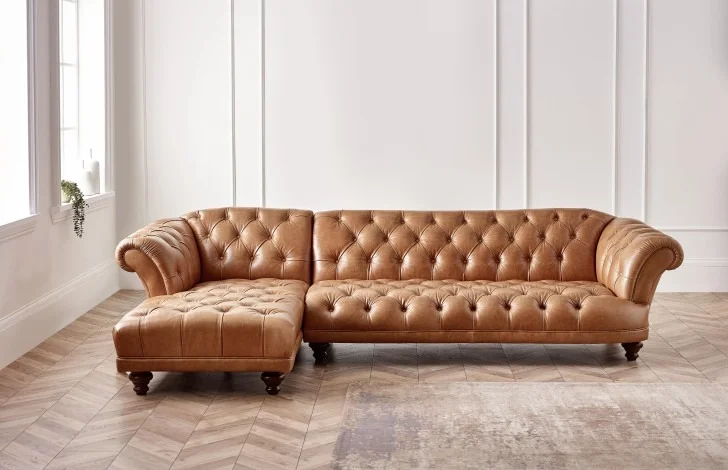
| Corner / sectional Chesterfield | Chesterfield details in modular form | Larger family rooms | Adds seating without losing style |
The modern direction matters because many buyers love the Chesterfield silhouette but do not want the room to feel heavy or old-fashioned. A lighter leather shade, slimmer frame, or more tailored cushion profile can make the design feel current without losing its identity.
Comfort: The Truth Most Buyers Discover Too Late
A Chesterfield is usually supportive, upright, and structured. That is part of its charm, but it is also the reason some buyers regret the purchase. Architectural Digest notes that people who want a softer cushion or who like to sit deep “in” a sofa may not be good matches for the Chesterfield style. DFS similarly frames Chesterfields as comfortable and supportive, but the comfort is more upright than sink-in casual.
This is the buying psychology most competitors miss. A Chesterfield is ideal for someone who values posture, style, and formality. It is less ideal for someone who wants movie-night lounging, cloud-like softness, or a sofa that disappears into the room.
Who usually loves a Chesterfield?
- Buyers who want a structured, elegant look
- People furnishing a study, office, or formal lounge
- Design-led homeowners who want a centerpiece
- Buyers who prefer a firmer seat and cleaner silhouette
Who often regrets it?
- Buyers expecting a deep, sink-in couch
- Families who want a very soft everyday lounging sofa
- Shoppers who value low-maintenance but choose delicate finishes without thinking it through
Bottom line:
The Chesterfield is not uncomfortable by default. It is simply a different comfort philosophy. It rewards people who know what they are buying.
How Chesterfield Sofas Are Made
A quality Chesterfield is not just about leather. The inside matters just as much. Strong construction is usually built around a solid hardwood frame, reliable suspension, good cushioning, and careful upholstery work. Retailers that specialize in Chesterfields commonly emphasize solid wood or hardwood frames, handcrafted construction, and made-to-order options.
Typical Manufacturing Steps
- Hide selection and grading
Tanneries and suppliers choose hides based on grain, thickness, and finish quality. Leather terminology matters here because not every leather label means the same thing. - Tanning and finishing
The hide is tanned and then finished to achieve the required color, softness, and protection. LWG defines leather manufacturing as a process that can be audited for environmental and social accountability, showing how seriously the industry treats production standards. - Frame construction
The frame is usually built from hardwood or other sturdy timber. This is the backbone of the sofa’s lifespan. - Spring system and support layers
Springs or webbing are installed to determine seat support and long-term resilience. - Cutting and tufting
The leather is cut, pulled, and button-tufted into the signature Chesterfield shape. The visual geometry is part of the construction challenge, which is why craftsmanship matters so much. - Cushion filling and finishing
Cushion firmness can range from soft to firm. Some makers even offer comfort options, which is a major advantage if you are balancing style with daily use. - Quality inspection
Final checks should confirm stitching, button placement, leather consistency, and frame stability.
Mini summary:
A beautiful leather Chesterfield can still fail if the frame is weak or the seat build is poor. The outside style only tells part of the story.
How to Identify a Good Chesterfield Sofa Leather
This is the section that saves people money.
1. Ask what the leather really is
Do not stop at “real leather.” Ask whether it is full-grain, top-grain, pigmented, semi-aniline, or another finish. The reason is simple: leather terms are not always used consistently in retail, and industry definitions are more precise than marketing language.
2. Check the frame
A well-made Chesterfield should feel stable, not hollow or overly light. Many reputable makers highlight solid wood or hardwood frames as a durability feature.
3. Look at the tufting
Tufting should look balanced and even. Loose buttons, uneven folds, or puckering are warning signs. The Chesterfield is a shape that exposes poor craftsmanship quickly.
4. Inspect the leather surface
Natural marks are normal in higher-grade leather, but the surface should not look plasticky or heavily coated unless that is an intentional design choice. Full-grain leather is valued because it keeps the natural grain surface intact.
5. Ask about cushion firmness
A premium Chesterfield should let you choose a comfort level if possible. Some makers offer soft, medium, or firm seating, which is a real advantage for long-term satisfaction.
Complete Buying Guide: What to Check Before You Buy
Best buying checklist
- Leather type and finish
- Frame material
- Spring system
- Cushion fill
- Seat depth
- Arm height
- Room size
- Color compatibility
- Warranty
- Return policy and care instructions
Buying Guide Table
| Buy This If… | Avoid This If… |
| You want a formal, elegant centerpiece | You want a deep, Ultra-Soft lounging sofa |
| You value leather that improves with age | You want a sofa with zero maintenance |
| You have a room that can carry a strong visual anchor | Your space is too small for a visually heavy piece |
| You are willing to care for leather properly | You prefer delicate finishes but have pets/kids/clutter |
| You want a long-term furniture investment | You mainly want the cheapest possible option |
Practical decision rule
If your top priority is longevity, choose a well-built leather Chesterfield with a strong frame and a finish that suits your household. If your top priority is everyday softness, a Chesterfield may still work, but only if you accept its firmer character.
Best Uses for a Chesterfield Leather Sofa
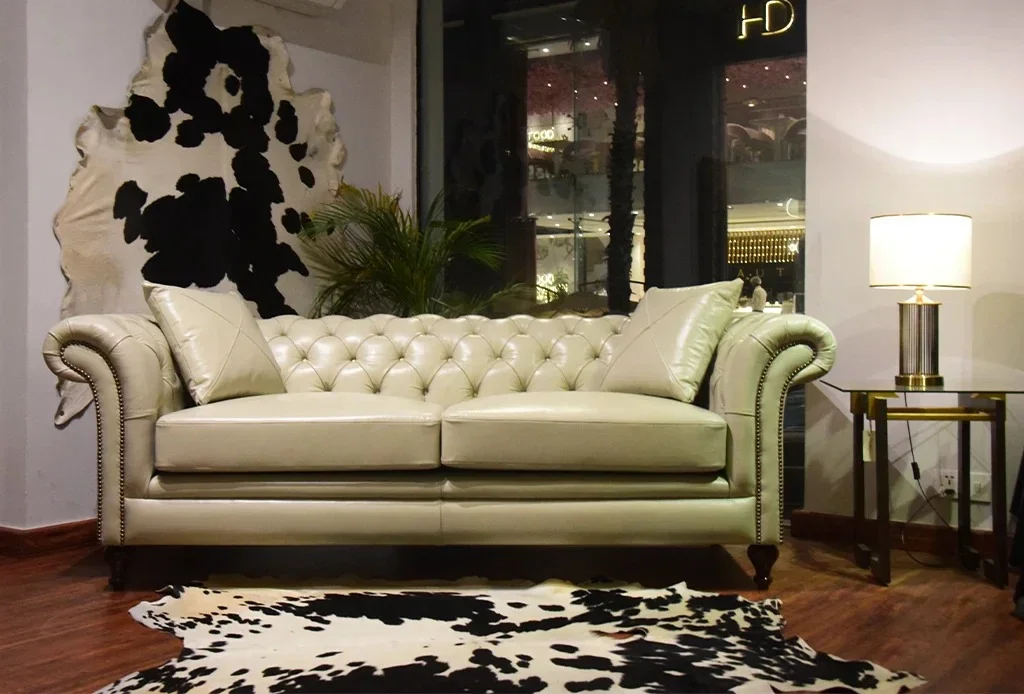
A Chesterfield works best where its formality becomes a strength.
- Formal living rooms
- Home offices
- Reading lounges
- Executive spaces
- Boutique hospitality interiors
- Traditional or transitional homes
It is especially effective when you want the sofa to feel like an intentional design statement rather than just another seat. That is why the Chesterfield continues to show up in heritage interiors and modern luxury spaces alike.
Worldwide Price Ranges: What Buyers Typically See
Prices vary by country, leather grade, brand reputation, customization, and shipping. Examples from current retailer pages show how widely the market can range: a UK leather Chesterfield guide lists 3-seater leather Chesterfields from about £800 to £4,000, an official Chesterfield store lists one 3-seater at $4,021, and Pakistan-based listings show Chesterfield leather sofas from about Rs 55,000 on sale to around Rs 330,000 for larger variants.
Tiered price guide
- Budget tier: entry-level leather-look or lower-spec leather pieces
- Mid tier: solid everyday real-leather Chesterfields with decent build quality
- Premium tier: higher-grade leather, stronger frames, custom options, better craftsmanship
- Luxury tier: made-to-order, heritage-style, top finish, premium tailoring, long warranties
Pros and Cons
Pros
- Timeless visual appeal
- Strong heritage value
- Can age beautifully
- Works in classic and modern interiors
- Often made with durable construction when bought well
Cons
- Can feel firm rather than soft
- Poor-quality versions age badly
- Heavy visual presence may overwhelm small rooms
- Delicate finishes need care
- Some buyers confuse marketing terms and overpay for weak construction
Common Buying Mistakes to Avoid
- Buying for looks only and ignoring comfort.
- Assuming “genuine leather” automatically means top quality.
- Ignoring frame construction and spring support.
- Choosing a delicate finish for a high-traffic household.
- Buying the wrong size for the room.
- Forgetting about sunlight, heat, and cleaning routines.
Care, Cleaning, and Maintenance Tips
Leather sofa care is not complicated, but it has to be consistent. Architectural Digest recommends regular dusting, weekly light wiping, prompt spill response, and periodic conditioning. It also warns against too much moisture, heat, and rough repair attempts.
Simple maintenance schedule
Weekly
- Dust with a dry or lightly damp Microfiber Cloth
- Check creases, buttons, and seams for early wear
Monthly
- Clean lightly with a leather-safe product if needed
- Condition the leather feels dry or begins to show stress lines
Every 6–12 months
- Do a fuller leather conditioning session, depending on use and climate
What to avoid
- Direct sunlight for long periods
- Heaters, fireplaces, and radiators nearby
- Harsh household chemicals
- Over-wetting the leather
- DIY repairs on serious cuts or tears
Pet and family reality
Leather can be practical in busy homes because spills are easier to wipe than on many fabrics, but you should still protect it from claws and rough use. Keep expectations realistic: leather is resilient, not indestructible.
Expert Tips Most Buyers Ignore
- Ask for the exact leather specification, not just “real leather.”
- Sit on the sofa for at least a few minutes before deciding. Chesterfields are about seat feel as much as appearance.
- Check how the leather reacts to light. Some finishes look richer, warmer, or more natural in real room lighting than in showroom photos.
- Match the sofa to the room’s function. Formal spaces can handle a stronger Chesterfield presence; casual family rooms may need a softer alternative.
- Prefer a maker that is transparent about frame, fill, and care. Good makers tend to explain these details clearly.
Who Should Buy a Chesterfield Leather Sofa?
A Chesterfield is a smart buy for:
- People who want long-term style
- Buyers who like structured seating
- Homeowners creating a formal focal point
- Anyone who appreciates heritage design
- Buyers are willing to maintain leather properly
Who Should Avoid It?
You may want to skip a Chesterfield if:
- You want a deeply cushioned lounge sofa
- You dislike regular leather care
- Your room is very small and needs a lighter visual footprint
- You want a soft, casual sofa above all else
Future Trends in the Leather Chesterfield Market
The Chesterfield is likely to stay relevant because the market keeps moving toward durable, heritage-informed pieces that age well. Current trend coverage points to richer color palettes, warm neutrals, made-to-order customization, and high-quality materials that feel premium over time. Leather in classic tones such as deep brown and navy is still expected to remain stylish because it develops character naturally.
In other words, the future is not about abandoning the Chesterfield. It is about refining it: slimmer proportions, more livable colors, better comfort engineering, and clearer material transparency.
Frequently Asked Questions
A: No. Chesterfield is a style, not a material guarantee. You can find Chesterfields in real leather, fabric, velvet, faux leather, and mixed materials. Always check the material spec.
A: It is often the premium choice if you want natural character and long-term aging. Still, the best option depends on your household and how much upkeep you are willing to do.
A: Because the style was designed around structure and upright seating. That firm feel is part of the Chesterfield identity, not necessarily a flaw.
A: A common maintenance rhythm is every 6–12 months, though usage, climate, and leather finish all matter. If the leather starts to feel dry or show stress lines, it is time to act.
A: Yes. Current 2026 trend coverage still treats them as a timeless choice, especially when they are styled with updated colors, cleaner surroundings, and better room balance.
Conclusion
A leather Chesterfield is best understood as a long-term design investment, not a quick furniture purchase. The right one gives you heritage style, strong visual presence, and years of character. The wrong one gives you regret: poor comfort, weak leather, and a sofa that ages badly. That is why the smartest buyers focus on material truth, frame quality, comfort fit, and realistic maintenance from the beginning.
If you want a sofa that feels timeless, confident, and built for the long haul, the Chesterfield remains one of the best choices in leather furniture. Explore more leather guides on TheLeatherItems.com, compare the material details carefully, and choose the version that fits your home—not just your first impression.
Legal disclaimer: Leather quality, Pricing, manufacturing standards, and product availability may vary by country, brand, and supplier. Always verify authenticity, material details, and care instructions before purchase.