🛋️ Faux Leather Sofa
A Faux Leather Sofa has become one of the most popular choices in modern homes because it delivers the luxurious appearance of real leather without the high cost or maintenance burden. However, most buyers still struggle to understand why some sofas peel within 2 years while others last more than a decade.
As a leather industry consultant with deep manufacturing experience, I can tell you this clearly: the difference is not just price—it is material engineering.
In this complete 2026 guide, you will learn everything about faux leather sofas, including PU, PVC, bonded leather risks, microfiber leather advantages, durability science, and how to choose a sofa that actually lasts.
This is not a generic furniture article—it is a professional buying blueprint built to help you avoid costly mistakes and choose long-term value furniture.
🧾 What Is a Faux Leather Sofa?
A faux leather sofa is upholstered using synthetic materials designed to imitate genuine leather without using animal hides.
Instead of natural animal skin, manufacturers use:
- Polyurethane (PU leather)
- Polyvinyl Chloride (PVC / vinyl leather)
- Bonded leather composites
- Microfiber synthetic leather
- Plant-based vegan leather alternatives
👉 The goal is to replicate leather aesthetics while improving affordability and maintenance.
🧬 Key Insight
Not all faux leather is equal. Some materials are highly engineered polymers, while others are low-grade plastic coatings that degrade quickly.
📜 History & Evolution of Faux Leather Sofas
Faux leather started as basic PVC vinyl used in automotive interiors. Over time, advancements in polymer science have been introduced:
- Softer PU coatings
- Breathable microfiber blends
- Eco-based vegan leathers
- High-resistance top coatings
Today’s premium faux leather can visually rival genuine leather—but performance still depends on quality grade.
🚀 Why Faux Leather Sofas Matter in 2026
Modern buyers choose faux leather sofas because:
- Rising cost of genuine leather
- Vegan lifestyle trends
- Easy cleaning needs
- Pet-friendly requirements
- Minimalist interior design trends
👉 In 2026, faux leather is no longer a “cheap alternative”—it is a design-driven furniture category.
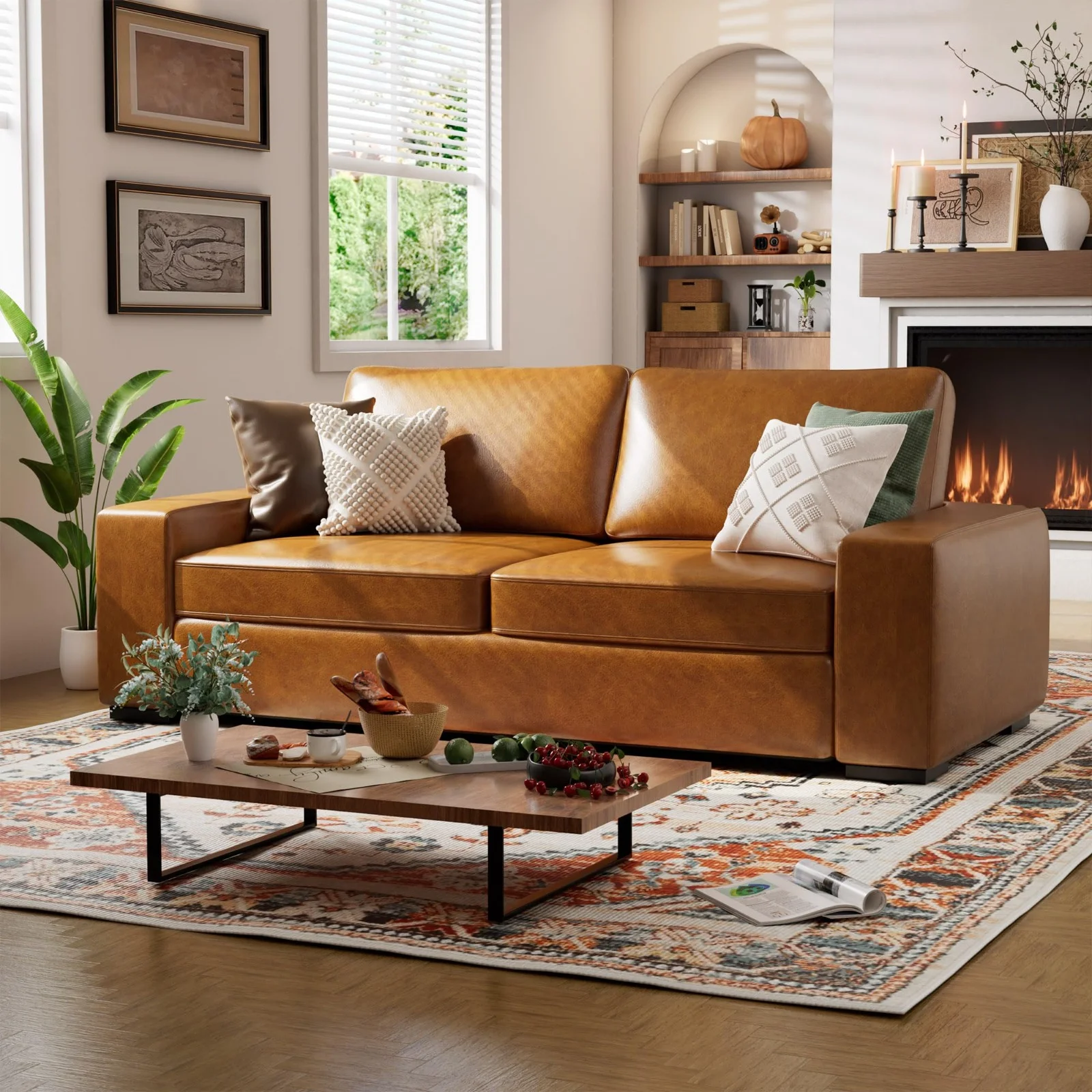
🧪 Types of Faux Leather Used in Sofas
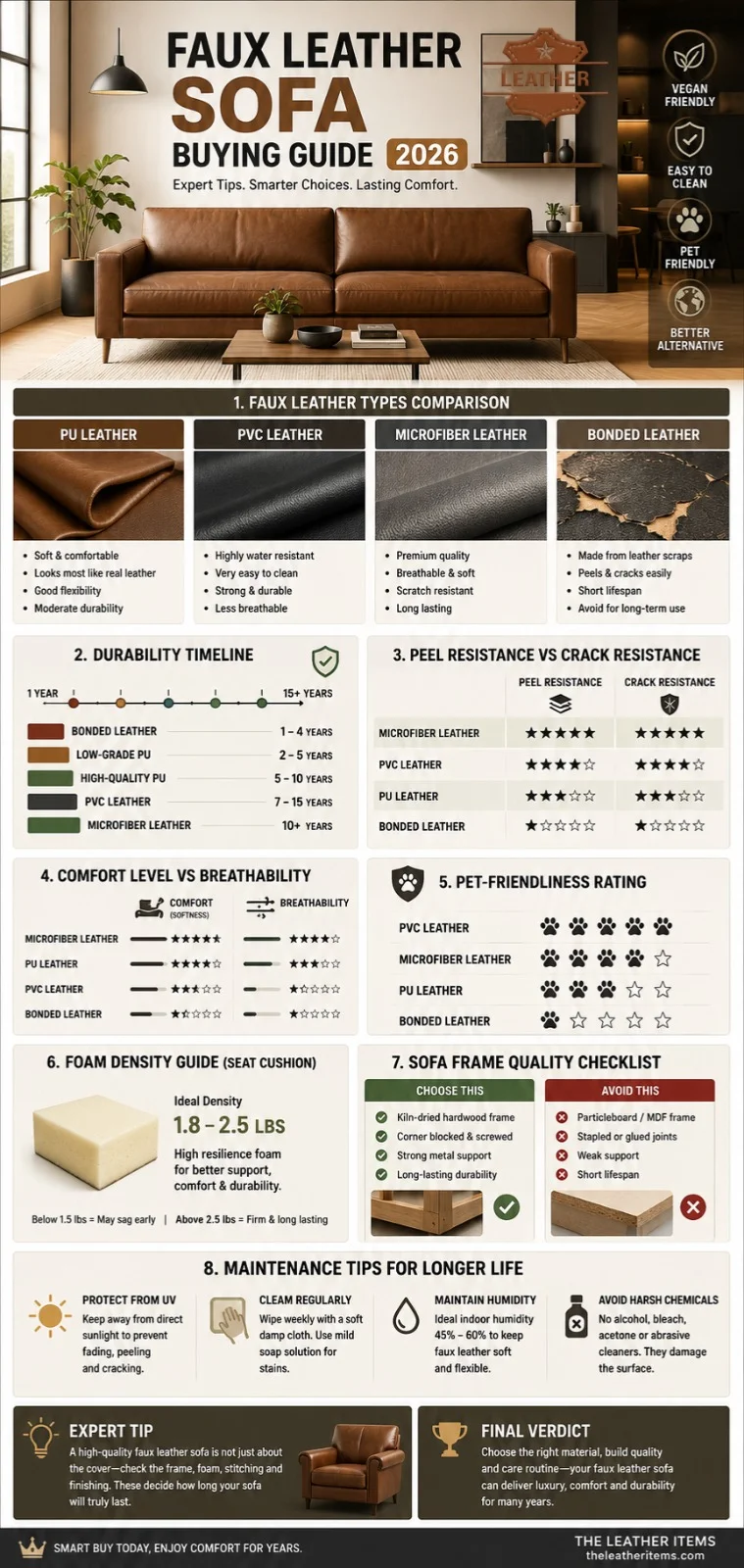
PU Leather
PU leather is the most widely used sofa material globally.
Advantages
- Soft texture close to real leather
- Flexible and comfortable
- Affordable luxury appearance
Disadvantages
- Can peel under heat
- Lower lifespan than real leather
- UV sensitive
👉 Best for: modern homes, mid-range sofas
PVC Leather
PVC is a plastic-based synthetic coating.
Advantages
- Highly water-resistant
- Very easy to clean
- Strong stain protection
Disadvantages
- Less breathable
- Can feel stiff
- Industrial texture
👉 Best for: families, kids, pets
Bonded Leather
Bonded leather is made from shredded leather scraps + glue.
Major Problems
- Peels quickly
- Cracks under pressure
- Short lifespan
👉 Expert warning: Avoid sofas completely.
Microfiber Leather
One of the highest-quality faux leather types.
Advantages
- Breathable structure
- Scratch resistant
- Long lifespan
- Soft premium feel
👉 Best for: luxury faux leather sofas
Plant-Based Vegan Leather
Innovative materials include:
- Cactus leather
- Mushroom leather
- Apple leather
- Pineapple Leather
👉 Eco-friendly but still evolving in durability.
⚖️ Faux Leather Sofa vs Real Leather Sofa
| Feature | Faux Leather Sofa | Real Leather Sofa |
| Cost | Affordable | Expensive |
| Maintenance | Easy | Moderate |
| Durability | Medium | High |
| Breathability | Low | High |
| Aging | Peeling risk | Patina improves |
| Pet Friendly | Good (PVC) | Moderate |
| Eco Impact | Mixed | Mixed |
⏳ How Long Does a Faux Leather Sofa Last?
Lifespan by Material
| Material | Lifespan |
| Bonded Leather | 1–4 years |
| Low-Grade PU | 2–5 years |
| High-Quality PU | 5–10 years |
| PVC Vinyl | 7–15 years |
| Microfiber Leather | 10+ years |
🧠 Expert Insight
Most sofa failures occur due to:
- Heat exposure
- Cheap foam
- Weak stitching
- Low-grade PU coating
🛋️ Faux Leather Sofa Styles Explained
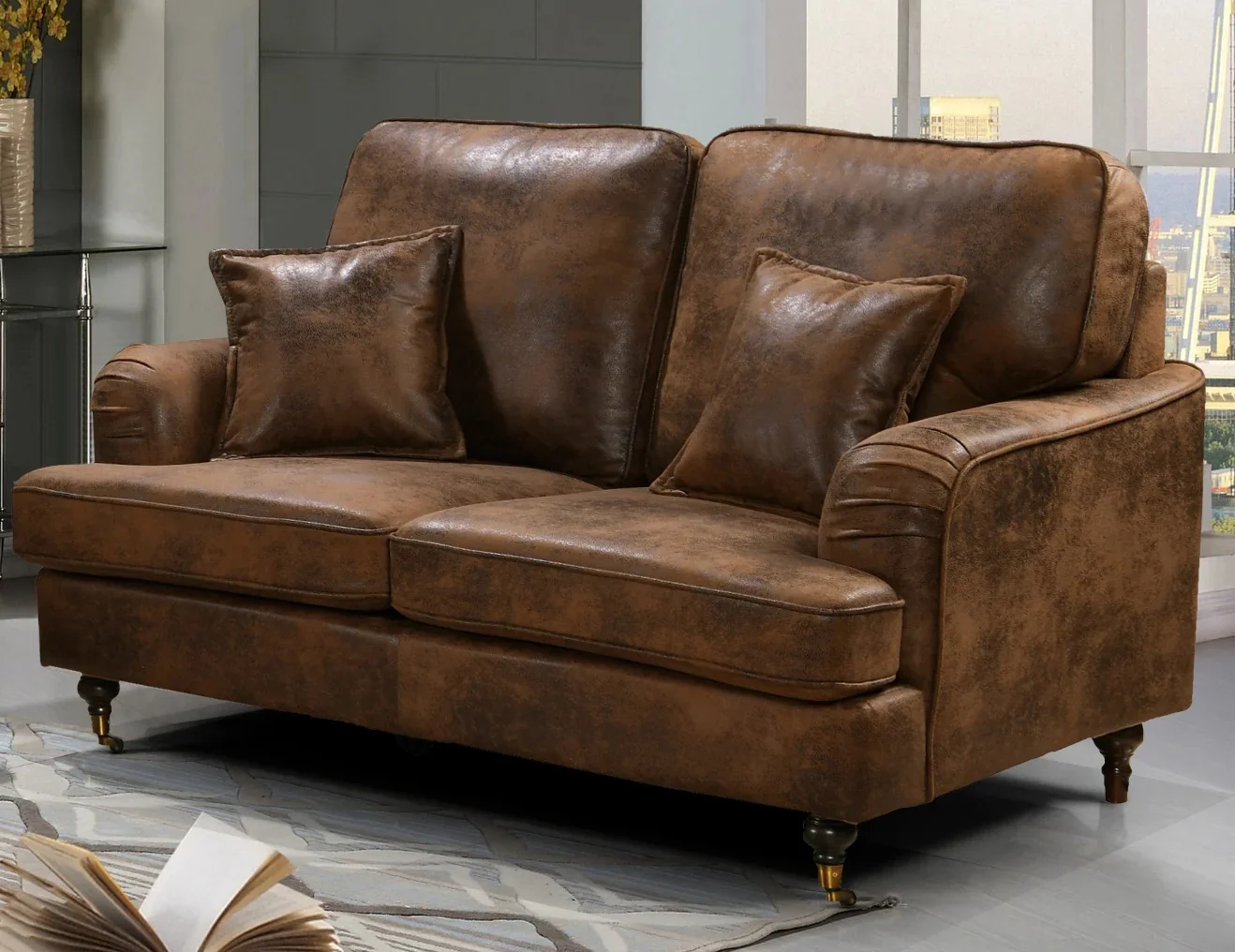
Modern Faux Leather Sofa
Minimalist design, metal legs, neutral tones.
Faux Leather Sectional Sofa
Best for large families and open spaces.
Faux Leather Recliner Sofa
Features:
- USB charging
- Power recline
- Headrest adjustment
Chesterfield Faux Leather Sofa
Luxury vintage tufted design.
Mid-Century Faux Leather Couch
Compact, stylish, retro appeal.
🏗️ Manufacturing Science
A sofa’s durability depends on:
Frame Quality
- Kiln-dried hardwood (best)
- Steel reinforcement (premium)
- Particleboard (avoid)
Foam Density
- Ideal: 1.8–2.5 lbs density
- High resilience foam = longer life
Stitching Quality
- Double stitching = durability
- Weak stitching = early tearing
🧠 How to Identify High-Quality Faux Leather
✔ Surface should rebound when pressed
✔ No whitening cracks when folded
✔ Slight grain texture (not plastic shine)
✔ Flexible, not stiff
💡 Pros & Cons of Faux Leather Sofas
Advantages
- Affordable luxury look
- Easy cleaning
- Pet-friendly options
- Wide style variety
Disadvantages
- Heat sensitivity
- Lower lifespan than real leather
- Environmental concerns
⚠️ Common Buyer Mistakes
- Buying bonded leather unknowingly
- Ignoring frame quality
- Choosing looks over durability
- Not checking foam density
- Ignoring warranty terms
🧼 Care & Maintenance Guide
Weekly Care
- Dry microfiber cleaning
- Light soap wipe
Monthly Care
- Inspect seams
- Clean body oils
Avoid
- Alcohol cleaners
- Direct sunlight
- Steam cleaning
🌍 Price Range Overview
| Type | Price Range |
| Budget PU Sofa | $200–$600 |
| Mid-range Sofa | $600–$1500 |
| Premium Microfiber Sofa | $1500–$4000+ |
🌱 Eco & Sustainability Insight
Faux leather Sustainability is complex:
✔ Pros
- No animal use
- Lower tanning pollution
❌ Cons
- Petroleum-based plastics
- Recycling difficulty
👉 Future trend: bio-based vegan leather innovation
🔮 Future Trends in Faux Leather Sofas
- AI-designed upholstery textures
- Bio-leather scaling
- Anti-peel nano coatings
- Smart sofas with sensors
- Fully recyclable synthetic leather
❓ People Also Ask
A: Yes, but durability depends on the material type. High-quality PU, PVC, and microfiber sofas can last up to 10+ years with proper care.
A: Peeling happens due to heat exposure, low-grade PU coating, and lack of protective finishing layers.
A: Yes, especially PVC and microfiber leather because they resist scratches, stains, and fur buildup.
A: PU is softer and more realistic, while PVC is more durable and water-resistant. Choice depends on lifestyle.
A: Avoid sunlight, clean gently, and maintain indoor humidity to prevent drying and cracking.
🧾 Conclusion
A faux leather sofa is a smart furniture choice when selected correctly. The key is understanding material science—not just design or price.
For modern homes, the best options are:
- High-quality PU leather for balance
- PVC leather for durability and pets
- Microfiber leather for premium longevity
👉 Avoid bonded leather completely.
If chosen wisely, a faux leather sofa delivers:
- Stylish luxury appearance
- Budget-friendly comfort
- Practical everyday usability
Explore more expert leather guides on TheLeatherItems.com to make smarter buying decisions and build a Long-Lasting Furniture Collection.