Introduction
A Leather Watch Roll is one of the smartest accessories a watch owner can buy, but most people choose one for the wrong reason. They see a nice exterior, a soft lining, and a compact shape, then assume all rolls are basically the same. They are not. The best leather watch roll protects against scratches, keeps bracelets from pressing into each other, supports different wrist sizes, and still looks refined enough for business travel or luxury storage. That matters even more in 2026, when buyers expect both style and real function.
If you collect watches, rotate watches for travel, or want a cleaner way to store a luxury timepiece, the right roll can make a real difference. This guide explains how a watch roll works, which leather types are worth paying for, what cushion size actually means, how to compare styles, and how to choose the best option for your collection without wasting money. It is written for both casual buyers and serious collectors.
What Is a Leather Watch Roll?
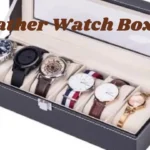
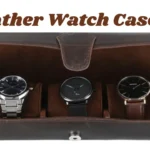
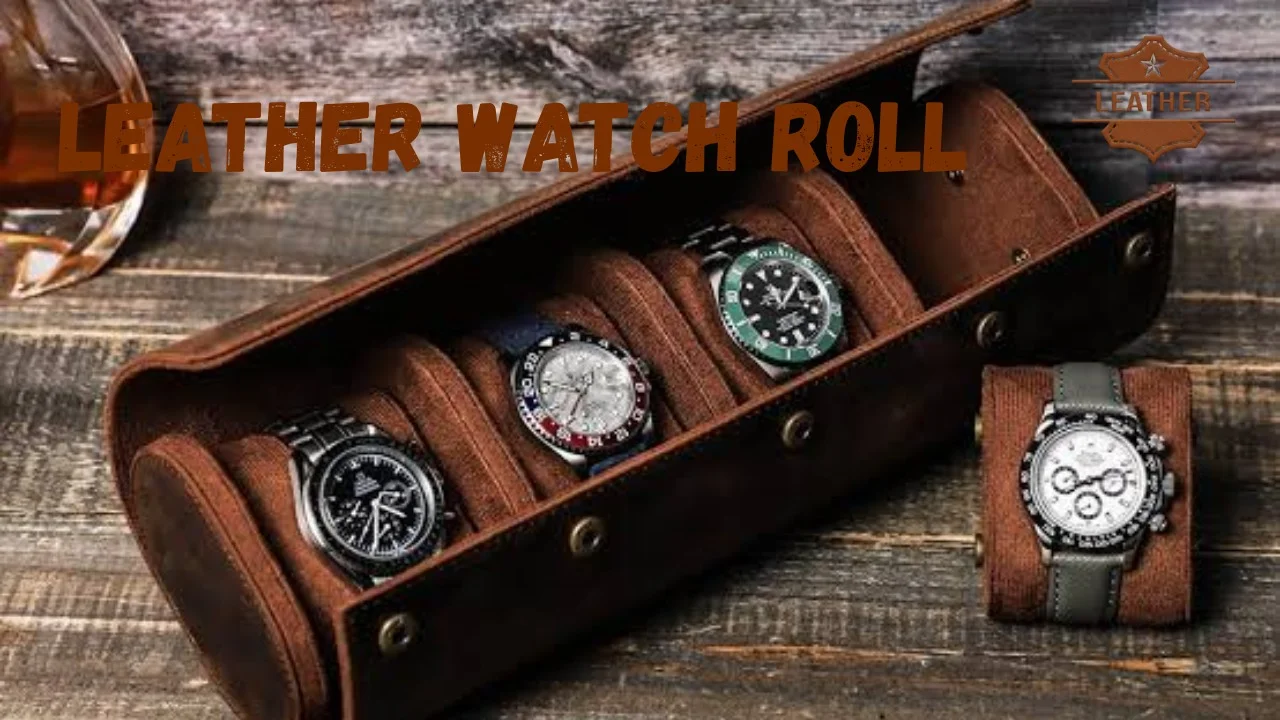
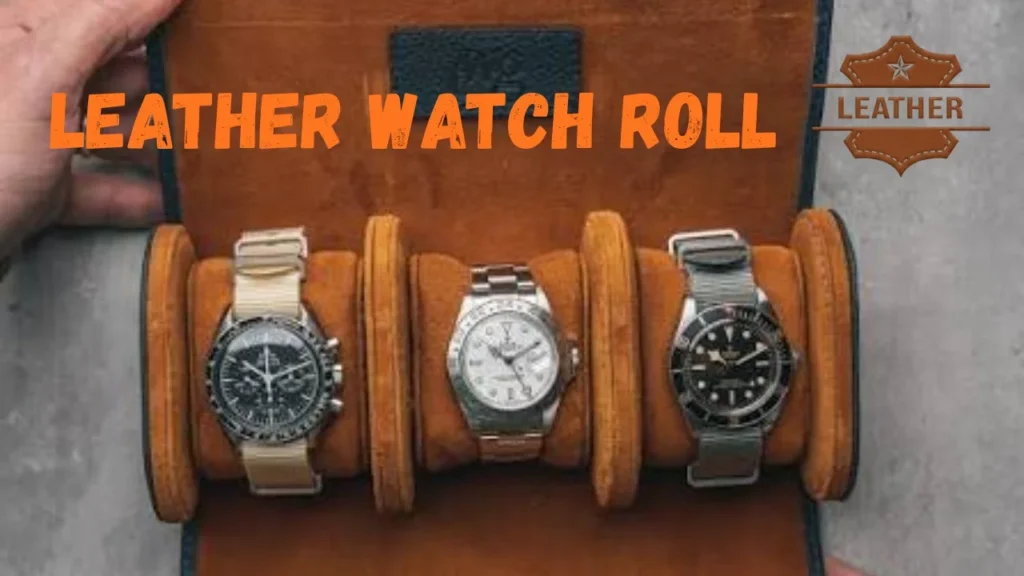
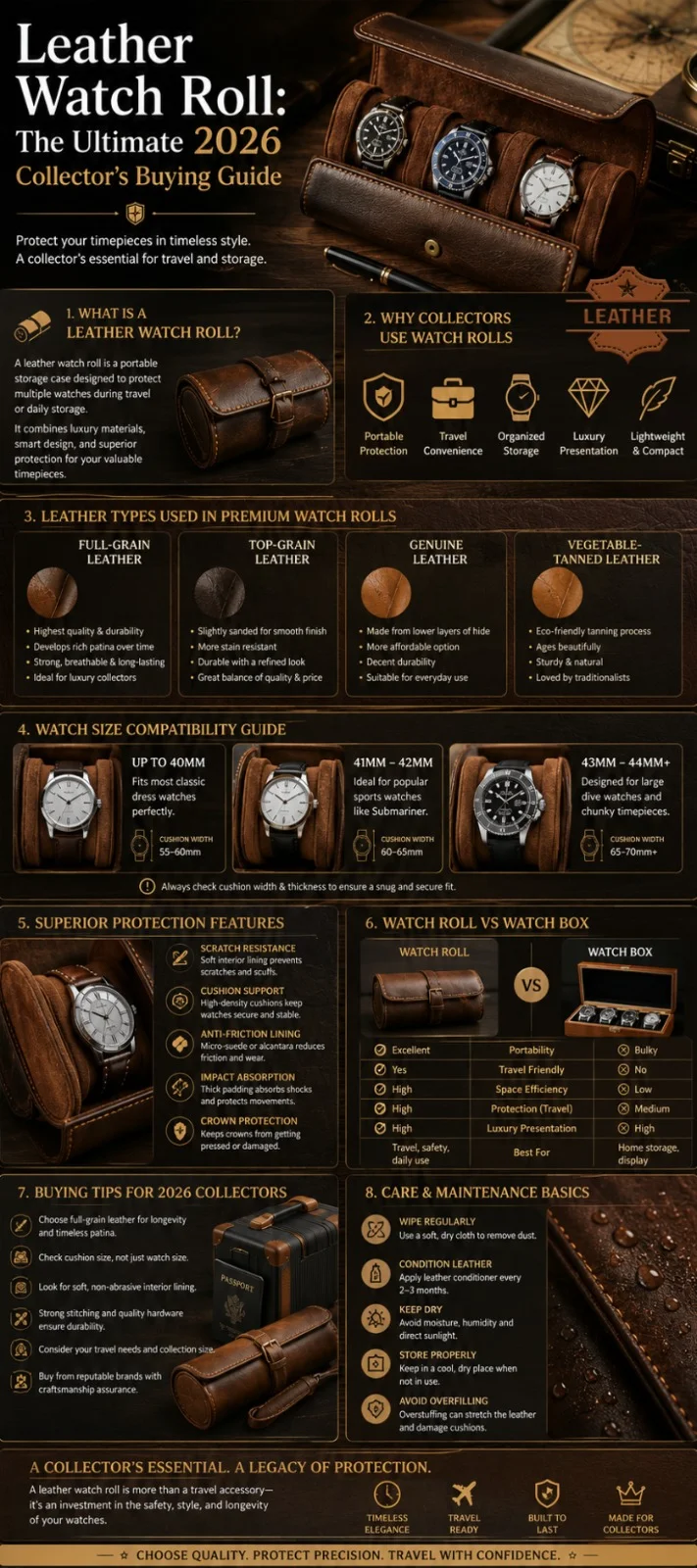
A leather watch roll is a cylindrical or foldable storage case designed to keep wristwatches separated, cushioned, and protected. In travel-focused guides, it is usually described as a compact case with a soft interior and a durable outer shell, made for keeping watches safe inside luggage, hotel safes, or carry-on bags.
In simple terms, it is a protective home for a watch when the watch is not on your wrist. A good roll reduces movement, limits rubbing between watches, and helps protect clasps, crowns, bezels, crystals, and bracelets from contact damage during transport. That is why many collectors prefer a watch roll over loose storage or improvised pouches.
Why Leather Watch Rolls Matter in 2026
The watch market has shifted toward higher-value purchases, stronger travel habits, and more collectors who rotate several watches instead of wearing only one. That makes secure, portable storage more important than ever. A leather watch roll fits that need because it combines presentation, protection, and portability in one accessory.
It also matters because watch owners are now more aware of micro-scratches, bracelet wear, and crown damage. The best travel cases are not just about keeping a watch from falling out of a bag. They are about preventing pressure damage, reducing friction between pieces, and choosing a storage format that suits the watch’s clasp type and case thickness.
How a Watch Roll Protects Your Timepieces
A watch roll protects in four main ways:
First, it separates watches so that metal does not knock against metal. Second, it uses a soft lining to reduce surface abrasion. Third, it keeps the watch supported so the bracelet or strap is not crushed. Fourth, it limits movement inside a suitcase or safe.
Everest’s guide highlights a key protection detail many buyers miss: standard one-size pillows can be too fluffy, too loose, or too tight, while adjustable or compressible pillows can help the watch sit more naturally and avoid unnecessary bracelet pressure. That is especially useful for collectors with multiple wrist sizes or watches with different strap styles.
Watch Roll vs Watch Box vs Travel Case
| Option | Best For | Main Strength | Main Limitation |
| Watch roll | Travel, compact storage, collectors | Easy to pack, discreet, elegant | Less display-friendly than a box |
| Watch box | Home storage and display | Organized home presentation | Bulkier and less travel-friendly |
| Travel watch case | Mixed travel needs | Can offer a stronger structure | May be less elegant than a roll |
| Watch pouch | Light short-term carry | Very compact | Usually less protective than a roll |
Travel + Leisure explains that a watch roll is a specific type of cylindrical travel case with padding, while watch travel cases are a broader category. It also notes that watch rolls are more compact than boxes and easier to fit in bags and safes. DailyWatch says the same in simpler terms: a watch roll is usually more travel-friendly than a watch box, while boxes are often better for permanent display.
Why Watch Collectors Prefer Watch Rolls
Collectors usually like watch rolls because they are practical without looking utilitarian. A roll can hold one watch or several watches, stay discreet in transit, and still feel premium enough for luxury ownership. Time + Tide points out that some rolls are built for larger rotations, while other brands focus on single-watch portability.
A better watch roll also helps collectors manage travel routines. Instead of packing watches loosely, the collector can select one travel piece, one backup piece, or a small rotation set. That makes the roll part of a storage system, not just a pouch.
Leather Types Used in Premium Watch Rolls
The leather itself matters almost as much as the structure. Full-grain leather, cross-grain leather, and genuine leather all show up in current watch-roll listings, but they do not perform the same way over time. T3’s current watch-roll guide, for example, includes full-grain, cross-grain, and full-grain-based premium options, which shows how material choice is a real selling point in this category.
| Leather Type | What It Means | Best For | Long-Term Behavior |
| Full-Grain Leather | The top layer of the hide was kept intact | Premium rolls, collector pieces | Strong, durable, and develops patina over time |
| Top-grain leather | Top layer that may be refined or buffed | Sleek premium goods | More uniform look, usually less character than full-grain |
| Genuine leather | A broad term for real leather, often lower in the hierarchy | Budget-friendly options | Quality varies a lot by finishing and layer used |
| Vegetable-tanned leather | Leather tanned with natural tannins | Heritage-style products | Often patinas richly and ages with character |
| Saffiano leather | Leather with a patterned finish | Structured, modern look | More resistant-looking surface, less natural aging character |
| Suede/nubuck linings | Soft interior materials | Scratch reduction | Good for interiors, not usually for the exterior shell |
Full-grain leather is widely described as the top layer of the hide, kept in its most natural state. Genuine leather, by contrast, is a much broader term and may include more processing or lower layers. Vegetable-tanned leather is especially relevant for premium watch rolls because it tends to develop patina as it absorbs oils, light, and moisture over time.
What Patina Means in a Watch Roll
Patina is the natural change that leather develops with use. It can darken, soften visually, and show richer tone variation over time. Tanner Bates explains that full-grain vegetable-tanned leather is especially suited to patina because it retains the natural grain and absorbs oils and moisture more readily.
For watch buyers, patina is usually a feature, not a flaw. A good leather watch roll should age gracefully instead of peeling, cracking, or looking tired after a few trips. That is why premium buyers often prefer leather that is expected to improve visually with age, not just survive it.
How to Identify a Better Watch Roll
A good watch roll usually has five signs:
- A firm outer shell that keeps the roll from collapsing.
- A soft, non-abrasive lining such as suede or microfiber.
- Pillows or inserts that match the watch size.
- Secure closures such as snaps, zips, or reinforced straps.
- Clean stitching and edge finishing that suggest real craftsmanship.
Everest’s description of sliding rails, compressible pillows, and strong inner construction shows why these details matter. The goal is not just to hold a watch. The goal is to keep the watch still, protected, and easy to remove without unnecessary contact.
Leather Watch Roll Size Guide
| Roll Size | Best Use | Best Watch Types |
| Single watch roll | Minimal travel | One daily watch, dress watch, or special piece |
| Double watch roll | Weekend travel | Two-watch rotation or backup piece |
| Triple watch roll | Short business trips | Small collector rotation |
| Four-watch roll | Heavier travel | Mixed collection travel |
| Multi-watch collector roll | Home + travel | Enthusiasts with larger rotations |
The right size depends on collection behavior, not just the number of watches. A collector with two large watches may be better off with a double roll than a cramped triple roll. A buyer who travels with one watch every week may only need a single roll with excellent structure. That is why size should be judged alongside watch thickness, bracelet style, and packing routine.
Watch Size Compatibility Guide
| Watch Profile | Roll Recommendation | Why |
| Slim dress watch | Standard pillow works well | Less bulk, easier to secure |
| Medium sports watch | Medium cushion and stable lining | Needs stronger support without compression |
| Thick dive watch | Larger cavity and more room around the crown | Prevents squeezing and crown pressure |
| Bracelet watch | Soft but supportive pillow | Avoids bracelet deformation |
| Leather strap watch | Flat or lightly padded support | Keeps the strap from creasing |
| Large-dial watch | Check the internal diameter carefully | Standard rolls may be too tight |
Charles Simon explicitly warns that not every cushion fits every watch, especially watches with large dials, thick bezels, or unusual wrist sizes. That is exactly why a compatibility guide matters. For larger or thicker watches, the safest choice is usually a roll with more room around the cushion and a support system that does not force the strap or bracelet into an unnatural shape.
What to Look for in a Premium Leather Watch Roll
A premium roll should have more than an attractive exterior. Look for:
- full-grain or high-quality top-grain leather
- a soft lining that resists scratches
- a cushion system that fits your watch sizes
- strong stitching around stress points
- a secure closure
- a shape that keeps the roll stable in transit
- enough spacing so watches do not touch each other
T3’s premium and best-overall picks show that buyers are already responding to material quality, Soft Interiors, and protection claims, but most articles stop there. The better buying guide explains how those features work together.
Leather Watch Roll Buying Checklist
Before buying, ask these questions:
- How many watches do I actually travel with?
- Are they slim, medium, or thick cases?
- Do I wear bracelets, leather straps, or rubber straps?
- Do I need home storage, travel storage, or both?
- Is the leather type clearly identified?
- Is the lining soft enough to avoid micro-scratches?
- Are the cushions sized for my watches?
- Is the closure secure enough for luggage travel?
Travel + Leisure suggests choosing size based on the kind of collection you transport and the way the band fastens, because buckle and deployment clasps behave differently in storage. That is a useful buying filter that many watch-roll pages leave out.
Best Uses of a Leather Watch Roll
A leather watch roll is ideal for:
- business travel
- weekend trips
- hotel safe storage
- collector rotation storage
- gifting a luxury watch
- keeping watches separated in luggage
- discreet storage for valuable timepieces
DailyWatch and Travel + Leisure both emphasize portability and compactness, while Everest focuses on stable travel protection and easy retrieval. That makes the watch roll especially useful for people who want to travel with watches without carrying a bulky box.
Pros and Cons
Pros
- compact and travel-friendly
- elegant luxury presentation
- separates the watches from each other
- useful for safes and carry-ons
- available in single, double, triple, and larger formats
Cons
- not always ideal for very large watches
- Cheap pillows can be too tight or too loose
- Lower-quality leather may crack or age badly
- Some rolls are more about style than protection
- less useful than a display box for home presentation
How to Travel Safely With Luxury Watches
The safest travel setup starts with the right roll, but it does not end there. A well-packed roll should go inside your carry-on or another secure bag, not loose in checked luggage. Travel + Leisure also recommends considering extra security precautions such as insurance for expensive pieces, a tracker if practical, and hotel safes for longer trips.
Good travel habits also include:
- not overstuffing the roll
- keeping watches separated
- avoiding unnecessary pressure on clasps
- cleaning the watch before storage
- checking that the roll closes fully before travel
How to Maintain a Leather Watch Roll
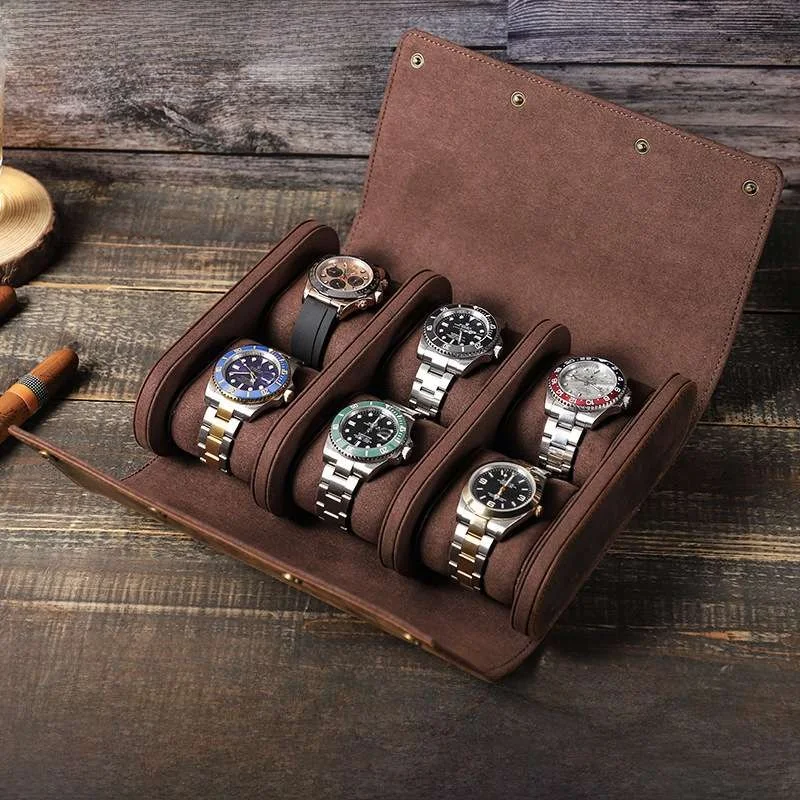
Leather care should be simple, not complicated. Travel + Leisure recommends using a dry cloth to keep genuine leather cases polished and occasionally using oil to nourish the leather. Tanner Bates adds that proper care means gentle cleaning, conditioning, and avoiding prolonged water exposure or harsh chemicals.
Best care habits
- Wipe dust off regularly
- store away from damp areas
- avoid leaving it in a hot car
- Condition the leather lightly when needed
- keep the lining free of grit and lint
- let it air out after travel
Common Buyer Mistakes to Avoid
The most common mistakes are:
- buying by looks only
- choosing the wrong cushion size
- assuming every “genuine leather” product is premium
- packing too many watches into one roll
- ignoring clasp type and bracelet thickness
- forgetting Long-Term care
One of the biggest mistakes is thinking any watch roll will fit any watch. Charles Simon’s caution about large dials, thick bezels, and wrist-size variation is important because fit is not universal. That is why compatibility should be treated as a buying requirement, not an afterthought.
Best Leather for a Watch Roll
For collectors, full-grain leather is usually the strongest choice because it retains the natural surface of the hide and is associated with durability and patina. Vegetable-tanned full-grain leather is especially attractive for people who like an accessory that matures beautifully over time.
For buyers who want a more uniform finish, top-grain leather can still be a solid premium option. For budget buyers, genuine leather can work, but only if the product page is transparent about leather source, lining, and construction quality.
Who Should Buy a Leather Watch Roll
A leather watch roll is a strong choice for:
- watch collectors
- frequent travelers
- professionals who carry a watch for work trips
- gift buyers
- people who want elegant storage at home
- buyers who value compact luxury
Who Should Avoid It
A leather watch roll may not be the best choice if:
- You need only the home display
- Your watches are extremely oversized, and the roll is not dimensioned correctly
- You want a rigid hard-case style box
- You are unwilling to maintain leather properly
Future Trends in the Leather Watch Roll Market
The strongest trend is toward smarter interiors and a better fit. Current reviews and brand guides already show interest in adjustable or more carefully shaped cushions, better lining materials, and stronger protection systems. Everest’s floating-watch concept and Charles Simon’s cushion-sizing emphasis point toward a market that is moving beyond simple cylindrical storage toward more engineered protection.
Another important trend is transparency. Buyers now want to know where the leather came from, how it was tanned, and whether it was sourced responsibly. That makes organizations like the Leather Working Group increasingly relevant when a brand wants to build trust around sourcing and sustainability.
People Also Ask
A: Yes, if the roll has a soft lining, secure closure, and correctly sized cushions. The protection comes from separation, padding, and reduced movement.
A: It depends on your travel habits. A single roll is great for one favorite watch, while a triple roll suits a short rotation. The best size is the one you can pack without forcing the watches together.
A: For travel, usually yes. A watch roll is more compact and easier to pack. A watch box is better for home display and permanent storage.
A: Sometimes, but not always. Large case sizes and thick bezels may need a larger cushion or a custom-fit solution. Check internal dimensions before buying.
A: A good one helps a lot by keeping watches separated and cushioned. Soft linings and stable inserts are the main reasons the watch surface stays safer.
Conclusion
If your audience wants a leather watch roll that feels premium and actually protects valuable watches, the winning page should be a collector’s guide first and a sales page second. That means better education, Better Fit Guidance, better leather explanations, and better long-term ownership advice. Brands and publishers that build trust this way are much better positioned to win both rankings and conversions. For TheLeatherItems.com, this is a strong chance to own the topic with a guide that helps first-time buyers, frequent travelers, and serious collectors make the right choice.
Legal Disclaimer
Leather quality, pricing, manufacturing standards, and product availability may vary by country, brand, and supplier. Always verify authenticity, material details, and care instructions before purchase.