Introduction
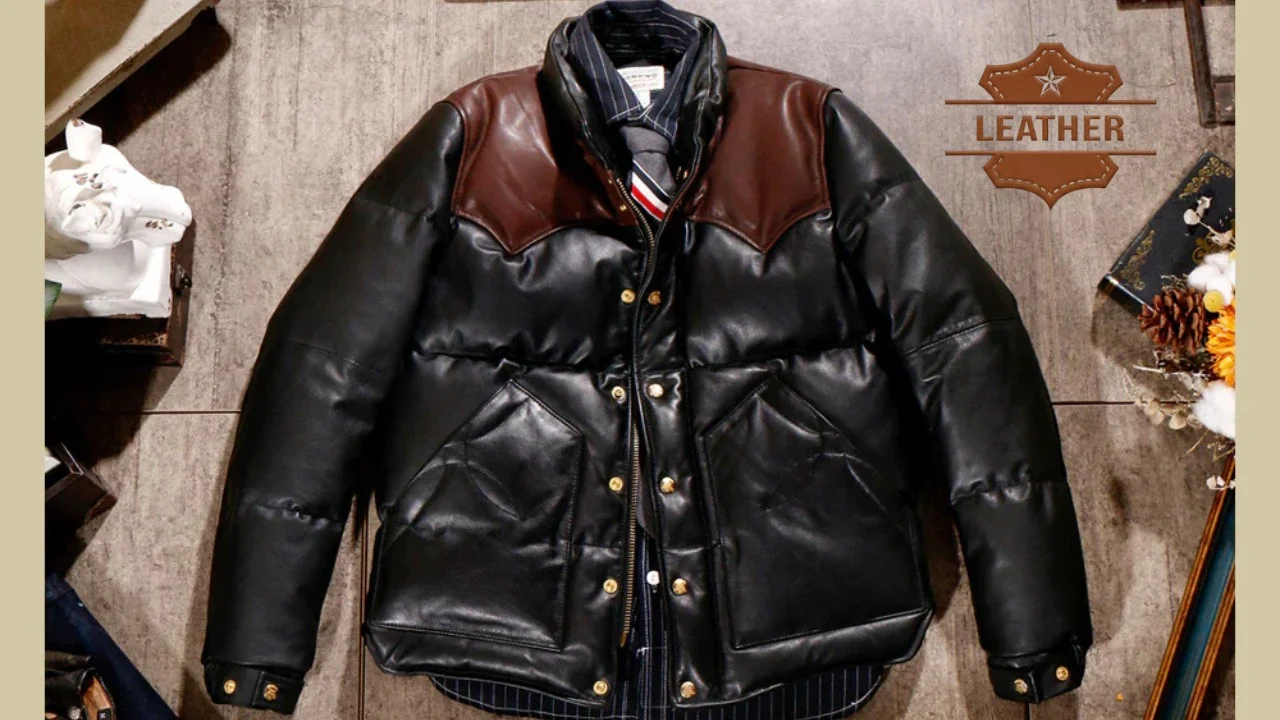
A Leather Puffer Jacket combines a premium leather outer shell with quilted insulating baffles that trap air for exceptional warmth. Unlike traditional leather jackets that rely primarily on the shell for wind resistance, leather puffers add internal insulation layers (down, synthetic, or hybrid) to deliver high thermal performance while maintaining a sleek, luxurious leather appearance.
This hybrid design merges two proven concepts: the durability, texture, and aging character of leather with the lightweight warmth of modern puffer technology — creating an elevated piece suitable for urban winters, city commutes, and stylish cold-weather layering.
Why Choose a Leather Puffer Jacket?
- Aesthetic value — luxurious, polished, urbane look with natural patina potential
- Functional performance — superior warmth-to-weight ratio plus wind resistance
- Versatility — bridges streetwear, smart-casual, and elevated everyday styling
- Long-term investment — quality examples develop character and last many seasons
A Brief History of the Leather Puffer
Leather outerwear originated in rugged, functional contexts (aviation, motorcycling, military). Puffer jackets evolved from expedition and alpine gear, using stitched baffles to trap warm air efficiently.
The leather puffer emerged as a sophisticated fusion: designers applied premium leather aesthetics to insulated puffer construction. By 2026, the category will have matured with minimalist quilting, hybrid materials, responsible sourcing, and refined silhouettes that work equally well on the runway and city streets.
Types & Variations of Leather Puffer Jackets
By Length
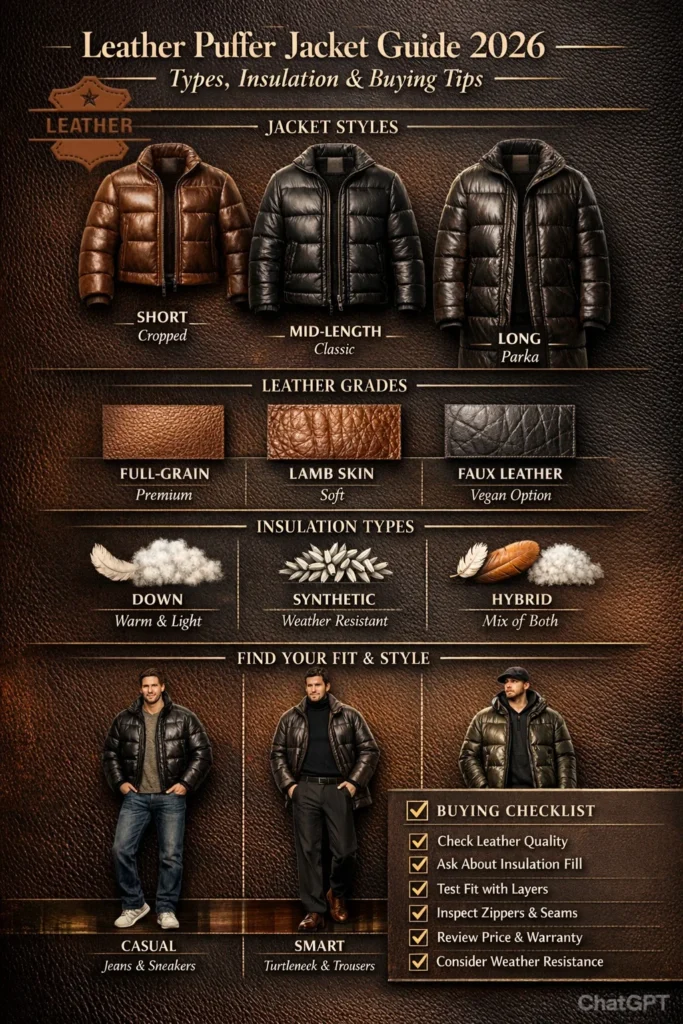
- Cropped / Short — Hits above the hip; modern, streetwear-friendly; pairs with high-waisted trousers
- Mid-Hip / Classic — Most versatile length; balances style and coverage
- Long / Parka-style — Extended coverage; maximum warmth; ideal for very cold climates
Hooded vs Non-Hooded
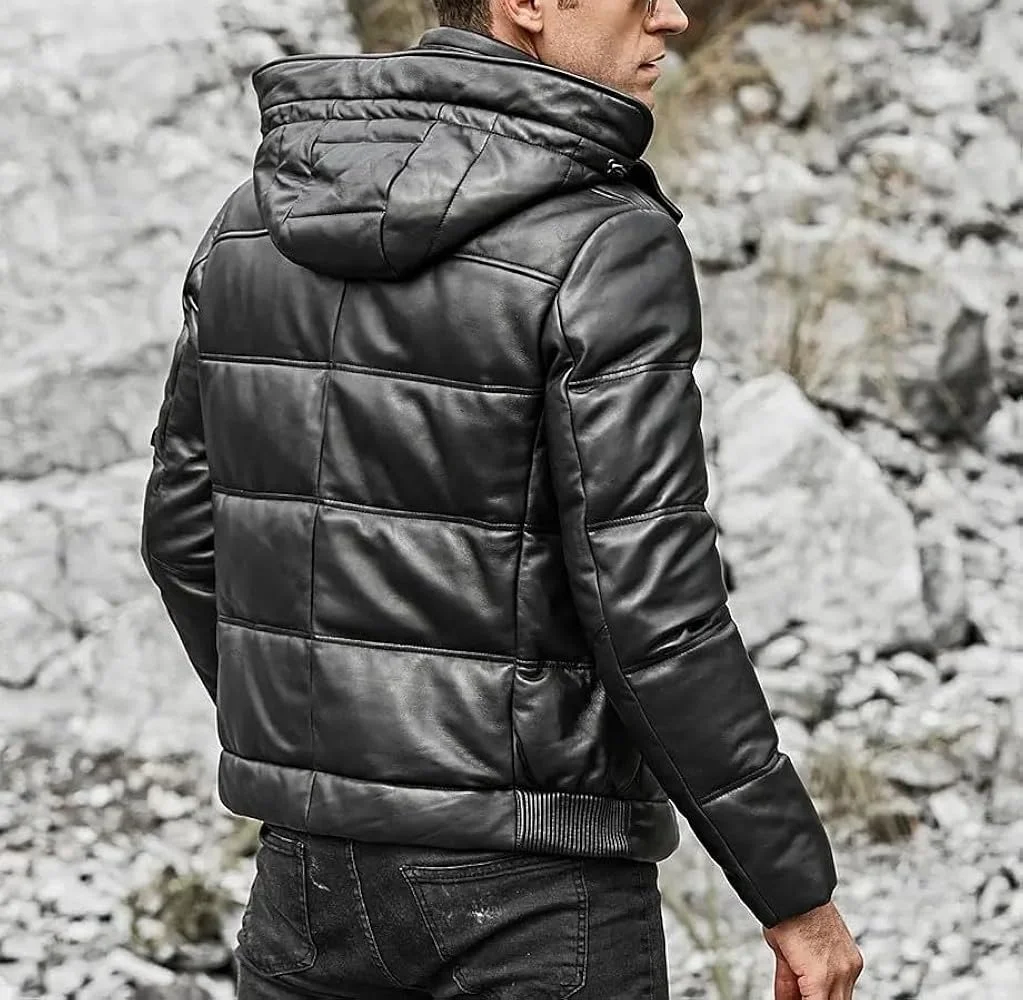
- Hooded — Adds casual versatility and better wet-weather protection
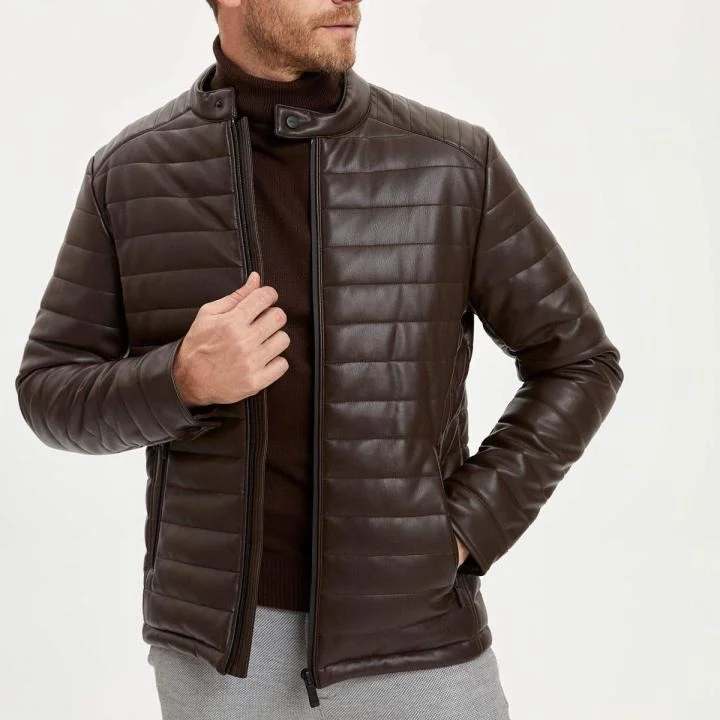
- Collar / Funnel Neck — Cleaner, more formal appearance; excellent neck seal for heat retention
Quilting Patterns
- Horizontal — Classic, even insulation distribution
- Chevron / Diagonal — Adds visual movement and directional style
- Box / Diamond — Grid structure; minimizes cold spots and delivers consistent warmth
Material Hybrids
Many 2026 designs blend leather panels with technical fabrics (nylon, Cordura) in high-wear or high-exposure areas for improved durability and weather resistance.
Leather Types & Grades
Genuine Leather
- Full-Grain — Top-tier; natural surface preserved; maximum durability and richest patina
- Top-Grain — Lightly corrected for uniformity; still premium and long-lasting
- Corrected Grain — Heavily processed; smoother but less character and longevity
- Lambskin / Sheepskin — Exceptionally soft and luxurious; best for refined silhouettes
- Goatskin / Cowhide — Stronger, more abrasion-resistant; suited to everyday or rugged use
Faux / Vegan Leather
Polymer-based simulation. Offers a consistent finish, often better initial water resistance, and ethical appeal. Lacks Natural patina and typically has a shorter lifespan.
Recommendation
Prioritize full-grain or top-grain for investment pieces; lambskin for softness and fashion; high-grade faux for budget or ethical priorities.
Insulation & Warmth Performance
Insulation Types
- Down — Highest warmth-to-weight; excellent loft (600–900+ fill power ideal)
- Synthetic — Moisture-resistant; performs better in damp conditions; slightly heavier
- Hybrid — Combines down clusters with synthetic fibers for balanced all-weather performance
Fill Power (Down)
Higher numbers = greater loft and warmth per gram. Look for 600+ (good), 700–900+ (excellent) in premium models.
Leather Puffer vs Regular (Nylon/Poly) Puffer
| Feature | Leather Puffer | Regular Puffer |
| Aesthetic | Luxurious, urbane, premium | Sporty, technical, pragmatic |
| Durability | High (with quality leather) | Varies by shell fabric |
| Water Resistance | Requires treatment | Often inherently better |
| Warmth (same fill) | Comparable | Comparable |
| Weight | Heavier | Lighter |
| Repairability | Excellent (leather specialists) | Easier visible fabric repairs |
| Price | Higher | Wider range |
Pros & Cons
Pros
- Elevated, sophisticated appearance
- Excellent durability and aging character
- Versatile across casual and smart-casual outfits
- Strong wind resistance from the leather shell
Cons
- Higher upfront cost
- Heavier than standard puffers
- Requires regular conditioning and protective treatments
- Less forgiving in heavy/prolonged rain without treatment
How Leather Puffer Jackets Are Made
- Material Sourcing — Selecting leather grade, insulation type, and fill power
- Pattern & Cutting — Precise panel layout from hides and linings
- Quilt Assembly — Stitching baffles, inserting fill, attaching lining
- Hardware & Finishing — Installing zippers, snaps, collars, cuffs
- Quality Control — Checking seam strength, fill uniformity, and hardware function
- Final Treatments — Optional waterproofing, conditioning, edge finishing
How to Identify Real vs Fake Leather
- Smell — Real: warm, organic; Faux: chemical/plastic
- Grain & Texture — Real: irregular, natural variations; Faux: overly uniform or repeating pattern
- Underside — Real: fibrous/suede-like; Faux: fabric or smooth synthetic backing
- Pores — Real: random; Faux: embossed repetition
- Water Drop — Real: absorbs slowly; Faux: often repels
- Price & Seller — Suspiciously low prices usually indicate corrected or synthetic
Buying Checklist
- Leather grade & origin (full-grain/top-grain preferred)
- Insulation type + fill power/density
- Fit with layering room (shoulders align, sleeves reach wrist bone)
- Even quilting & no cold spots
- Quality hardware (YKK zippers or equivalent)
- Reinforced stress-point stitching
- Water-resistance treatment (if needed)
- Warranty, repair options, and care instructions
- Responsible sourcing (RDS-certified down, certified tanneries)
Styling & Outfit Ideas
Streetwear / Casual
- Black leather puffer + tapered jeans + white sneakers
- Oversized puffer + cargo pants + chunky boots
Smart Casual / Elevated
- Mid-hip leather puffer + turtleneck + tailored wool trousers + Chelsea boots
- Brown leather puffer + merino crewneck + chinos + minimalist sneakers
Color Palette
Black, dark brown, olive, tan, and charcoal remain the most versatile 2026 choices.
Layering Tip
Use thin, High-Performance base and mid-layers (merino, fleece grid) to preserve the clean silhouette.
Care & Maintenance
Daily
- Wipe dust/dirt with a soft, dry cloth
Conditioning
- Apply leather conditioner every 3–6 months (thin layer, patch test first)
Storage
- Use wide, padded hangers
- Breathable garment bag in a cool, dry place (never plastic)
Water & Stains
- Blot light moisture immediately; air dry naturally
- Apply water-repellent protector spray annually (test first)
- Professional leather cleaning for deep stains or odors
Price Ranges Worldwide
- Budget / Faux — $80–$250
- Mid-Range (genuine leather + synthetic fill) — $250–$700
- Premium / Designer (full-grain + high-fill down) — $700–$2,500+
Prices vary significantly by region, brand heritage, and material specifications.
Top Countries & Provenance
- Italy & Spain — Artisanal tanning and luxury finishing
- United States & United Kingdom — Technical outerwear expertise and heritage brands
- Canada & Australia — Cold-weather design and construction
- Middle East — Growing luxury outerwear market
Look for certified tanneries, RDS down, and clear construction details.
2026 Trends
- Minimalist or micro-quilted patterns for cleaner silhouettes
- Hybrid leather + technical fabric constructions
- Strong emphasis on Sustainability (responsible down, lower-impact tanning)
- Slightly oversized and relaxed fits remain popular
FAQs
A: Yes — especially with 600+ fill power down or high-density synthetic. Leather adds excellent windproofing, but for extreme cold, layer appropriately (base + mid + puffer) and choose longer lengths for better coverage.
A: Light rain is usually fine with treated leather. Heavy or prolonged exposure can damage untreated leather. Opt for hybrid designs or apply hydrophobic treatment; reapply as needed.
A: Choose a size that allows room for insulating layers. If between sizes and layering is important, go one size up. Ensure shoulder seams align and sleeves reach the wrist bone.
A: With proper care (conditioning, correct storage, timely repairs), a quality leather puffer can last many seasons — often longer than standard puffers. Leather develops attractive patina over time.
A: Yes, especially for budget, ethics, or lighter use. Modern high-grade faux options perform well and resist water better initially, though they lack patina and typically don’t last as long as genuine leather.
Conclusion
A leather puffer jacket is an elegant ensemble model combining the tactile semantics of leather with the heat-trapping latent structures of modern insulation. It’s suitable for urban life where style matters and Cold-Weather function is non-negotiable. When you treat a jacket like a model — examine training data (materials), inspect architecture (construction), validate performance (warmth, fit), and schedule maintenance (conditioning & repair) — your purchase becomes an informed and durable investment. Use the checklists and taxonomy in this guide to select the best leather puffer for your needs in 2026.
SEO-Friendly Alt Text
“Premium 2026 leather puffer jacket infographic showing types, leather grades, insulation options, styling tips, and buying checklist.”
Caption (CTR-Friendly)
“Leather Puffer Jacket Guide 2026: Discover types, insulation, styling tips & a must-follow buying checklist for your perfect winter jacket.”
Description (SEO-Optimized & CTR-Friendly)
“Explore the ultimate 2026 guide to leather puffer jackets — from styles and leather types to insulation, fit, and care. Learn how to pick the perfect jacket for warmth, style, and longevity.”