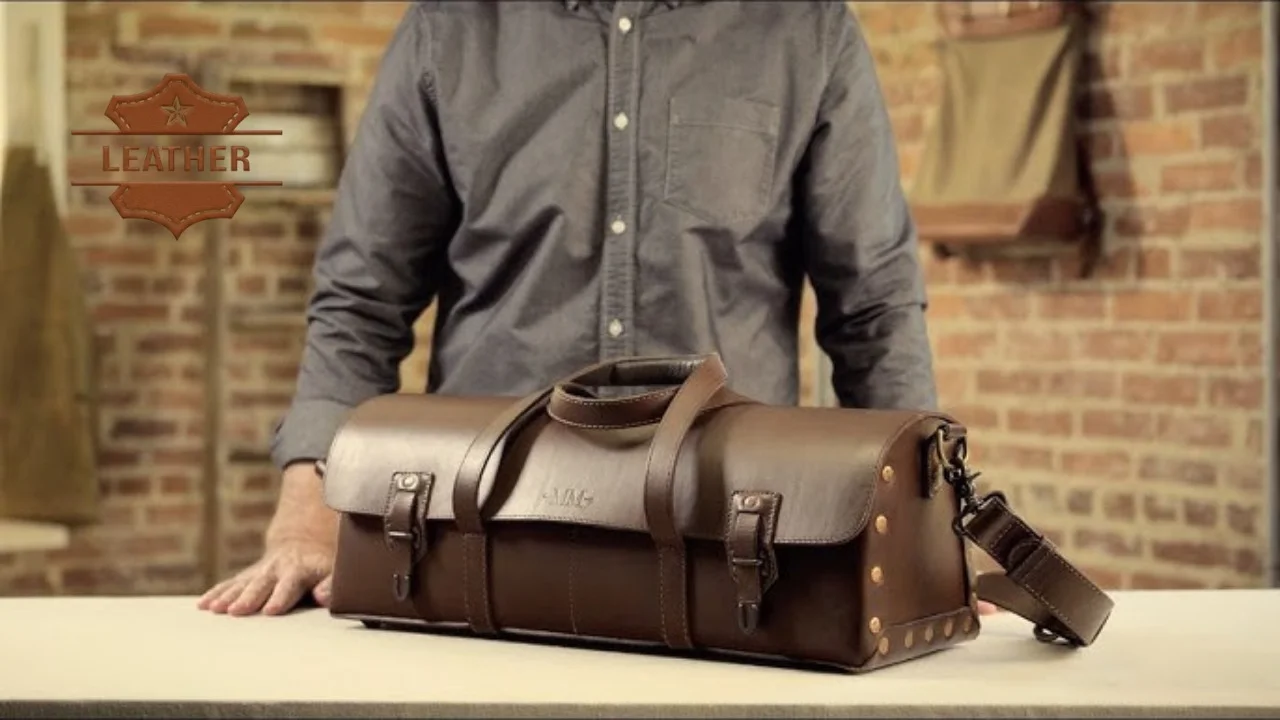
🔰 Introduction
A Leather Tool Bag is far more than a simple container for carrying equipment—it represents a long-term investment in efficiency, organization, durability, and professional identity.
Whether you are an electrician managing complex wiring systems, a carpenter shaping raw materials into precision structures, a mechanic handling heavy-duty machinery, or a DIY enthusiast tackling home improvement projects, the quality of your tool storage directly impacts your productivity, workflow, and comfort level.
One of the most common mistakes buyers make is opting for a low-cost alternative without considering long-term performance. At first glance, a cheaper option may seem appealing, but over time, it often leads to frustration, reduced lifespan, and repeated replacements.
Why does this happen?
Not all tool bags are engineered with the same materials, craftsmanship, and structural integrity.
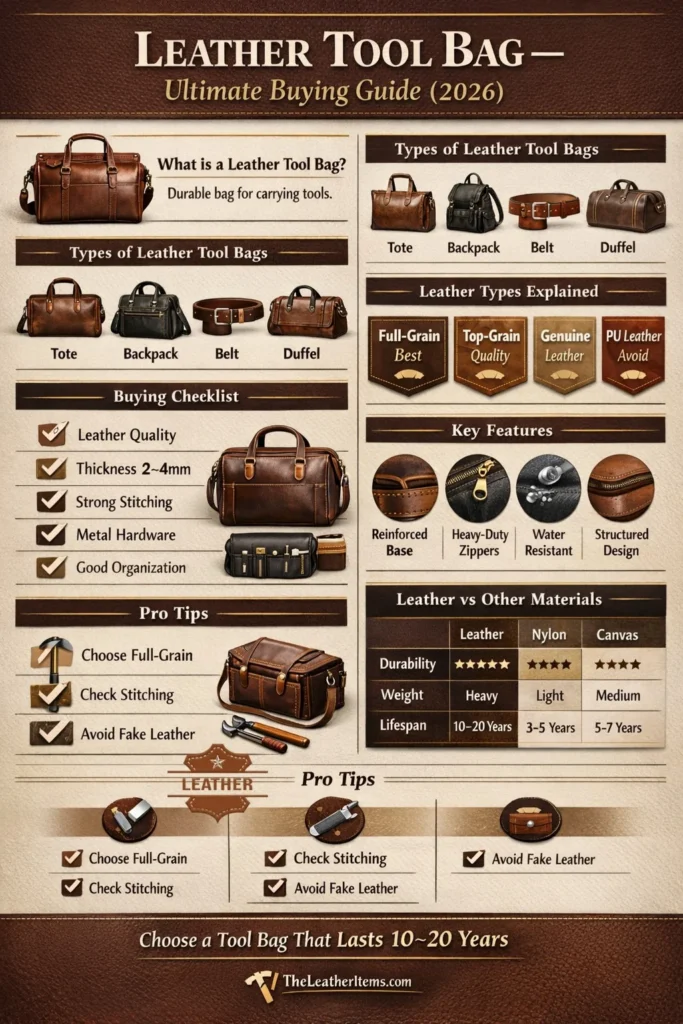
Unlike synthetic materials such as nylon or canvas, leather tool bags provide exceptional resilience, superior toughness, and a rigid structure that maintains its shape under pressure. High-grade leather products can endure 10 to 20 years or even longer, developing a distinctive aged finish known as patina, which enhances their visual appeal and character over time.
In this comprehensive guide, you will explore:
- Different types of leather tool bags
- Detailed leather quality breakdown
- Real vs fake leather identification techniques
- Step-by-step buying framework
- Common purchasing mistakes
- Maintenance strategies for longevity
👉 By the end of this guide, you will have a clear, confident understanding of which leather tool bag aligns perfectly with your needs and profession.
🧠 What is a Leather Tool Bag?
A leather tool bag is a heavy-duty storage solution crafted from natural or processed leather, specifically designed to transport tools safely, efficiently, and systematically.
These bags are widely used across various industries, including:
- Construction and building projects
- Electrical installations
- Carpentry and woodworking
- Mechanical repairs and maintenance
✅ Why Professionals Prefer Leather
Compared to alternative materials, leather offers several distinct advantages:
- Exceptional durability and resistance
- Protection against sharp and heavy tools
- A firm structure that prevents sagging
- An extended lifespan compared to synthetic materials
- Sophisticated and professional appearance
👉 In simple terms: Leather equals durability, elegance, and reliability.
🏛️ History of Leather Tool Bags
Leather has been utilized for centuries due to its natural strength, flexibility, and adaptability.
🕰️ Evolution Over Time
| Era | Usage |
| Medieval Era | Basic leather pouches for craftsmen and blacksmiths |
| Industrial Revolution | Introduction of structured tool carriers |
| Modern Era | Advanced ergonomic and reinforced designs |
Today’s leather tool bags combine traditional craftsmanship with modern innovation, offering both functionality and aesthetic refinement.
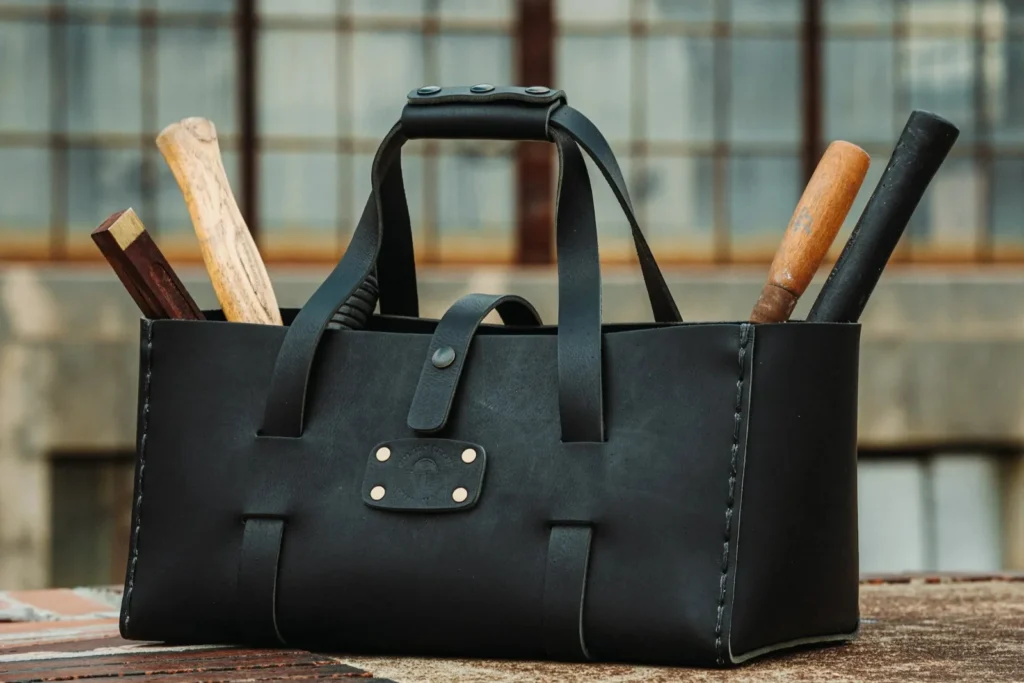
🧵 Types of Leather Tool Bags
Selecting the appropriate type is the first step toward making a smart and practical decision.
1️⃣ Tool Tote Bags
- Open-top configuration
- Quick and convenient tool access
- Spacious and sturdy design
👉 Ideal for: Carpenters and contractors
2️⃣ Tool Backpacks
- Even weight distribution across the shoulders
- Hands-free mobility
- Enhanced comfort for extended use
👉 Ideal for: Electricians and field technicians
3️⃣ Tool Belts & Pouches
- Easy-Access Compartments
- Lightweight and portable
- Worn around the waist for efficiency
👉 Ideal for: Construction workers
4️⃣ Duffel-Style Tool Bags
- Large storage capacity
- Secure zipper closure
- Suitable for transporting heavy tools
👉 Ideal for: Mechanics and industrial professionals
🏆 Leather Types Used in Tool Bags
Understanding leather quality is crucial before making a purchase decision.
🥇 Full-Grain Leather
- Highest durability and strength
- Natural grain remains untouched
- Develops rich patina over time
👉 Best suited for professionals
🥈 Top-Grain Leather
- Slightly refined surface
- Smooth and polished finish
- Balanced durability and affordability
👉 Best for value-conscious buyers
🥉 Genuine Leather
- Lower quality compared to others
- Less durable over time
- Often marketed misleadingly
👉 Not recommended for heavy-duty use
❌ PU Leather
- Artificial material
- Mimics real leather appearance
- Prone to cracking and peeling
👉 Avoid for professional applications
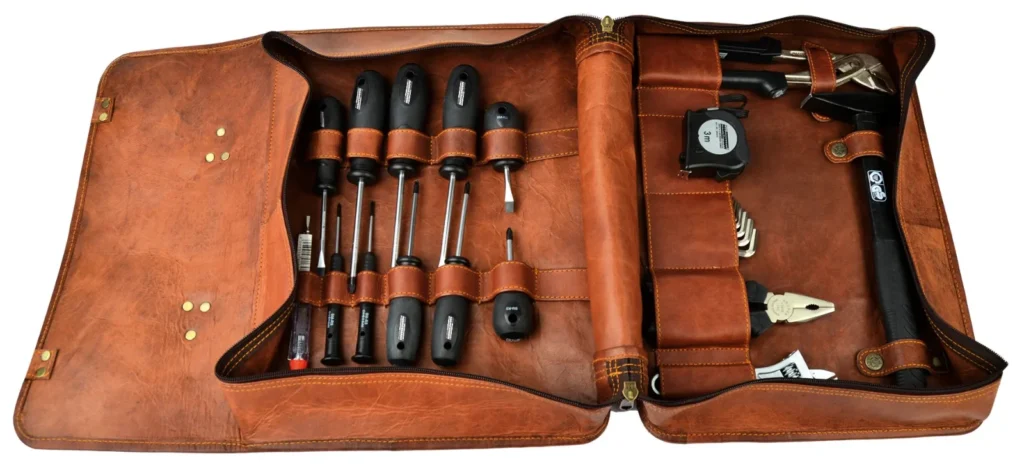
🏭 Manufacturing Process
Understanding the production process helps you distinguish high-quality craftsmanship from inferior products.
🔧 Raw Hide Selection
Premium hides are carefully chosen based on thickness, texture, and grain quality.
🌿 Tanning Process
- Vegetable tanning: eco-friendly and long-lasting
- Chrome tanning: faster and more flexible
✂️ Cutting & Shaping
Leather panels are precisely cut using specialized tools.
🧵 Stitching & Assembly
Heavy-duty threads and reinforced seams ensure durability.
⚙️ Hardware Installation
Includes zippers, buckles, and rivets for functionality.
✨ Finishing
Final polishing, conditioning, and quality inspection.
🔍 How to Identify Real vs Fake Leather
Many buyers struggle to differentiate between authentic and synthetic materials.
| Feature | Real Leather | Fake Leather |
| Smell | Natural, earthy aroma | Chemical scent |
| Texture | Irregular and unique | Uniform pattern |
| Durability | Long-lasting | Cracks over time |
| Price | Higher cost | Lower price |
👉 Pro Tip: Always examine both the smell and surface texture.
🛒 Buying Guide – What to Check Before Purchase
This is the most critical section for making an informed decision.
1️⃣ Leather Quality
Always prioritize full-grain leather for Maximum Longevity.
2️⃣ Thickness (2–4mm)
Thicker material indicates greater strength and endurance.
3️⃣ Stitching Quality
Look for:
- Double stitching
- Reinforced seams
4️⃣ Hardware Quality
Choose:
- Brass or stainless steel components
Avoid: - Plastic fittings
5️⃣ Pocket Organization
Multiple compartments improve efficiency and accessibility.
6️⃣ Comfort & Ergonomics
- Padded straps
- Wide belts
- Balanced weight distribution
⚙️ Key Features to Look For
A premium leather tool bag should include:
- Structured base to prevent collapsing
- Reinforced edges and corners
- Heavy-duty zippers
- Resistance to water and oil
⚖️ Leather vs Other Materials
| Feature | Leather | Nylon | Canvas |
| Durability | ⭐⭐⭐⭐⭐ | ⭐⭐⭐ | ⭐⭐⭐ |
| Weight | Heavy | Light | Medium |
| Style | Premium | Basic | Casual |
| Lifespan | 10–20 years | 3–5 years | 5–7 years |
👉 Conclusion: Leather outperforms in durability and long-term value.
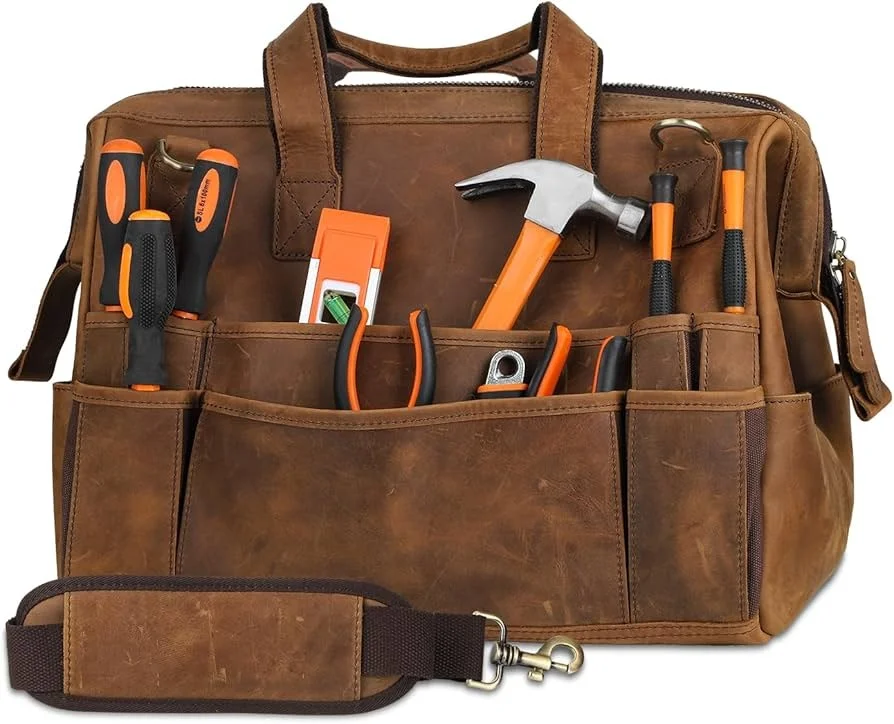
👷 How to Choose the Right Leather Tool Bag
Follow this structured approach:
Identify Your Use Case
- DIY → Compact pouch
- Professional → Heavy-duty bag
Consider Tool Weight
- Lightweight tools → Backpack
- Heavy tools → Tote
Focus on Comfort
Long working hours require ergonomic support.
Inspect Build Quality
Examine stitching, rivets, and base strength.
🔥 Best Use Cases
Understanding your profession helps optimize your choice.
⚡ Electricians
- Lightweight designs
- Quick-access compartments
🪚 Carpenters
- Large tote bags
- Strong structural support
🔧 Mechanics
- Oil-resistant leather
- Reinforced bases
🛠️ Common Mistakes to Avoid
Avoid these frequent errors:
- Misinterpreting “genuine leather” as premium
- Ignoring overall bag weight
- Overlooking stitching quality
- Failing to check tool compatibility
👉 These mistakes often result in wasted money and reduced efficiency.
🧼 Care & Maintenance Tips
Proper maintenance ensures longevity.
🧴 Conditioning
Apply leather conditioner every 3–6 months.
💧 Avoid Moisture
Leather is water-resistant but not Waterproof.
🧽 Cleaning
Use a soft cloth and avoid harsh chemicals.
📦 Storage
Store in a dry environment away from sunlight.
💰 Price Range Worldwide
| Region | Price Range |
| USA | $80 – $400 |
| UK | £70 – £350 |
| Europe | €80 – €380 |
| Middle East | $90 – $420 |
👉 Higher-quality leather comes with a higher upfront cost but offers better longevity.
🌍 Top Countries Famous for Leather Tool Bags
- Italy – Premium craftsmanship
- USA – Industrial durability
- Pakistan – High-quality exports at competitive prices
- India – Budget-friendly options
🏷️ Popular Leather Tool Bag Brands
- Heritage leather manufacturers
- Industrial workwear companies
👉 Always choose brands known for quality, reliability, and craftsmanship.
📊 Pros & Cons
✅ Pros
- Extremely durable
- Professional appearance
- Long-lasting performance
- Strong structural integrity
❌ Cons
- Heavier than synthetic alternatives
- Higher initial cost
- Requires regular maintenance
❓ FAQs
A: Yes, they offer long-term durability and professional value, making them a smart investment.
A: Full-grain leather is the best due to its strength and longevity.
A: They are water-resistant but not fully waterproof.
A: With proper care, they can last 10–20 years.
A: Yes, for durability and strength. Nylon is lighter but less durable.
🏁 Conclusion
A leather tool bag is not merely a storage accessory—it is a Reliable professional companion designed to enhance efficiency, organization, and durability.
It provides:
- Strength and resilience
- Long-term performance
- Improved organization
- Excellent return on investment
Although the initial cost may be higher, the long-term benefits significantly outweigh the expense.
👉 If durability is your priority → choose a heavy-duty tote
👉 If comfort matters most → choose a backpack
👉 If speed and accessibility are key → choose a tool belt