🔥 Introduction
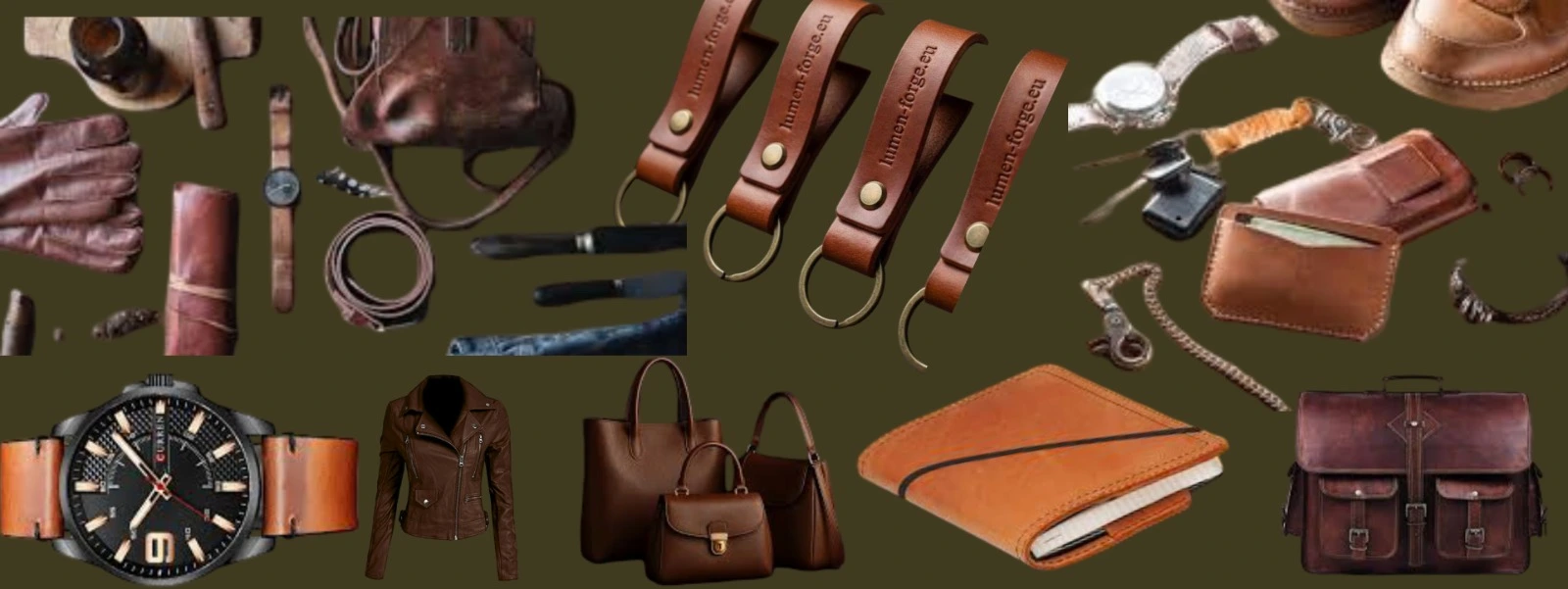
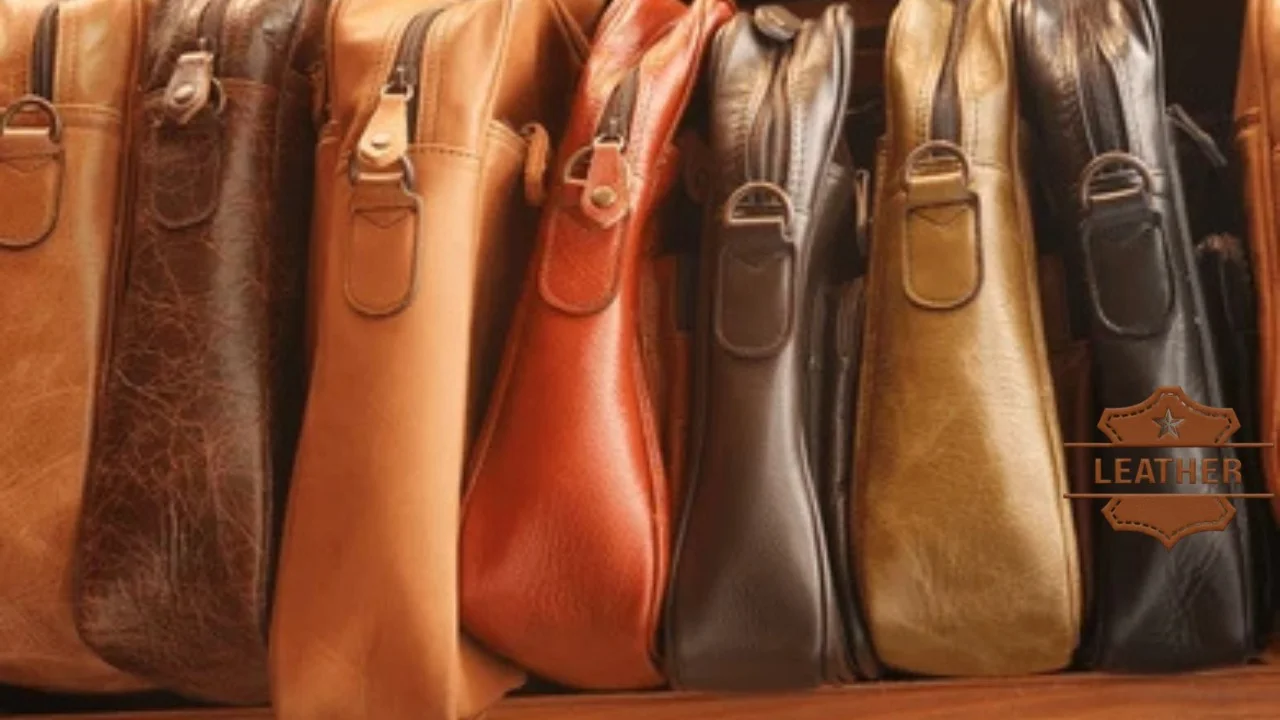
In today’s rapidly evolving fashion ecosystem, dominated by automated production systems and fast-fashion retail cycles, Leather Handcrafted Bags occupy a distinct and prestigious position. These are not ordinary utility items; they represent a blend of artistry, tradition, engineering precision, and long-term functional value.
Unlike mass-manufactured accessories produced in high-speed factory environments, handcrafted leather bags are meticulously created by skilled artisans who invest substantial time, expertise, and attention into every individual piece. Each bag is the outcome of deliberate manual effort—cutting, stitching, shaping, and finishing performed with exceptional care.
However, a major challenge exists in the global marketplace:
👉 Many products marketed as “handmade” are actually machine-assisted or partially mass-produced.
This creates confusion among consumers and leads to overpricing of low-quality goods disguised as premium craftsmanship.
With increasing global demand across regions such as North America, Europe, and the Middle East, understanding how to differentiate genuine handcrafted leather products from misleading alternatives has become essential.
In this comprehensive guide, you will learn:
- How to identify authentic handcrafted leather bags
- Key differences between handmade and machine-produced bags
- Leather quality classifications and grading systems
- Step-by-step manufacturing insights
- Complete buying checklist for smart decisions
- Pricing structures and global market trends
- Expert-level evaluation techniques
Whether you are a professional buyer, fashion enthusiast, traveler, or business owner, this guide is designed to help you make informed, confident, and value-driven purchasing decisions.
🧵 What Are Leather Handcrafted Bags?
✔ Definition
Leather handcrafted bags are premium-quality accessories created primarily through manual craftsmanship rather than automated industrial production. In these products, artisans control most or all stages of development—from selecting raw leather to final polishing.
Unlike machine-made products, handcrafted bags rely on human skill, precision, and traditional techniques that have been refined over generations.
🔍 Core Characteristics
Authentic handcrafted leather bags typically include:
- Manually cut leather components
- Traditional saddle stitching techniques
- Hand-finished and burnished edges
- Individual shaping and assembly
- Personalized finishing touches
💡 Why They Stand Out
Compared to industrially produced alternatives, handcrafted leather bags are:
✔ Highly unique in appearance
✔ Structurally stronger and more durable
✔ Rich in detailing and finishing quality
✔ Designed with long-term usability in mind
👉 Expert Observation: Genuine handcrafted bags reflect the artisan’s experience, making each piece slightly unique in texture, alignment, and finishing—something impossible in automated production lines.
📜 History of Leather Handcrafted Bags
Leather craftsmanship is one of the oldest material-based arts in human history, dating back thousands of years. Its evolution reflects the development of human civilization itself.
🏺 Historical Development Timeline
Ancient Civilizations (Egypt, Rome, Mesopotamia):
Leather was Primarily Used for storage pouches, armor, sandals, and utility containers.
Medieval Period:
Leatherworking became a structured trade, with guild systems ensuring quality control and training apprentices.
18th–19th Century Europe:
Luxury leather goods began emerging, especially in fashion hubs like France and Italy.
Industrial Revolution:
Machine production increased accessibility but reduced craftsmanship depth.
Modern Era (21st Century):
A renewed appreciation for artisanal products has revived demand for handcrafted leather goods.
🌍 Modern Importance
Today, leather handcrafted bags are associated with:
- Sustainable fashion practices
- Luxury lifestyle branding
- Heritage craftsmanship preservation
- Slow fashion movement adoption
Countries such as Italy, France, the United Kingdom, and Pakistan remain influential in maintaining high-quality leather traditions.
🎯 Types of Leather Handcrafted Bags
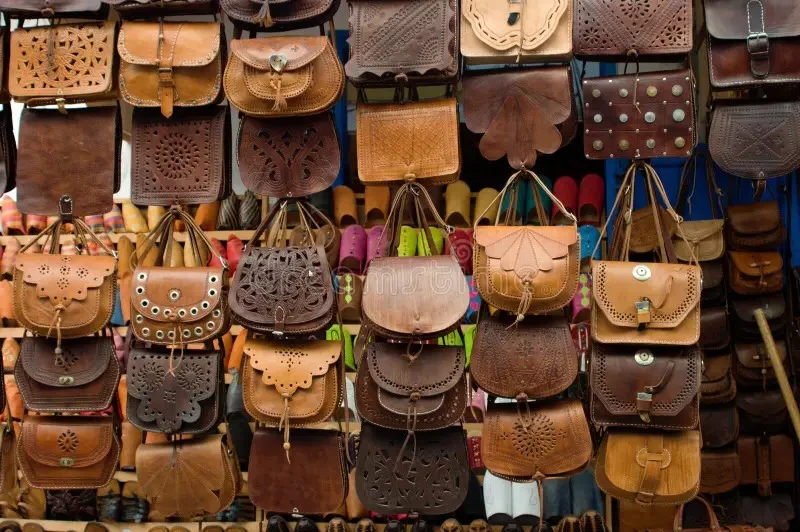
Selecting the correct bag type depends on your lifestyle, profession, and usage requirements.
👜 Tote Bags
- Spacious open structure
- Ideal for everyday essentials
- Popular among office professionals and students
🎒 Backpacks
- Balanced weight distribution
- Suitable for travel and commuting
- Combines comfort with durability
💼 Briefcases
- Structured and professional appearance
- Designed for corporate environments
- Ideal for documents, laptops, and business essentials
🧳 Duffel Bags
- Large storage capacity
- Excellent for short trips and travel
- Durable construction for heavy usage
👜 Crossbody Bags
- Lightweight and compact
- Suitable for casual and urban use
- Enhances mobility and convenience
👉 Recommendation: Always select a bag based on functionality first, followed by style preferences.
🧱 Leather Types Used
The type of leather used directly determines durability, appearance, and lifespan.
🥇 Full-Grain Leather
- Highest durability level
- Retains natural surface texture
- Develops rich patina over time
- Extremely long-lasting
🥈 Top-Grain Leather
- Slightly refined surface
- Smooth and uniform appearance
- Moderate durability compared to full-grain
🥉 Genuine Leather
- Lower-tier quality grade
- Heavily processed surface
- Shorter lifespan
🚫 PU Leather
- Artificial composition
- Low durability
- Economical but non-premium
📊 Comparative Overview
| Leather Type | Durability | Appearance | Lifespan | Value |
| Full-Grain | Very High | Natural | 10–20+ yrs | $$$$ |
| Top-Grain | High | Smooth | 5–10 yrs | $$$ |
| Genuine | Medium | Processed | 2–5 yrs | $$ |
| PU Leather | Low | Artificial | 1–3 yrs | $ |
👉 Professional Tip: Always prioritize full-grain leather when investing in handcrafted bags for long-term performance.
⚙️ Manufacturing Process
Understanding production steps helps buyers evaluate authenticity.
🪵 Step 1: Leather Selection
Premium hides are selected based on:
- Grain consistency
- Thickness level
- Flexibility and strength
✂️ Step 2: Pattern Cutting
- Done manually using templates
- Reduces material waste
- Ensures precision alignment
🧽 Step 3: Edge Preparation
- Edges are smoothed and refined
- Prevents cracking over time
🪡 Step 4: Saddle Stitching
- Hand-Stitched using dual needles
- Far stronger than machine stitching
🧩 Step 5: Assembly
- Individual components are joined carefully
- Structural reinforcement is added
✨ Step 6: Final Finishing
- Polishing and conditioning
- Edge burnishing for a smooth finish
👉 Insight: Handcrafted bags may take several hours to multiple days to complete, depending on complexity.
⚖️ Handmade vs Machine-Made Leather Bags
| Feature | Handcrafted | Machine-Made |
| Stitching | Saddle stitch | Machine lock stitch |
| Durability | High | Moderate |
| Uniqueness | Unique piece | Identical copies |
| Production Speed | Slow | Fast |
| Price | Higher | Lower |
👉 Key Insight: Hand stitching ensures structural integrity even if a thread breaks—unlike machine stitching.
🧠 How to Identify Original vs Fake Leather
✔ 7 Expert Evaluation Methods
- Smell Test: Genuine leather has a natural, organic scent
- Surface Texture: Natural imperfections indicate authenticity
- Water Absorption: Real leather absorbs moisture slowly
- Edge Quality: Burnished edges reflect craftsmanship
- Flexibility Test: Bends without cracking
- Label Analysis: Beware of misleading “genuine leather” tags
- Price Indicator: Extremely cheap pricing signals imitation
👉 Fake leather often appears overly smooth, plastic-like, and uniform.
🛒 Buying Guide
✔ Before Purchase Verify:
- Is it full-grain leather?
- Is stitching fully hand-done?
- Are edges properly finished?
- Is the hardware solid metal or a cheap alloy?
- Does the bag feel durable and structured?
🧠 Buyer Decision Matrix
| Buyer Type | Recommended Choice |
| Budget Buyer | Top-grain leather |
| Luxury Buyer | Full-grain handcrafted |
| Traveler | Duffel or backpack |
| Professional | Briefcase |
👉 Smart consumers prioritize long-term value instead of short-term savings.
🎯 Uses of Leather Handcrafted Bags
- Corporate office use
- Travel and tourism
- Daily commuting
- Luxury fashion styling
- Premium gifting purposes
🧼 Care & Maintenance Guide
Proper maintenance significantly extends product lifespan.
✔ Recommended Practices:
- Clean using a soft cloth
- Apply leather conditioner regularly
- Store in protective dust bags
❌ Avoid:
- Excess water exposure
- Harsh chemical cleaners
- Direct sunlight for long periods
👉 Conditioning every 3–6 months maintains softness and Durability.
💰 Global Price Range
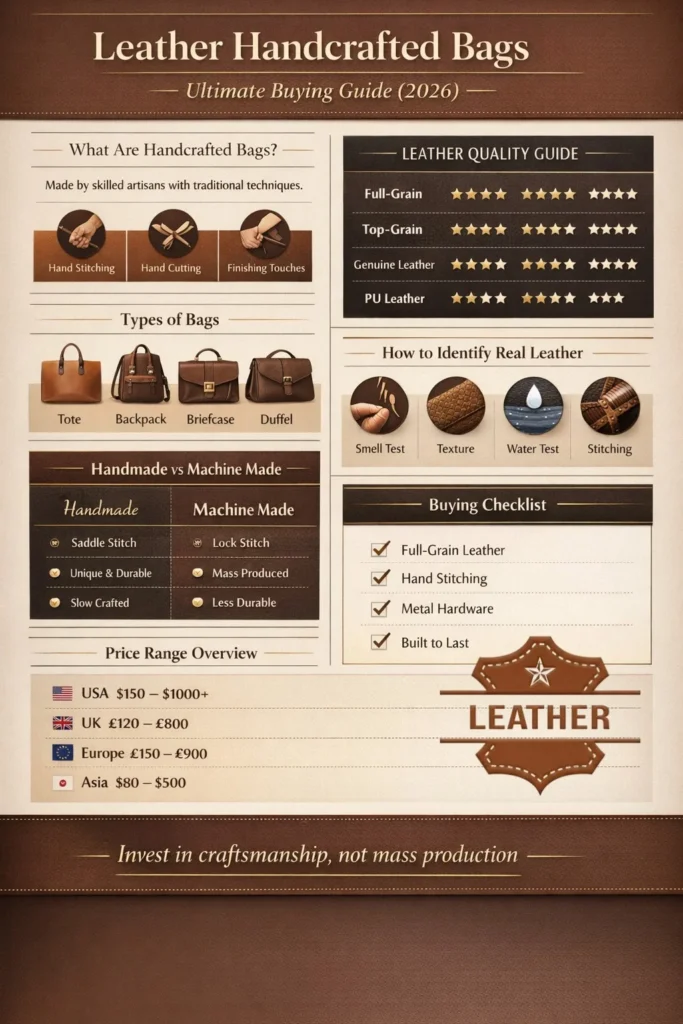
| Region | Price Range |
| USA | $150 – $1000+ |
| UK | £120 – £800 |
| Europe | €150 – €900 |
| Middle East | $200 – $1200 |
| Asia | $80 – $500 |
📌 Price Influencing Factors:
- Leather grade
- Craftsmanship level
- Brand reputation
- Country of origin
🌍 Leading Brands & Countries
🏆 Notable Brands:
- Saddleback Leather
- Hardgraft
- WP Standard
- MAHI Leather
🌎 Manufacturing Leaders:
- Italy 🇮🇹 – Premium luxury craftsmanship
- UK 🇬🇧 – Heritage leather goods
- France 🇫🇷 – High-fashion design excellence
- Pakistan 🇵🇰 – Skilled artisan production
- India 🇮🇳 – Traditional craftsmanship hubs
👉 Italy remains the global benchmark for premium leather quality.
📈 Future Market Trends
The leather goods industry is transforming:
🔮 Key Trends:
- Sustainable and eco-conscious leather production
- Rise of independent artisan brands
- Minimalist luxury design preference
- Shift toward durability-focused consumption
👉 Consumers increasingly prefer long-term investment products over fast fashion items.
👍 Pros & Cons
✔ Advantages
- Exceptional durability
- Unique craftsmanship
- Natural aging (patina development)
- Repairable structure
- Eco-friendly long lifespan
❌ Disadvantages
- Higher initial cost
- Limited availability
- Requires maintenance
- Longer production time
❓ FAQs
A: Yes, they provide long-term durability, aesthetic value, and superior craftsmanship quality.
A: With proper care, they can last between 10 and 20+ years.
A: Full-grain leather is considered the highest quality option.
A: They require skilled labor, premium materials, and time-intensive craftsmanship.
A: Yes, high-quality handcrafted leather bags are generally repair-friendly.
🏁 Conclusion
Leather handcrafted bags represent more than simple fashion accessories—they embody tradition, craftsmanship, and long-term investment value.
In a marketplace saturated with mass-produced alternatives, choosing handcrafted leather means selecting durability, individuality, and Premium Quality.
By understanding leather grades, manufacturing methods, and authenticity checks, consumers can confidently avoid low-quality products and make informed decisions.
👉 Always prioritize full-grain leather, hand stitching, and trusted artisan craftsmanship when making a purchase.