✨ Introduction
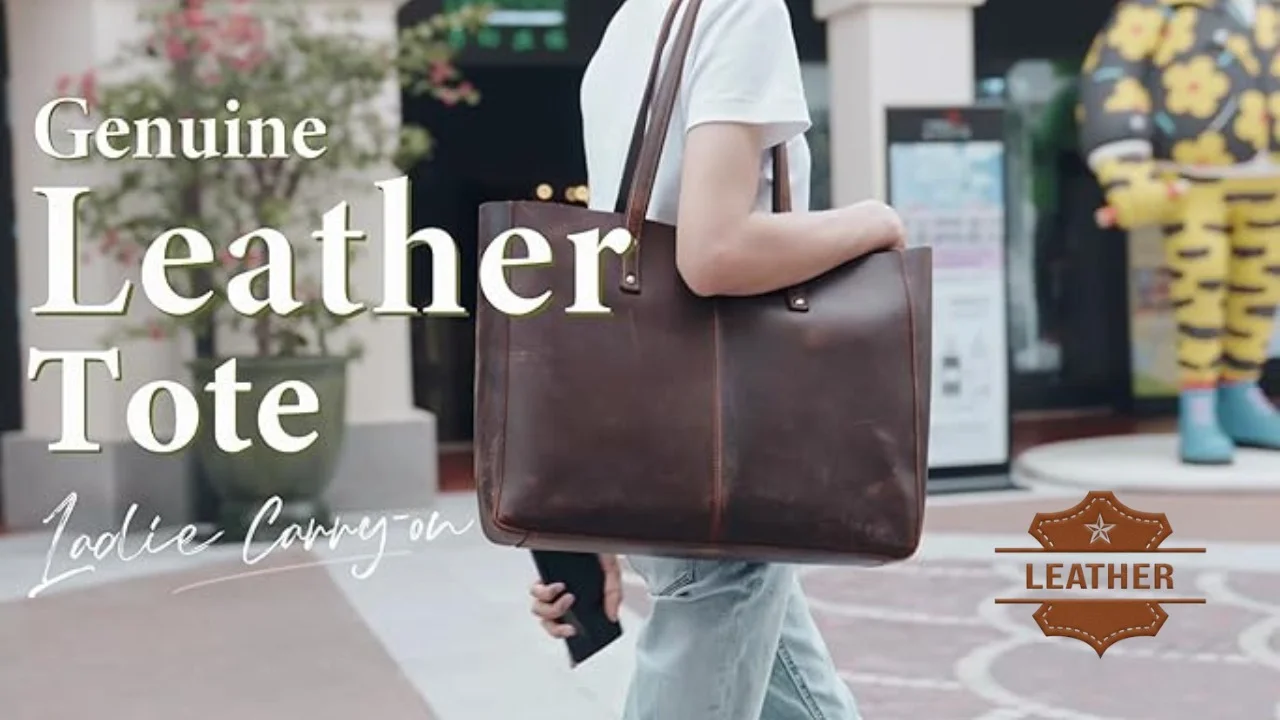
A Genuine Leather Tote Bag is more than just an everyday accessory—it represents a blend of elegance, practicality, and long-term investment. Across the globe, tote bags have become a daily essential for professionals, students, travelers, and even homemakers. Their versatility makes them one of the most functional and stylish carry solutions available today.
Unlike smaller handbags, a tote bag offers ample space and effortless usability. Whether you need to carry a laptop, books, cosmetics, documents, or groceries, a tote bag adapts seamlessly to your lifestyle. Its open structure, combined with strong shoulder straps, ensures convenience without compromising aesthetics.
However, there is a critical detail many buyers overlook:
👉 The term “genuine leather” does NOT always indicate premium quality.
While genuine leather is real, it often refers to a lower grade compared to full-grain or top-grain leather. Many brands use this label as a marketing tactic, which can mislead buyers into assuming superior craftsmanship.
This comprehensive 2026 guide is designed to eliminate confusion and provide clarity. You will gain a deeper understanding of leather quality, construction techniques, and smart purchasing strategies.
📌 What You’ll Learn
- The real meaning of genuine leather
- Different leather categories explained in simple terms
- How to distinguish authentic leather from synthetic materials
- Expert buying strategies used by professionals
- Global price expectations and value benchmarks
By the end of this guide, you will have the knowledge and confidence to choose a leather tote bag that aligns perfectly with your needs, budget, and personal style.
🧾 What is a Genuine Leather Tote Bag?
A genuine leather tote bag is a spacious, open-style carry bag crafted from real animal hide, designed for daily use and multi-purpose functionality.
✅ Key Characteristics:
- Large storage capacity
- Dual shoulder straps
- Simple and clean design
- Multi-functional usage
- More durable than synthetic alternatives
Unlike compact purses or clutches, tote bags emphasize:
👉 Accessibility + Capacity
This makes them suitable for a wide range of activities, including:
- Professional work environments
- Travel and commuting
- Shopping and errands
- Academic use
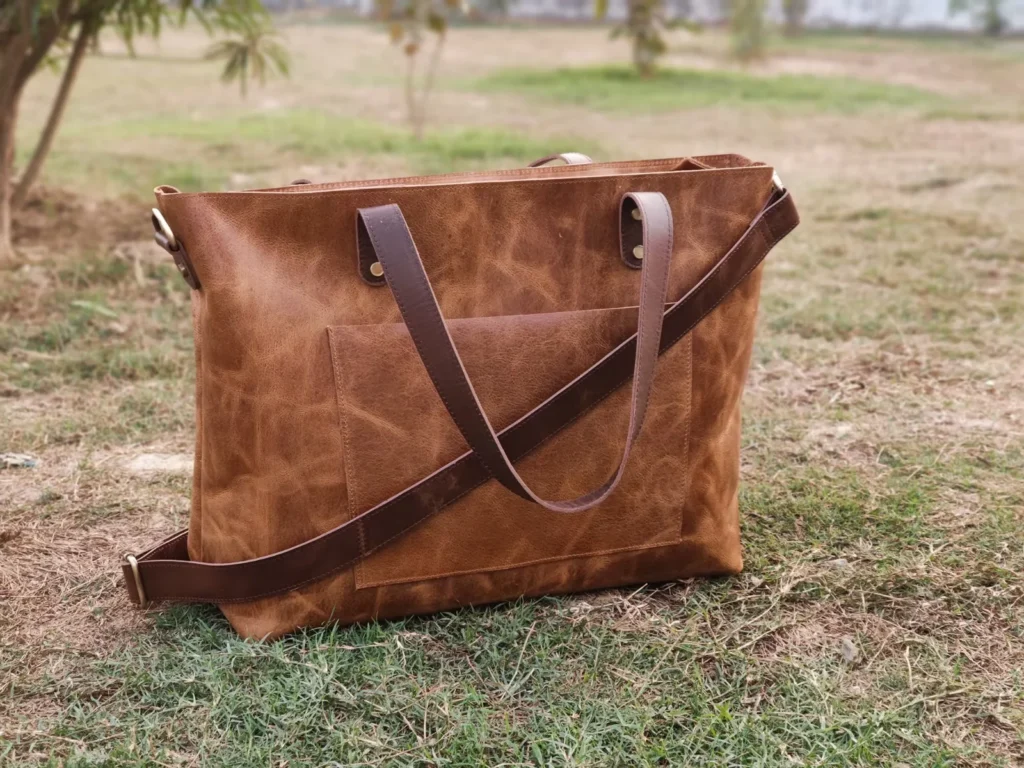
📜 History of Leather Tote Bags
The term “tote” literally means “to carry,” and its origins are rooted in practicality rather than fashion.
🕰️ Evolution Timeline:
- 1940s–1950s: Tote bags were used as utility carriers for ice, groceries, and tools
- 1960s: They transitioned into fashion accessories
- 1980s: Leather totes entered the luxury market
- 2000s–Present: A fusion of fashion, function, and sustainability
Today, tote bags are a universal staple, seen everywhere from corporate offices to international airports.
🧵 Types / Variations of Leather Tote Bags
Selecting the right tote bag depends on your lifestyle and daily requirements.
👜 1. Classic Open Tote
A traditional design without closures, offering quick and easy access. Ideal for casual use and light carrying needs.
🔐 2. Zip-Top Tote
Includes a zipper for enhanced security, making it suitable for crowded areas or travel.
💻 3. Laptop Tote
Designed with padded compartments to safely store electronic devices, perfect for professionals.
🔄 4. Convertible Tote
A versatile option that can transform into a backpack or crossbody bag, ideal for travelers.
🧳 5. Structured Tote
Features a reinforced base that maintains shape, providing a polished and professional appearance.
🐄 Leather Types Used in Tote Bags
Understanding leather grades is essential for making a smart purchase decision.
🥇 Full-Grain Leather
The Highest Quality leather, retaining the natural grain. It is extremely durable and develops a rich patina over time.
🥈 Top-Grain Leather
Slightly refined for a smoother finish. Offers a balance between durability and aesthetics.
🥉 Genuine Leather
Derived from lower layers of the hide. More affordable but less durable compared to premium grades.
❌ Bonded Leather
Manufactured from leftover scraps and fibers. It is weak and prone to peeling.
🧪 PU (Faux Leather)
A synthetic alternative that mimics leather’s appearance but lacks durability and authenticity.
📊 Leather Comparison Table
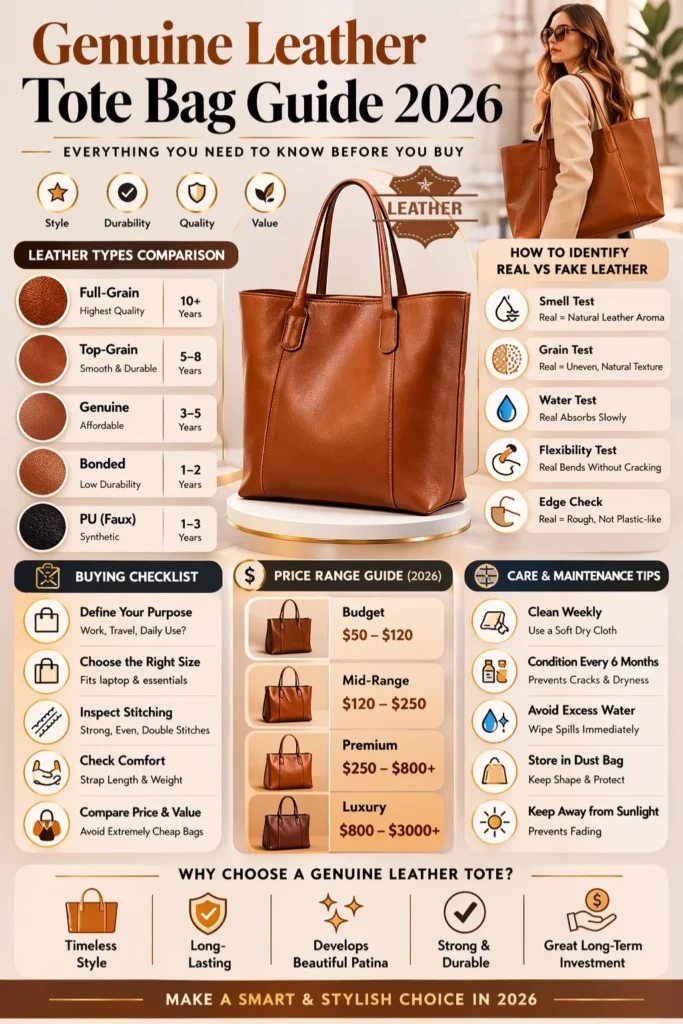
| Leather Type | Durability | Appearance | Price | Lifespan |
| Full-Grain | Excellent | Natural | High | 10+ years |
| Top-Grain | Very Good | Smooth | Medium | 5–8 years |
| Genuine Leather | Moderate | Processed | Lower | 3–5 years |
| Bonded Leather | Poor | Artificial | Very Low | 1–2 years |
| PU Leather | Low | Synthetic | Low | 1–3 years |
👉 Expert Insight: If your budget allows, always prioritize full-grain or top-grain leather for long-term value.
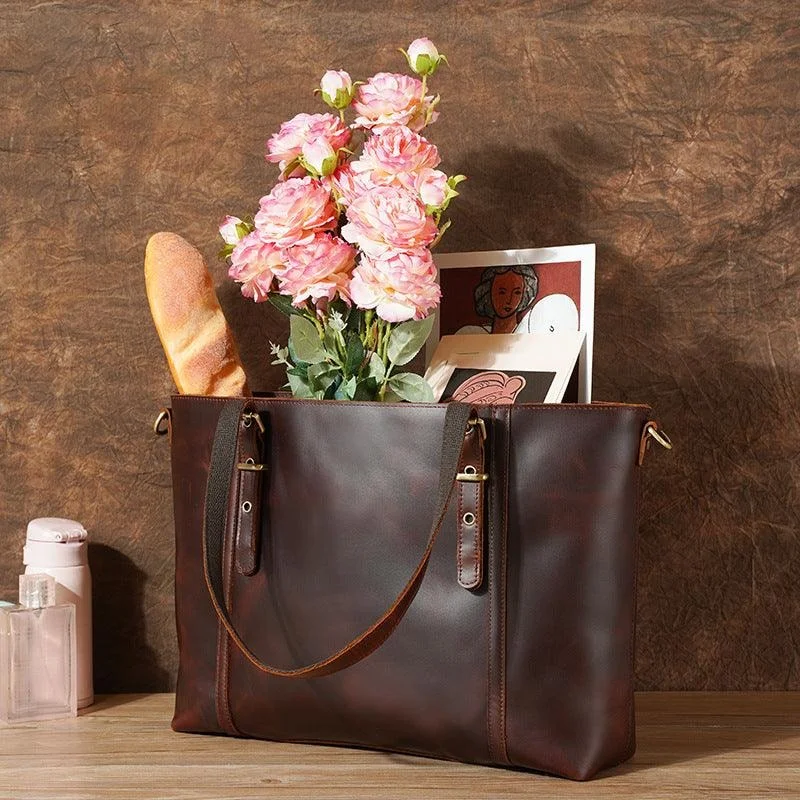
🏭 Manufacturing Process
Understanding production methods helps evaluate quality and craftsmanship.
Step 1: Hide Selection
High-quality products begin with premium raw hides.
Step 2: Tanning
- Vegetable tanning: eco-friendly and premium
- Chrome tanning: faster and cost-effective
Step 3: Cutting
Precision ensures minimal waste and accurate shapes.
Step 4: Stitching
Strong threads and reinforced seams enhance durability.
Step 5: Edge Finishing
Edges are sealed and polished to prevent wear.
Step 6: Assembly
Handles, linings, and hardware components are attached.
Step 7: Quality Inspection
Final checks ensure durability, finish, and defect-free construction.
🔍 How to Identify Original vs Fake Leather
Use these practical methods before purchasing:
✔️ 1. Smell Test
Authentic leather has a natural, earthy scent, while synthetic materials smell chemical.
✔️ 2. Grain Test
Real leather has irregular patterns; fake leather appears uniform.
✔️ 3. Water Test
Genuine leather absorbs moisture slowly; synthetic surfaces repel water.
✔️ 4. Flexibility Test
Real leather bends smoothly without cracking.
✔️ 5. Edge Inspection
Natural leather edges are rough, while synthetic edges look plastic-like.
🛒 Buying Guide
🎯 Step 1: Define Your Purpose
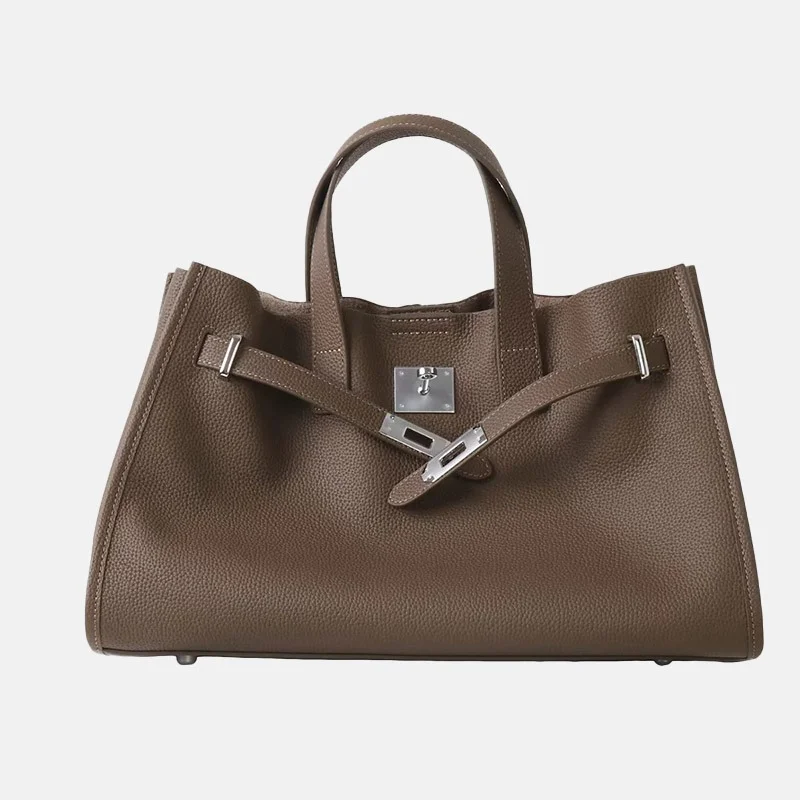
Identify whether you need the bag for work, travel, or daily use.
🎯 Step 2: Choose Leather Type
Select based on budget and durability expectations.
🎯 Step 3: Evaluate Size & Capacity
Ensure it accommodates your essentials comfortably.
🎯 Step 4: Inspect Craftsmanship
Check stitching, hardware quality, and finishing.
🎯 Step 5: Assess Comfort
Consider strap length and weight.
🎯 Step 6: Compare Value
Balance Price with durability and functionality.
👉 Avoid extremely low-priced options, as they often compromise quality.
🎒 Top Uses of Genuine Leather Tote Bags
- 💼 Office work
- ✈️ Travel
- 🛍️ Shopping
- 🎓 College
- 🧘 Daily activities
🧴 Care & Maintenance Tips
Proper maintenance significantly extends the lifespan of leather products.
✅ Essential Guidelines:
- Clean regularly with a soft cloth
- Apply conditioner every 6 months
- Avoid prolonged exposure to moisture
- Store in a breathable dust bag
- Keep away from direct sunlight
⚠️ Pro Tip: Conditioning prevents drying and cracking.
💰 Price Range Worldwide (2026)
| Category | Price Range |
| Budget | $50 – $120 |
| Mid-Range | $120 – $250 |
| Premium | $250 – $800+ |
| Luxury | $800 – $3000+ |
🌍 Regional Insights:
- USA/UK: Higher pricing due to branding
- Europe: Known for premium craftsmanship
- Asia: Competitive and affordable options
- Middle East: Luxury-focused market
🌎 Top Countries Famous for Leather Tote Bags
- 🇮🇹 Italy – Renowned for luxury craftsmanship
- 🇫🇷 France – High fashion influence
- 🇺🇸 USA – Functional and durable designs
- 🇬🇧 UK – Classic aesthetics
- 🇹🇷 Turkey & 🇮🇳 India – Handmade and cost-effective
⚖️ Genuine Leather vs Faux Leather Tote Bags
| Feature | Genuine Leather | Faux Leather |
| Durability | High | Medium |
| Aging | Improves | Cracks |
| Cost | Higher | Lower |
| Maintenance | Required | Minimal |
| Eco Impact | Natural | Synthetic |
✅ Pros & Cons
✔️ Advantages
- Long-lasting material
- Timeless appearance
- Develops character over time
- Strong and resilient
- Better long-term investment
❌ Disadvantages
- Requires maintenance
- Higher initial cost
- Sensitive to water exposure
- Quality variations across brands
❓ FAQs
A: Yes, but it depends on craftsmanship. It’s not the highest grade, but still better than synthetic options.
A: Typically 3–7 years with proper care.
A: Full-grain leather is the best, followed by top-grain.
A: Yes, if not properly maintained.
A: Yes, in durability and aging, but faux leather is cheaper and vegan-friendly.
🏁 Conclusion
A genuine leather tote bag can be a Valuable addition to your wardrobe—provided you understand what you are purchasing. The biggest mistake buyers make is assuming that “genuine leather” guarantees superior quality.
In reality, quality depends on three factors:
👉 Leather grade
👉 Craftsmanship
👉 Usage habits
For the best long-term results:
- Choose full-grain or top-grain leather whenever possible
- Inspect construction quality carefully
- Follow proper maintenance routines
This guide has equipped you with complete knowledge, from leather types to buying strategies and pricing insights. You are now prepared to make a confident and informed purchase decision.