🔰 Introduction
Men’s Leather Work Gloves are not just accessories — they are essential safety tools that protect your hands in some of the toughest environments. Whether you’re working in construction, welding, farming, mechanics, or heavy outdoor labor, the right pair of gloves can mean the difference between efficiency and injury.
But here’s the problem…
Most people buy gloves based on price or looks — not performance. That leads to faster wear, poor grip, discomfort, and even safety risks.
This guide changes that.
With 20+ years of leather industry insight, I’ll break down:
- Which leather type is best for your job
- How to identify real vs fake leather
- What makes gloves last longer
- And how to choose the perfect pair in 2026
By the end, you won’t just buy gloves — you’ll invest in the right protection.
🧤 What Are Men’s Leather Work Gloves?
Leather work gloves are protective hand gear made from animal hides, designed to provide:
- ✔ Cut & abrasion resistance
- ✔ Heat protection
- ✔ Strong grip in tough conditions
- ✔ Long-lasting durability
Unlike synthetic gloves, leather adapts to your hands over time, offering a custom fit and superior comfort.
📜 History of Leather Work Gloves
Leather gloves date back thousands of years. Early craftsmen, blacksmiths, and soldiers used animal hides to protect their hands.
Key evolution phases:
- Ancient Era – Basic hide wrapping for protection
- Industrial Revolution – Mass production for factory workers
- Modern Era (2000s–2026) – Advanced stitching, reinforced zones, hybrid materials
👉 Today’s gloves combine traditional leather strength with modern engineering.
🚀 Why Leather Work Gloves Matter in 2026
Work environments are becoming more demanding:
- Heavier machinery
- Tougher materials
- Longer working hours
Leather gloves stand out because they offer:
- 🔥 Heat resistance (ideal for welding)
- 🛡️ Impact protection
- 💪 Superior durability vs synthetic
👉 In 2026, performance + safety + longevity are non-negotiable — and leather delivers all three.
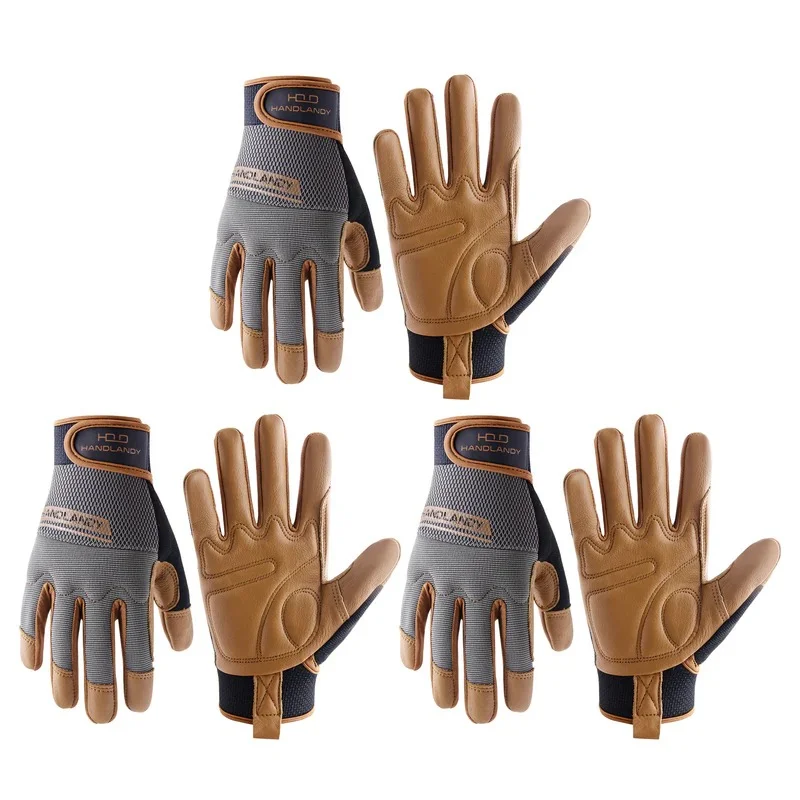
🧩 Types of Men’s Leather Work Gloves
Driver Gloves
- Slim fit
- High dexterity
- Ideal for driving & light work
Rigger Gloves
- Heavy-duty
- Reinforced palms
- Best for construction
Welding Gloves
- Thick leather
- Heat-resistant
- Extended cuffs
Mechanic Gloves
- Thin leather
- Precision-focused
🔎 Quick Summary
| Type | Best For | Key Feature |
| Driver | Light work | Flexibility |
| Rigger | Construction | Durability |
| Welding | Heat work | Protection |
| Mechanic | Precision | Grip |
🐄 Leather Types Used in Work Gloves
This is where most buyers go wrong.
🐄 Cowhide Leather
- Most common
- Thick & durable
- Water-resistant
👉 Best for: Construction & heavy-duty work
🐐 Goatskin Leather
- Extremely flexible
- High tensile strength
- Lightweight
👉 Best for: Precision work & dexterity
🦌 Deerskin Leather
- Ultra-soft
- Maintains flexibility when wet
👉 Best for: Comfort & long wear
🐑 Sheepskin Leather
- Soft & lightweight
- Good insulation
👉 Best for: Cold environments
🧠 Leather Comparison Table
| Leather Type | Durability | Flexibility | Comfort | Best Use |
| Cowhide | ⭐⭐⭐⭐⭐ | ⭐⭐⭐ | ⭐⭐⭐ | Heavy-duty |
| Goatskin | ⭐⭐⭐⭐ | ⭐⭐⭐⭐⭐ | ⭐⭐⭐⭐ | Precision |
| Deerskin | ⭐⭐⭐ | ⭐⭐⭐⭐⭐ | ⭐⭐⭐⭐⭐ | Comfort |
| Sheepskin | ⭐⭐⭐ | ⭐⭐⭐⭐ | ⭐⭐⭐⭐⭐ | Cold weather |
🏭 Manufacturing Process
Understanding how gloves are made helps you identify quality.
Hide Selection
Only High-Grade hides are chosen.
Tanning
Transforms rawhide into usable leather.
Cutting
Precision cutting for glove patterns.
Stitching
Double stitching increases durability.
Reinforcement
Extra layers added to stress zones.
Finishing
Conditioning, polishing, inspection.
🔎 Mini Summary
👉 Better materials + better stitching = longer lifespan.
🔍 Real vs Fake Leather
✔ Real Leather Signs
- Natural smell
- Irregular texture
- Absorbs moisture
❌ Fake Leather Signs
- Plastic smell
- Perfect uniform surface
- Peeling over time
🛒 Ultimate Buying Guide
Fit
- Snug but comfortable
- Not too tight
Leather Type
- Heavy work → Cowhide
- Precision → Goatskin
Stitching
- Double-stitched preferred
Reinforcements
- Palm patches
- Knuckle protection
Cuff Type
- Safety cuff for protection
- Elastic cuff for flexibility
🏗️ Top Uses of Leather Work Gloves
- Construction
- Welding
- Farming
- Mechanics
- Landscaping
- Warehouse handling
💰 Price Range Worldwide
| Quality Level | Price Range |
| Budget | $10 – $25 |
| Mid-range | $25 – $60 |
| Premium | $60 – $150+ |
🌍 Top Countries Known for Leather Gloves
- Pakistan (Sialkot – global hub)
- Italy (luxury leather craftsmanship)
- USA (industrial gloves)
- India (affordable production)
💸 Budget-Friendly Options
- Cowhide gloves under $25
- Split leather options
- Basic stitched gloves
👉 Good for occasional use

💎 Premium / Luxury Options
- Full-grain leather
- Kevlar stitching
- Reinforced knuckles
👉 Ideal for professionals
⚠️ Common Mistakes to Avoid
- ❌ Buying cheap “genuine leather.”
- ❌ Ignoring glove fit
- ❌ Choosing the wrong type for the job
- ❌ Skipping durability checks
🧼 Care, Cleaning & Maintenance Tips
Cleaning
- Use mild soap
- Avoid soaking
Drying
- Air dry only
- Avoid direct heat
Conditioning
- Apply leather conditioner monthly
Storage
- Keep in a dry place
🧠 Expert Tips Most Buyers Ignore
- Leather thick ≠ better (balance matters)
- Goatskin often lasts longer than expected
- Reinforced palms double glove life
- Proper fit improves safety
🔮 Future Trends in Leather Work Gloves
- Smart gloves with sensors
- Eco-friendly vegetable tanning
- Hybrid leather + synthetic designs
- Cut-resistant integrated fibers
⚖️ Pros & Cons of Leather Work Gloves
✅ Pros
- Long Lifespan
- Heat resistance
- Strong grip
- Comfortable over time
❌ Cons
- Higher upfront cost
- Needs maintenance
- Can stiffen if not cared for
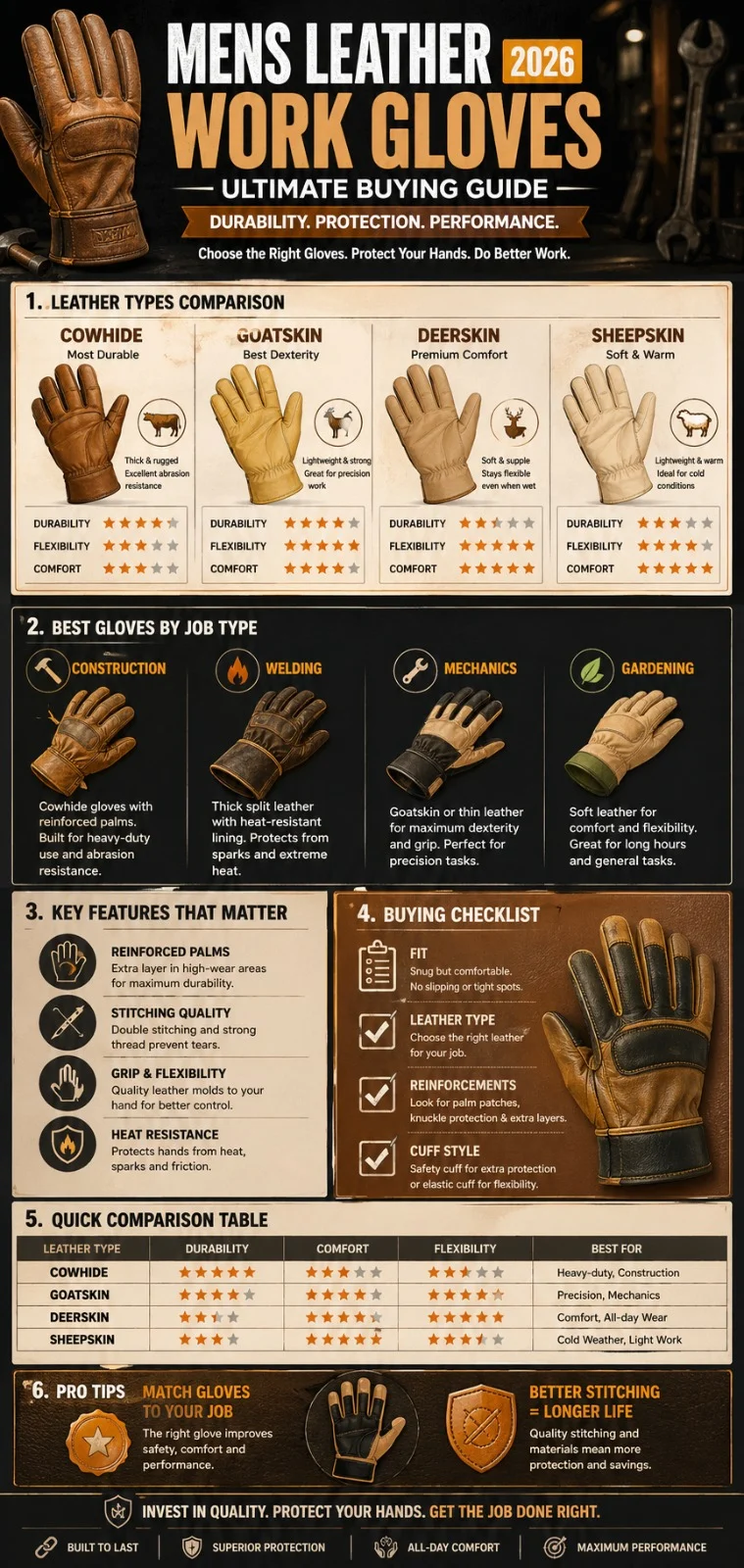
📊 Quick Decision Table
| Job Type | Best Leather | Key Feature |
| Construction | Cowhide | Durability |
| Welding | Split leather | Heat resistance |
| Mechanics | Goatskin | Dexterity |
| Farming | Cowhide | Toughness |
❓ FAQs
A: Yes. Leather offers better durability, heat resistance, and lifespan.
A: Cowhide is the best due to its toughness and abrasion resistance.
A: High-quality gloves can last 6 months to 2+ years, depending on usage.
A: Yes, but excessive moisture can damage them if not dried properly.
A: Yes — they last longer and provide better protection.
🏁 Conclusion
Choosing the right men’s leather work gloves is not about picking the most expensive pair — it’s about selecting the right leather, the right fit, and the right design for your job.
If you remember one thing from this guide, let it be this:
👉 Match the glove to your work — not The Price Tag.
For heavy-duty jobs, go with cowhide.
For precision, choose goatskin.
Invest once — and your hands will thank you every day.