Introduction
A woman’s search for a Leather Dress usually means one of three things: a shopper wants styling ideas, a buyer wants quality advice, or a fashion lover wants to know what is actually trending right now. This guide covers all three. Leather is not just a seasonal fashion fabric; it is a timeless wardrobe material made from treated animal hide, and it has long been used for clothing, footwear, handbags, and more.
In 2026, leather dressing feels more refined than rebellious. Fashion forecasts point to richer browns, stronger silhouettes, softer romance, and a continued love of elevated texture. Quiet luxury is still influencing how people dress, while brown tones and power-dressing shapes are showing up strongly in trend reporting.
That is why this article is built to do more than explain how to style a leather dress. It helps you choose the right leather, understand the differences between real and faux options, spot quality, match your body type, and build outfits that feel modern in 2026.
What Is a Leather Dress?
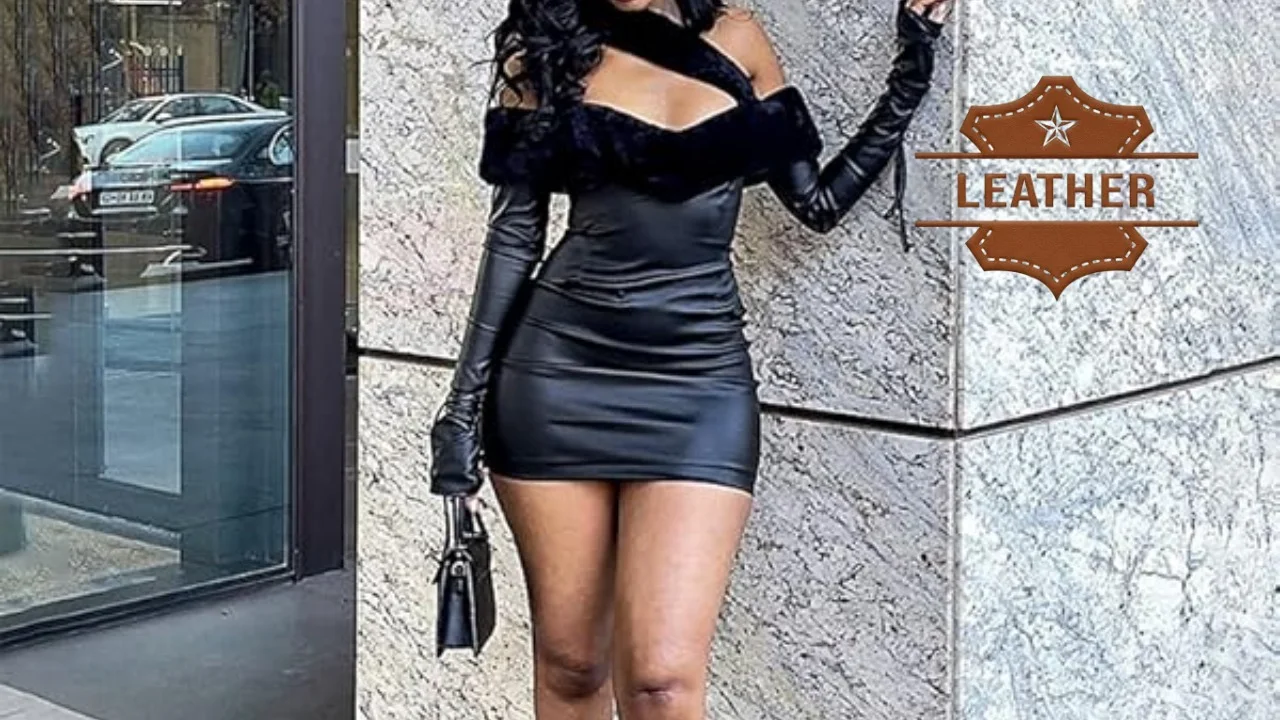
A leather dress is a dress made from leather or leather-look material, designed to create structure, polish, and visual impact. Unlike soft jersey or cotton dresses, leather gives an outfit more presence. It can feel sleek, sharp, romantic, edgy, or luxurious depending on the cut, finish, and styling. Leather itself is a treated hide, and the quality of the hide plus the finishing process strongly affects how the dress looks, breathes, and wears over time.
A well-made leather dress can work in many settings: date night, dinner, evening events, smart casual plans, fashion-forward office outfits, and winter layering looks. The real value comes from choosing the right silhouette and material for the occasion.
Mini summary:
A leather dress is not only a statement piece. It is a structured, versatile fashion item that can lean classic, modern, edgy, or elegant.
Why Leather Dresses Matter in 2026
Leather remains a powerful fashion material because it balances durability, texture, and polish. Editorial trend coverage for 2026 points to stronger silhouettes, brown-led palettes, and a renewed interest in rich, tactile dressing. Vogue’s 2026 forecasting also highlights voluminous power dressing, rich browns, and bolder color pairings, while British Vogue notes that leather remains one of fashion’s most reliable styling tools.
At the same time, the market is also seeing more interest in responsible leather production and alternative materials. The Leather Working Group says it is a global multi-stakeholder organization focused on sustainable leather sourcing and production, and that over a third of global finished leather production is assessed using its audit standard.
That means 2026 buyers are no longer choosing only between “black” and “brown.” They are also thinking about leather quality, sustainability, longevity, and how a dress fits into a smarter wardrobe.
Snippet-ready answer:
Leather dresses matter in 2026 because they combine luxury texture, timeless structure, and trend-led styling in one piece.
Types of Leather Dresses for Women
Different leather dress styles solve different wardrobe needs. The best one depends on the occasion, body shape, and how bold you want the outfit to feel.
Leather Mini Dress
Best for parties, nights out, concerts, and confident fashion looks.
A mini dress gives more leg line and usually feels youthful and energetic.
Leather Midi Dress
Best for date nights, city dressing, dinner, smart casual style, and polished everyday wear.
The midi length is one of the most useful options because it feels more refined and easy to style.
Leather Bodycon Dress
Best for curve emphasis, evening wear, and confident dressing.
This is the most fitted option and usually works best with clean accessories.
Leather Shirt Dress
Best for work-adjacent outfits, brunch, transitional weather, and casual elegance.
A shirt dress softens leather’s intensity and makes it easier to wear in daylight.
Leather Slip Dress
Best for layering, minimalist styling, and evening looks with a softer edge.
This style works beautifully under blazers, coats, or knitwear.
Leather Wrap Dress
Best for flattering the waist and creating balance.
The wrap shape is one of the easiest fits for many body types.
Mini summary:
Mini dresses read bold, midi dresses read sophisticated, bodycon styles read sexy, and shirt or wrap dresses read more versatile.
Real Leather vs Faux Leather Dresses
This is one of the most important buying decisions. Leather does not mean the same thing every time. Some dresses use genuine animal leather, while others use PU or newer vegan materials. The difference affects durability, breathability, feel, price, and care. Britannica defines leather as treated animal hide, while industry sources note that grading terms can be confusing and not always official.
| Feature | Real Leather | Faux / Vegan Leather |
| Feel | Natural, supple, premium | Smooth to textured, depending on the material |
| Breathability | Better | Usually lower |
| Durability | Often stronger over time | Varies widely |
| Aging | Develops patina | May crack or peel if low quality |
| Price | Higher | Usually lower |
| Care | Needs conditioning and careful storage | Easier daily care, but quality varies |
Many newer vegan materials are improving, but some are still plastic-based. Immaculate Vegan’s 2026 guide notes how vegan leather has evolved beyond old “pleather” perceptions, while the USDA National Agricultural Library cautions that many vegan leathers are still petroleum-based plastics and may not be biodegradable.
Pros of real leather
- Long-lasting
- Better natural texture
- Develops character with wear
- Usually feels more premium
Cons of real leather
- Higher cost
- Needs more care
- Not ideal for buyers avoiding animal materials
Pros of faux/vegan leather
- More affordable
- Cruelty-free options available
- Easier for some shoppers to buy in trend colors and shapes
Cons of faux/vegan leather
- Can crack or peel if of poor quality
- Often less breathable
- Environmental impact depends on the material
Leather Types Used in Dresses
The leather type matters as much as the dress cut. A cheap design in a poor material will never look as good as a simple silhouette made from quality leather.
| Leather Type | Best Use in Dresses | Buyer Notes |
| Full-grain | Premium midi dresses, investment pieces | Keeps the natural grain intact, breathes well, and develops patina over time. |
| Top-grain | Smooth fashion dresses, polished looks | A refined choice when a more uniform surface is desired. |
| Genuine leather | Lower-to-mid price dresses | The term can be misleading and is not a simple quality guarantee. |
| Suede | Soft, luxe fashion dresses | Best for texture-driven looks; more delicate than smooth leather. |
| Nubuck | Matte, velvety fashion dresses | Great if you want a softer visual finish. |
| PU / faux leather | Trend-driven, budget-friendly dresses | Good for affordability, but quality varies widely. |
Expert note:
A lot of shoppers think “genuine leather” is the best grade because the name sounds premium. In reality, leather grading is not an official universal system, and terms can be used in confusing ways. Always judge by hide quality, construction, finish, and brand transparency instead.
How Leather Dresses Are Made
A good leather dress is not just cut and sewn. It goes through a careful process that starts with hide selection and ends with finishing and quality control. Horween explains that quality begins with top-quality hides and careful processing from raw, cured state to finished leather, while Britannica defines leather as preserved animal hide suitable for clothing and other uses.
Step-by-step leather dress production
- Hide selection
The tannery chooses hides based on thickness, softness, consistency, and damage level. - Tanning
Hides are stabilized through tanning, so they do not decay. - Splitting and grading
The hide may be split into layers and graded by appearance and intended use. Leather grading terminology can vary by tannery. - Dyeing and finishing
Color, texture, Softness, and sheen are adjusted. - Pattern cutting
Garment panels are cut with attention to grain direction and stretch. - Stitching and assembly
Skilled sewing is needed because leather leaves holes permanently. - Lining and structure
Lining improves comfort, breathability, and movement. - Final inspection
Quality control checks seams, symmetry, hardware, and finish.
Mini summary:
Leather dress quality is not just about the leather itself. Tanning, cutting, lining, and stitching all matter.
How to Identify Original vs Fake Leather
This is where many buyers lose money. A dress may look luxurious online but feel stiff, plasticky, or fragile in real life.
What to check before buying
- Surface texture: Real leather usually looks less perfect and more natural.
- Smell: Genuine leather often has a distinct organic smell.
- Flexibility: Good leather bends without feeling like plastic.
- Edges and stitching: Quality construction looks even and reinforced.
- Lining: Better dresses often have smoother, more durable linings.
- Brand honesty: Good sellers clearly state leather type, origin, and care needs.
Quick signs of poor-quality faux leather
- Shiny plastic look
- Strong chemical smell
- Cracking at folds
- Cheap-looking seams
- Thin backing that feels weak
Simple buyer test
If the material looks too perfect, too shiny, and too stiff at the same time, it is worth a second look.
Snippet-ready answer:
To spot real leather, check the texture, smell, flexibility, edges, stitching, and brand transparency. Genuine leather should feel natural, not plastic-like.
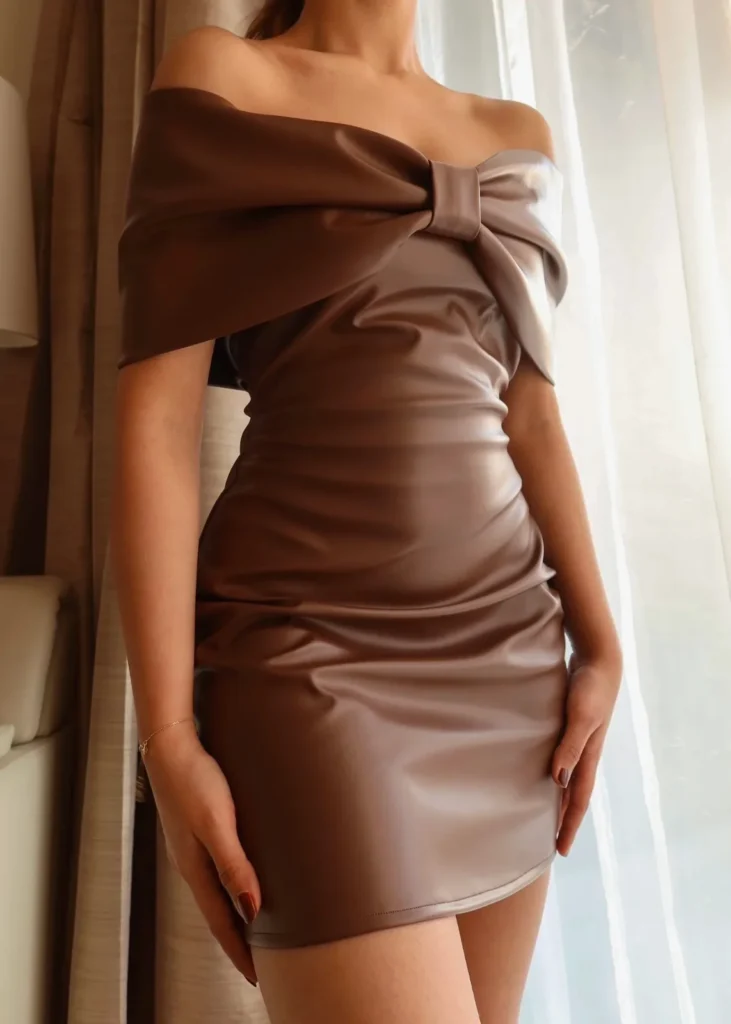
Best Leather Dress Styles by Body Type
Fashion works best when it respects proportion. A leather dress should enhance your shape, not fight it.
Pear Shape
Choose:
- A-line leather dresses
- Belted waists
- Structured shoulders
- Midi lengths
Why it works:
This balances the body by adding structure on top and flow on the bottom.
Hourglass Shape
Choose:
- Bodycon leather dresses
- Wrap styles
- Fitted midi dresses
Why it works:
These styles follow the natural waist and highlight curves cleanly.
Apple Shape
Choose:
- V-neck leather dresses
- Empire waistlines
- Soft draping
- Shirt dress silhouettes
Why it works:
These create vertical lines and reduce bulk around the middle.
Petite Body Type
Choose:
- Mini dresses
- Clean monochrome looks
- Slim fits
- High-shine excess kept to a minimum
Why it works:
Shorter lengths and cleaner lines help avoid visual heaviness.
Curvy Body Type
Choose:
- Stretch-panel leather dresses
- Strategic seam placement
- Dark matte finishes
- Wrap or midi silhouettes
Why it works:
These offer shape without stiffness.
Mini summary:
The best leather dress is the one that supports your proportions, not just the trend.
How to Style a Leather Dress
Leather is strong visually, so styling should create balance. The goal is usually to soften, sharpen, or modernize the look, depending on the setting.
Casual Styling
Wear with:
- White sneakers
- Oversized cardigan
- Denim jacket
- Simple tote bag
This makes a leather dress feel less formal and more wearable for daytime.
Office-Appropriate Styling
Wear with:
- Tailored blazer
- Low block heels or loafers
- Minimal jewelry
- Structured handbag
A midi leather dress with a clean blazer can look polished and confident.
Date Night Styling
Wear with:
- Pointed heels
- Small clutch
- Soft waves or slick hair
- One standout accessory
This is the easiest way to turn a leather dress into an elegant evening outfit.
Winter Styling
Wear with:
- Wool coat
- Knee-high boots
- Tights
- Cashmere scarf
This is especially strong because current fashion reporting continues to support boot-led, rich-toned outfit formulas. Vogue and fashion editors have also highlighted brown and leather-heavy looks as part of the 2026 styling direction.
Quiet Luxury Styling
Wear with:
- Neutral coat
- Matte leather dress
- Minimal gold jewelry
- Sleek boots or pumps
Quiet luxury is all about restraint, quality, and clean lines rather than loud logos.
Snippet-ready answer:
Style a leather dress by balancing its texture with softer, cleaner pieces like blazers, boots, knits, and minimal jewelry.
Best Shoes to Wear With a Leather Dress
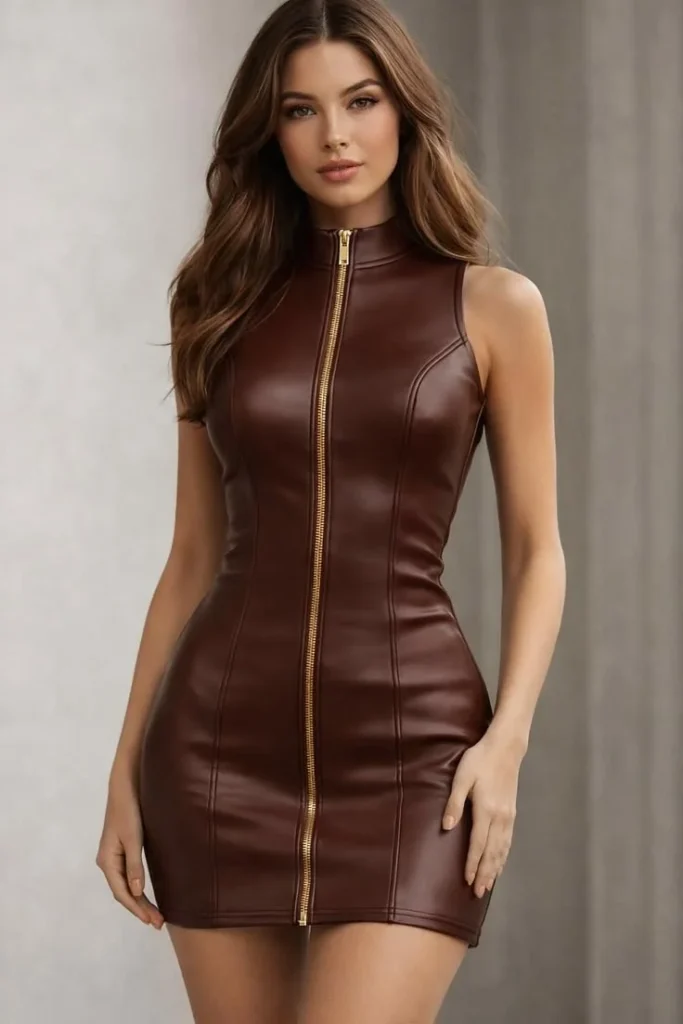
The right shoe changes the whole mood of the outfit.
Knee-High Boots
Best for: winter, city looks, polished edge
These make the outfit feel Expensive and Lengthened.
Ankle Boots
Best for: casual style, transitional weather
These work especially well with mini and midi dresses.
Strappy Heels
Best for: evening events, date nights, formal dressing
These keep the look feminine and sharp.
Sneakers
Best for: casual dressing, street style, daytime ease
Use this when you want the dress to feel relaxed.
Loafers
Best for: office style, modest chic looks
These are ideal for a more grown-up look.
Fashion coverage in 2026 also shows boots becoming more versatile across seasons, with brown leather boots, slouchy boots, and dress-and-boot pairings getting strong editorial attention.
Mini summary:
Boots make leather dresses sharper, heels make them dressier, and sneakers make them more modern.
Leather Dress Outfit Ideas by Season
This section is useful for both readers and Google snippets.
Spring
- Leather midi dress + trench coat + ankle boots
- Faux leather shirt dress + loafers + light knit
Summer
- Sleeveless leather mini dress + sandals + minimal bag
- Leather slip dress + flat sandals + thin jewelry
Fall
- Leather bodycon dress + blazer + knee-high boots
- Brown leather dress + suede boots + gold accessories
Winter
- Long-sleeve leather dress + wool coat + tall boots
- Black leather midi dress + tights + structured handbag
These outfit formulas also align with the wider 2026 fashion movement toward brown tones, sculptural shape, and bold yet wearable styling.
Snippet-ready answer:
For winter, pair a leather dress with boots, tights, and a wool coat. For summer, keep the leather soft by using sandals, lighter layers, and minimal accessories.
Leather Dress Color Trends for 2026
Black will never disappear, but the 2026 color direction is clearly richer and warmer. Vogue’s trend reporting points to browns, camel, chestnut, plum, maroon, and other deeper tones as important colors for the season ahead. British Vogue also notes that designers are approaching leather with fresh intention and more contrasted silhouettes.
Best colors to target
- Black
- Chocolate brown
- Espresso
- Burgundy
- Deep olive
- Camel
- Cream
- Plum
Why brown matters now
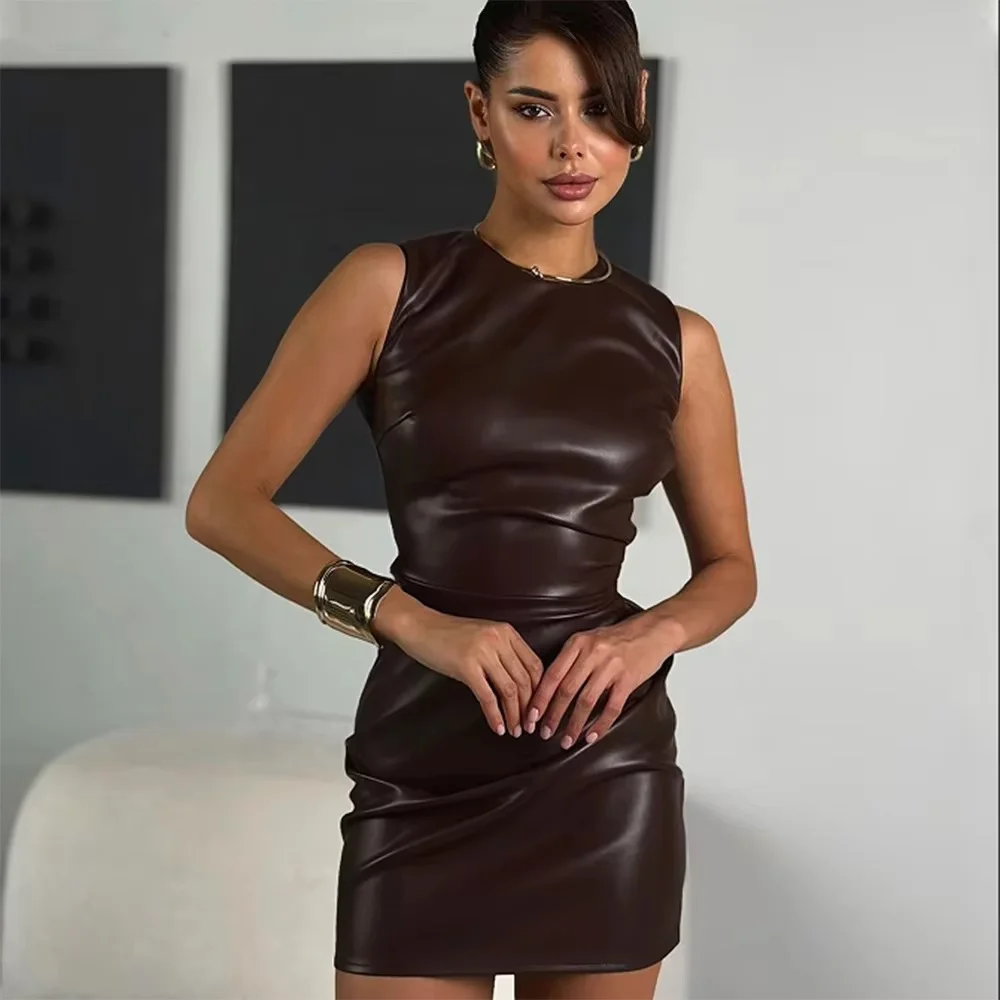
Brown feels softer than black, but still luxurious. It works especially well in quiet luxury, old-money styling, and tonal layering looks. That is one reason brown leather dresses are likely to remain highly relevant in 2026.
How to Choose a High-Quality Leather Dress
A premium leather dress should feel balanced: soft, structured, comfortable, and well finished. Horween’s approach to leather quality emphasizes strong hides, good oils, and careful finishing, while leather industry sources repeatedly show that the section of the hide and the finish matter more than marketing language alone.
Buying checklist
- Check the leather type
Prefer full-grain or good top-grain if you want longevity. - Inspect the stitching
Seams should be straight, tight, and reinforced. - Feel the lining
Lining should help comfort and reduce cling. - Look at the weight
Too heavy can feel stiff; too light can feel cheap. - Examine the hardware
Zippers, snaps, and buttons should feel durable. - Check the cut
The dress should move with the body. - Ask about care
Good products come with clear maintenance instructions.
Common red flags
- Vague product descriptions
- No leather type listed
- Poor stitching around stress points
- Stiff plastic-like feel
- Overly shiny finish
- No lining in a fitted dress
Mini summary:
Buy the construction, not just the look.
Price Range Worldwide
Leather dress pricing varies based on hide quality, labor, design complexity, and brand position. The ranges below are practical buying estimates, not fixed market rules.
| Category | Typical Range | What You Usually Get |
| Budget faux leather | Low to mid | Trend-focused styles, lower durability |
| Mid-range faux or mixed leather | Mid | Better fit, better finishing |
| Real leather entry-level | Mid to high | Genuine hide, simpler construction |
| Premium real leather | High | Better hides, lining, and craftsmanship |
| Luxury designer | Very high | Brand premium, superior finish, fashion prestige |
Buying tip:
A very cheap real leather dress is often a warning sign. Real leather has material and labor costs that usually show in the final price.
Top Countries and Markets Known for Leather
Leather production and leather fashion are global industries. The Leather Working Group’s Global Supplier Network shows just how international the sector is, and industry reputation varies by tannery, craftsmanship, and specialization rather than nationality alone.
Commonly recognized leather markets include:
- Italy
- France
- Spain
- Turkey
- Pakistan
- India
- China
- United States
Expert note:
Do not judge leather only by country. Judge the tannery, the finish, the stitching, the lining, and the transparency of the brand.
Budget-Friendly Options
Budget-friendly leather dresses can still look excellent if the cut is clean and the faux leather is well-made.
Best budget strategy
- Choose simple silhouettes
- Focus on matte finishes
- Avoid excessive hardware
- Prioritize fit over trend clutter
- Read product descriptions carefully
Budget pros
- Lower cost
- Easier to test trends
- Better for first-time buyers
Budget cons
- More likely to crack or peel
- Lower breathability
- Construction is often weaker
Faux leather has improved, but quality still varies a lot. That makes product description, lining, and stitching even more important.
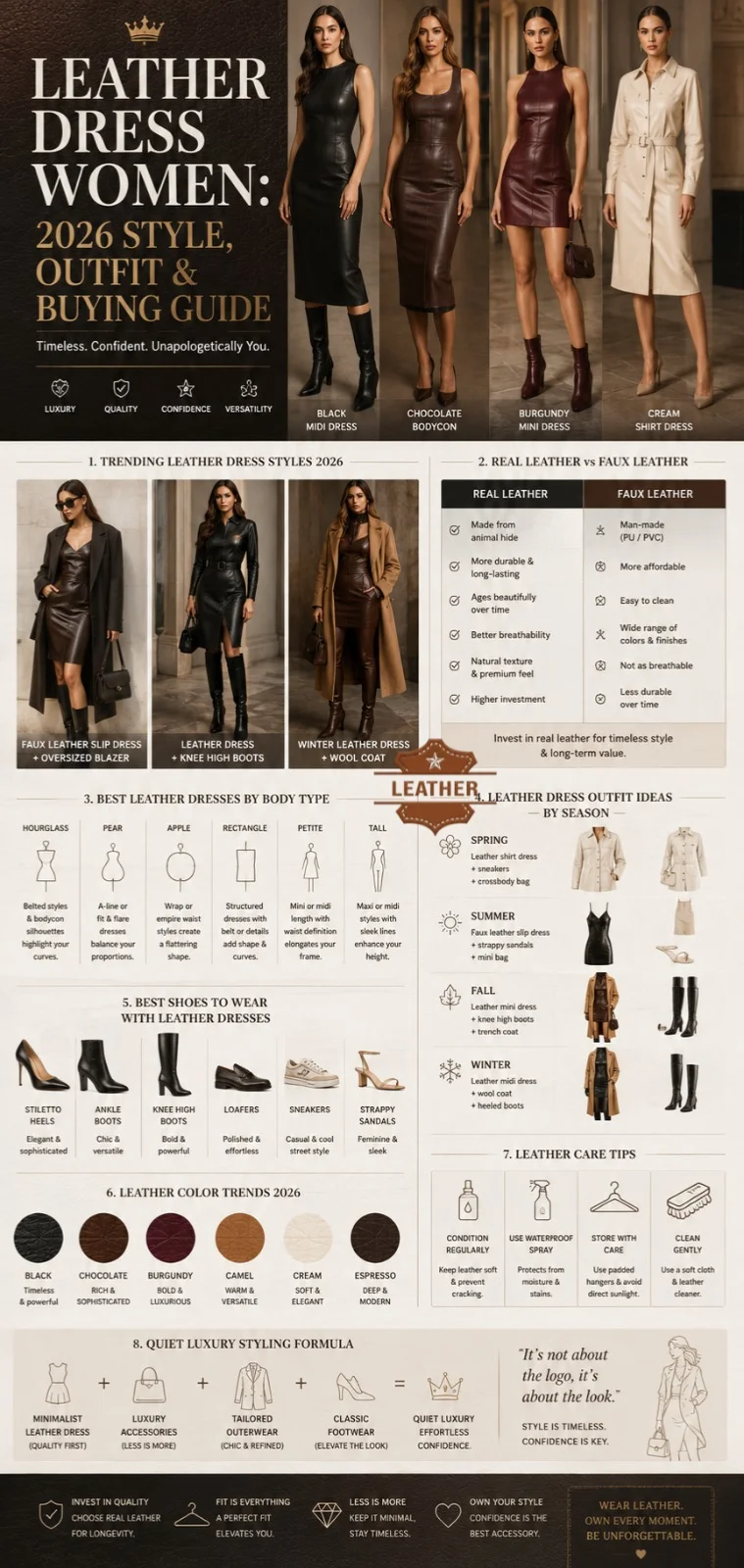
Premium and Luxury Options
Premium leather dresses are often about restraint, not excess. The best luxury piece usually has:
- Excellent hide selection
- Softer hand-feel
- Better lining
- Cleaner seams
- Strong drape
- Timeless silhouette
This is where full-grain and high-end top-grain leather become attractive, especially if the wearer wants the dress to age well and develop a richer surface character. Full-grain leather keeps the grain intact and develops patina naturally over time, while top-grain can offer a more uniform look.
Common Mistakes to Avoid
Many leather dress mistakes are styling mistakes, not just buying mistakes.
Avoid these errors
- Wearing too many heavy textures at once
- Choosing a dress that is too tight to move in
- Ignoring the lining quality
- Pairing a bold leather dress with overly busy accessories
- Buying based only on shine
- Confusing “genuine leather” with top-tier quality
Leather already gives a strong visual impact. Overloading the outfit can make it feel heavy instead of elegant.
Care, Cleaning & Maintenance Tips
Leather is durable, but it still needs care. Preventive care guidance for leather objects emphasizes managing light, moisture, and storage conditions carefully. In fashion terms, that means keeping a leather dress in good shape with proper storage and gentle maintenance.
Care checklist
- Hang on a padded hanger
- Keep away from direct sunlight
- Store in a breathable garment bag
- Avoid damp spaces
- Let the dress air out after wearing
- Use leather conditioner when appropriate
- Clean stains gently and early
- Use professional cleaning for serious issues
What not to do
- Do not fold leather for long periods
- Do not use harsh detergents
- Do not soak the dress
- Do not store it in plastic for months
- Do not apply random home products without testing
Faux leather care
- Wipe with a soft, damp cloth
- Dry immediately
- Avoid high heat
- Keep away from sharp accessories that can scratch it
Mini summary:
Good leather care is mostly about prevention: proper storage, limited moisture, and gentle cleaning.
Expert Tips Most Buyers Ignore
These are the small details that separate a good purchase from a disappointing one.
Check the lining first
A great leather shell with a poor lining often feels uncomfortable and drapes badly.
Look at movement, not just still photos
A dress can look amazing standing still and feel awkward when walking or sitting.
Matte often ages more gracefully than heavy shine
High shine can date quickly unless it is done with intention.
Color matters more than many buyers think
Black is classic, but brown, burgundy, and camel are especially useful in 2026.
The best dress is the one you can repeat
A real wardrobe winner is versatile enough for boots, heels, jackets, and different seasons.
Sustainable claims need scrutiny
Some vegan leathers are better than old PVC-based versions, but many are still plastic-based. Ask what the material actually is before you buy.
Future Trends in Leather Fashion
The future of leather fashion is not just “more leather.” It is smarter leather. Current trend reporting points toward stronger tailoring, richer colors, sculptural silhouettes, and more intentional, investment-style dressing. Brown shades are gaining power, and quiet luxury continues to shape the way consumers think about expensive-looking clothes.
What to expect next
- More chocolate and espresso tones
- Cleaner, less flashy finishes
- Stronger shoulders and tailored shapes
- Longer midi lengths
- Better sustainability messaging
- More mixed-material dresses with leather panels
- More quiet-luxury styling with minimal accessories
Leather also fits the broader shift toward less disposable fashion. LWG’s role in responsible sourcing suggests that transparency and accountability will remain part of the conversation.
Snippet-ready answer:
The future of leather dresses is moving toward richer browns, cleaner tailoring, better sustainability claims, and quieter luxury styling.
FAQs
Yes. Leather remains a strong fashion material in 2026, especially in brown tones, refined silhouettes, and quiet-luxury styling.
Knee-high boots, ankle boots, heels, loafers, and clean sneakers all work, depending on the occasion. Boots are especially strong in current styling trends.
Yes, if the material quality is good and the dress fits well. Many vegan leather options are much better than older “pleather,” but composition matters.
Full-grain is ideal for durability and patina, while top-grain is also a strong choice for a cleaner, more uniform look.
Use simple accessories, tailored layers, and polished shoes. Neutral styling and clean structure create a more refined result.
Conclusion
A woman’s search for a leather dress is really a search for confidence, style, and smart buying. The best leather dress is not just the one that looks good on a hanger. It is the one that fits your body, suits your lifestyle, matches the season, and uses the right material for your budget.
In 2026, the strongest leather dress direction is clear: richer browns, cleaner cuts, better quality checks, and more wearable luxury. Whether you choose real leather or a High-Quality faux option, the key is to focus on construction, fit, and versatility.
For readers at theleatheritems.com, this is the kind of piece that should sit at the center of your fashion content strategy. It answers the buyer’s question, the style question, and the quality question in one place.
Explore more leather guides on theleatheritems.com, and invite readers to comment, share, and compare their favorite leather dress styles.