Introduction
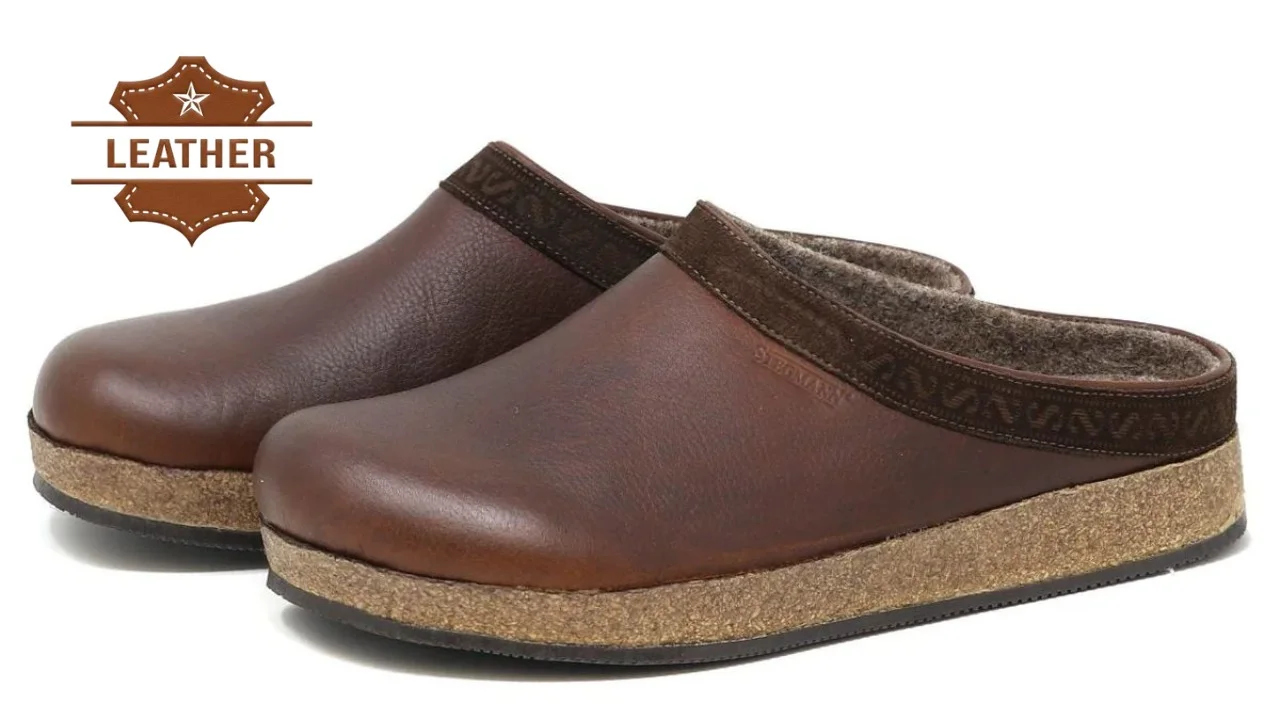
Men’s Leather Clogs are no longer just a practical shoe for work or home. In 2026, they sit right at the intersection of comfort, function, and easy style. That shift is not random. Fashion reporting this year shows clogs back on runways and in celebrity looks, while shoppers are also moving toward comfort-first footwear that still looks polished.
This guide is built to solve the real buying questions people have: Are leather clogs good for standing all day? Which leather is best? Should you choose open-back or closed-back? Can you wear them with modern outfits, not just work clothes? And how do you avoid buying a pair that looks good online but feels disappointing in real life? The answer depends on leather quality, sole construction, fit, and how you plan to wear them.
If you want one pair that can move between casual wear, travel, work, and relaxed weekend styling, men’s leather clogs are one of the smartest slip-on categories to understand before you buy.
What Are Mens Leather Clogs?
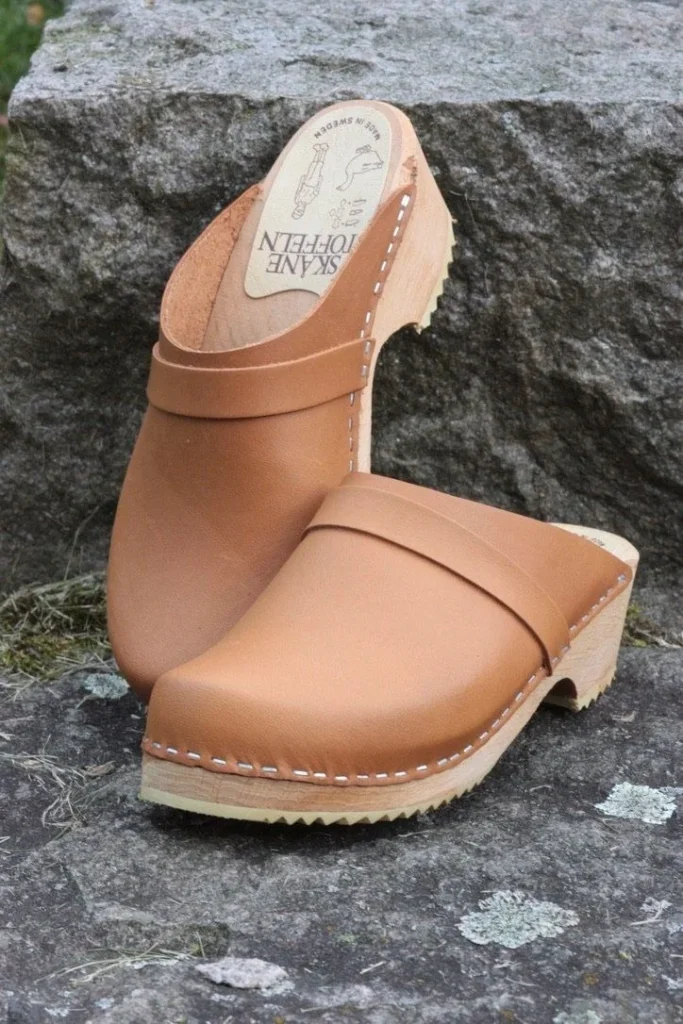
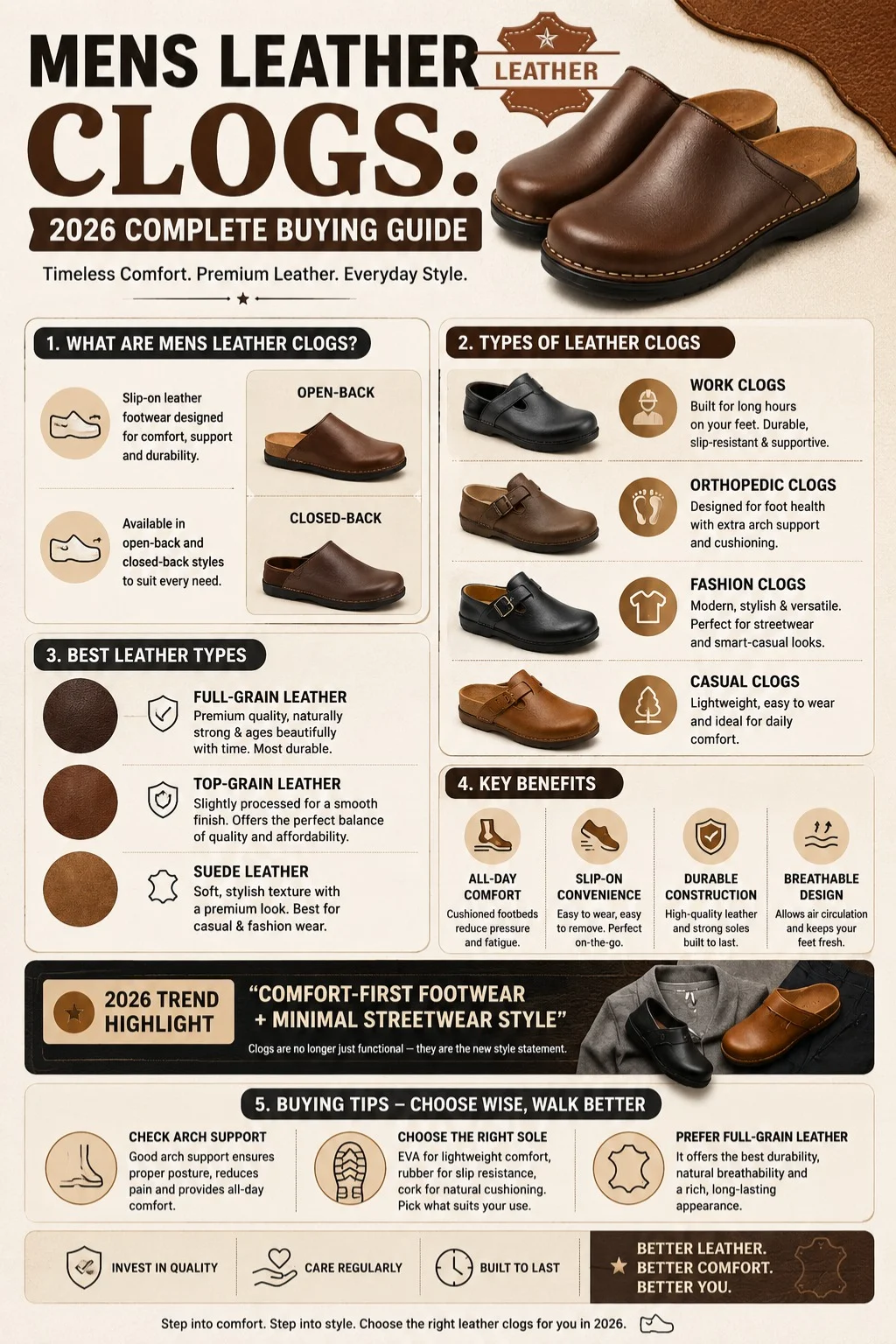
Men’s leather clogs are slip-on shoes built with a leather upper and a supportive sole. Depending on the model, they may be open-back, closed-back, lined, unlined, or designed with a cork, rubber, EVA, or wood-style base. They are popular because they combine easy wear with a more substantial build than many lightweight slip-ons.
A good clog usually focuses on three things: easy entry, stable underfoot support, and enough structure to hold up to repeated use. That is why clogs work so well for everyday wear, travel, and jobs that keep you on your feet.
A Short History of Clogs
Clogs have deep historical roots in Europe, where wooden and protective clog-style footwear served practical daily needs. Museum collections and historical records show clog-style shoes appearing in different forms over a long span of time, not as a passing trend but as durable working footwear.
Modern leather clogs are a refined evolution of that idea. Instead of only being a work shoe, they now sit in the “comfort-meets-style” category, where craftsmanship, material choice, and silhouette matter just as much as function. That is one reason they keep coming back in fashion cycles.
Why Mens Leather Clogs Matter in 2026
The 2026 footwear story is clear: comfort is no longer an afterthought. Search coverage and fashion reporting point to a continued move toward practical silhouettes, easy slip-on shoes, and “quiet comfort” styling. Clogs fit that shift perfectly because they are easy to wear, visually simple, and versatile enough for both utility and style.
For shoppers, that means one thing: the best leather clogs today are not just about looking traditional. They should also solve modern problems such as long-standing hours, commuting, quick outfit changes, and a wardrobe that needs fewer but better shoes.
Types of Men’s Leather Clogs
Closed-Back Leather Clogs
Closed-back clogs are the more secure option. They hold the heel better and usually feel more stable during long wear. This makes them a strong choice for work settings, all-day use, or anyone who prefers a more planted feel.
Open-Back Leather Clogs
Open-back clogs are easier to slide into and out of. They are especially good for relaxed use, indoor-outdoor routines, and warm weather. The trade-off is less heel security.
Orthopedic Leather Clogs
Orthopedic-style clogs emphasize arch support, cushioning, and reduced pressure. Brands in this category often highlight support systems intended to ease strain during long hours on your feet.
Fashion or Lifestyle Leather Clogs
These are the styles most likely to show up in editorial fashion coverage. They keep the clog shape but elevate it with sleeker leather, refined finishes, or fashion-led details such as studs, carved soles, or minimal silhouettes.
Work Clogs
Work clogs are built for people who need grip, support, and durability first. Search results from medical, kitchen, and work-focused pages often highlight slip resistance, comfort, and easier long-wear performance.
Leather Types Used in Men’s Leather Clogs
| Leather Type | What It Means | Best For | Main Trade-Off |
| Full-grain leather | The top layer of the hide with the natural grain intact | Durability, premium look, patina | Usually costs more |
| Top-grain leather | The top layer, lightly corrected for a smoother finish | Cleaner appearance, balanced price | Slightly less character than full-grain |
| Genuine leather | A broad retail term for real leather, often lower in the hierarchy | Budget-friendly leather footwear | Quality can vary a lot |
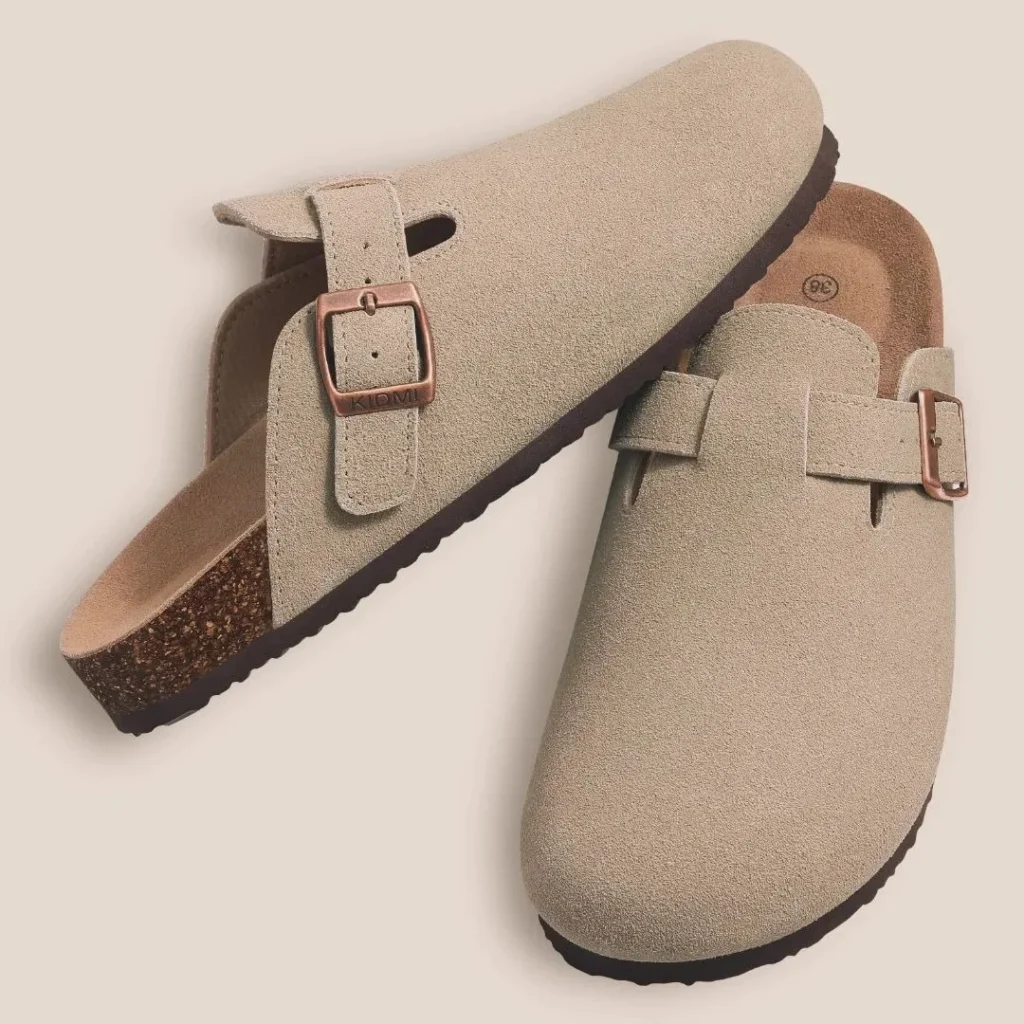
| Suede | Leather with a soft, napped surface | Casual, fashion-led clogs | Needs more care |
| Nubuck | Similar to suede but sanded from the outside of the hide | Soft, refined premium looks | Marks more easily |
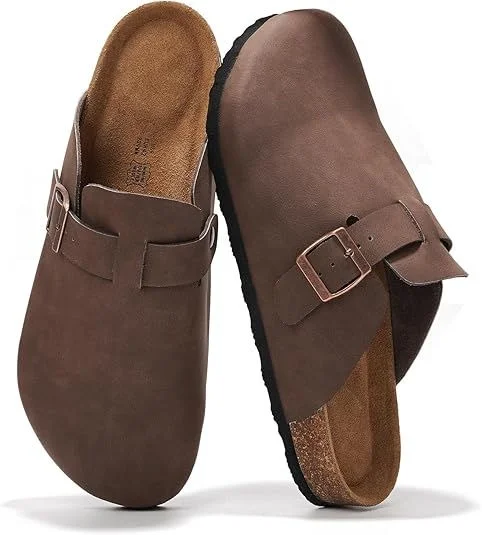
| PU / Faux leather | Synthetic leather alternative | Lower cost, vegan positioning | Usually less breathable and less durable |
Full-grain leather is typically considered the strongest premium option because it keeps the hide’s natural surface intact, while top-grain is smoothed for a cleaner finish. That is why many durability-focused shoe makers and leather guides still favor full-grain when long life is the goal.
How Men’s Leather Clogs Are Made
A solid leather clog usually goes through a sequence of design, pattern work, cutting, stitching, assembly, lasting, and finishing. In shoe manufacturing, the exact number of steps varies by production method, but the core idea stays the same: build the upper, build the base, join them correctly, then finish for comfort and appearance.
Here is the simplified process buyers should understand:
- Leather selection – choose the right hide, finish, and thickness.
- Pattern making – the clog shape is mapped out for fit and balance.
- Cutting – upper parts are cut from leather panels.
- Stitching and trimming – the upper is assembled and cleaned up.
- Sole building – cork, EVA, rubber, wood-style, or blended soles are prepared.
- Lasting and attachment – the upper is shaped and fixed to the sole.
- Finishing – edges, color, lining, and final inspection are completed.
A key buyer insight: the best-looking upper does not matter much if the sole and attachment method are weak. Durable shoes usually benefit from stronger construction and better repairability.
How to Identify Original vs Fake Leather
This is one of the biggest buying mistakes. A shoe can look “premium” online but still use poor leather or synthetic material underneath. A practical way to judge the pair is to look at the material description, the grain, the finish, the smell, and the way the shoe bends. Leather care experts also stress that different materials require different care, which is another reason correct Identification Matters.
Signs of better leather
- Natural grain variation, not a perfectly repeated pattern
- A richer surface depth, not a plastic shine
- Edges and stitching that look clean and firm
- A structure that bends without looking stiff and dead
Signs of lower-quality or fake material
- Too-uniform surface print
- Artificial shine that looks coated
- Very low breathability
- Product copy that avoids saying exactly what the upper is made of
Snippet-ready answer
The easiest way to spot fake leather is to look for a repeated surface pattern, plastic-like shine, weak breathability, and vague material descriptions.
Buying Guide: What to Check Before Purchase
If you are buying men’s leather clogs online, use a checklist instead of guessing. The best pairs are the ones that match your daily use, foot shape, and weather needs.
Check these first
- Fit and width: your toes should not feel cramped.
- Heel security: open-back or closed-back depends on your routine.
- Arch support: important if you stand for long periods.
- Outsole grip: Look for traction if floors are slippery.
- Leather type: full-grain and top-grain usually signal better quality.
- Weight: too-heavy clogs can tire your legs faster.
- Seasonal use: lined styles help in cold weather; lighter models help in warm weather.
Pros and cons
Pros
- Easy slip-on wear
- Good everyday comfort
- Strong style versatility
- Often durable if made well
- Suitable for work, travel, and casual wear
Cons
- Poorly made pairs can feel heavy
- Open-back styles offer less heel security
- Leather needs care
- Fit can be tricky if the last is too narrow or too flat
Best Uses for Men’s Leather Clogs
Men’s leather clogs are useful because they do not belong to only one style category. They work in casual, work, travel, and relaxed home settings.
Best uses include
- Daily casual wear
- Long shifts and standing work
- Travel days and airport outfits
- Indoor-outdoor quick errands
- Minimalist streetwear looks
- Transitional weather outfits
Price Range Worldwide
Prices vary widely based on leather quality, construction, brand positioning, and country of sale. Search results show budget marketplace pairs, mid-range heritage options, and premium designer or craft-led pieces all sharing the clog category.
A practical pricing view looks like this:
| Segment | Typical Buyer Profile | What to Expect |
| Budget | First-time buyer, casual use | Basic comfort, simpler construction |
| Mid-range | Everyday wear, better materials | Better leather, better footbed, stronger build |
| Premium | Style-led or long-life buyer | Higher-quality leather, more refined finishing, better support |
This is a market-level framework, not a fixed price list, because pricing shifts by country, taxes, and retailer.
Best Countries and Brands Known for Leather Clogs
Several markets are strongly associated with clog-making or clog retail: the Netherlands and wider European clog tradition, Scandinavian-inspired styling, and premium leather craft regions that emphasize handwork and durable construction.
Brand names seen in the current results include Birkenstock, Jerusalem Sandals, Stegmann, L.L.Bean, Dansko, and Project Cloud. These are not all direct competitors in the same exact way, but they show how broad the category is, from fashion to comfort to work wear.
Budget-Friendly vs Premium Choices
Budget-friendly options are best when:
- You need a second pair for light use
- You are testing the clog silhouette
- You want a casual slip-on without paying for heritage branding
Premium options are best when:
- You want better leather
- You expect the pair to age well
- You care about comfort, support, and long wear
- You want a more polished look for outfits
Styling Men’s Leather Clogs in 2026
Fashion coverage in 2026 shows clogs appearing in more polished and more expressive looks, which means they are no longer limited to workwear or home wear. Leather versions especially work well when the rest of the outfit is clean and balanced.
Easy outfit formulas
- Casual: straight jeans, plain tee, dark leather clogs
- Smart casual: chinos, polo, brown or black clogs
- Utility style: relaxed trousers, overshirt, sturdy leather clogs
- Minimal streetwear: wide-leg pants, simple knit, sleek clogs
- Warm-weather look: linen pants, open shirt, lighter leather clogs
Style tip
The best clog outfits usually keep the rest of the look simple. Let the shoe do the work. Avoid over-layering when the clog already has a strong silhouette. That is especially true for chunky or wooden-sole designs.
Common Mistakes to Avoid
- Buying based only on photos.
- Ignoring width and heel fit.
- Choosing style over grip for work use.
- Assuming every “leather” label means high quality.
- Skipping care after purchase.
- Wearing the wrong clog type for the season.
Care, Cleaning, and Maintenance
Leather shoes last longer when they are cleaned, conditioned, and stored properly. Shoe care guides consistently stress gentle cleaning, appropriate conditioner, and regular maintenance to keep leather supple and help prevent cracking.
Simple care routine
- Wipe off dust with a soft cloth.
- Clean lightly with the Correct Leather Product.
- Let the shoes dry naturally.
- Apply conditioner sparingly when needed.
- Store them in a dry place away from heat.
Extra care tips
- Do not soak leather
- Avoid harsh household cleaners
- Match the cleaner to the leather type
- Use a brush or cloth, not rough scrubbing
Snippet-ready answer
Clean leather clogs gently, condition them occasionally, and keep them dry to help the leather stay soft and prevent cracking.
Expert Tips Most Buyers Ignore
The first hidden rule is that sole construction matters as much as leather quality. Stronger stitched or better-built soles tend to hold up better over time than flimsy glued constructions.
The second hidden rule is that traction matters more than people think. Slip resistance depends on the outsole compound, tread pattern, and the surface where the shoe is used. A clog that is fine outdoors may not behave the same way on wet indoor floors.
The third hidden rule is that support should match your life. If you stand all day, arch support and cushioning matter more than a trendy silhouette. If you wear them casually, style and leather finish may matter more than technical support.
Future Trends in the Leather Clog Market
The direction for 2026 is clear: comfort stays central, but style is getting cleaner and more refined. Editorial and runway coverage show clogs returning with updated materials, polished finishes, and a more fashion-aware shape. That means the category should keep expanding across luxury, heritage, and comfort-first brands.
In leather manufacturing, buyers are also paying more attention to responsible sourcing, better construction, and materials that last longer instead of being replaced quickly. Even when the look is minimal, the winning product is increasingly the one that feels better, lasts longer, and is easier to maintain.
FAQs
A: Yes. Pairs with good arch support, cushioning, and stable construction are better for long hours on your feet.
A: Yes. Current fashion coverage shows clogs back in runway, celebrity, and trend reporting for 2026.
A: Full-grain leather is usually the strongest premium option for durability and aging well.
A: Choose closed-back for more security and open-back for easier slip-on wear and relaxed use.
A: Wipe them clean, condition them gently, avoid soaking, and store them in a dry place.
Conclusion
Men’s leather clogs are one of the strongest modern footwear categories because they combine comfort, durability, and Styling Flexibility in one simple shape. The best pairs use quality leather, supportive construction, and a sole that matches real-life use. In 2026, that matters even more because shoppers want footwear that works across work, travel, and casual fashion without feeling outdated.
If you are building content for theleatheritems.com, this page should act as the pillar article for the topic. It covers buyer intent, material education, fit, style, care, and trend relevance in one place, which is exactly the type of page that can beat short collections and thin product posts.