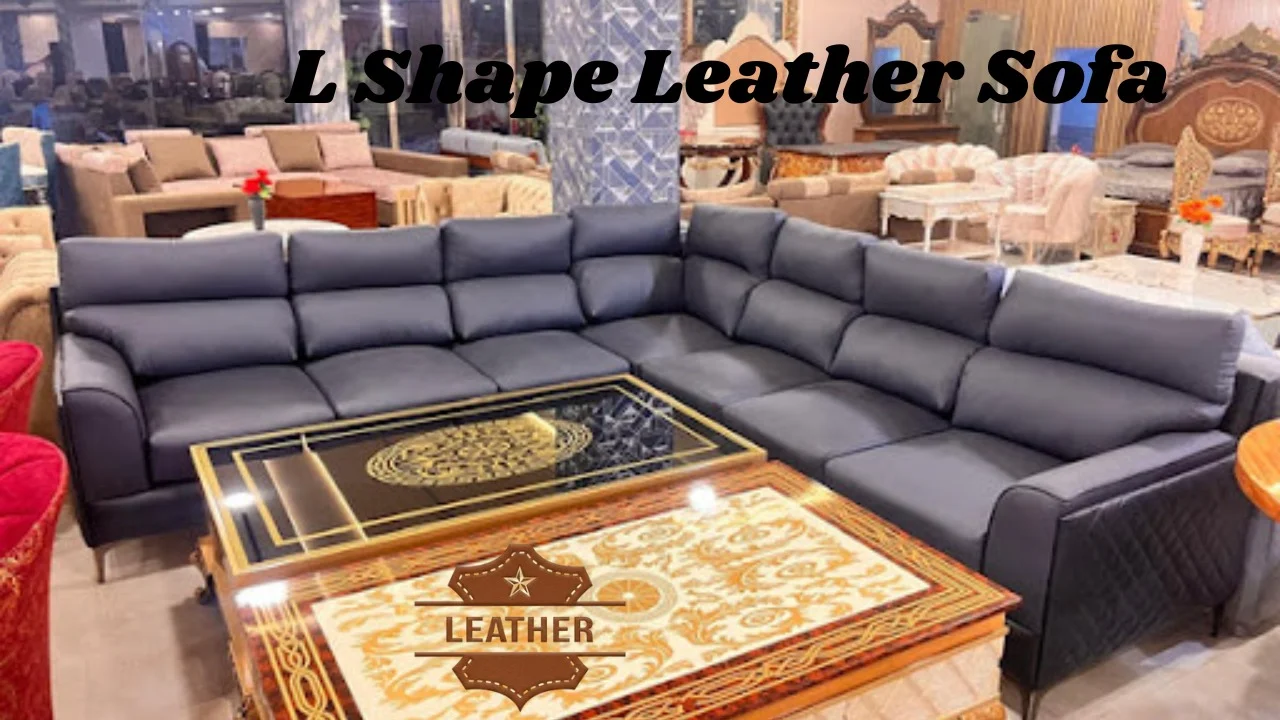
L Shape Leather Sofa
An L-Shaped Leather Sofa is one of the smartest furniture choices for modern homes because it combines style, seating capacity, and practical room use in one piece. It can anchor a living room, define an open-plan layout, and give you a comfortable place to stretch out without cluttering the space. That is why shoppers compare it so carefully before buying.
But most buying guides only scratch the surface. They mention size and style, yet they do not explain the leather itself, the frame beneath it, the cushion support, or how the sofa will actually feel after months of daily use. That is where buyers make expensive mistakes.
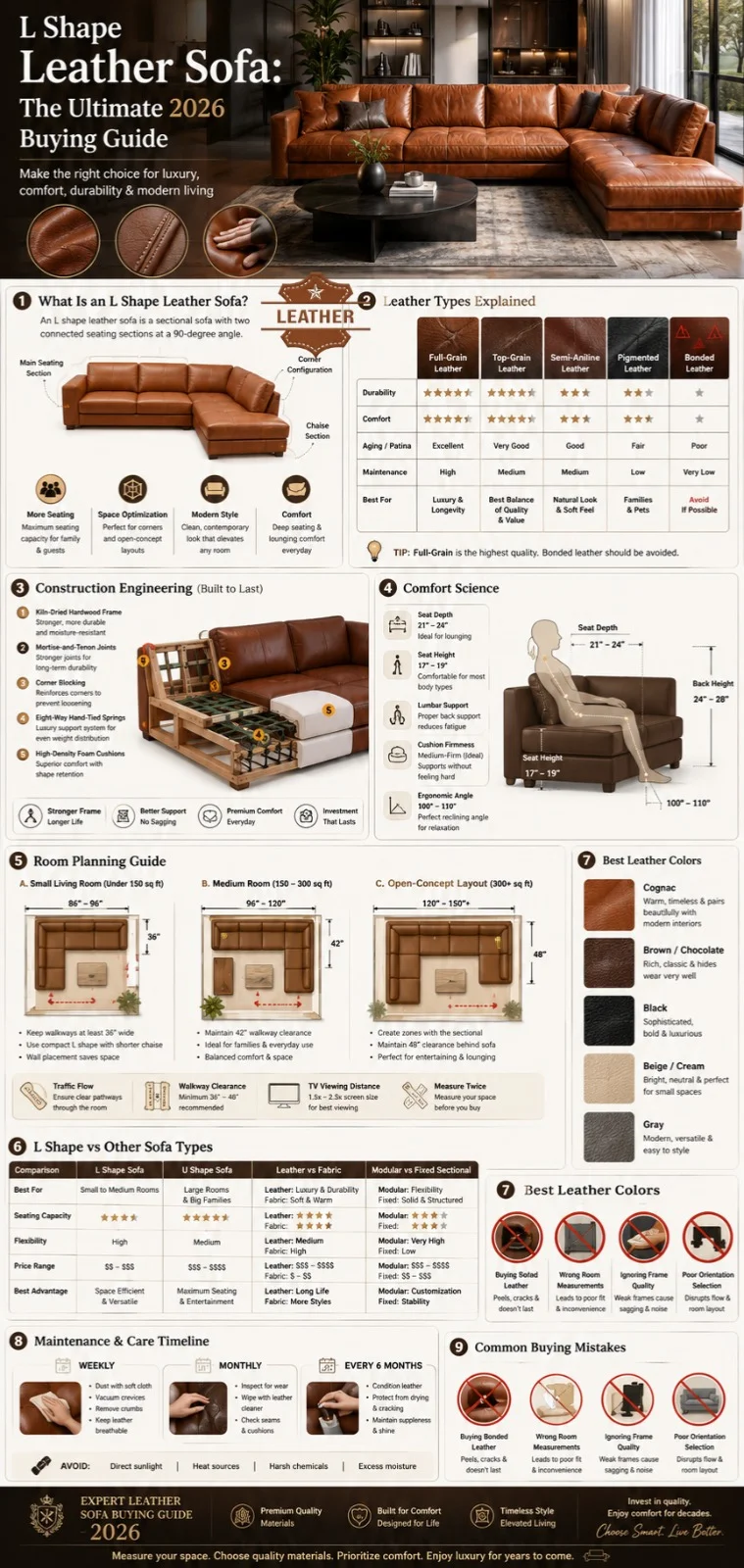
This guide gives you the full picture. You will learn how to choose the right leather, how to check construction quality, how to plan your room, and how to avoid the common traps that make a sectional look good online but disappointing at home. The goal is simple: help you choose an L-shaped leather sofa that is beautiful on day one and still worth loving years later.
What is an L-shaped leather sofa?
An L-shaped leather sofa is a sectional sofa with two connected seating sections forming a right angle. In many homes, one side includes a chaise or lounge extension, which makes the sofa useful for both sitting and lying down.
This format works well because it uses corners efficiently, creates a natural conversation area, and fits a wide range of layouts, from apartments to open living rooms. Modular versions are especially useful because they can often be reversed or expanded later. Burrow’s sectional listings show this clearly: their L-shaped and chaise layouts are reversible, and modules can be added as needs change.
Why L-Shaped Leather Sofas Matter in 2026
In 2026, buyers want furniture that feels premium but also works hard in real life. A leather sectional fits that need because leather is durable, easy to maintain, and naturally develops character over time. Reputable furniture brands still emphasize leather’s longevity, easy cleaning, and graceful aging, especially for family rooms and busy homes.
The best part is that a good leather sectional does more than “look luxurious.” It can be the main seating solution in the room, help organize the layout, and reduce the need for extra chairs. That is why the real buying decision is not only about style. It is about fit, comfort, and how the piece will age in your home.
Types of L-Shaped Leather Sofas
1. Standard L Shape Sectional
This is the most common version. It works well for family rooms, medium spaces, and buyers who want one simple seating solution.
2. Chaise Sectional
This version includes an extended lounge seat. It is ideal if you like to put your feet up often or use the sofa for TV nights.
3. Modular Leather Sectional
Modular sofas can be rearranged, expanded, or reversed. That flexibility makes them a strong option for growing households or changing room layouts. Burrow’s modular leather sectionals are a clear example of this kind of setup.
4. Reclining Leather Sectional
These include manual or power recline functions. They are useful for media rooms and comfort-first homes.
Quick Summary
If your room is stable and simple, a standard sectional is enough. If your room may change, a modular design is often the better long-term investment.
Leather Types Used in L-Shaped Leather Sofas
Leather quality matters more than most shoppers realize. Industry and furniture references consistently point to full-grain and top-grain leather as the premium choices, while bonded leather sits much lower in durability. Leather Working Group definitions and retailer guides make the differences very clear.
| Leather type | What it means | Best for | Buyer note |
| Full-grain leather | Keeps the complete grain surface with no corrective sanding. It is the most natural-looking type and develops patina over time. | Luxury buyers, long-term ownership | Highest character and durability potential. |
| Top-grain leather | The surface is lightly buffed for a more uniform appearance. | Most premium sofa buyers | A practical balance of luxury and consistency. |
| Aniline leather | Colored with transparent dyes, leaving the natural grain visible. | Buyers who love natural character | Beautiful but can show marks more easily. |
| Semi-aniline leather | Has a light protective finish and a more uniform look. | Families who want beauty plus protection | A strong middle ground. |
| Corrected-grain leather | The grain is partially buffed and then finished. | Buyers who want a more even surface | More processed, less natural. |
| Bonded leather | Made from leather scraps blended with adhesive and pressed into sheets. | Budget accessories, not ideal for premium sofas | Less durable than top-grain or full-grain. |
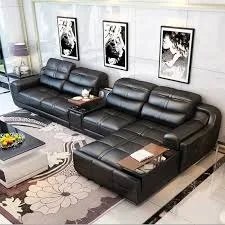
Which leather should most sofa buyers choose?
For most people, top-grain leather is the best balance of appearance, comfort, and long-term use. If you want the richest natural character, choose full-grain. If you have children or pets and want easier maintenance, semi-aniline or a well-finished top-grain option is often the safer choice.
Bonded leather warning
Bonded leather sounds attractive on a spec sheet, but it is not the same as a full-hide leather product. Pottery Barn explains that it is made from scraps and adhesive, and it is not as durable as top-grain or full-grain leather. For a sofa you expect to keep for years, that difference matters.
Construction Engineering: What Makes a Sofa Truly Durable?
A leather sofa is only as strong as its frame and support system. That is why the hidden construction details matter just as much as the upholstery.
Furniture brands commonly highlight kiln-dried wood, mortise-and-tenon joinery, and strong frame construction because these details help reduce warping and improve Long-Term Stability. Crate & Barrel, for example, specifically notes kiln-dried wood and mortise-and-tenon construction on its leather seating.
| Construction element | Why it matters | What to look for |
| Kiln-dried hardwood frame | Helps prevent warping and cracking | Hardwood such as oak, maple, or other properly dried wood. |
| Corner blocking | Strengthens stress points | Especially important on sectionals and arm joins |
| Mortise-and-tenon joinery | Creates stronger joints than weak stapled frames | A premium sign of solid construction. |
| Suspension system | Determines how the sofa feels and how evenly weight is supported | Eight-way hand-tied, sinuous springs, or strong webbing depending on price tier |
| Cushion core | Impacts comfort and sag resistance | High-density foam or layered support |
Suspension systems in simple words
Eight-way hand-tied systems are widely regarded as a luxury benchmark, while sinuous springs are common in many well-made contemporary sofas. The goal is even support, reduced sagging, and a seat that does not collapse too fast. A weaker webbing-only base is usually a budget signal. This is why the best buying guides now pair leather choice with frame and support advice instead of discussing upholstery alone.
Comfort Science: How to Choose a Sofa That Feels Good Every Day
Comfort is not just softness. A sofa can feel soft in the store and still be wrong for your body at home.
Seat depth matters a lot. Crate & Barrel explains that shallower seats feel more formal and are easier to stand up from, while deeper seats encourage lounging and stretching out. That is exactly why L-shape sectionals often feel so appealing: one side gives you a relaxed lounging zone.
What to check before buying
- Seat depth: Deeper is better for lounging; shallower is better for upright sitting.
- Seat height: lower seats feel more relaxed; higher seats are easier for older adults and frequent use.
- Lumbar support: important if you sit for long periods.
- Firmness: medium-firm is often the most practical choice for family use.
- Arm height: matters if you rest your head or use the sofa for reading.
Best comfort choice by lifestyle
- Movie lovers: deeper chaise, softer cushions
- Families: medium-firm seats, easy-clean leather
- Older buyers: moderate depth, slightly higher seat height
- Pet households: protected leather finish, durable stitching
How to Choose the Right Size
A sectional that is too large can overpower the room. A sectional that is too small can look awkward and underused. Good buying guides consistently stress measuring the room, entryway, and layout before purchase because sectionals are difficult to return or resize later.
Room planning basics
- Measure the wall space first.
- Measure doors, hallways, elevators, and stairs.
- Leave a clear walking space around the sofa.
- Make sure the chaise does not block traffic flow.
- Check the orientation before ordering.
Simple sizing guide
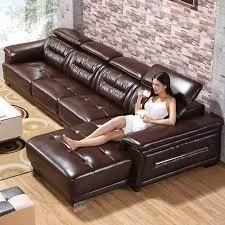
- Small rooms: choose compact L-shapes with shorter chaise depth.
- Medium rooms: standard sectionals work best.
- Large open spaces: bigger modular or extended L-shapes feel more balanced.
Left-facing vs right-facing
This is one of the most important decisions. Choose the side based on where the open walking path needs to stay clear, where the TV is placed, and how the room is entered. Modular and reversible designs are a major advantage here because they can adapt to changing spaces. Burrow’s product pages explicitly note reversible L-shaped and chaise setups.
L-Shaped Leather Sofa vs Other Popular Options
| Comparison | L Shape Leather Sofa | U Shape Sofa | Traditional Sofa | Fabric Sofa |
| Seating capacity | High | Very high | Moderate | Moderate |
| Space efficiency | Excellent | Needs more room | Good | Good |
| Lounging comfort | Excellent | Excellent | Moderate | Depends on fill |
| Room definition | Strong | Strongest | Light | Light |
| Maintenance | Easier than fabric | Easier than fabric | Easier than fabric | Harder to clean generally |
| Best use | Family rooms, open layouts, TV spaces | Large entertainment rooms | Smaller or formal rooms | Homes prioritizing softness and color variety |
When L-shape wins
L-shape sectionals usually win when you want one piece to do several jobs: seating, lounging, and room shaping.
When a U-shape wins
Choose a U-shape when your room is large, and you need maximum social seating.
When fabric wins
Fabric can be a better fit if you want color variety or a softer textile feel, but leather remains strong for easy maintenance and long-term polish.
Best Colors for a Leather Sectional
Color affects both style and maintenance. The most practical leather colors remain the ones that age gracefully and fit many interior styles.
- Cognac: warm, timeless, and very versatile
- Chocolate brown: rich and traditional
- Black: sharp and formal
- Beige: bright and contemporary
- Gray: modern and neutral
Full-grain and aniline leathers often show more natural variation, while more finished leathers tend to look more uniform. That means your color choice should also reflect how much natural character you want to see in the hide.
Pros and Cons of an L-Shaped Leather Sofa
| Pros | Cons |
| Excellent seating efficiency | Takes planning to place correctly |
| Great for lounging | Wrong orientation can block traffic |
| Timeless and upscale look | Premium leather costs more |
| Easier to clean than many fabrics | Some leathers show marks and patina |
| Can define open-plan rooms | Large pieces are harder to move |
Leather itself has long-term strengths: it is durable, can develop patina, and is easier to care for than many upholstery choices. But it is still a natural material, so variations in grain, texture, and aging are normal.
Best Uses for an L-Shaped Leather Sofa
This sofa works especially well for:
- Family rooms
- Open-plan living areas
- TV and media rooms
- Lounge-style apartments
- Large conversation spaces
- Homes that need one Central Seating Zone
A modular L-shape is especially helpful when your space may change later. Reversible chaise options and add-on modules make the sofa more future-proof.
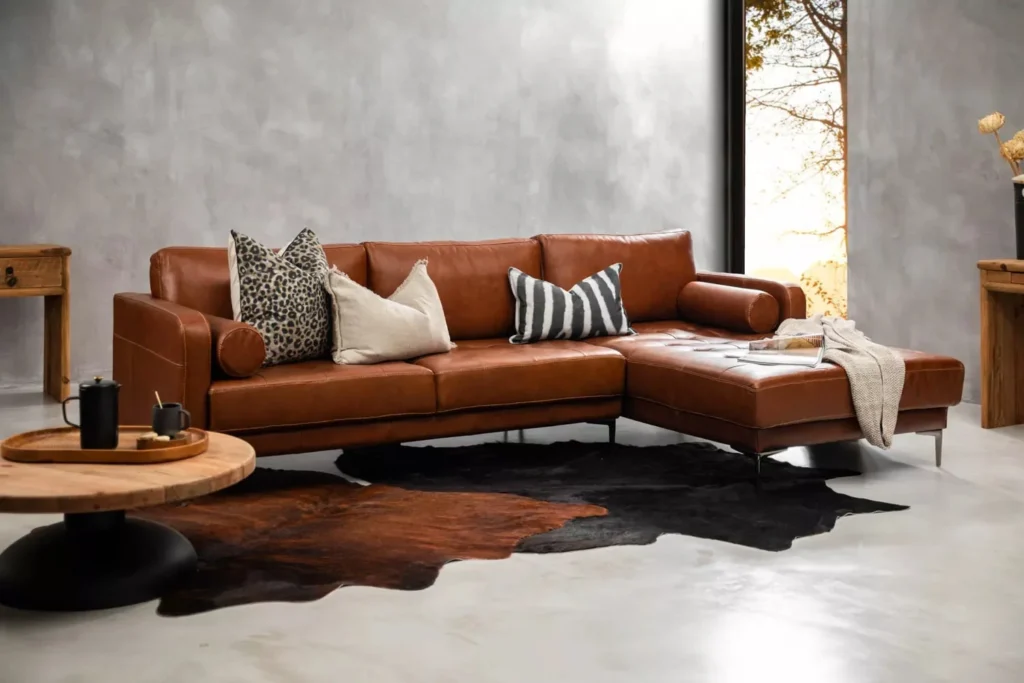
How to Care for a Leather Sectional
Leather lasts longer when you care for it consistently. Pottery Barn recommends routine dusting, gentle wiping, and keeping leather away from direct sunlight and heat sources because both can dry the hide and cause cracking or discoloration over time. Crate & Barrel also advises weekly dust removal, prompt spill cleanup, and controlled humidity and temperature.
Simple care routine
Weekly
- Dust with a soft cloth
- Vacuum seams and crevices
- Remove crumbs and debris
Monthly
- Wipe gently with a slightly damp cloth if needed
- Check for dry spots or dull areas
- Rotate cushions if the design allows it
Every 6 months
- Condition only with a leather-safe product approved for upholstery
- Check joints and hardware for looseness
What to avoid
- Direct sunlight
- Heat vents
- Harsh cleaners
- Alcohol-based products
- Scrubbing stains aggressively
Expert Buying Mistakes to Avoid
- Choosing bonded leather because the price looks better
- Ignoring the frame and spring system
- Ordering without measuring the room and entryway
- Picking the wrong chaise orientation
- Buying a sofa that is too deep or too shallow for your body
- Forgetting how the color will age in real light
- Assuming “looks premium” means “is premium”
This is where many competitor guides stay too shallow. They tell you what a sectional is, but not how to avoid expensive regret. Better current buying guides now combine leather type, build quality, and room planning in one decision process.
Who Should Buy an L-Shaped Leather Sofa?
An L-shaped leather sofa is a strong choice for:
- Families who want durable seating
- Buyers who like a polished, upscale look
- People furnishing open-concept rooms
- Apartment owners who need efficient seating
- Anyone who values easy cleaning and long service life
Who Should Avoid It?
You may want to skip an L-shaped leather sofa if:
- Your room is very small and cannot spare any corner space
- You move often and want the lightest possible furniture
- You want a super-soft textile feel instead of leather
- You are not ready to measure carefully before ordering
Future Trends in Leather Sectionals
The strongest direction in modern sectional design is flexibility. Modular systems, reversible layouts, built-in utility features, and durable cushion technology are becoming more common. Burrow’s current leather sectional pages show this trend clearly, with modular growth, reversible layouts, and practical add-ons.
A second trend is smarter comfort engineering. Buyers no longer want only a stylish frame. They want measurable support, better seat ergonomics, and construction that justifies the price. That is why contemporary guides continue to emphasize frame quality, seat depth, leather type, and long-term care.
People Also Ask
A: Yes, if it is sized correctly. A compact L-shape can actually save space by using a corner efficiently, but you must measure carefully so the chaise does not block the walkway.
A: Top-grain and full-grain are the strongest premium choices for most buyers. Full-grain gives the most natural character, while top-grain offers a more uniform surface.
A: Yes. Quality leather can develop a patina and become softer and richer over time when properly cared for.
A: It can be used in some furniture, but it is less durable than top-grain or full-grain leather, so it is not the best pick for a long-term investment sofa.
A: Measure the wall, the walking path, and the entry points. Then check whether the chaise or return side will block movement, windows, or the TV area.
Final Conclusion
A great L-shaped leather sofa is not just a style purchase. It is a long-term comfort decision. The smartest buyers focus on leather type, structural quality, cushion support, room fit, and care, not just the showroom look. That approach gives you a sofa that feels better, lasts longer, and ages more beautifully.
For most buyers, the ideal balance is a top-grain or full-grain leather sectional with a solid hardwood frame, Reliable Suspension, and the right orientation for the room. If your space may change later, a modular or reversible design is even better. The right piece can become the centerpiece of the entire home.
Legal disclaimer: Leather quality, pricing, manufacturing standards, and product availability may vary by country, brand, and supplier. Always verify authenticity, material details, and care instructions before purchase.