Introduction
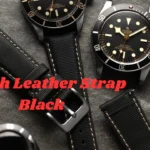
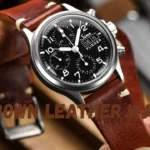
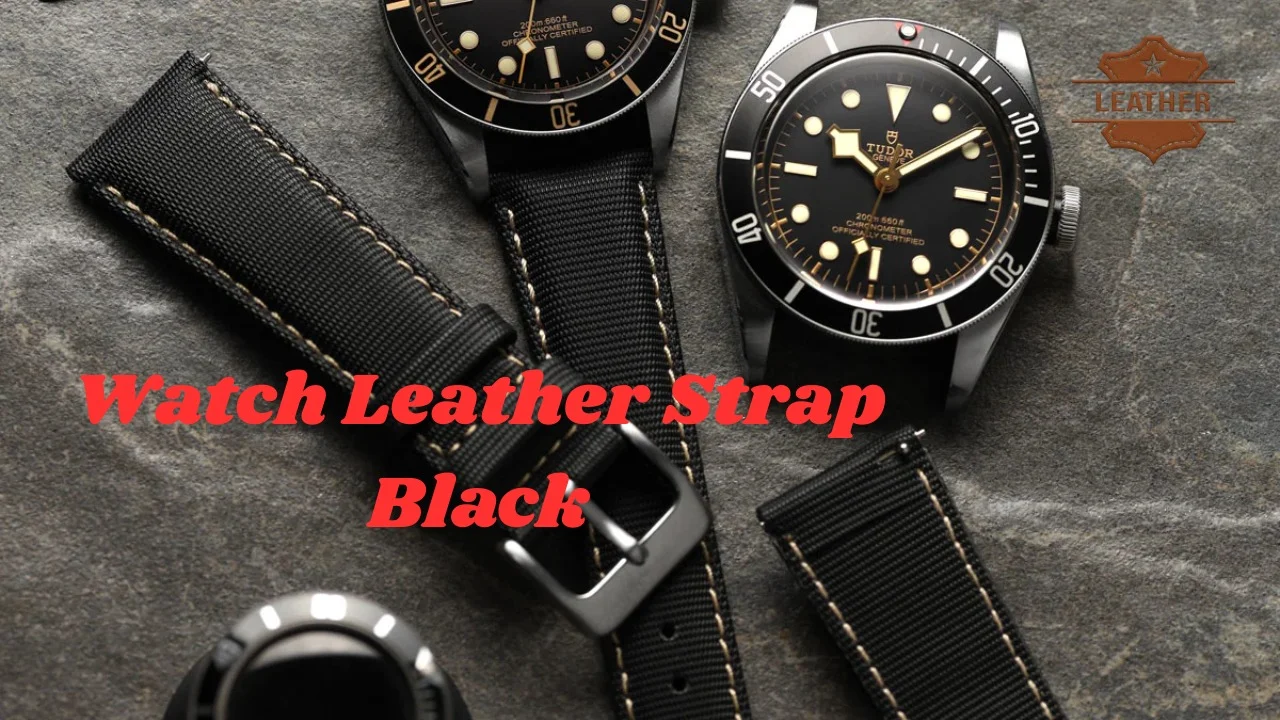
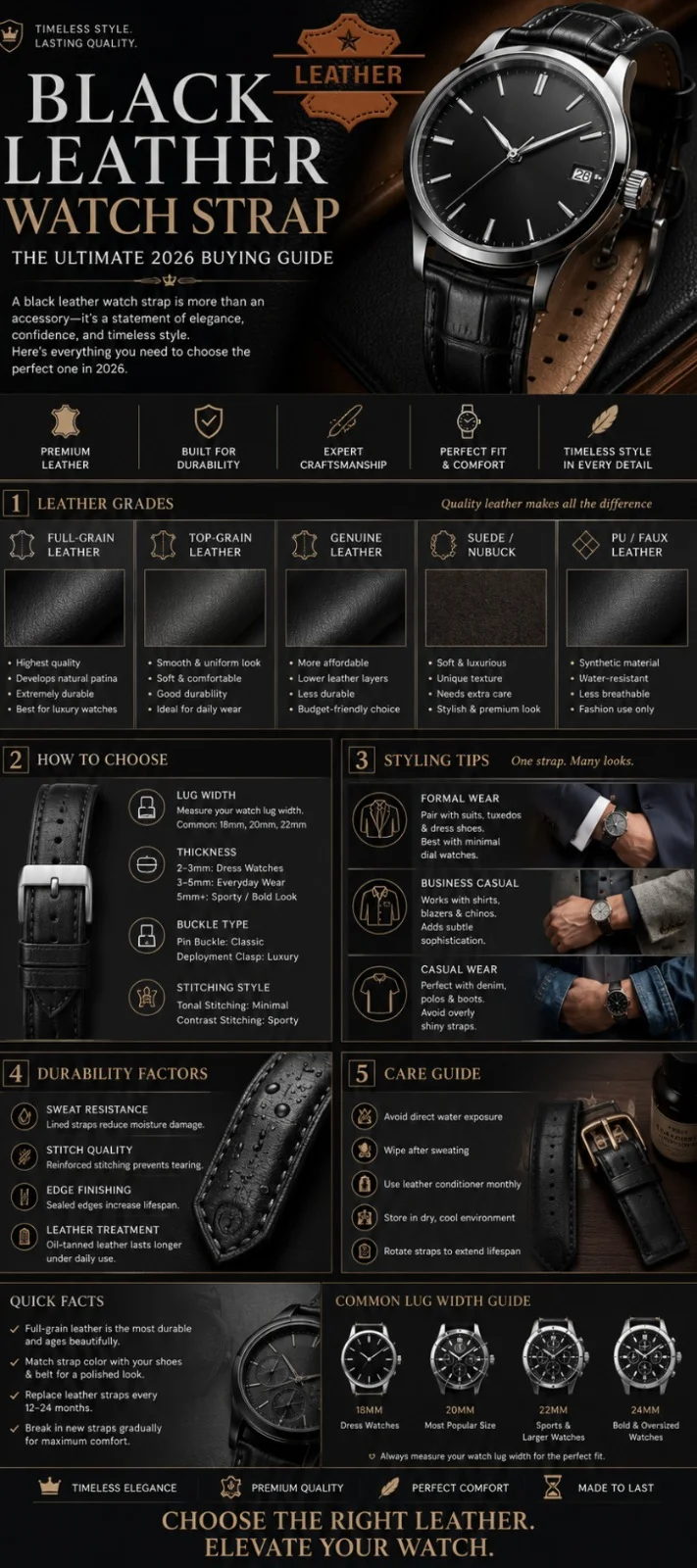
A Black Leather Watch Strap is one of the simplest upgrades you can make to a watch, but it can completely change how the watch looks, feels, and fits into your daily life. The right strap can make a dress watch look sharper, make a daily watch feel more comfortable, and make even a modest timepiece look far more expensive. The wrong strap, on the other hand, can ruin the watch’s proportions, wear out too quickly, or feel stiff and uncomfortable.
In 2026, buyers are looking for more than a black strap that simply “matches.” They want better leather, cleaner finishing, the right lug width, reliable stitching, and honest information about durability and care. That is exactly where most competitor pages fall short. They show products, but they do not teach the buyer how to choose wisely. This guide fixes that gap with practical advice from a leather and watch perspective, so you can choose the best black leather watch strap for style, comfort, and long-term value.
What Is a Black Leather Watch Strap?
A black leather watch strap is a watch band made from leather, dyed or finished in black, and built to attach to a watch case through the lugs. In simple terms, it is the bridge between the watch head and your wrist. That bridge matters more than many buyers realize, because it affects comfort, formality, and the overall visual balance of the watch. The most common fit factor is lug width, which is the distance between the watch lugs; several watch brands and strap specialists note that the most common men’s size is around 20 mm, with typical strap widths often falling between 18 mm and 26 mm, depending on the watch.
Black leather is popular because it is one of the most versatile strap colors. It works with business wear, formal wear, and many minimalist casual looks. It is also the easiest strap color to pair with black shoes, belts, and darker wardrobe pieces, which is why black leather remains a core category in watch strap collections.
Why Black Leather Watch Straps Still Matter in 2026
Black leather watch straps remain important because buyers still want a strap that looks refined without trying too hard. In the current market, many strap brands now offer padded finishes, quick-release pins, stitched and unstitched versions, and performance-focused leather options, which shows that the category has moved beyond basic replacement bands.
A black leather strap matters in 2026 for five reasons:
- It makes a watch look more formal and polished.
- It is lighter than a metal bracelet.
- It often feels more comfortable for all-day wear.
- It can be changed quickly to refresh the watch’s style.
- It gives strong value when the leather quality and construction are right.
A Short History of Leather Watch Straps
Leather has been used for watch straps for decades because it offers comfort, flexibility, and a classic appearance. Over time, strap making improved from simple stitched bands to more refined constructions with padding, lining, edge finishing, and better buckles. In parallel, the leather industry itself became more standardized, with tanning and finishing processes improving consistency and durability. The tanning process turns raw hide into stable leather, and modern production often uses controlled finishing to improve appearance and wear performance.
The result is the modern black leather watch strap: cleaner, stronger, and more style-specific than the basic straps of the past.
Types of Black Leather Watch Straps
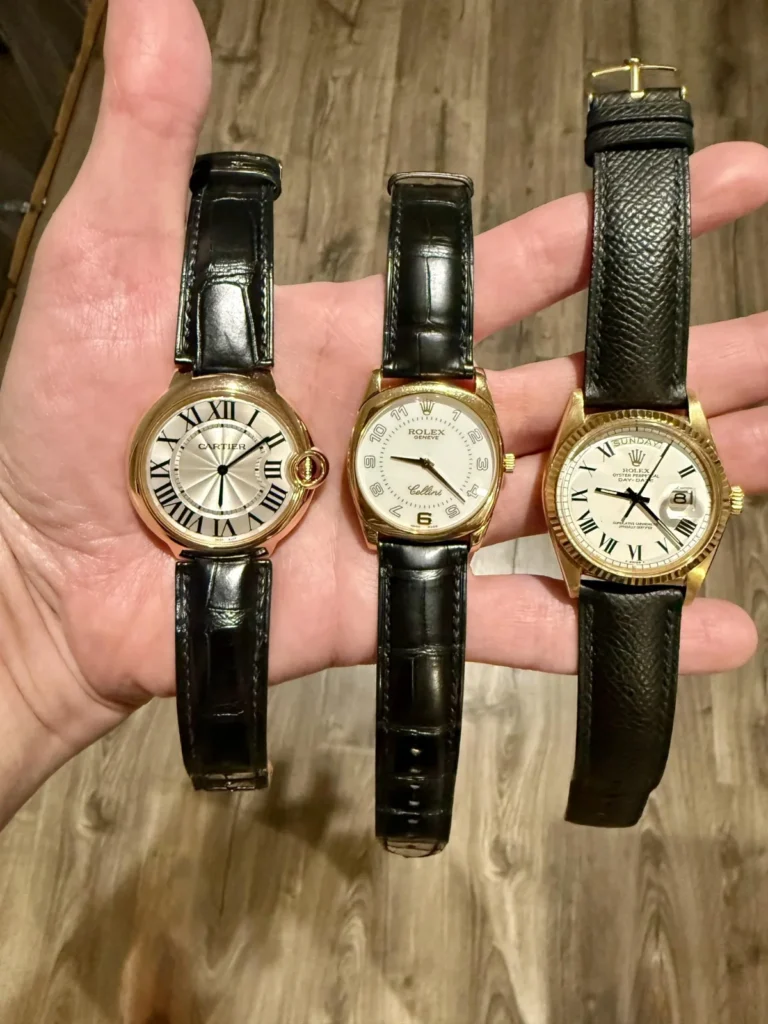
Black leather straps are not all the same. Shape, thickness, stitching, texture, and lining change how they look and perform.
1) Flat Dress Strap
A slim, clean profile with minimal padding. Best for dress watches and formal outfits.
2) Padded Strap
A thicker center section gives more wrist presence and a slightly more luxurious feel. Many collections now use this style for everyday and office wear.
3) Stitched Strap
Visible stitching adds detail and can make the strap feel more casual or sport-luxury.
4) Quick-Release Strap
A practical option for buyers who want easy strap changes without tools. This is common in modern retail listings and guide content.
5) Textured or Embossed Strap
Often used to imitate alligator, crocodile, or other textures while keeping a leather base.
6) Performance Leather Strap
A more durable, sometimes moisture-aware strap built for regular use rather than only dress occasions.
Leather Types Used in Black Watch Straps
| Leather Type | What It Means | Best For | Main Strength | Main Weakness |
| Full-grain leather | Top natural layer with grain intact | Premium dress and daily straps | Strong, durable, and develops patina | Usually more expensive |
| Top-grain leather | The top layer is refined or corrected for a smoother look | Everyday premium wear | More uniform appearance | Slightly less character than full-grain |
| Genuine leather | Lower-grade category used broadly in retail | Budget-friendly straps | Affordable | Usually less durable |
| Suede | Napped leather with a soft texture | Style-focused wear | Soft, distinctive look | More delicate and stain-prone |
| Nubuck | Sanded outer leather with a velvet-like touch | Fashion-forward wear | Premium feel | Needs careful maintenance |
| PU / faux leather | Synthetic alternative | Low-cost or vegan preference | Lower price, easy to wipe | Shorter lifespan and less Breathability |
Leather industry and leather goods references consistently distinguish full-grain as the highest-quality natural layer, while top-grain is refined for a more uniform look; “genuine leather” is a much looser retail term and does not automatically mean premium quality.
Full-Grain Leather
Full-grain leather is the strongest and most natural-looking option for a black watch strap. It keeps the original grain structure and typically ages well. Leather industry references describe full-grain as the grain split of the hide with only hair and epidermis removed, which is why it is prized for durability and character.
Top-Grain Leather
Top-grain leather is usually smoother and more consistent. It can be a smart choice if you want a cleaner, more polished black strap without the visible natural marks sometimes seen in full-grain leather.
Genuine Leather
This is where many buyers get misled. “Genuine leather” sounds premium, but in retail language, it often refers to a lower category than full-grain or top-grain. It can still work well, but the buyer should focus on construction quality, lining, and stitching instead of the label alone.
Suede and Nubuck
These are stylish but more delicate choices. They look great, but they are not the best pick if you sweat a lot, live in a wet climate, or want one strap to do everything. Care guidance from watch and leather brands consistently warns that delicate leathers need more protection.
How Black Leather Watch Straps Are Made
A good strap is not just cut leather. It is a small piece of construction engineering.
Step 1: Leather selection
The maker chooses hide type, thickness, and finish. Premium straps usually start with better-grade leather.
Step 2: Cutting
Panels are cut into top layer, lining layer, and any reinforcement pieces.
Step 3: Shaping and thinning
The strap is tapered, punched, and skived so it sits properly on the wrist and near the buckle.
Step 4: Stitching or bonding
Some straps are stitched for strength and appearance; others rely more on bonding plus clean finishing.
Step 5: Lining
A soft lining helps reduce sweat damage and improves comfort.
Step 6: Edge finishing
Good edge finishing matters because sealed or painted edges often last better than rough edges.
Step 7: Buckle fitting
A pin buckle is classic; a deployment clasp feels more premium and can reduce wear at the buckle point.
Step 8: Final inspection
A quality strap should be checked for straight stitching, clean holes, even taper, and secure hardware.
How to Identify Original vs Fake Leather
If you are buying a black leather watch strap, these checks help.
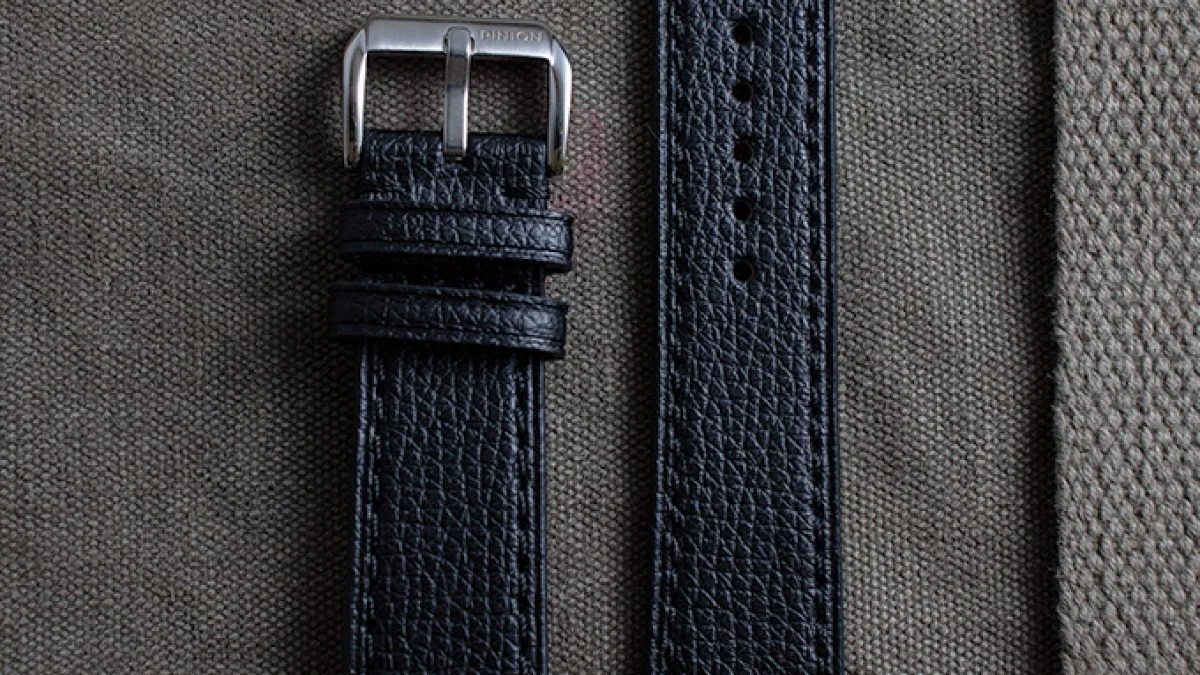
Signs of better leather
- natural grain variation
- soft but structured feel
- edges that are cleanly finished
- stitching that sits straight and even
- a lining that feels intentional, not flimsy
- a smell that is leather-like, not overly chemical
Signs of fake or low-value leather
- overly perfect surface with no natural depth
- plastic-like shine
- stiff and hollow feel
- peeling at the edges
- weak holes that deform quickly
- vague product descriptions with no material details
The safest approach is to read the material description carefully and judge the strap by construction, not just marketing language. Industry sources consistently show that grades and finishing matter more than generic labels.
Complete Buying Guide for a Black Leather Watch Strap
1) Measure Lug Width First
This is the first rule. If the width is wrong, the strap will not fit properly. Strap guides from Carl Friedrik, WatchObsession, Condor, and Nixon all stress that lug width is the key measurement, and it is typically measured in millimeters.
2) Match the Strap to the Watch Style
- dress watch: slim, flat, minimal stitching
- everyday watch: medium padding, clean stitching
- vintage-style watch: classic taper and modest profile
- sporty watch: sturdier leather, stronger buckle, practical lining
3) Choose the Right Thickness
A thin strap looks elegant on a dress watch. A thicker strap adds presence but can overpower a small case.
4) Decide on Stitching
- tonal stitching = quiet and formal
- contrast stitching = more casual, more visible character
5) Check the Buckle
A pin buckle is classic and versatile. A deployment clasp can feel more premium and reduce crease wear in the leather.
6) Look at Lining and Sweat Resistance
Longines and other watch-care guides advise protecting leather straps from excessive moisture, heat, and prolonged direct light. A better lining can help extend service life.
7) Think About Use Case
A daily commuter needs a different strap than a collector who wears the watch twice a week.
Best Uses for a Black Leather Watch Strap
A black leather watch strap works best for:
- formal office wear
- weddings and dress events
- minimalist wardrobes
- black-shoe / black-belt outfits
- Slim Dress Watches
- smart-casual evening looks
- vintage watches that need a clean, elegant upgrade
Styling Guide: When Black Leather Looks Best
Formal Wear
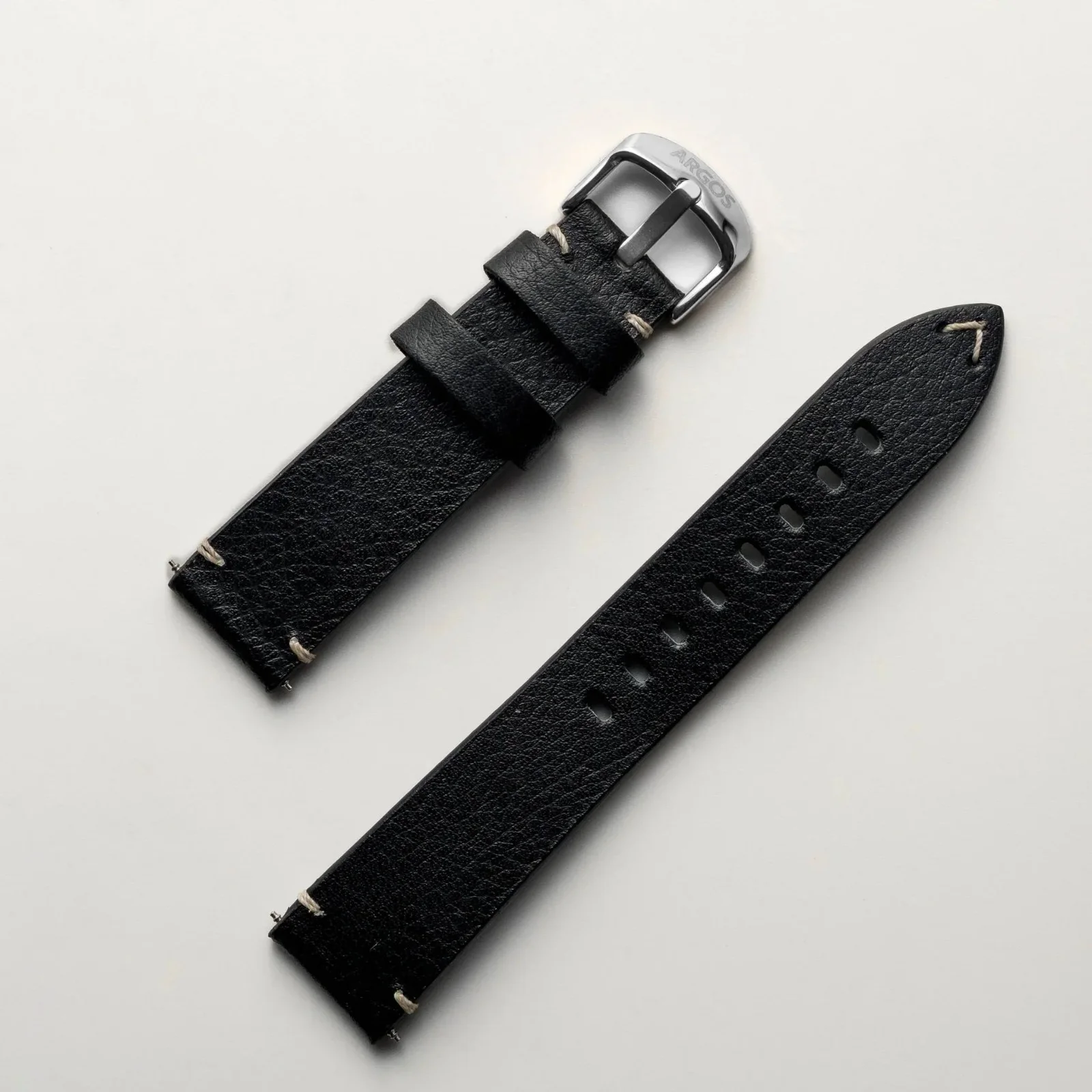
This is the safest and strongest use case. A black strap pairs naturally with suits, tuxedos, and black leather shoes.
Business Casual
With chinos, a blazer, or a button-down shirt, black leather creates a sharp, controlled look.
Casual Wear
Black leather can still work with denim, knitwear, and boots, but a softer or slightly textured strap usually looks better than a glossy one.
The simple rule
If the rest of your outfit is polished, the watch can be polished too. If the outfit is rugged or sporty, use a strap with more texture or a less formal finish.
Worldwide Price Ranges
Prices vary by leather grade, buckle, lining, brand, and country. Based on current strap listings, budget straps can be found around the low tens in local currency, while premium models can be far higher depending on brand and material. Retail examples show black leather straps ranging from affordable marketplace pricing to premium brand offerings and higher-end calfskin or Horween options.
| Category | Typical Buyer | Expected Value |
| Budget | First-time buyer, backup strap | Basic functionality, lower durability |
| Mid-range | Daily wear buyer | Best balance of price and quality |
| Premium | Style-focused or collector | Better leather, better finish, longer life |
| Luxury | Collector, luxury watch owner | Best materials, refined construction, premium feel |
Best Countries and Markets Famous for Leather Goods
Different markets are known for different strengths:
- Italy: refined calfskin, luxury finishing, fashion-driven design
- UK: strong strap culture and watch accessory specialization
- USA: heritage leather brands, horween-style focus, rugged premium goods
- Germany / Switzerland: precision, functional finishing, watch-system compatibility
- Pakistan / India / global export markets: strong manufacturing capacity and broad price ranges
For trust and sourcing claims, it is smart to reference LWG-certified tanning and transparent material disclosures where available. LWG’s audit standard is widely used in the industry for responsible leather production.
Budget-Friendly vs Premium vs Luxury
Budget-Friendly
Good for testing the style, replacement use, or occasional wear. The risk is lower durability and weaker finishing.
Premium
This is usually the sweet spot. Better leather, cleaner stitching, better lining, and more comfortable wear.
Luxury
Luxury straps are about touch, finishing, brand reputation, and detail. If the strap sits on a luxury watch, the strap quality should not feel out of place. Brand guide content from WatchGecko and other specialists shows strong buyer interest in premium strap construction and leather type selection.
Pros and Cons
| Pros | Cons |
| Very versatile and formal | Sensitive to water and sweat |
| Comfortable on the wrist | Needs regular care |
| Can elevate a watch quickly | Lower-grade leather may crack early |
| Easy to match with outfits | Not ideal for swimming or heavy sports |
| Wide range of prices and finishes | Some fake leather looks good only at first |
Leather and watch-care sources consistently caution against water exposure, heat, and aggressive cleaning for leather straps.
Common Buyer Mistakes to Avoid
- Buying the wrong lug width.
- Choosing style before material quality.
- Ignoring strap thickness.
- Overlooking the lining quality.
- Assuming “genuine leather” means premium leather.
- Wearing the same strap every day without rest.
- Letting the strap get soaked.
- Matching a dress watch with an overly thick or sporty strap.
Care, Cleaning, and Maintenance Tips
Watch and leather guides agree on the basics: keep leather dry, avoid heat, clean gently, and let the strap rest. Longines advises Avoiding Heat and direct light, while Nixon recommends wiping with a dry microfiber cloth and using mild soap carefully if needed.
Best care routine
- Wipe the strap after wear.
- Let it air out before storing.
- Keep it away from water and humidity.
- Rotate straps when possible.
- Use leather conditioner sparingly and only when needed.
- Store in a cool, dry place.
- Replace the strap when cracking, edge peeling, or odor becomes persistent.
Expert Tips Most Buyers Ignore
- Black leather is not one style; matte, glossy, padded, flat, and textured versions all create different looks.
- A strap should support the watch, not fight it.
- The best strap for a dress watch is usually thinner and cleaner than buyers expect.
- A lining matters almost as much as the outer leather if you wear the watch daily.
- If your watch has a high-value case or dial, do not pair it with a weak strap just to save money.
- Responsible sourcing is becoming more important, so look for transparency and certification claims when available. LWG’s audit framework is a useful trust signal.
Who Should Buy a Black Leather Watch Strap?
A black leather watch strap is ideal for:
- professionals
- watch collectors
- style-conscious buyers
- gift shoppers
- minimalists
- people who want one strap for many outfits
- buyers upgrading a watch’s appearance without replacing the watch itself
Who Should Avoid It?
It may not be the best choice for:
- swimmers
- heavy gym users
- people in very humid or wet environments
- buyers who want zero-maintenance straps
- buyers who prefer rugged, outdoor, or ultra-sport styling
Future Trends in the Leather Strap Industry
Several trends are shaping the category:
- more quick-release compatibility
- stronger demand for transparent sourcing
- more premium finishing at mid-range prices
- more hybrid straps with better sweat resistance
- more focus on ethical and certified leather supply chains
- more interest in versatile straps that work from office to evening
Those trends align with what current strap brands are already publishing: more choice, more sizing guidance, more care advice, and more attention to material quality.
People Also Ask
A: A slim, flat full-grain or top-grain black strap is usually best. It keeps the watch elegant and avoids overpowering a dress case. Strap guides from specialist brands consistently recommend smooth, minimal leather for dress watches.
A: It can be, but the label alone is not enough. “Genuine leather” is often less premium than full-grain or top-grain leather, so stitching, lining, and edge finishing matter more.
A: Measure the lug width, which is the distance between the inside of the lugs on the watch case. That measurement determines the strap width you need.
A: Yes, but daily wear means more sweat, bending, and surface wear. It lasts longer if you rotate straps, keep it dry, and clean it gently.
Conclusion
A black leather watch strap is one of the easiest ways to improve a watch, but the best results come from choosing carefully. Focus first on fit, then on leather grade, then on construction, then on style. That order saves money and gives you a strap that looks better, feels better, and lasts longer.
For most buyers, the best choice is a well-made black strap with the right lug width, a clean buckle, solid lining, and honest material disclosure. As collectors, a premium full-grain or top-grain strap adds refinement. For everyday users, comfort and durability matter most. And for style-driven buyers, the right black leather strap can make almost any watch look more intentional and expensive.
Leather quality, Pricing, manufacturing standards, and product availability may vary by country, brand, and supplier. Always verify authenticity, material details, and care instructions before purchase.