Introduction
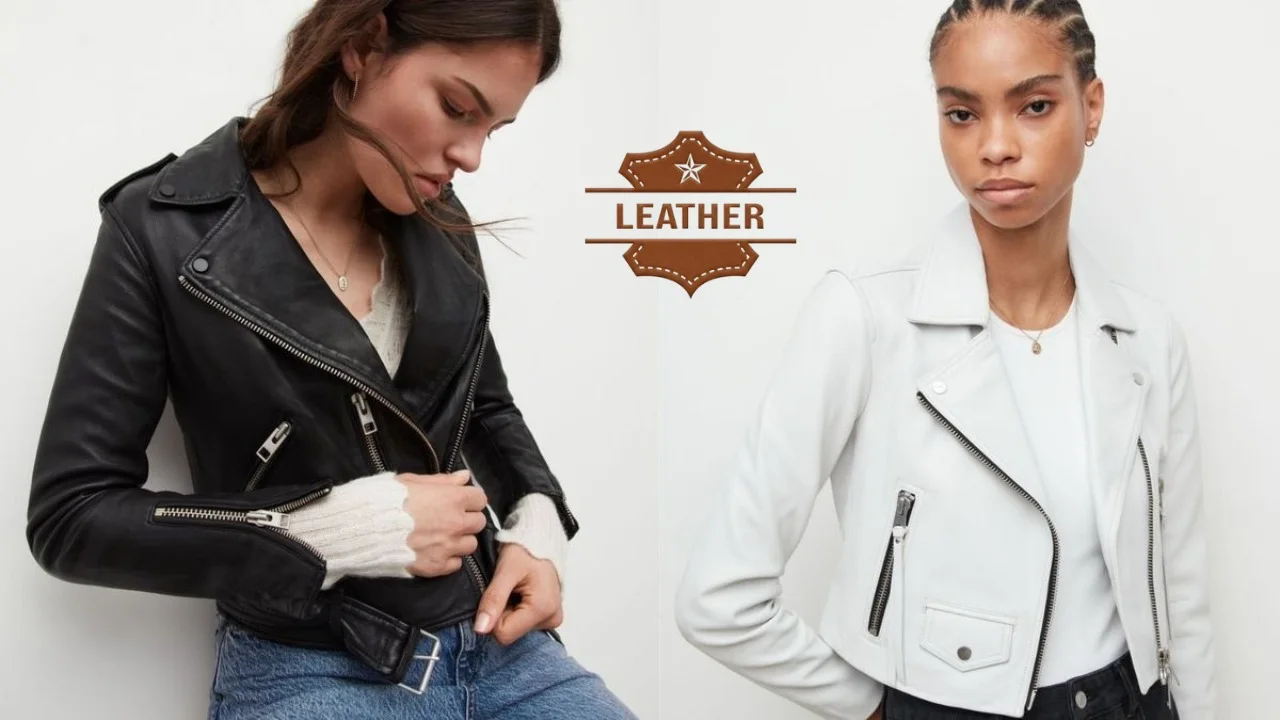
All Saints Leather Jackets have carved out a distinct space in modern wardrobes—but are they actually worth the investment in 2026? If you’re considering one, the answer depends on how you plan to wear it. Known for their sleek silhouettes, ultra-soft leather, and understated rock aesthetic, these jackets are designed for style-first, everyday city use—not heavy-duty performance.
In this updated 2026 guide, we break down everything that matters before you buy: leather quality, fit, durability, pricing trends, and how All Saints compares to heritage brands. Whether you’re shopping for your first leather jacket or upgrading your wardrobe, this guide will help you make a confident, informed decision.
What is an All Saints leather jacket?
All Saints Spitalfields is a British fashion brand founded in 1994 with East London roots. Over the years, it became known for slim, rock-inspired silhouettes and garment-dyed leather jackets that read broken-in from the first wear. The company’s leather jackets are designed in London and produced using the kinds of leathers and finishes that favor a soft hand and an immediately wearable “lived-in” look.
In plain terms, All Saints builds leather jackets for style and everyday city wear. They are fashion-first garments rather than certified riding gear. That’s not a negative; it’s an important distinction. If your priority is a sleek, soft jacket that layers easily and photographs well, All Saints is often exactly what you want.
Key characteristics and who it’s for
What to expect from All Saints jackets
- Slim, modern European cuts, tapered bodies, and sleeves designed to create a contemporary silhouette.
- Soft leather (most commonly lambskin and goatskin) with garment-dyed / washed finishes for a vintage-worn appearance.
- Minimal branding and subtle details; the aesthetic is “rock-leaning but quiet.”
- Fashion-first construction: nice hardware and finishing, but not built for prolonged abrasion or impact.
- Good for city wear, layering over T-shirts and light sweaters.
Who should buy All Saints?
- People who want a stylish everyday leather jacket with a smooth, soft feel.
- Shoppers who prefer modern slim fits and subtle vintage finishes.
- Those who will wear the jacket in an urban, lifestyle context rather than on a motorcycle.
Who should not buy All Saints
- Riders who need CE-rated armor or cowhide built for heavy impact.
- Buyers seeking a decades-to-century heirloom that will age into a hard-wearing full-grain patina.
Types & popular styles
All Saints typically offers several recognizable families of leather jackets. Below are the common categories and examples you’ll see on product pages and in styling guides.
Biker / Moto Jackets
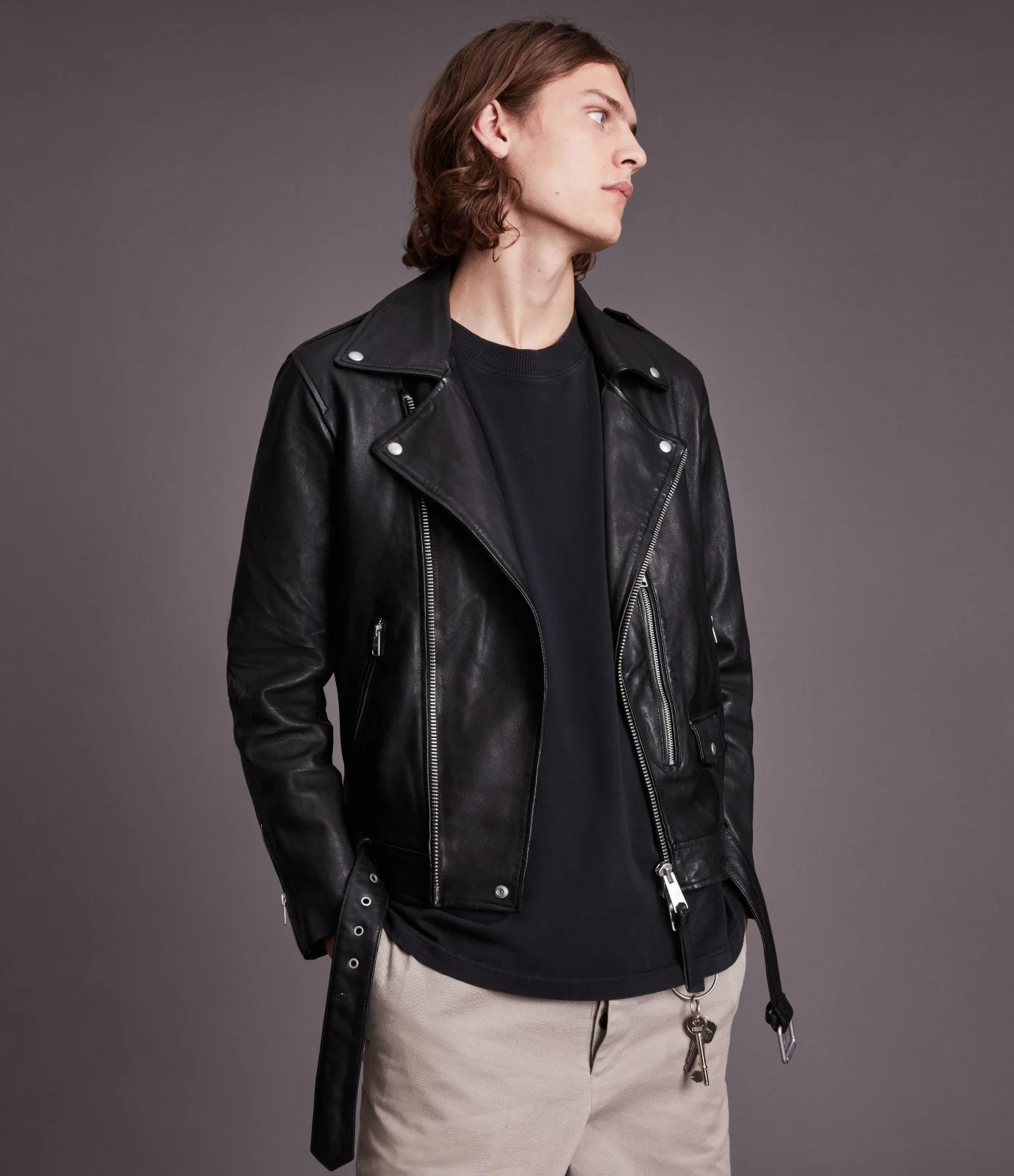
Examples: Dalby, Balfern, Luck. These are the classic asymmetric zip, lapel, snap-shoulder styles adapted into a softer, slimmer profile. Best for slim builds and nights out.
Bomber Jackets
Examples: Marco, Felda. Simpler zip fronts and rounded hems are good for daily wear and relaxed layering.
Cropped & Statement Pieces
Shorter lengths, sometimes with experimental seams, fringe, or asymmetry, aimed at trend-led shoppers and editorial styling.

What leather do they use?
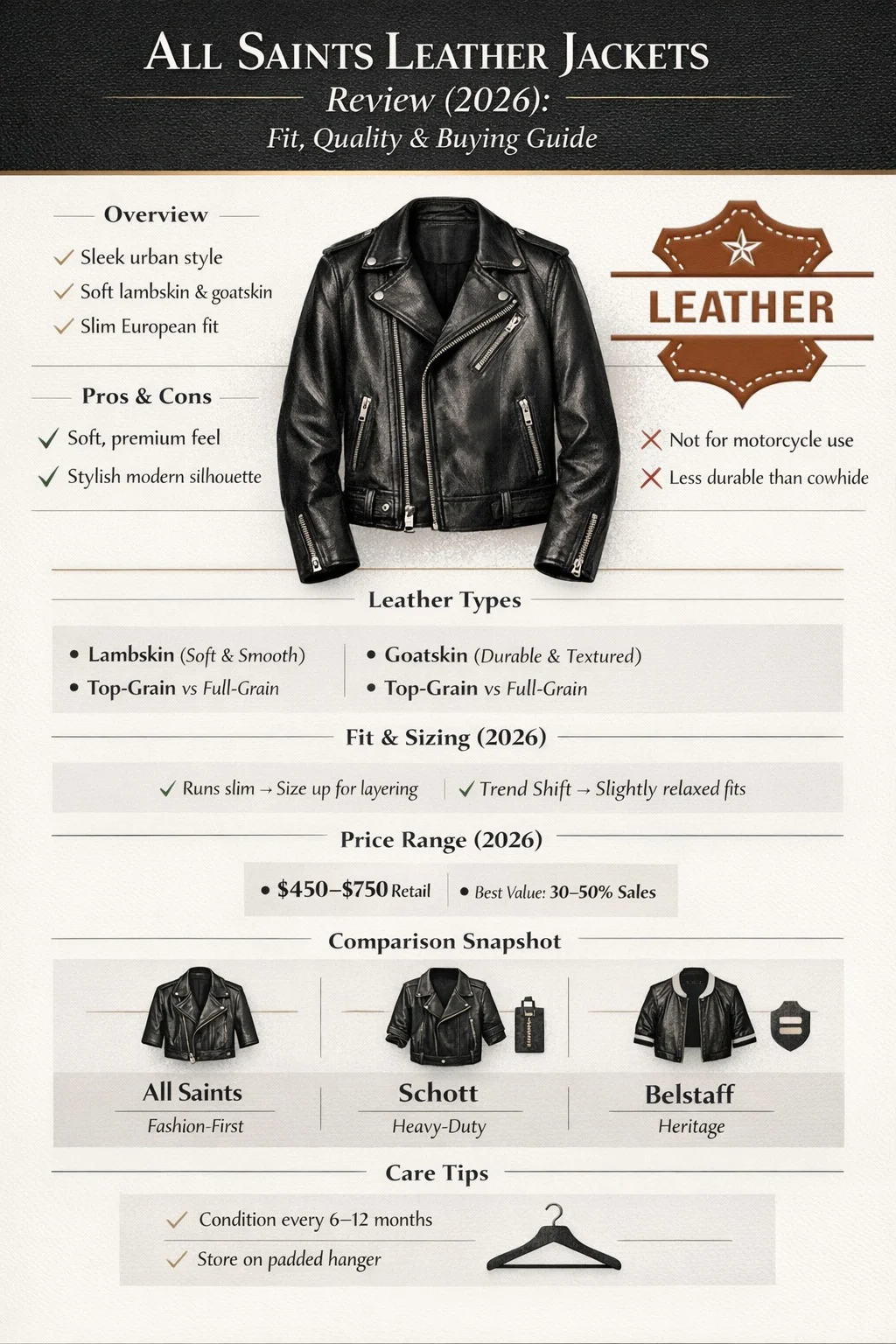
Short version: Most All Saints jackets you’ll encounter are lambskin (sheep leather) or goatskin; cowhide/top-grain appears in some heavier or Special Models. Many core styles list “100% sheep leather” in the materials.
Leather Types: A Simple Guide
- Lambskin: Very soft, supple, excellent drape, ideal for fashion-forward jackets but more prone to surface scratches.
- Goatskin: Slightly firmer, more pronounced grain, better abrasion resistance than lambskin.
- Cowhide / Top-grain: Heavier and tougher; used in heritage motorcycle pieces.
Top-grain vs full-grain
- Top-grain: The surface may be sanded or corrected for a uniform appearance, widely used for smooth, fashionable leather.
- Full-grain: The natural surface is kept intact and ages into a patina more common in heritage or workwear leather.
Tanning methods
Most fashion leather is chrome-tanned because that process is fast, economical, and yields soft, color-stable leather ideal for garment dyeing and washing. If the tanning method matters to you or your readers, check the product page or sustainability notes (some brands disclose vegetable-tanned or chrome-free collections).
How All Saints jackets are made: quick manufacturing steps
A condensed manufacturing workflow helps both readers and systems understand production quality.
- Hide selection: Choosing hides with consistent thickness and minimal defects.
- Tanning & processing: Commonly chrome tanning for fashion leather.
- Dye & wash: Garment-dyeing and specialized washes give that broken-in look.
- Pattern cutting: Slim European patterns for shoulder and sleeve geometry.
- Sewing & assembly: Medium stitch density and reinforced seams in high-stress areas.
- Hardware fitting: Zippers, snaps, rivets; sometimes branded, sometimes standard.
- Finish & QC: Softening, small fixes, and final inspection.
How to spot a real vs fake All Saints leather jacket
Counterfeits happen. Use this checklist:
Signs of an authentic All Saints jacket
- SKU on the internal label matches the SKU/product ID on the official product page.
- The material label clearly states the leather type (e.g., “Shell: 100% sheep leather”).
- Even, neat stitching with consistent seam allowances.
- Quality hardware with smooth zipper action (no rattling).
- Leather smell/hand consistent with real leather, not a plasticky smell.
Red flags
- low prices far below usual retail, without a clear reason.
- Misspelled tags or poor print quality on labels.
- Plastic-like feel or synthetic smell.
- Poorly finished hardware that rattles or has rough edges.
Practical tip: buy from All Saints stores, the official website, or trusted retailers. If in doubt, compare the SKU and product photos to the brand page, or contact All Saints customer service.
Fit & sizing: what to expect
Short rule: All Saints run slim. If you plan to layer thick sweaters or hoodies, size up.
Quick fit rules
- T-shirt fit: Buy your usual size.
- Thin sweater: You can often stay true to size.
- Thick sweater/hoodie: Go one size up.
- Broad shoulders/muscular arms: Consider sizing up for comfort.
How to test fit when trying on
- The shoulder seam should sit at the edge of your shoulder bone.
- Sleeve length should finish at the wrist bone with arms relaxed.
- Zip test zip up with the layers you plan to wear; if it strains, size up.
- Movement test: raise your arms and reach; the jacket should not pull painfully across the back.
Product metadata suggestions: include fit_type: slim, recommended_size_up, model_height_and_size on product pages to reduce returns and increase buyer confidence.
All Saints vs Schott vs Belstaff honest comparison
All Saints
- Focus: Fashion-first, slim silhouettes.
- Typical leather: Lambskin, goatskin (top-grain).
- Price: Mid-range (street-to-premium).
- Durability: Medium; built for lifestyle use.
- Best for: City styling, evenings out, layered looks.
Schott NYC
- Focus: Heritage motorcycle jackets (Perfecto).
- Typical leather: Heavy cowhide.
- Price: Heritage-premium; some USA-made lines cost more.
- Durability: Very high; built for riding.
- Best for: Motorcycle protection, durable workwear.
Be staff
- Focus: Heritage motorcycle and adventure wear.
- Typical leather: Treated cowhide; waxed cotton blends.
- Price: Premium Heritage Pricing.
- Durability: High; weather-treated for long-term use.
- Best for: Adventure/heritage aesthetics, weather resistance.
Sustainability & Leather Trends in 2026
In 2026, sustainability is no longer a niche concern—it’s a major decision factor for leather buyers. While All Saints has traditionally focused on design and finish, the broader fashion industry is shifting toward responsible leather sourcing and reduced environmental impact, and this is influencing newer collections.
Many brands, including All Saints, are increasingly working with Leather Working Group (LWG)-certified tanneries that follow stricter environmental standards for water use, chemical management, and waste reduction. This doesn’t necessarily mean every jacket is fully sustainable, but it’s a strong indicator of improved production practices compared to previous years.
Another emerging trend is the introduction of chrome-free and vegetable-tanned leather options in limited collections. These processes reduce the use of harsh chemicals and create a more natural aging process, though they may feel slightly firmer compared to traditional chrome-tanned lambskin.
2026 Fit Trend Insight: Relaxed vs Slim Shift
Although All Saints is known for its signature slim, tailored silhouette, 2026 fashion trends are clearly moving toward relaxed, more comfortable fits across both menswear and womenswear. This shift is being driven by changing lifestyle habits, including hybrid work, casual dressing, and a growing preference for comfort without sacrificing style.
In practical terms, this means ultra-skinny, tight-fitting leather jackets are becoming less dominant, while slightly roomier cuts with softer structure are gaining popularity. Some newer All Saints releases already reflect this evolution, offering jackets with a bit more ease in the shoulders, chest, and sleeves—while still maintaining a clean, modern look.
For buyers, this trend has real implications:
- Choosing a slightly relaxed fit can make your jacket feel more current for longer
- It allows for easier layering (hoodies, knitwear)
- It improves comfort for everyday wear, especially in transitional seasons
If you’re investing in your first All Saints jacket—or upgrading—consider avoiding overly tight fits that limit movement or feel restrictive. A balanced fit (tailored but not tight) will not only look better over time but also extend the versatility of your jacket across different outfits and occasions.
Price guide + where to buy for best value
Typical retail ranges
- USA: $450–$750 (most core jackets).
- UK: £350–£650.
- Europe: €420–€720.
- Australia: AUD 700–1,100.
Buying tips
- Sales & outlets: All Saints often reduces prices during seasonal sales and outlet events; discounts of 30–50% are common on last-season styles, which are often the best value.
- Authorized sellers: Buy from All Saints stores, the official site, or authorized retailers for guaranteed authenticity.
- Secondhand: All Saints jackets have solid demand in the resale market. Check SKU, tags, and photos closely.
Care, maintenance & repair
Good care will extend the life of your jacket substantially.
Daily/weekly
- Hang on a wide, padded hanger that doesn’t fold.
- Wipe off rain or spills immediately with a soft cloth.
- Brush or wipe off dust and grit gently.
Every 6–12 months
- Apply a leather conditioner suitable for fashion leather; test first on a hidden seam.
- Apply thinly, rub in gently, and buff off any excess.
Handling scratches
- Light Surface Scratches on lambskin often diminish with gentle rubbing and conditioning.
- For deeper scars, use a leather repair kit or consult a professional cobbler.
Zipper & hardware care
- Lubricate zippers occasionally with beeswax or a zipper lubricant if they stiffen.
- Avoid forcing a stuck zipper.
Storage
- Store in a cool, dry place away from direct sunlight.
- Use a breathable cloth cover rather than plastic for long-term storage.
Price guide (2026): What to expect
Examples
- Dalby Slim Fit Leather Biker Jacket (example range): mid-$500s to $700s, depending on region and model.
- Luck Leather Jacket (example range): $600–$700+ for some men’s models.
Sales & value
- If budget is important, wait for seasonal sales. Average sale reductions of 30% or more are not unusual, and that’s often where All Saints jackets represent genuine value for shoppers wanting fashion-grade leather without heritage pricing.
Care, maintenance & repair
- Hang, don’t fold. Use a wide padded hanger.
- Wipe wet spots immediately.
- Condition annually (6–12 months) with a leather product suitable for lambskin/top-grain.
- Get hardware fixed early. Zippers and buttons are cheaper to replace than an entire panel.
- Use a cobbler for serious repairs; leather can often be restored rather than replaced.
Verdict: Are All Saints leather jackets worth it?
Short final call
For fashion lovers and city dwellers who want a soft, modern silhouette and a jacket that photographs and layers beautifully, yes, All Saints is worth it, particularly when you buy on sale. If you require motorcycle-grade durability, armor compatibility, or decades-long robust wear under hard conditions, look at Schott, Belstaff, or other heritage makers.
Buy it if
- You want style-first leather with a soft hand and slim fit.
- You plan to wear a lot of city and social wear.
- You value the brand’s aesthetic and are satisfied with mid-range pricing.
Don’t buy it if
- You need certified protection or heavy, thick cowhide.
- You want a utilitarian jacket meant for decades of rough outdoor use.
Quick buying checklist
- Material: Shell = 100% sheep leather (or check the product label).
- Fit: Shoulder shape and sleeve length fit you.
- Stitching: Even with no loose threads.
- Hardware: Zipper action is smooth.
- SKU & tag: Product ID matches the retailer page.
- Price: Is it on sale? Consider waiting for a collection drop.
- Return policy: Clear returns for leather items (important).
FAQs
A: Yes. Most are lambskin or goatskin (real leather). Check each product page for the material declaration.
A: For fashion use and with regular care, expect 5–10 years. They are not engineered as motorcycle armor.
A: Yes. Sale prices are typically where you get the best value for All Saints.
A: Yes. Zippers, seams, and small tears can usually be repaired by a cobbler or leather repair service.
A: Yes. All Saints tends to run slim size up if you plan thick layers.
Conclusion
All Saints leather jackets remain one of the strongest choices in 2026 for anyone prioritizing style, comfort, and a modern silhouette. Their soft lambskin construction, minimalist design, and tailored fit make them ideal for everyday city wear and fashion-forward outfits.
However, understanding their purpose is key—they’re built for aesthetics, not extreme Durability. If you buy with that expectation (and ideally during a sale), they offer excellent value in the fashion leather category.
If you’re looking for a sleek, wearable leather jacket that elevates your wardrobe instantly, All Saints is a smart, reliable pick. Take time to choose the right fit, verify authenticity, and care for it properly—you’ll get years of stylish use out of it.