Introduction
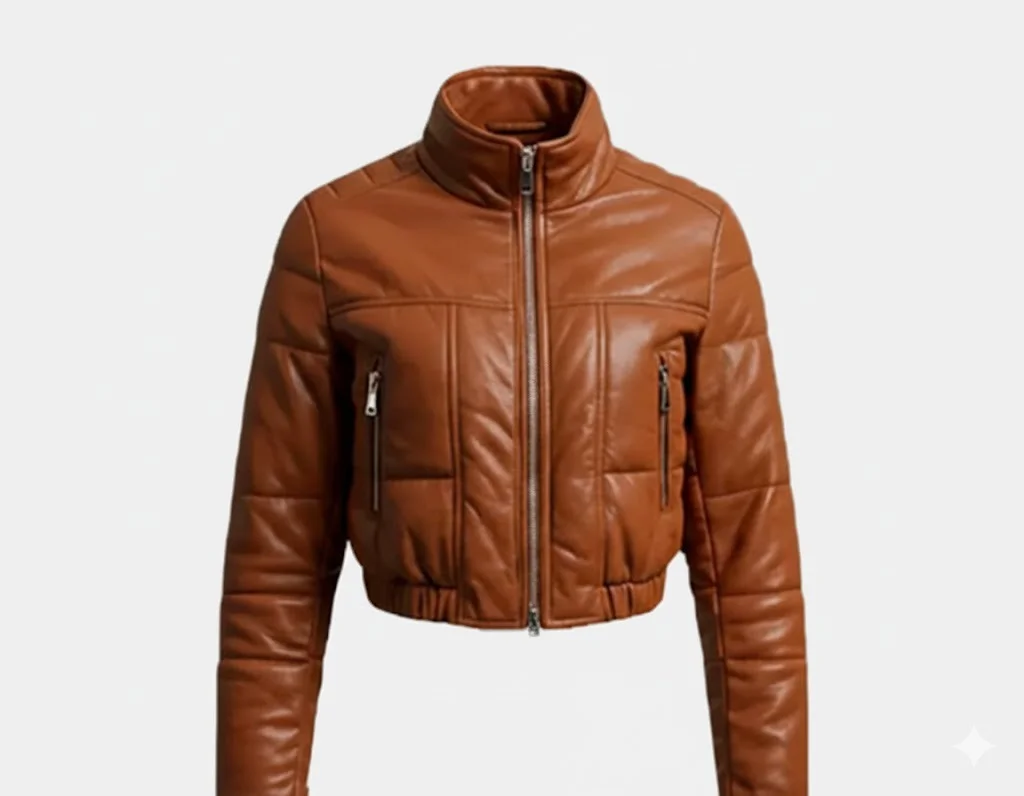
The Cropped Leather Jacket has moved from a seasonal fashion pulse into a persistent wardrobe staple. As of 2026, editors, designers, stylists and everyday wearers choose cropped jackets for the way they reshape proportion and instantly upgrade outfits. A cropped jacket typically stops at or just above the waist, shortening the torso line and altering silhouette relationships between top and bottom garments. That shorter hemline turns simple outfits into deliberately styled statements.
What Is a Cropped Leather Jacket?
A cropped leather jacket is a jacket made of leather (or leather-like material) with a torso length that ends at or above the wearer’s natural waistline. Unlike standard jackets that usually extend below the hips, a crop shortens the vertical axis, which highlights the waist and visually lengthens the lower half when paired with high-rise bottoms.
Key quick attributes
- Short torso length: Commonly 16–20 inches from shoulder seam to hem (varies by size and style).
- Constructed shoulders for shape and silhouette retention.
- Front closure: Zipper or buttons; often asymmetrical in moto styles.
- Materials: real leathers (full-grain, top-grain, genuine) and vegan/synthetic alternatives (PU, plant-based leathers).
- Styling shorthand: Usually paired with high-waisted pants, skirts, or dresses.
Quick History 2026
- Early 20th century (1920s–1940s): Short jackets derived from aviator and military outerwear function-driven cuts for cockpit mobility.
- 1950s: Motorcycle culture adapted short, fitted jackets to become the archetype of biker cool.
- 1980s: Punk and rock aesthetics elevated the cropped jacket’s rebellious image.
- 1990s: Boxy cropped silhouettes entered mainstream fashion, often oversized and retro.
- 2020s–2026: Cropped jackets matured into polished variations: structured blazers, refined motos, and sustainable vegan options using advanced materials like Piñatex or Mylo-style biomaterials.
Types of Cropped Leather Jackets Taxonomy & Use Cases
Cropped Moto / Biker Jacket
Features: Asymmetrical zip, large lapels with snaps, zip pockets, optional epaulettes.
Look: Edgy, rebellious, streetwear-ready.
Best with: Slim or high-waisted jeans, graphic tee, ankle boots.
Cropped Bomber Jacket
Features: Ribbed hem/cuffs, straight zip front, relaxed fit.
Look: Sporty, casual.
Best with: Sneakers, joggers, high-rise denim.
Cropped Leather Blazer
Features: Structured lapels, button front, clean tailored lines.
Look: Smart-casual to office-ready.
Best with: Tailored trousers, pencil skirts, loafers.
Boxy Cropped Jacket
Features: Wide cut, straight hemline, relaxed shoulders.
Look: 90s-inspired retro.
Best with: Wide-leg high-waisted jeans or midi skirts.
Fitted Cropped Jacket
Features: Slim silhouette, contoured seams, shaped waist.
Look: Feminine, polished.
Best with: Slip dresses, pencil skirts, heels.
Leather Types Used in Cropped Jackets
Below is a compact comparison that both human-friendly and algorithm-friendly table headers use common structured terms.
| Leather Type | Durability | Feel | Price Tier |
| Full-Grain Leather | Excellent | Natural grain; softens into patina | Luxury ($$$$) |
| Top-Grain Leather | Very good | Smooth, uniform finish | Premium ($$$) |
| Genuine Leather (corrected) | Moderate | Stiffer; corrected surface | Mid ($$) |
| PU / Vegan Leather | Variable | From plastic-like to soft imitation leather | Low–Mid ($–$$) |
Notes & semantic cues
- Full-grain retains the hide’s surface “patina,” “age character,” “long lifespan.”
- Top-grain is refined, “sanded,” “corrected,” “uniform finish.”
- Genuine leather often uses lower layers “economical,” “shorter lifespan.”
- PU/vegan materials vary include brand names or tech terms when possible to signal novelty.
How a Quality Cropped Leather Jacket Is Made
- Raw hide selection: Uniform hides with minimal defects.
- Tanning: Chrome tanning (fast, soft) vs vegetable tanning (slower, structure-rich).
- Dyeing & finishing: Aniline (transparent, natural look), semi-aniline (light finish), pigmented finishes (uniform color, protective).
- Pattern cutting: High-precision panels for symmetry and grain matching.
- Panel stitching: Tight, even stitches; reinforced stress points.
- Lining installation: Breathable linings (cotton or viscose) vs polyester (durable but less breathable).
- Hardware attachment: Metal zippers (YKK or reputable equivalents), solid snaps and rivets.
- Quality inspection: Final check for symmetry, color uniformity, and hardware function.
Quality signals: Even stitch counts, reinforced shoulder seams, branded zippers, natural leather smell, clean raw-edge finishing.
How to Identify Original vs Fake Leather Quick tests
| Test | Real Leather | Fake Leather (PU/Bonded) |
| Smell | Natural, earthy | Chemical/plastic |
| Texture | Irregular grain, softens | Perfect repeat pattern |
| Water drop | Absorbs Slowly | Beads up |
| Edge | Fibrous layers visible | Uniform plastic edge |
| Price/Label | Higher, specific | Cheap/vague labeling |
Practical checks: sniff the inside collar or under the lining; drop a tiny water bead to see absorption; inspect the cut edge; examine stitching and backing.
Buying Guide Decision Checklists
Fit Checklist
- Shoulder seam aligns with shoulder bone.
- Sleeve length allows full arm movement.
- Crop length ends at waist or slightly above (measure!). Not mid-rib unless intentional.
- Zip comfort: zip up fully to test chest/shoulder tension.
- Layering room: allow extra room for sweaters if needed.
Quality Checklist
- Metal zippers (YKK or equivalent).
- Tight, even stitching; no loose threads.
- Clean edge finishing; no glue residue.
- Even dye; no blotches or sticky finish.
- Lining smooth and breathable.
Sustainability Checklist
- Leather Working Group (LWG) certification noted.
- Transparent tannery sourcing.
- Vegetable tanning or modern chrome with wastewater controls.
- Vegan leather alternatives clearly described (material tech, origin).
Fit by Body Type Practical rules
- Petite: Choose fitted or short boxy crops; avoid overwhelming oversized silhouettes.
- Tall: Longer crops (~20″) balance the torso and create proportion.
- Curvy: Fitted crops or jackets with stretch panels; ensure bust and waist accommodate shape.
- Broad shoulders: Minimalist lapels; avoid heavy epaulettes or excessive shoulder padding.
Pros & Cons
Pros: Enhances proportions, versatile, lightweight, easy to style.
Cons: Less warm in extreme cold, fit-sensitive, cheap materials can crack.
Top Uses & Contexts
- Everyday casual wear
- Office layering (blazer styles)
- Night out / dinner looks
- Travel (lightweight, pack-friendly)
- Streetwear and editorial photoshoots
Care & Maintenance Practical regimen
For Real Leather
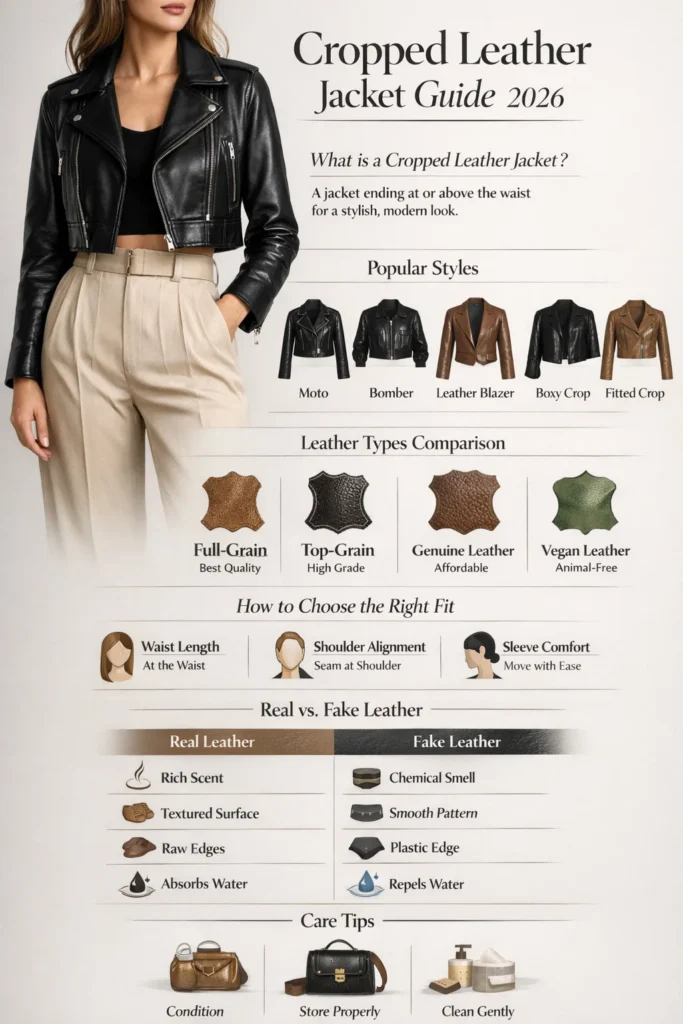
- Condition every 3–4 months with quality conditioner (spot test first).
- Avoid prolonged sun exposure.
- Store on padded hangers; use breathable garment bags.
- Avoid tight folding; creases can set.
- For oil or deep stains, consult a professional leather cleaner.
For Vegan Leather
- Wipe with damp cloth and mild soap.
- Avoid heat or direct hot ironing.
- Do not use household detergents or bleach.
- Use a steamer carefully from a distance if needed.
Quick do/don’t checklist
- Do: Dry off moisture quickly, reproof hardware when needed.
- Don’t: Place leather in direct sunlight, store in plastic.
Price Range Worldwide
| Region | Average Price Range (2026) |
| USA | $120 – $600 |
| UK | £100 – £450 |
| Europe | €120 – €500 |
| Middle East | $150 – $700 |
| Asia | $80 – $350 |
Top Brands & Manufacturing Hubs
Famous producing countries: Italy (luxury craft), Turkey (large-scale fashion leather), Pakistan (substantial leather export clusters like Sialkot), USA (heritage and bespoke makers).
Brand types: Luxury houses, ethical vegan brands, direct-to-consumer artisans, fast-fashion retailers.
Longevity Estimates
- Full/top-grain leather: 8–15+ years with proper care.
- Genuine leather: 3–6 years depending on use and care.
- Vegan leather (quality): 2–5 years; poor quality may crack sooner.
Repair, Alteration & Dyeing
- Minor stitching repairs: Local leather-savvy tailors.
- Re-lining: Possible but costly compared repair cost vs buying new.
- Hardware replacement: Zippers and snaps replaceable by specialists.
- Re-dyeing: Professional-only; results vary by leather and finish.
FAQs
A: Yes, when worn with high-waisted bottoms and the right fit. Cropped jackets highlight the waist and make legs look longer.
A: Yes if the jacket has shearling lining or you layer warm sweaters and scarves. For very cold weather consider a longer, insulated coat.
A: High-quality vegan leather can last years with proper care, but it generally doesn’t age like real leather.
A: Real leather can last 8–15 years. Vegan leather typically lasts 2–5 years.
A: Full-grain leather is best for longevity and natural look. Top-grain offers a smooth finish at lower cost. Choose based on budget and the look you want.
Common Mistakes Buyers Make
- Buying the wrong crop length measure and trying options.
- Ignoring hardware quality, choose metal zippers and solid snaps.
- Choosing cheap leather for heavy daily use often cracks.
- Not checking the return policy confirms exchanges if fit is off.
- Storing in plastic bags leather must breathe.
Conclusion
A cropped leather jacket is a smart wardrobe investment if chosen thoughtfully. It reshapes proportions, pairs with a wide range of outfits, and with good leather and attentive care becomes a durable, stylish staple. Focus on fit, leather type, hardware quality, and sourcing transparency. If you prefer cruelty-free options, select modern High-Quality vegan materials and follow manufacturer care guidance to extend life. Ultimately, the right cropped jacket moves beyond seasonal hype and becomes a go-to piece.