Introduction
A Leather Messenger Bag is more than just a container for your belongings — it’s a practical tool, a style statement, and often a reliable long-term companion. Whether you’re commuting by bike, carrying a laptop between coworking spaces, or needing a dependable travel partner, the right messenger bag protects your essentials while projecting a thoughtful aesthetic.
This comprehensive 2026 guide covers everything a discerning buyer needs to know: evaluating leather grades, ensuring laptop compatibility, inspecting construction and hardware, comparing leather to alternatives like canvas, following step-by-step care routines, and identifying modern features such as integrated tech pockets and modular interiors. You’ll find clear checklists, comparison tables, repair advice, notes on culture and sustainability, and practical buying tips to help you shop with confidence.
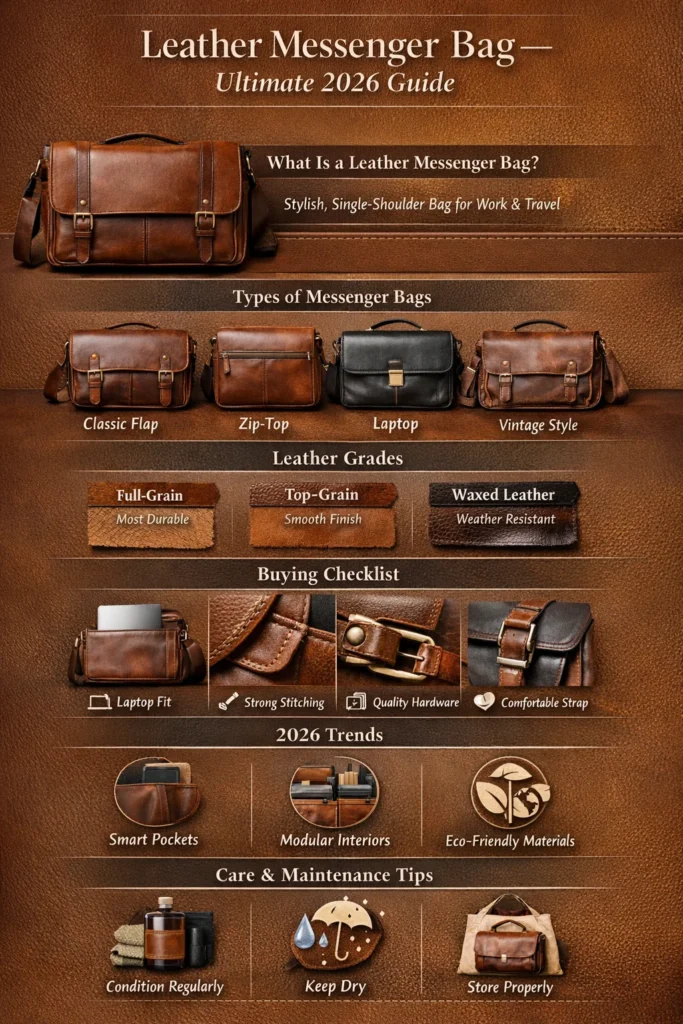
What is a Leather Messenger Bag?
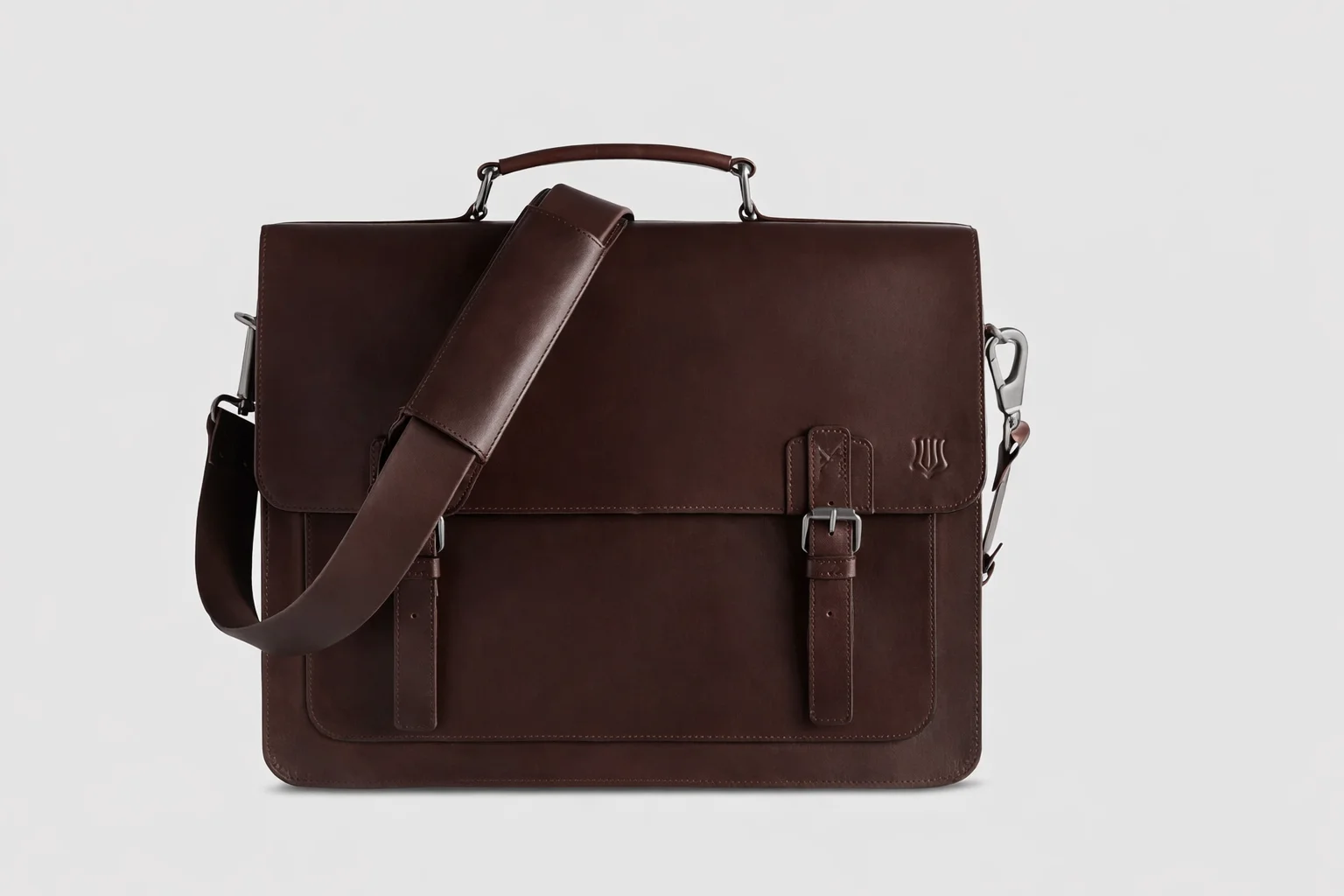
A leather messenger bag is a crossbody satchel worn over the shoulder, originating from postal carriers and bike couriers. Today’s versions include padded laptop sleeves, zippered security compartments, and contoured straps, making them ideal for office commuters, students, and travelers.
The classic rectangular body with a flap or zip-top design offers quick access to essentials while safeguarding laptops and documents. It balances streamlined professional looks with rugged, lived-in styles.
A Short History
Messenger bags started as utilitarian mail sacks and courier satchels in the 20th century. In the 2000s, padded sleeves and reinforcements adapted them for portable computers. From the 2010s onward, demand grew for handcrafted, full-grain leather pieces that develop a rich patina and prioritize repairability over disposability. This focus on durability, provenance, and longevity continues to shape the market in 2026.
Types and Variations of Messenger Bags
- Classic Flap Messenger: Features a large single flap for a timeless look.
- Zip-Top Messenger: Provides enhanced weather protection and security with a zipper closure.
- Laptop Messenger: Includes a padded sleeve for 13″–16″ laptops.
- Compact / Everyday Messenger: Smaller size for phone, wallet, tablet, and light everyday carry (EDC).
- Distressed / Vintage Messenger: Oiled or waxed finishes with antiqued hardware for an instantly aged aesthetic.
- Urban / Commuter Messenger: Incorporates reflective trims, quick-access pockets, and bike-friendly features for city use.
Leather Types and Grades — Know What You’re Buying
Mastering leather grades is key to smart shopping. Here’s a straightforward breakdown:
Full-Grain Leather (Heirloom Quality)
- Top layer of the hide with natural grain and imperfections intact.
- Highest durability and longevity.
- Develops a deep, attractive patina over time.
- Ideal for premium everyday bags meant to last decades.
Top-Grain Leather
- Surface sanded or corrected for uniformity.
- Very durable, though slightly less than full-grain.
- Subtler patina with a polished appearance.
- Suited to professional, refined bags.
Corrected-Grain / Genuine Leather
- Lower-cost hides buffed and coated to mask flaws.
- Lower durability; good initial look, but less character long-term.
- Best for budget or fashion-focused pieces.
Waxed / Oiled Leather (Finish Types)
- Infused with waxes or oils for water repellency and rustic style.
- Hides scuffs, repels light moisture, and ages ruggedly.
- Great for commuters, travelers, and lived-in looks from day one.
Vegetable-Tanned vs. Chrome-Tanned
- Vegetable-Tanned: Plant-based tannins; firmer, richer patina, excellent for structured bags.
- Chrome-Tanned: Chromium salts; softer, faster production, often cheaper, ideal for supple daily use.
Manufacturing Process — Step by Step
- Hide Selection & Grading — High-quality sections chosen for full-grain.
- Tanning — Stabilized via vegetable or chrome methods.
- Splitting & Milling — Adjusted thickness and softened.
- Cutting & Patterning — Precise panel cutting from templates.
- Edge Treatment & Stitching — Burnished edges and even, high-density stitching.
- Hardware Attachment — Durable buckles, rivets, and zippers (brass, stainless steel preferred).
- Finishing & Quality Control — Final checks for stitch density, measurements, and strength.
How to Tell Real Leather from Fake Leather — Quick Tests
- Smell: Genuine leather has a warm, organic scent; faux often smells chemical.
- Grain: Natural variations and texture in real leather; synthetics are overly uniform.
- Backside: Fibrous, suede-like in real; textile or plastic in faux.
- Water Drop: Real absorbs slowly; faux beads (test inconspicuously).
Buying Guide — What to Check Before Purchase
Follow this step-by-step checklist:
- Size & Laptop Fit Measure internal sleeve (height × width × depth). Allow 1–2 cm extra for cases. Ensure 1–1.5 cm padding.
- Construction & Stitching 8–12 stitches per inch; reinforced stress points with rivets or doubled stitching.
- Hardware Quality: Solid brass, stainless steel, or quality alloys; reputable zippers like YKK.
- Strap Comfort & Anchors Wide, padded strap; robust stitching/hardware at anchors.
- Lining & Organization Light-colored lining; Multiple Pockets for tech and essentials.
- Weather Resistance Waxed/oiled leather or resistant linings; zip-tops or flaps; optional rain cover.
- Repairability & Warranty Brands offering repairs or replacements; check coverage duration.
Comparison Table: Leather Types & Suitability
| Leather Type | Durability | Weather Resistance | Aging / Patina | Best Use |
| Full-Grain | Very High | Moderate (improves with wax) | Excellent | Premium everyday & heirloom bags |
| Top-Grain | High | Moderate | Good | Professional, refined bags |
| Corrected/Genuine | Low–Moderate | Variable | Poor | Budget, fashion items |
| Waxed/Oiled | High | Better water-shedding | Rustic patina | Commuter & travel bags |
How to Choose the Best Bag — Use-Case Checklist
- Professionals: Slim profile, top-grain or refined full-grain, padded sleeve, quick-access pockets.
- Students: Roomy compartments, reinforced base, padded strap for heavy loads.
- Travelers/Commuters: Waxed/oiled leather, zip-top, lockable pockets, ergonomic strap.
- Style-First Buyers: Distressed finishes, visible stitching, antiqued hardware.
Top Uses for a Leather Messenger Bag
- Daily laptop commute.
- Business travel (fits under seats, quick document access).
- Cycling/micro-mobility (stable crossbody wear).
- Everyday carry (EDC) for wallet, keys, phone, and compact tech.
2026 Trends & Innovations
In 2026, messenger bags blend timeless functionality with modern upgrades:
- Smart pockets with cable routing, power-bank compartments, and USB passthroughs.
- RFID-blocking linings for security.
- Modular removable dividers for work-to-travel versatility.
- Sustainability focus: traceable sources, Leather Working Group certifications.
- Ergonomic improvements: contoured pads, balanced straps for reduced strain.
While broader handbag trends lean toward relaxed structures, earthy neutrals, and refined craftsmanship, leather messengers emphasize durability and tech integration for everyday practicality.
Care & Maintenance — Keep Your Bag for Decades
Routine Care
- Dust/wipe with a soft dry cloth.
- Spot-clean lightly damp for spills (avoid saturation).
- Condition full-grain every 3–6 months (test first).
Deep Care
- Empty and remove debris.
- Brush off dirt.
- Clean with a suitable leather cleaner.
- Apply a thin conditioner layer and massage it in.
- Buff for luster.
- Re-wax waxed leather for water resistance.
Storage
- Use a breathable dust bag (no plastic).
- Stuff with acid-free paper to hold shape.
- Cool, dry place away from the sun.
Quick Fixes
- Scuffs: Condition or wax.
- Loose stitches: Professional re-stitching.
- Water: Blot, air-dry, re-condition.
Damage Repair & When to Seek Help
- Strap/seam issues: Brand repair or cobbler.
- Deep scratches: Professional color-matching/filling.
- Hardware failure: Replaceable to extend life.
- Major structural damage: Pro restoration recommended.
Price Ranges — What to Expect
- Budget/Corrected Grain: $40–$150
- Mid-Range/Top-Grain Branded: $150–$450
- Premium/Full-Grain Handcrafted: $450–$1,500+
- Heritage/Custom: $1,500–$3,000+
Quality pieces offer better long-term value through longevity and repairs.
Top Countries & Brands Known for Leather Messenger Bags
- Italy: Artisan tanning and refined designs.
- USA: Heritage workshops and hand-finishing.
- UK: Classic styling and strong techniques.
- India & Pakistan: Skilled vegetable-tanning and competitive quality.
- Turkey: Robust, quality exports.
Research independent reviews from gear sites for Durability insights.
Pros & Cons
Pros
- Extremely long-lasting (full-grain).
- Beautiful patina development.
- Repairable for extended life.
- Versatile professional/casual appeal.
Cons
- Heavier than canvas or synthetics.
- Requires regular maintenance.
- Higher initial cost for quality.
- Variable water resistance without treatment.
How to Break In Your Leather Messenger Bag
- Apply light conditioner initially for flexibility.
- Start with light loads for 1–2 weeks.
- Avoid overstuffing to allow natural shaping.
- Recondition after 2–3 months of use.
FAQs
A: No, not fully. Waxed/oiled versions resist light rain better, but use a rain cover for heavy exposure.
A: Measure the internal sleeve dimensions and add 1–2 cm clearance for cases. Verify beyond marketing labels.
A: Yes — for superior durability, patina, and repairability, it often provides better long-term value.
A: Every 3–6 months normally; more in dry climates or heavy use. Test products first.
A: Yes — most comply with carry-on rules and offer convenient access. Opt for secure closures.
Conclusion
A leather messenger bag is more than a functional accessory — it’s a long-term investment in durability, organization, and personal style. In 2026, the best messenger bags combine high-quality leather, thoughtful construction, modern features, and repairability, making them Suitable for work, travel, commuting, and everyday carry.
By understanding leather grades, checking proper laptop fit, inspecting stitching and hardware, and choosing designs that match your daily use, you can avoid common buying mistakes and select a bag that truly lasts. Full-grain and well-made top-grain leather messenger bags not only hold up better over time but also develop a unique patina that reflects your lifestyle and use.
With the right care — regular cleaning, conditioning, and proper storage — a quality leather messenger bag can serve you for many years, often becoming better with age. Whether you prioritize professional appearance, commuter comfort, or sustainable craftsmanship, choosing the right leather messenger bag ensures you get lasting value, practical performance, and timeless appeal.