What is a Crossbody Leather Bag?
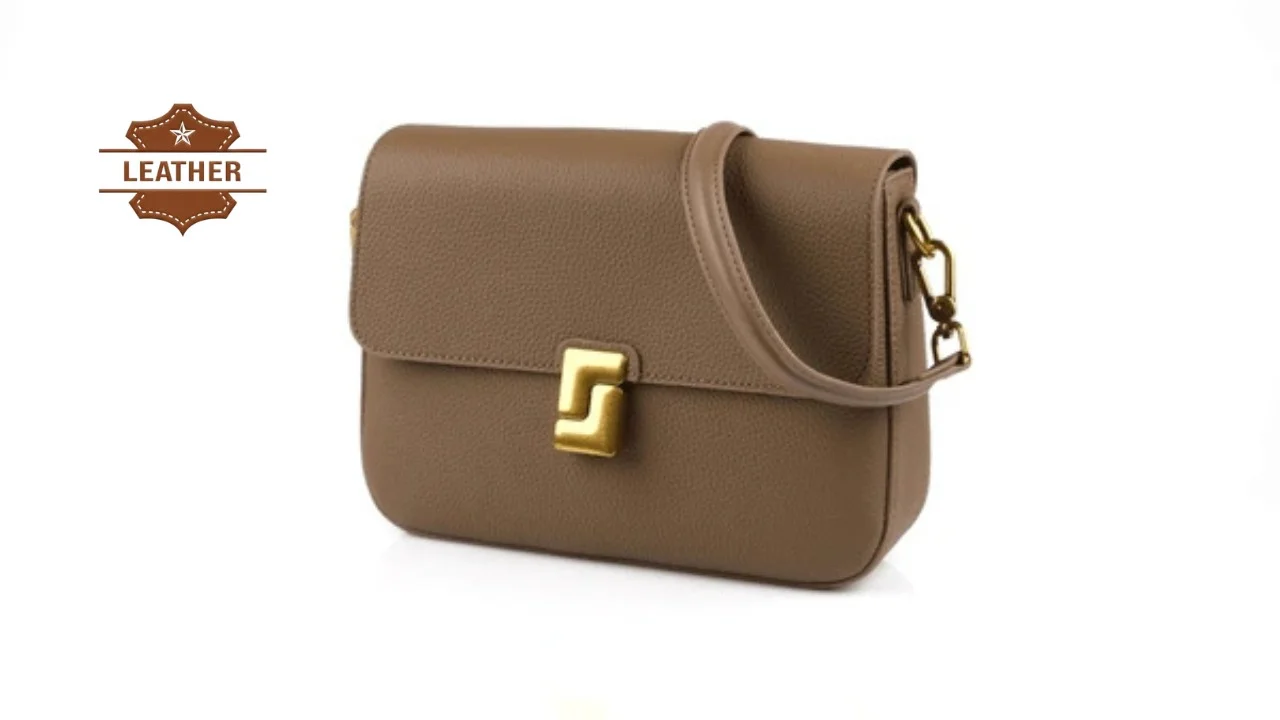
A Crossbody Leather Bag is a small-to-medium-sized leather bag featuring a long strap designed to be worn across the chest. The strap rests on one shoulder while the bag sits on the opposite hip. This hands-free design offers excellent convenience and added security in crowded environments, making it a favorite for daily commuting, travel, and casual outings. It strikes a perfect balance between practicality, safety, and style.
Key Features of Crossbody Leather Bags
- Adjustable long strap (typically 40–55 inches at maximum length)
- Secure closures: zipper, flap with magnet, or turn-lock
- Interior organization: card slots, zipper pockets, dedicated phone pocket
- Strong stitching and durable hardware built for everyday wear
Quick History: How the Crossbody Became Mainstream
The crossbody silhouette has roots in functional messenger and satchel bags used by riders, postal workers, and couriers throughout history. Over the 20th century, designers shrank the size and incorporated fashionable details, transforming it from a purely utilitarian item into a stylish everyday accessory. In the 2010s and 2020s, brands across all price points—from luxury fashion houses to affordable labels—embraced and reimagined the crossbody, cementing its status as one of the most practical bags for modern city life and travel. Fashion editors and travel experts continue to recommend zipped crossbody styles for secure, hands-free movement in busy areas.
Types & Styles: Pick What Fits Your Life
Different crossbody shapes suit various lifestyles and occasions. Here are the most common styles:
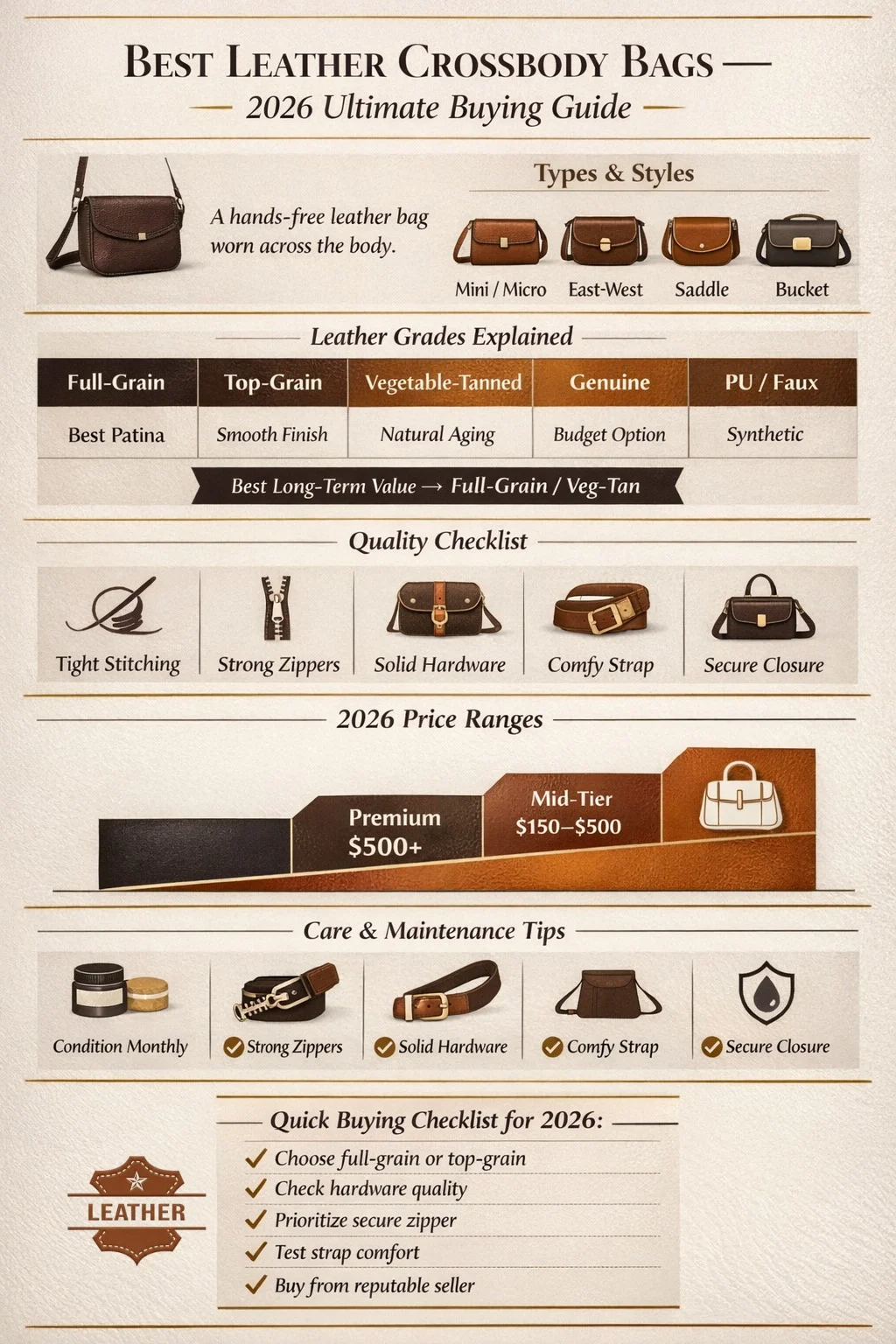
- Mini / Micro Crossbody: Very small; holds just a phone and cards. Ideal for nights out or minimalist carry.
- Classic East–West: Rectangular and wider than tall. Perfect for everyday essentials like a wallet, phone, and keys.
- Bucket / Drawstring Crossbody: Soft and roomy with a relaxed, casual vibe. Less structured, so small items can be harder to access quickly.
- Saddle Crossbody: Curved flap design with vintage charm. Frequently seen in heritage and designer collections.
- Structured Box / Camera Bag: Clean lines and organized compartments. Great for work and polished outfits.
- Convertible Crossbody: Includes a top handle plus a long strap. Can be worn as a crossbody or handheld for outfit versatility.
Leather Types Explained: What to Buy and Why
Choosing the right leather is key to durability, appearance, and value.
- Full-Grain Leather: The top, unsanded layer of the hide. Pros: Extremely durable; develops a rich patina over time. Cons: More expensive; natural marks and variations are visible (considered character). Best for: Long-term investment bags for daily use.
- Top-Grain Leather Lightly sanded to remove surface flaws. Pros: Smooth, uniform appearance; more affordable than full-grain. Cons: Slightly less durable; patina develops more slowly. Best for: Polished, refined styles on a moderate budget.
- Vegetable-Tanned Leather (Veg-Tan) Tanned using natural plant extracts. Pros: Ages beautifully with a natural patina; often more eco-conscious. Cons: Less water-resistant unless treated. Best for: Heritage-style pieces and patina enthusiasts.
- Genuine Leather (Lower Tier) Reconstituted or heavily processed lower layers. Pros: Affordable. Cons: Wears out faster; prone to peeling. Best for: Budget purchases or short-term use.
- PU / Faux Leather Synthetic, plastic-based material. Pros: Inexpensive and cruelty-free. Cons: Doesn’t age like real leather; less breathable and durable. Best for: Vegan preferences or occasional fashion pieces.
Tip: For the best long-term value, opt for full-grain or vegetable-tanned leather. Top-grain offers a great balance of quality and Affordability for a smooth, consistent finish.
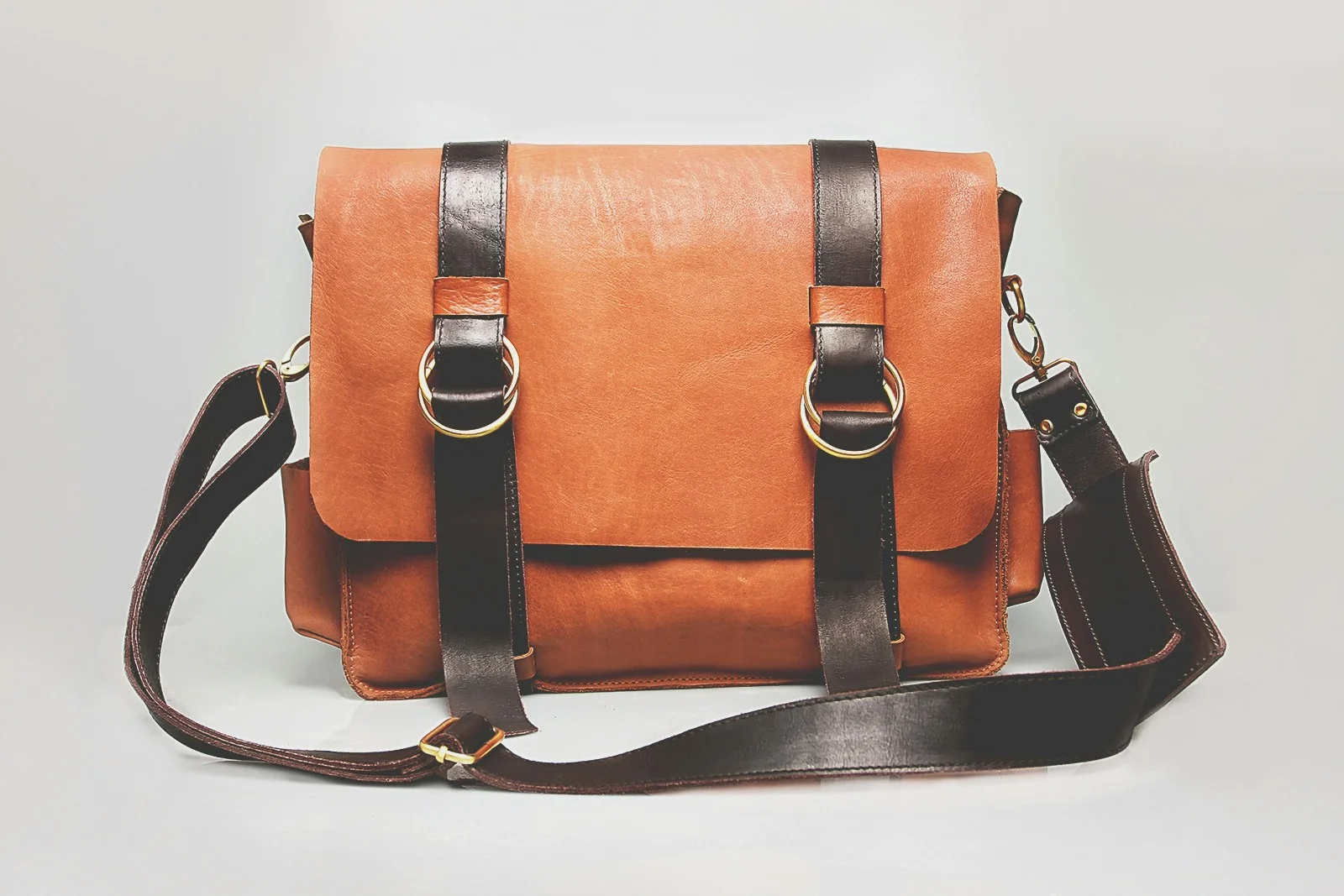
How to Evaluate a High-Quality Crossbody Leather Bag: Full Checklist
Use this guide when shopping online or in person:
Construction & Craftsmanship
- Tight, even stitching with no loose threads (hand-saddle stitching is premium)
- Burnished or edge-painted edges (raw edges may fray)
- Full sewn-in lining (canvas, cotton, or leather) rather than glued patches
Hardware
- Reliable zippers (e.g., YKK branding)
- Solid brass or stainless steel metalwork (avoid thin plating)
- Reinforced strap anchors and rivets
Strap & Comfort
- Fully adjustable with multiple holes or sliding buckles
- Wider straps for better weight distribution
- Padded or contoured straps for extended wear
Functionality
- Secure closure (zippers are safest)
- Useful organization (at least one zip pocket + open pockets)
- Reasonable weight (thicker leather adds durability but also heft)
Pros & Cons
Pros
- Extremely long-lasting with proper care
- Timeless, versatile style that pairs with many outfits
- Develops attractive patina over time (especially full-grain/veg-tan)
- Secure hands-free carry across the body
Cons
- Higher cost for premium leathers
- Requires regular care (sensitive to water, heat, and chemicals)
- Heavier than fabric alternatives
- Sustainability varies by production method
How Good Crossbody Bags Are Made
- Hide selection – Tanneries choose High-Quality hides
- Tanning – Chrome (fast) or vegetable (traditional/eco)
- Dyeing & finishing – Aniline, semi-aniline, or pigmented
- Cutting – Precise layout to showcase grain
- Edge finishing – Burnishing or painting
- Assembly – Stitching, gluing, and hardware installation
- Quality control – Inspection for defects
- Hand finishing – Premium brands polish edges and hardware by hand
Spotting Fakes and Low-Quality Leather: Easy Tests
- Smell — Real leather has a warm, organic scent; faux smells chemical/plastic
- Touch — Real leather feels supple with natural irregularities; faux is overly smooth
- Back side — Real hide shows fibrous texture; faux often has fabric/foam backing
- Water drop test (cautious, small spot) — Real leather absorbs slightly; faux beads up
- Price & source — Suspiciously low prices for designer styles signal caution
Buying Guide: Fit, Function, and Realistic 2026 Price Ranges
Use-Case Recommendations
- Daily commuter → Full-grain/top-grain with zip closure and comfortable strap
- Travel → Anti-theft zippers and multiple compartments
- Evening → Microstructured style with minimal hardware
- Casual weekend → Veg-tanned bucket or saddle
Budget Ranges
- Budget: $40–$150 (mostly faux or entry-level genuine)
- Mid-tier: $150–$500 (top-grain or well-made genuine; great value)
- Premium: $500–$2,000+ (full-grain, handcrafted, or designer)
Where to Buy & Top Countries/Brands
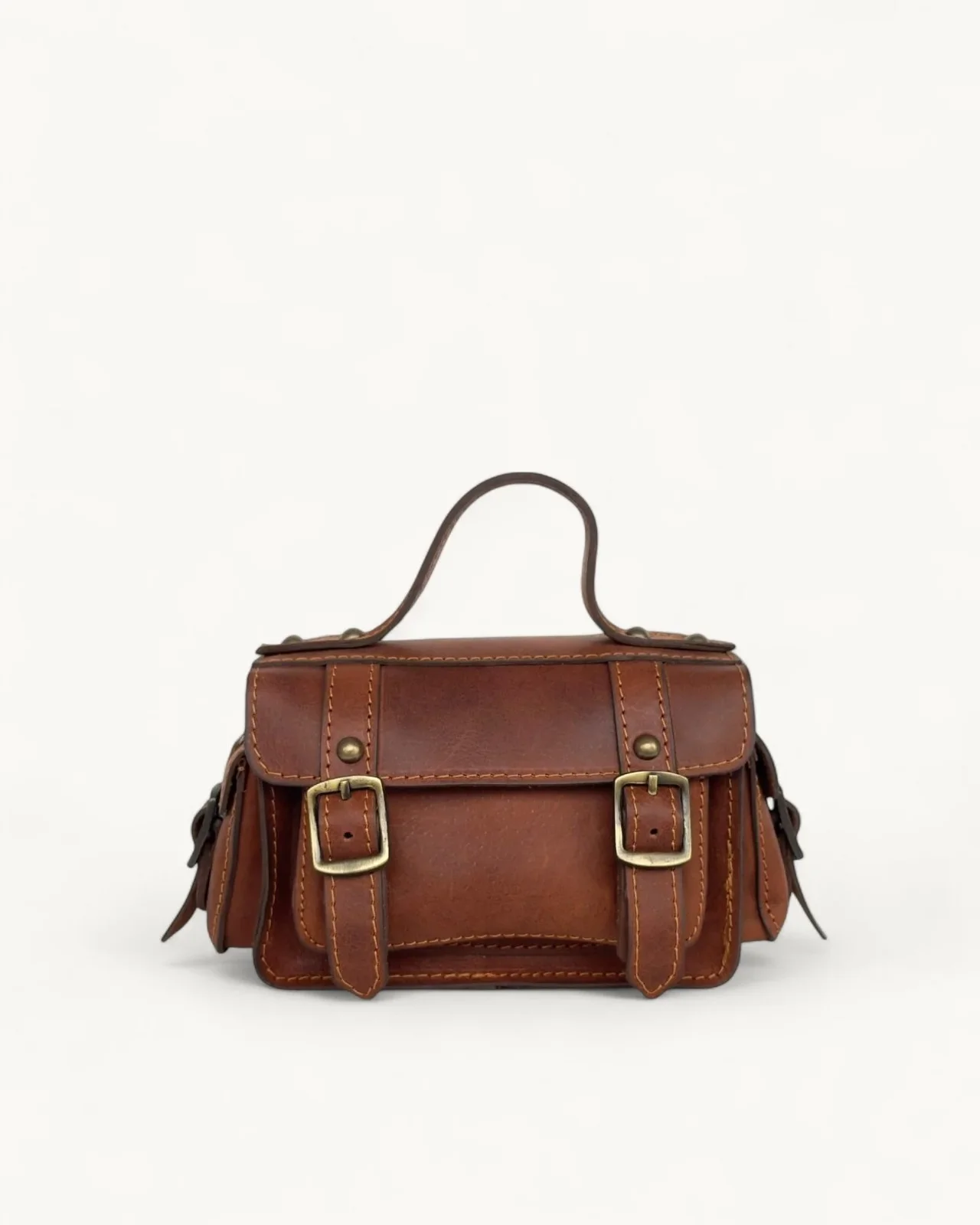
Recommended Sources
- Authorized brand boutiques
- Reputable department stores
- Direct-from-maker sites with material transparency
- Certified pre-owned platforms for vintage pieces
Countries Known for Leather Craft
- Italy (premium tanning & craftsmanship)
- Spain (stylish workshops)
- UK & USA (heritage brands)
- Select South Asian regions (strong mid-tier manufacturing)
Sustainability & Questions to Ask Brands
- Do you disclose tannery names or certifications (e.g., Leather Working Group)?
- Is the leather vegetable-tanned or chrome-tanned?
- Is it a food-industry by-product?
- Do you offer repair/refurbish programs?
Care & Maintenance: Keep Your Bag Looking New
Daily/Weekly
- Dust with a soft dry cloth
- Avoid overstuffing
Monthly
- Condition with a neutral leather product (test first)
- Inspect hardware and Stitching
Weather Protection
- Apply leather-specific water-repellent spray
- Air-dry naturally if wet (no direct heat)
Storage
- Use a breathable dust bag with tissue stuffing
- Keep away from prolonged sunlight
Styling Tips & Top Uses
- Commuter: Structured neutral crossbody + wool coat + boots
- Travel: Anti-theft zip style worn under a jacket
- Weekend: Veg-tanned bucket/saddle + denim + sneakers
- Evening: Micro crossbody + dress/blazer
Common Buyer Mistakes
- Judging by appearance alone → Always verify leather grade & hardware
- Ignoring strap comfort → Test with weight inside
- Prioritizing logo over quality → Focus on construction
- Skipping return/Repair Policies → Choose sellers with good support
Head-to-Head Example Comparison
| Model Type | Leather Grade | Best Feature | Price Band | Ideal User |
| Structured Camera Bag | Top-grain | Compact organization | Mid ($150–$400) | Office & city users |
| Micro Flap Bag | Full-grain | Timeless evening style | High ($500+) | Minimalists / nights out |
| Bucket Crossbody | Veg-tanned | Roomy casual | Mid–High ($200–$700) | Weekend users |
| Travel Anti-theft | Coated / Top-grain | Security + zips | Mid ($150–$350) | Travelers |
FAQs
A: Yes, but full-grain and top-grain perform best. Lower-tier “genuine leather” may wear out faster under heavy use.
A: Measure your essentials (phone, wallet, keys, charger) and select a bag with a bit of extra space.
A: Yes—crossbodies are unisex. Opt for matte finishes, clean lines, and neutral colors for a streamlined look.
A: No. Apply a leather-specific water repellent and protect valuables from rain.
A: Full-grain and veg-tanned develop a beautiful patina (softening and darkening). Coated finishes show less change.
Final Verdict
For the best leather crossbody bags in 2026, focus on leather grade, hardware quality, strap comfort, and practical design. Full-grain and vegetable-tanned leathers offer superior long-term value, while top-grain provides an excellent polished option at a more accessible Price.