Introduction
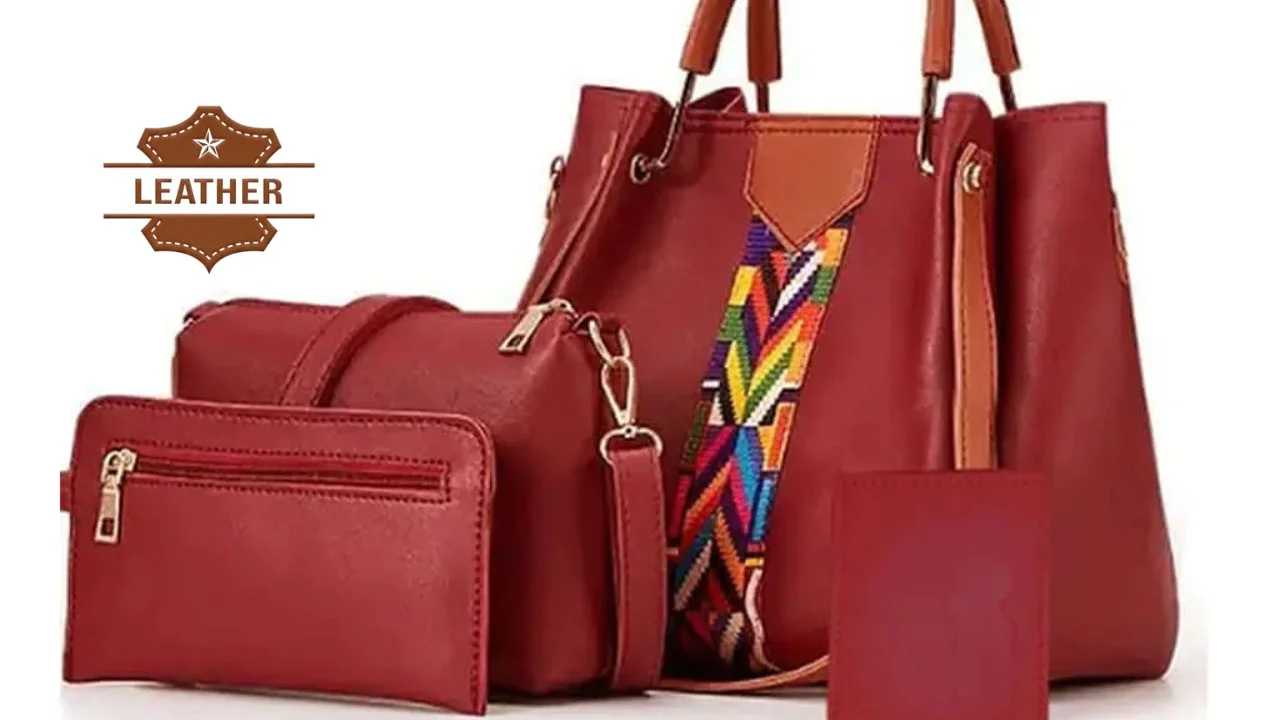
A Red Leather Bag is not merely an accessory — it is a high-impact feature in the semantic representation of your outfit. In human terms: red signals confidence, energy, and a carefully curated persona. In practical terms: a single red bag can transform neutrals into an outfit with presence, ground a monochrome look, or act as the punctuation mark at the end of a polished ensemble.
This guide functions like a long-form document in a natural language pipeline: it tokenizes the topic into distinct sections, embeds knowledge about materials and construction, decodes styling strategies, and outputs actionable checklists for buying and maintenance. Whether you are a buyer, retailer, fashion copywriter, or leather-technology student, you’ll find both tactical steps and strategic thinking here.
In this article, we’ll cover:
- The most popular styles of red leather bags and their use cases
- The leather taxonomies and how they affect durability and hand feel
- A step-wise explanation of how high-quality bags are manufactured
- How to distinguish real leather from synthetic alternatives (with practical tests)
- A buyer’s checklist and trade-offs by price band
- Care, protection, and gentle restorations to preserve color and structure
- Styling recipes for everyday, office, evening, and travel looks
- A comparison table and price ranges across value tiers
- SEO and keyword strategy suggestions for publishers and e-commerce sites
Read on for a thorough, real-world, and (yes) mildly technical breakdown of everything you need to know about red leather bags.
What Is a Red Leather Bag?
A red leather bag is any bag—handbag, tote, crossbody, backpack, clutch, or purse—whose primary exterior material is leather and whose dominant color is a shade of red. “Red” here admits a spectrum: from vivid scarlet to deep oxblood, from cherry to burgundy. The choice of shade alters perceived formality, seasonality, and color-matching rules.
Important classification signals:
- Function: Is the bag intended for everyday hauling (tote), hands-free mobility (crossbody), special events (clutch), or travel/student use (backpack)?
- Leather type: full-grain, top-grain, corrected/grain, nappa, or synthetic (PU). Each type provides different durability, patina potential, and price.
- Finish: dyed (aniline), pigmented, or coated. Finish mediates colorfastness, surface sheen, and color transfer risk.
- Construction quality: stitch density, edge finishing, hardware plating, and lining affect long-term performance.
Treat each red bag as a composed object with attributes — material, finish, hardware, ergonomics, and intended use — and decide which attributes you prioritize.
History of the Red Leather Bag
Color has been a fashion signifier for centuries. Red historically signaled status and visibility; in modern fashion, designers have used red as a deliberate visual anchor.
A brief timeline
- 1950s–1960s: Red was a cinematic and editorial accent; handbags in red were bold statements rather than everyday staples.
- 1970s–1990s: As ready-to-wear democratized color, red bags moved from occasion pieces to wardrobe staples for the fashion-attentive.
- 2000s–present: Social media and street style amplified color trends. Red bags appear across price tiers — from luxe full-grain totes to trend-driven micro bags.
Today, a red leather bag can be both a vintage heirloom and a viral street-style moment. The shade and finish determine whether it reads classic (oxblood, burgundy) or modern (true red, tomato).
Types & Variations of Red Leather Bags
Below are canonical styles and why they work. Think of each as a class in your wardrobe taxonomy.
Red Leather Tote — Everyday & Work
Attributes: large body, open or zip closure, structured or slouchy.
Why buy: Capacity for laptops, documents, and daily essentials. When made in robust top-grain or full-grain leather, a tote becomes a multi-year commuter investment.
Best for: Office, travel, shopping.
Red Leather Crossbody — Hands-Free Style
Attributes: mid to small size, adjustable strap, secure closure.
Why buy: Practical for city days and festivals; keeps essentials close while freeing the hands for other tasks.
Best for: Errands, sightseeing, weekend outings.
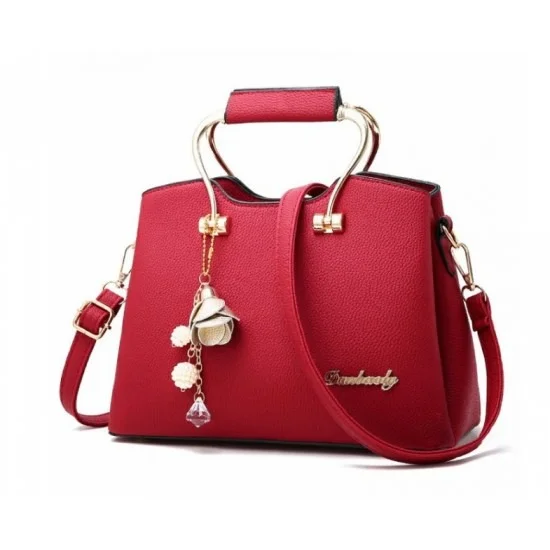
Red Leather Clutch — Elegant & Night Out
Attributes: compact, minimal handles (if any), refined finishing.
Why buy: A clutch adds a focal point of Color without overwhelming the outfit—ideal for dinners and formal events.
Best for: Special events, evening wear.
Red Leather Backpack — Practical & Stylish
Attributes: dual straps, roomy compartments, ergonomic design.
Why buy: Combines comfort and utility with bold color; works for students, travelers, and streetwear looks.
Best for: School, travel, casual days.
Red Shoulder Bag / Hobo
Attributes: soft silhouette, single strap, larger interior.
Why buy: Comfortable and relaxed; the slouch of a hobo reads casual but refined in good leather.
Best for: Everyday comfort with style.
Red Mini / Micro Bags — Statement Pieces
Attributes: intentionally tiny, fashion-first.
Why buy: Visual punch for editorial shots, influencer content, and trend looks where the bag is an accent rather than a cargo carrier.
Best for: Events, photographic storytelling.
Types of Leather Used in Red Bags
Leather type is a primary signal for performance and value. Below is a short taxonomy and what to expect.
Full-Grain Leather
- Characteristics: retains natural grain, develops patina, highest durability.
- Use: investment pieces—structured totes, heritage bags.
- Why it matters: ages well; natural marks are signs of authenticity.
Top-Grain Leather
- Characteristics: sanded/corrected surface; smoother than full-grain.
- Use: high-quality everyday bags.
- Why it matters: balances durability with a refined finish.
Corrected-Grain / Genuine Leather
- Characteristics: lower-grade hides with surface treatment and embossing.
- Use: cost-sensitive real leather options.
- Why it matters: budget-friendly with less longevity.
Nappa / Aniline Leather
- Characteristics: soft, supple, often minimally pigmented.
- Use: luxury soft handbags and clutches.
- Why it matters: feels luxurious but requires careful maintenance.
Faux Leather / PU
- Characteristics: synthetic materials, consistent texture, lower cost.
- Use: fast-fashion and veg-leather alternatives.
- Why it matters: lower Environmental Durability; no natural patina.
How Red Leather Bags Are Made — Step by Step
Understanding production clarifies why quality commands higher prices.
Hide Selection & Grading
Leather starts as a biological material. Good manufacturers reject hides with excessive defects and select based on thickness, tensile quality, and grain.
Pattern Cutting
Precision matters. Panels are cut with CNC or by hand; efficient layout (marker making) reduces waste.
Edge Preparation
Skiving (thinning edges) and smoothing prepare pieces for clean stitching and lamination.
Dyeing & Color Matching
Color technicians create recipes to match manufacturer standards. Red variants require careful pigment balancing to avoid drift (too orange, too purple) across lots.
Tanning & Finishing
Tanning stabilizes collagen; finishing adds protective topcoats, surface pigment, and abrasion resistance. Pigmented finishes help color fastness; aniline finishes preserve a natural look but are more vulnerable.
Stitching & Assembly
Stitch length, thread type (often bonded nylon or polyester), and seam reinforcement (bartacks, rivets) determine structural integrity.
Edge Painting & Burnishing
Painted and burnished edges prevent delamination and give a refined silhouette.
Hardware Plating
Zippers, buckles, and clips are plated (nickel, brass, gold tones). Quality hardware resists tarnish and functions smoothly.
Final Inspection & Packing
Quality control checks color consistency, seam strength, and hardware. Good brands document lot numbers and offer warranties.
How to Spot Real vs Fake Leather
Practical tests you can perform in seconds.
Smell Test
Real leather: earthy, organic aroma. Fake: chemical, plastic odor.
Touch & Feel
Real: warm, pliable, with Variable Texture. Fake: uniformly smooth, sometimes colder to the touch.
Pore Pattern
Real leather: non-uniform pores, natural scars, and variations. Fake: repetitive, mechanically embossed grain.
Backside Examination
Real: fibrous suede-like underside. Fake: textile or plasticky backing.
Water Drop Test
Real: absorbs a small drop slowly. Fake: beads up on the surface.
Price and Label
If the price is implausibly low for claimed full-grain leather, be skeptical. Check product descriptions and authenticity tags.
Buyer’s Checklist
Before you click “add to cart” or hand over cash, use this checklist.
- Leather Type & Origin — Prefer full-grain/top-grain for longevity.
- Color Finish — Ask whether the red is aniline (vibrant but delicate) or pigmented (durable).
- Hardware — Test zippers and metal—does it feel solid?
- Stitching — Even, tight, without missed threads.
- Lining — Breathable cotton/linen preferred over low-end synthetics.
- Ergonomics — Try straps on the shoulder for comfort and balance.
- Warranty & Returns — Does the seller accept returns or offer repairs?
- Photos & Lighting (online buyers) — Request natural light close-ups of seams, corners, and the underside.
Top Uses for Red Leather Bags
Red bags serve both functional roles and stylistic narratives.
Everyday Statement
A red bag livens neutral basics—jeans, tee, blazer—by inserting a deliberate color anchor.
Office & Meetings
Deep burgundy or oxblood projects professionalism while remaining stylish; choose structured silhouettes and matte finishes for a conservative workplace.
Evening & Events
A small red clutch or embellished evening bag reads festive and intentional.
Travel
Crossbodies and backpacks in durable top-grain leather offer security and style while traveling.
Seasonal & Holiday Looks
Red is a classic for holiday outfits—work with greens and neutrals for balance.
How to Style Your Red Leather Bag
Styling is an algorithm of contrast, harmony, and scale.
Neutral Foundation
Pair red with black, white, beige, camel, or denim to let the bag dominate.
Monochrome Red
Wear Varying Reds—lipstick, shoes, bag—to create a curated monochrome output. Use texture to avoid flatness.
Contrast With Texture
Mix leather with knitwear, suede, or metallic accents to create depth and visual interest.
Accessories
Minimal jewelry and complementary shoes are enough. Let the bag speak.
Comparison Table — Red Bag Styles
| Style | Best For | Leather Type | Pros | Cons |
| Tote | Work/Travel | Full-grain/Top-grain | Spacious, versatile | Can be bulky |
| Crossbody | City/Travel | Top-grain/Grained | Hands-free, secure | Limited size |
| Clutch | Evening | Nappa/Top-grain | Sleek, elegant | Small storage |
| Backpack | Casual | Grained leather | Practical, comfortable | Less formal |
| Mini | Fashion | Top-grain/Corrected | Stylish statement | Very small |
Pros & Cons
Pros
✔ Instant visual impact
✔ Versatile across seasons with the right shade
✔ Quality leather improves with time
✔ Potential wardrobe heirloom
Cons
✘ Bright red can show marks more obviously
✘ Poorly finished reds may transfer color to clothes
✘ Requires thought to coordinate with outfits
Care & Maintenance Tips
Treat care as a periodic maintenance pipeline to extend the lifetime.
Routine Cleaning
Dust weekly with a soft cloth. For surface dirt, use a lightly dampened cloth and a pH-neutral cleaner formulated for leather.
Conditioning
Condition every 6–12 months with a color-safe, pH-neutral conditioner. Over-conditioning may darken pigments; always test hidden areas.
Protection
Apply a leather protectant spray designed for pigmented aniline finishes. Avoid saturating the leather.
Proper Storage
Store in a breathable dust bag, away from direct sunlight. Stuff with tissue to preserve shape but avoid wood shavings that can stain.
Color Transfer Handling
For dye transfer, test a specialist leather cleaner on a hidden seam. For stubborn marks, consult a professional restorer.
Price Range Worldwide
Below is a high-level banding in USD:
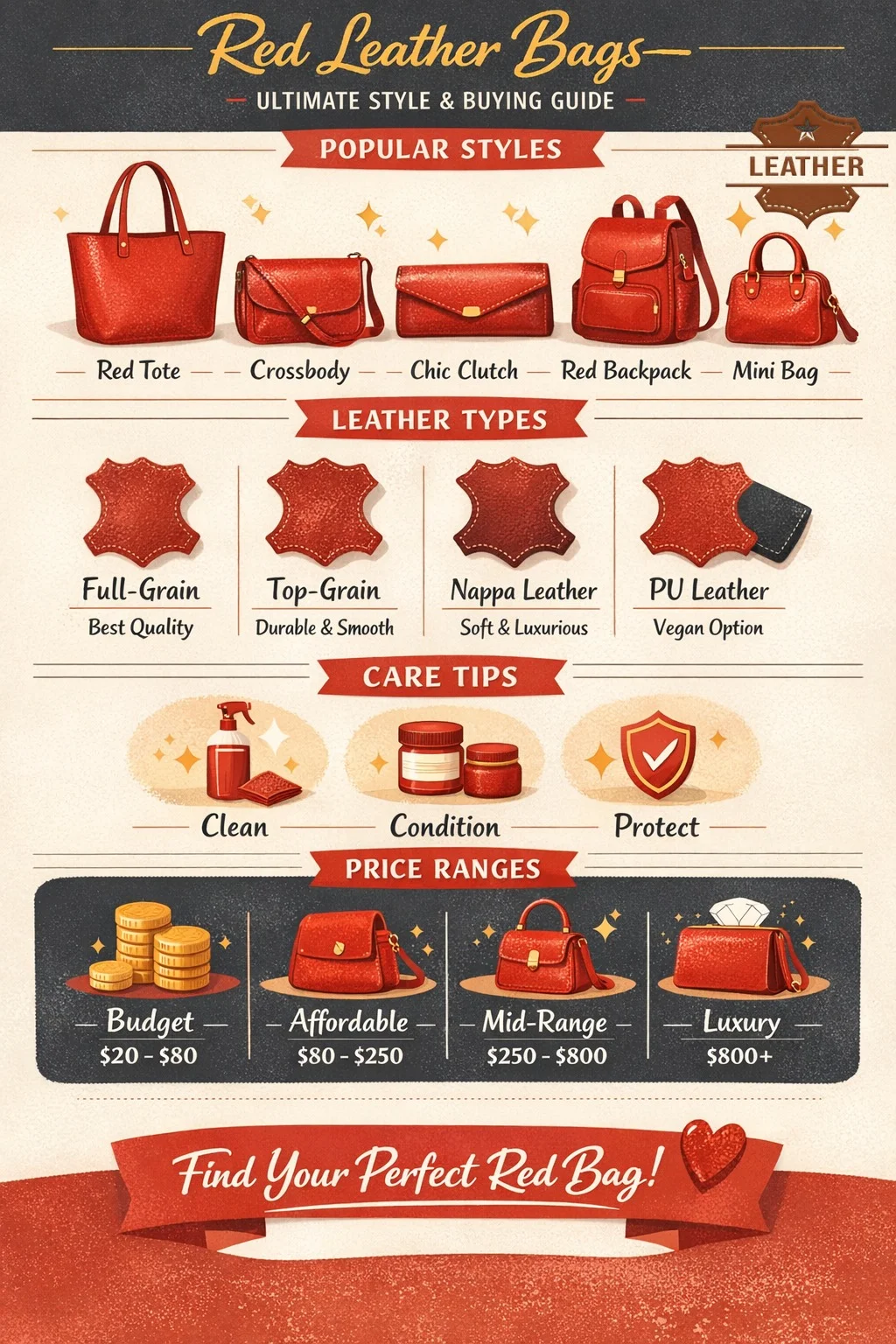
- Budget: $20–$80 — mostly faux leather.
- Affordable: $80–$250 — corrected leather or PU.
- Mid-Range: $250–$800 — top-grain leather; good construction.
- Luxury: $800–$3000+ — full-grain, designer craftsmanship.
- Haute Luxury: $3000–$10,000+ — iconic heritage brands and exotic leathers.
Prices vary by region, taxes, and brand positioning.
Top Brands for Red Leather Bags
Many houses produce noteworthy red leather bags. When curating a product list for a site, group by brand positioning and price tier (e.g., high-street, contemporary, luxury). (If you’d like, I can create a 12-item product shortlist with descriptions and SEO tags.)
FAQs
A: Yes! Deep tones feel timeless, and bright red keeps outfits lively. Neutral outfits help with everyday wear.
A: Higher-quality pigmented finishes resist transfer better. Always test before heavy use.
A: Yes, use pH-neutral, color-safe leather conditioner. Test a small area first.
A: Absolutely — it ages beautifully and lasts much longer than cheaper leathers.
A: Bright red makes a bold fashion statement. Burgundy is more classic and work-friendly.
Final Verdict
A well-chosen red leather bag is an investment in both style and function. For everyday use, prefer structured totes or crossbodies in top-grain leather with pigmented finishes for colorfastness. For the evening, choose soft nappa or polished top-grain clutches. Prioritize hardware quality, stitch integrity, and a Reliable Return Policy. Maintain the bag with scheduled conditioning, protection sprays, and careful storage.