Leather Flight Jacket Women
A Leather Flight Jacket For Women is one of those rare fashion pieces that feels practical, polished, and timeless at the same time. It has military roots, strong visual appeal, and real utility in colder weather. That mix is exactly why it keeps coming back in women’s wardrobes year after year. Flight jackets were originally built for aviators and later evolved into several recognizable silhouettes, including the bomber and shearling aviator family. Today, the category spans sleek city styles, warm winter layers, and fashion-forward versions made for everyday wear.
This guide is built to answer the real questions shoppers ask: What is a flight jacket? How is it different from a bomber or aviator? Which leather lasts longest? What fit looks best on women? When is shearling worth paying for? And how do you avoid buying a jacket that looks great online but feels wrong in real life? That is the gap many competing pages leave open, and it is the gap this article closes. Google’s guidance favors content that is genuinely useful and satisfying, so the structure below is designed to help the reader decide with confidence.
What Is a Leather Flight Jacket?
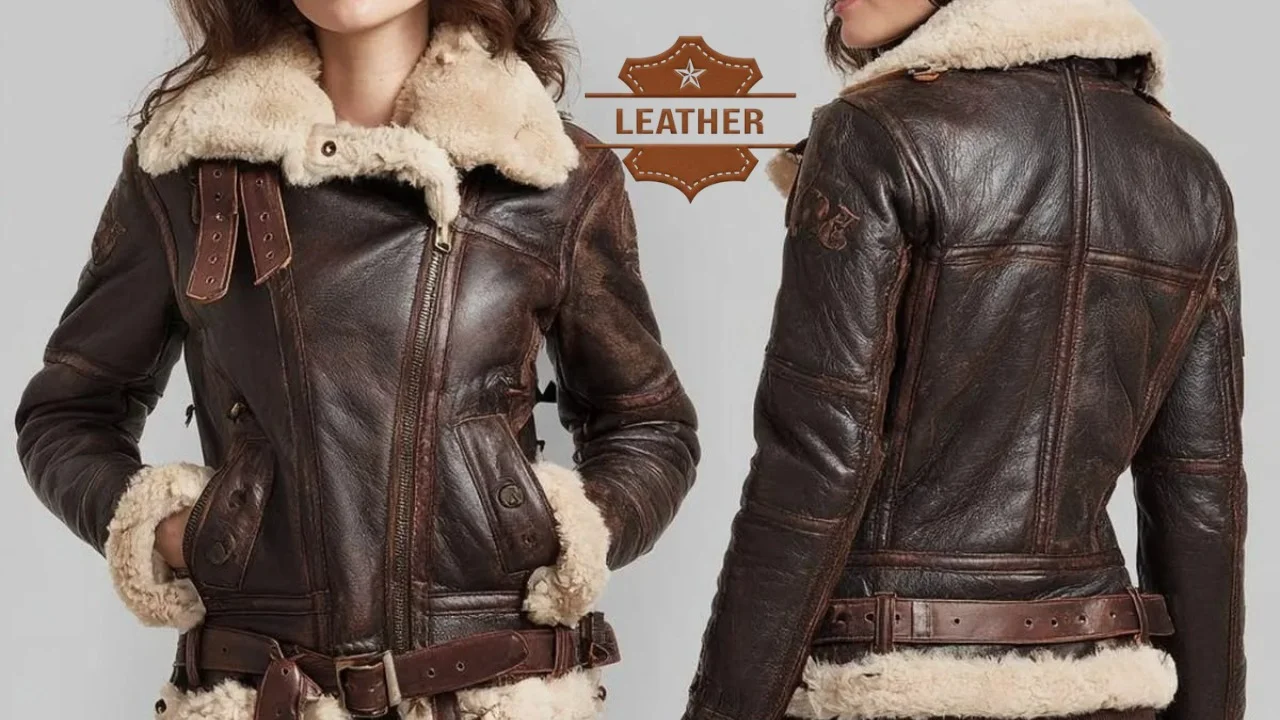
A leather flight jacket is a jacket style originally designed for aviators. In modern fashion, the term often overlaps with bomber and aviator styles, but the category is bigger than a single silhouette. The core idea is simple: durable outerwear with a short length, structured shape, and practical warmth. The flight-jacket family includes historically important styles such as the A-2, the B-3 shearling aviator, and the MA-1 bomber, associated in modern fashion talk.
For women, the best version is the one that balances structure and comfort. A good flight jacket should shape the body without feeling stiff, allow layering without bulk, and sit cleanly at the waist or slightly below it. That is where many generic product pages fall short: they describe the jacket, but not how it should actually work on a female body.
Snippet-ready answer:
A leather flight jacket for women is a short, structured leather outerwear piece inspired by military aviation jackets, designed to combine warmth, durability, and timeless style.
History of the Leather Flight Jacket
Flight jackets were created for early aviators who needed protection from wind and cold in open or cold-air cockpits. Over time, the design evolved into different military specifications and then into civilian fashion. The A-2 is one of the best-known leather flight jackets associated with WWII-era U.S. Army Air Forces pilots, while the B-3 is strongly linked to shearling warmth. Modern bomber-style language later became mainstream in fashion.
What matters for a buyer in 2026 is not just the history itself, but what the history tells you about construction. The aviation origin explains why these jackets favor durability, insulation, and a compact silhouette. That heritage also explains why the best versions still feel purposeful rather than decorative.
Mini summary:
Flight jackets were built for function first, and that is still the reason the best ones age so well.
Why It Matters in 2026
In 2026, women want outerwear that does more than look trendy for one season. They want pieces that can move from casual outfits to polished styling, from commuting to travel, and from cool-weather layering to winter wear. A leather flight jacket fits that need because it is versatile, season-spanning, and visually strong without being overly formal. The flight-jacket category also sits right at the intersection of luxury, utility, and streetwear, which gives it broad appeal.
There is also a sustainability angle in the buyer’s mind. A well-made leather jacket is usually purchased as a long-term wardrobe investment rather than a throwaway trend item. When readers understand how to evaluate leather quality and construction, they buy fewer poor pieces and keep better ones longer. That is the kind of practical, people-first value Google’s content guidance rewards.
Types of Women’s Leather Flight Jackets
| Type | Best for | Warmth | Style feel | Fit character |
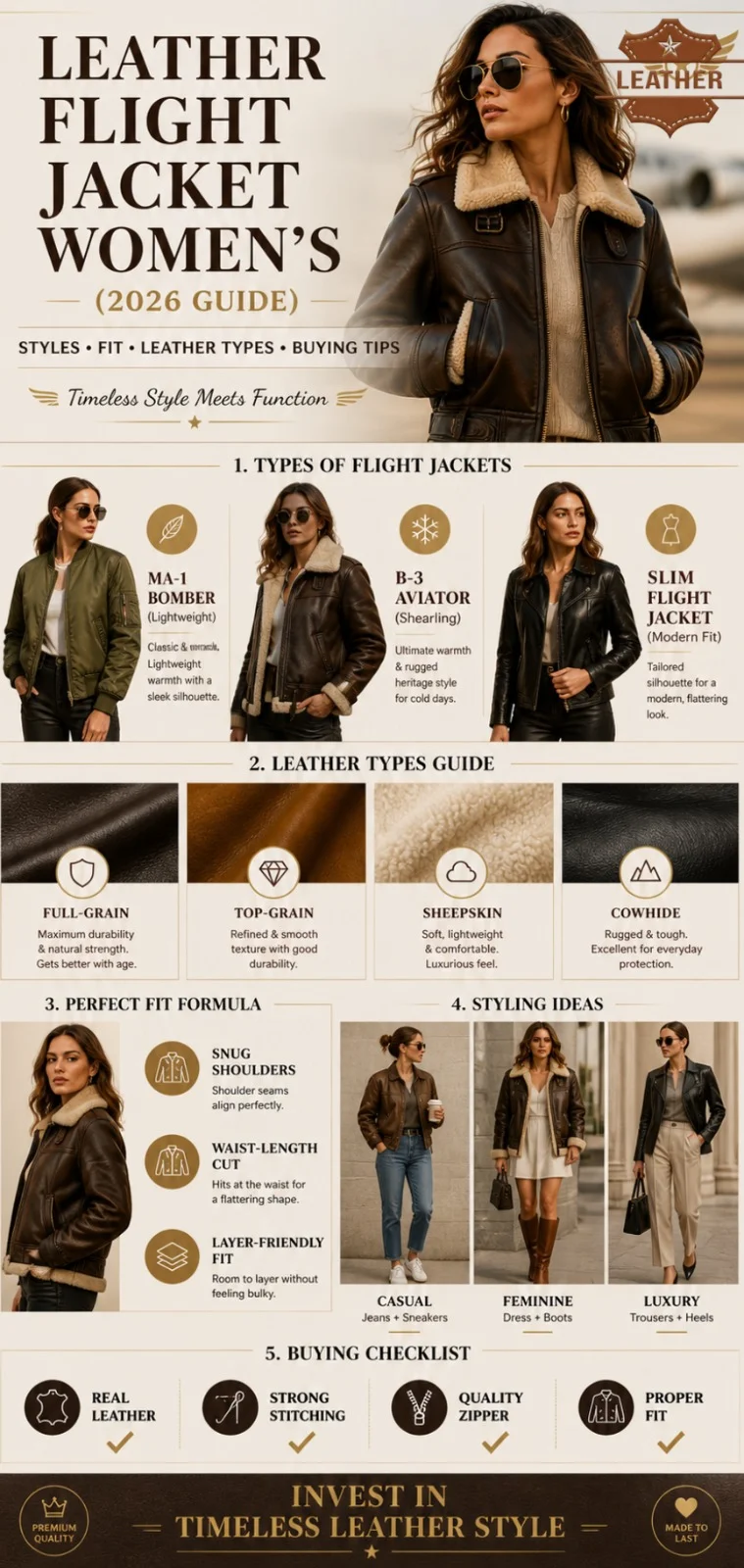
| A-2 inspired flight jacket | Classic everyday wear | Medium | Heritage, clean, timeless | Structured, tidy shoulders |
| B-3 aviator / shearling jacket | Deep winter | Very high | Luxury, rugged, bold | Bulkier, more substantial |
| MA-1 inspired bomber | Casual streetwear | Light to medium | Sporty, modern, minimal | Relaxed, easy layering |
| Slim women’s flight jacket | City styling | Medium | Tailored, feminine, polished | Close fit, sharp outline |
The table above is the simplest way to stop confusion between “flight,” “bomber,” and “aviator.” A flight jacket is the umbrella category. A bomber is one common civilian-facing descendant. An aviator or B-3 usually signals more warmth and shearling. That classification is the kind of clarity many competitor pages do not deliver.
MA-1 Bomber Style
This is the lighter, more casual interpretation. It works well with denim, joggers, and everyday streetwear. Women who want easy layering and less bulk usually prefer this shape.
B-3 Aviator Style
This is the cold-weather heavyweight. It is the right choice for winter and for buyers who want a strong, luxurious silhouette. Shearling is the feature that makes it feel warm and premium.
Modern Slim Flight Jacket
This is the fashion-first version. It keeps the aviation attitude but trims the volume. For women, this is often the easiest option to style with dresses, trousers, and boots.
Mini summary:
Pick MA-1 for ease, B-3 for warmth, and slim flight styles for the cleanest women’s fit.
Leather Types Used in Flight Jackets
The leather itself matters as much as the silhouette. “Leather” means animal skin that has been treated to preserve it, and the type of hide changes the jacket’s feel, weight, Durability, and Price. The Leather Working Group also notes that responsible sourcing and clear claims matter in leather supply chains, so shoppers should look for honest labeling rather than vague marketing language.
| Leather type | Feel | Best use | Pros | Cons |
| Full-grain | Natural, strongest | Long-term investment | Best durability, rich patina | Usually heavier and pricier |
| Top-grain | Smooth, refined | Everyday premium wear | Balanced look and durability | Less character than full-grain |
| Genuine leather | Varies widely | Budget-friendly real leather | Lower entry price | Often lower-grade and less durable |
| Lambskin | Soft, light, luxurious | Fashion-first jackets | Very soft, elegant drape | More delicate |
| Cowhide | Firm, rugged | Heavy-duty wear | Strong and resilient | Can feel stiff at first |
| Suede/nubuck | Warm and plush | Winter wear | Excellent insulation | Bulkier and expensive |
| Suede / nubuck | Velvety finish | Soft luxury styling | Beautiful texture | Needs more care |
| PU / faux leather | Synthetic | Vegan or low-cost options | Easy to access, light | Usually shorter lifespan |
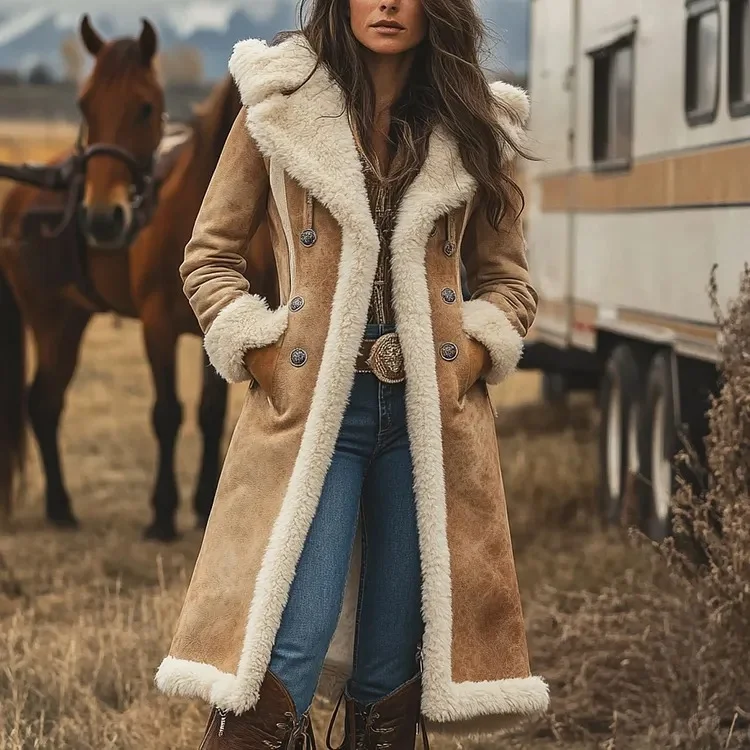
Full-Grain Leather
This is the top tier for durability and long wear. It keeps more of the hide’s natural character, which means better aging and patina over time.
Top-Grain Leather
This is smoother and more refined. It is often a smart middle ground for women who want a cleaner finish without the heavier feel of rugged hides.
Genuine Leather
This term sounds premium, but it often sits below full-grain and top-grain in the quality hierarchy. It can still be useful, but the buyer should inspect the construction carefully.
Suede and Nubuck
These are attractive and tactile, but they need more protection. They suit buyers who care more about finish than weather resistance.
PU / Faux Leather
This is the budget or vegan route. It can look good initially, but it usually cannot match the lifespan and aging quality of real leather.
Mini summary:
For longevity, full-grain is the safest investment. For softness, lambskin wins. For winter warmth, shearling leads.
Manufacturing Process: How a Good Leather Flight Jacket Is Made
A quality leather jacket starts long before the first stitch. Hides are selected, tanned, cut, stitched, lined, and finished into a wearable shape. Responsible leather standards also matter here, because leather production is increasingly tied to traceability and facility-level environmental auditing.
Step-by-step process
- Hide selection — Better hides produce better jackets.
- Tanning — The hide is preserved and stabilized.
- Sorting and grading — Leather is checked for texture, thickness, and defects.
- Pattern cutting — Panels are cut for the body, sleeves, collar, and lining.
- Stitching — Strong seam construction is critical.
- Hardware installation — Zippers, snaps, and trims are attached.
- Lining and finishing — The jacket is lined, conditioned, and inspected.
- Final quality check — Shape, symmetry, and hardware function are tested.
What experts look for
- Even stitching at stress points
- Strong zipper action
- Clean seam alignment
- Balanced sleeve length
- Stable collar shape
- Neat lining attachment
Poor construction usually fails first at the zipper, shoulder seams, and pocket stress points. That is why “looks good in photos” is never enough.
How to Identify Original vs Fake Leather
The easiest way to avoid mistakes is to read labels carefully and inspect the surface with your hands and eyes. Real leather has natural variation, a distinct smell, and a grain that usually looks less uniform than synthetic material. Faux leather often looks more perfect, but that perfection can be a clue. Leather care and product guidance from industry bodies also emphasizes that specific materials need specific handling, so vague care promises are a red flag.
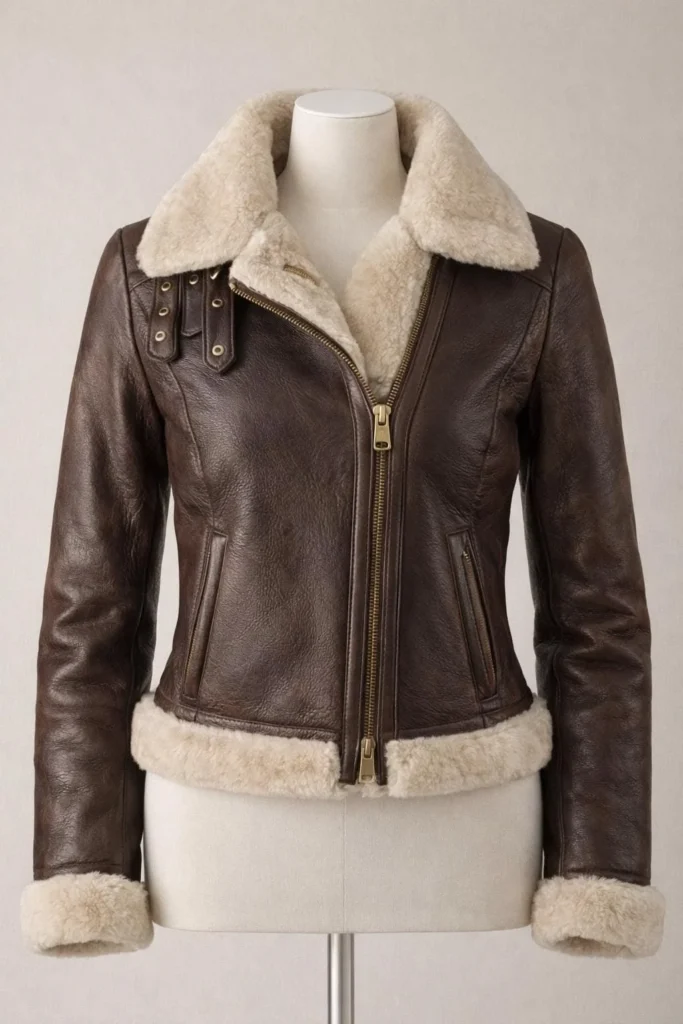
Quick authenticity checks
- Look for natural grain variation
- Check whether the surface feels too plastic-like
- Smell the material
- Fold gently and observe how it creases
- Inspect edge finishing and lining quality
- Verify the product description for exact leather type
What fake or low-grade pieces often reveal
- Too-shiny surface
- Very uniform texture
- Weak hardware
- Thin, hollow-feeling shell
- Loose stitching
- Vague material labels
Snippet-ready answer:
Real leather usually shows natural grain variation, a genuine leather smell, and less uniform texture than faux leather. Poor labels and cheap hardware are Common Warning Signs.
Buying Guide: What to Check Before Purchase
This is where most shoppers need the most help, and where competitor articles often stay too generic. Use the following checklist before buying.
Fit at the shoulders
The jacket should sit cleanly at the shoulder line. If the shoulders are too wide, the jacket looks borrowed. If they are too tight, layering becomes impossible.
Sleeve length
Sleeves should reach the wrist or just below it. Leather is less forgiving than fabric, so the sleeve length matters more than many buyers realize.
Body length
Most flight jackets look best when they hit around the waist or slightly below. That preserves the short, athletic shape the style is known for.
Lining
Choose the lining based on the climate. Shearling or heavy quilted linings work for cold weather. Lighter linings suit milder seasons.
Hardware
A quality zipper should glide smoothly. Snaps should close cleanly. Hardware is one of the first things to fail on cheap jackets.
Leather grade
Pick the best hide you can realistically afford. It affects how the jacket wears, ages, and lasts.
Brand transparency
Good sellers describe leather type, lining, country of origin, and care instructions clearly.
Return and repair policy
This is especially important for leather because fit is harder to fix later.
How a Women’s Flight Jacket Should Fit
This is one of the most valuable parts of the guide because women’s fit advice is often missing online. A flight jacket should feel structured but not restrictive. It should define the body without squeezing it. It should allow a thin knit or sweater underneath, but not look bulky. That balance is the real “sweet spot.”
Fit rules for women
- Shoulders should align naturally
- The body should skim, not cling
- Sleeves should bend comfortably at the elbow
- The hem should support the waistline
- The collar should lie flat or frame the face cleanly
Petite women
Petite shoppers usually look best in shorter, cleaner silhouettes. Too much bulk can overwhelm the frame. Slim flight jackets and cropped bomber-inspired styles are usually the easiest wins.
Tall women
Tall women can carry slightly longer cuts and more volume. A B-3 or oversized aviator can look intentional rather than heavy if the proportions are right.
Curvy body shapes
The goal is definition without compression. Look for jackets that taper lightly at the waist or have a structured hem. Avoid boxy cuts that remove shape.
Broad shoulders
Choose a cleaner shoulder line and avoid excessive epaulets or heavy hardware near the upper body. Keep the rest of the outfit streamlined.
Layering logic
If you plan to wear knitwear underneath, size for movement in the chest and upper back, not just for waist tightness.
Snippet-ready answer:
A woman’s flight jacket should be snug in the shoulders, comfortable through the body, and long enough to support the waist without restricting movement.
How to Style a Leather Flight Jacket
Style matters, but the best styling advice is not just “wear jeans.” It is about proportion, contrast, and occasion.
Casual street style
Pair a black or brown flight jacket with straight-leg jeans, a simple tee, and sneakers. This keeps the jacket as the hero piece.
Feminine contrast look
Wear an aviator jacket with a midi dress and boots. The softness of the dress balances the jacket’s structure.
Minimal luxury outfit
Combine a sleek flight jacket with tailored trousers, a fitted knit, and heeled boots. This is ideal for city wear.
Winter layered look
Use a shearling aviator jacket over a turtleneck and wool pants. This is the best formula when warmth matters most.
Airport or travel outfit
Choose a light-to-medium weight version with leggings or straight pants, a soft knit, and loafers or sneakers. The jacket adds Instant Polish without effort.
Styling rule that works every time
Keep the rest of the outfit simpler when the jacket is bold. Heavy outerwear looks best when the base layers stay clean.
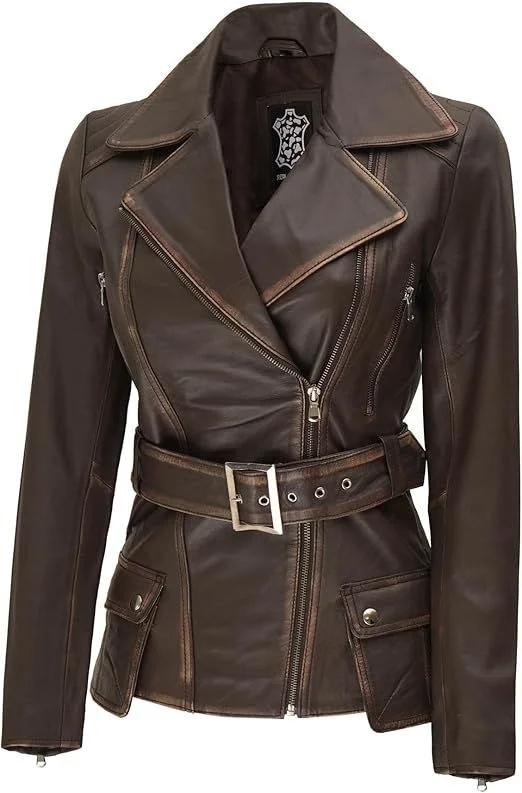
Leather Flight Jacket vs Bomber vs Aviator
| Feature | Flight Jacket | Bomber | Aviator |
| Meaning | Umbrella term for aviator-inspired outerwear | Common civilian offshoot | Usually warmer, more shearling-led version |
| Warmth | Medium to high | Light to medium | High to very high |
| Style | Functional, classic | Casual, sporty | Rugged, luxurious |
| Best for women | Balanced everyday wear | Relaxed styling | Winter statement looks |
The reason this comparison matters is simple: shoppers often use these words interchangeably, but they do not want the same result. A bomber is usually the lighter, more casual answer. An aviator leans warmer and richer. A flight jacket can cover the broader category. That clarity is missing in much of the current search space.
Mini summary:
Use “flight jacket” for the category, “bomber” for casual wear, and “aviator” when you want warmth or shearling emphasis.
Price Range Worldwide
These are practical retail bands rather than fixed prices, because leather costs change by hide type, craftsmanship, branding, and market region.
| Segment | Typical range | What you get |
| Budget | Low to mid | PU, split leather, or basic genuine leather |
| Mid-range | Mid | Better stitching, decent lining, more honest leather labels |
| Premium | High | Top-grain, lambskin, better hardware, cleaner finishing |
| Luxury | Very high | Full-grain, shearling, refined tailoring, brand premium |
Budget-friendly options
These are good for trend testing or occasional wear. Focus on fit and finish, because low-priced jackets often fail in hardware and stitching.
Premium options
These are best for women who want a long-term wardrobe piece. Full-grain, top-grain, lambskin, and good shearling are the usual sweet spots.
Top Countries and Brand Strengths
Different countries are known for different strengths in leather manufacture and leather-garment production. Pakistan, for example, has a long leather-garment manufacturing presence and export ecosystem, while countries with established aviation-fashion heritage often lead in heritage styling and premium positioning. The Leather Working Group also notes that responsible leather production is now a global standard-setting conversation, not a niche topic.
General market reputation by region
- Pakistan — strong garment manufacturing and leather production base
- Italy — luxury finishing and fashion-led craftsmanship reputation
- Turkey — strong outerwear and leather-garment output
- United States — heritage flight-jacket styling and legacy aviation aesthetics
- UK/Europe — fashion-forward leather outerwear and premium retail positioning
Pros and Cons
Pros
- Timeless look
- Strong styling versatility
- Good warmth potential
- Long lifespan when well-made
- Works across casual and polished outfits
Cons
- Can be heavy
- Good versions can be expensive
- Poor fit is hard to fix
- Requires Care
- Faux and cheap options may not age well
Common Mistakes to Avoid
- Buying by appearance only
A beautiful jacket can still be badly cut. - Ignoring leather type
Full-grain, top-grain, and genuine leather are not the same thing. - Choosing the wrong size
Too big looks sloppy; too tight limits movement. - Overlooking lining
Warmth depends as much on lining as on leather. - Skipping hardware checks
Weak zippers destroy the wearing experience fast. - Using harsh cleaning products
Leather needs the right care, not generic fabric treatment. Industry guidance stresses asking for product-specific care instructions when they are not supplied.
Care, Cleaning & Maintenance Tips
Good leather care helps the jacket last longer and look better as it ages. Basic care guidance from industry bodies recommends following product-specific instructions and using safe, gentle handling rather than guessing.
Simple care routine
- Wipe dust off with a soft cloth.
- Let the jacket air out after wear.
- Keep it away from direct heat.
- Store it on a wide hanger.
- Condition it sparingly when needed.
- Protect suede or nubuck with the right specialty products.
- Keep shearling dry and clean.
Do not do this
- Do not machine wash leather
- Do not dry on a radiator
- Do not soak it
- Do not use random household cleaners
Expert Tips Most Buyers Ignore
These are the small details that often decide whether a jacket becomes a favorite or a regret.
Cost per wear matters more than sticker price
A higher-quality jacket that lasts years often beats a cheaper one you replace sooner.
The collar changes the face shape
A wide shearling collar feels bold and winter-ready. A clean stand collar feels more modern and minimal.
Hardware should match the lifestyle
If you wear the jacket often, zipper smoothness matters more than decorative details.
The lining can change the whole silhouette
Thick lining gives warmth but adds volume. That can matter a lot for petite women.
Leather ages differently
Full-grain and top-grain usually improve visually with time, while low-quality synthetics tend to deteriorate faster.
Future Trends in the Leather Industry
The future of leather outerwear is moving in three directions: better traceability, more responsible production claims, and more demand for multifunctional pieces. Leather Working Group’s global role shows how much traceability and facility-level auditing now matter in the sector. At the same time, Google’s content guidance keeps pushing publishers to create genuinely useful, satisfying pages rather than thin keyword content.
What does that mean for buyers?
- More transparent sourcing
- Better product labeling
- More emphasis on durability
- More demand for timeless silhouettes
- More interest in jackets that work across multiple seasons
FAQs
A: Yes. Warmth depends on the jacket’s construction and lining. Shearling and B-3 style aviators are the warmest, while lighter bomber styles are better for mild to cool weather.
A: A bomber is usually a lighter, more casual offshoot. Aviator usually suggests a warmer, more rugged, often shearling-led style. Flight jacket is the broader category name.
A: It should sit well on the shoulders, allow easy arm movement, and skim the body without feeling boxy or tight.
A: Yes, for long-term wear. It is generally the strongest and most durable option, especially if you want a jacket that develops character over time.
A: Black is the most versatile, brown feels vintage and rich, and beige or tan gives a softer, fashion-forward look.
Final Verdict
A leather flight jacket for women is more than a trend piece. It is a smart outerwear investment when you choose the right silhouette, leather grade, and fit. The best jackets are the ones that feel strong on the shoulders, flattering at the waist, and practical enough to wear across seasons. That is why clear classification matters: flight jacket, bomber, and aviator are related, but they do not solve the same style problem.
If you want this page to outrank weaker competitors, the winning formula is simple: give readers a clearer taxonomy, better Women-Specific fit guidance, smarter leather-buying advice, and stronger styling formulas than the pages currently in the SERP. That is the exact path this draft follows, in line with Google’s people-first guidance.