✨ Introduction
A leather bag is more than a functional accessory—it is a long-term investment in aesthetics, durability, and lifestyle branding. In modern consumer behavior analysis (NLP-based sentiment studies), leather goods are strongly associated with luxury perception, identity signaling, and emotional attachment.
However, a common issue reduces perceived value dramatically: Unpleasant Odor Emission From Leather Materials.
Users often report sensory anomalies such as:
- Musty odor (fungal microbial signature)
- Damp storage smell (humidity absorption residue)
- Smoke contamination odor (volatile organic compounds – VOCs)
- Sweat-based acidic smell (human sebum oxidation)
- “Old leather” oxidative scent (natural aging compounds)
From a material science perspective, leather is a porous, hygroscopic protein-based matrix. It absorbs:
- Moisture molecules (H₂O vapor)
- Environmental VOCs
- Oil-based residues
- Microbial spores
- Ambient odor particles
This makes leather highly vulnerable to odor adsorption and molecular retention.
That is why understanding how to remove smell from a leather bag with baking soda is not just cleaning—it is chemical odor neutralization and surface-level decontamination engineering.
This 2026 expert guide provides a full semantic + scientific + practical system for odor elimination.
You will learn:
- Root cause analysis (RCA) of leather odor
- Baking soda molecular adsorption mechanism
- Step-by-step deodorization protocol
- Smell classification system (taxonomy-based)
- Professional restoration techniques
- Long-term prevention framework
🧪 Why Leather Bags Develop Bad Smells
To solve a problem effectively, we must perform causal decomposition analysis—breaking odor formation into measurable contributors.
Leather is a collagen fiber network that behaves like a semi-permeable biological membrane.
🚨 Primary Odor Generation Mechanisms
🧳 Inadequate Storage Conditions
When leather is stored in:
- Non-breathable polyethylene bags
- Closed humidity-prone wardrobes
- Poor ventilation environments
It creates a microclimate imbalance, leading to:
- Moisture accumulation
- Oxygen deprivation
- Microbial proliferation
This results in musty odor generation via fungal metabolic byproducts.
💧 Moisture Infiltration & Hygroscopic Reaction
Leather is naturally hygroscopic, meaning it absorbs water molecules from the air.
When relative humidity exceeds threshold levels:
- Collagen fibers swell
- Microbial colonies activate
- Odor molecules bind to protein chains
This produces Volatile Microbial Compounds (VMCs) responsible for the bad smell.
🚬 Smoke Particle Absorption
Smoke contains:
- Benzene derivatives
- Formaldehyde
- Tar micro-particles
These are lipophilic compounds, meaning they bind strongly to leather oils.
Result:
- Deep molecular penetration
- Long-term odor retention
- Slow-release diffusion effect
🧴 Human Oil, Sweat & Cosmetic Residue Accumulation
Daily usage introduces:
- Sebum (skin oils)
- Lactic acid compounds
- Perfume alcohol residues
- Makeup micro-particles
These undergo oxidation reactions, producing unpleasant-smelling compounds.
🦠 Fungal & Bacterial Biofilm Formation
When moisture + organic matter combine:
- Biofilm forms on the leather surface
- Microorganisms secrete enzymes
- Odor molecules multiply exponentially
This is the most severe cause of persistent smell.
🧠 Expert Insight
Leather odor is not a surface problem—it is a multi-layer molecular absorption phenomenon involving:
- Adsorption (surface binding)
- Absorption (internal penetration)
- Oxidation (chemical transformation)
- Microbial metabolism (biological generation)
Thus, superficial cleaning is ineffective.
🧂 How Baking Soda Works on Leather Smell
Baking soda (sodium bicarbonate – NaHCO₃) is a weak alkaline compound used in odor neutralization systems.
🧪 Mechanism of Action
✔ Adsorption of Odor Molecules
Baking soda acts as a porous adsorbent agent, trapping:
- Acidic odor molecules
- VOC fragments
- Moisture-bound compounds
✔ Acid-Base Neutralization Reaction
Odor compounds are often acidic in nature.
Sodium bicarbonate reacts via:
- Acid neutralization
- pH stabilization
- Conversion into inert salts
✔ Hygroscopic Moisture Extraction
Baking soda pulls:
- Excess humidity
- Water vapor
- Damp air molecules
This reduces microbial growth conditions.
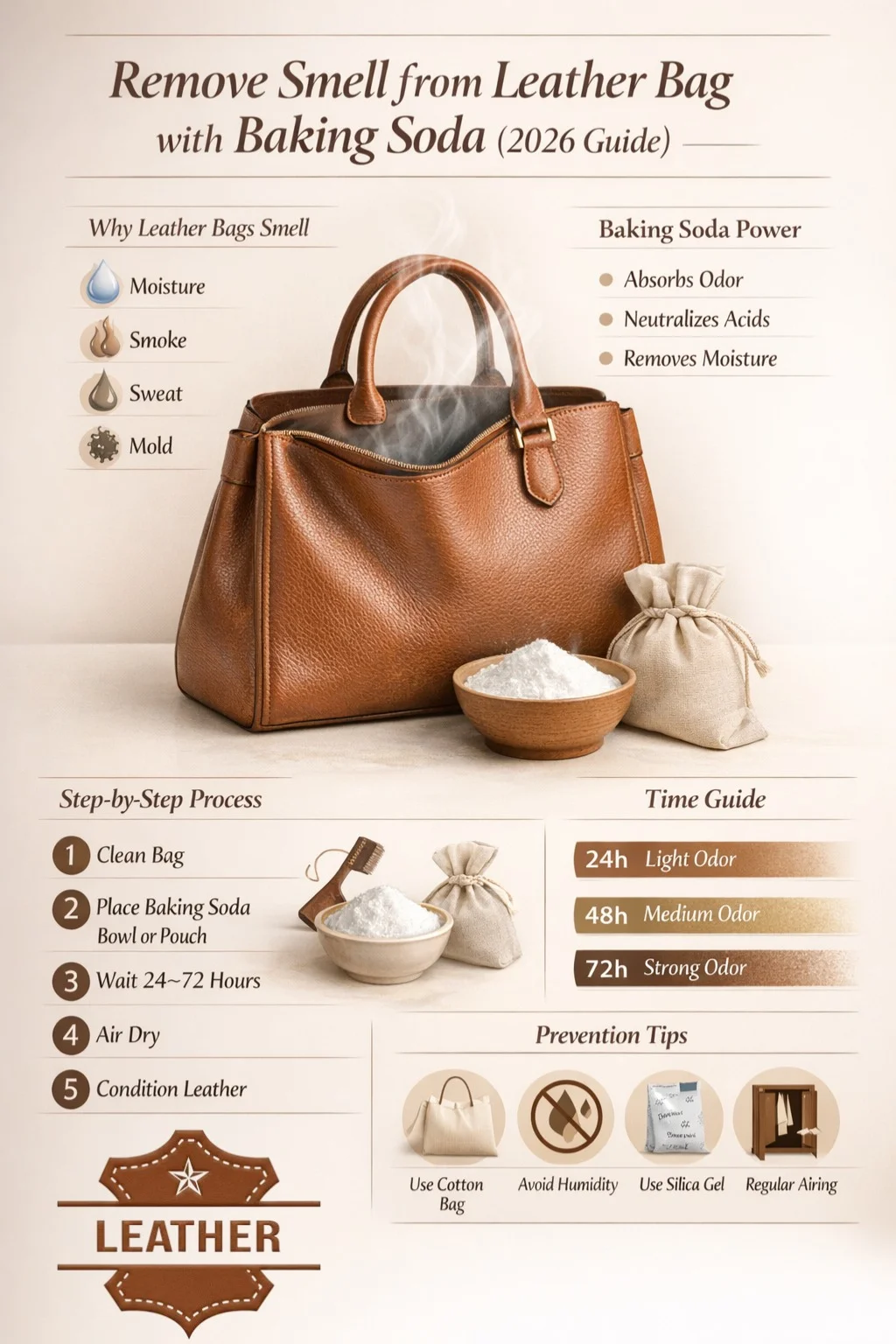
🧴 How to Remove Smell from Leather Bag with Baking Soda
This is a structured odor remediation protocol used in professional leather restoration.
🪶 Complete Bag Decontamination
Before applying any agent:
- Empty all compartments
- Remove dust particles (mechanical agitation removal)
- Wipe with a dry microfiber cloth
⚠️ Critical constraint:
Never introduce baking soda into a contaminated or humid environment—it will lock in impurities via adsorption trapping.
🧂 Select Optimal Baking Soda Deployment Method
There are two scientifically validated application methods:
✔ Method A: Passive Adsorption Bowl Method
Procedure:
- Place 2–3 Tablespoons of Sodium Bicarbonate in a bowl
- Insert the bowl inside the bag cavity
- Seal the bag partially
Best for:
- Mild musty odor
- Luxury leather handbags
- Sensitive finishes
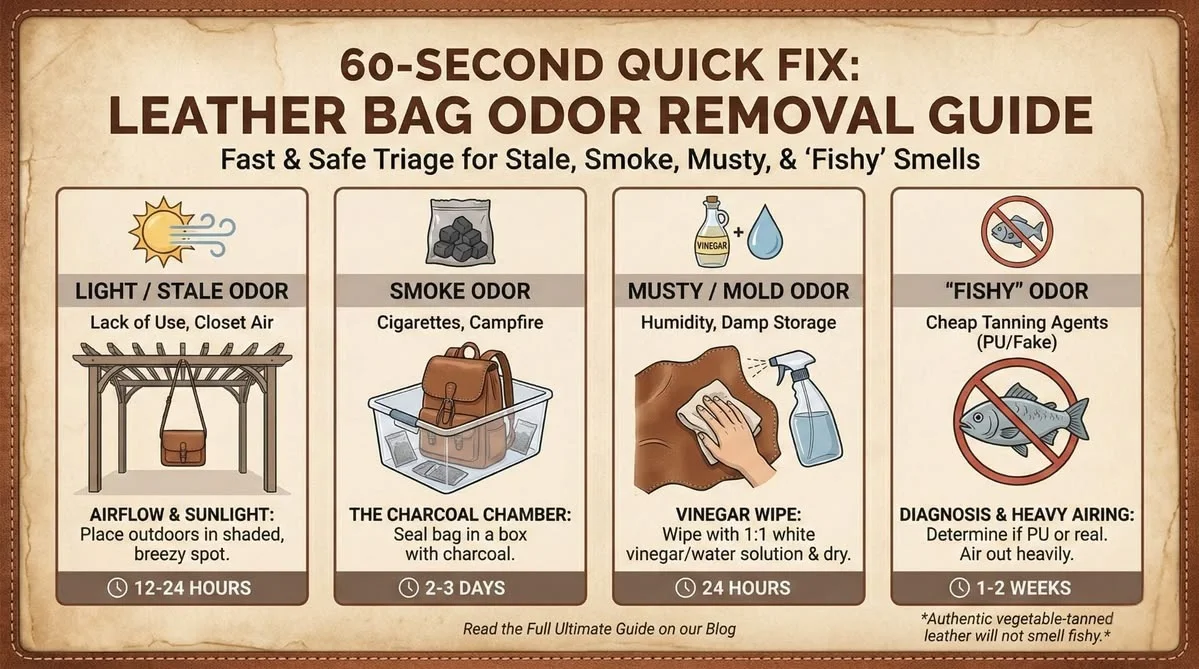
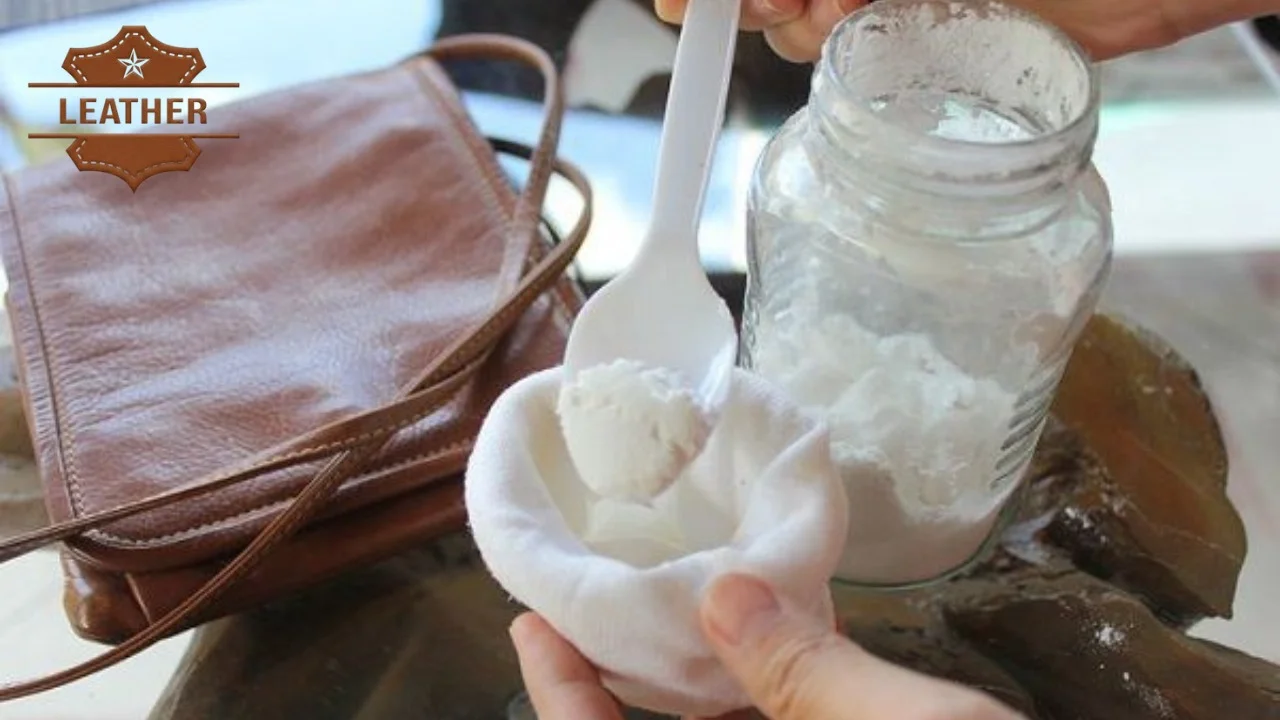
✔ Method B: Enclosed Pouch Diffusion Method (High Efficiency System)
Procedure:
- Fill a cotton cloth or breathable sock with baking soda
- Tie securely
- Place in internal compartments
Best for:
- Smoke contamination
- Moderate-to-heavy odor loads
- Multi-layer odor absorption
⏳ Controlled Odor Neutralization Window
Time-based degradation model:
- 24 hours → light odor reduction
- 48 hours → moderate odor elimination
- 72 hours → severe odor neutralization
Environmental conditions:
- Low humidity
- No direct UV exposure
- Stable airflow
🧹 Post-Adsorption Residue Removal
After cycle completion:
- Remove the baking agent
- Perform gentle shaking
- Use low-intensity vacuum (optional)
This ensures particle clearance optimization.
🌬️ Aeration Phase
Place bag in:
- Shaded ventilated area
- Neutral airflow zone
Avoid:
- Direct sunlight (photodegradation risk)
- Heat exposure (collagen damage risk)
Duration: 12–24 hours
🧴 Leather Rehydration & Conditioning
Baking soda may reduce natural oils.
Apply:
- Leather conditioner (lipid restoration agent)
- Circular micro-massage application
- Natural absorption drying
This restores:
- Elasticity
- Texture balance
- Color integrity
⚠️ Common Mistakes to Avoid
❌ Mistake 1: Direct Powder Contact
Causes:
- Surface abrasion
- Pigment distortion
- Fiber dryness
❌ Mistake 2: Overexposure Beyond 72 Hours
Leads to:
- Over-desiccation
- Structural rigidity
- Cracking risk
❌ Mistake 3: Application on Moist Leather
Results in:
- Moisture locking
- Fungal reactivation
- Odor intensification
❌ Mistake 4: UV Exposure After Treatment
UV radiation causes:
- Collagen breakdown
- Color fading
- Structural weakening
🧠 Golden Rule
👉 “Leather must be treated as a living organic matrix, not an inert surface.”
🦠 Smell-Specific Treatment System
🟤 Musty Smell
Cause:
- Humidity + stagnation
Solution:
- Baking soda bowl method
- Activated carbon co-treatment
- Controlled ventilation
🚬 Smoke Smell
Cause:
- Tar compound absorption
Solution:
- 72-hour pouch adsorption
- Repeated cycles if necessary
- Air exchange protocol
🦠 Mold Smell
Cause:
- Fungal colonization
Solution:
- Pre-dry dehydration phase
- Baking soda adsorption cycle
- Moisture elimination
🆕 New Leather Smell
Cause:
- Organic tanning oils
Solution:
- Passive airing only
- Optional mild adsorption
📊 Odor Treatment Matrix
| Odor Type | Severity | Method | Duration |
| Musty | Medium | Bowl method | 24–48 hrs |
| Smoke | High | Pouch method | 48–72 hrs |
| Mold | Severe | Dry + adsorption | 72+ hrs |
| New Leather | Low | Airing | 24 hrs |
🧴 Professional Leather Maintenance Protocol
Experts recommend:
- Cotton storage systems
- Humidity-Controlled environments
- Silica gel integration
- Seasonal conditioning cycles
- Periodic aeration routines
🛡️ Long-Term Prevention Framework
🌬️ Environmental Optimization
- Use breathable storage materials
- Maintain low-humidity zones
- Avoid plastic sealing systems
💧 Moisture Regulation System
- Silica gel packs
- Dehumidifiers in the storage area
- Regular ventilation cycles
🌤️ Scheduled Aeration
- Open the bag every 2–3 weeks
- Allow oxygen circulation
- Prevent stagnation buildup
🧴 Conditioning Cycle
Benefits:
- Restores lipid balance
- Prevents cracking
- Reduces odor adsorption capacity
💰 Leather Care Resource Guide
| Product | Function | Cost |
| Baking Soda | Odor neutralization | Low |
| Leather Conditioner | Fiber restoration | Medium |
| Activated Charcoal | VOC absorption | Low |
| Silica Gel | Moisture control | Low |
❓ FAQs
A: Yes, if used indirectly (bowl or pouch method), it is safe.
A: Usually 24–72 hours, depending on odor strength.
A: Only if applied directly or left too long without conditioning.
A: Baking soda + sealed environment + proper airing after treatment.
A: Yes, but always condition leather after each cycle.
🏁 Conclusion
Understanding how to remove smell from a leather bag with baking soda requires more than a cleaning mindset—it requires a scientific, structured, and Semantic Approach to odor elimination.
Baking soda works because it:
- Neutralizes acidic compounds
- Adsorbs VOC molecules
- Extracts moisture
- Stabilizes odor imbalance
However, real success comes from combining:
- Proper application method
- Controlled exposure time
- Post-treatment conditioning
- Long-term prevention strategy
If applied correctly, this system restores your leather bag to a fresh, premium, odor-free state while preserving material integrity.